
Foam is the one component almost every cushion buyer purchases blind. You can see fabric, squeeze a welt cord, sit on a display — but the foam core arrives sealed inside its cover, specified by a number most people have never had explained. Into that vacuum flow myths, repeated from one product review to the next until they sound like physics. This article takes the five most expensive of them and checks each against what actually happens on a cutting floor. The two references worth bookmarking first: the density decision guide (how to choose foam density) and the head-to-head material comparison (memory foam vs regular foam).
Myth 1: “Higher Density Means Harder”
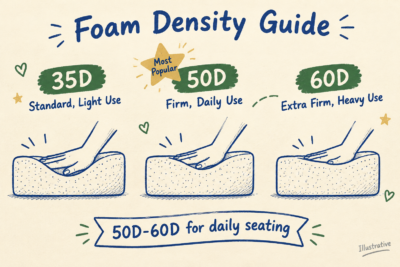
The truth: density and firmness are two independent specifications. Density counts how much polymer sits in each cubic foot of foam — 35D means roughly 3.5 lb/ft³ — and it sets how many years the core holds its loft under load. Firmness is a separate dial (graded by ILD): it sets how hard the foam pushes back on first sit. A 65D core can be cut softer than a 35D one; a soft-feeling cushion can be hiding a dense, long-lived core. The two numbers correlate in people’s heads because cheap furniture pairs low density with high firmness — the manufacturer’s only way to make thin foam feel supportive — and that pairing is what hardened into the myth.
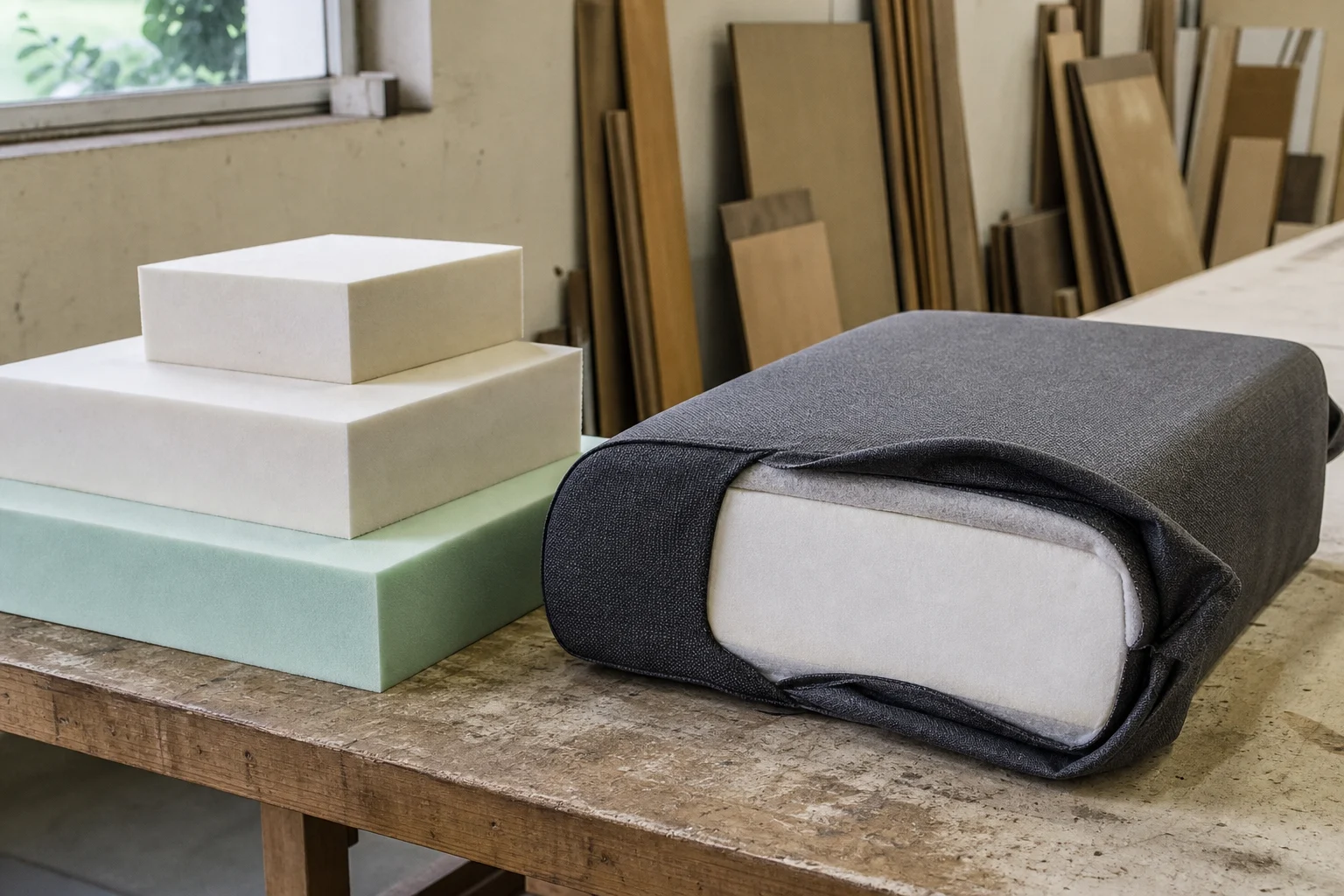
So both of the common mistakes are the same mistake. Buying 65D “because I like a firm seat” wastes money on density the use doesn’t need. Avoiding 65D “because I like a soft seat” rules out the best material for a hard-working chair. The workshop rule that untangles it: density buys years, firmness buys feel. Match density to the job, then buy the feel separately:
| Grade | The job it is cut for |
| 35D | Occasional furniture — decorative chairs, window seats, guest-room pieces |
| 50D | Daily-use seating — dining chairs, the every-evening sofa, most orders |
| 60D | Long daily hours, heavier sitters, deep seats, light commercial |
| 65D | Heavy commercial duty — bar stools, reception furniture, boat cushions |
The full decision tree behind this table lives in how to choose foam density.
Myth 2: “High Density Foam Never Goes Flat”
The truth: every polyurethane foam core fatigues — density only sets the speed. Foam carries you by bending millions of cell walls, and under enough sit-down cycles those walls slowly lose their ability to spring back (the industry calls it compression set). This is chemistry and physics, not a defect. What density changes is the schedule: more polymer per cubic foot means more material sharing each load, and the clock runs proportionally slower. The rules of thumb from the lifespan tables (how often to replace sofa cushions):
- – Furniture-in-a-box foam, 18–24D — one to two years of real use; the fill that gave “couches die young” its reputation
- – 35D — three to five years if it carries daily sitting, far longer on the occasional duty it is specced for
- – 50D — roughly five to eight years of family use
- – 60D–65D — eight to ten-plus years; 65D routinely outlasts the fabric sewn around it
The second half of the myth is the one that costs money in the other direction: assuming a flattened cushion must have been cheap. A 65D bar stool run hard for twelve years and a 24D sofa dead at eighteen months can both be foam doing exactly what its density predicted. Before replacing, diagnose: age the cushion against its grade and its actual duty, then choose between a foam-swap and a full re-cushion — how to fix sagging couch cushions covers the swap.
Myth 3: “Memory Foam Is the Best Seat Material”
The truth: memory foam is a mattress technology, and seating is not mattress use. Viscoelastic foam is engineered to respond slowly and contour under sustained, static load — exactly right for a sleeping body that stays put for eight hours. A seat cushion lives the opposite life: frequent sit-down-stand-up cycles, shifting weight, turns. Slow recovery fights every one of those. Get up and sit back down, and the contour from the last sit is still there; sink deep into the cushion and every reposition takes effort; the material also builds heat through a long evening. These are not quality tiers of memory foam — they are the material working as designed, in the wrong job.
The workhorse of seat cores is high-resilience (HR) polyurethane foam — open-celled, springy, engineered to push back, in the 35D–65D grades. That is the honest position of our own catalog: our seat cores run HR polyurethane across the full 35D–65D ladder, and we do not sell solid memory-foam cores, because they underperform for the use (memory foam vs regular foam is the full head-to-head; memory foam seat cushions maps where the material genuinely belongs).
Where memory foam earns its place in seating is as a topper, not a core: a 1″–1.5″ memory layer over a firm HR base delivers contour at the surface and spring in the structure — the luxury configuration, covered in memory foam topped cushions. The gel-infused variants follow the same rule (gel foam cushions).
Myth 4: “A Strong Smell Means the Foam Is Toxic”
The truth: a light odor from freshly manufactured foam is normal off-gassing, and it fades in days. Polyurethane foam is cured in blocks, and newly cut foam releases small amounts of residual volatiles — the faint “new foam” smell you notice unboxing a cushion. Sealed shipping amplifies it (the volatiles collect in the bag), and unzipping the room’s airflow dissipates it: air the cushion out for a few days and the smell goes. It is not a toxicity signal, and it is not a quality signal in either direction — cheap and expensive foams alike carry it.
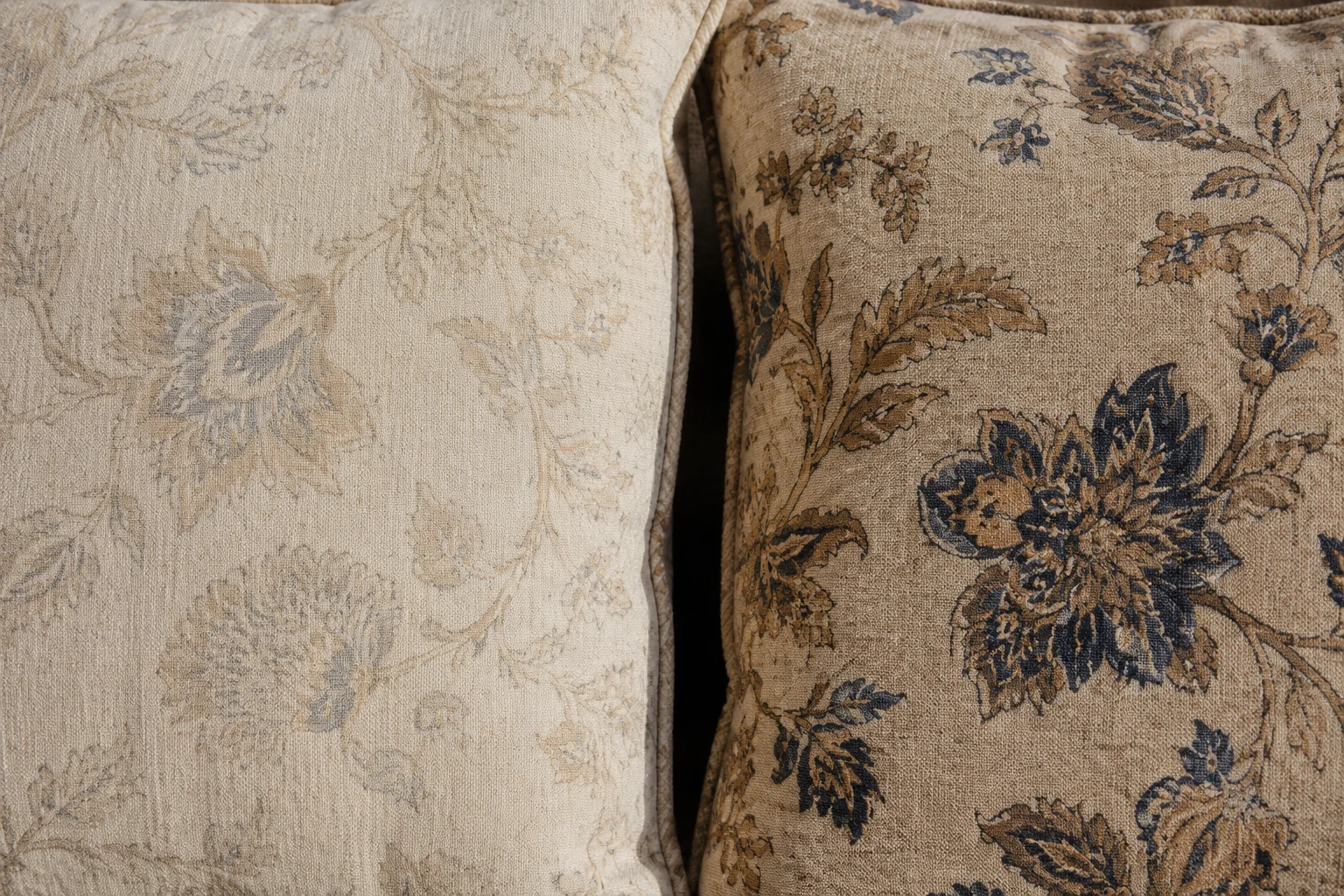
Two honest caveats. First, persistence is the flag that matters: an odor that survives weeks of ventilation, or comes with irritation, is a reason to query the material’s source, not to air it out longer. Second, for chemical-sensitive households the property worth shopping for is a different material entirely — natural latex cures with almost no off-gassing period at all, a real and substantive advantage covered in latex foam cushions. The mistake to avoid is treating smell as a diagnostic: a scentless cushion is not automatically safe, and a scented one is not automatically dangerous.
Myth 5: “All Foam Is the Same — Buy the Cheapest”
The truth: “foam” is a family of materials spanning a 4x range in polymer content, not one material. An 18D furniture-in-a-box core and a 65D commercial core are both polyurethane, and they are entirely different products: one is engineered to survive eighteen months of light use at a shipping-friendly weight, the other to hold its loft under a decade of bar trade. Genuine high-resilience grades start around 25D; below that, the price advantage is real and the lifespan disadvantage is realer. The full anatomy of what density physically means is in high density foam explained.
The arithmetic that kills the myth lives on our own price sheet: the entire ladder from 35D to 65D adds roughly seven dollars to a standard 24×24 seat. That is the whole cost of moving from a core that ages in a few years to one that outlasts the fabric around it — the re-do, by contrast, costs the whole project again. Buying cheap foam is not saving money on the same product; it is buying fewer years of the same product (cheap vs quality cushions runs the same audit across fabric and fill). Where economy is genuinely right — the decorative chair nobody sits in — say so and buy 35D honestly; the mistake is paying daily-use duty with occasional-use foam.
The Pattern Behind All Five
Each myth has the same root: treating foam as a single material with a single quality, rather than a graded system with two independent specs. Once density (the years) and firmness (the feel) are separated, all five collapse at once — hardness stops being a density question, flattening becomes a schedule you can read, memory foam finds its correct layer, smell stops masquerading as toxicity, and the price ladder resolves into seven honest dollars.
Ordering Foam Without the Myths
- Set density by duty using the four-grade table above — hours per day and sitter weight, with tiers going up a grade (the three-question tree in how to choose foam density).
- Buy feel separately: pick the firmness line and layer spec (plush wrap or memory topper over a firm base) on their own merits, not through the density number (cushion filling types).
- Specify and order at custom sofa cushions — Cushion Mill cuts every core to your measured dimensions at ±½” (±¾” over 36″), from a $45 base per cushion plus area × fabric rate, crafted in 4–7 business days, delivered in 3–6 weeks, with dimensions confirmed before cutting. For cores-only orders on daily-use couches, our couch foam cushions cut to size page publishes the density rates up front.
FAQs
Is higher density foam firmer?
No — density and firmness are independent specs; a 65D core can be cut softer than a 35D one, and “hard” is bought or avoided with the firmness grade, not the D number. Match density to use, buy the feel separately.
Will high-density foam eventually go flat?
Yes — every foam core fatigues; density only sets the schedule, from 1–2 years at furniture-in-a-box grades to 10+ years at 65D. Read the flattening against the cushion’s age and duty before blaming the material.
Is memory foam good for seat cushions?
As a whole core, no — slow recovery fights frequent sit-stand cycles, which is why HR polyurethane is the seat-core workhorse; memory foam belongs as a 1″–1.5″ topper over a firm base. The head-to-head: memory foam vs regular foam.
Why does my new foam cushion smell, and is it toxic?
A light odor is normal off-gassing from freshly cut foam — air it out for a few days and it fades; it is neither a toxicity nor a quality signal. Persistence beyond weeks is the flag that warrants querying the source.
Is cheap foam ever the right buy?
Only on occasional-duty furniture — 35D on a decorative chair is honest economy; daily seating on 18–24D foam is buying the re-do along with the cushion. The full 35D–65D ladder costs about seven dollars more per standard seat.
What is the one spec to check before ordering foam?
The density grade in D — it is the number that predicts lifespan, and any seller who cannot state it is telling you something. The grades decoded: how to choose foam density.
Next Steps
- Grade your seating honestly — hours per day, sitter weight, occasional versus daily — and let the density table hand you the grade, tiers going up.
- Choose feel through firmness and layering (memory toppers over firm bases), never through the density number.
- Order the cores at custom sofa cushions — measured dimensions cut to ±½” (±¾” over 36″), $45 base plus fabric rates, 4–7 business days.
Foam Density Explained: D-Ratings vs lbs/ft³
What foam density actually measures, why D-ratings and lbs/ft³ (PCF) are two different languages with no direct conversion formula, and how to translate between them honestly — by use tier and lifespan, with the 35D–65D grades decoded.
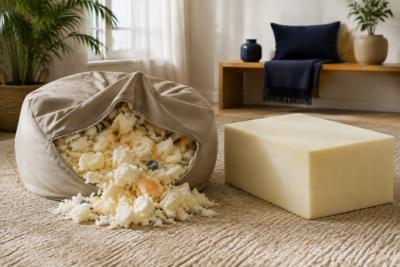
Flame Retardants in Cushion Foam: What Changed and What to Ask
Cushion foam flame retardants explained: why California TB117 put additive chemicals into furniture foam, what the TB117-2013 revision changed, what CertiPUR-US and GREENGUARD actually certify, how to read new-foam off-gassing, and the six questions to ask any supplier for nursery and commercial buying.
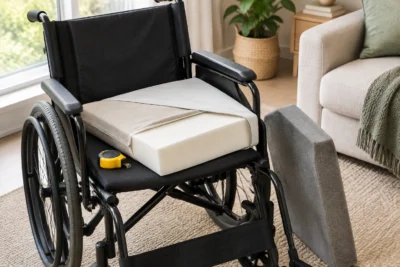
Wheelchair Cushion Foam Replacement: Measure, Order, Revive
Replace wheelchair cushion foam instead of the whole pad: three signals the core is done, W x D and thickness measuring, 50D-65D density for all-day seats, and cover fit – cores cut to your measurements.
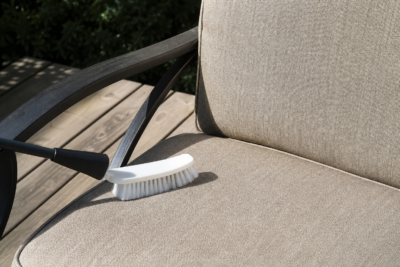
How to Care for Polyester Cushions: Washing, Fading and Stretching Them Back
Polyester cushion care from top to bottom: what spun polyester can and can’t handle, the wash-day routine that won’t ruin fills, how to slow the fading that defines the tier, and reviving covers that have stretched out.
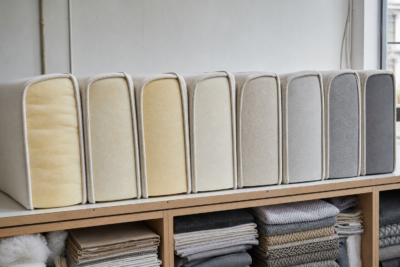
How to Choose Foam Density: 35D vs 50D vs 60D vs 65D (Decision Guide)
Pick cushion foam density in three questions: 35D for occasional seats, 50D as the daily-use default, 60D for heavy sitters and long hours, 65D for commercial and marine duty — with lifespan rules of thumb and what each upgrade costs.
HD Foam vs Dry-Fast Foam: The Outdoor Cushion Guide
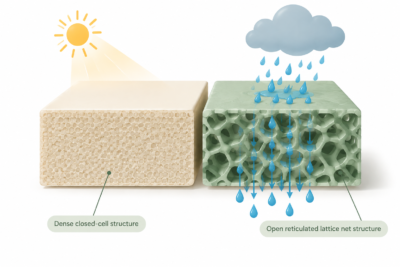
High-density foam vs dry-fast reticulated foam for outdoor cushions — cell structure, PPI, feel, the measured price premium (+9% at one configurator), and the simple covered-vs-uncovered test that picks for you.