
POLYWOOD frames are famous for outliving everything around them — the recycled HDPE lumber shrugs off rain, salt and sun while the cushions on top slowly surrender. That asymmetry is the whole reason this guide exists: the furniture asks for almost nothing, and the pads ask for a handful of decisions made once (fabric, thickness) and a handful of habits applied each season. Get those right and the cushion side of the equation stops being the weak half.
This is the care-and-compatibility walkthrough we give POLYWOOD owners at the factory — which fabrics suit the frames, how waterproof any cushion really is, what cleaning actually does, how to store pads through winter, and the point where cleaning stops and replacing starts. For made-to-measure replacements themselves, see the POLYWOOD replacement cushions hub.
Fabric Choices for POLYWOOD Frames
The frame does not constrain the fabric — HDPE is chemically inert and coarse-grained enough that any outdoor cloth sits fine on it — so the choice is about where the set lives. In open weather, Tech Fabric is the low-effort tier: waterproof, wipe-clean, solution-dyed so the color runs through the yarn instead of sitting on it. Under a covered porch, Cotton Linen gives a softer hand and takes spot cleaning happily. Premium Velvet and Chenille are the comfort tiers for sheltered settings, with the caveat that they want gentler cleaning routines.
Whichever tier you pick, the spec that matters most is solution-dyed construction — pigment melted into the fiber before weaving rather than printed onto the surface afterwards. It is the difference between a pad that fades evenly and quietly over years and one that goes chalky in a single high-summer. All 119 fabrics in our configurator are open to zoom before you commit, weave shots included.
Are Cushions on POLYWOOD Furniture Waterproof?
The frames are completely weatherproof — that is the brand’s engineering promise, and it holds. Cushions are a fabric decision, not a yes-or-no. A Tech Fabric build is genuinely waterproof: rain beads and rolls, spills wipe off, and the seam work is the only place water can think about getting in. Solution-dyed woven fabrics are water-repellent rather than waterproof — they shed a shower comfortably but breathe, which is exactly why they feel better in dry heat.
Either way, the foam underneath is drainable and fast-drying; a soaked pad is an airing problem, not a ruined one, provided you stand it on edge and let the water leave. The failure mode to avoid is a pad left flat through repeated wet-dry cycles — that is how seams age five seasons in two.
How to Clean POLYWOOD Cushions — and the Frames Under Them
The frames are the easy half: hose, mild soap, soft brush, done. The color in HDPE lumber runs all the way through, so there is no coating to scratch and no stain that soaks in — even the mildew that collects in humid summers wipes off the plastic with soap and a rinse.
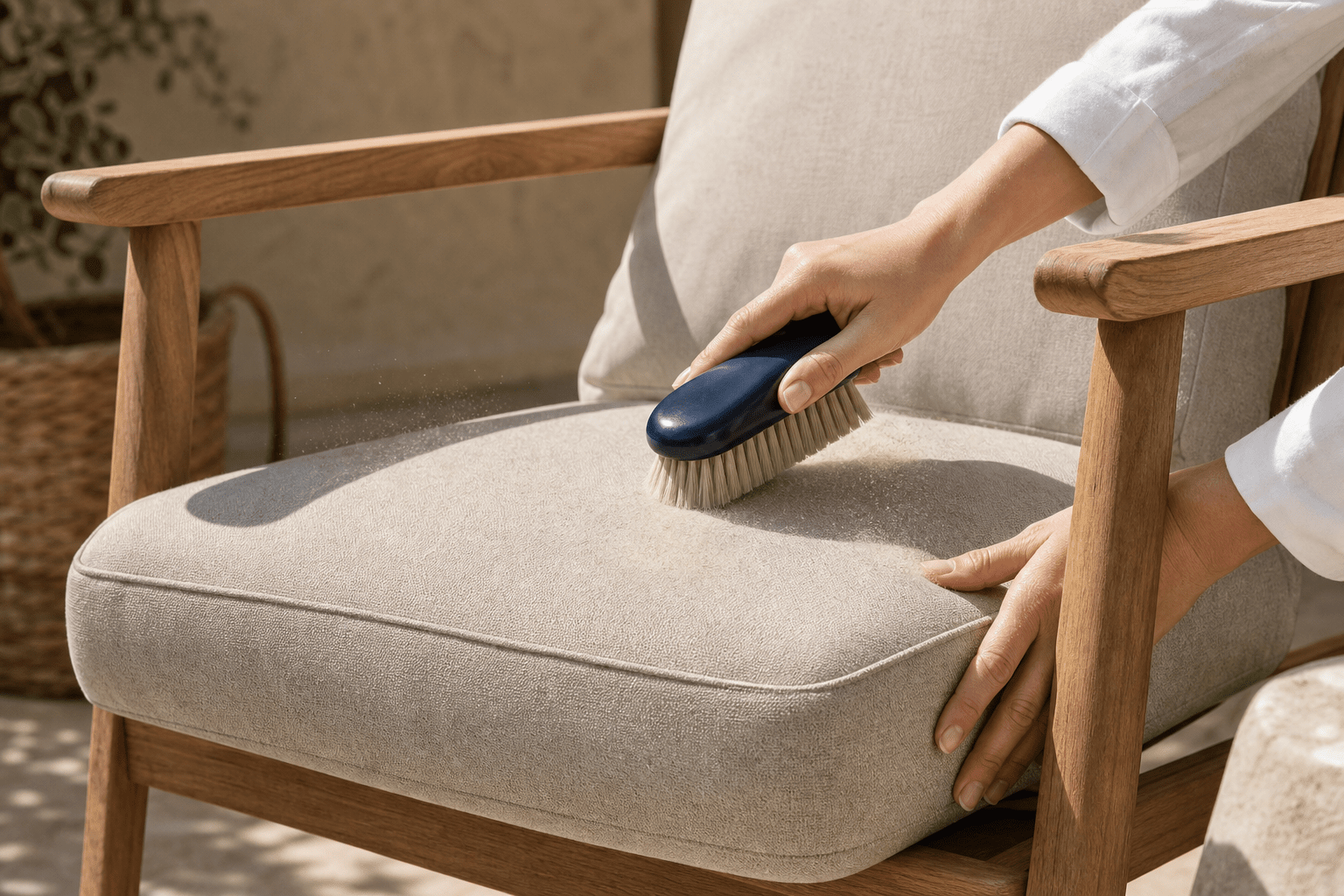
The cushions want slightly more nuance. Day to day, a damp cloth covers Tech Fabric and a brush-off covers woven cloth. For seasonal deep cleaning, spot-clean woven fabrics with mild soap and lukewarm water, rinse the cloth often, and never saturate the fill on purpose. Every cover we sew unzips, so a full wash is available when a season demands it — air-dry the foam flat, air-dry the cover, and re-zip only when both are fully out. Never machine-dry the fill; heat is the one thing high-density foam does not forgive.
Storing Cushions Through the Off-Season
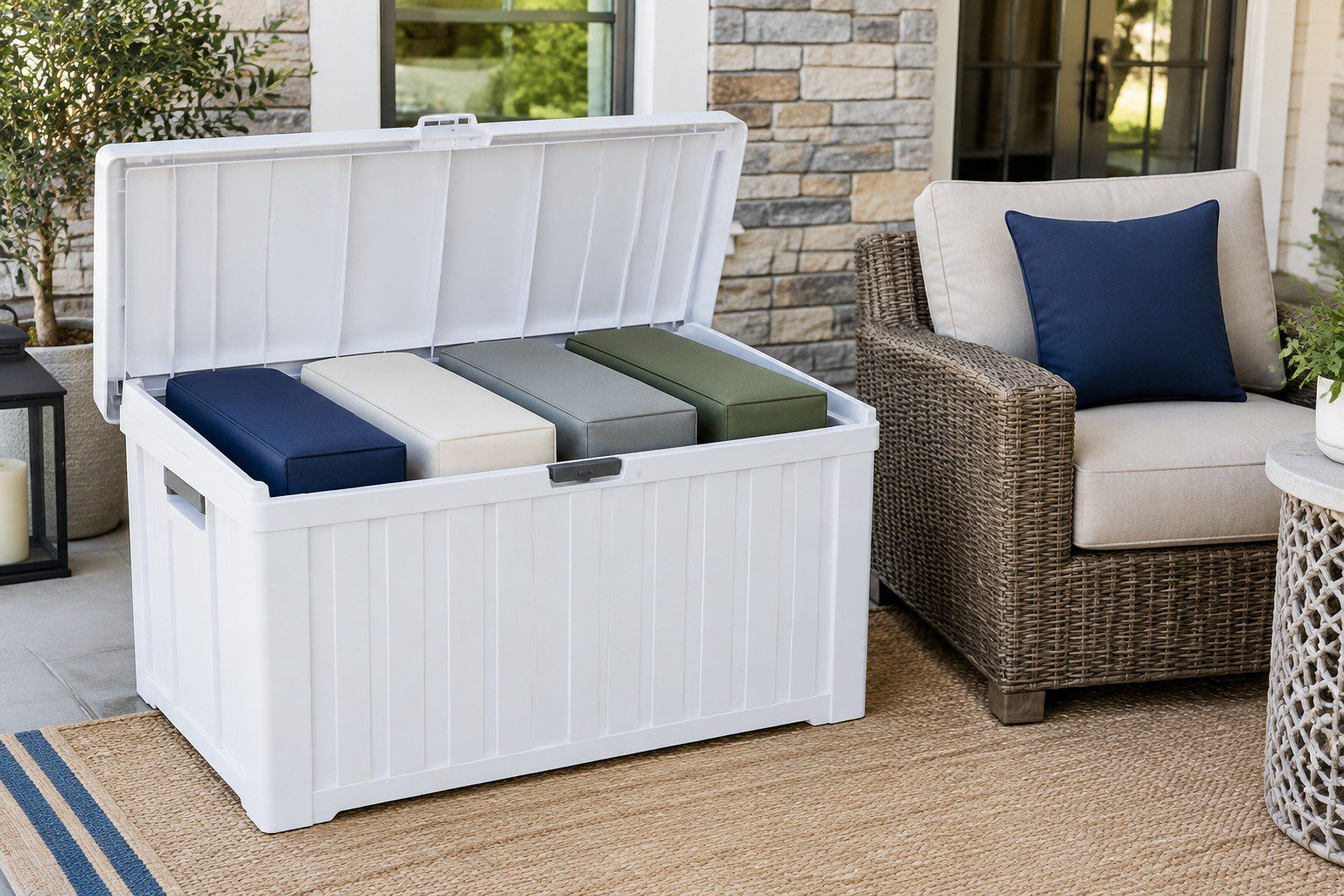
The frames winter outside without complaint; the pads should not. UV and standing water — not cold — are what age fabric and foam, so storage is less about warmth and more about darkness and dryness. A deck box, a garage shelf, or a closet all work. If indoor space is short, stack the pads on edge rather than flat so air moves around them, and keep them off bare ground where condensation can collect underneath. One honest note from the factory: the sets that come back to us after eight-plus years almost all spent their winters indoors — it is the single highest-leverage habit on this page.
When to Replace Instead of Cleaning
Cleaning rescues fabric; it does not resurrect foam. The sit test settles it: sit down hard, stand up, and watch. Foam that rebounds instantly and leaves no dish still has years in it — clean the cover and carry on. A pad that holds your shape, dishes visibly, or has gone board-stiff at the edges is done, and no cover change will save it — re-covering is for healthy foam with tired cloth only.
On the fabric side, replace when the cloth itself starts to fail rather than soil: stitching parting at the seams, a face that stays slimy after cleaning, or fabric that tears when you flex it. Those are end-of-life signs, not cleanliness problems — and they are the cue to re-measure the frame and order the replacement to current numbers rather than the pad’s old, compressed dimensions. Made-to-measure replacement sets from $45, cut to your frame measurements in any of 119 fabrics, close the gap at a fraction of replacing the furniture.
FAQs
Do POLYWOOD chairs need cushions?
No — the frames are contoured and comfortable bare, which is part of the brand’s appeal. Cushions are a comfort upgrade on top: they add height, soften long sits, and let you bring color to a frame that only ships in lumber tones. Plenty of owners run a bare set for the frame’s looks and a cushion set for the seasons they actually use it.
What thickness works best on POLYWOOD dining chairs?
Two to three inches is the working range for dining height: enough to soften the sit without lifting the table out of reach. Measure the bare seat, add your chosen thickness, and check the chair still slides under the table before ordering — seat height is a table-height decision as much as a comfort one.
Can POLYWOOD cushions stay outside all summer?
They can, and many do — but the pads that reach year eight are the ones that came indoors between uses or at least got stood on edge after rain. If your set lives uncovered, Tech Fabric plus a shake-and-stand routine after storms is the lowest-effort path to a long life.
Do you cut cushions for every POLYWOOD series?
Yes — Adirondack, chaise, rocking and Eastport dining are the requests we see most, and the same custom route covers Vineyard, Lakeside, Prescott, Chesapeake, Nautical, Long Beach, Portside, Edge and glider frames. Every build runs off your measurements: start at the POLYWOOD hub.

Why One Rain Ruins a Patio Cushion (and How to Dry It in Time)
One rainstorm can kill a patio cushion — not by getting it wet, but by trapping water in the foam for days. The physics of why cushions stay wet for 5 days, the 72-hour mold clock, and a time-based triage for saving soaked cushions.
Insect-Proofing Patio Cushions: What Works on Bugs, Without Ruining Fabric
Why insects target outdoor cushions (nesting sites, food residue, moisture), the prevention stack — cleaning, storage, covers, placement — what sprays and repellents are fabric-safe, and the honest limits of keeping a patio bug-free.
Pollen Season on the Patio: Protecting Cushions and Furniture
What pollen actually does to outdoor cushions (it’s not the color — it’s the chemistry), the spring protection playbook from covers to placement, cleaning pollen off fabric without grinding it in, and fabric choices for the perpetually dusty patio.
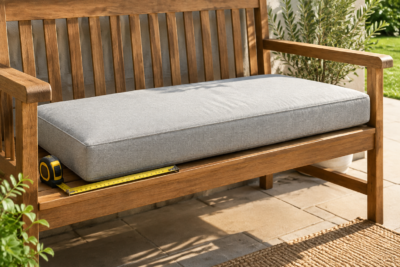
How to Clean Mold Off Outdoor Cushions (and When It’s Too Late)
How to tell salvageable mold from a dead cushion, the vinegar-and-oxygen-bleach method that works, and what to buy so it never comes back.
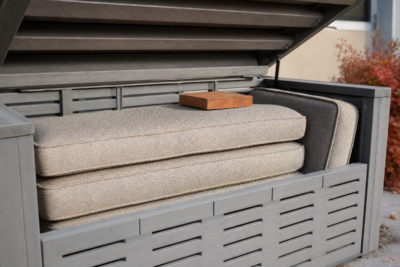
How to Store Outdoor Cushions for Winter: The Complete Method
The right way to winterize outdoor cushions — deep clean, bone-dry, ventilated storage, what never to do — and which climates need indoor storage at all.
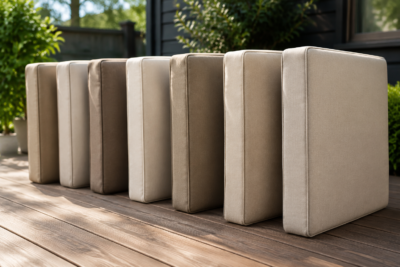
How to Drain Waterlogged Cushions (and When Foam Is Done)
How to rescue a waterlogged outdoor cushion fast — free drain, pressing, air-drying and verifying the core — plus the honest signs that the foam is past saving.