
Cushion specs usually answer comfort questions. Thickness answers a geometry question: how high off the floor you end up sitting, and whether that height still faces the table at the right distance. A cushion is not padding laid on top of a chair — it is the last layer of the chair’s structure, as real as the legs. Add four inches of foam to a bench and you have built a taller bench. The number to hold onto before any other decision: 10 to 12 inches (25–30 cm) of clearance between the underside of the table and the top of the seat cushion. A 30-inch dining table wants a seated surface around 18–19 inches (45–48 cm); a 36-inch counter wants 24–26 inches (61–66 cm). Get that gap right and almost any foam feels right; get it wrong and no density rescues the sit. This guide walks the three situations that bring people to a thickness decision, the density that has to travel with it, and the two measurements that settle the number.
Thickness Is a Seat-Height Decision First
Comfort lives in density and firmness — how the foam pushes back under you. Height lives in thickness, and height is arithmetic, not preference. That is why the thickness dropdown on our own designer is a fixed ladder of 2, 3, 4, 5, 6 and 8 inches rather than a free-entry field: the tier is chosen against the seat and the table around it, not against a plushness mood. The three situations below cover nearly every thickness order that crosses our cutting table.
Situation One: Lowering a Seat That Sits Too Tall
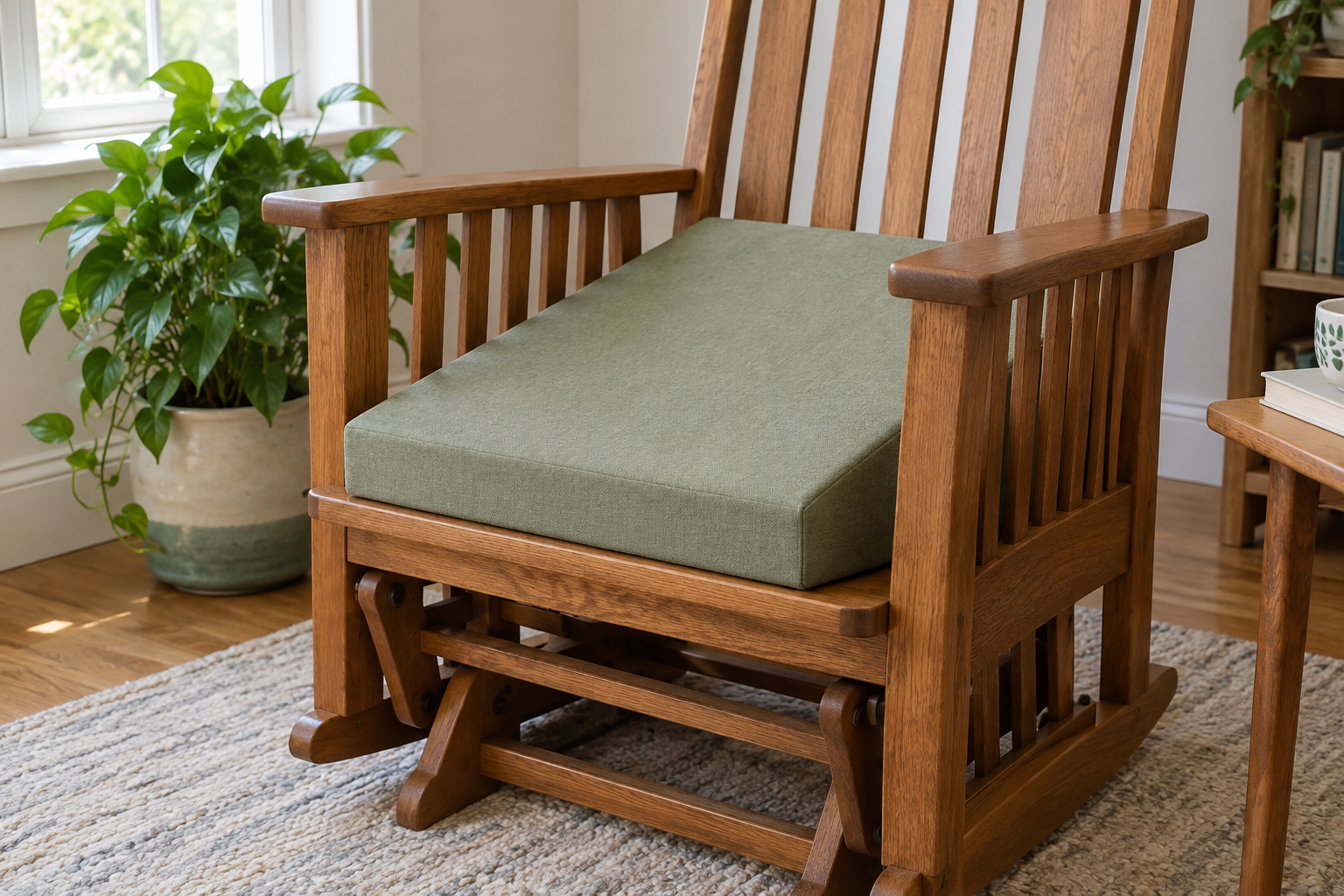
Tall-seated furniture — glider rockers, deep-framed armchairs, some vintage dining chairs — routinely leaves shorter sitters with feet fishing for the floor. A Reddit poster in r/upholstery put it exactly:
“the seat height is unusually high especially for us under 5’4″ people. i would love for it to be 2″ less”
The cushion answer is a thin, dense pad. Two inches is the working minimum for a seat you actually sit on; below that, foam cannot do its job of distributing weight and the pad turns into a token layer. And thin padding is the one place where low-density foam is disqualified outright: a 2-inch pad compresses through most of its height under load, so it has to be dense enough to hold the last of its loft — 50D minimum for occasional seating, 60D for a daily chair. The full measuring routine for shaped and sprung rocker seats is in how to measure rocking chair cushions. One honest limit: if the seat needs to come down more than about 2 inches, the cushion has run out of range — no pad subtracts height, and that is a job for the legs or the frame, not the foam.
Situation Two: Raising a Seat That Sits Too Low
Low seats fail differently: knees ride higher than hips, and standing up becomes a project. The fix is thickness — commonly a 4–6 inch build, sometimes with a wedge profile, higher at the front, that does double duty as a rise assist. Here thickness and density have to move together. A thick pad cut in low-density foam feels luxurious for a month, then sags into a dish and quietly gives back half the height you ordered: cheap outdoor pads in the 1.5–2.5 inch band flatten in one to two seasons, and tall builds in soft foam fail the same way, only louder. Our rule of thumb from the cutting floor: at 4 inches go 50D or firmer; at 5 inches and up, 60D for daily seating. The deep-build physics — sag, hammocking, edge roll — and when 5 inches plus is genuinely warranted are covered in the thickness half of our foam density and thickness guide.
Situation Three: Matching Seat Height to Table Height
The most common thickness decision is also the least recognized: you are not choosing a cushion, you are closing the gap between a seat and a table. A custom-bench buyer on Reddit described the trap precisely:
“the seat height is 54cm which will end up closer to 60cm when I fit my bench cushion”
That sentence is the whole subject in miniature: the cushion’s thickness goes into the seat height, all of it, before anyone sits down. A 54 cm bench is a between-heights bench — too tall for a standard 75 cm dining table (which wants a 45–48 cm seated surface), too short for a 90 cm counter (which wants 61–66 cm) — and a 6 cm cushion lands it at 60 cm, still answering to neither. The thread’s only offers were a counter-height chair or sawing the legs; nobody suggested working the cushion thickness backward from the table, which is the cheaper lever. The reverse calculation, using industry-standard table heights:
| Seating scenario | Table / counter top | Target seated surface (cushion included) | Gap to keep |
|---|---|---|---|
| Dining table | 28–30 in (71–76 cm) | 18–19 in (45–48 cm) | 10–12 in (25–30 cm) |
| Counter height | 34–36 in (86–91 cm) | 24–26 in (61–66 cm) | 10–12 in (25–30 cm) |
| Bar height | 40–43 in (102–109 cm) | 28–31 in (71–79 cm) | 10–12 in (25–30 cm) |
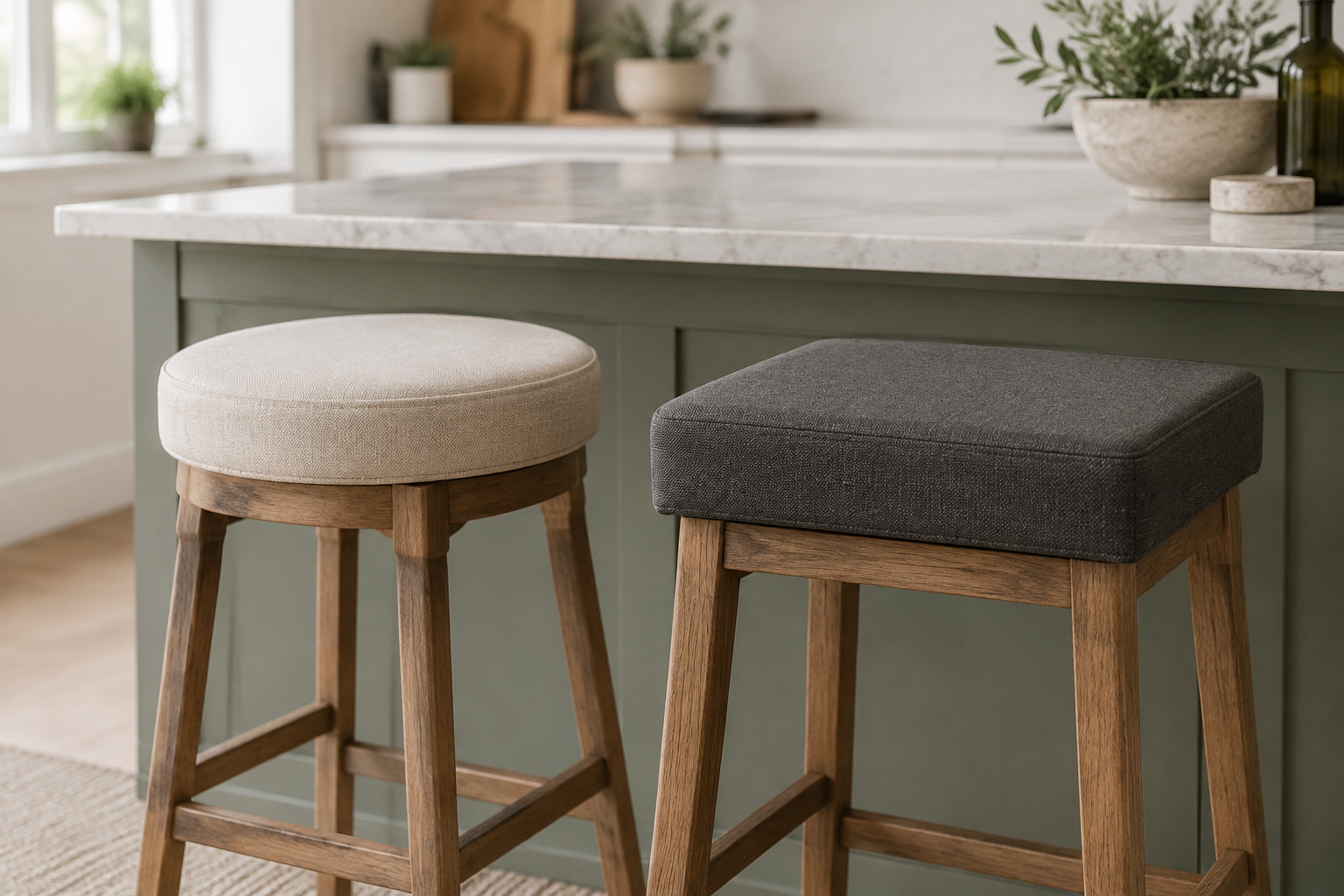
So the working formula: cushion thickness = table height − 10 to 12 inches − the hard seat’s height. A hard bench top at 16 inches under a 30-inch table takes a 2–4 inch cushion; the same bench under a 36-inch counter wants 8-plus, which is a signal to change the bench, not the cushion. Kitchen benches that straddle both duties have their own trade-offs worked through in kitchen bench cushions, and the shape-side decisions for dining builds live in custom dining bench cushions.
The Thickness–Density–Feel Triangle
Thickness sets the height you order; density sets the height you keep. Those two dials plus the feel they produce form one triangle — turn one and you owe the others a look. The matrix below is how our ladder of thickness tiers behaves across the four density grades we cut (35D, 50D, 60D, 65D):
| Thickness tier | Density that holds it | What it feels like | Typical duty |
|---|---|---|---|
| 2 in | 50D–60D | Firm, low platform | Lowering tall seats; dining chairs; piano benches |
| 3 in | 50D–60D | Standard dining-firm | Default dining and bench build |
| 4 in | 50D minimum, 60D daily | Supportive with give | Raising low seats; lounge dining |
| 5 in | 60D | Deep but structured | Deep seats; rise-assist builds |
| 6 in | 60D–65D | Tall and solid | Daybeds; heavy users; low frames |
| 8 in | 65D or layered | Near-mattress | Floor lounging; swing beds; RV dinettes |
Read the table as one rule: the taller the build, the firmer the core it needs to stand on. A 2-inch 35D pad bottoms out; an 8-inch 35D build is a hammock with corners. The deciding questions when you are between two cells — who sits here, at what weight, for how many hours — are worked through in how to choose foam density.
Two Measurements Settle the Number
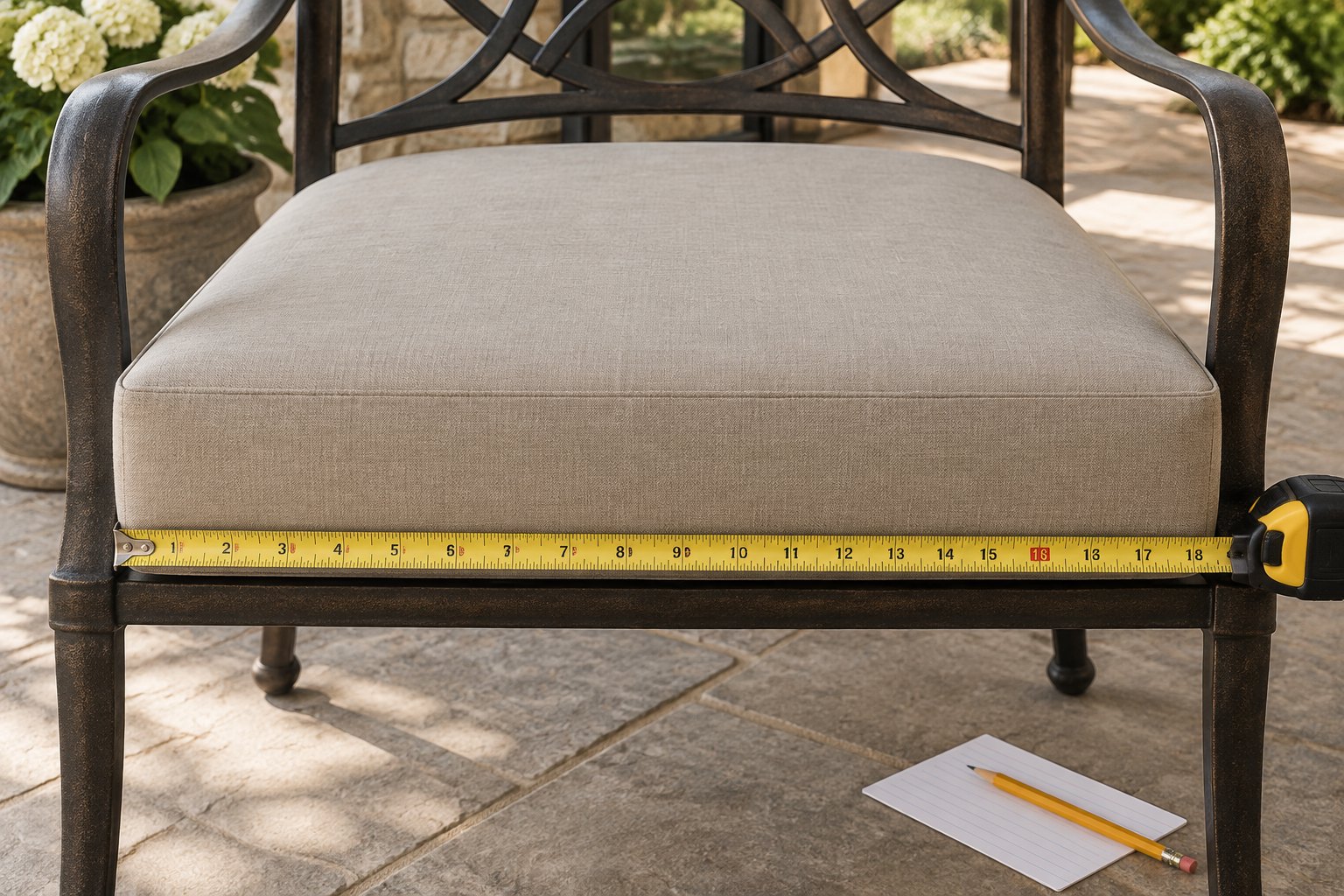
You need exactly three numbers, and two of them you already have a tape measure for:
- The drop. Underside of the table or counter arm, straight down to the top of the existing seat surface (cushion included if one is there). This is the number the 10–12 inch rule judges.
- The hard seat height. Floor to the top of the seat with any old cushion removed. Thickness budget = target seated surface − this number.
- Your own knee clearance. Seated with feet flat, measure floor to the underside of your thigh at the knee. If the table apron sits below the seat top by less than that, a thicker cushion buys you a collision with the apron — check before ordering up.
When an old cushion is being replaced rather than a build being planned from scratch, measure the old pad the way our order desk asks for everything: edge to edge at the seams, on a flat table, never the frame opening — the full seam-to-seam discipline is in bench cushion measurements. And order the thickness the old pad was when new, not what it has sunk to; a 4-inch cushion measured at a flattened 2.5 comes back permanently low, and the height you did not order is the height you do not get. Square seat pads around the 25 × 25 size class — the most common bench replacement — have their dimensions worked through at 25 × 25 outdoor cushions.
For reference, the thicknesses we cut every week cluster by furniture duty: 2.5–3 inches for dining chairs and standard benches, 4–5 inches for chaise and lounge seats, 5–7 inches for deep seats and daybed-style builds. Body height is the other input nobody prints on a spec sheet. The r/upholstery poster above needed a taller chair made lower for a household under 5’4″; the mirror case is just as common — a tall household perched on a fashionable low bench, every knee above every hip. As a working band, seated surfaces around 17–19 inches suit most adults between roughly 5’2″ and 6’0″, with each direction of departure arguing for a deliberate inch of thickness added or removed. If two people of very different heights share the seat, favor the taller sitter’s floor clearance and hand the shorter one the thickness that lets feet rest flat — the table gap forgives an inch of cushion more easily than dangling feet forgive a tall one.
FAQs
How thick should a bench cushion be?
2–3 inches when the hard seat already sits at the correct height for the table; 4–6 inches when the cushion’s job is to raise a low seat. Work it out backward: table height minus 10–12 inches of clearance minus the hard seat height.
Does cushion thickness change seat height?
One for one, in both directions. Every inch of cushion adds an inch of seated height — which fixes a low seat and worsens a tall one. A cushion can add height; it cannot subtract it.
How much cushion does it take to raise a seat 2 inches?
Order 2 inches of foam over the current hard seat height, cut in 60D for daily seating. Thin builds are exactly where low-density foam is disqualified — the pad compresses through most of its height and the gain disappears under load.
What is the right distance between table and seat cushion?
10–12 inches (25–30 cm) from the underside of the table to the top of the cushion, across dining, counter and bar heights alike. Below that, thighs meet the apron; above it, the table reads as too tall for comfortable elbows.
Should a thicker cushion be denser?
Yes. At 4 inches go 50D or firmer; at 5 inches and up, 60D for anything sat on daily. Tall builds in soft foam sag into a dish within the first seasons and give back the height the thickness promised.
Next Steps
1. Measure the drop — table underside to seat top — and check it against the 10–12 inch rule.
2. Measure the hard seat height with the old cushion off, and subtract it from your target seated surface: the difference is your thickness tier.
3. Pair the tier with the density that holds it in the foam density and thickness guide, then spec the build at custom cushions. Production runs 4–7 days standard or 3–5 days rush, with delivery in 3–6 weeks — and nothing is cut until your numbers are confirmed.
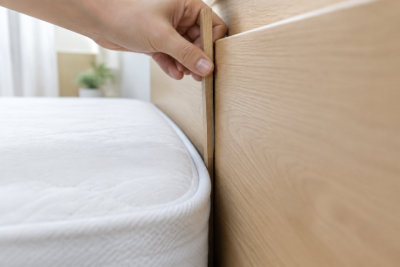
What Size Bed Gap Filler Do I Need? Thickness, Length and Density
Size a bed gap filler from three measurements, not the bed’s name: thickness equals gap width plus half an inch to one, length runs the full seam, height runs platform to mattress top. Density starts at 50D.

Church Pew Cushion Sizes: Standard Dimensions and How to Measure
Standard pew seats run 19-21 inches deep; cushions are cut 2-3 inches thick to measured runs at plus-or-minus half inch tolerance. Dimensions table, taper rules, and the pew-by-pew measuring method.
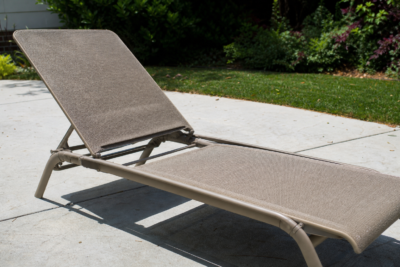
Chaise Lounge Cushion Measurements: A Complete Guide to Getting the Fit Right
How to measure a chaise lounge cushion correctly — seat depth, back height, thickness, hinge points and one-piece vs two-piece styles — with real Hampton Bay chaise dimensions.
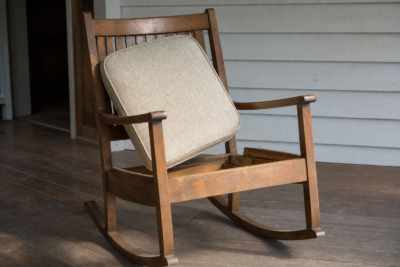
How to Measure Rocking Chair Cushions: Seats, Backs and Tie Positions
How to measure rocking chair cushions — tapered seats, curved backs, slat-gap tie maps and rock clearance — with the three-number protocol for both pieces of a rocker set.
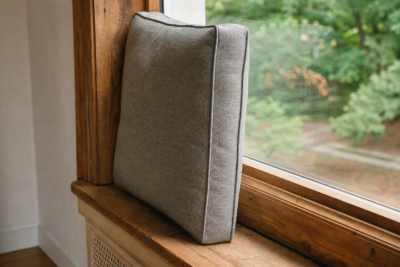
Window Seat Cushion Measurement: How to Get a Perfect Fit
Measure a window seat cushion correctly — width across alcoves, depth front to back, thickness vs sill height, radius corners and bay window angles — with tips from the cutting floor.
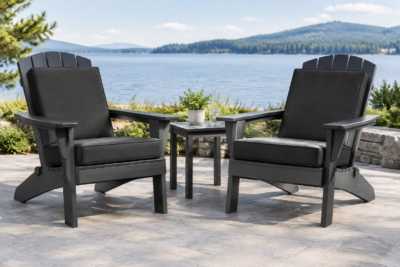
How to Measure Adirondack Chair Cushions: Seats, Fan Backs and Slat Gaps
How to measure Adirondack chair cushions — tapered seats, fan-back heights, recline geometry, strap-through slat-gap maps and two-piece sets for the tall-back chair.