
A papasan chair moved outdoors changes what its cushion is. Indoors, the big round just needs to stay fluffy and match the room. Out on a porch or patio it takes rain from above, splash from below, sun the manufacturer never tested for, and a wicker bowl that collects water exactly where the cushion sits. Most one-size “outdoor papasan cushions” die inside two seasons for predictable reasons — which means the deaths are preventable at the spec stage. This guide covers what actually fails outdoors, the diameter decision nobody explains, the fill question at outdoor scale, and the honest engineering line between a flat round replacement and the concave original. The full measuring routine lives in how to measure a papasan cushion; the indoor world is covered in the papasan cushion guide.
Why Outdoor Papasans Eat Cushions
The failure order is consistent, and it is worth knowing before you spend anything:
- The fabric fades first. A big round presents a huge flat target to midday sun; generic polyester covers go chalky inside one summer of full exposure. Solution-dyed acrylics are the fabric class built to hold color through years of it (outdoor fabric guide).
- Then the fill takes on water. Most original papasan cushions are blown fiber — cheap, huge, shaped like a sponge by volume. Fiber holds rain against itself, and a wet round sitting in a bowl takes days to dry in shade. Damp plus shade equals mildew by late summer — and whatever the cushion sheds drains into the wicker beneath, so the cushion and the frame rot together.
- The frame itself weathers last and slowest. Wicker does fail in UV and freeze-thaw, but on a multi-year clock — comfortably outliving two or three stock cushions. The frame is the durable part; the cushion is the consumable, which is exactly where a cut-to-your-numbers replacement beats rebuying the same doomed round. We are the mill: ten years of cutting foam and sewing covers, and nothing is cut until your numbers are confirmed.
The Diameter Decision: Overhang or Inset
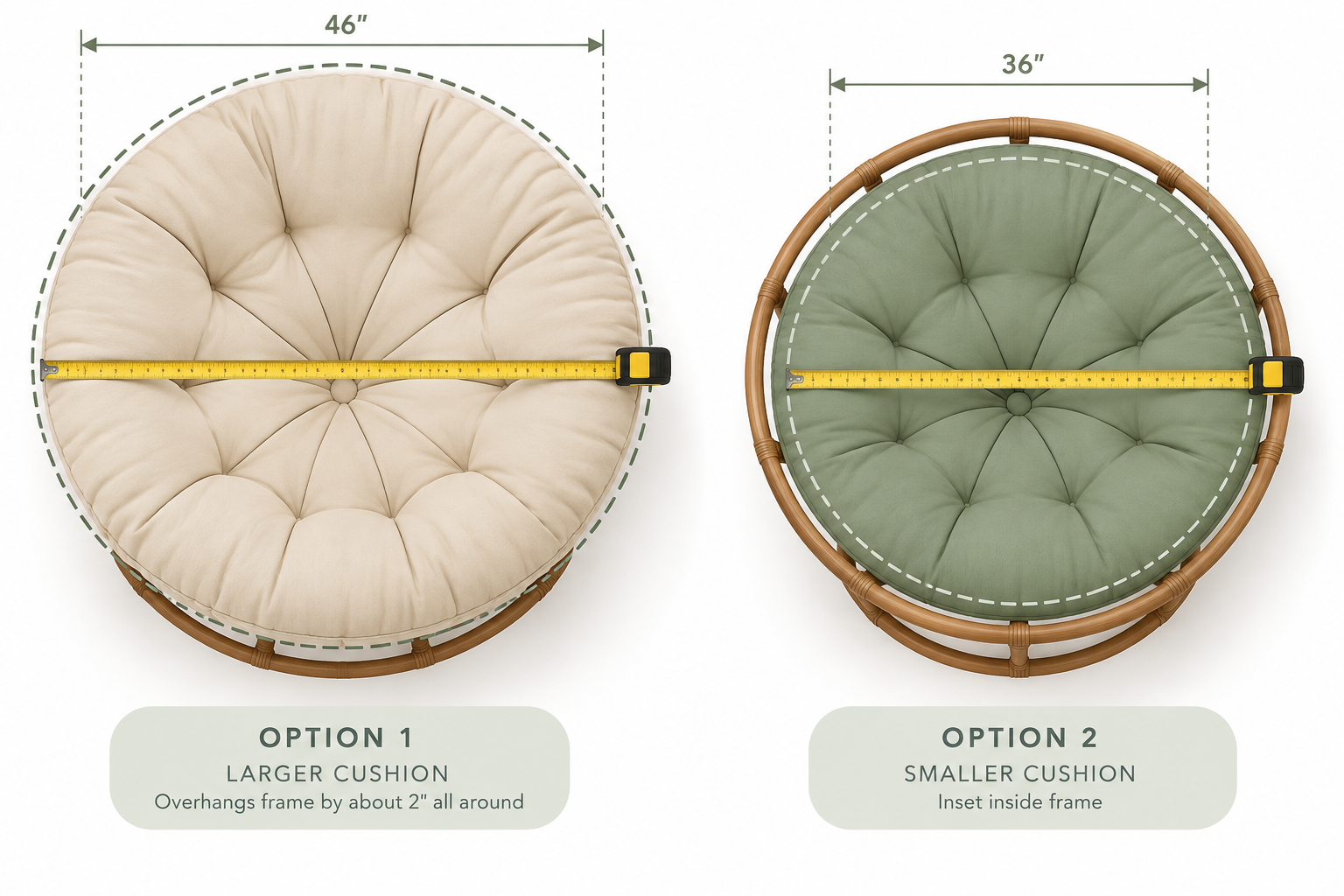
Custom shops’ size charts quote frames of 44 to 48 inches with cushions up to 52 for double papisans (mamasans), and the common industry rule is “frame diameter plus two inches” so the pad drapes the bowl’s rim. That is one valid choice — the overhang look, soft edges hanging past the wicker. It is also the most expensive way to size a round, because rounds are priced on the bounding square of the diameter: a 50-inch overhang round and a 25-inch inset round differ by four times the fabric and foam area at the same thickness.
The alternative nobody mentions is the inset round: a smaller disc sized to the usable seating circle inside the bowl, the wicker rim left exposed as armrest and backrest. On a 46-inch frame that circle runs roughly 22 to 26 inches across — you sit inside the bowl rather than on top of it. The inset round:
- costs a quarter of the overhang round at equal thickness;
- sheds water instead of wicking it over the rim into the wicker;
- flips and rotates easily, which is how you even out sun wear on a big disc;
- and reads as a deliberate look — bowl as shell, disc as seat — provided the rim is in good shape.
Rule of thumb from the cutting table: overhang if the papasan is a lounging nest you curl into; inset if it is a chair you sit in upright. Either way, measure before you order — one pass across the widest point, through the center, nearest quarter inch (round measuring method).
Fiber vs Foam: The Fill Decision Outdoors
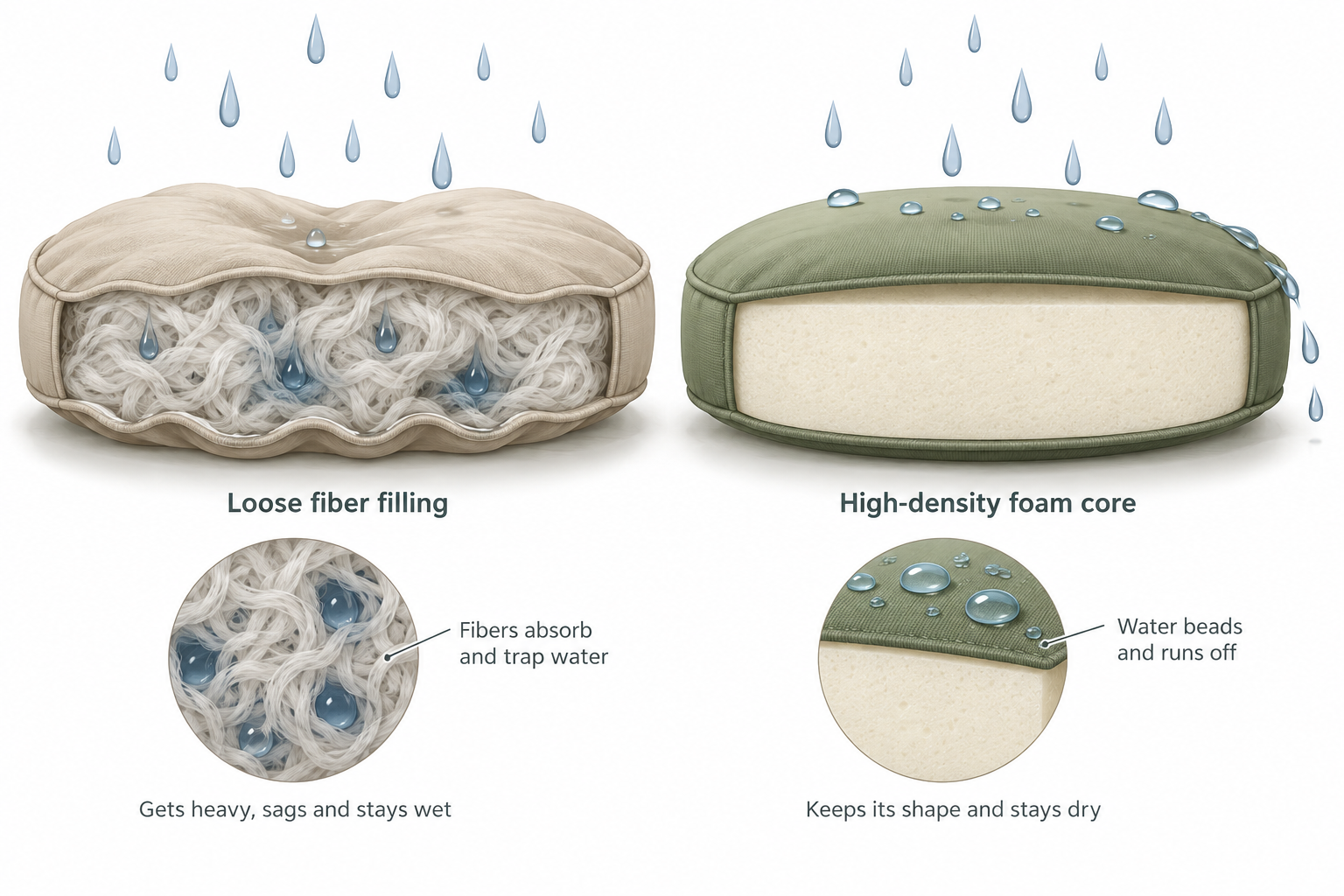
The original papasan feel is loose fiber — it is what makes the chair a nest, and indoors that is a defensible choice covered honestly in filling types compared. Outdoors the fiber case collapses for one mechanical reason: fiber has no recovery structure of its own. Wet fiber mats, matted fiber stays compressed, and within a season you own a 48-inch pancake with a mildew scent. The cheap replacements die the same death because they are the same construction.
A foam core is the outdoor answer. Foam carries its own structure — it drains, dries, and holds its loft on a multi-year clock set by density. Density is lifespan: our cushions are cut in high-density 35 to 65D grades, and for a papasan’s sink-in seating duty 60D is the grade we cut most for outdoor rounds. The trade runs both ways: foam will not feel like a featherbed nest, and fiber will not survive a porch. One honest hybrid we see work is an inset foam round for the seat with the original fiber round brought out on dry days only.
On quick-dry foam: the outdoor trade’s reticulated “quick-dry” foams exist for full-soak exposure and are covered honestly in HD foam vs dry-fast foam. Our own line is cut in the high-density grades above; for a bowl frame under cover or in part-shade, dense foam plus a weather-shedding cover is the spec that decides year five.
Flat Round or Concave Bowl: The Honest Boundary
An original papasan cushion is not flat — it is a shallow cone or bowl that dishes to cradle the sitter, part sewn geometry, part fiber loft. Custom shops that sell replacement rounds, including the big names ranking for papasan cushions today, overwhelmingly sell a flat disc: diameter, thickness, fabric. The concavity you remember comes largely from fiber settling under you, not from the pad shipping pre-dished. The honest engineering line:
- A flat round is a direct, orderable replacement — sized by diameter and thickness, it sits in the bowl, the rim holds it centered, and your weight creates the dish in use. This is the route that works with a configurator: one diameter number, one thickness number, fabric, done. Ours takes round diameters from 8 to 96 inches and thicknesses 2 to 8.
- A pre-shaped concave or contour-cut bowl is a different product — a darted or gathered construction some original makers and specialists still sew. We do not offer it as a one-click configuration; if you want the true dished original, that is an inquiry job: send the frame diameter, the depth of the dish at center, a photo or sketch, and the mill will tell you straight whether it is a job we can cut or one to route elsewhere.
No shop should promise a “perfect concave papasan replica” from a diameter dropdown — the geometry does not survive that translation. Flat is not a compromise; it is what the furniture needs once the old cushion has gone flat anyway.
The Weather Stack: Fabric, Drainage, Thickness
For a round that lives outdoors, spec it in this order:
- Fabric first. Solution-dyed acrylic (Sunbrella-class) for full-sun bowls; a waterproof, wipe-clean performance fabric for covered porches where the enemy is spill and splash, not UV. Color is dyed into the fiber before weaving in solution-dyed acrylics — which is why they fade on a five-year clock while generic prints go chalky in one.
- Cover closure second. Our covers close with zippers and remove for washing. Day to day, cleaning is a wipe or spot-clean; seams are stitched flush so water does not pool on the line.
- Thickness third. A 4 to 5 inch round at 60D carries a papasan’s sink-in feel; beyond that you are buying diameter-priced foam to do a density job. Thickness runs 2 to 8 inches if the frame demands it.
- Drainage geometry last. Ask for a slightly firmer, flatter crown rather than a soft dome — soft crowns dish, dished crowns pond, and ponded water finds every seam. After rain, stand the round on edge; even dense foam dries faster vertically.
The same circular logic applies to every round shape outdoors — stools, ottomans, tree-bench segments — and the general version lives in the round outdoor cushions guide.
Keeping a Big Round in Place
A flat disc in a bowl has a natural anchor most cushions lack: gravity into a dish. An overhang round is effectively captive — the rim holds it. An inset round can rotate and, in wind, walk. The stock industry answer is sewn ties and hook-and-loop tabs; we do not sew ties, so plan the physics instead:
- Weight. A 24-inch 5-inch 60D round is a double-digit-pound object; in a dish, that stays put short of a storm.
- Fit. Ordering the inset diameter within an inch of the seating circle leaves nowhere for the disc to travel.
- The frame. Wicker bowls accept wicker-safe clips at the rim — fitted by you, under the cushion line where nothing shows, and removable without touching the sewn cover.
In real wind, the answer for any mattress-scale outdoor cushion is the same: bring it in. A big round is a sail with seams.
Ordering: Two Routes at the Mill
Every outdoor papasan order at our shop is one of two routes:
- The configurator, for flat rounds. Round shape, diameter through the center (8 to 96 inches), thickness 2 to 8, fabric line, foam grade — formula-priced at a $45 make-base plus per-square-foot foam and fabric rates, instant quote on screen, free shipping over $158. Start at custom cushions, round shape.
- The inquiry route, for everything odd. Pre-dished concave originals, oval mamasan bowls, contour requests, or “the old one is gone and I only have the frame” — send the frame numbers, a photo and a sketch, and a real person replies within one business day. If it is not a job for us, we say so.
Standard production runs 4 to 7 business days, rush 3 to 5, shipping in 3 to 6 weeks — and nothing is cut until your numbers are confirmed against the order.
The product page for flat rounds — the sizing table, overhang-versus-inset pricing worked at real rates, and the FAQ — is custom papasan cushions.
FAQs
Can a papasan cushion live outside all summer?
Under cover or in part-shade, yes — spec solution-dyed acrylic or a waterproof performance fabric over a high-density foam core, and stand it on edge after hard rain. Fully exposed bowls eat even good cushions; the honest habit is storing the round when the chair sits empty for weeks.
What diameter should an outdoor papasan cushion be?
Two valid answers. Overhang: frame diameter plus about two inches, the nest look — largest area, highest price. Inset: the 22 to 26 inch seating circle inside the bowl, a quarter of the area, easier to rotate against sun wear. Measure through the center, nearest quarter inch (full method).
Is a flat round really a replacement for the dished original?
Functionally, yes — most custom replacements sold today are flat discs, and the dish you remember comes largely from fiber settling under you in use. A true pre-shaped concave cushion is a specialty construction; if that is what you want, send frame numbers and a photo through the inquiry route rather than the configurator.
What fill survives outdoor papasan duty?
Foam, by density. Loose fiber mats when wet and stays flat; a 60D high-density core drains, dries and holds its loft for years. Density is lifespan — the same rule that governs every seat we cut (fills compared).
Why no ties on the cushion?
We do not sew ties. A round in a bowl is anchored by weight and fit; where wind is a real problem, wicker-safe clips at the rim do the job without stitch holes in a weather cover.
How much does a custom outdoor papasan round cost?
Formula-priced: a $45 make-base plus per-square-foot foam and fabric rates, every shape at the same rate. The diameter decision dominates the number — an inset round runs a fraction of an overhang round. Run your diameter in the round configurator for the instant quote.
Next Steps
- Measure the frame — the bowl’s outside diameter and the flat seating circle inside it, through the center, nearest quarter inch — with the papasan measuring guide.
- Pick the route for your chair: overhang nest or inset seat, flat round or inquiry for a shaped original.
- Configure it at custom cushions — round shape, diameter, thickness, outdoor fabric — or send the inquiry. Nothing is cut until your numbers are confirmed.
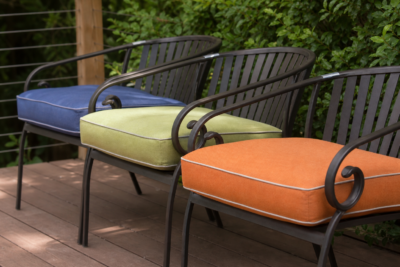
Patio Chair Cushions: The Complete Buying Guide (Outdoor Too)
Everything that decides a patio or outdoor chair cushion — sizes, thickness, ties, fabric tiers and where each buying route wins. Custom from $45 when grids fail.
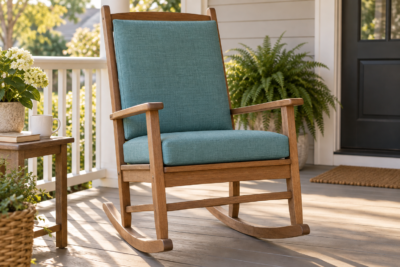
Outdoor Rocking Chair Cushions: The Weatherproof Guide to Sizes and Fabrics
An indoor rocking cushion dies fast on a porch. The sun bleaches the print in a single season, the foam
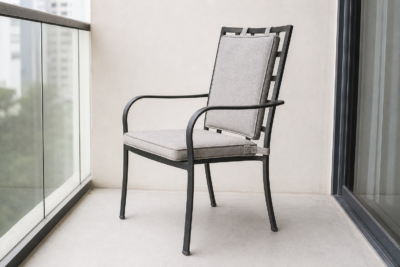
Cushions for Metal Patio Chairs: Frame Types, Grip and the Heat Question
Cushions for metal patio chairs guide: wrought iron, aluminum and steel frames and what each means for pads, sliding on slick metal, heat absorption in sun, sizing across mixed metal sets, and the outdoor duty spec.
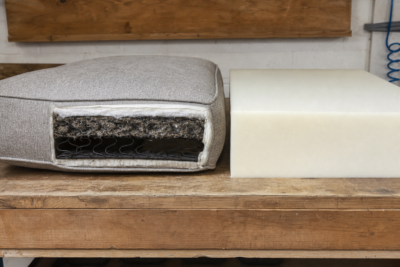
High Density Foam Couch Guide: What Density Actually Means
What high density foam actually means for a couch — the ×10 density convention, density vs firmness (ILD), the 35D–65D grades ranked by use, how each grade fails, and what density costs per square foot.
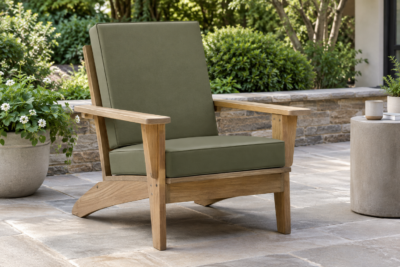
Adirondack Chair Cushions: Sizes, Selection & Replacement Guide
Adirondack cushion sizes decoded: 20×20 seats, tall-back options, tie patterns, best fabrics — plus fitting odd or vintage chairs.
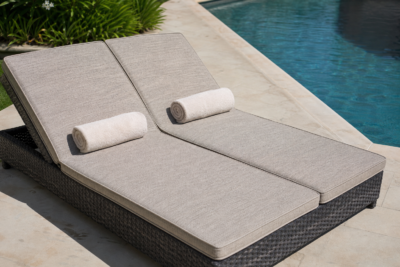
Double Chaise Lounge Cushions: Two-Position Geometry and Shared Lounging
Double chaise lounge cushion guide: back-to-back and side-by-side layouts, measuring two lounging positions in one piece or two, fill for shared daily lounging, and outdoor fabric for a full-sun centerpiece.