
A round cushion is the only shape that comes down to a single number, and that is exactly why it goes wrong. With a rectangle, a sloppy tape reading errs by an inch in one direction. With a circle, a sloppy reading — taken off-center, over a bulge, or copied from a cushion that has quietly gone oval — errs in every direction at once. Off by half an inch on a 19-inch stool and the cushion either spins in the ring or will not drop in at all.
Here is the factory method: two numbers, three rules, and the traps specific to circles.
Where Do Round Cushions Actually Come From?
Round stools, round ottomans, tree-bench segments, drum side tables converted to seating, and the odd wrought-iron bistro set. The one thing these have in common: there is no standard size to look up. Not one of the 195+ verified replacement sizes in our measured library — 31 collections across Hampton Bay and Martha Stewart (chart) — is a true circle; even the ottomans are rectangles (the Lake Adele ottoman, a Martha Stewart piece, runs 24 × 18 × 5; the Edington 22 × 20). Round seating is custom territory by nature, which makes the measuring instructions the whole ballgame.
The Two Numbers a Round Order Needs
Our builder’s round shape takes exactly two fields:
| Field | Letter | What it is | Range we cut |
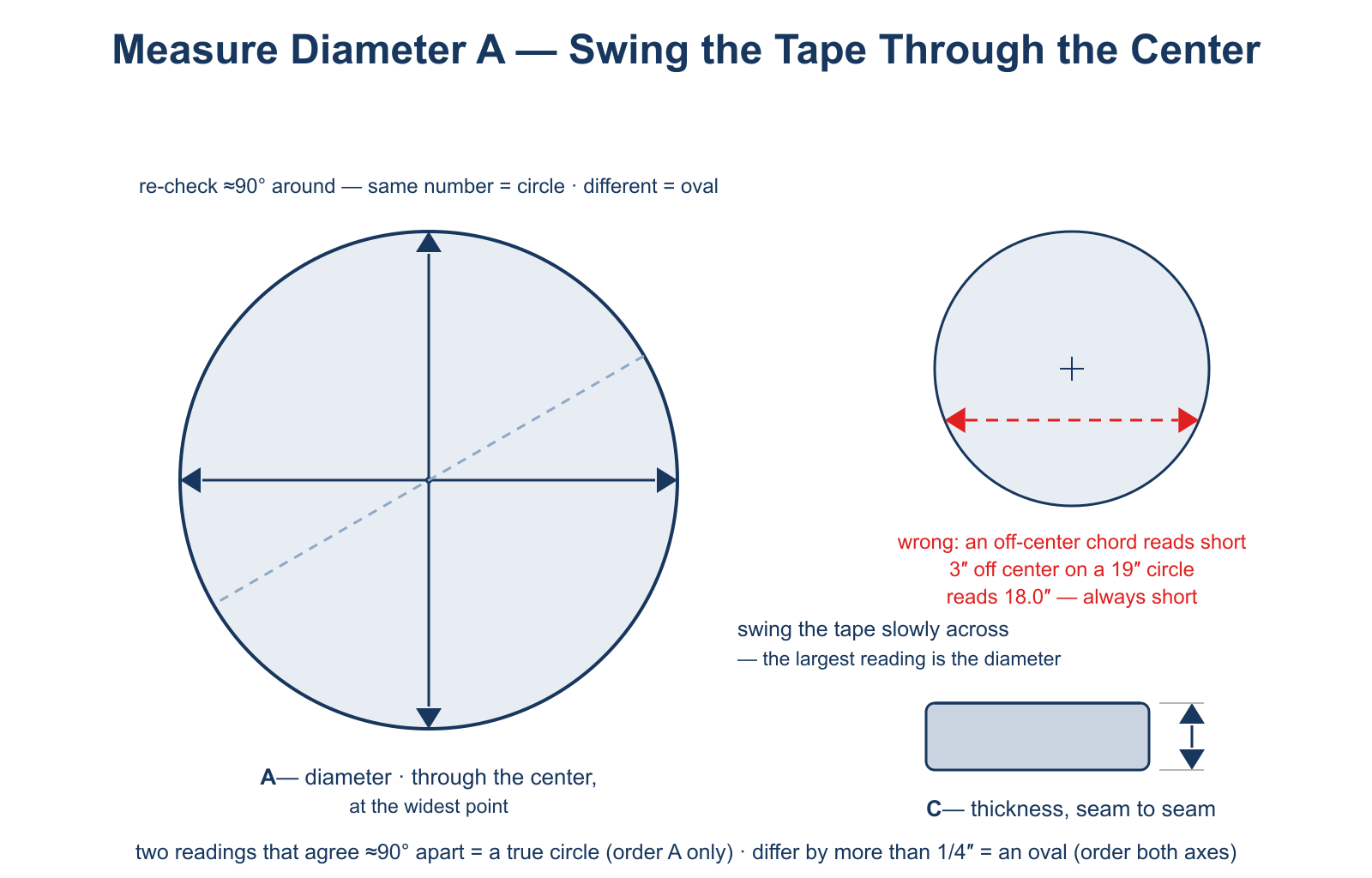
| Diameter | A | Straight across the widest point, through the center | 8–96″ |
| Thickness | C | Foam height, seam to seam | 2–8″ |
That is the entire order. No width, no depth, no radius — the circle is fully defined by one diameter, and the builder draws it live from that single number in the round cushion builder.
Rule One: The Tape Must Cross the Center
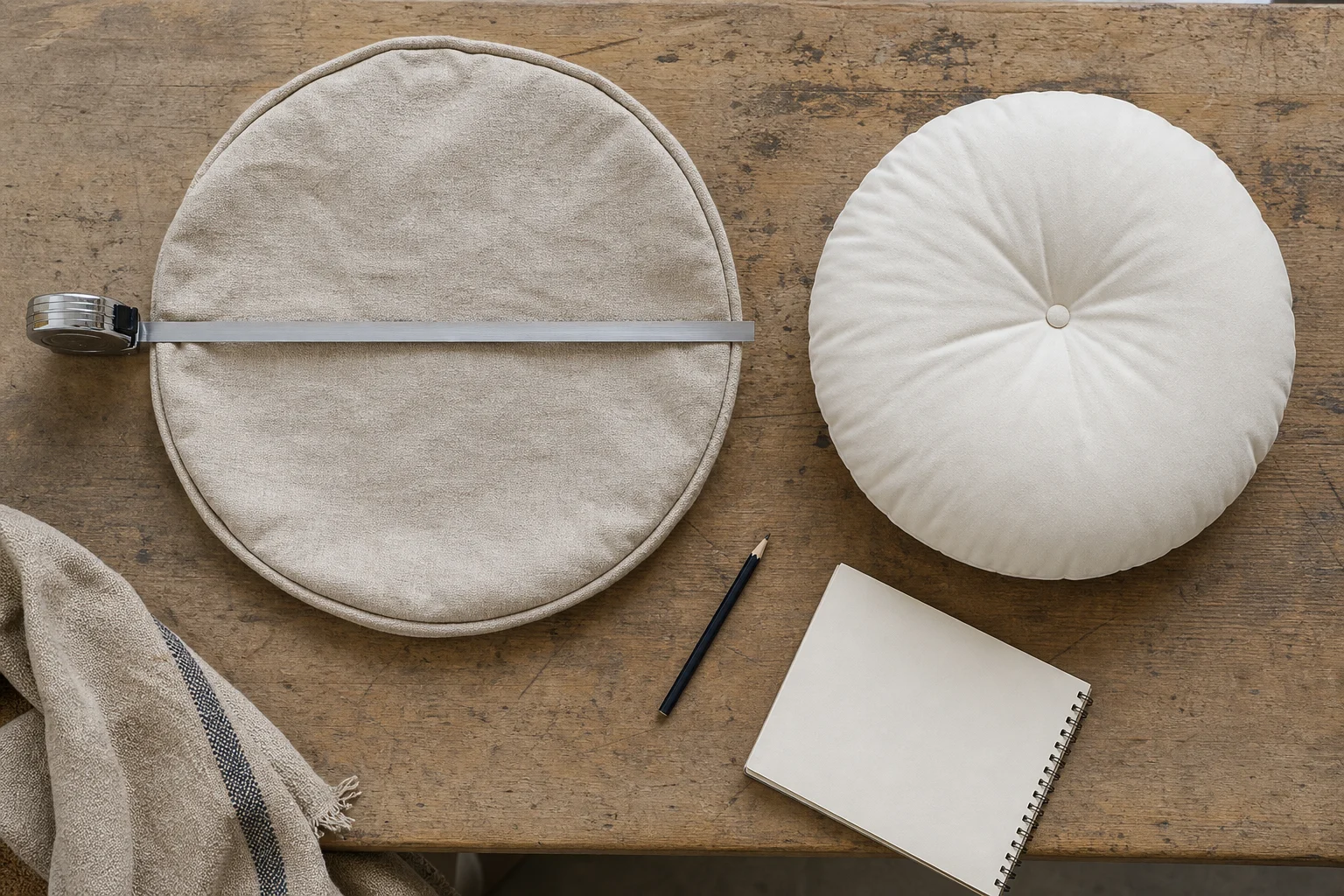
The diameter is the straight line through the widest point of the circle. Every reading that misses the center is a chord — shorter than the true diameter — and the error grows fast. On a 19-inch circle, a tape line passing just 1 inch off center reads about 18.9″; 3 inches off reads 18.0″. A quarter-inch target means you cannot eyeball this.
How to stay on center:
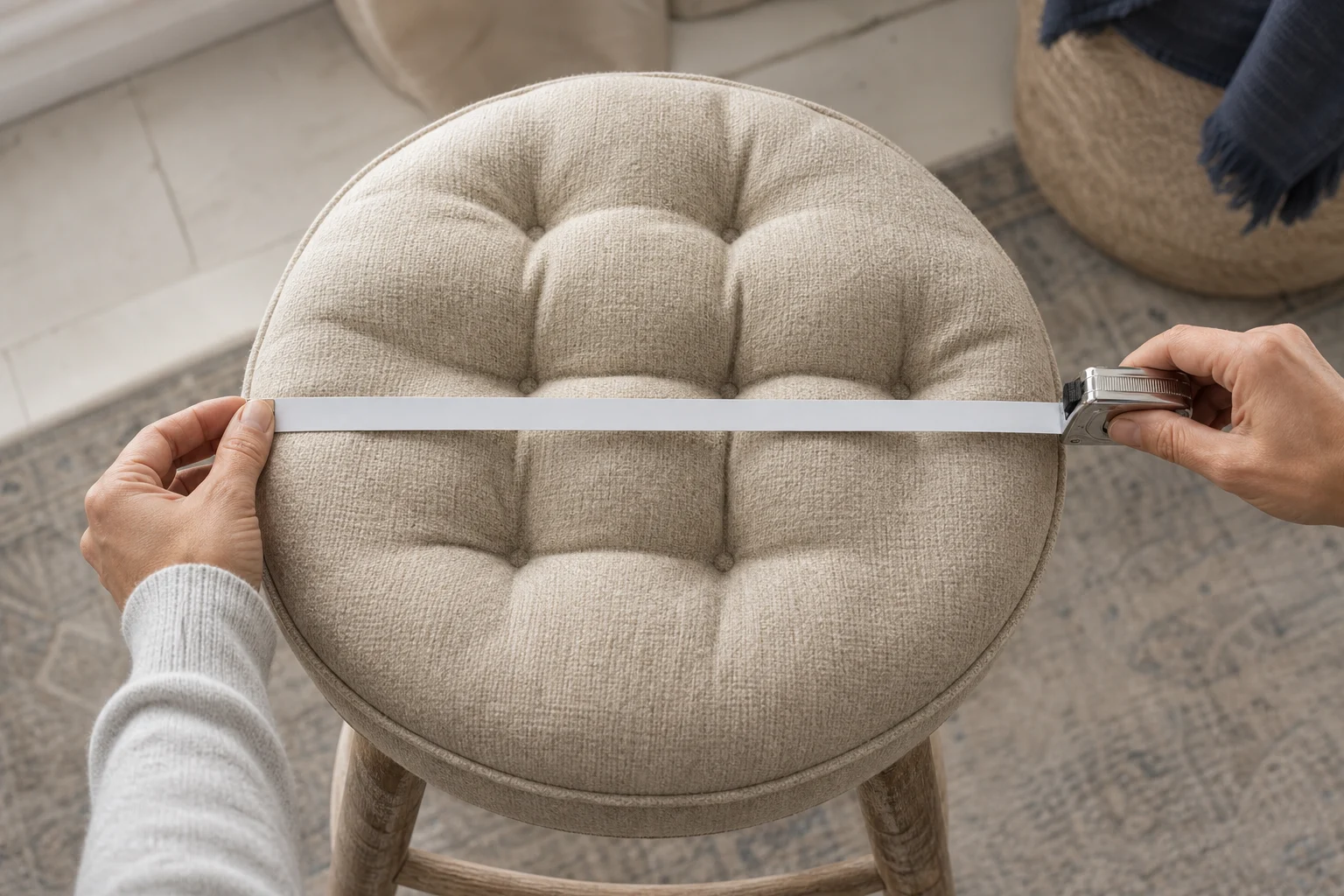
- – If the frame has a rim (stool ring, ottoman frame), hook the tape on the inside of the rim at one side and swing the tape slowly across to the other side. The largest reading you see is the diameter — the tape has found the center line on its own. Write that one down.
- – If you are measuring an old cushion, find the seam. Most round covers have a vertical seam or a center tuft; lay the tape from seam across to seam on the opposite side.
- – Cross-check at a second angle. Take a second reading roughly 90 degrees around from the first. Same number: you have a circle and you are done. Different numbers: you have an oval, and the next section applies.
Rule Two: Measure the Frame, Not the Crushed Cushion
The general rule — measure the frame whenever the frame is available — matters double for circles, because circles deform in a way rectangles do not: old round cushions go oval. Years of someone’s favorite sitting spot compress the foam asymmetrically, and the cover holds the new shape. Copy an oval cushion for a round frame and the new cushion will gap on two sides and bind on the others.
- – Stool or ottoman with a rim: measure the inside diameter of the rim, tape flat against the inside faces, using the swing method above.
- – Open frame (no rim), like a tree bench segment or a drum table: measure the flat top edge to edge at the widest point. Cushions for open tops are usually cut a touch larger than the top so the edge rolls clean — the order desk confirms intended overhang before cutting.
- – Old cushion is all you have: measure the longest axis and the shortest axis as described in the oval check above. If they match, good. If they differ by more than 1/4″, you are looking at compressed foam, not the original circle — split the difference, note it on the order, and expect a confirming phone call.
Rule Three: Thickness Gets Measured, Not Guessed
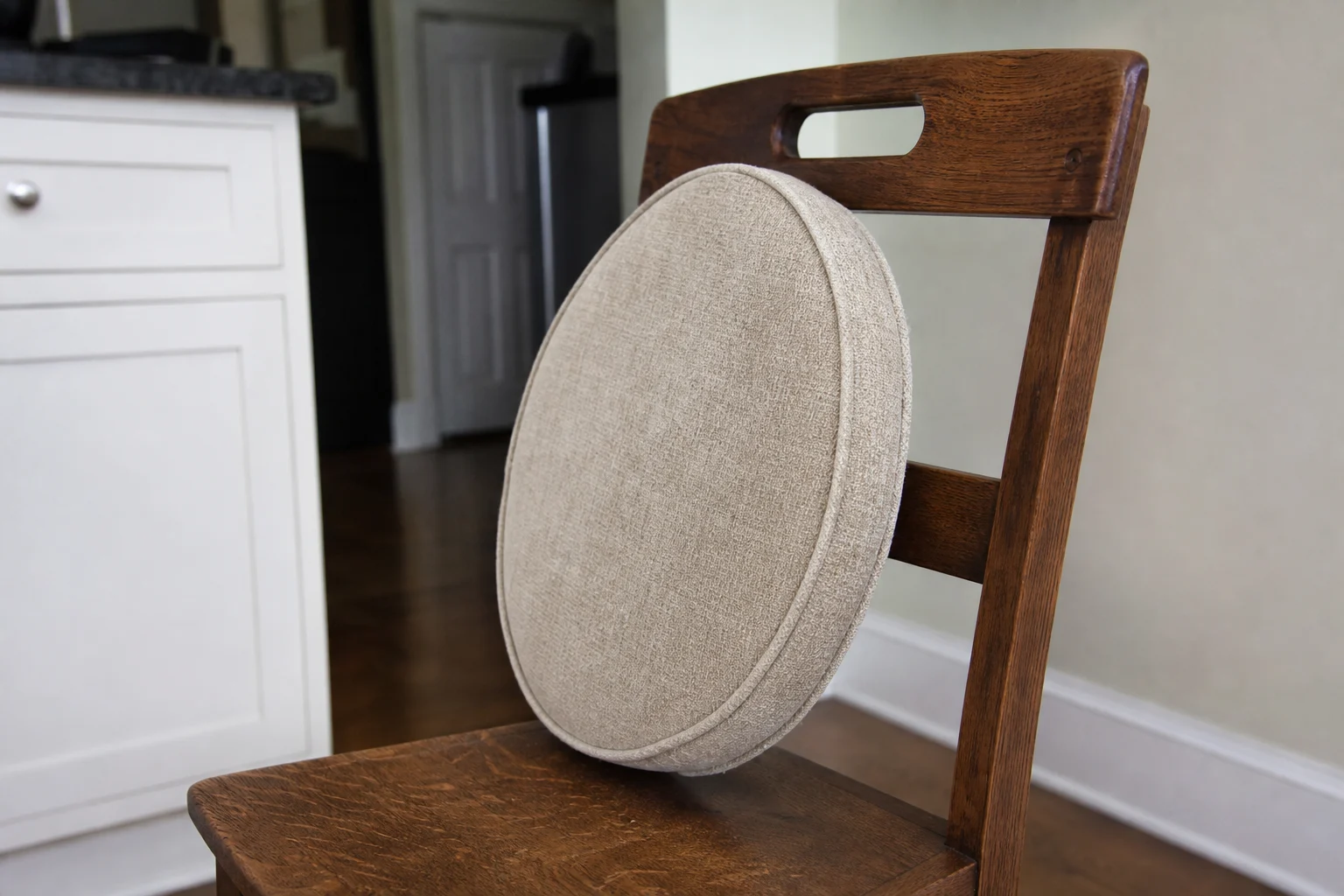
Thickness (letter C) is where round-cushion buyers guess, because on a stool the old foam is often hidden inside a fitted cover. Stand the old cushion on edge and measure seam to seam — never over the bulge of a waterfall edge or a tufted top, which can add half an inch of optimistic reading. Typical cuts: 2.5–3″ for dining-height stools where headroom matters, 4–5″ for ottomans and seating-height rounds, 5–7″ for deep, soft seating. Our cutting forms run 2″ to 8″ thick on rounds.
What About Tree Benches and Curved-Bench Segments?
Not every round job is a full circle. Tree benches and curved conversation benches break the circle into segments — usually four to six pieces — and each segment is measured on its own terms:
- – Count the segments first. Six equal segments of a circle around a tree trunk means each covers a 60-degree arc; four means 90 degrees. The count tells the cutting table what it is assembling.
- – Measure each segment like a small curved front: the straight-line chord from one end of the segment to the other (that is the segment’s A), plus the bow height from the chord to the arc’s peak — the same chord-and-bow method we detail in how to measure curved wicker seating.
- – Measure the trunk cutout. The inner edge has to clear the tree, so measure the inner chord too — the straight-line distance across the segment at the trunk side — and note the trunk’s diameter if you can get a tape around it.
- – Measure one segment thoroughly, then spot-check the rest. On well-built benches the segments match; on weathered ones they have drifted apart, and a quarter-inch difference between neighbors is worth knowing before the knife runs.
Segment work is routine here — the same builder fields, one order line per segment.
The Traps Specific to Circles
- The off-center chord. Covered above — it is the number-one error on round orders, and it always reads small.
- Copying the oval. Second most common. An aged round cushion is an ellipse wearing a circular memory.
- Measuring over the welt cord. A round cushion with welt cord (piping) around the face measures larger over the cord than the sewing seam. Measure at the seam; the welt adds no usable foam.
- Assuming the frame is round because it looks round. Wrought-iron and rattan frames flatten on the side that faces a wall or a table. Run the two-angle check on the frame too.
- Squashing the tape into a rim. On stools, the tape must stay level and flat against the inside faces — pressing it down into the seat pan reads wide, and a round cushion that is wide does not forgive. It rolls, bunches, and spins.
What Does a Round Cushion Cost?
Custom cushions start at a $45 make-base plus material at per-square-foot foam and fabric rates, and every shape prices at its bounding rectangle. For a circle, that bounding rectangle is the square of the diameter: a 19-inch round prices like a 19 × 19 square, at the same shape factor as every other shape in the builder — no exotic-shape surcharge for curves. Fabric runs a flat $7.43 per square foot (all 119 fabrics), and the custom cushion builder shows the total move live as you type the diameter.
FAQs
Is one diameter measurement really enough?
Yes — if the tape crosses the center. Take a second reading 90 degrees around as a check; two matching readings are your proof the piece is round and your number is the true diameter.
My old round cushion measures differently in two directions. What do I order?
That cushion has gone oval with age. If the two readings differ by more than 1/4″, order the average, note both numbers in the comments, and send a photo — the order desk re-verifies before anything is cut.
Should a round cushion be the same diameter as the frame opening?
For a rimmed stool or ottoman, yes — order the inside rim diameter, not larger. For open tops like tree benches, a slight overhang is normal and gets confirmed with you at order review.
Can you cut a half-round instead?
Yes — flat back, curved front, a common shape for window-seat ends and niches. That is a separate shape in the builder with its own two numbers (flat edge length and bulge height).
How thick should a round stool cushion be?
2–3″ on dining-height stools so you are not lifted above the table, 4–5″ on ottomans and seating-height rounds. Beyond that, thickness is comfort and price — every extra inch is real material.
Next Steps
- Measure the inside diameter with the swing method and cross-check at 90 degrees; write down diameter and thickness to the nearest quarter inch.
- Enter both numbers in the round cushion builder and compare the drawing’s proportions against your stool or ottoman. For floor cushions — the big-diameter seating rounds — the custom floor cushions page starts from the same round shape.
- Attach a photo of the frame at checkout — every order is re-verified against the database and photos before cutting, and production runs 4–7 business days (rush 3–5).
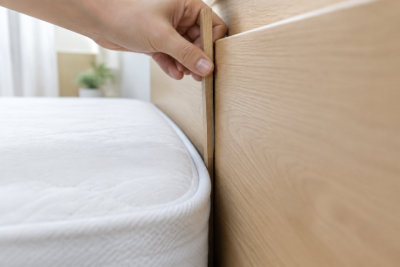
What Size Bed Gap Filler Do I Need? Thickness, Length and Density
Size a bed gap filler from three measurements, not the bed’s name: thickness equals gap width plus half an inch to one, length runs the full seam, height runs platform to mattress top. Density starts at 50D.

Cushion Thickness & Seat Height: Match the Pad to the Table
Cushion specs usually answer comfort questions. Thickness answers a geometry question: how high off the floor you end up sitting,

Church Pew Cushion Sizes: Standard Dimensions and How to Measure
Standard pew seats run 19-21 inches deep; cushions are cut 2-3 inches thick to measured runs at plus-or-minus half inch tolerance. Dimensions table, taper rules, and the pew-by-pew measuring method.
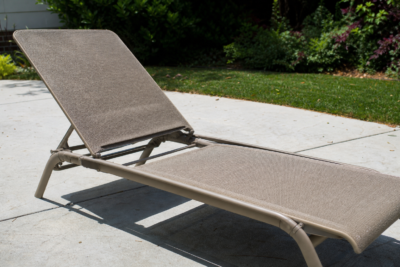
Chaise Lounge Cushion Measurements: A Complete Guide to Getting the Fit Right
How to measure a chaise lounge cushion correctly — seat depth, back height, thickness, hinge points and one-piece vs two-piece styles — with real Hampton Bay chaise dimensions.
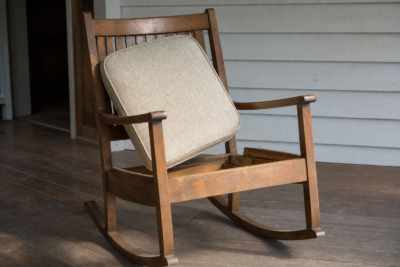
How to Measure Rocking Chair Cushions: Seats, Backs and Tie Positions
How to measure rocking chair cushions — tapered seats, curved backs, slat-gap tie maps and rock clearance — with the three-number protocol for both pieces of a rocker set.
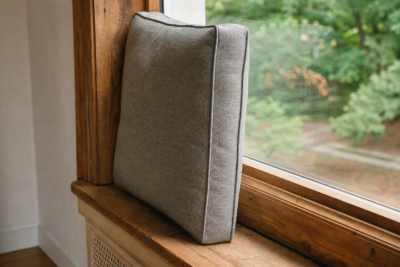
Window Seat Cushion Measurement: How to Get a Perfect Fit
Measure a window seat cushion correctly — width across alcoves, depth front to back, thickness vs sill height, radius corners and bay window angles — with tips from the cutting floor.