
An indoor rocking cushion dies fast on a porch. The sun bleaches the print in a single season, the foam takes on rain and never gives it back, and every rock works the pad forward until it ends up on the deck boards. Outdoor rocking chair cushions are not indoor cushions with a water-resistant label — they are a different spec sheet: fabric that holds color under UV, foam that drains, and a fit that survives motion. This guide covers what actually changes when the rocker lives outside.
What Actually Makes a Cushion “Outdoor”
Two components decide whether a cushion survives the porch: the fabric and the foam inside it. Everything else is stitching details.
Fabric. The seasonal aisle is dominated by printed polyester — the color sits on the surface like ink on paper, and UV erases it in one to two seasons of full sun. The upgrade tier is solution-dyed acrylic, where the color is locked into the fiber before it is spun into yarn: the fabric can fade for years before you notice, and it shrugs off rain instead of absorbing it. A middle tier, olefin, trades a slightly coarser hand for strong stain resistance — the olefin vs Sunbrella comparison breaks down where each one wins. The short version for a rocker: if the chair sits in open sun for more than four hours a day, buy solution-dyed acrylic and never think about it again.
Foam. Indoor cushions use closed-cell polyurethane that behaves like a sponge once the cover wears thin. Outdoor-spec cushions use open-cell quick-drain foam: rain passes through, you stand the cushion on its edge, and gravity pulls most of the water out in an afternoon. Density still matters — 2.5 to 3 lb foam holds up under daily rocking without bottoming out, while the 1.5 lb filler in big-box pads flattens by midsummer. The full material breakdown is in indoor vs outdoor foam.
Two patterns account for most porch-rocker cushion regrets. The first is moving indoor cushions out: they look fine for a summer, then the fabric goes stiff and gray and the foam stays damp for days after each rain. The second is replacing a dead outdoor set with the same cheap tier that killed it — printed polyester over 1.5 lb foam — and running the identical one-season cycle again at a slightly lower price. The porch does not negotiate; it simply bills you again each spring.
The Four Porch Rocker Frames and What Each Demands
“Outdoor rocking chair” covers four different machines, and each one asks something different of its cushions.
| Frame type | Typical seat pad | What the cushion must handle |
| Classic wooden porch rocker (slat seat) | 19-21 in wide, 2-4 in thick | Slat gaps bite into cheap foam; the pad must bridge the gaps without sagging through |
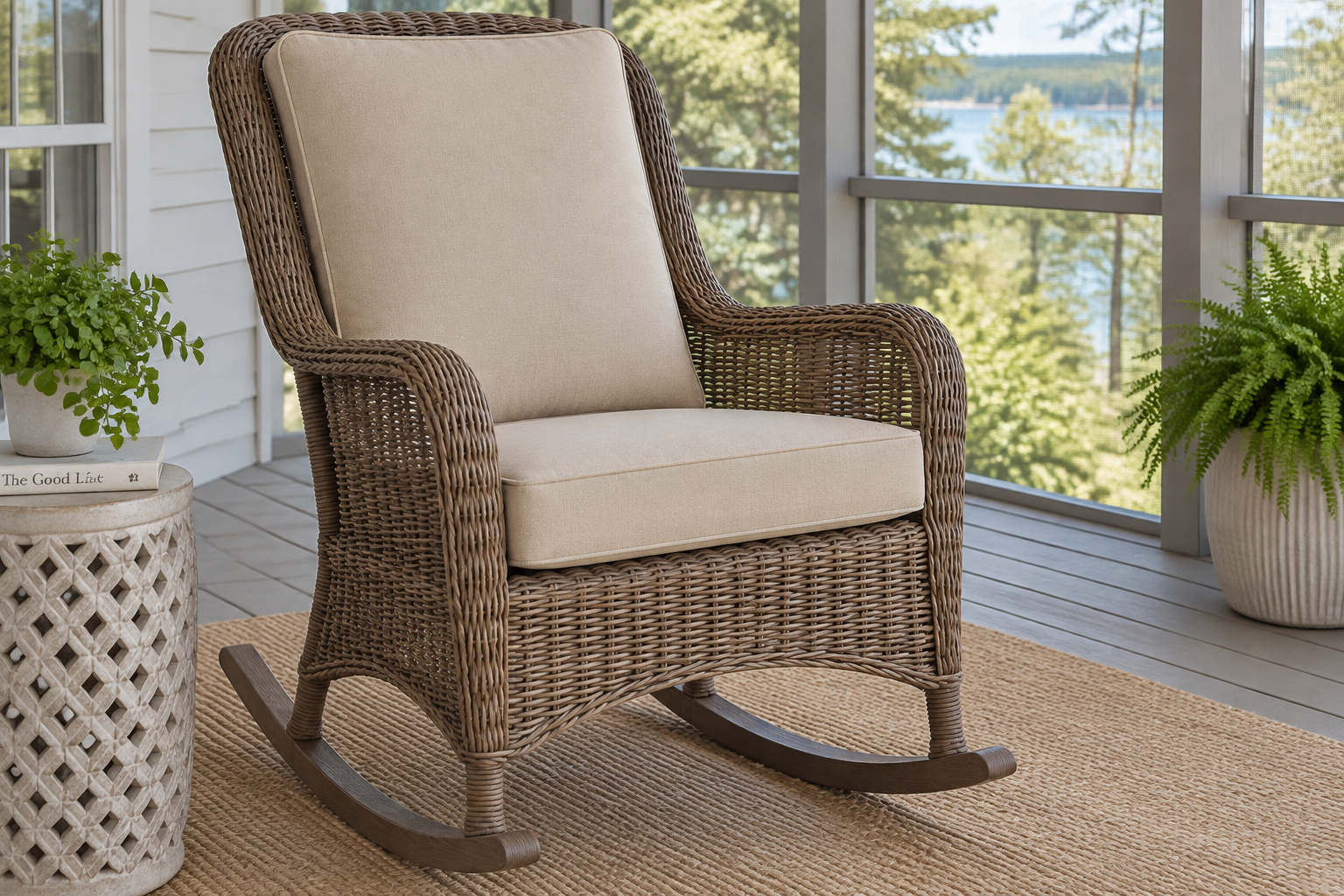
| Wicker porch rocker | 19-21 in wide, contoured back | The woven back is rarely flat — a squared-off back pad gaps at the shoulders; curved-back patterns fit far better |
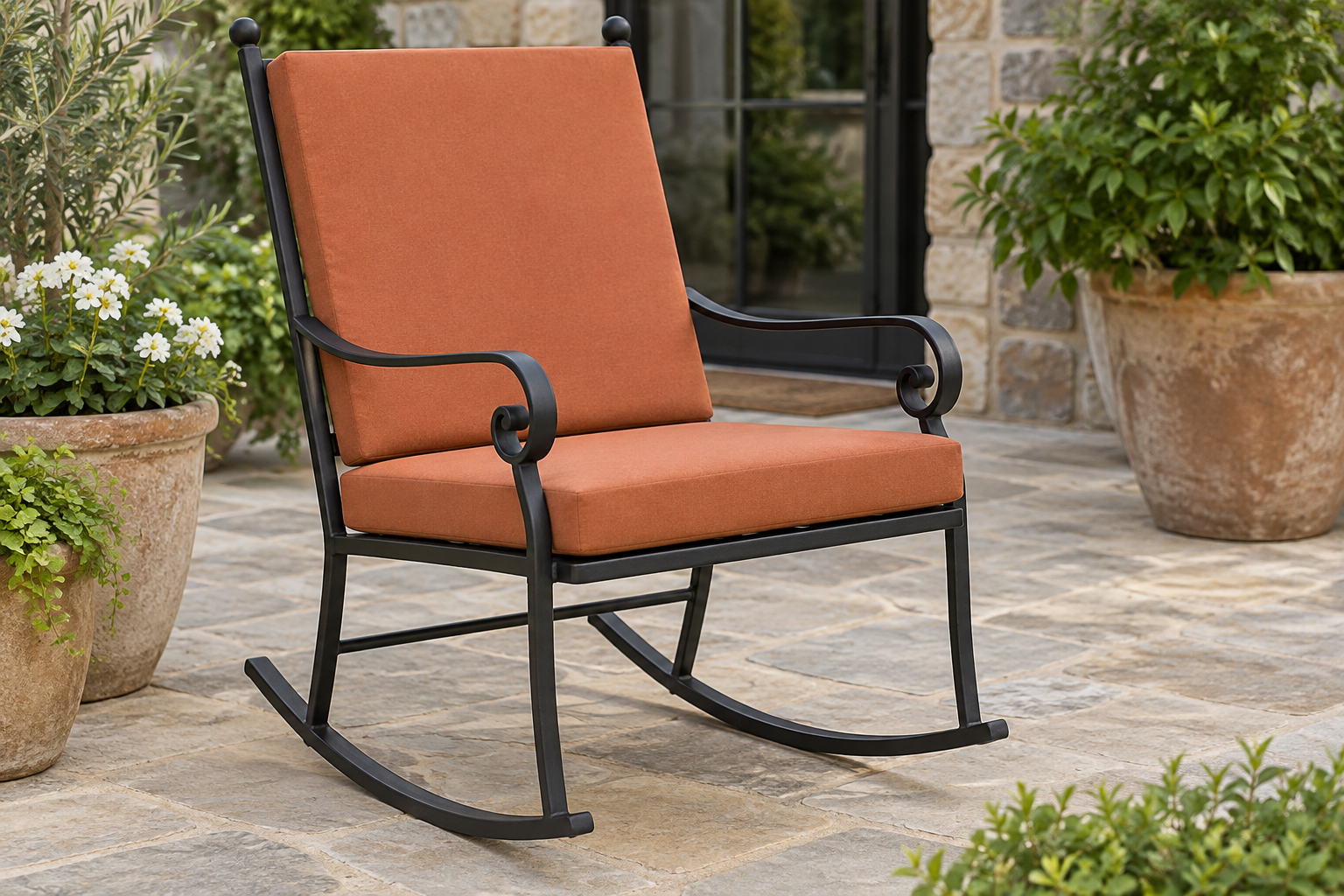
| Wrought iron rocker | 17-19 in wide, 2-2.5 in thick | Tight spring decks punish thick pads; metal heats in sun, so light fabric colors are the practical call — more in the wrought iron cushion guide |
| Poly lumber (HDPE) rocker | 20-22 in wide | The frame outlives its cushions five to one — expect to replace cushions as a maintenance cycle, not a one-time buy |
That last row is the quiet argument for buying well the second time: the frame you own will still be rocking long after a cheap pad is landfill, which makes the cushion the decision that actually matters.
Sizing: Porch Rockers Run One Size Up
Indoor rockers center on 17-18 inch seats. Porch rockers — built heavier, for people in coats, sitting longer — run 19 to 21 inches, and wicker models run larger still. Thickness is where comfort lives: 2 to 4 inches on the seat, with the upper end reserved for rockers whose slats or springs have gone hard. One caution carried over from the geometry of rocking: every extra inch of thickness raises your seat and shifts the rock’s balance point, so past 4 inches a thick pad starts to feel like climbing onto a bar stool. The measuring walkthrough — seat, back, and how to transfer the numbers — is in how to measure rocking chair cushions, and the broader sizes landscape is in the rocking chair cushions guide.
Keeping the Cushion On: The Motion Problem
Rocking is a one-directional shaker: every stroke nudges the pad forward, and a glazed porch floor does nothing to stop it. The industry’s standard answers are sewn ties anchored to the frame, hook-and-loop strips, and rubberized non-slip mats laid under the pad. They all work to a degree — and the general-purpose fixes are ranked in how to stop cushions from sliding, with tie-positioning specifics in how to add ties to cushions for pads that arrived without them.
The answer that needs no hardware is fit. A cushion cut to the exact footprint of the seat platform — matching its width, its depth, its squared corners — has nowhere to creep, because the platform edge acts as the stop. That is the logic behind made-to-measure porch rocker cushions: measure once, and the motion problem largely disappears along with the gap at the backrest.
Rain, Drain and the Dry-Out Routine
Quick-drain foam does most of the work, but the routine finishes it. After a hard rain, stand cushions on edge so water exits the bottom, and rotate them once midway. Never bag or cover damp cushions — a wrapped wet cushion is an incubator, and mildew that roots inside foam cannot be cleaned away afterward; surface mildew on fabric can (cleaning guide), which is exactly why the distinction matters. Over winter, store porch rocker cushions flat in a closet and leave the rocker outside under furniture cover: freeze-thaw cycles destroy foam that is holding even a little water.
Wind and the Open-Deck Question
A covered porch shelters cushions from rain but not from wind, and a rocking chair’s high back pad is effectively a sail. On open decks the stakes rise again — afternoon gusts will relocate any loose cushion. Heavier high-density foam helps, a sheltered corner helps more, and every retention method worth using is ranked in how to keep outdoor cushions from blowing away.
What Custom Outdoor Rocker Cushions Cost
Custom porch rocker cushions start from a $45 make-base plus per-square-foot rates for foam and fabric, priced live in the calculator on the custom rocking chair cushions page — a two-piece outdoor set in solution-dyed acrylic typically lands well below the big-brand equivalent once fabric grade is matched honestly. If your existing set is structurally sound but the fabric has failed, replacement rocking chair cushions covers the re-cover path. Standard crafting runs 4-7 days, rush production takes 3-5 days, and shipping to US addresses runs 3-6 weeks — worth planning before the porch season starts, not during it.
FAQ
What size cushions fit an outdoor rocking chair?
Most porch rockers take a seat pad 19-21 inches wide and 2-4 inches thick, one size up from the 17-18 inch indoor standard. Wicker porch rockers run larger and often need a contoured back pad. Measure the seat seam-to-seam before ordering — frame makers vary by an inch or two even within “standard” models.
Can I use indoor rocking chair cushions on a covered porch?
Not for long. A roof blocks rain but not UV or humidity: printed polyester fades in a season and indoor foam holds moisture once humidity gets in. If the rocker lives outside in any form, use outdoor fabric and quick-drain foam from the start.
What is the best fabric for outdoor rocking chair cushions?
Solution-dyed acrylic for rockers in direct sun — the color is part of the fiber, so it holds for years instead of seasons. Printed polyester works only for fully shaded, covered porches and short seasons. The fabric decision is covered in detail in the outdoor cushion fabric guide.
How do I keep outdoor rocker cushions from sliding while rocking?
Three working answers, in order of effectiveness: cushions cut to the exact seat footprint (the platform edge itself becomes the stop), ties or hook-and-loop anchoring the pad to the frame, and non-slip mats for minor creep. The trade-offs of each are ranked in the sliding-fixes guide.
Do outdoor rocking chair cushions come as a set with the back pad?
Usually yes — a two-piece set of seat pad plus back pad, because a replaced seat next to a faded old back shows the color gap immediately. Ordering both pieces from one fabric run is the only way to guarantee they match.
Can I get custom cushions for a wicker porch rocker with a curved back?
Yes — curved and rounded back frames are one of the most common custom requests, because squared-off standard pads gap at the shoulders. Send the back’s width, height and curve depth, and the pattern is cut to the frame instead of to a generic rectangle.
How long do custom outdoor rocker cushions take to make and ship?
Standard crafting takes 4-7 days, rush production 3-5 days, and shipping to US addresses runs 3-6 weeks. For a porch you want to use by Memorial Day, ordering in early spring is the comfortable margin.
Patio Chair Cushions: The Complete Buying Guide (Outdoor Too)
Everything that decides a patio or outdoor chair cushion — sizes, thickness, ties, fabric tiers and where each buying route wins. Custom from $45 when grids fail.
Cushions for Metal Patio Chairs: Frame Types, Grip and the Heat Question
Cushions for metal patio chairs guide: wrought iron, aluminum and steel frames and what each means for pads, sliding on slick metal, heat absorption in sun, sizing across mixed metal sets, and the outdoor duty spec.
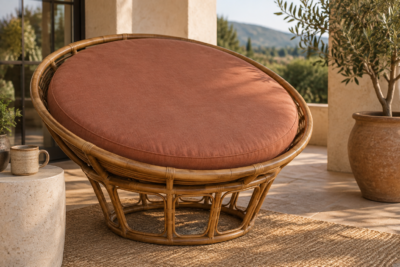
Outdoor Papasan Cushions: Weathering the Big Round
Outdoor papasan cushions fail in a known order — fabric, fill, bowl. The overhang-vs-inset diameter decision, fiber vs foam outdoors, and the honest line between a flat round and the concave original.
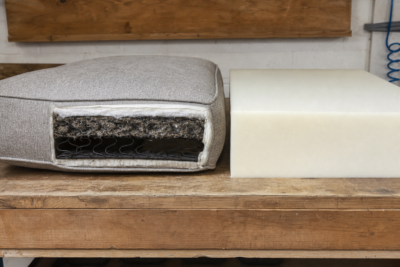
High Density Foam Couch Guide: What Density Actually Means
What high density foam actually means for a couch — the ×10 density convention, density vs firmness (ILD), the 35D–65D grades ranked by use, how each grade fails, and what density costs per square foot.
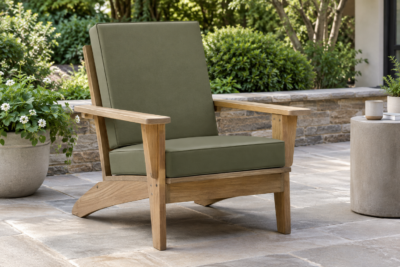
Adirondack Chair Cushions: Sizes, Selection & Replacement Guide
Adirondack cushion sizes decoded: 20×20 seats, tall-back options, tie patterns, best fabrics — plus fitting odd or vintage chairs.
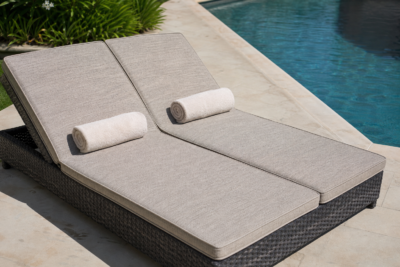
Double Chaise Lounge Cushions: Two-Position Geometry and Shared Lounging
Double chaise lounge cushion guide: back-to-back and side-by-side layouts, measuring two lounging positions in one piece or two, fill for shared daily lounging, and outdoor fabric for a full-sun centerpiece.