
The papasan bowl chair is the least standardized piece of common furniture in America. Its cushion is a giant round — sometimes flat, sometimes tufted, often with a skirt or a split — and the frames vary enough that “standard papasan cushion” is a category of hope rather than a specification. The good news: a papasan is geometrically honest. Two diameters and a thickness decision will specify the entire cushion. The bad news: those two diameters are routinely measured wrong, because people measure the cushion they have instead of the bowl that holds it.
This guide is the measuring companion to the papasan project; the general round-cushion discipline (why rounds are measured across, through center, twice at 90°) lives in how to measure round cushions, and the general error catalog is cushion measurement mistakes. Cushion Mill order desk builds bowl-chair rounds regularly; here’s the routine.
Know Your Frame First
Every papasan is a bowl and a base. The bowl is the concave ring you sit in — a circular rim (usually rattan, sometimes wicker or metal) forming the seat. The base is the standing ring it rests in. The cushion belongs to the bowl, and the bowl is your measuring reference — not the old cushion, which has spent years being sat into a shape that is no longer its own.
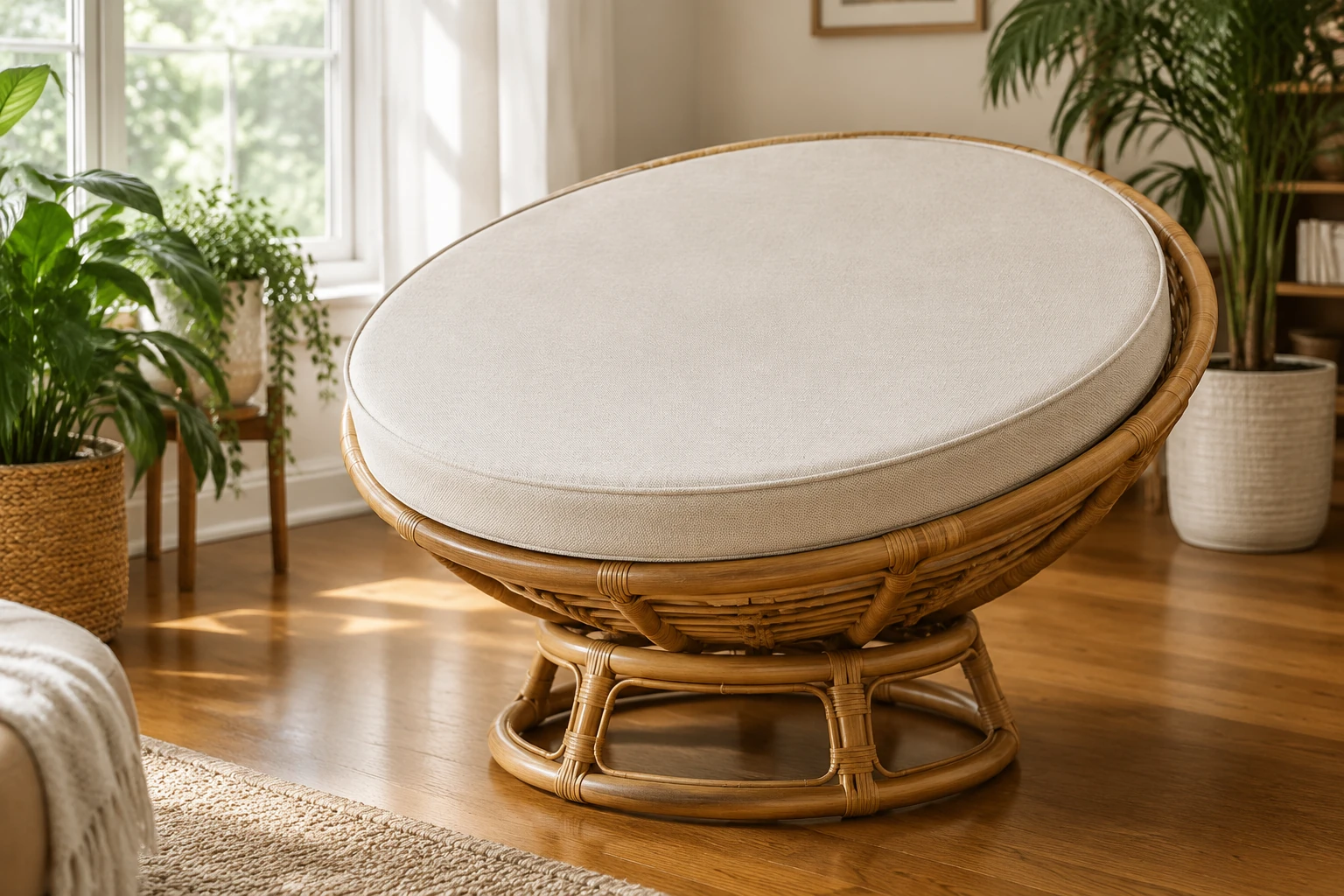
Before measuring, take the bowl off the base and set it rim-down on the floor. This does three things: stabilizes it for measuring, shows you the rim’s true edge, and reveals how round it actually is. Check roundness now: measure rim outside-edge to outside-edge across the middle, then rotate 90° and measure again. Within 1/2″ between the two: a true round, proceed. More than 1/2″ apart: your bowl is slightly oval or dented — record both numbers, and read the oval-handling section below.
The Two Diameters That Define the Cushion
1. The Rim Diameter (the number on the order)
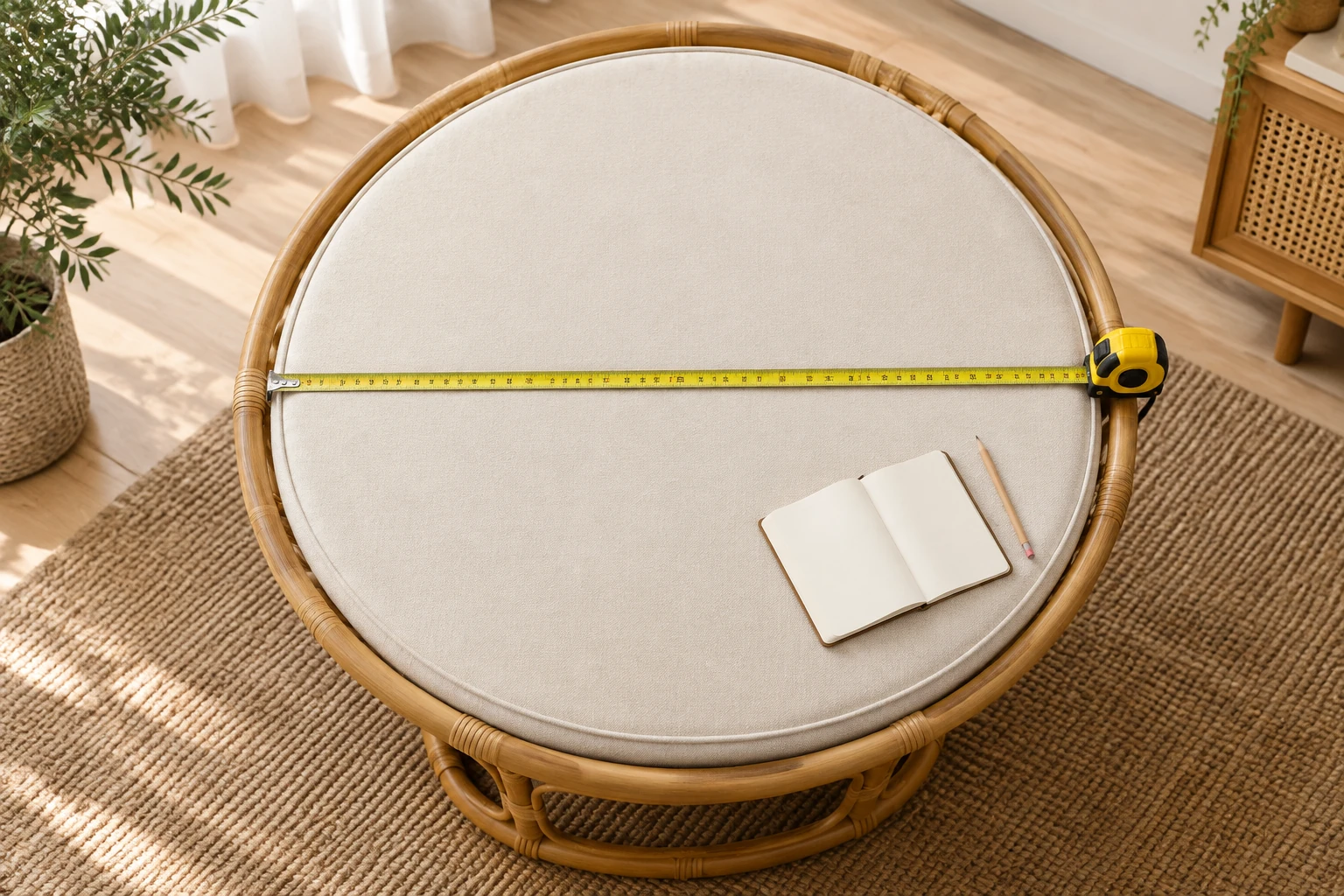
Measure across the rim’s outside edges, through the center, twice at 90°. This is the frame’s defining dimension. Common rim diameters run 44–52″, with most rattan frames clustering at 46–48″.
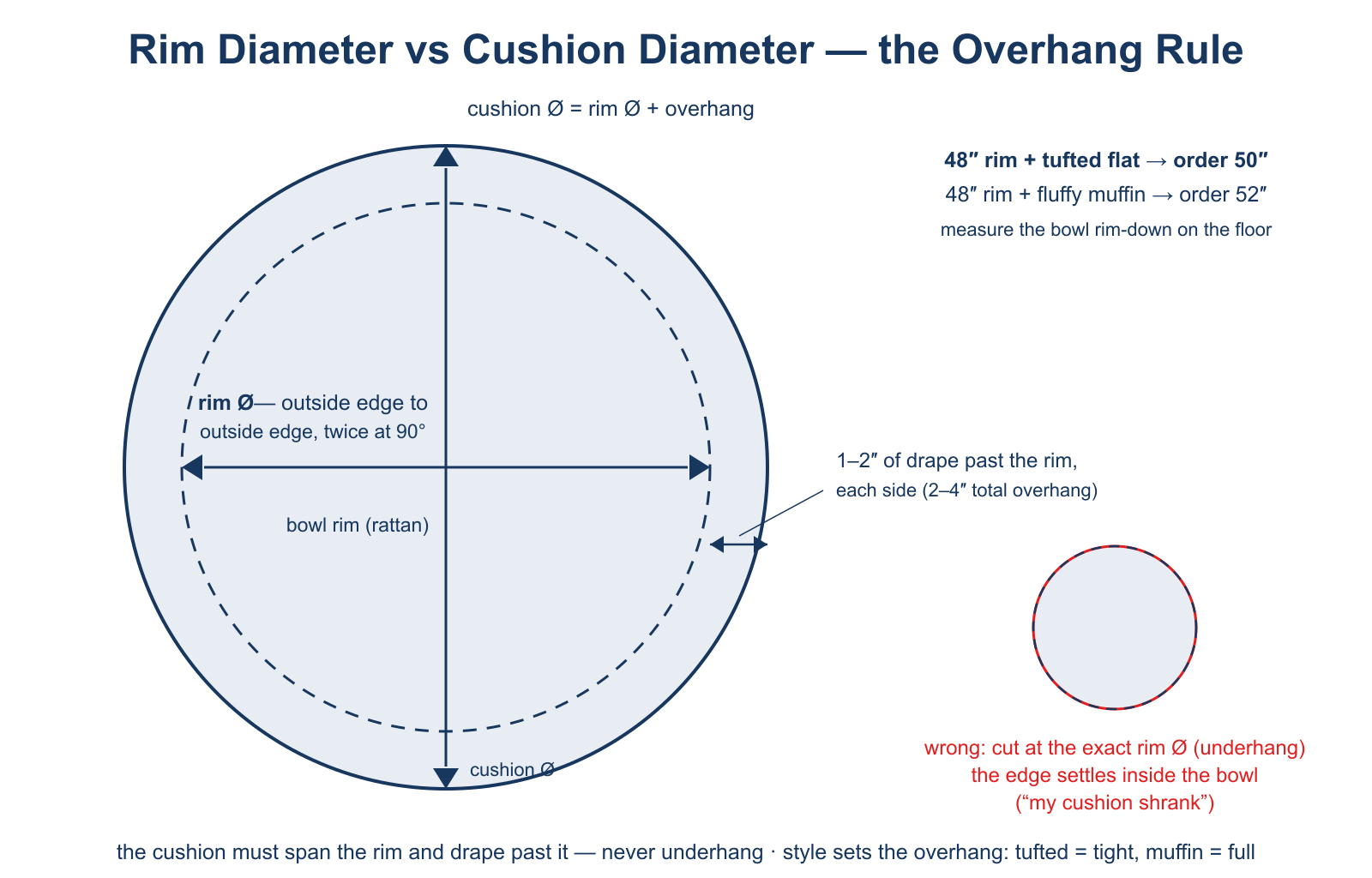
The cushion’s cut diameter relates to the rim diameter like this:
- – Cushion diameter = rim diameter + overhang. The cushion must span the rim and drape past it, or the rim’s edge sits proud of the cushion and you feel the rattan through the fabric.
- – Overhang guidance: 2–4″ total (1–2″ of drape past the rim on each side). Flat, firm papasan cushions (the tufted style) run the low end — 1″ of drape keeps the tufted surface taut. Fluffy, fiber-filled “muffin” cushions run the high end — drape is what gives them their sink.
- – Never underhang. A cushion cut at the rim’s exact diameter sits inside the bowl’s curve the moment it settles, and its edge disappears below the rim — the classic misfit that reads as “my cushion shrank.”
So a 48″ rim with a tufted-flat cushion orders at 50″; the same rim with a fluffy muffin style orders at 52″. The style decision (next section) sets the overhang.
2. The Base Diameter (the rarely-needed second number)
The base ring matters only when the frame is a double-papasan/mamasan (an elongated oval bowl — that’s a different product with two axes, closer to an oval cushion project) or when you’re ordering a matching base pad to keep rattan-on-rattan contact quiet. For standard round papasans, note it on the sketch and move on.
Thickness and Style: The Comfort Geometry
Papasan cushion thickness interacts with the bowl differently than thickness on flat seating, because the bowl pre-forms the sit. The bowl’s depth does part of the cradling work; the cushion decides how much cradle becomes sink.
One thing to know about our cushions: they are cut as flat, uniform-thickness discs — the cradle you feel comes from the bowl frame doing the supporting, not from a shaped or dished cushion.
| Style | Thickness | Sit character | Notes |
| Tufted flat | 4–5″ | Supportive, “chair-like” | Tufting locks fill; keeps its look; easiest to clean |
| Medium loft, light tufting | 5–7″ | Balanced | The most common replacement style |
| Fluffy muffin, no tufting | 7–9″ | Deep sink, “nest” | Fiber-migration risk; rotate monthly per cushion filling types |
Two frame-matching rules:
- Deep bowls (rim sits high, bowl 8″+ deep) take thinner cushions. The bowl already cradles you; a 9″ cushion in a deep bowl puts your knees at your chin. Match the combined depth — bowl depth + cushion thickness — to your tolerance by actually sitting in the empty bowl with a couple of folded blankets stacked to the candidate thickness.
- Shallow bowls (the near-flat modern style) take thicker cushions. The cushion is doing the cradling.
Foam-core papasan constructions (a round foam base under the fiber cap) hold their geometry better than all-fiber rounds — the same structural argument as memory foam topped cushions applied to a circle — and they’re the right spec when the papasan is daily seating rather than a dorm-room icon.
Keeping the Cushion Centered
A round cushion on a curved bowl wants to wander, and every exit from the chair can become a re-centering chore. What holds a papasan cushion in place is decided at measuring time:
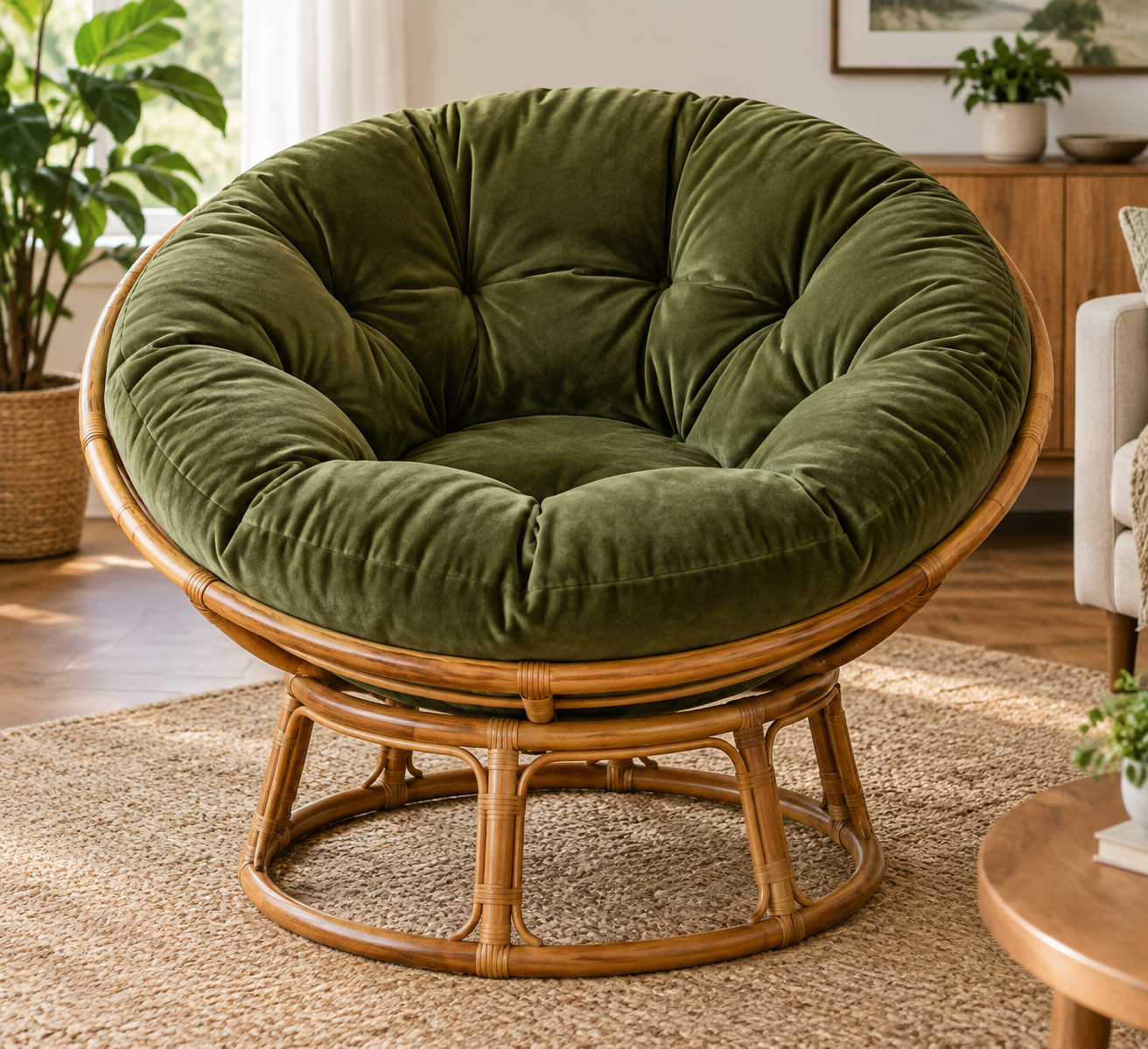
- A cut diameter that actually drapes. The 2–4″ of overhang from the rim rule is your first anchor: a round heavy enough to droop past the rim settles into the bowl’s concave, and its own weight pins it there. A cushion cut flush with the rim slides every time someone stands up — one more reason never to underhang.
- A fabric face with grip. Velvet, brushed cotton and other textured faces hold a rattan weave far better than slick, polished weaves. If your papasan lives on a smooth metal or heavily varnished frame, weight the fabric choice toward texture — friction is decided at order time, not added later.
- A grip pad between bowl and cushion. A round rug-style grip pad, cut a few inches smaller than the cushion and laid flat in the bowl before the cushion goes in, stops sliding on even the slickest frames. It is an inexpensive store-bought accessory you size yourself — nothing about the cushion has to change.
- The split cushion. Some papasan cushions are cut across a diameter and hinged or simply butted, so the bowl can fold for storage. A split is a real option but changes the order (two half-rounds, edge finish on the cut, alignment of the tufting) — mention it at order if storage is your constraint, and the order desk will confirm construction.
Skirts and Edge Finishes: The Two Details That Finish a Round
Between the numbers and the finished cushion sit two style decisions worth making deliberately. The skirt — a fabric ruffle sewn around the cushion’s edge that drapes over the bowl’s rim — is the traditional papasan look. If you want one, its drop is its own measurement: 3–4″ of skirt covers the rim and the upper weave cleanly; longer skirts (6″+) read more theatrical but catch on the base when the bowl tilts. Note the skirt drop as a separate line on the order, because it changes fabric yardage materially on a 50″ circumference. The edge finish — knife-edge or boxed — changes both look and behavior: knife-edge is the softest look and the cheapest; a boxed edge (a side wall of fabric) adds effective thickness and structure without adding foam, which is useful when you want the muffin look without the muffin migration.
Oval Bowls and Mamasans
If your “papasan” seats two or is an elongated oval (the mamasan), the project becomes an oval round: measure two axes — the long diameter and the short diameter, each across outside edges through center — and apply the same overhang rule to both. Record the axes in order (long × short). Oval rounds are routinely verified with photos before cutting, because oval frames vary more than circular ones; this is standard practice, not an imposition — the same pre-cut confirmation Cushion Mill runs on curved wicker work (how to measure curved wicker seating).
Completing the Spec
- Diameter: rim diameter + 2–4″ per the style, ordered as one number for rounds (two for ovals).
- Thickness/style: per the bowl-depth matching above; tufted for structure and cleaning, muffin for sink, foam-core for daily use.
- Density if foam-core: daily papasan sitting is real sitting — 50D per how to choose foam density; occasional sunroom duty runs lighter.
- Fabric: papasans are oversized and exposed — a wipe-clean family matters more here than on almost any other cushion (scrubbing a 50″ round by hand is a cardio event). Indoor families run a flat $7.43 per square foot, all 119 fabrics; covered-porch papasans should use outdoor-tier fabrics per the best outdoor cushion fabrics.
- Photos: rim-down on the floor with the tape laid across, and the bowl in the base. Round orders are verified against photos before cutting.
A note on covers with skirts already attached. If your old cushion wears a skirt you like, measure the skirt’s drop separately from the cushion body — the drop belongs on the new order as its own line, and photographing the old skirt’s attachment (sewn flat, gathered, or box-pleated) tells the workroom which construction to reproduce.
The Five Papasan Measuring Errors
- Measuring the old cushion. It has been sat into an ellipse and its cover has stretched; the rim is the truth. Cushion measurement off old pieces only when the frame is gone, with the corrections from how to measure round cushions.
- Measuring inside the rim instead of outside. The cushion spans the rim — outside edge to outside edge, then add overhang. Inside-diameter orders produce the “shrink” misfit.
- One diameter, not two. Rotating 90° and measuring again costs ten seconds and catches ovals and dented rims before they become remakes.
- Thickness matched to preference, not bowl depth. Deep bowl + thick cushion = knees at chin. Test the combined depth with blankets before ordering.
- Treating overhang as optional. The 2–4″ of drape past the rim is what lets the round settle into the bowl and stay centered; a cushion cut flush slides and needs re-centering every time anyone sits. Treat overhang as part of the fit, not a style garnish.
FAQs
What size is a standard papasan cushion?
There isn’t one — frames run 44–52″ at the rim, which is why measuring yours is the whole game. Most cluster at 46–48″ rims, taking cushions of 48–52″ depending on style. Order rim diameter plus 2–4″, never a category label.
How do I measure a papasan cushion without the old one?
Off the frame: bowl rim-down, outside-edge to outside-edge through center, twice at 90°. Then add the overhang and choose thickness per your bowl’s depth. The two-diameter discipline is in how to measure round cushions.
How thick should a papasan cushion be?
4–5″ tufted-flat for deep bowls and chair-like sitting; 5–7″ for the standard balanced sit; 7–9″ fluffy only for shallow bowls and nest-seekers. Match cushion thickness to bowl depth as a combined system — test with blankets before you commit.
My bowl measures differently across than it did rotated. Now what?
If the two diameters are within 1/2″, average them and order one round. Beyond 1/2″, you have an oval frame: record both axes and order an oval — or for mamasan two-seaters, the two-axis oval routine above.
Can I get a papasan cushion that doesn’t need fluffing?
Yes — foam-core construction. A round foam base under a fiber cap holds geometry where all-fiber rounds flatten and migrate; the structural logic is the same as memory foam topped cushions. Specify a foam core with 50D for daily use.
Next Steps
- Pull the bowl, set it rim-down, and take two diameters at 90° — outside edges, through center.
- Pick style and thickness against your bowl’s depth (blanket test), and your fabric family for the abuse the chair actually gets.
- Build the round at the custom cushions builder — your diameter, thickness and fabric in one flow, with every round order re-verified against your photos before the knife moves.
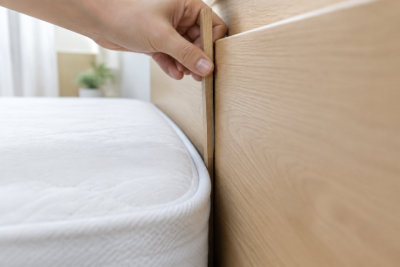
What Size Bed Gap Filler Do I Need? Thickness, Length and Density
Size a bed gap filler from three measurements, not the bed’s name: thickness equals gap width plus half an inch to one, length runs the full seam, height runs platform to mattress top. Density starts at 50D.
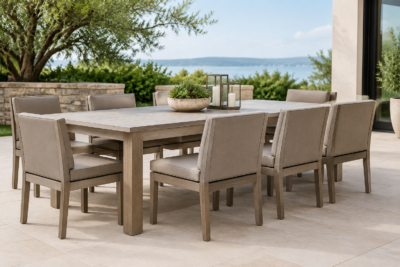
Cushion Thickness & Seat Height: Match the Pad to the Table
Cushion specs usually answer comfort questions. Thickness answers a geometry question: how high off the floor you end up sitting,

Church Pew Cushion Sizes: Standard Dimensions and How to Measure
Standard pew seats run 19-21 inches deep; cushions are cut 2-3 inches thick to measured runs at plus-or-minus half inch tolerance. Dimensions table, taper rules, and the pew-by-pew measuring method.
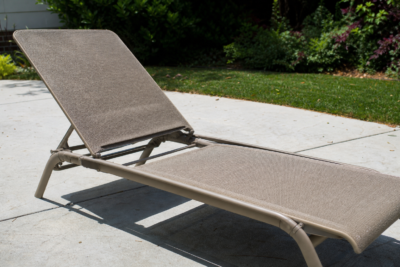
Chaise Lounge Cushion Measurements: A Complete Guide to Getting the Fit Right
How to measure a chaise lounge cushion correctly — seat depth, back height, thickness, hinge points and one-piece vs two-piece styles — with real Hampton Bay chaise dimensions.
How to Measure Rocking Chair Cushions: Seats, Backs and Tie Positions
How to measure rocking chair cushions — tapered seats, curved backs, slat-gap tie maps and rock clearance — with the three-number protocol for both pieces of a rocker set.
Window Seat Cushion Measurement: How to Get a Perfect Fit
Measure a window seat cushion correctly — width across alcoves, depth front to back, thickness vs sill height, radius corners and bay window angles — with tips from the cutting floor.