
Foam vs Fiber Cushion Filling: Which Lasts Longer?
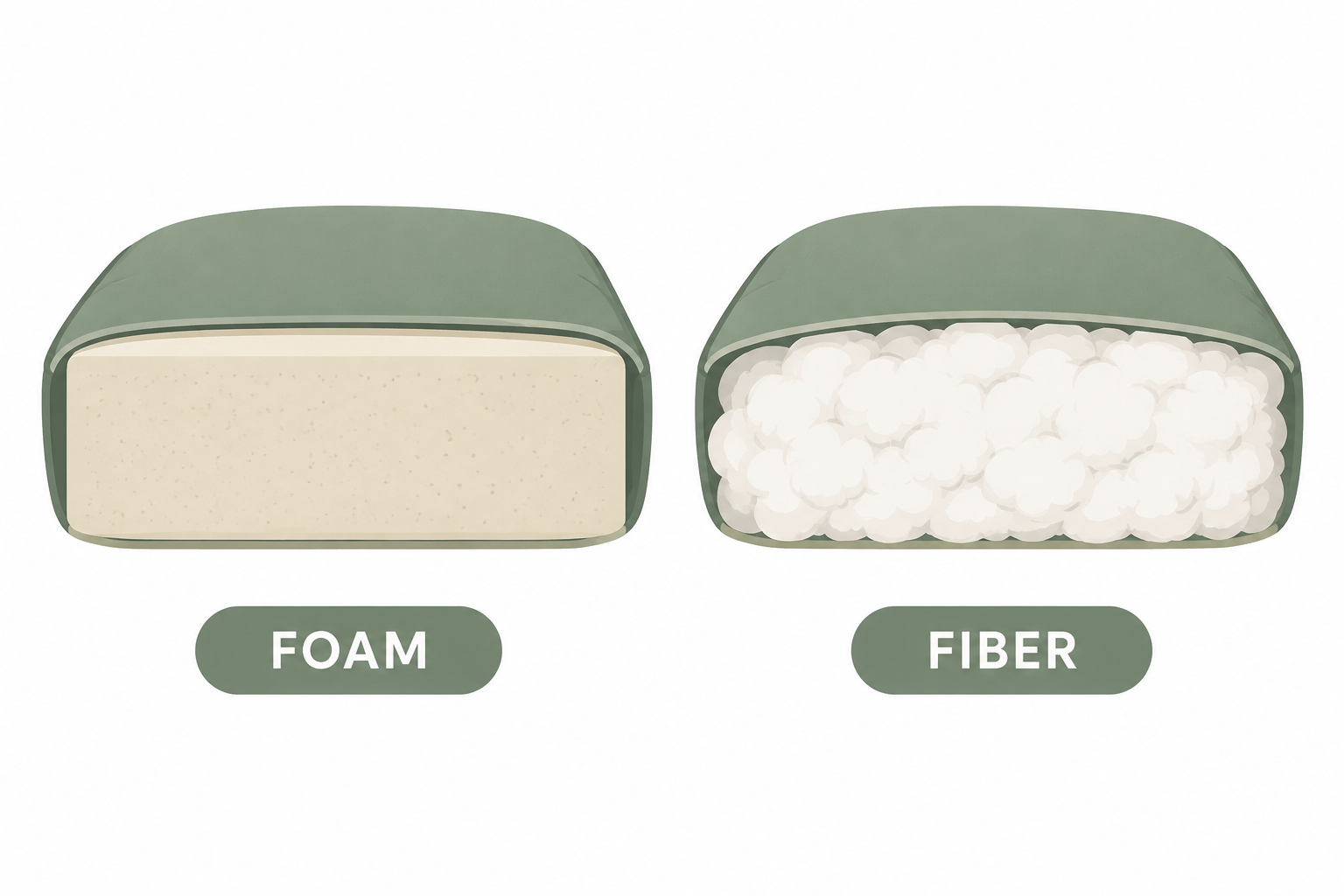
Ask the question flat — “foam or fiber?” — and you get a flat answer that helps nobody, because the two fills are not rivals for the same job. Foam is a load-bearing engineered core. Fiber is soft volume. On seats, the lifespan contest is not close: fiber packs flat in seasons of real sitting, while a decent foam core holds its loft for years. If that contest already ended and your seats lost, couch foam cushions put a fresh load-bearing core back under the covers. On back cushions and throw pillows, fiber is not the loser — it is the correct tool. This guide separates the two jobs, then shows what each fill actually costs at real configurator prices, so the choice is made by physics and arithmetic instead of showroom softness.
The full family context — where memory foam, down and quick-dry foam sit — is in cushion filling types compared; the density-grade decoder is in high density foam explained.
What Each Fill Physically Is
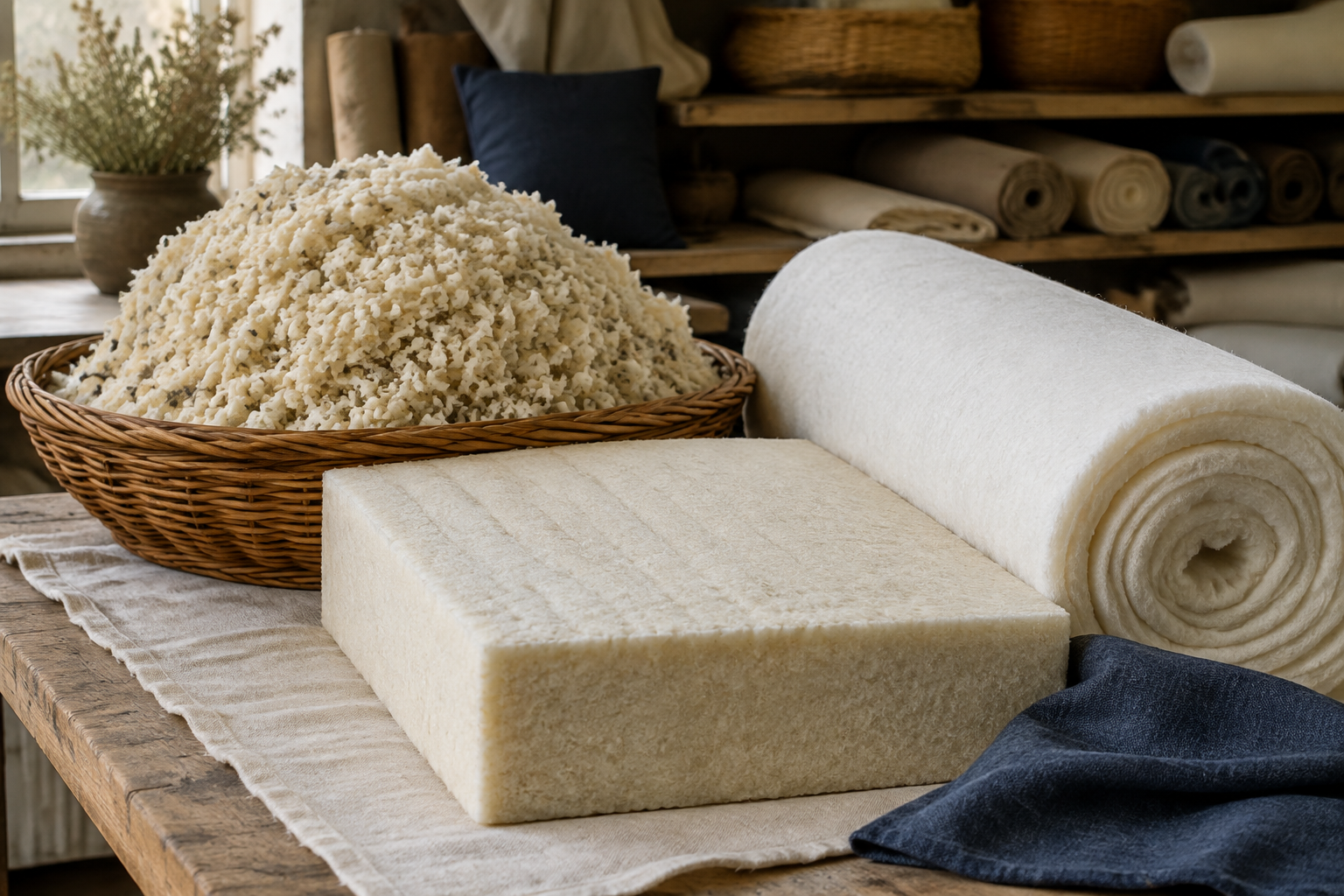
Foam (polyurethane, the 35D–65D grades) is a solid cellular polymer. Every cubic foot carries a measurable weight of material — that is the density number, written in the ×10 convention (35D ≈ 3.5 lb/ft³). Load goes into the cell walls, the walls push back, and the push-back is measurable: density sets how many years the cell walls keep doing it.
Fiber (lofted polyester) is millions of soft filaments blown into a ticking. Nothing structural connects them. Comfort comes from air trapped between filaments — which is why a fiber cushion feels wonderful on day one and reads as a body print by month six. The failure has a name on every factory floor: fiber migration and packing. Filaments clump, shift and compress; fluffing redistributes them but does not restore what has packed.
The Lifespan Verdict, By Job
| Question | Foam core | Fiber fill |
| Daily seat cushion, 5+ years | Yes — 35D holds 5–10 years, 50D+ longer | No — flattens within a season or two of real sitting |
| Back cushion | Acceptable but reads firm | Correct tool — squash-not-support is what backs want |
| Throw pillow / bolster | Overkill | Correct tool |
| Failure mode | Compression set (dishing) after years | Packing and clumping after months |
| Failure you can see coming? | Slow — loft loss over years | Fast — visible flattening, lumpy zones |
| Revivable? | No (dead is dead) | Partially — fluffing redistributes, time defeats it |
The honest summary: on any surface that carries your weight, foam outlasts fiber by an order of magnitude; on surfaces that only meet your back, fiber’s shorter life barely matters because nothing structural is asked of it. Public durability tables from foam suppliers tell the same story from the material side — roughly a six-month working life at bargain-basement density versus a twenty-year life at the top of the seating grades.
What the Durability Premium Actually Costs
Fiber is the budget option on every price list — but how much budget, exactly? The cleanest data we have is a live configurator walk-through on a competitor’s curved bench cushion page (measured September 2026, same size, same fabric, same thickness, only the fill changed):
| Fill option (same 22″ curved bench, 6″ thick) | Configured price | vs fiber |
| Fiber fill | $164.63 | — |
| High-density foam | $186.30 | +$21.67 (+13%) |
| Dry-fast (reticulated) foam | $203.35 | +$38.72 (+24%) |
Read that middle line carefully, because it is the whole economics of this article: the foam upgrade costs about 13% more than fiber and is the difference between a cushion that survives the household and one that is furniture-shaped landfill within the year. Anyone choosing fiber to save $22 on a seat core is scheduling a re-buy.
Our own price sheet runs the same logic in the density direction. Between 35D and 50D at 3″ thickness, the rate difference is under a dollar per square foot — on a 17 × 17 seat that is roughly $2 to move from the standard grade to the frequent-use grade, the single cheapest life-extension purchase in the entire cushion catalog (live rates in the custom sofa cushions builder).
The One Thing Fiber Does Better
Fairness requires the flip side. Fiber wins three real contests:
- 1. Initial softness per dollar. Nothing feels plush faster. If the cushion is decorative or lightly used — a guest-room accent, a reading nook back — fiber’s economics are fine.
- 2. Weight. Fiber back cushions are light enough to fling around; foam-back constructions feel dense by comparison.
- 3. Washability in small formats. Covers with loose fiber fill launder easily in pillow sizes.
Notice all three are back-cushion and pillow virtues. That is not a coincidence — it is the job fiber was chosen for in good designs.
The Layered Answer (What Good Builds Actually Do)
Premium cushions rarely pick one fill. The classic build is a foam core with a fiber or down wrap: the core carries load and keeps geometry for years; the wrap supplies the soft first impression fiber is genuinely good at. Back cushions in quality sofas are fiber (or down) over nothing — correct. Seat cushions in the same sofa are foam, often foam-plus-wrap — also correct. When you configure a cushion, you are not really answering “foam or fiber”; you are answering “is this piece a seat or a back?”
How to Spec It When You Order
- – Seat, used daily: 35D minimum, 50D for the every-evening couch, 60D+ for heavy loads or deep seats. Foam every time.
- – Seat, guest room: 35D foam still beats fiber — the price gap is now tiny and the frame will outlive two fiber cushions.
- – Back cushion: fiber in a channel-stitched ticking (channels slow migration); this is one place our catalog’s uniform fabric pricing — all 119 fabrics at one flat rate — leaves the real choice where it belongs, in the fill and the density.
- – Anything that lives outdoors: neither plain fiber nor standard foam; that decision moves to the quick-dry foam conversation in cushion filling types.
The Bottom Line
Which lasts longer? On seats, foam — by years, not percentages, and the upgrade premium measured at real configurator prices is about 13%. On backs, the question dissolves, because a back cushion’s job is softness, and softness is fiber’s home turf. Buy foam where structure matters, fiber where squash matters, and never let a “plush” label on a seat cushion talk you out of the cell walls that will still be pushing back in year five.
Foam Density Explained: D-Ratings vs lbs/ft³
What foam density actually measures, why D-ratings and lbs/ft³ (PCF) are two different languages with no direct conversion formula, and how to translate between them honestly — by use tier and lifespan, with the 35D–65D grades decoded.
Flame Retardants in Cushion Foam: What Changed and What to Ask
Cushion foam flame retardants explained: why California TB117 put additive chemicals into furniture foam, what the TB117-2013 revision changed, what CertiPUR-US and GREENGUARD actually certify, how to read new-foam off-gassing, and the six questions to ask any supplier for nursery and commercial buying.
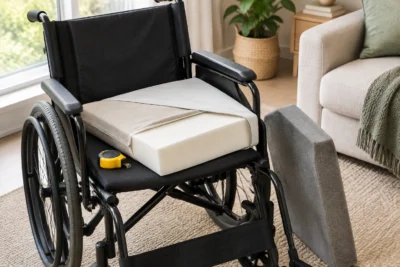
Wheelchair Cushion Foam Replacement: Measure, Order, Revive
Replace wheelchair cushion foam instead of the whole pad: three signals the core is done, W x D and thickness measuring, 50D-65D density for all-day seats, and cover fit – cores cut to your measurements.
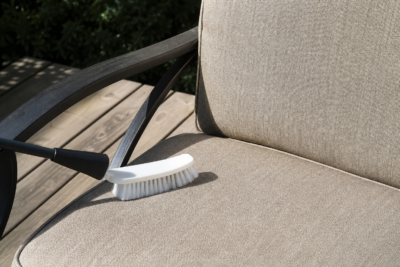
How to Care for Polyester Cushions: Washing, Fading and Stretching Them Back
Polyester cushion care from top to bottom: what spun polyester can and can’t handle, the wash-day routine that won’t ruin fills, how to slow the fading that defines the tier, and reviving covers that have stretched out.
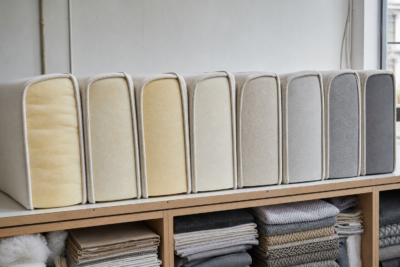
How to Choose Foam Density: 35D vs 50D vs 60D vs 65D (Decision Guide)
Pick cushion foam density in three questions: 35D for occasional seats, 50D as the daily-use default, 60D for heavy sitters and long hours, 65D for commercial and marine duty — with lifespan rules of thumb and what each upgrade costs.
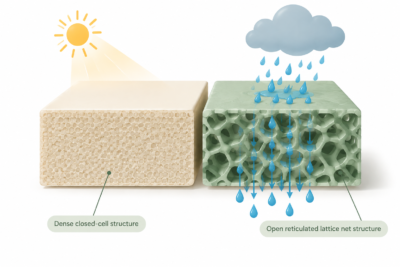
HD Foam vs Dry-Fast Foam: The Outdoor Cushion Guide
High-density foam vs dry-fast reticulated foam for outdoor cushions — cell structure, PPI, feel, the measured price premium (+9% at one configurator), and the simple covered-vs-uncovered test that picks for you.