
There is exactly one fill that belongs inside cushions that live in the rain, and it is not a fabric innovation, a coating, or a “waterproof” label. It is quick-dry foam (reticulated foam): polyurethane foam processed so that every cell wall is removed, leaving an open lattice that water pours straight through. Pool furniture, marine seating, and uncovered patios in rainy climates run on it. This guide explains what reticulation actually does, the spec numbers to ask for, what it costs at market prices — and, honestly, when you do not need it, because a covered patio does not need marine fill any more than a bedroom needs a lifeguard.
The fill-family context — where this sits against HR foam, fiber, down and memory — is in cushion filling types compared, and the water-behavior framing is in waterproof cushions explained.
What Is Reticulated Foam?
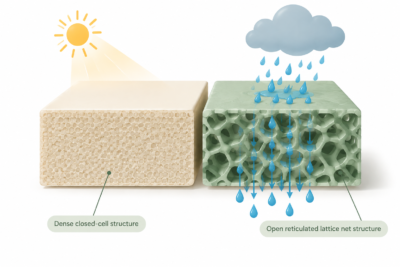
Reticulated foam is polyurethane foam processed so that every cell membrane — the thin plastic window stretched across each bubble in the block — is removed, leaving only the structural struts in one fully connected, open lattice. Because there are no windows left to trap it, water passes straight through instead of soaking in: a soaked cushion drains in seconds and dries in hours, and the interior never stays damp long enough for mildew to establish. “Quick-dry foam” is the trade name cushion sellers use for exactly this material; the word itself comes from the Latin reticulum, “little net,” which is what the structure is. How that lattice is made and what it changes under a sitter is next.
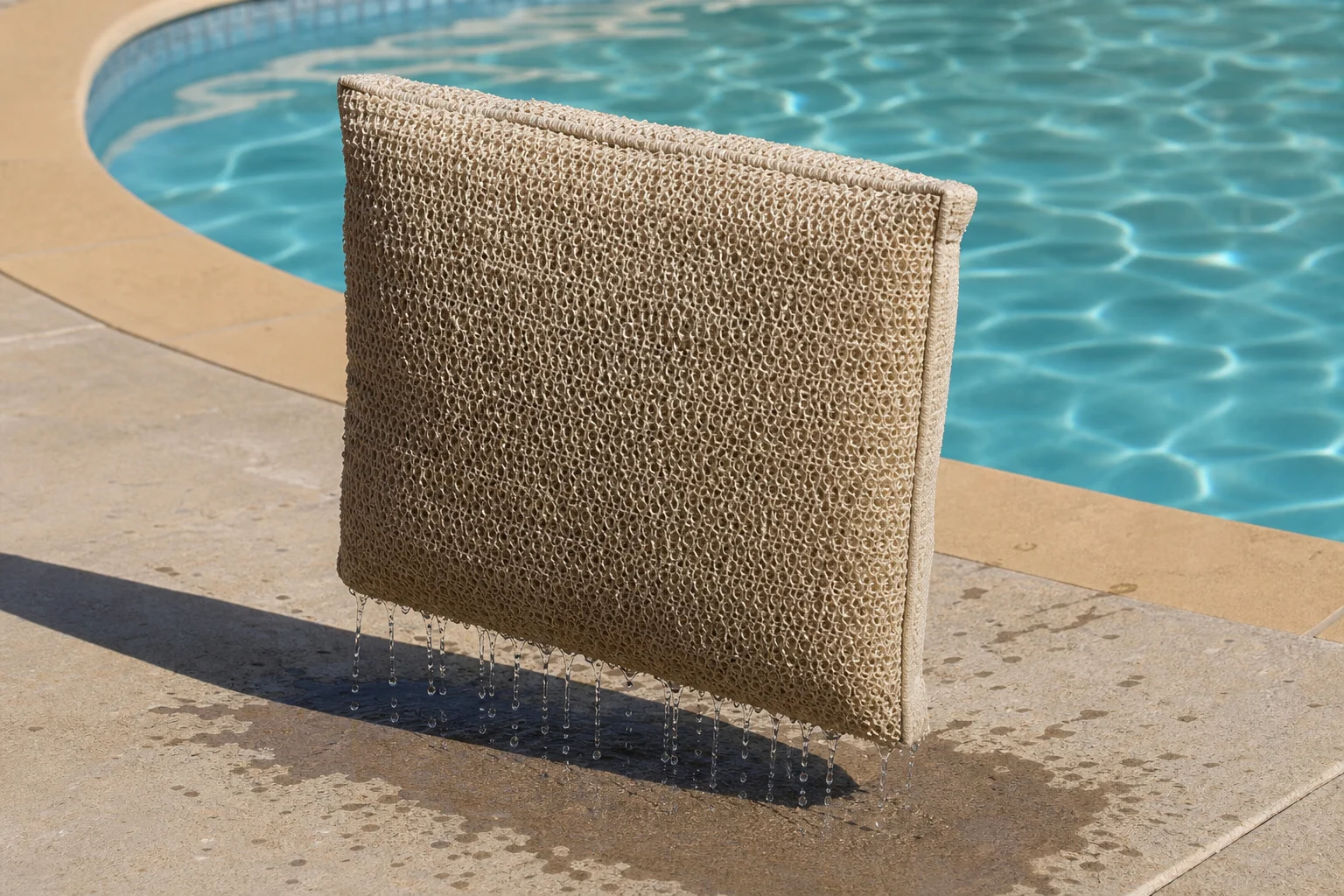
What “Reticulated” Actually Means
Standard polyurethane foam is open-celled in the technical sense, but under a microscope most cells still have thin window membranes stretched across their openings — enough membrane to slow water and trap it. Reticulation removes those windows entirely: the block is passed through a controlled hydrogen-oxygen flash or a chemical wash that burns out every membrane and leaves only the structural struts.
The result is a lattice of large, fully connected pores. Three properties follow directly from the geometry:
- Water drains through, not out. Rain passes the block in seconds; squeeze a soaked cushion and it empties through visible channels, not like a pillow fighting you.
- Air flushes it. Connected pores mean airflow carries moisture out and dry air through — the interior never stays damp long enough for mildew to establish, which is the actual anti-mold mechanism (dryness, not chemistry).
- It feels firmer at the same density. Struts but no windows means less material compressing per unit of volume — a reticulated seat reads noticeably firmer than a seating foam of equal density, which is why outdoor builds often pair it with a plush wrap or a thicker profile.
The Spec Sheet: PPI, Not Just Density
Reticulated foam is graded by PPI — pores per inch — the count of open pores along an inch of block. Common seating and filtration grades run roughly 25–80 PPI: higher PPI = finer pores, softer feel, slower flow; lower PPI = coarser, faster-draining, firmer. Density (around the 2–3 lb/ft³ class for most grades) still matters for lifespan, but PPI is the dial that sets feel and drainage speed.
This is a variation on the rule that governs every cushion on this site: density is lifespan, ILD is comfort, and the two are independent — the full foam-spec decoder (D numbers, ILD, compression set) is in memory foam vs foam cushions. Reticulated foam adds a third axis on top: PPI, which trades drainage speed against softness. A listing that states none of the three is selling geometry by photograph.
One structural caution worth knowing: the open lattice that makes reticulated foam drain so well also makes it intolerant of deep compression — crush the lattice hard in storage or transit and the struts fracture permanently, unlike seating foam which rebounds from vacuum packing. Treat reticulated cores as an engineered filter, not packing material.
Where Quick-Dry Sits on the Triangle
On the softness–support–durability triangle, reticulated foam parks beside high-density seating foam, having traded some comfort for total water dominance:
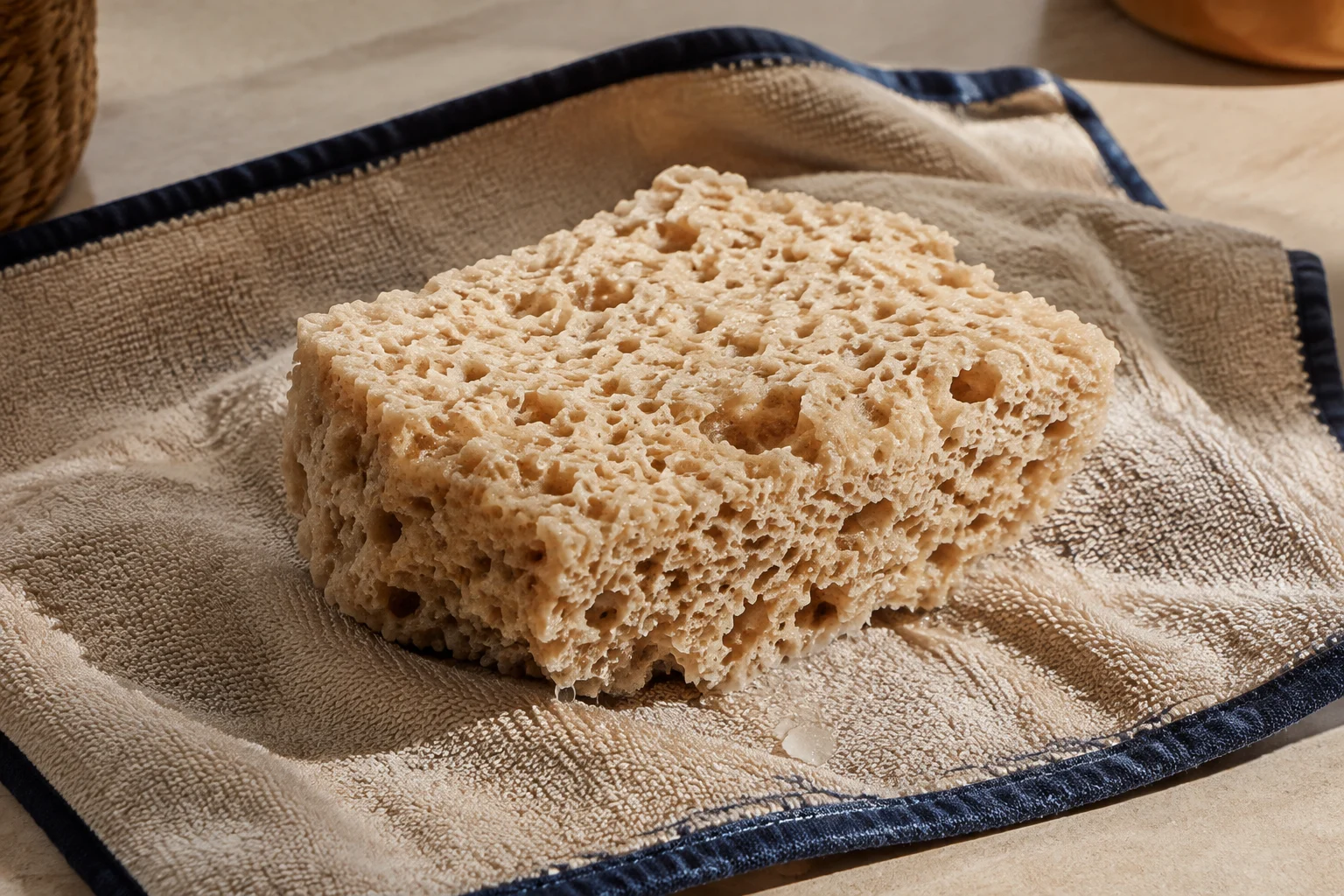
- – Softness: low-to-medium. Firmer than seating foam at equal density; plush wraps and fiber toppers exist to compensate.
- – Support: high. The lattice carries load without bottoming; marine and pool duty prove it daily.
- – Durability: high outdoors, where it counts. Its aging enemy is mechanical abuse and UV through bad covers — not water. In the wet, it is the only fill whose calendar barely notices the weather.
- – Water: the whole point. Drains in seconds, dries in hours, resists mildew by staying dry.
Compare the neighbors: fiber drains fast but packs flat (densified fiber explained); standard foam supports but holds water; down holds water and the odor that comes with it (down vs foam). Reticulated foam is the only fill that answers “how does it handle rain?” with “yes.”
Where It Wins, and Where It Is Overkill
Reticulated wins when cushions get soaked as a routine, not an accident:
- Uncovered patios and gardens in any climate where rain is a weekly event — the cushions stay out, get rained on, and dry by afternoon.
- Pool furniture. Splashes, wet bodies, chlorine air; quick-dry cores plus breathable covers are the standard for a reason.
- Marine seating. The material’s native habitat — spray, washdowns, humidity.
- Humid climates under cover. Even roofed porches in tropical air hold moisture in standard foam long enough to mildew; reticulated interiors flush with the breeze.
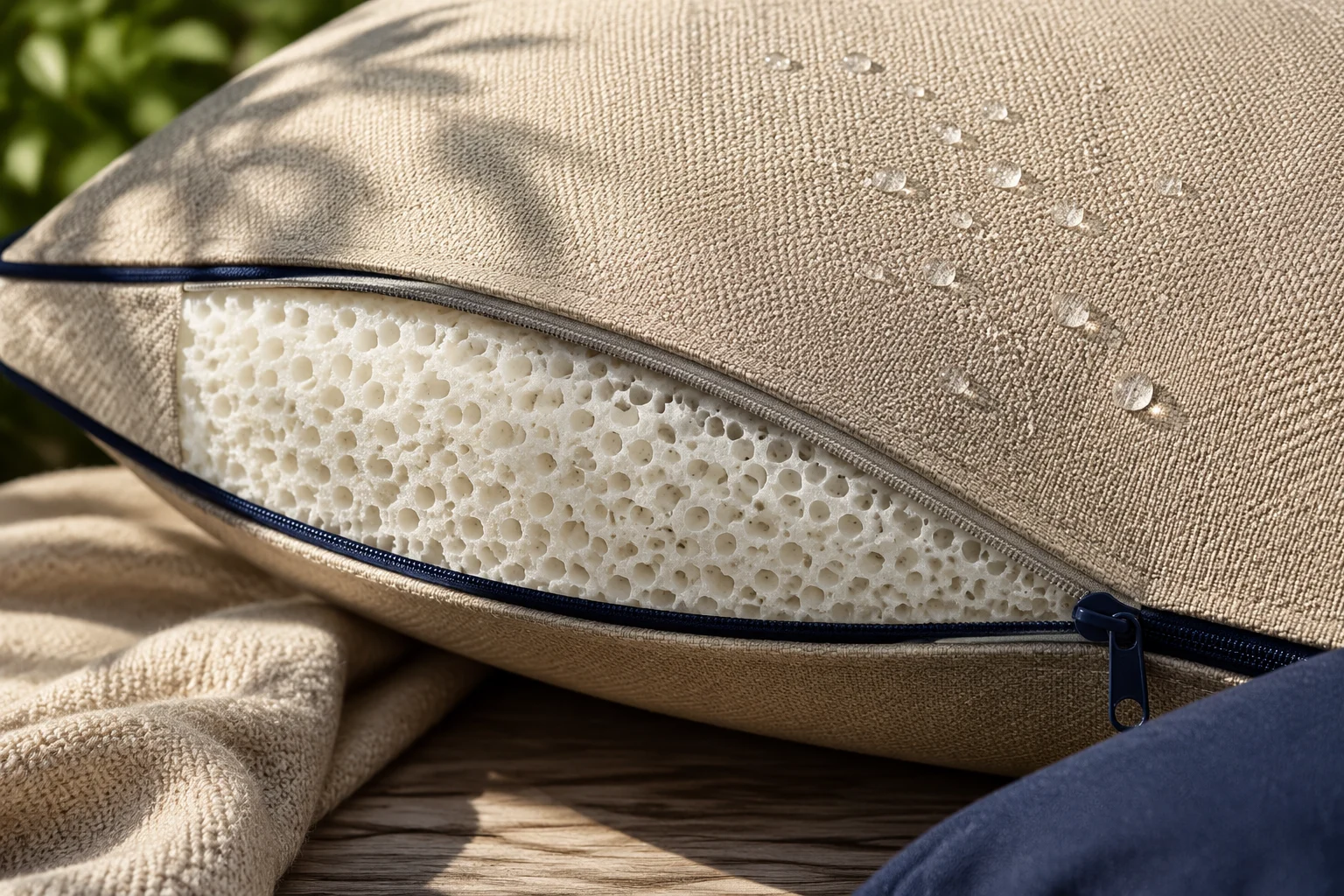
It is overkill when the furniture is genuinely sheltered: a covered porch in a dry climate, a sunroom, cushions that come in or under furniture covers when weather arrives. There, a high-density foam core under a waterproof, wipe-clean cover delivers the same practical outcome at a lower price per cushion at market prices — and quick-dry foam typically prices at or above premium HR foam, so buying it for a dry patio is paying marine money for a dessert climate. The cover strategy is in the outdoor fabric guide.
Our Menu, Stated Plainly
We are the factory — ten years of cutting foam and sewing covers — and our menu is high-density foam in four grades (35D–65D). Here is when that is the right answer, and when another fill serves you better.
Right answer, today: sheltered and semi-exposed outdoor seating — covered patios, porches, and sets that see rain only occasionally. Our current outdoor line pairs high-density foam cores with waterproof, wipe-clean covers: the fabric sheds the water, the foam carries the sit, and the combination is what the mainstream American patio replacement market runs on. Density grades and thickness are priced live in the custom cushion builder, and every cushion is made to order in 4–7 days of crafting, 3–6 weeks delivery.
Another fill serves you better: cushions that live uncovered in the rain — pool furniture, marine, and fully exposed sets in wet climates. For that duty the correct core is reticulated quick-dry foam, and we are straight about where we stand: we do not carry a reticulated core — reliable domestic supply of true reticulated stock is thin, and we would rather you buy the right fill from a marine specialist than the wrong fill here. When your seating is sheltered but gets soaked once in a while, drain and edge-stand the cushions — the recovery routine is how to drain waterlogged cushions.
Thickness and Price in the Builder
In the builder, fill grade and thickness price together: each shape takes a thickness field (the C dimension, 2″–8″ in 1/8″ increments), and the quote is footprint at per-sqft foam and fabric rates, times a shape factor, on a $45 make-base. Because outdoor builds run unwrapped cores (fiber and down wraps hold moisture), a plan for a plush feel later solves it with thickness now: ordering 4″–5″ instead of 3″ buys the plushness that the wrap would otherwise supply. Typical outdoor seating runs 2.5″–3″ for dining chairs and 4″–5″ for lounge and deep seating.
FAQs
What is quick-dry foam in outdoor cushions?
Reticulated polyurethane — foam processed so every cell window is removed, leaving connected open pores that let rain drain straight through and air flush the interior dry; it is the correct core for cushions that live in the rain.
What is reticulated foam?
Polyurethane foam with every cell membrane removed, leaving a fully connected open lattice of struts — the technical name for quick-dry foam. Water drains through it in seconds instead of soaking in, which is why uncovered patios, pool furniture and marine seating run on it.
Is quick-dry foam worth the extra cost?
For uncovered, poolside or marine seating, yes — it is the only fill that ignores water; for covered or occasionally soaked seating, high-density foam under a waterproof cover achieves the same practical result for less at market prices.
Does quick-dry foam get moldy?
Almost never from water alone — mildew needs sustained dampness, and the open lattice drains and airs out faster than mold can establish; mold on a quick-dry cushion means the cover trapped water against the foam, not the foam holding it.
What does PPI mean on foam spec sheets?
Pores per inch — the count of open pores along one inch of reticulated foam; lower PPI drains faster and feels firmer, higher PPI feels softer with finer pores, and PPI is to reticulated foam what ILD is to seating foam: the comfort dial.
Can I use regular foam outdoors if the cover is waterproof?
Under genuine shelter, yes — that is the standard mainstream build; the failure mode is repeated soakings, where standard foam holds water long enough to break down and mildew while reticulated foam drains it in seconds.
Next Steps
- Classify your seating’s real exposure — genuinely uncovered in rain is the quick-dry case; covered or occasional-soak seating runs well on high-density foam under a waterproof cover.
- For sheltered seating, measure per how to measure and configure in the custom cushion builder — pick the density grade and thickness.
- For uncovered-in-rain seating, buy the right fill now from a marine specialist that stocks reticulated core; the wrong fill costs more than the right one ever will.
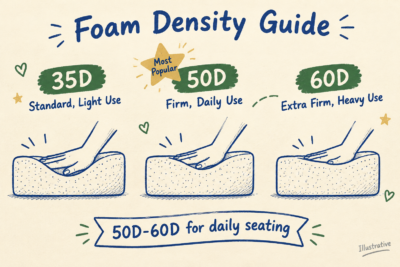
Foam Density Explained: D-Ratings vs lbs/ft³
What foam density actually measures, why D-ratings and lbs/ft³ (PCF) are two different languages with no direct conversion formula, and how to translate between them honestly — by use tier and lifespan, with the 35D–65D grades decoded.
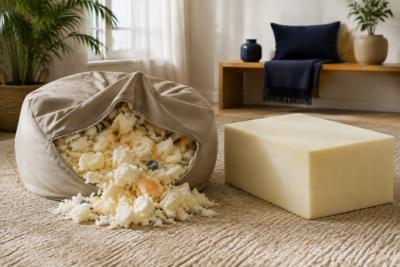
Flame Retardants in Cushion Foam: What Changed and What to Ask
Cushion foam flame retardants explained: why California TB117 put additive chemicals into furniture foam, what the TB117-2013 revision changed, what CertiPUR-US and GREENGUARD actually certify, how to read new-foam off-gassing, and the six questions to ask any supplier for nursery and commercial buying.
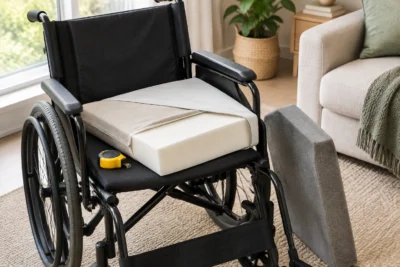
Wheelchair Cushion Foam Replacement: Measure, Order, Revive
Replace wheelchair cushion foam instead of the whole pad: three signals the core is done, W x D and thickness measuring, 50D-65D density for all-day seats, and cover fit – cores cut to your measurements.
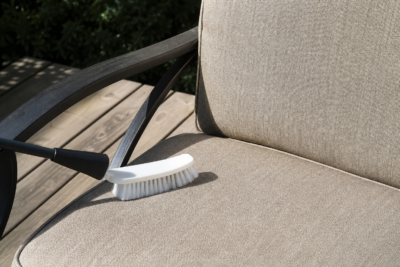
How to Care for Polyester Cushions: Washing, Fading and Stretching Them Back
Polyester cushion care from top to bottom: what spun polyester can and can’t handle, the wash-day routine that won’t ruin fills, how to slow the fading that defines the tier, and reviving covers that have stretched out.
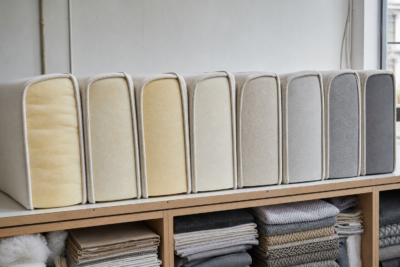
How to Choose Foam Density: 35D vs 50D vs 60D vs 65D (Decision Guide)
Pick cushion foam density in three questions: 35D for occasional seats, 50D as the daily-use default, 60D for heavy sitters and long hours, 65D for commercial and marine duty — with lifespan rules of thumb and what each upgrade costs.
HD Foam vs Dry-Fast Foam: The Outdoor Cushion Guide
High-density foam vs dry-fast reticulated foam for outdoor cushions — cell structure, PPI, feel, the measured price premium (+9% at one configurator), and the simple covered-vs-uncovered test that picks for you.