
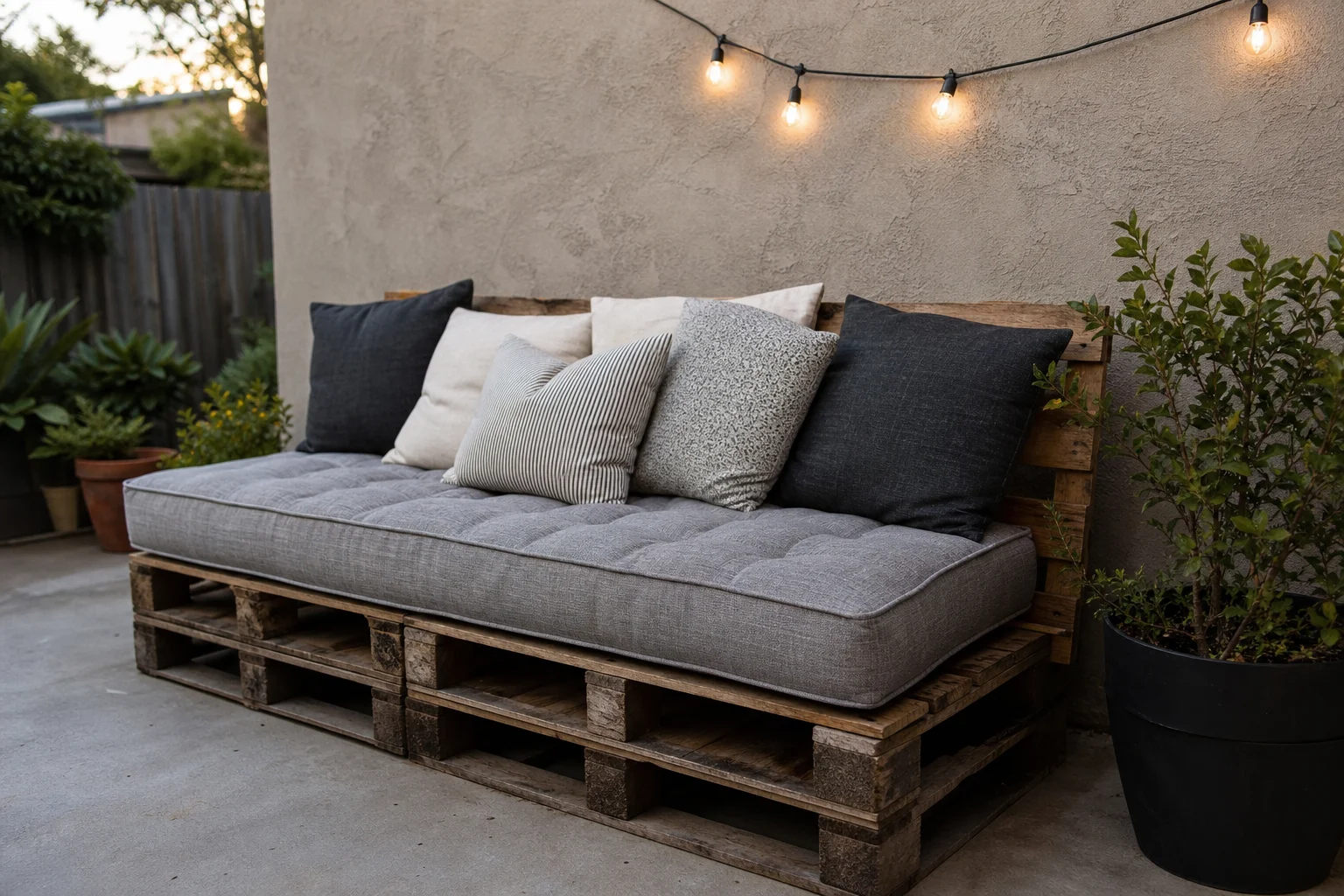
The pallet bench is the internet’s favorite free-furniture project, and it deserves the reputation: genuinely inexpensive wood, honest rustic character, a weekend of work. What the tutorials underplay is the two places the project is actually won or lost — getting the pallet deck flat and squared (because every deck flaw telegraphs through the cushion), and sizing the cushion to the bench you actually built rather than the one in the tutorial photo.
This guide covers the whole arc: pallet sourcing, deconstruction and rebuild, deck prep, then the cushion — sizing it, and the honest build-vs-buy decision at the end. If you already have a bench and just need the top half, jump to the cushion sections.
Step 1: Source the Right Pallets
Not all pallets are bench material, and a few are actively bad:
- – HT stamp only — heat-treated pallets are safe for furniture. Avoid MB (methyl bromide, being phased out but still around) entirely.
- – Skip stained or spilled-on pallets — unknown liquids are unknown chemicals; clean, dry, weathered-gray is fine.
- – Condition check: split boards, protruding nails and twist are normal in degrees; structural rot and soft, punky wood are disqualifiers.
- – Count: one standard 48×40″ pallet yields a two-person bench deck with clever cutting; two pallets make it comfortable — one intact as the seat platform, the second donating boards for squaring and edging.
Step 2: Deconstruct and Assess
Pallets are built to not come apart. The efficient methods: a reciprocating saw with a metal blade to cut the nail shanks between deck and stringers (fast, minimal splitting), or a pry bar and hammer with patience (traditional, louder, more splitting). Pull or punch every remaining nail — a forgotten nail head under a cushion is discovered the worst way.
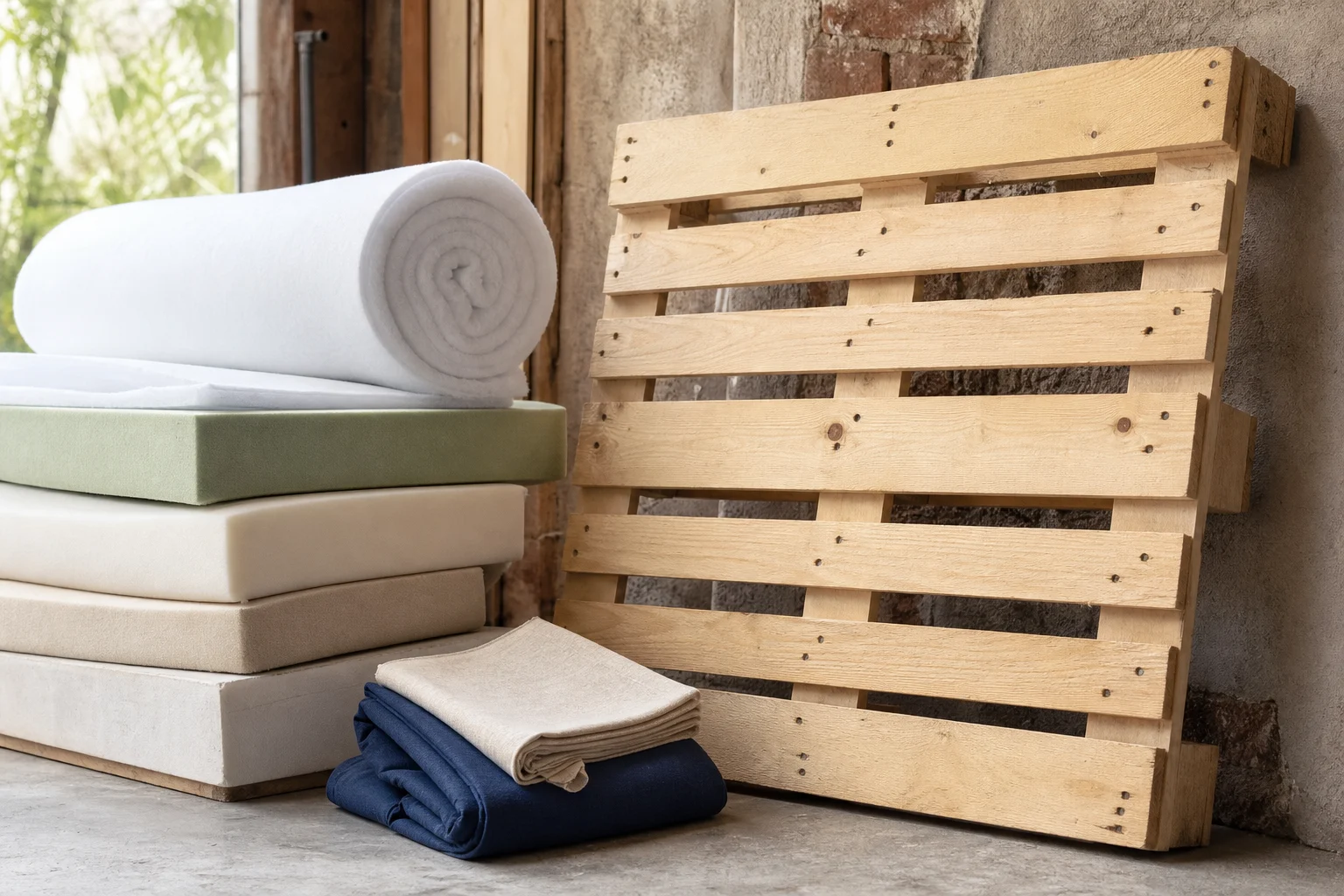
Lay the deck boards out and grade them: flattest, straightest boards for the sitting surface; twisted ones for the base or the kindling pile.
Step 3: Build the Bench Structure
The classic robust build:
- Keep one pallet intact as the platform (or rebuild a deck: stringers as frame, deck boards screwed — not nailed — across the top).
- Square and level the deck. Shim and plane until the deck is flat front-to-back and side-to-side, corners square (measure diagonals — equal diagonals means square). This is the step that decides cushion fit and comfort; a crowned deck bows the cushion, a twisted one rocks it.
- Reinforce for sitting loads: a center stringer or two under the deck, legs or a base frame that doesn’t wobble. A bench that flexes under load works its fasteners loose in months.
- Sand everything sitting-adjacent — 80-grit then 120-grit over the deck and edges. Splinters are a seating defect.
- Finish per location: outdoor oil or exterior stain for patio duty (a UV oil finish is the low-maintenance path); interior paint or wax indoors.
Step 4: Measure the Cushion Deck (the Numbers That Matter)
With the bench built, measure the deck you made, not the pallet’s nominal size:
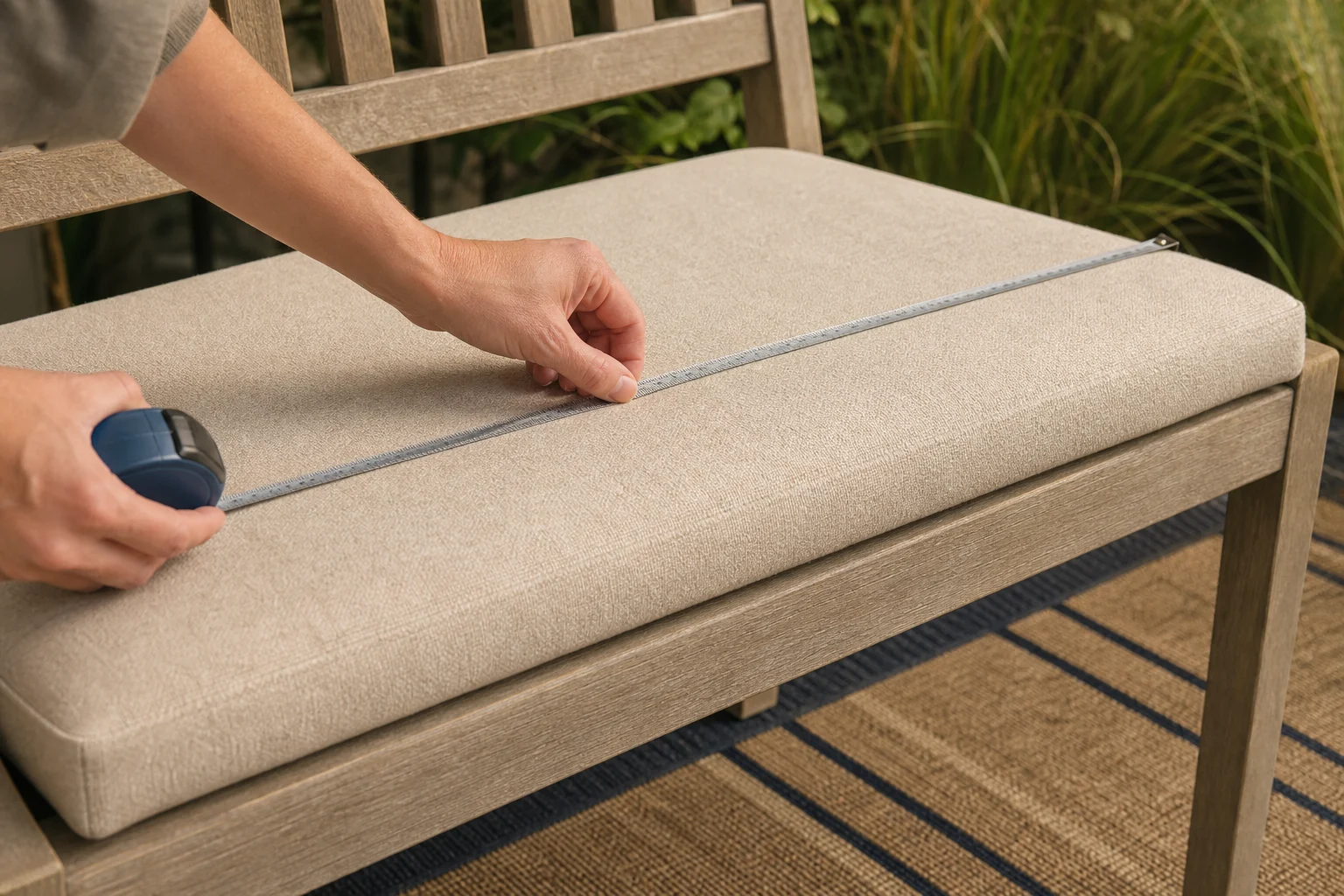
- – Width × depth of the flat deck surface, edge to edge — the cushion sits on a platform, so it orders at full dimension, no compression allowance (the frame-fitted minus-half-inch rule applies to cushions inside frames, not on platforms — the distinction is drawn in how to measure outdoor cushions and bench cushion measurements).
- – Thickness by duty: 3″ is the pallet-bench standard — enough loft to erase the board seams under you; 4″ if the bench is a primary seat. Beyond 4″ on a bench this rustic reads odd.
- – Overhang preference: flush looks tailored; a 1″ front overhang softens the look and protects the edge board. Note it either way — the ±½” tolerance of custom cutting (±¾” on dimensions over 36″) honors what you specify.
- – Anchor points: pallet benches are open underneath — note the gaps between deck boards for tie-downs, or plan the gripper base if the deck finish is smooth (how to add ties to cushions covers positioning).
Step 5: The Cushion — Build or Buy
The DIY route: a bench cushion is a box-cover sewing project — fabric, 3″ foam, batting wrap, sewn box with hand-closed final seam. The full method is in how to make cushion covers and cushion recovery DIY. Realistic expectations: an afternoon to a weekend depending on sewing experience, and the material costs (foam at retail, fabric, batting) land remarkably close to custom pricing.
The buy route: a custom bench cushion at Cushion Mill runs $45 base plus area × fabric rate ($7.43 per square foot flat, all 119 fabrics) — so a 48×16 bench cushion in the performance tier prices out transparently at the custom bench cushions indoor builder (or custom outdoor bench cushions for patio duty), cut to your measured deck within ±½” (±¾” over 36″), with 50D daily-use foam as the default grade and stitch styles from smooth to channel — the grid stitch being the classic rustic-bench pairing for its quilted durability (DIY tufted bench cushion is the full make-it-yourself version of that look).
The decision logic mirrors every project in this series (custom vs standard cushions): sew it for the project’s own sake and the one-of-a-kind fabric; buy it for daily-duty lifespan, outdoor fill engineering, or when your weekend is already spent on the wood. The hybrid most people land on: build the bench, buy the cushion, and spend the saved hours on the finish.
Outdoor pallet benches specifically: the wood survives weather with re-oiling; the cushion is the weather-vulnerable half. Quick-dry fill and solution-dyed fabric are the survival spec — quick dry foam and best outdoor cushion fabric — and ties become non-negotiable on an open site per how to keep cushions from blowing away.
Step 6: Details That Finish It
- – Ties to the deck gaps: hemp or grosgrain ties through the board gaps at all four corners keep the cushion put without hardware (the no-sew anchor options in the ties guide).
- – Back cushion option: a second, thinner cushion (4″ loft, lighter density — the seat/back density split in seat and back cushion sets) turns the bench against a wall into a real seat; anchor it to the wall or a timber backrest.
- – Storage: pallet benches with legs invite under-bench cushion storage — a habit that extends cushion life per how to store outdoor cushions for winter.
Maintenance: Keeping Both Halves Alive
A pallet bench is a two-material system — wood and textile — and each half has its own calendar:
- – The wood: exterior oil finish renews yearly (a 30-minute wipe-on job), and inspection each spring for loose fasteners — wood movement works screws loose, and a re-torqued screw is a five-second fix versus a wobble that becomes a split.
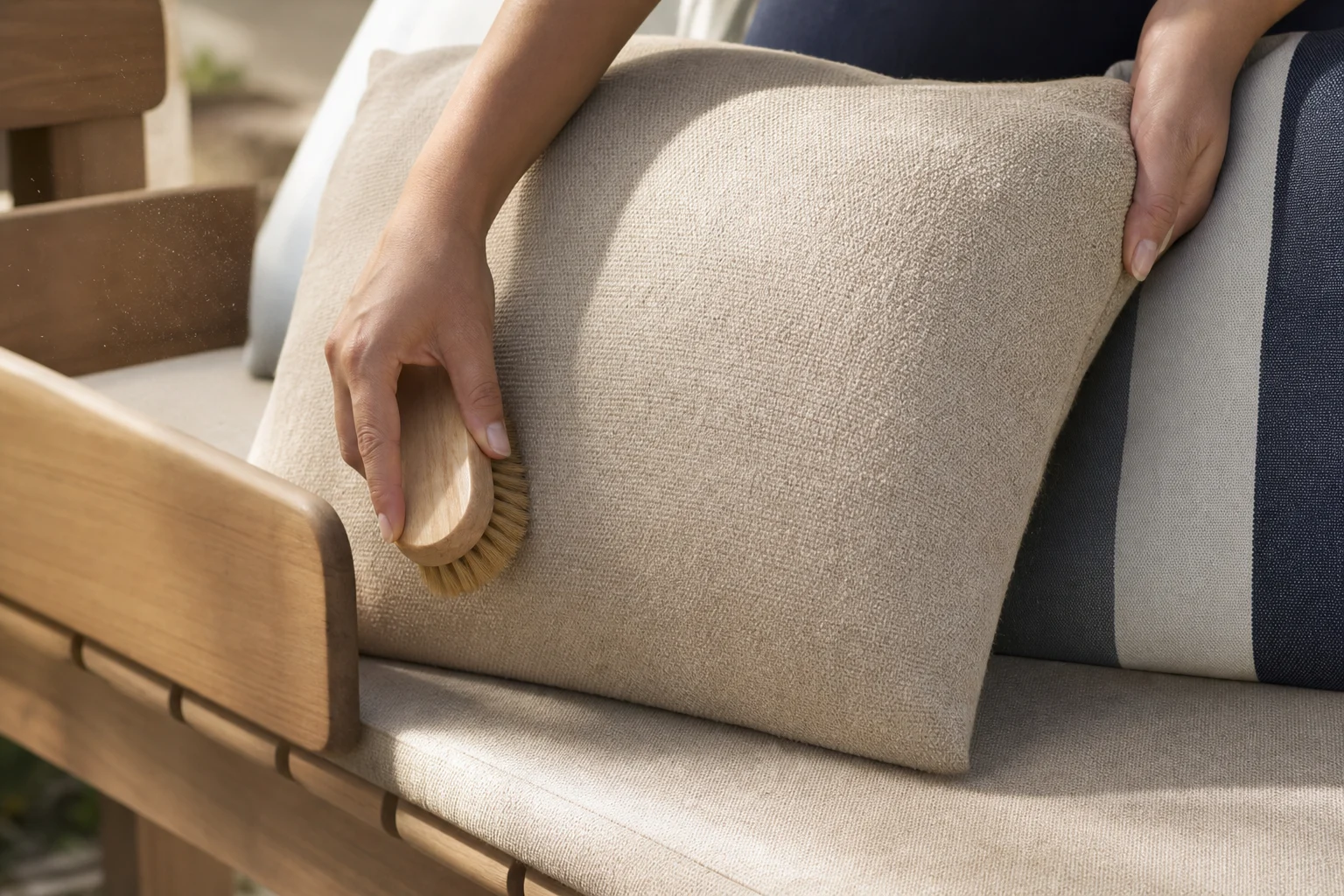
- – The cushion: the standard cadence applies — weekly brush, immediate spot protocol, season deep-clean per how to clean outdoor cushions — with one pallet-specific addition: check the underside after wet weeks. The gap between deck boards breathes, but the boards themselves hold moisture longer than a slat-less surface, and the cushion’s bottom face is where mold starts (how to prevent mold on outdoor cushions). Stand cushions on edge after rain as a habit.
- – The interface: sand splinters and nail-shadow rust spots as they appear — anything that roughens the deck surface abrades the cushion underside with every sit.
Benches maintained on this rhythm routinely outlast their original builders’ expectations — five to ten years outside is realistic for HT pallets kept oiled, and the cushion refreshed or replaced once or twice along the way at a fraction of the original build effort.
FAQs
Are pallets safe to use for furniture?
HT-stamped (heat-treated) pallets are; MB-stamped and mystery-stained ones are not. Clean, dry, weathered pallets from a known goods stream are the safe sourcing zone.
How thick should a pallet bench cushion be?
3 inches standard — enough to erase the board seams — 4 inches if the bench is a primary seat. Platform seating orders at full deck dimension with no compression allowance.
Should I sew or buy the pallet bench cushion?
Sew for the project and a one-of-a-kind fabric; buy for daily use, outdoor duty, or a weekend already spent on the wood. Custom runs $45 base plus fabric area — remarkably close to DIY material costs.
How do I keep the cushion from sliding on wood?
Ties through the deck-board gaps, or a non-slip gripper pad on a smooth finish. The decision tree is in the anti-slide guide.
Can a pallet bench live outdoors?
Yes with exterior finish and re-oiling — but the cushion is the vulnerable half: quick-dry fill and solution-dyed fabric are the outdoor spec. The fabric logic is in the outdoor fabric guide.
Why square the deck so carefully?
Every flaw telegraphs through the cushion — a crowned deck bows it, a twisted one rocks it. Equal diagonals, flat surface, then measure.
Next Steps
- Source HT-stamped pallets, deconstruct with a reciprocating saw, and build the deck squared — flat surface, reinforced frame, sanded and finished for the location.
- Measure the finished deck and decide build-vs-buy for the cushion with the honest cost logic above.
- Spec the cushion at custom outdoor bench cushions or custom bench cushions indoor — full-deck sizing, 3–4″ thickness, 50D foam, delivered in 3–6 weeks.
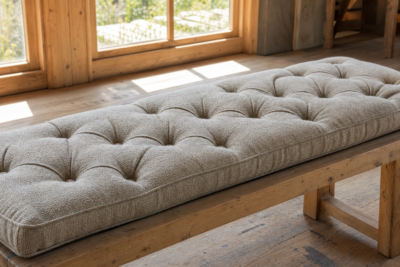
DIY Tufted Bench Cushion: How to Build the Quilted Look Yourself
A realistic walk-through of sewing a tufted bench cushion at home — materials list, the tufting method that works for beginners (buttons versus stitched pulls), foam and fabric choices, where DIY tufting goes wrong, and when to order the grid stitch instead.
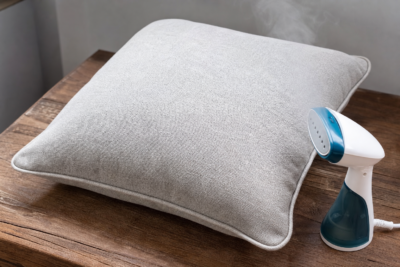
How to Get Wrinkles Out of Cushion Covers: Steam, Wash and Weight Methods
The complete wrinkle-removal guide for cushion covers — why covers wrinkle in the first place, the fabric-by-fabric method matrix (steam, dryer tricks, damp-weight, wash-and-air), the heat-safety rules by fiber, and the fit fixes that stop wrinkles returning.
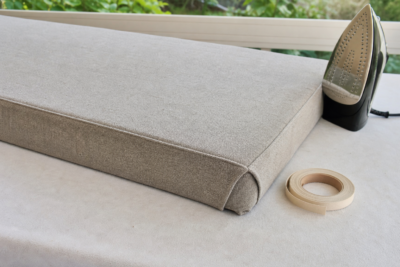
No-Sew Cushion Covers: Seven Methods That Actually Work (and What They Can’t Do)
Envelope wraps, tie-front panels, fabric glue builds, fitted-sheet hacks, knotted fringe and more — the no-sew cushion cover methods ranked by durability, the materials each one needs, and the honest limits of glue-and-fabric construction.
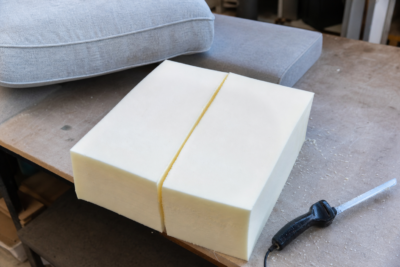
How to Cut Foam: Tools, Methods and Straight-Line Discipline
Every practical way to cut upholstery foam at home — electric knives, serrated bread knives, long blades and hot wire — the straight-line technique that prevents wonky edges, curved and radius cutting, and safe glue-up for multi-piece builds.
How to Fix Sagging Couch Cushions (Foam, Not Fluff)
Fix sagging couch cushions by finding the real cause — dead foam, flattened fiber, or a failing support deck under the seats. Quick fixes vs real fixes, and when re-foaming is the only answer.
How to Reupholster Dining Chairs: Seat Pads, Full Cushions and When to Stop
The complete dining chair reupholstery walk-through — the drop-in seat pad method, replacing foam while you’re in there, fabric choices for dining duty, the full-cushion route for padded chairs, and the honest stop-or-continue decision.