
A rocking chair punishes measurement errors that static furniture would forgive. On a dining chair, a cushion cut half an inch narrow just sits a little loose. On a rocker, that same cushion walks sideways with every stroke, saws at its tie stitching, and finishes the season on the porch floor. The numbers are small — most rockers take a set under 21 inches wide — but four rocker-specific details decide whether the set survives the motion it was bought for: the seat taper, the back’s curve, the slat-gap map, and the rock clearance under the deck.
The foundation is the same three-step protocol every cushion on this site is measured with: seam to seam on the existing cushion (or frame-first when the cushion is gone), foam measured on edge at the seam line, and every number confirmed to tolerance before anything is cut — custom cushions are guaranteed to ±½”, or ±¾” on dimensions over 36″. The full method is in how to measure outdoor cushions; this page adds what a rocker adds. When you are ready to order, the custom rocking chair cushions page takes the measurements from this page — tie positions stay in your retrofit plan.
Step 1: Count Your Pieces Before You Count Numbers
Most rockers take a two-piece set — a seat pad and a back pad — and each piece gets its own three numbers: width, depth (or height, for the back), and thickness. Write them as two separate blocks on your sketch. The most common rocker-order mixup at our order desk is a single fused list of five numbers with no indication of which piece is which; a 18-inch width could be either cushion, and the two pieces rarely match.

Three constructions you might be replacing:
- – Tied two-piece sets — the classic hardwood rocker setup, with the back pad secured by its own ties. Easiest to measure, easiest to replace piece by piece.
- – Tie-through backs — back pads whose straps thread between the back slats at two or more heights. You need the slat-gap map from Step 3 before this one can be ordered.
- – Attached upholstered pads — glider-style rockers with back pads fastened to the frame. Measure in place; see the glider rocker cushion guide for that branch of the family, because gliders and rockers do not share cushions despite sharing a room.
Step 2: Measure the Seat — Three Widths, Then Depth
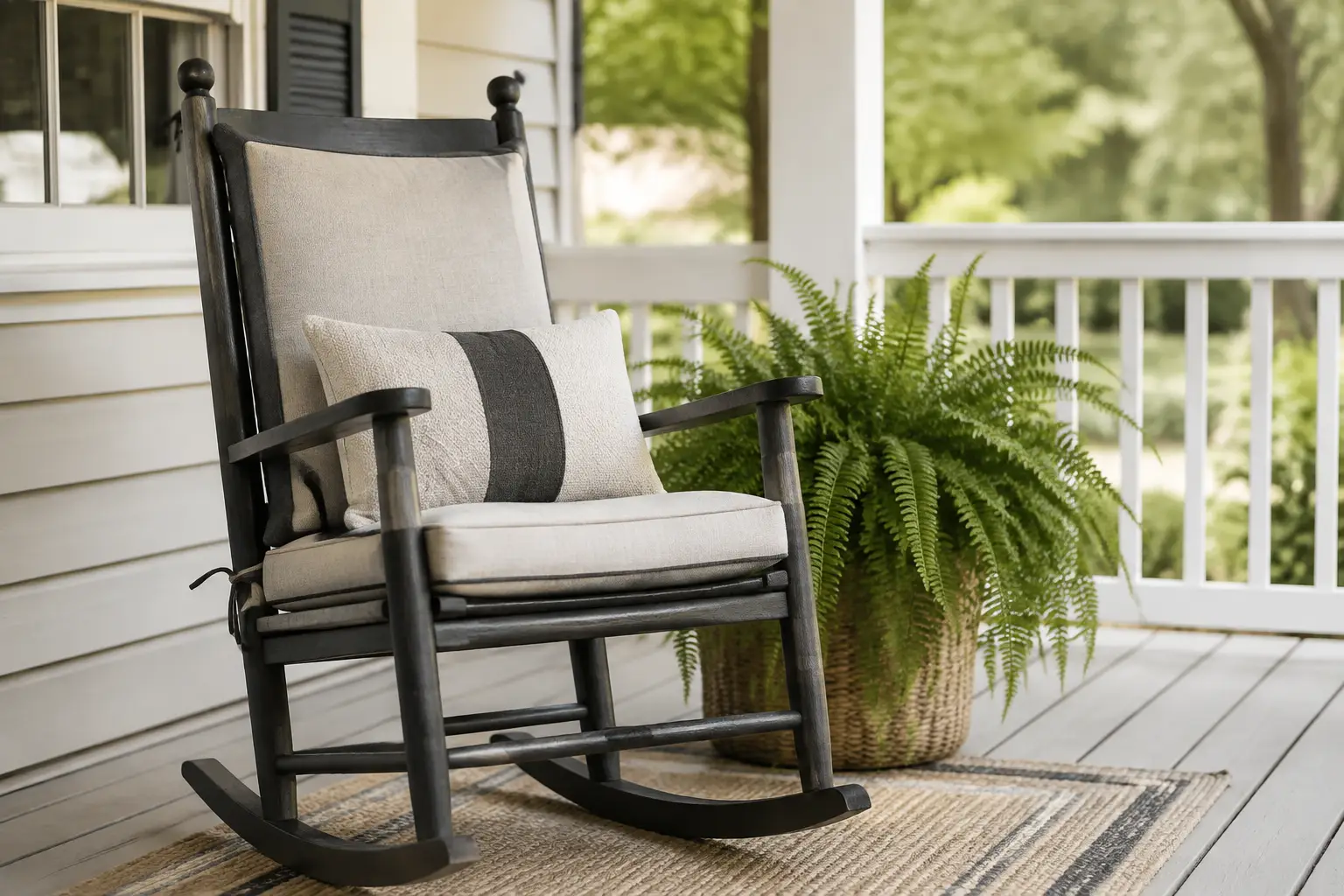
Rocker seats taper more than almost any other chair type, because the arm posts converge toward the back on classic designs.
- Width at the front edge, between the arm posts.
- Width at the back, where the seat meets the back frame.
- Width at the middle, on spindle rockers especially.
If all three match, you have a rectangle; if the front and back differ, record both — that is a trapezoid, and it is routine on rockers, with a full inch of taper on many chairs. Our order form has separate front-width and back-width fields for exactly this case. Where the readings are within half an inch of each other, use the smaller one: a slightly snug cushion on a moving chair is the tailoring that keeps it centered.
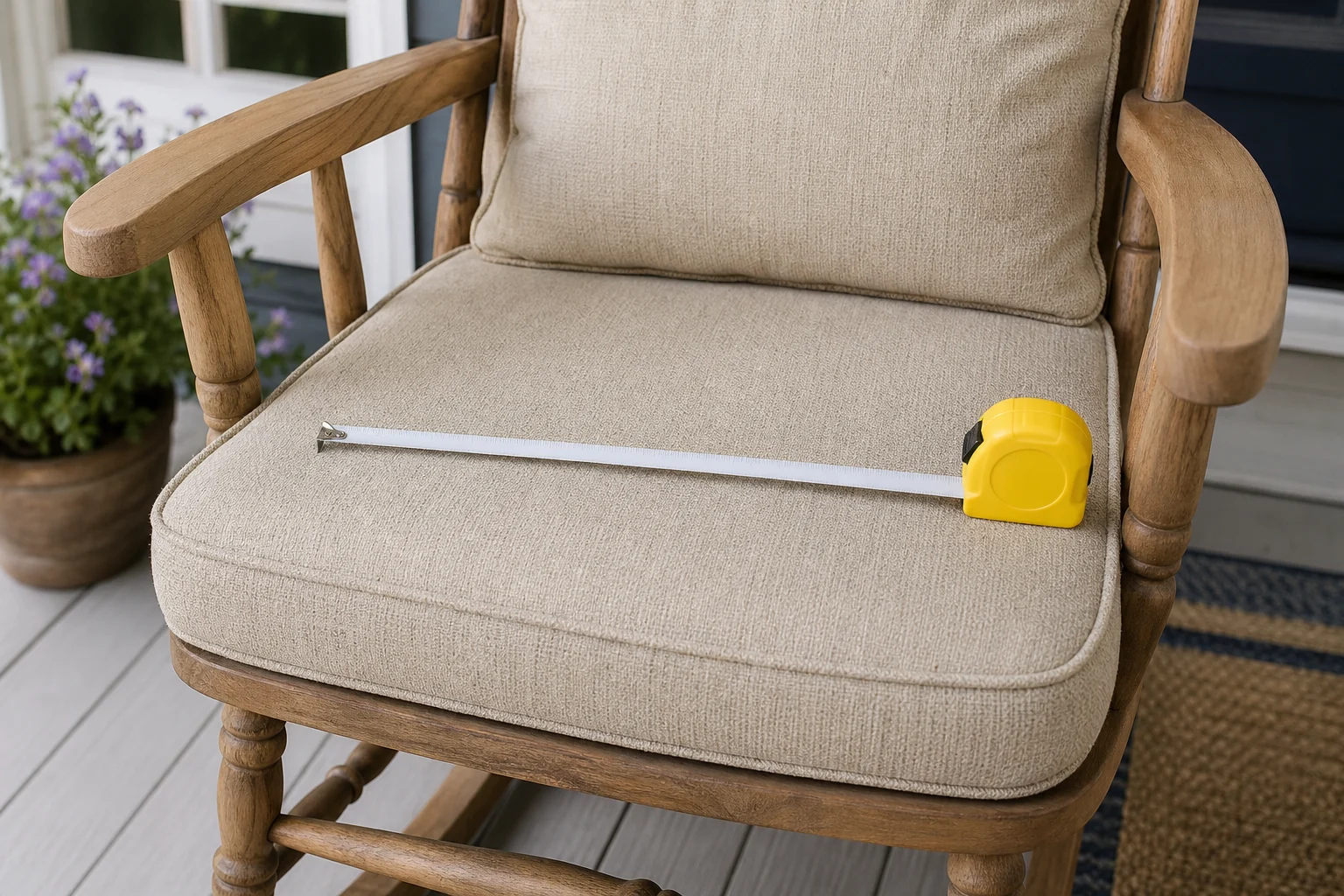
Depth runs from the back frame to the front edge of the seat deck, tape flat. Do not follow the seat’s surface downhill if the deck is dished or contoured — measure the horizontal footprint, and note the dish separately if you can feel it. Typical rocker seats run 16–18 inches deep on indoor chairs, 18–20 on porch wicker rockers.
Step 3: Measure the Back — Chord, Rise, and the Slat-Gap Map
The back pad is where rockers earn their reputation as a measuring job. Two numbers describe a flat back; three describe a curved one:
- – Width as a chord — the straight-line distance between the back stiles at the widest point the cushion will sit. Lay the tape straight across even if the back bows past it.
- – Rise — the distance from the midpoint of that chord out to the surface of the back. An inch or less of rise usually disappears under sewing ease; more than that, and the back pad should be cut with a curve so the edges do not stand off the slats. The same chord-and-rise method is walked through in measuring curved wicker seating.
- – Height — from the seat deck to the top rail, minus 1–2 inches so the pad does not ride up past the frame.
Then draw the slat-gap map: from the seat deck upward, note the height of every gap between slats or spindles. Back pads tie through those gaps, and a strap that lands on solid wood instead of a gap is the single most common back-cushion fit failure on rockers. The map is five minutes with a pencil and it converts a guess into a spec — the mistake catalog in cushion measurement mistakes exists mostly because this step gets skipped.
Step 4: Record Tie Positions as Distances, Not Adjectives
“Standard ties” means nothing on a rocker — there is no standard rocker. What your tie-retrofit plan needs is positions:
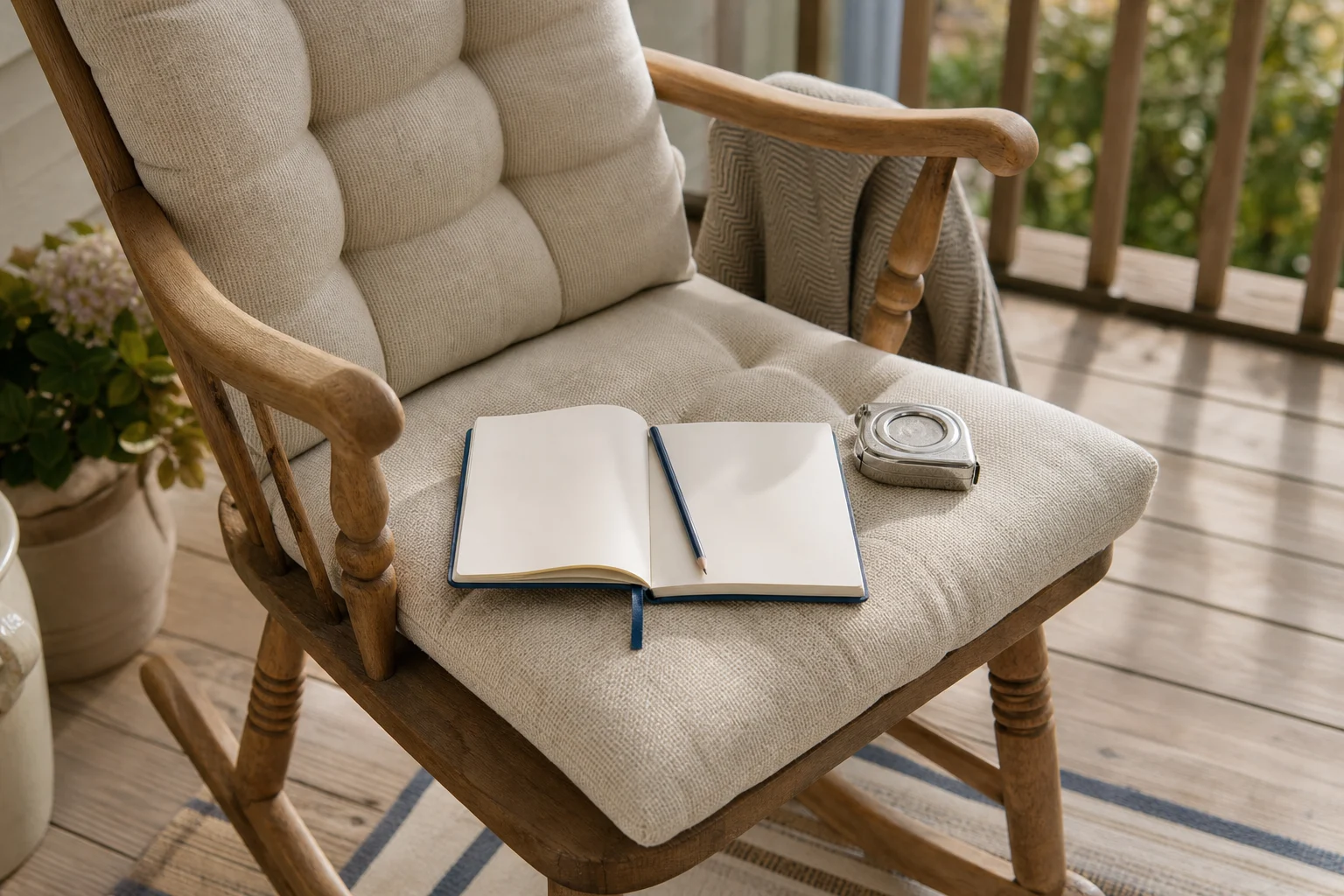
- On a surviving old cushion, measure from the cushion’s edge to the center of each tie root before the cushion disintegrates. Reproducing that placement is half the fit.
- On the frame, confirm each tie position lands where the chair offers something to loop — seat rail, slat gap, or arm post.
- Note the gap widths for tie-through straps; vintage spindle spacing runs wider than modern slats, and straps need enough length to wrap and knot behind.
Four ties (front and back corners) hold a seat pad better than two on any rocker that gets daily use, and rear ties threaded through a slat gap rather than around the rail are what stop the backward walk that rocking motion causes. The tie engineering itself — reinforced roots, width, materials — is covered in the rocking chair cushions guide; from the measuring side, all of it starts with positions written down as numbers.
Step 5: Check Thickness Against the Rock Clearance
Thickness on a rocker is a geometry decision before it is a comfort one. Every inch of seat pad raises your weight and steepens the rock arc against the floor stoppers; on a low vintage rocker, a 4-inch pad can turn a gentle chair into a launching mechanism.
Measure the rock clearance: the gap under the seat deck at mid-rock. If it is tight, the practical ceiling on seat thickness drops with it. The working ranges we cut: 2 inches is the traditional seat on classic hardwood rockers, 3 is the comfort spot on larger frames, and 4 belongs on oversize porch rockers only. Backs run 2–3 inches — thick enough to read as a cushion, thin enough not to push you off the seat’s ergonomics.
Common Rocker Measuring Mistakes
| Mistake | What goes wrong | The fix |
| One width, assumed rectangle | Trapezoid cut as rectangle bags at the arms on one side | Three width readings; record both ends if they differ |
| Tape following a dished seat | Depth reads long, cushion overhangs the front edge | Horizontal footprint only; note the dish separately |
| Back measured flat across the bow | Width reads short; pad pulls at its ties | Chord plus rise; curved cut when rise exceeds an inch |
| Ties ordered “standard” | Straps land on solid wood, pad rotates | Slat-gap map; tie roots specified as distances from the edge |
| Thickness chosen for comfort only | Low rockers get tippy, stoppers catch | Check rock clearance before upgrading thickness |
| Measuring one chair of a set | Production-year variance leaves one odd chair | Every chair, its own line on the order |
Rocker Cushion Cheat Sheet
| Measurement | What to record | Typical range |
| Seat width (front / mid / back) | All three; both ends if tapered | 17″–18″ indoor; 19″–21″ porch wicker |
| Seat depth | Back frame to front edge, horizontal | 16″–18″ indoor; 18″–20″ porch |
| Seat thickness | Seam to seam, cushion on edge | 2″–3″ (4″ oversize only) |
| Back width | Chord between stiles; plus rise if curved | Matches seat width, ±1″ |
| Back height | Seat deck to top rail, minus 1–2″ | 16″–20″ indoor |
| Slat-gap map | Height of each gap from the seat deck up | 2–4 usable gaps typical |
| Tie positions | Edge-to-tie-center distances, seat and back | 2–4 roots per pad |
| Rock clearance | Under-deck gap at mid-rock | Sets the thickness ceiling |
For reference points: classic indoor rockers take seat pads around 17–18 inches wide by 16–17 deep; porch wicker rockers run 19–21 wide; and the IKEA POÄNG rocker — the best-documented spec in the category — publishes its seat at 22 × 19.625 inches with an official 2-inch cushion. Use those as sanity checks, not shortcuts; manufacturers revise frames between years.
FAQs
What size cushions fit a rocking chair?
Classic indoor rockers take seat pads 17–18 inches wide and 16–17 deep with matching backs; porch wicker rockers run 19–21 inches wide. Always measure your own chair — seat taper and slat spacing vary chair by chair.
How do I measure a curved rocking chair back?
Measure the width as a straight chord between the stiles, then measure the rise from the chord’s midpoint to the back’s surface. Rise over an inch means the back cushion should be cut with a curve rather than flat.
Where should rocking chair cushion ties go?
Wherever the chair offers an anchor: rear seat rail or slat gaps for seat pads, slat gaps at two heights for back pads. Measure tie roots as distances from the cushion edge so the sewing lands where your frame has something to loop.
How thick should a rocking chair seat cushion be?
2 inches on classic hardwood rockers, 3 on larger frames, 4 only on oversize porch rockers — and only after checking the rock clearance under the seat deck, because thickness steepens the rock arc.
Can I replace just the seat pad and keep the old back?
Yes, each piece orders separately — but new foam next to compressed old foam makes the contrast obvious, and on rockers the mismatch shows on every stroke. Most single-piece orders become sets within a season.
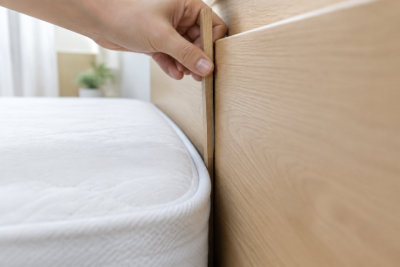
What Size Bed Gap Filler Do I Need? Thickness, Length and Density
Size a bed gap filler from three measurements, not the bed’s name: thickness equals gap width plus half an inch to one, length runs the full seam, height runs platform to mattress top. Density starts at 50D.
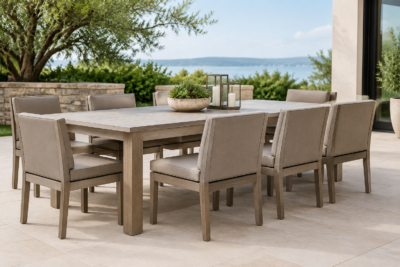
Cushion Thickness & Seat Height: Match the Pad to the Table
Cushion specs usually answer comfort questions. Thickness answers a geometry question: how high off the floor you end up sitting,

Church Pew Cushion Sizes: Standard Dimensions and How to Measure
Standard pew seats run 19-21 inches deep; cushions are cut 2-3 inches thick to measured runs at plus-or-minus half inch tolerance. Dimensions table, taper rules, and the pew-by-pew measuring method.
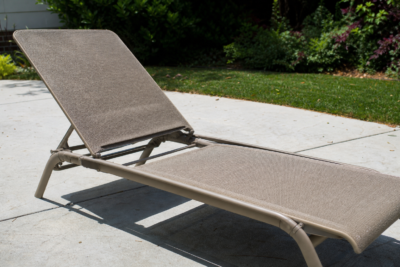
Chaise Lounge Cushion Measurements: A Complete Guide to Getting the Fit Right
How to measure a chaise lounge cushion correctly — seat depth, back height, thickness, hinge points and one-piece vs two-piece styles — with real Hampton Bay chaise dimensions.
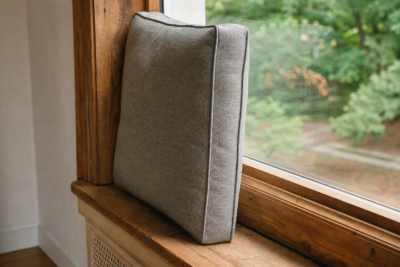
Window Seat Cushion Measurement: How to Get a Perfect Fit
Measure a window seat cushion correctly — width across alcoves, depth front to back, thickness vs sill height, radius corners and bay window angles — with tips from the cutting floor.
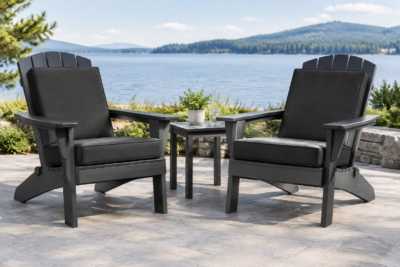
How to Measure Adirondack Chair Cushions: Seats, Fan Backs and Slat Gaps
How to measure Adirondack chair cushions — tapered seats, fan-back heights, recline geometry, strap-through slat-gap maps and two-piece sets for the tall-back chair.