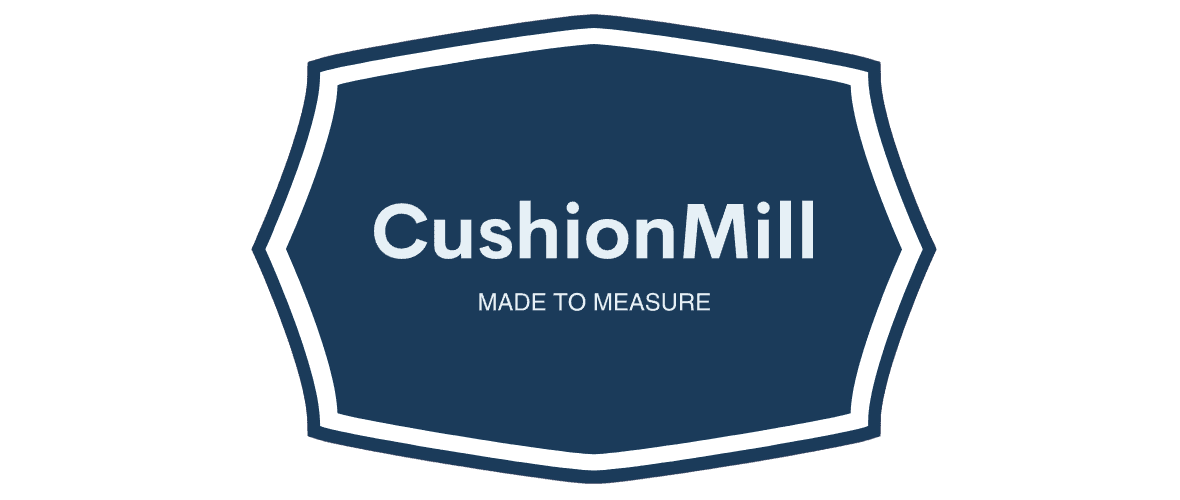
Most standard patio cushions will never properly fit an Adirondack chair — the problem is geometry, not size: a reclined fan back, a thin seat deck and a front-wide seat that no straight dining-chair cushion matches. A generic pad can be made to sit on the seat; only a cushion cut for the fan-back shape ever looks and feels right.
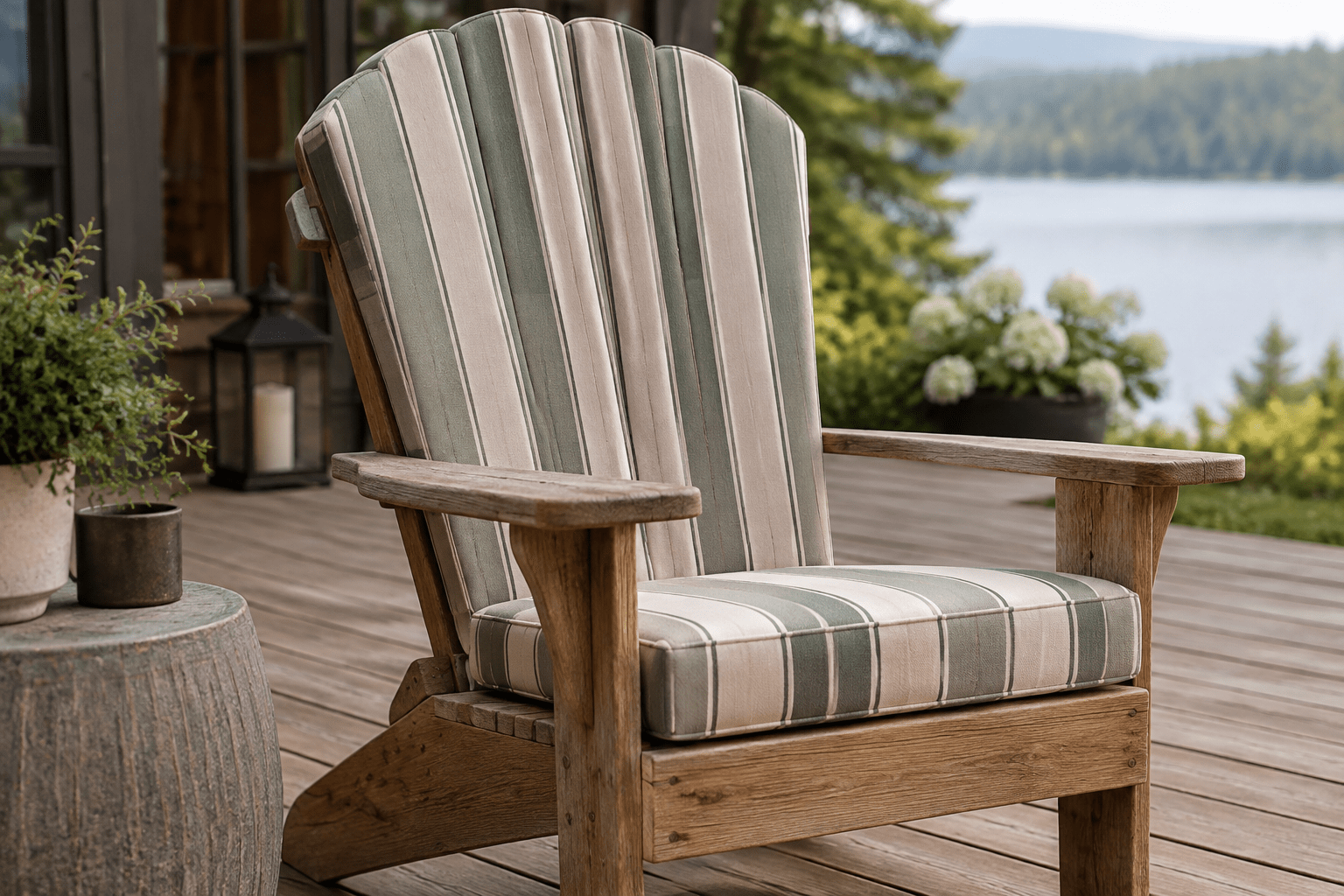
This guide covers the three geometric reasons standard cushions fight these chairs, which off-the-shelf options come closest and where each compromises, the set-buying and clearance traps, what waterproof actually means on an outdoor cushion, and the three-path decision — retail pad, partial upgrade, custom cut — with costs. The full measuring sequence is in how to measure Adirondack chair cushions; the size-and-selection overview is in the Adirondack guide.
Why a Standard Patio Cushion Fights an Adirondack Chair
An Adirondack is not a dining chair laid on a porch. Three features of the build — the whole point of the design — are exactly the three things a standard cushion cannot handle:
1. The reclined fan back. The backrest leans back at a noticeably steeper angle than any dining or patio chair, and it is wider at the top than at the seat — the slats fan outward. A straight-backed universal cushion hangs off the top edge, gaps at the bottom, and wrinkles through the middle because it is bending along a curve it was cut flat for.
2. The thin, laid-back seat. Adirondack seats are only about 1 to 2 inches deep and tilt with the recline. Standard patio seat cushions are built 3 to 4 inches thick for upright chairs; a thick pad on a laid-back seat pushes you forward up the seat, drops your feet past the footrest angle, and can push your head past the top of the backrest. On this chair, thin is not a cost cut — it is the correct spec.
3. The shaped seat front. Many Adirondacks widen or round toward the front edge of the seat, and most have slat gaps the cushion is expected to bridge. A rectangle cut for a dining chair overhangs the front curve, leaves bare seat at the sides, and sags into the gaps it was never sized to bridge.
Put together: an Adirondack wants a thin, shaped seat cushion and a tapered, angled back cushion — the two things the universal-cushion aisle does not stock.
Which Standard Cushions Come Closest (and How Each Compromises)
None of this stops the big-box aisles from selling “universal” pads to Adirondack owners, and honestly, three of them half-work:
| Option | What it does on an Adirondack | The compromise you accept |
|---|---|---|
| Thin universal seat pad (1–2 in) | Sits on the seat without shoving you forward | Squares off a rounded seat front; slides on the tilted deck without a grip point |
| Thick dining patio cushion (3–4 in) | Immediate comfort on paper | Pushes you up the reclined seat, wrong foot angle, head past the backrail |
| Chair pad + separate universal back cushion | Covers both surfaces | Back cushion wrinkles on the fan taper, gaps at the slats, nothing ties the pair together |
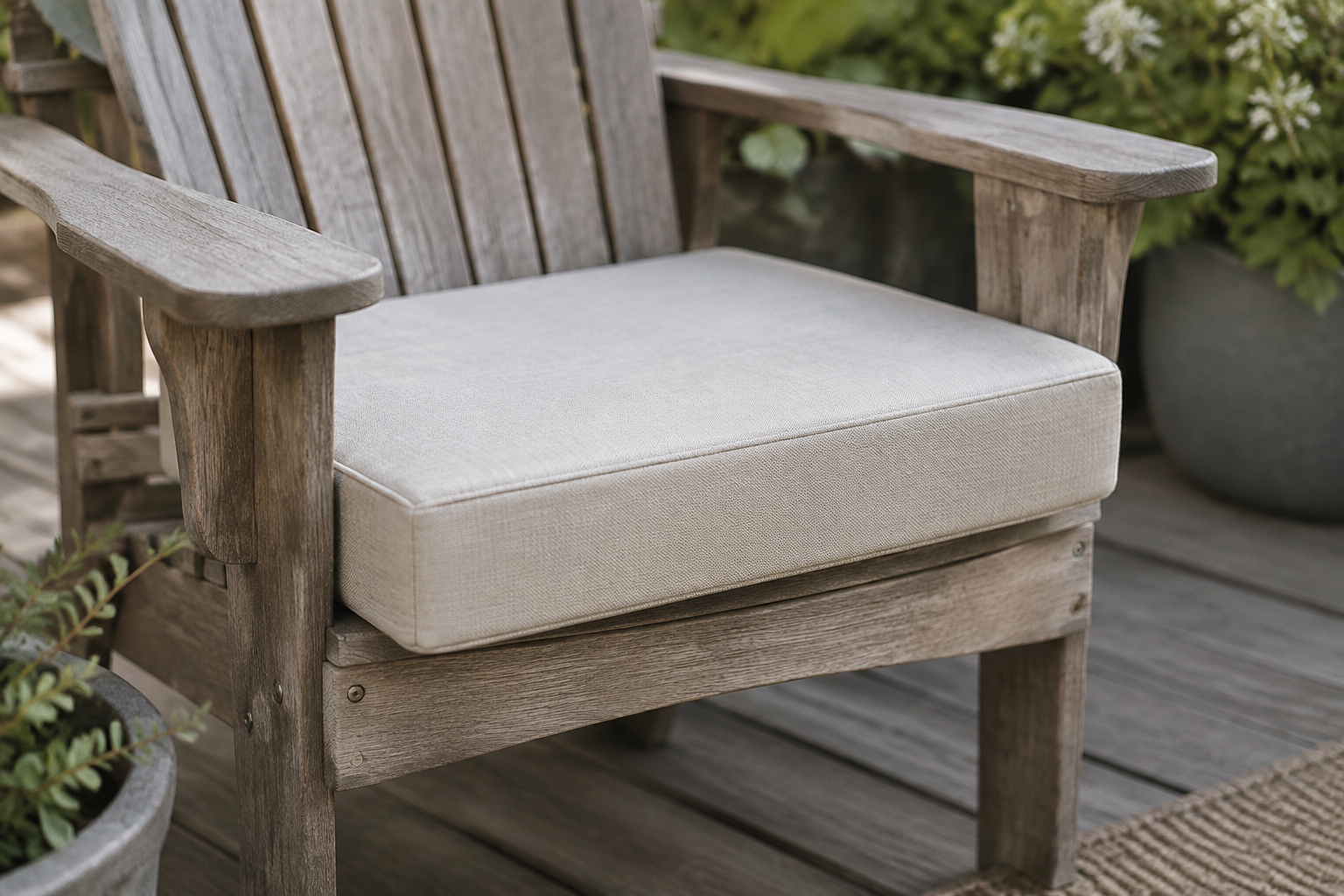
The pattern in the failures is consistent: the thicker and more “universal” the cushion, the harder it fights the chair. The owners who live longest with store-bought options are those with straight-back, boxy Adirondack clones — the modern simplified builds that flatten the seat and square the back into something closer to a normal chair. The more classic the fan-back silhouette, the shorter the list of off-the-shelf options that work at all.
The Fan Back Problem: Where Generic Fails Hardest
If you only replace one cushion on an Adirondack, make it the back — and understand why the generic one failed:
The fan back is tallest at the top and narrowest where it meets the seat, with a built-in recline. A flat-loomed, straight-cut back cushion cannot follow that taper: excess fabric wrinkles horizontally where the chair is narrower, the top corners flop past the backrail, and there is no clean way to anchor the bottom edge because the seat-to-back angle is nothing like a dining chair’s near-right-angle.
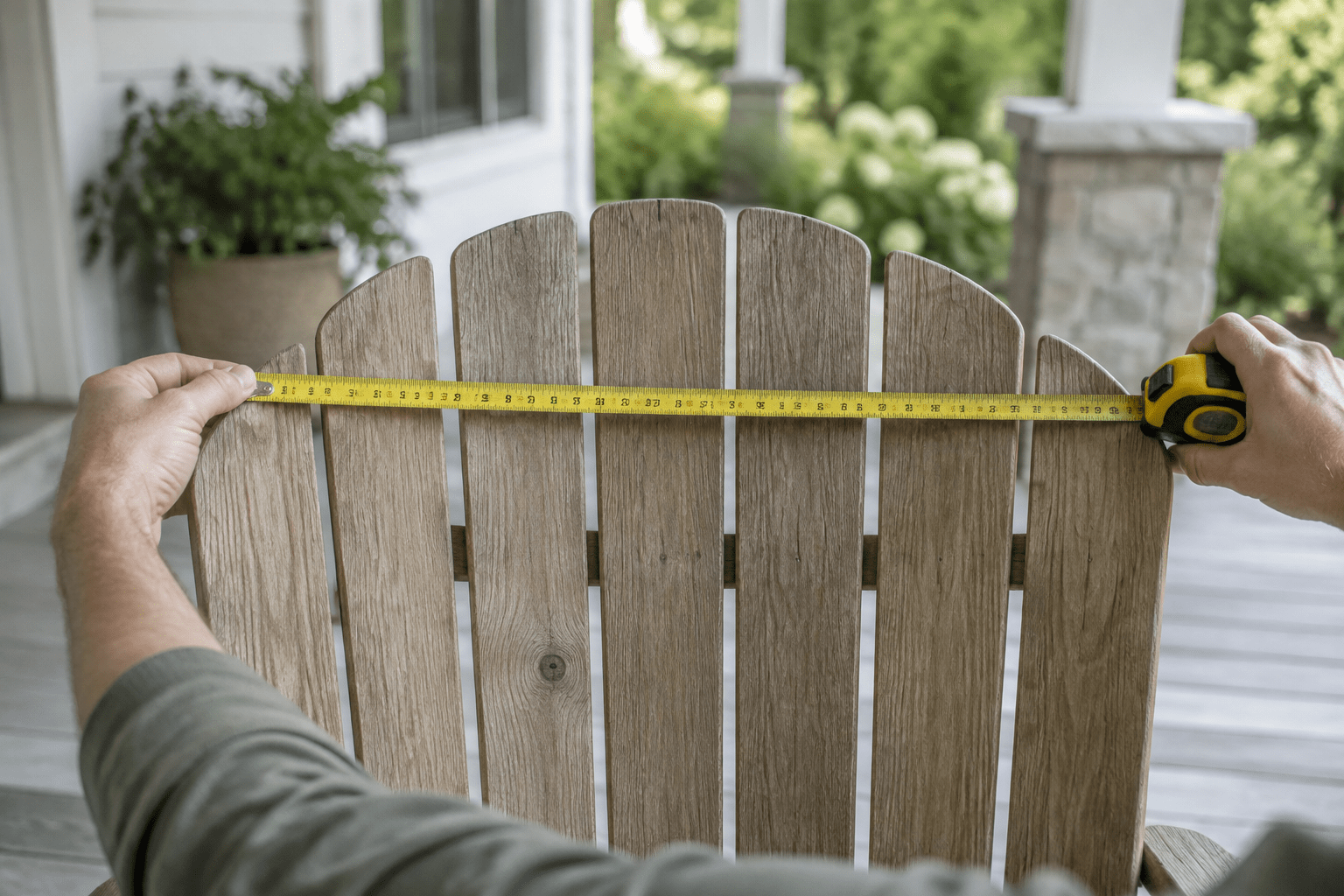
The fix is measurement, not force: width at the top, width at the bottom, height down the center, and the slat-gap map for where the anchoring points sit. That is the exact sequence in how to measure Adirondack chair cushions — steps two through four exist because of the fan back.
One more detail worth flagging from the sewing floor: on fan-back cushions, attachment points are placed per-chair, from your slat-gap map, not from a standard layout. Two Adirondacks from two makers rarely share a gap pattern, which is the quiet reason “universal” backs never sit quite right on either.
Buying Sets: Set of 2, Set of 4 and the Brand-Match Trap
Adirondack cushions sell heavily as sets — “set of 2” and “set of 4” are among the most-searched phrasings — and sets are the right instinct with one large caveat:
A stock set is cut for the maker’s chair, not yours. Retail sets are designed alongside a specific chair line: the seat taper, the back taper, the gap positions are all matched to that manufacturer’s frame. On its own chair, the fit is genuinely good. On your chair — a different maker, a different era, a different slat count — the same set inherits every compromise from the sections above, with the added frustration that a mismatched set mismatches two surfaces at once.
The honest set-buying rules:
- Buy the set from the same maker as the chair when the chair’s line is still current. That is the one case where stock sets fit as designed, and it is worth checking before anything custom.
- Measure before trusting a “universal” set label. Top width, bottom width, seat width and depth — five minutes against the dimensions in the size guide filters out most mismatches before you pay.
- Sets made for chairs you no longer own are why the clearance aisle is full of them. Which is the next section.
Plastic and POLYWOOD-style Adirondacks follow the same rules with one addition: their seat dimensions run truer to maker specs than wooden builds, so a same-maker set on a plastic chair is the most reliable stock fit in the category — and cross-maker sets are the least, because the slat-gap patterns differ most.
Clearance Cushions: What You Are Actually Buying
Clearance Adirondack cushions are tempting at a third of the price, and the purchase is fine when you know what a clearance cushion physically is:
Clearance stock is overwhelmingly discontinued lines — colorways and prints the maker dropped, often for the chairs they were designed to match, which may also be discontinued. What that means in practice:
- The fit gamble is permanent. If it does not fit your chair, there is no other size in that line to exchange into; the line is gone.
- No future matching. Buy one clearance set for two chairs today, want a third chair cushion next year, and the colorway no longer exists anywhere. The mismatched-third-chair email is a real genre in our inbox.
- Fabric performance is still the fabric’s. An older print on a lesser fabric fades like any lesser fabric, clearance or not — the fabric guide is worth two minutes even at clearance prices.
The rational way to use the clearance aisle: a near-free experiment to learn what shape and thickness your chair actually wants, before ordering the real thing cut to match.
Waterproof, Water-Resistant, and What an Adirondack Cushion Actually Needs
Adirondack chairs live fully outdoors, so the waterproofing question comes up in almost every inquiry — and the label on the shelf is the least reliable part of the answer:
- “Waterproof” cushions do not really exist as a fabric claim. Covers shed water to a degree; seams, stitching holes and the foam underneath all take on water in a real storm. What differs is how fast the cushion dries, which is a foam-and-fabric system question, not a label. The full unpacking is in are waterproof cushions real.
- What an Adirondack actually needs: solution-dyed acrylic fabric (Sunbrella-class) for fade and rot resistance, and — if the chairs sit uncovered — quick-dry foam so a soaked cushion drains and dries instead of holding water against the slats for days. Standard foam under a good fabric still takes days to dry inside.
- Thickness interacts with drying. The thick comfort cushion that felt right in the showroom holds more water and dries slower than the thin spec the chair’s geometry wanted anyway — on this chair, the geometry and the weather agree on thin.
The practical spec that satisfies both the fan-back geometry and the outdoor life: thin seat, shaped back, solution-dyed acrylic, quick-dry (reticulated) foam — a marine-specialist buy — and zippered covers.
The Three-Path Decision (with Honest Costs)
Every Adirondack cushion replacement lands on one of three paths, and the right one is usually decided by the chair, not the budget:
Retail / clearance pad makes sense if: your chair is a straight-back simplified build, the same maker’s set is still sold, or you are running the near-free clearance experiment. Expect tens of dollars per chair and some geometric compromise.
Re-cover or partial upgrade makes sense if: your existing cushions still fit — the foam rebounds under a ten-second press — and only the fabric has faded or stained. The foam is the expensive half of a cushion; saving it saves most of the money. The decision test between recovering and replacing is in replacement cushion covers vs full cushions.
Custom-cut makes sense if: your chair is a classic fan-back, is wooden and hand-built (so nominal sizes never matched anyway), or you are tired of the compromise. Cushions are cut to your measured numbers — thin seat, tapered back, gaps mapped — through the quote selector, starting at $39 plus per-square-foot foam and fabric rates, made in 4–7 business days with rush at 3–5. Against buying a wrong-fitting set twice, the math usually lands closer than people expect.
Quick rule of thumb: the more your chair looks like the classic Adirondack silhouette, the shorter the stock-cushion path and the earlier custom becomes rational.
FAQ
Will standard patio cushions fit Adirondack chairs?
Usually not well — the reclined fan back, thin tilted seat and shaped seat front are all shapes a standard upright-chair cushion is not cut for. A thin universal seat pad is the least-bad off-the-shelf option; anything thick pushes you forward up the reclined seat. Chairs with straight, boxy backs are the exception that half-works.
What thickness should an Adirondack seat cushion be?
Thin — about 1 to 2 inches, because the seat deck is only 1 to 2 inches deep and tilts back with the chair. Thickness that feels luxurious on a dining chair shoves you forward on an Adirondack, drops your feet past the footrest angle and pushes your head past the backrail. Thin is the correct spec here, not a corner cut.
Are Adirondack cushion sets (set of 2 or 4) worth buying?
Yes when the set comes from the same maker as your chairs and that line is still current — the set is cut to that frame. Across makers, the set inherits every universal-cushion compromise on both surfaces at once. Measure top width, bottom width and seat size against the set dimensions before buying.
What does a clearance Adirondack cushion set really get me?
A discontinued line at a discount — fit gamble permanent, no future matching pieces, fabric still ages as its grade ages. Fine as a cheap experiment or for same-maker chairs; a bad start for building a matched set over years.
Do I need waterproof cushions for Adirondack chairs?
You need fade-resistant fabric and fast-drying foam, which is what “waterproof” labels are gesturing at. No cushion is truly waterproof through seams and stitching; solution-dyed acrylic over quick-dry foam is the combination that survives uncovered outdoor life and dries in hours instead of days.
Next Steps
- Identify your chair’s build — classic fan-back or simplified straight-back. That one observation shortens every path below it.
- Measure the five numbers — seat width and depth, back top width, back bottom width, back height — following how to measure Adirondack chair cushions.
- Price the custom path against the compromise — thin-seat, fan-back sets cut to your measurements start at $39 plus per-square-foot rates through the quote selector, made to order in 4–7 business days.
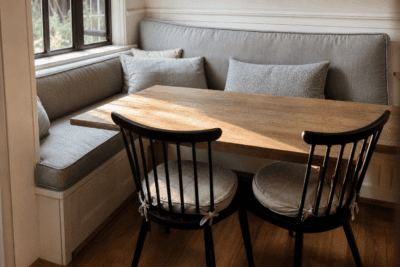
Breakfast Nook Cushions: The Corner-Seating Build Guide
Breakfast nook cushion guide: L-shaped and U-shaped runs, corner geometry and seam placement, seat-plus-back builds at dining height, morning-sun fabric logic, and ordering the whole run from one fabric lot.

Outdoor Dining Sets: Buying the Set Right So the Cushions Work
Outdoor dining set buying guide: how the set choice locks in your cushion future — seat sizes, arm heights, frame materials, cushion quality in boxed sets versus custom pads, and set versus separate buying.

At Home Outdoor Cushions: The Decor Superstore’s Seasonal Wall
At Home runs a full-scale seasonal cushion department at decor-store prices — what the wall stocks, the fit grid, and when the superstore route ends at custom.
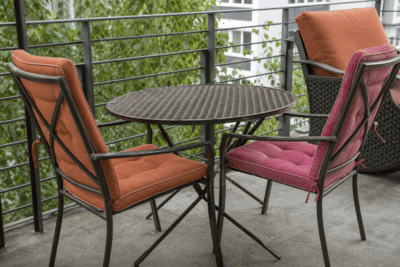
Target Outdoor Cushions: Threshold, Sizing and Replacement (2026)
Target’s Threshold cushions look designer but run generic sizes. What fits, what the seasonal rotation kills, and when custom replacements beat another Threshold refresh.
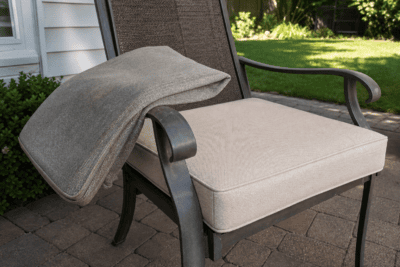
Hampton Bay Cushion Covers: Replacement Covers vs Full Cushion Replacement
The Hampton Bay covers question answered — why OEM cover-only replacements are rarely available for most series, the exact-fit route (full cushions by your series dimensions), re-covering services and DIY, and how to identify your series first.
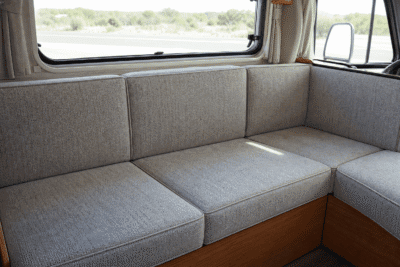
RV & Camper Cushion Replacement: The Complete Guide
RV dinette and berth cushion replacement — sizes, 45–60D foam for daily use, spill-proof fabrics, and the paper-template method for odd cabin shapes.