
Ovals are the ghost shape of the cushion world. Almost nobody stocks them, and the furniture that needs them — oval window seats, rocking chairs, antique ottomans, Victorian parlor pieces — was built before anyone standardized anything. The replacement is therefore custom, and custom cutting makes errors exact: a wrong number does not sort-of fit, it fits wrong in both directions at once. This guide covers the two axes and the thickness an oval order needs, a quarter-inch rule that separates true ovals from circles before you spend money, and the four mistakes that account for nearly every misfit oval we see. For the general width-depth-thickness protocol, start with how to measure outdoor cushions; the photo walkthroughs for every shape live in the measurement guides.
What Is an Oval Cushion?
An oval cushion is a closed curve with no corners and two different widths: one long direction, one short direction. The simplest test costs nothing — lay the old pad flat on a table and look straight down at it. All edge, no straight lines, longer one way than the other: an oval. One flat side with the rest curved: that is a half-round, a different shape with its own rules. Every direction equally wide: a circle, and an easier order than you thought.
The furniture behind the shape is old, and that is the whole problem. Oval rockers, oval ottomans and oval window-seat ends were cut to the piece of furniture, not to a catalog, so no two eras — often no two makers — agree on what “standard oval” means. Stock cushion makers respond by not trying. The shape runs on made-to-measure, which means the tape measure in your hand is the spec sheet. For an oval rocker, the replacement rocking chair cushions page covers the rebuild from worn set to fresh cut.
One habit before anything else: measure the old cushion, never the chair. Frames run larger than the pads they carry, and an oval frame’s rails can hide a quarter inch or more on each side of the true cushion line.
The Three Numbers an Oval Order Needs
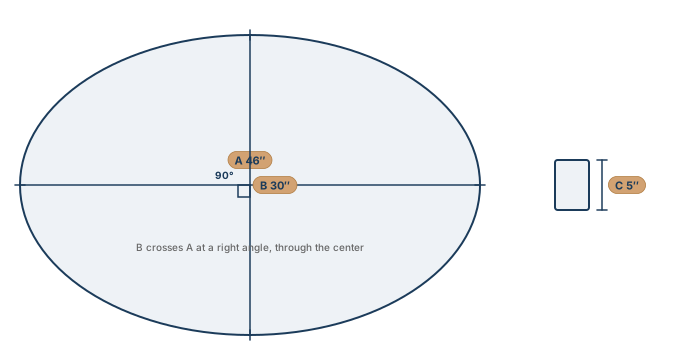
Every oval on earth is fixed by the same three numbers. In our cushion builder, the Oval card is the one with the ellipse drawing, and its three fields carry the same letters used below — read your tape straight into the form.
| Letter | Field | What to measure | A typical order |
|---|---|---|---|
| A | Long axis | The longest run, tip to tip | 46″ |
| B | Short axis | The widest point across its middle | 30″ |
| C | Thickness | Seam to seam, cushion stood on edge | 5″ |
A — Long Axis: Tip to Tip
- Lay the old cushion flat on a table — never on the chair, never hanging over the edge.
- Find the long direction by eye. An ellipse always has an obvious one; if you have to squint, you may be holding a circle (the section below settles that).
- Lay the tape on the face of the cushion, from the far tip to the far tip, passing through what looks like the middle.
- Slide the tape parallel to itself an inch or two each way and watch the reading. An ellipse has exactly one longest line and it passes through the center — the largest reading you can find is A.
Record to the nearest quarter inch. Our cutting forms accept eighth-inch increments, so 46 3/8″ goes in as 46 3/8″, not as 46″.
B — Short Axis: Across the Middle
- Find the midpoint of A. Easiest method: half of A, marked lightly on each side, joined across the cushion.
- Measure straight across the cushion through that midpoint, perpendicular to A.
- Slide the tape along the curve the same way you did for A. There is exactly one widest line, and it crosses the long axis at its middle — the largest honest reading is B.
The right angle is the whole trick. B must cross A at 90 degrees, on the flat, with the tape lying on the cushion’s face — not bent around the edge, not read through the side wall of the pad.
C — Thickness
Stand the cushion on its edge on the table and measure seam to seam. The seam is the honest edge — it is where the cover was actually cut — while the puff of fill above it is just fill, and it compresses differently every time it is measured. Oval window seats and rockers most often take 3″; 5″ belongs to outdoor deep seating. The builder accepts 2″ through 8″.
Four Mistakes That Ruin Oval Orders
These four belong to ovals specifically. The shape-blind classics — measuring the frame, reading a sagging tape, rounding “for luck” — are collected in cushion measurement mistakes, and they apply here too.
1. Crossing the axes at an angle. If B crosses A at 80 degrees instead of 90, both numbers are wrong in opposite directions: A reads short, B reads long. The oval cut from those numbers is a skewed egg — it sits on the seat rotated a few degrees, with a gap at one tip and an overhang at the other, and nothing about it looks fixable because the error is baked into the curve.
2. Swapping the long and short axis. The builder expects the long axis in A and the short in B — the long axis must be the longer of the two. Enter them reversed and the cushion that arrives is your seat turned a quarter-turn: perfect oval, wrong orientation, and on a window seat where the long dimension runs along the wall, it simply does not go in. Check which number is bigger before you submit, every time.
3. Not recognizing a circle. If your two axis readings land within a quarter inch of each other, you are probably holding a circle. That is not a technicality — a 45″ × 45 1/8″ cushion was cut as a round and has aged as a round, and ordering it as an oval buys you a two-axis pad that fits no better and costs the same effort to explain. Quarter inch or less: order the round.
4. Measuring the seam line instead of the outer edge. On an old pad the cover’s seam can sit a little inboard of the true edge — decades of washing shrink covers, and piping adds its own width. A and B are tip-to-tip and widest-point on the outermost edge, piping included. (Thickness is the opposite discipline: there you want seam to seam, because the seam is the cut.) Same word, two jobs — the most confused pair of instructions in oval orders.
Is It an Oval or a Circle?
Run the check before you order, not after:
- Measure across the cushion through the center: call it reading one.
- Rotate the tape 90 degrees through the same center: reading two.
- Compare. A difference of half an inch or more is a true oval — order both axes. A difference under a quarter inch is a circle — one diameter does it, and the round protocol is how to measure a round cushion.
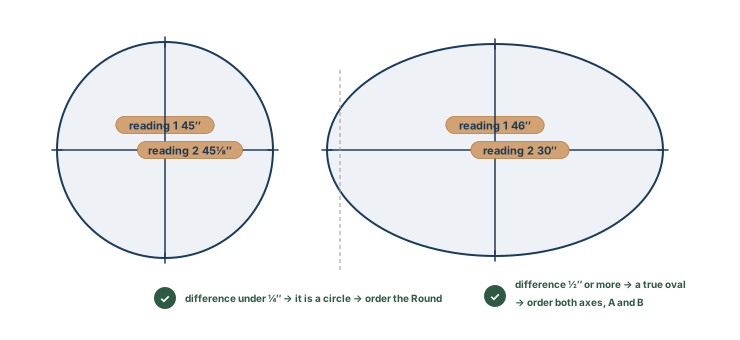
Between those, a quarter to a half inch, is borderline — usually an old pad whose fill has settled unevenly. Measure at three angles, take the longest reading as A and the shortest as B, and order the oval. An oval ordered on a near-circle still fits; a circle ordered on a slight oval leaves a crescent gap, and the gap is on you.
One more thing worth knowing: decades-old fill settles where you sit. If the pad is lopsided — one end drooping, one side compressed — measure what is there now, at the widest and longest honest points, not what the tag said it was in 1968.
Why There Is No Standard Oval Size Chart
Window seats and benches get size charts because their makers agreed on foot-wide increments a century ago. Ovals never got the meeting. A 1905 rocker’s oval seat, a 1920s parlor ottoman and a mid-century window-seat end share a name and nothing else, so any “standard oval” table is a list of one factory’s customers. Expect to measure, expect made-to-order, and expect every shape to price the same way — by the square foot, never a shape surcharge.
FAQs
Can I measure the frame if the old cushion is gone?
Yes — but measure the deck the cushion sat on, and expect frame numbers to run slightly large. For an oval frame, take the longest run tip to tip between the inside of the rails, then the widest across the middle, and photograph the seat from directly above with a tape in the frame. Photos settle a dozen questions at once; a real person replies within one business day.
What thickness should an oval cushion be?
3″ for window seats, rockers and ottomans; 5″ only for outdoor deep seating. Thinner than 3″ reads as a placemat on an antique scale; thicker than 5″ lifts a rocker seat past its arm line. The builder takes 2″–8″ for the rare exception.
My two readings differ by less than a quarter inch — still an oval?
No — order it as a round. Two axes within a quarter inch of each other is a circle wearing a little age. One diameter, one number, done.
How close to my numbers will the cushion actually be cut?
A shop holding ±½″ is the benchmark to expect — ±¾″ on runs over 36″ — and every dimension should be re-checked against your order before fabric is cut, not after sewing. Ask what happens when a cut misses tolerance; remakes for shop errors should be the shop’s problem, not a negotiation.
What if I get a number wrong?
Say so within 24 hours — cancellation is free inside the first day. After that, the backstop is process: nothing is cut until your numbers are confirmed, and odd numbers get a phone call, not a guess. If the error is ours, the remake is ours.
Next Steps
- Measure A, B and C off the old cushion, flat on a table, to the nearest quarter inch — and take one photo from directly above with the tape in the frame.
- Open the builder with the oval card preselected and type your numbers in: custom oval cushions.
- Confirm when we check the order back to you. Made to measure in 4–7 business days, rush 3–5 — a fraction of the wait of typical US custom shops.
The one-sentence version: an oval is two axes and a thickness — the longest line tip to tip, the widest line across its middle at a right angle, thickness seam to seam — and if the two axes agree within a quarter inch, it was never an oval at all.
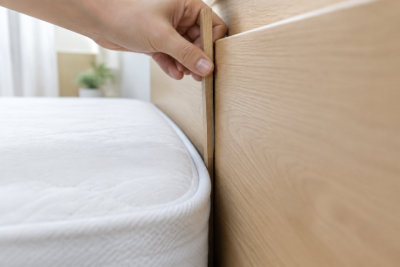
What Size Bed Gap Filler Do I Need? Thickness, Length and Density
Size a bed gap filler from three measurements, not the bed’s name: thickness equals gap width plus half an inch to one, length runs the full seam, height runs platform to mattress top. Density starts at 50D.

Cushion Thickness & Seat Height: Match the Pad to the Table
Cushion specs usually answer comfort questions. Thickness answers a geometry question: how high off the floor you end up sitting,

Church Pew Cushion Sizes: Standard Dimensions and How to Measure
Standard pew seats run 19-21 inches deep; cushions are cut 2-3 inches thick to measured runs at plus-or-minus half inch tolerance. Dimensions table, taper rules, and the pew-by-pew measuring method.
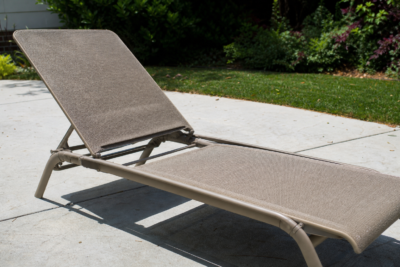
Chaise Lounge Cushion Measurements: A Complete Guide to Getting the Fit Right
How to measure a chaise lounge cushion correctly — seat depth, back height, thickness, hinge points and one-piece vs two-piece styles — with real Hampton Bay chaise dimensions.
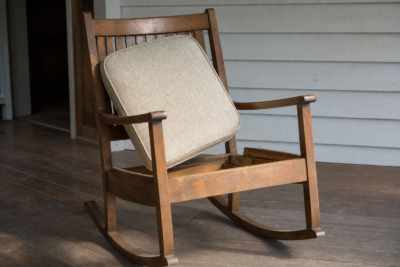
How to Measure Rocking Chair Cushions: Seats, Backs and Tie Positions
How to measure rocking chair cushions — tapered seats, curved backs, slat-gap tie maps and rock clearance — with the three-number protocol for both pieces of a rocker set.
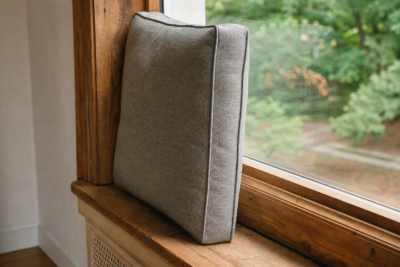
Window Seat Cushion Measurement: How to Get a Perfect Fit
Measure a window seat cushion correctly — width across alcoves, depth front to back, thickness vs sill height, radius corners and bay window angles — with tips from the cutting floor.