
Temu has taken the price floor of the consumer market and lowered it — outdoor cushions included, at sticker prices that make even big-box value tiers look premium. The question is never whether the price is low; it is what the price buys, how long it lasts, and what the total cost looks like when the answer is “one season.” This guide gives the honest assessment: what Temu’s cushion offering actually is, the specific failure modes of ultra-cheap construction, the narrow cases where buying it makes sense, and the decision line against every other route in this series. The measuring baseline for anything you buy anywhere: how to measure outdoor cushions. Sibling guides: Amazon, Walmart.
What You Are Buying on Temu
The platform is a direct-from-factory marketplace: enormous catalog, rotating listings, prices that reflect factory-floor costs with minimal markup and minimal everything else. For cushions specifically, the catalog is dominated by:
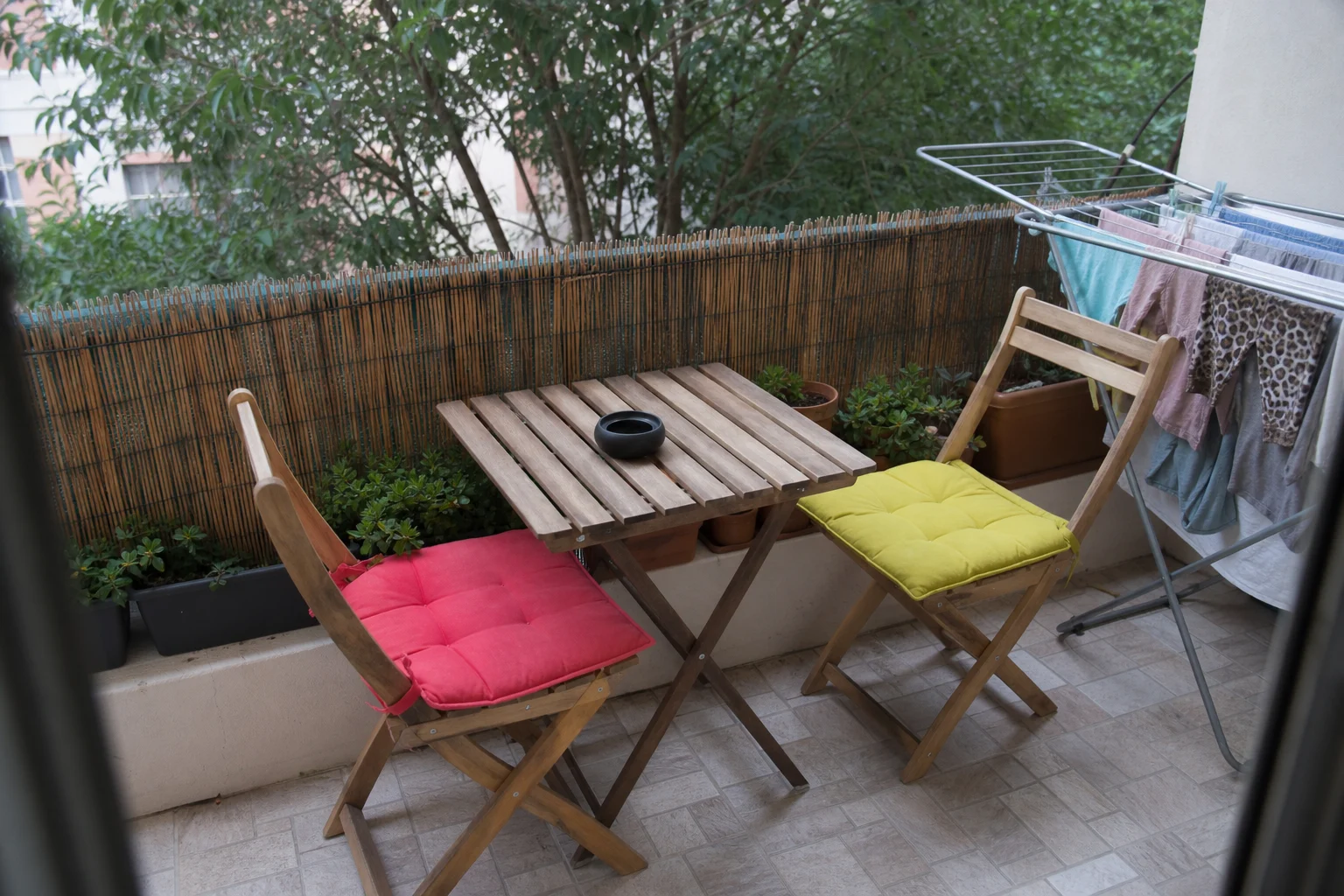
- Generic-grid cushions — dining squares, seat pads, bench pads at the standard sizes, in rotating prints.
- Decorative pillows and pads — thick with tufted floor cushions and accent pieces, thinner on serious seating product.
- Unbranded everything — no fiber pedigrees, no foam specs, no brand standing behind the listing after it rotates.
The structural facts to hold onto: listings change constantly (the product you bought may not exist as a listing next month), specs are thinner than any other channel in this series, and the platform’s photograph-to-doorstep gap is the widest in the market. None of this makes Temu a scam; it makes it a specific tool with a specific narrow use.
What the Price Actually Buys — and What It Doesn’t
Run the standard checks against ultra-cheap construction and the pattern is consistent:
| Check | What ultra-cheap typically delivers | Consequence |
| Fabric fiber | Unqualified “polyester” or unnamed “outdoor fabric” | The fade tier; in real sun, visibly lighter within a season |
| Fill | Loose fiber, low-grade foam, or a blend | Mats flat under real sitting; the mats-by-August failure |
| Dimensions | Spec tables round optimistically; consistency varies by batch | Measure on arrival, before the return window closes |
| Construction | Light stitching, minimal ties, no zipper | Ties and seams are the first casualties |
| Accountability | Listing rotates; the seller relationship is thin | Warranty in practice is the return window, nothing more |
The honest summary: the price is real, and so is the one-to-two-season clock. Ultra-cheap cushions are not mispriced quality product; they are honestly cheap product. The mistake is not buying them — it is buying them and expecting a different clock.
The Five Failure Modes, in Order
Knowing what fails first tells you what a cheap cushion can and cannot do:
- Fill collapse. The first and most certain: loose fiber and low-density foam compress under daily sitting. A seat that reads plush on arrival reads flat by mid-summer with real use. No maintenance habit reverses fill collapse (the mechanics).
- Color fade. Polyester-family fabric in full sun loses depth within weeks to months. On a covered porch, this failure mostly disappears — which is the single biggest lever for making cheap cushions work.
- Tie and seam failure. Light stitching under wind and daily repositioning gives at the stress points; the cushion then slides, and sliding accelerates everything else.
- Waterlogging. Cheap open-cell fill holds rain like a sponge; the cushion that stays heavy for days is growing the mildew that ends it (the draining method buys time, not immortality).
- Batch inconsistency. Ordering the “same” cushion twice, months apart, produces two different cushions — dimension drift, color drift, sometimes different fabric entirely. This is why completing sets matters on this channel more than any other.
When Temu Cushions Make Sense
The defensible uses, honestly stated:
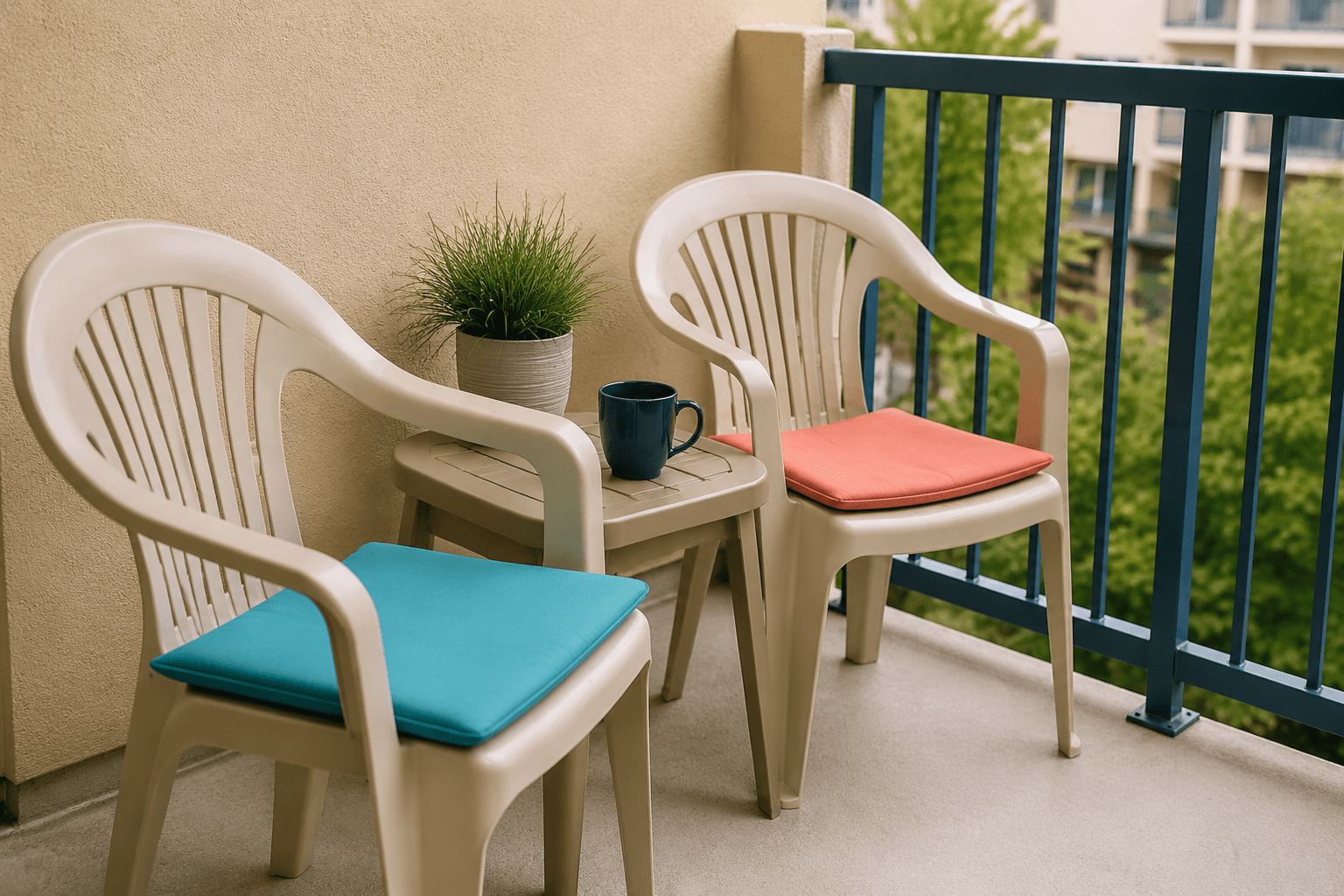
- – Covered or screened porches with seasonal usage — the two biggest failure modes (sun fade, rainlogging) are muted by the environment, and the remaining clock (fill collapse) matters less for six-weeks-a-year usage.
- – Staging and scenery — a porch dressed for a sale, a rental’s photo shoot, a party: cushions as set dressing, where lifespan is irrelevant.
- – Trying a size or a look — discovering whether your family actually uses bench seating before committing to the real thing.
- – Filling a gap cheaply while the real order is decided — the interim solution, understood as interim.
When the Math Stops Working
- – Daily-use seating. One cheap set per summer for three years costs more than one correct run at 50D-60D foam with solution-dyed acrylic covers — the loop economics are laid out in custom vs standard cushions, and they are starker at this price floor.
- – Anything off the generic grid. Temu’s catalog is generic sizes; deep seats, one-piece benches, hinge positions, and high-loft backs are not there at any price.
- – Sets worth keeping. Furniture good enough to keep deserves the replacement that ends the cycle: exact-fit cushions from a $45 make-base plus per-sqft foam and fabric rates, cut only after your dimensions are confirmed — start at custom outdoor cushions.
The Total-Cost Arithmetic
Sticker price is the wrong number; cost per season of service is the right one. A cheap set that serves one real season costs its full price per season. A mid-tier universal set that serves three costs a third of its price per season. A custom set at 50D-60D with acrylic covers that serves eight to ten costs a small fraction per season — and fits the first time, which no amount of discounting buys on a rotating marketplace. The arithmetic does not forbid cheap cushions; it forbids confusing their price with their cost.
The Platform Mechanics: Timelines, Returns and Sets
Ultra-cheap marketplaces differ from every other channel in this series in their operational mechanics, and the mechanics change the buying strategy:
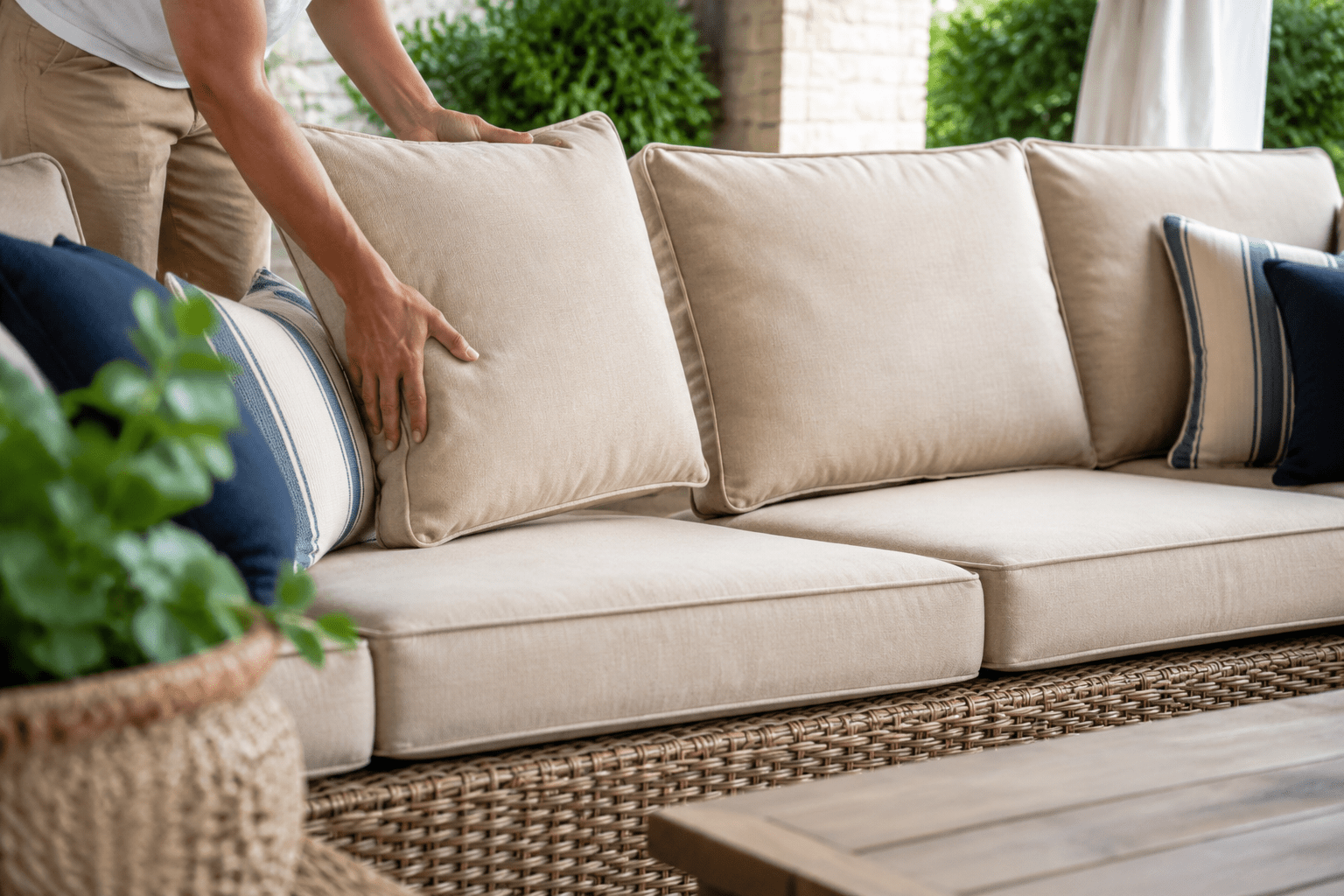
- – Shipping timelines run long. Direct-from-factory logistics mean weeks, not days — a spring purchase arriving mid-summer is a real pattern, and it argues for buying off-season (buying next summer’s cushions at summer’s end, when the usage pressure is off) rather than in the spring rush when every week of delay matters.
- – The return window is the entire warranty. Treat the arrival day as inspection day: measure every piece, press every fill, photograph any defect against a tape measure, and decide inside the window — because after it, the listing’s rotation means there is no seller relationship standing behind the product.
- – Sets are one-order projects. Batch inconsistency makes multi-order set completion a patchwork gamble; if a set of six is the plan, six in one order is the only version of the plan.
A note on expectations that fairness requires: some ultra-cheap cushions serve their purpose perfectly well for the niche they fill — the staging porch, the six-week cabin, the kids’ fort in the backyard. The channel deserves its bad reputation only when it is asked for a job it was never built to do. Match the tool to the job, inspect on arrival day, and the price is genuinely what it appears to be.
FAQs
Are Temu outdoor cushions good quality?
They are honestly cheap rather than deceptively cheap — expect the fade tier of fabric and fill that mats within a season of real use, which is fair value exactly when the usage is light, covered, or temporary, and poor value for daily open-patio seating.
How long do ultra-cheap outdoor cushions last?
In full sun with daily use, one season is the honest expectation — fill collapse first, color fade close behind; on a covered porch with occasional use, two to three seasons, because the environment mutes the two fastest failure modes.
Can I complete a set by ordering the same Temu cushions twice?
Not reliably — listings rotate and batches drift, so the “same” cushion ordered months later can differ in dimension, color, and sometimes fabric; buy the full count in one order or accept the patchwork.
What should I check when cheap cushions arrive?
Measure every piece against your seat numbers on day one (spec tables round optimistically), run the five-second press test on the fill, and inspect ties and seams — all inside the return window, which is the entire accountability structure the channel offers.
When is custom better than buying cheap repeatedly?
Daily-use seating, off-grid shapes, and sets worth keeping — one run at custom outdoor cushions ends the annual loop and costs less per season served than the cheap cycle it replaces.
Next Steps
- Measure your seats per how to measure — the numbers decide whether any generic product, at any price, can fit.
- Match the usage honestly: covered and occasional leans cheap; daily and exact-fit leans custom.
- For the durable route, price custom outdoor cushions — 4-7 business days, nothing cut until your dimensions are confirmed.
Breakfast Nook Cushions: The Corner-Seating Build Guide
Breakfast nook cushion guide: L-shaped and U-shaped runs, corner geometry and seam placement, seat-plus-back builds at dining height, morning-sun fabric logic, and ordering the whole run from one fabric lot.
Outdoor Dining Sets: Buying the Set Right So the Cushions Work
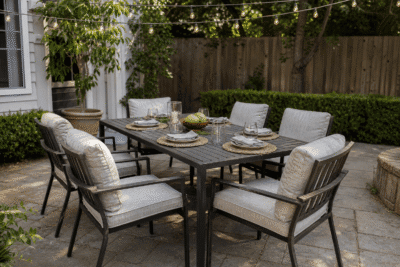
Outdoor dining set buying guide: how the set choice locks in your cushion future — seat sizes, arm heights, frame materials, cushion quality in boxed sets versus custom pads, and set versus separate buying.

At Home Outdoor Cushions: The Decor Superstore’s Seasonal Wall
At Home runs a full-scale seasonal cushion department at decor-store prices — what the wall stocks, the fit grid, and when the superstore route ends at custom.
Target Outdoor Cushions: Threshold, Sizing and Replacement (2026)
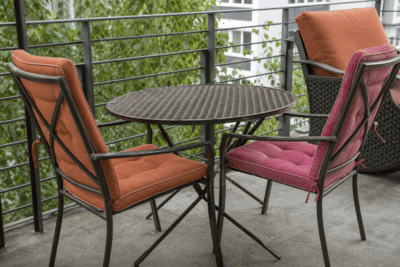
Target’s Threshold cushions look designer but run generic sizes. What fits, what the seasonal rotation kills, and when custom replacements beat another Threshold refresh.
Hampton Bay Cushion Covers: Replacement Covers vs Full Cushion Replacement
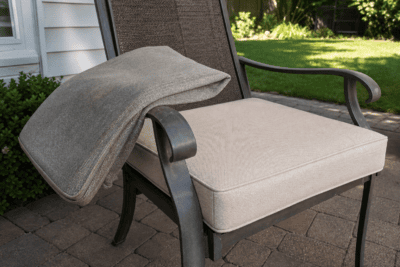
The Hampton Bay covers question answered — why OEM cover-only replacements are rarely available for most series, the exact-fit route (full cushions by your series dimensions), re-covering services and DIY, and how to identify your series first.
RV & Camper Cushion Replacement: The Complete Guide
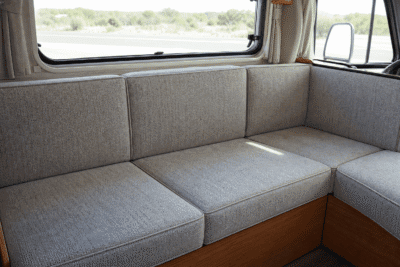
RV dinette and berth cushion replacement — sizes, 45–60D foam for daily use, spill-proof fabrics, and the paper-template method for odd cabin shapes.