
A piano bench is furniture with a job description: hold a musician at exactly the right height for hours, rock nothing, and stay put. Its cushion is therefore an ergonomic component, not a comfort accessory — a half-inch of error in height or firmness changes hand position at the keys, and a cushion that slides mid-scale is worse than no cushion at all. Yet piano benches are also among the most-shared, most-abused seats in a house: the student, the teacher, the duet partner, the relative persuaded to play at the holidays. This guide covers sizing, firmness, anti-slip, and fabrics for the seat where “comfortable” must also mean “correct.” The general indoor measuring routine is in how to measure.
Bench Sizes: Measure, Don’t Assume
Piano benches cluster around a few standard tops, but the variation is exactly enough to defeat assumed sizes:
| Bench type | Typical top | Notes |
| Standard adjustable artist bench | 29–30″ × 13–14″ | Rectangular top; the most common replacement target |
| Fixed student bench (upright pianos) | 28–30″ × 13–15″ | Often slightly domed or contoured at the factory |
| Duet bench | 34–36″ × 14–15″ | Wider for two players; usually bought with the piano |
| Vintage and heirloom benches | Varies widely | Leather-topped Victorian benches run odd sizes — measure to the quarter inch |
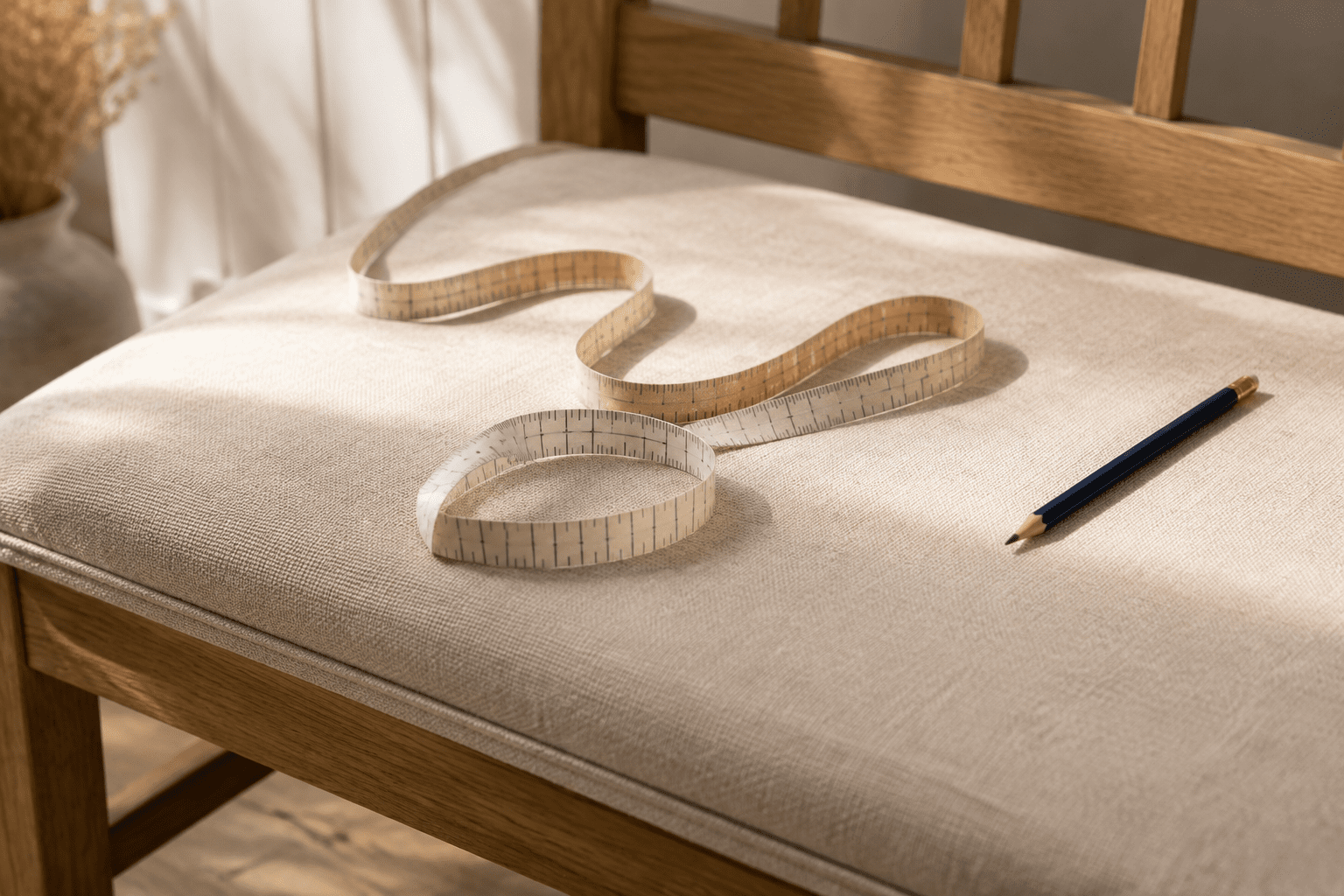
Measure the bench top itself, edge to edge, with the seat at its flattest — the pad should match the top’s footprint, or sit a quarter-inch inside it so the edges don’t scuff the bench rails. The seam-to-seam method and the general accuracy discipline are in cushion measurement mistakes, whose lessons apply doubled on a bench this narrow: a pad cut an inch wide on a 14-inch bench is a pad that overhangs visibly and catches on clothing.
Thickness: The Posture Calculation
Thickness on a piano bench is a playing-geometry decision before it is a comfort decision:
- – The starting height matters. Players are matched to the keyboard by bench height — adjustable benches exist precisely for this. Adding thickness changes the effective height, and the player’s wrist angle changes with it.
- – 1.5–2 inches is the working band. Enough to soften the sit for long sessions, not enough to disturb a matched height. A player who has settled their bench height should stay at the low end.
- – 3 inches for players who need the lift. Shorter players and children sometimes use the cushion as the adjustment — in that case, treat the cushion as part of the height setup and keep it consistent practice to practice.
- – The elbow check after any change: sit at the keyboard, let the arms hang, and bring the hands to the keys — forearms should run roughly level with the floor and the wrists neither flexed up nor dropped. The same elbow logic that governs kitchen-chair cushions applies at the piano; the ergonomics discussion in kitchen chair cushions transfers directly.
Firmness: Firm Is the Practice-Hour Answer
What a pianist feels through the cushion is stability, and stability comes from dense, thin fill:
- – A firm foam core (50D-grade) at 1.5–2 inches is the correct daily-practice pad: it softens the hard top without letting the sitter sink, because sinking changes hip angle the same way thickness does. The density logic is in how to choose foam density.
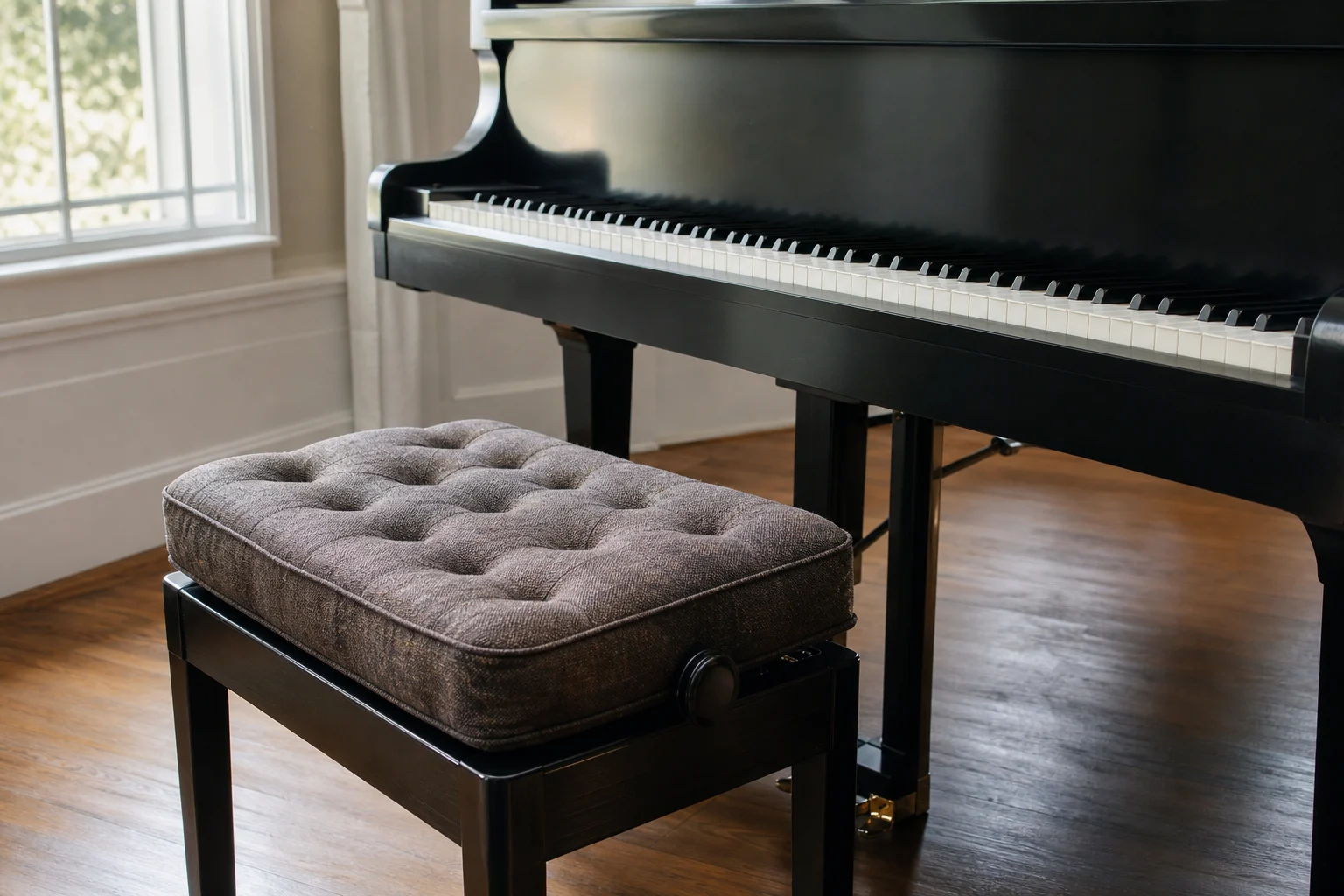
- – Soft, plush, fiber-filled pads — the tufted velvet look — are decorative seating. Under practice hours, fiber compresses unevenly within weeks and the pad starts rocking the player’s pelvis microscopically at every shift. They serve occasional players and living-room pianos that are mostly furniture.
- – Memory-foam tops help players with genuine pressure sensitivity (long sessions, older players), but as a thin comfort layer over a firm core, not the whole pad — the construction that makes memory layers work is covered in memory foam topped cushions.
The honest summary: the more hours a day the bench is used, the firmer and thinner the pad should be. The piano world’s most-used benches — teaching studios — often run no pad at all, for exactly this reason.
Anti-Slip: Non-Negotiable on a Polished Top
A piano bench top is finished wood — slick by design, and a smooth pad on it slides with every lean. The options:
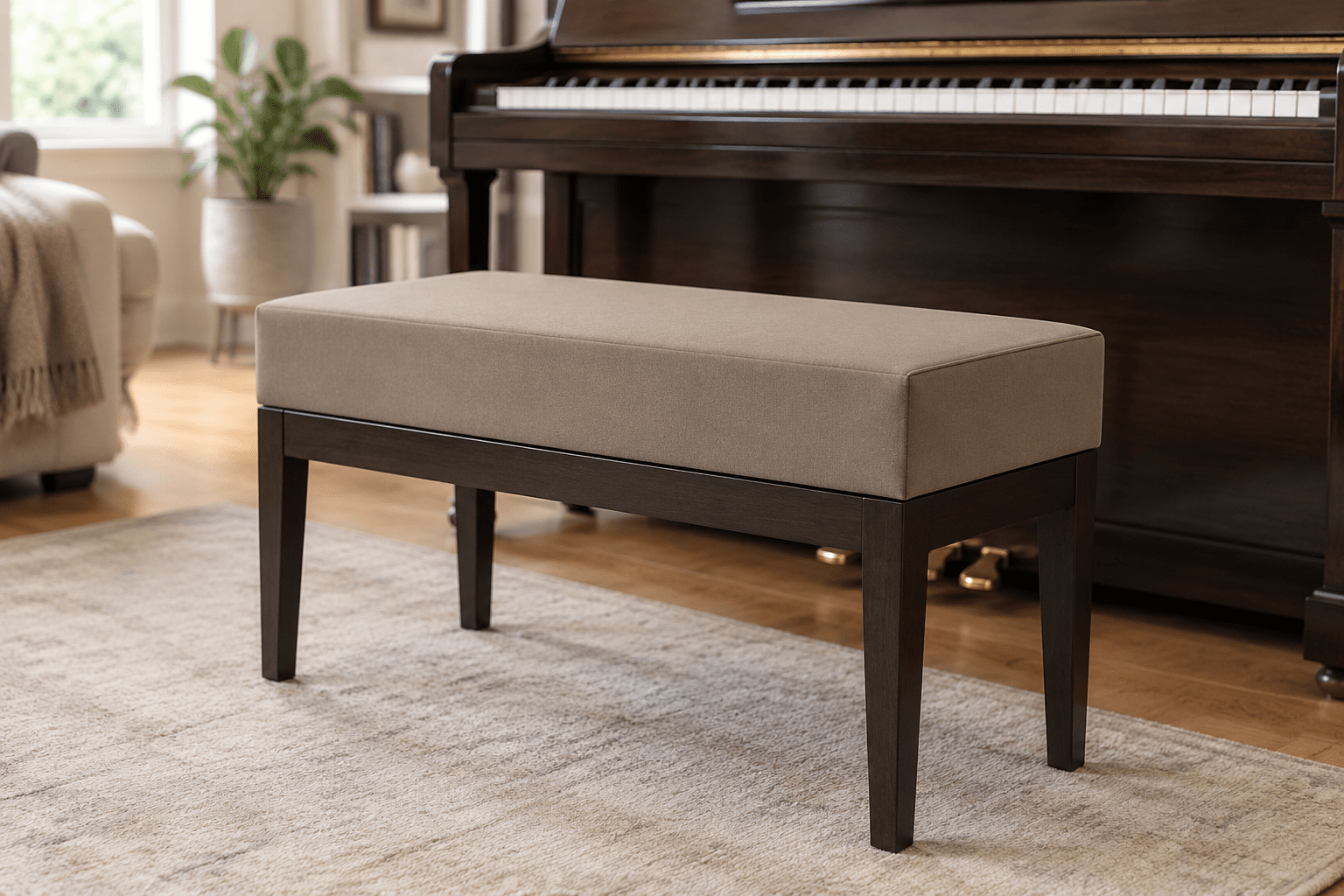
- Non-slip textured underside. The invisible, correct answer for most benches — a grip layer that holds the pad in place without touching the bench’s finish. It works with the bench’s own weight relationship: player weight pins the pad; the grip keeps it from creeping.
- Ties. The traditional answer, anchored at the bench’s end rails or seat-frame bars. Absolutely secure and visually period-correct on vintage benches; the trade is the bow at each end.
- Hook-and-loop. Overkill for a bench that never moves, and it commits adhesive to the finish. Skip it here.
The sliding-cushion mechanics (and why “just reposition it” loses every day) are in how to stop cushions from sliding.
Fabric: Quiet, Durable, Forgiving
Piano bench fabrics answer to three specific demands:
- – Color discipline. The bench is stage furniture; mid-tones, deep tones, and textures read as intentional where bright pattern reads as a cover-up job. The hide-the-wear logic that makes mid-tones the working choice everywhere is in choosing cushion colors.
- – Abrasion under daily use. Students shift, lean, and stand constantly; tight heavy weaves — cotton linen blends, chenilles — hold up where loose weaves pill. The fabric ladder from linen-family to premium chenille runs a flat $7.43 per square foot (all 119 fabrics), and a bench pad is a small piece — the grade upgrade that feels expensive on a sofa is free here.
- – Spot-clean between washes. Quality bench pads have zippered covers and clean the honest way: mild soap, water, immediate attention to marks. The cleaning routine is in how to clean couch cushions.
Tufting — the classic piano-bench look — is a sewing-style choice (a small per-piece add-on in custom work for stitched patterns like grid tufting), and it has a functional side on thick pads: the stitches tie the fill layers together so they can’t shift and crease. On firm thin practice pads it is purely aesthetic.
Ordering Routes
Standard-size pads from music retailers. The quick route for standard 29–30″ benches — genuine piano-supplier pads run firmer than home-store “bench cushions” and are sized for actual benches. Check the fill spec before the color; many are decorative-soft.
Custom cut-to-size pads. The exact route — and the main route for vintage benches, duet benches, and players who want the ergonomics specified deliberately: the pad cut to the measured top, thickness chosen for the height setup, a 50D core for practice hours, and the fabric graded for the room. A bench pad is one of the smallest and most economical custom orders in a house. For this seat specifically, order direct from custom piano bench cushions — the same $45 make-base, cut to the measured top. General entry point: custom indoor bench cushions, pricing from a $45 make-base plus per-square-foot rates, 4–7 business days, dimensions confirmed before cutting.
The no-pad option, honestly stated. Serious players with height-matched adjustable benches often prefer the bare leather top — the bench was designed at its height, and the pad is a compromise. If the bench is right and the hours are long, this is a legitimate answer, not a failure to decorate.
FAQs
What size is a standard piano bench cushion?
Most artist benches take 29–30 inches by 13–14 inches — but measure your top edge to edge before ordering, because vintage and duet benches run anywhere. Cut to the top’s footprint, or a quarter-inch inside it.
How thick should a piano bench cushion be?
1.5–2 inches for players already matched to their bench height; 3 inches only when the cushion is deliberately the height adjustment. Thickness changes wrist angle at the keys — check forearm level after any change.
Should a piano bench cushion be firm or soft?
Firm for daily practice — a 50D-class core that softens the sit without letting you sink. Plush fiber pads rock the pelvis microscopically and change playing posture; they suit occasional and decorative use.
How do I keep a piano bench cushion from sliding?
A non-slip textured underside, with ties on vintage benches where the look suits them. Finished bench tops are slick by design; a gripper underlay solves it without touching the finish.
Are tufted bench cushions better?
Functionally equal at thin practice grades — tufting’s real job is tying thick fill layers against shifting. Choose it for the look, and expect a small sewing-style add-on in custom work.
Can I get a cushion for an odd-sized vintage bench?
Yes — custom pads are the standard route for heirloom benches. Measure to the quarter inch and specify firm thin fill; entry point custom indoor bench cushions.
Next Steps
- Measure the bench top edge to edge, note the bench type and your height setup, and run the elbow check to fix your target thickness before browsing anything.
- Set the fill — 50D at 1.5–2 inches for practice hours — and choose a quiet mid-tone tight weave that assumes spot-clean care.
- Order the exact pad at custom indoor bench cushions — measured top, thickness, and fabric in one specification, confirmed before cutting — pads ship without sewn ties or grip backing; the loose gripper underlay above is the retrofit that suits finished tops.
The Practice-Hour Top
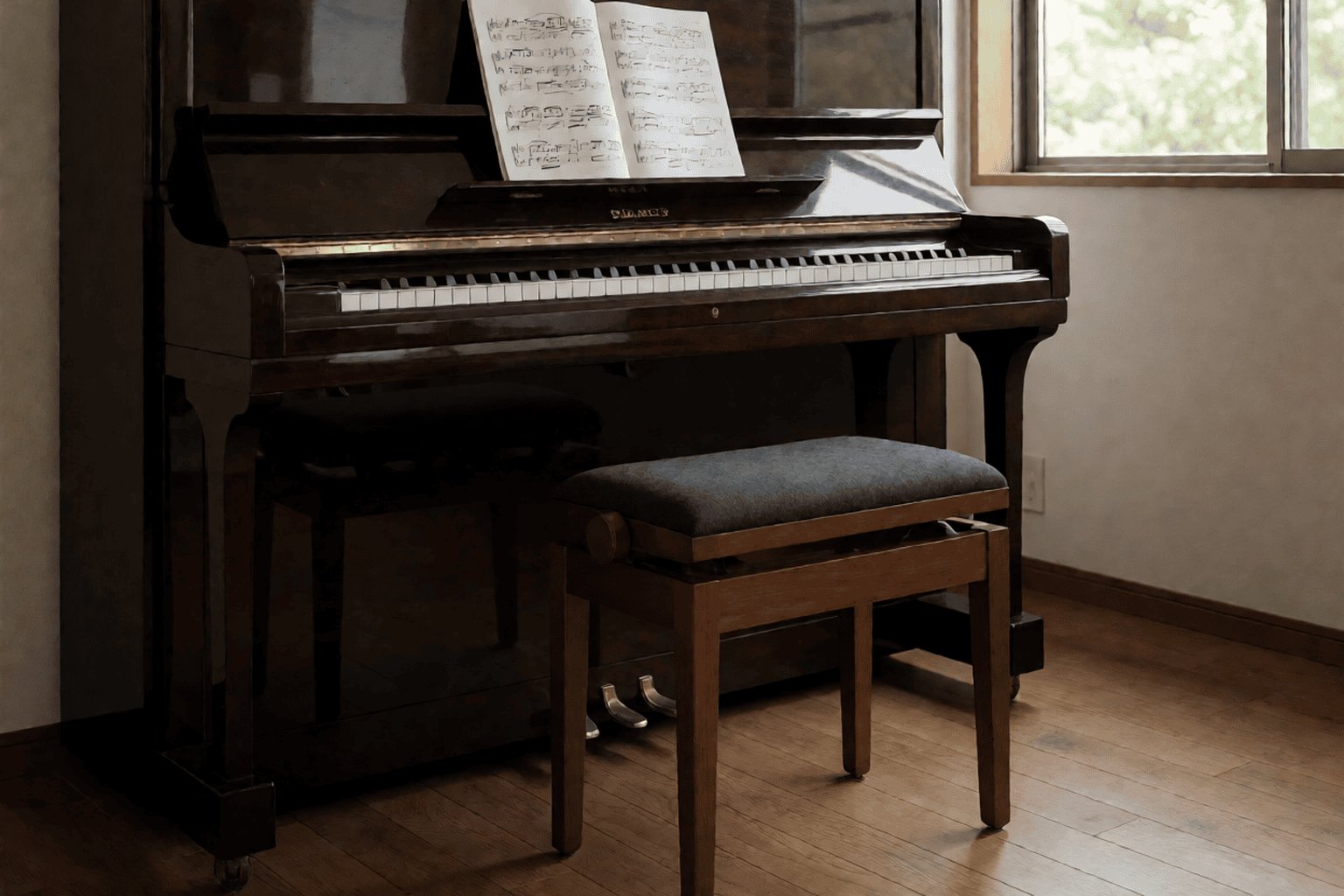
A bench pad built for practice hours runs firm and thin — two to three inches of dense core in a quiet fabric — so posture stays honest and the pedal view stays clear, with the polished top underneath doing its part against sliding.
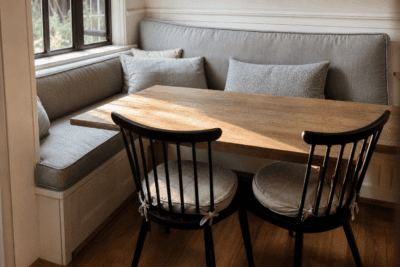
Breakfast Nook Cushions: The Corner-Seating Build Guide
Breakfast nook cushion guide: L-shaped and U-shaped runs, corner geometry and seam placement, seat-plus-back builds at dining height, morning-sun fabric logic, and ordering the whole run from one fabric lot.

Outdoor Dining Sets: Buying the Set Right So the Cushions Work
Outdoor dining set buying guide: how the set choice locks in your cushion future — seat sizes, arm heights, frame materials, cushion quality in boxed sets versus custom pads, and set versus separate buying.

At Home Outdoor Cushions: The Decor Superstore’s Seasonal Wall
At Home runs a full-scale seasonal cushion department at decor-store prices — what the wall stocks, the fit grid, and when the superstore route ends at custom.
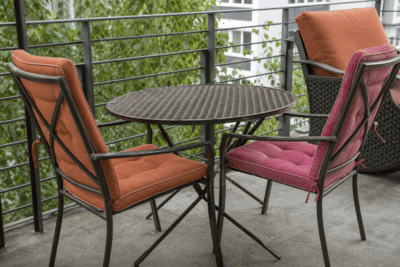
Target Outdoor Cushions: Threshold, Sizing and Replacement (2026)
Target’s Threshold cushions look designer but run generic sizes. What fits, what the seasonal rotation kills, and when custom replacements beat another Threshold refresh.
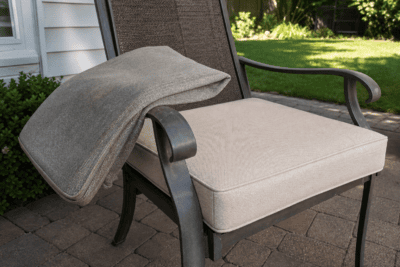
Hampton Bay Cushion Covers: Replacement Covers vs Full Cushion Replacement
The Hampton Bay covers question answered — why OEM cover-only replacements are rarely available for most series, the exact-fit route (full cushions by your series dimensions), re-covering services and DIY, and how to identify your series first.

RV & Camper Cushion Replacement: The Complete Guide
RV dinette and berth cushion replacement — sizes, 45–60D foam for daily use, spill-proof fabrics, and the paper-template method for odd cabin shapes.