
The most expensive mistake in wicker isn’t buying the wrong brand — it’s putting the wrong family outside. A natural rattan set that looked perfect in the showroom and dies on the patio in one season; a “bargain” resin set that chalks and cracks because it was never UV-stabilized. Both mistakes trace to the same root: nobody said which wicker they had, and nobody asked.
Five tests, in order of convenience, will classify almost any piece. The background you need: types of wicker materials (the families) and is wicker furniture waterproof (what weather does to each).
Test 1: The Strand Test (the definitive one)
Find a loose strand end on the underside or back of the piece, and test it:
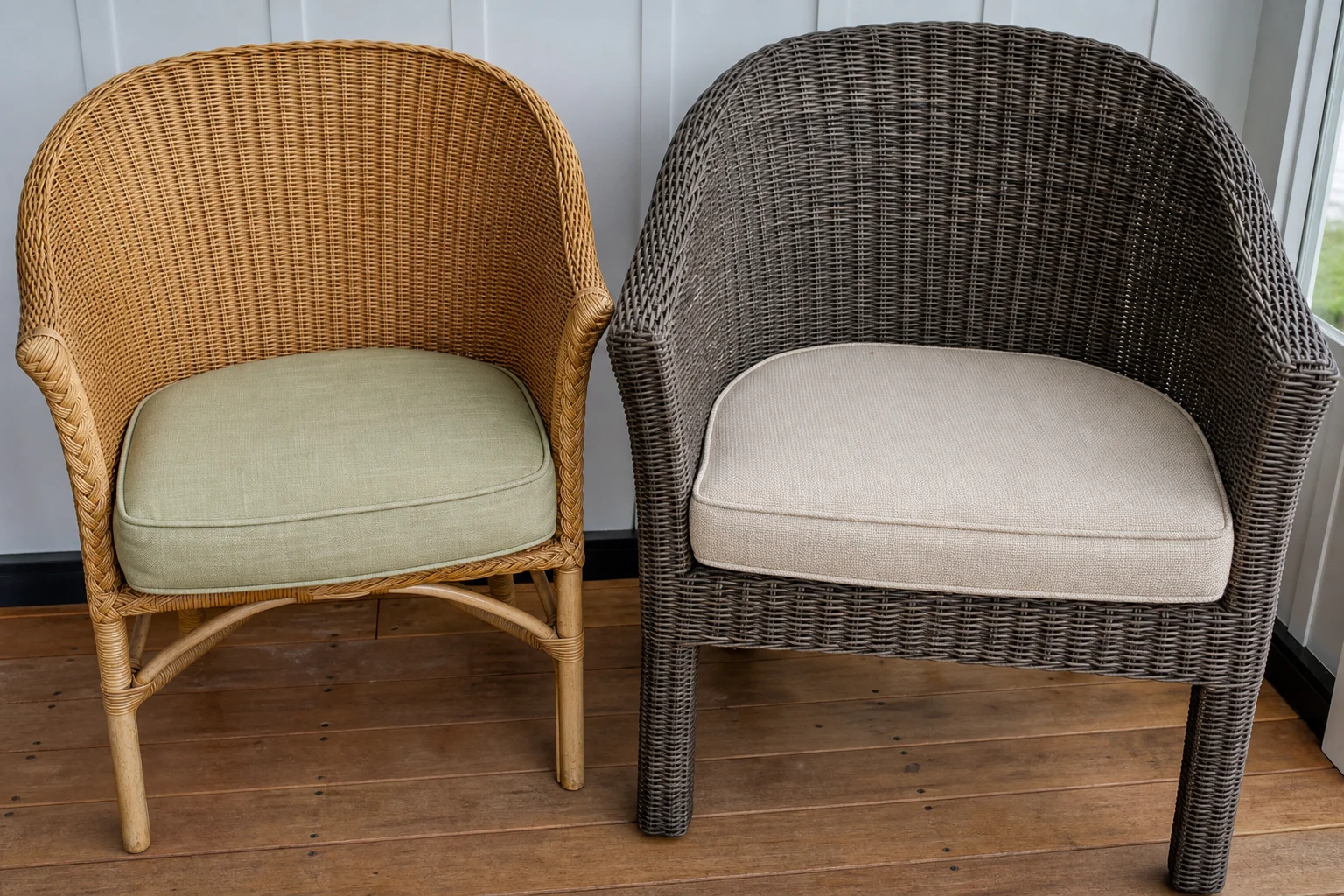
- – Snaps fibrous and dry, with visible woody fiber inside — natural (rattan core, reed, willow). Indoor or covered-only.
- – Stretches, then tears smooth, with a plastic-fracture look — synthetic (PVC-resin or HDPE). Outdoor-capable; quality varies by maker.
- – Fraying paper-like fibers, feels like heavy cord — paper fiber wicker. Indoor only, and fragile.
- – Waxy, glossy, hard strand with a distinct molded seam — synthetic, often the budget PVC end.
The cell structure tells the family even when color and weave are ambiguous. Naturals are fibrous all the way through; synthetics are uniform plastic.
Test 2: The Frame Check
Turn or tilt the piece and inspect the structure under the weave:
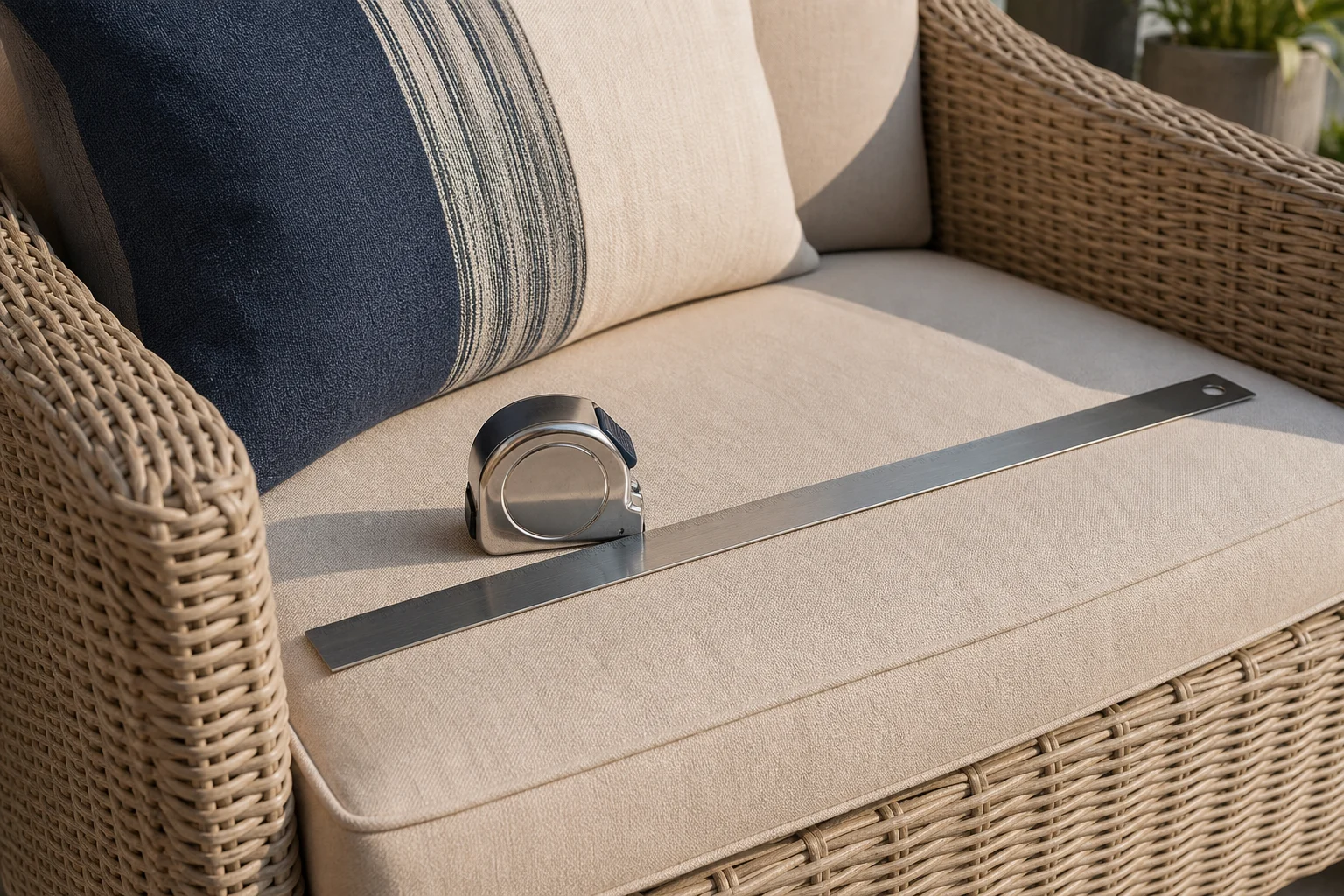
- – Aluminum frame — lightweight, non-magnetic (the magnet test below), never rusts: the outdoor pairing. Usually a sign of a set engineered for exposure.
- – Steel frame, powder-coated — magnetic, coating intact: outdoor-capable, with the caveat that every scratch is a future rust site; check joints for coating quality.
- – Steel with rust already present at welds and joints: outdoor history with a countdown running.
- – Rattan pole or hardwood frame (bent poles, visible natural wood): the natural-furniture construction — indoor.
- – The magnet trick: a fridge magnet sticks to steel, not to aluminum. Ten seconds, definitive on the frame question, which is half the outdoor-suitability answer.
Test 3: The Weight and Hand-Feel Test
Pick it up (or heft one chair):
- – Light, almost hollow-feeling, with plastic-waxy strands — synthetic on aluminum: the outdoor profile.
- – Substantial, woody, with a warm organic feel and woody smell — natural: the indoor profile. Rattan has a faint sweet-woody scent synthetics never reproduce.
- – Extremely light with papery strands — paper fiber: indoor and fragile.
Weight isn’t quality — it’s family. A heavy natural set isn’t “better made” for the outdoors than a light aluminum one; it’s the wrong material for the patio.
Test 4: The Tag, Listing and Price Decode
When you’re buying rather than classifying:
- – “All-weather wicker,” “PE rattan,” “HDPE wicker,” “resin wicker over powder-coated aluminum” — outdoor-intent language; the good signs are HDPE/PE named explicitly plus aluminum frame plus a multi-year warranty.
- – “Rattan,” “natural wicker,” “handwoven rattan,” “cane” — indoor language; any listing using these for outdoor furniture is either mistaken or selling a covered-porch-only product.
- – “Wicker” with no material named at all — the red flag of the category; ask or apply Tests 1–3 in the store.
- – Price as a signal: genuine woven-HDPE sets cost real money (the cost anatomy is in why patio furniture is expensive); suspiciously cheap “outdoor wicker” is usually thin PVC on thin steel with one-season expectations (cheap vs quality outdoor cushions runs the same math for the cushions that go on top).
Test 5: The Exposure History Test (for pieces you’ve owned)
Already-weathered pieces classify themselves:
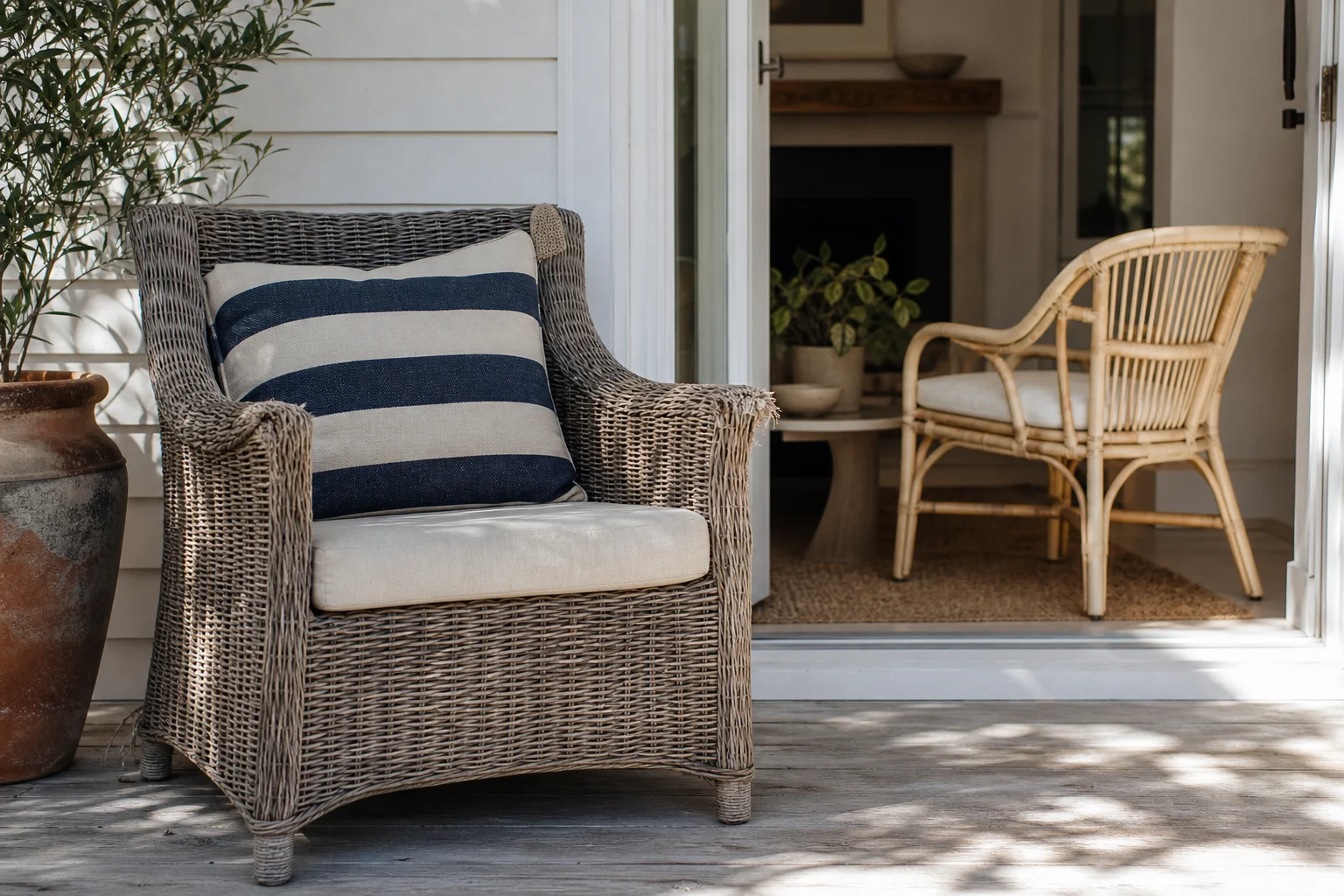
- – Grayed, brittle, cracked strands after outdoor seasons — either a natural wrongly placed outside, or budget PVC at end-of-life; either way, replacement rather than rescue (how long does wicker furniture last stages the decision).
- – Mold in the weave, musty smell, sagging seat panels — natural wicker that has been living in moisture; indoor it goes, after a careful cleaning and full drying.
- – Faded but sound, strands still tough — quality synthetic that has simply aged; new cushions (wicker furniture cushions) and it reads new.
What to Do With the Classification
Natural (indoor family): sunroom, covered porch at most — and the cushion spec follows: tailored indoor cushions, ties for positioning (how to add ties to cushions), no moisture engineering needed beyond ordinary spot-clean discipline.
Synthetic (outdoor family): open-air is fine — and now the cushion conversation starts over at the cushion layer, because the cushions carry the weather exposure from here: quick-dry fill, solution-dyed fabric families, attachment for wind (how to keep cushions from blowing away, weather resistant cushions). The all-weather frame was the easy half.
Ambiguous or mixed: classify each part — weave, frame, cushions — and rate the set by its weakest member. A beautiful HDPE weave with a rusting frame is a steel problem; outdoor cushions on a natural-rattan bench is a pile of mistakes waiting for rain.
The Cost of Getting It Wrong, In Numbers
Classification isn’t academic — misplacement has a price tag, and the mistakes run in both directions:
- – Natural wicker placed outdoors: a $600–1,500 set expecting 10+ years indoors is destroyed in 1–2 seasons — effectively paying full price for 15% of the product. The failure is quiet (fiber graying, first cracks) until it’s total.
- – Budget PVC-resin trusted because “it’s outdoor wicker”: a $300–600 set sold on the wicker word delivers 2–3 seasons instead of the 8–10 a woven-HDPE set would have — the difference between $75/season and $150+/season of value, plus two extra shopping trips.
- – Outdoor cushions on indoor frames: even correctly spec’d quick-dry cushions (weather resistant cushions) can’t save a natural frame underneath them — the soft half survives while the hard half fails, and the set is a loss either way.
- – The correct-classification dividend: matching material to location and running the care calendar (how long does wicker furniture last) puts sets at the top of their range — a decade from woven HDPE, a generation from cared rattan indoors.
One ten-minute classification session — the five tests above — is the cheapest insurance in the category.
Practice Cases: Five Pieces, Classified
The tests read differently on real furniture. Five worked examples:
Case 1 — the heirloom sunroom chair. Fibrous snap on the strand test, bent rattan pole frame, woody smell, light paper tag reading “genuine rattan.” Classification: natural, indoor. It has spent sixty years indoors for a reason; the covered sunroom is its envelope, and a winter in heated indoor storage extends its life by decades.
Case 2 — the big-box “all-weather” set. Smooth plastic fracture on the strand test, magnet sticks to the frame at the welds, price under $400 for five pieces. Classification: PVC-resin on coated steel — outdoor-capable chemistry, budget execution. Two to four seasons honest horizon; inspect the frame coating now and annually, because that is where it dies first.
Case 3 — the marketplace “rattan effect” lounger. “Rattan effect” is the giveaway phrase — effect means synthetic. Strand test confirms PE; frame magnet test says aluminum. Classification: woven HDPE over aluminum — genuine outdoor furniture, no asterisks. Maintain per the rinse-and-inspect calendar and it earns its price tier (types of wicker materials).
Case 4 — the antique-shop woven rocker. Paper-like fraying strands, extremely light, no frame magnet attraction (hardwood). Classification: paper fiber wicker — indoor, fragile, and the cushion spec runs light pads only (seat pads vs cushions) because the seat’s own give is part of the design.
Case 5 — the patio set that came with the house. Grayed, brittle strands after unknown outdoor years, faded but complete. Classification: post-mortem territory — the material has already failed (how long does wicker furniture last‘s Stage 4). Frames may salvage if aluminum (strip, inspect, re-cushion at per-piece custom pricing); naturals at this stage are kindling with sentimental value.
The pattern across all five: two tests (strand and frame) plus one honest look at condition classify nearly everything, and every classification leads directly to a placement, a maintenance calendar, and a cushion spec.
The Classification Card
Print-worthy, the whole guide in five lines:
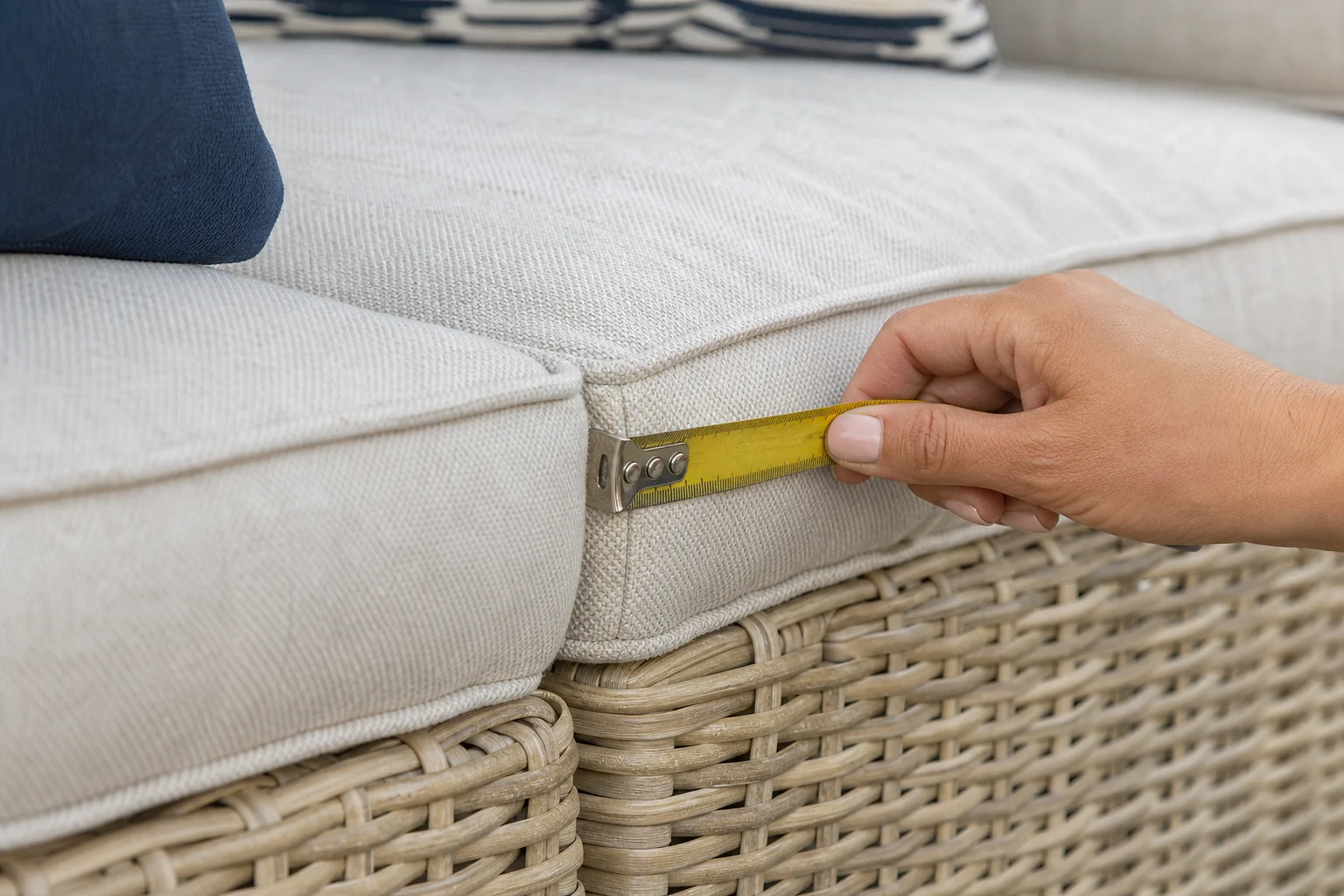
- Strand: fibrous = natural (indoor); plastic = synthetic (outdoor-capable).
- Frame: magnet = steel (rust watch); no magnet = aluminum (outdoor pairing).
- Smell and weight: woody and solid = natural; waxy and light = synthetic.
- Listing: PE/HDPE named = good; just “wicker” = ask; “rattan effect” = synthetic.
- Condition: grayed and brittle = material failure; faded but tough = aging, salvage with new cushions.
After Classification: The Three-Week Plan
Classification pays off fastest as a short plan — three weekends:
Weekend one: classify everything (this guide, one afternoon), place naturals under cover or indoors, and order the touch-up supplies — coating paint for steel frames, teak oil if teak is present (how to care for teak furniture), and the cleaning basics per how to clean outdoor cushions for the soft parts.
Weekend two: the maintenance pass — coatings touched up before rust establishes, fasteners re-torqued, weaves rinsed and dried, cushions assessed against the replacement checklist in when to replace outdoor cushions. The measured list of replacement pieces comes out of this weekend with photos.
Weekend three: the orders — replacement cushions per piece at custom pricing for the frames worth keeping (the renovation economics in custom vs standard cushions), attachments matched to real anchors, and the storage plan for the off-season written while the calendar is in hand. Three weekends transforms a misclassified, aging set into a maintained system — and every subsequent season costs one weekend, not three.
The final reminder: when any test result conflicts with the tag, believe the test — tags follow marketing departments, materials follow physics, and the strand-and-frame evidence never misleads.
FAQs
How do I know if my wicker furniture is outdoor-rated?
Strand test first — plastic strands mean synthetic and outdoor-capable; fibrous woody strands mean natural and indoor — then the frame magnet test: aluminum is the outdoor pairing, and rust on steel is a countdown.
Can I put indoor wicker on a covered porch?
Covered porch is the boundary naturals can tolerate — real shade, no driving rain — with humidity watched and the piece brought in for winter. Open-air placement of naturals is the one-season mistake.
Is my wicker rattan or plastic?
Snap a strand end: fibrous woody breakage is rattan, smooth plastic fracture is synthetic, paper-like fraying is paper fiber. The cell structure never lies, even under paint.
Does aluminum frame mean outdoor furniture?
It’s the strongest single sign — aluminum exists in outdoor furniture because it can’t rust — but confirm the strand family too; the outdoor rating follows the weakest component.
My outdoor wicker has gone gray and brittle — can it be saved?
Grayed brittle strands mean the material itself has failed (UV embrittlement on PVC, or a natural wrongly outdoors) — replacement, not rescue. If strands are faded but still tough, it’s just aged, and new cushions renovate it.
What does “PE rattan” mean on a listing?
Polyethylene wicker — the woven-HDPE outdoor standard, a good sign, especially paired with an aluminum frame and a multi-year warranty. “Rattan” without “PE” is the indoor plant.
Next Steps
- Run the five tests on the piece in question — strand, frame magnet, weight and smell, tag language, exposure history — and write down the family.
- Place it inside its envelope: naturals indoors or covered, synthetics outside with the frame checked.
- Outfit accordingly at custom wicker cushions — indoor-tailored specs for naturals, waterproof fabric over high-density foam for outdoor sets (anchoring via after-market ties), in 4–7 business days.
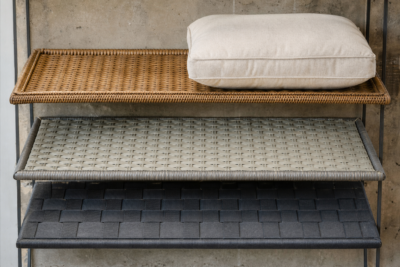
Types of Wicker Materials: Natural, Resin and HDPE Compared
Every wicker material family ranked — rattan core, paper fiber, bamboo, willow and reed on the natural side; PVC-resin and woven HDPE on the synthetic side — with outdoor ratings, lifespans and what each means for cushions.
Bench Cushions: The Complete Guide to Sizes, Types and Custom Fit
A bench cushion is only as good as three numbers: the length and depth of the seat deck it sits
How to Buy Patio Furniture Online Without Regret: The Complete Method
The online patio-furniture method that prevents the classic regrets — dimension-verification discipline, photo-evidence buying, material questions to ask, shipping and return reality, and why custom cushions solve online’s worst problem: fit.
Patio Furniture Sets: How to Choose Seating Sets, Dining Sets and Modules
The patio-set decoder — set types by use pattern (dining, conversation, sectional, bistro), what set pricing bundles and hides, the OEM cushion problem, and the set-versus-separate decision made honestly.
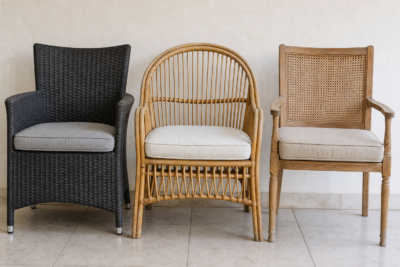
Wicker vs Rattan vs Cane: What Each Word Actually Means
The three most-confused words in woven furniture, sorted properly — rattan is a material, wicker is a weaving method, cane is a specific weave and fiber — and what each distinction means for cushions, care and outdoor use.
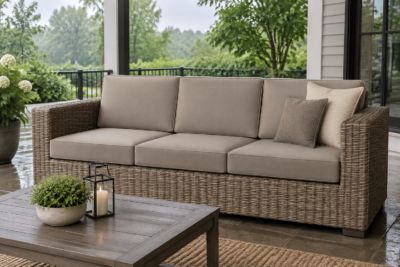
Is Wicker Furniture Waterproof? The Honest Weather Answer
No wicker is waterproof and good wicker doesn’t need to be — how rain, humidity and sun actually affect natural and synthetic wicker, what ‘all-weather’ really means, and the protection habits that add years to either family.