
Outdoor furniture curves. Wicker loveseats bow their fronts, deep-seat conversation sofas arc around fire pits, benches follow garden walls, round dining sets circle their tables, and rattan shells wrap the sitter entirely. Each curve is a design decision by the furniture maker and a measuring problem for the cushion buyer — curved pads specified by chord-and-camber or template fit their frames and read intentional; rectangular pads laid on curved frames gap, curl, and look like exactly what they are. This guide covers the outdoor curve family and the measuring that captures it. The deep-dive on curved wicker specifically: how to measure curved wicker seating; the round family: round outdoor cushions.
The Curve Family, Outdoors
- – The bowed-front loveseat and settee — the classic wicker curve: straight back, arcing front. The most common outdoor curve (wicker loveseat cushions).
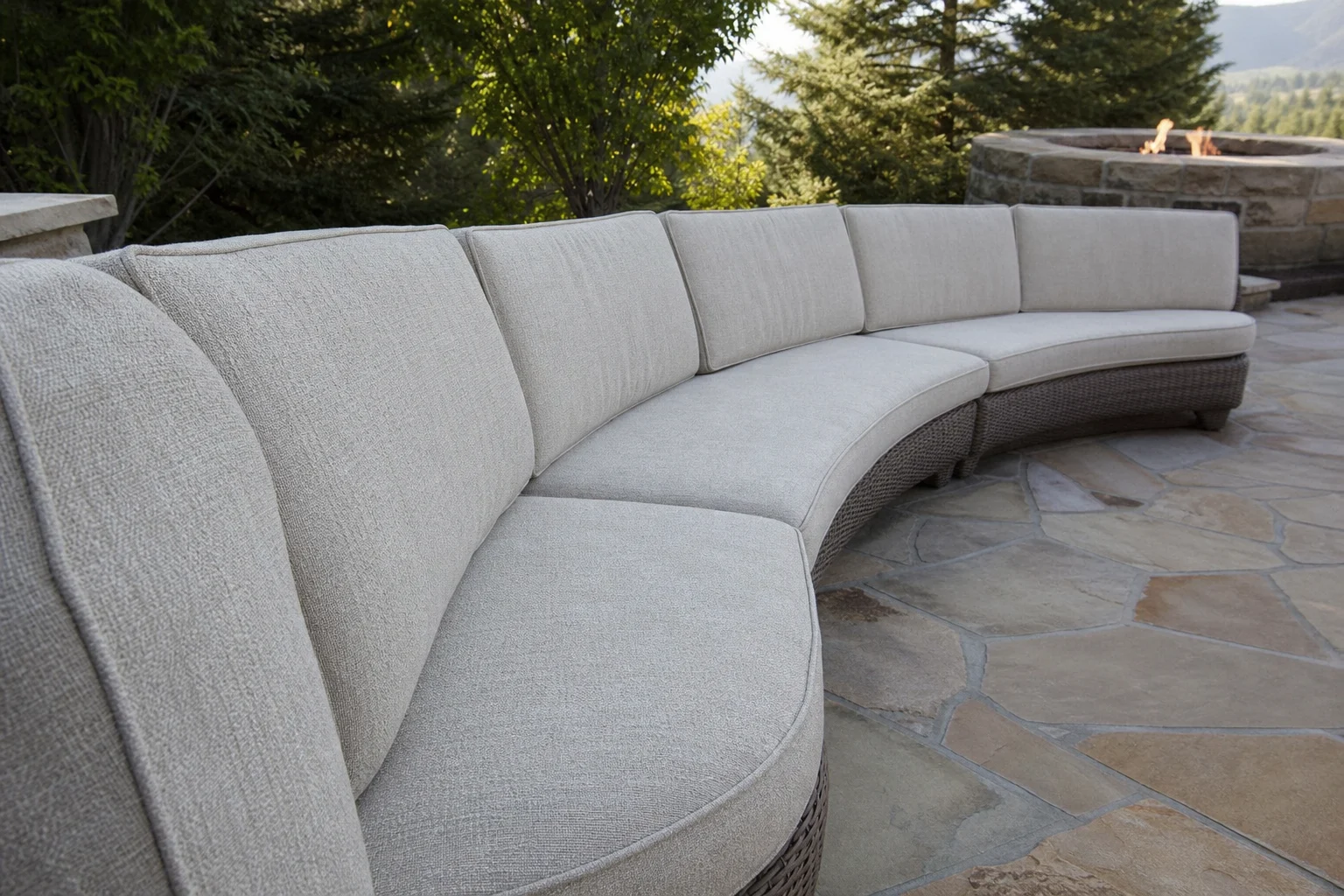
- – The curved sectional — the conversation sofa that arcs around the fire pit or follows the patio’s shape; sections of arc rather than straight modules (outdoor sectional buying guide).
- – The curved bench — garden-wall and deck-rail benches following structure; the fixed-curve case (extra long bench cushions for the run lengths).
- – Round and racetrack sets — circular seating clusters: round outdoor cushions.
- – Shell and bowl chairs — rattan and wicker shells that curve in both directions: rounded back chair cushions.
- – Sling and suspension curves — loaded fabric curves: hammock and hanging chair cushions, zero gravity chair cushions.
Chord and Camber: The Two-Number Curve
A gentle, single-direction curve (the bowed front) is captured by two numbers:
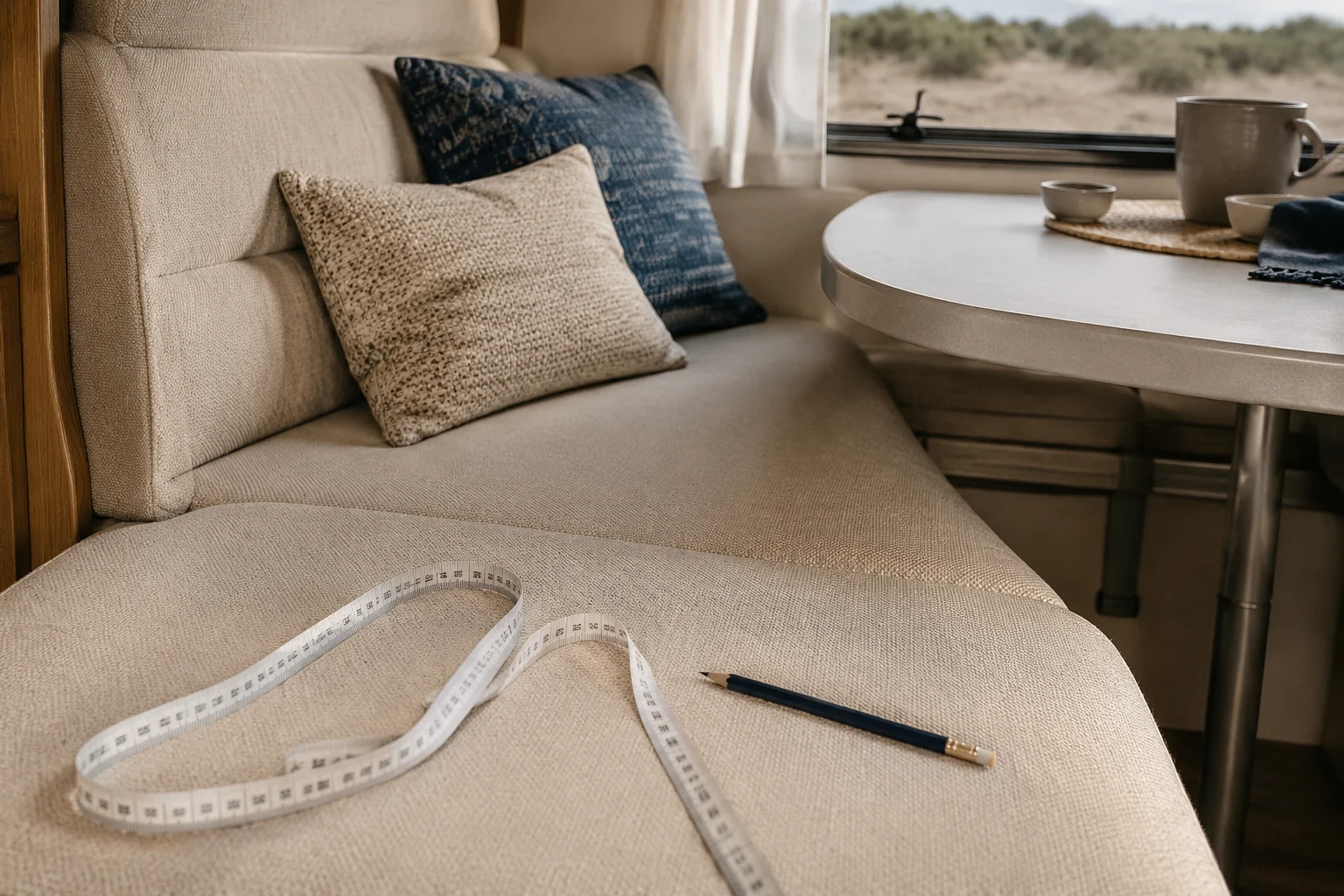
- – The chord: the straight-line distance across the curve’s endpoints (the seat’s width at its widest straight measure).
- – The camber (the rise): the perpendicular distance from the chord’s midpoint to the curve’s farthest point.
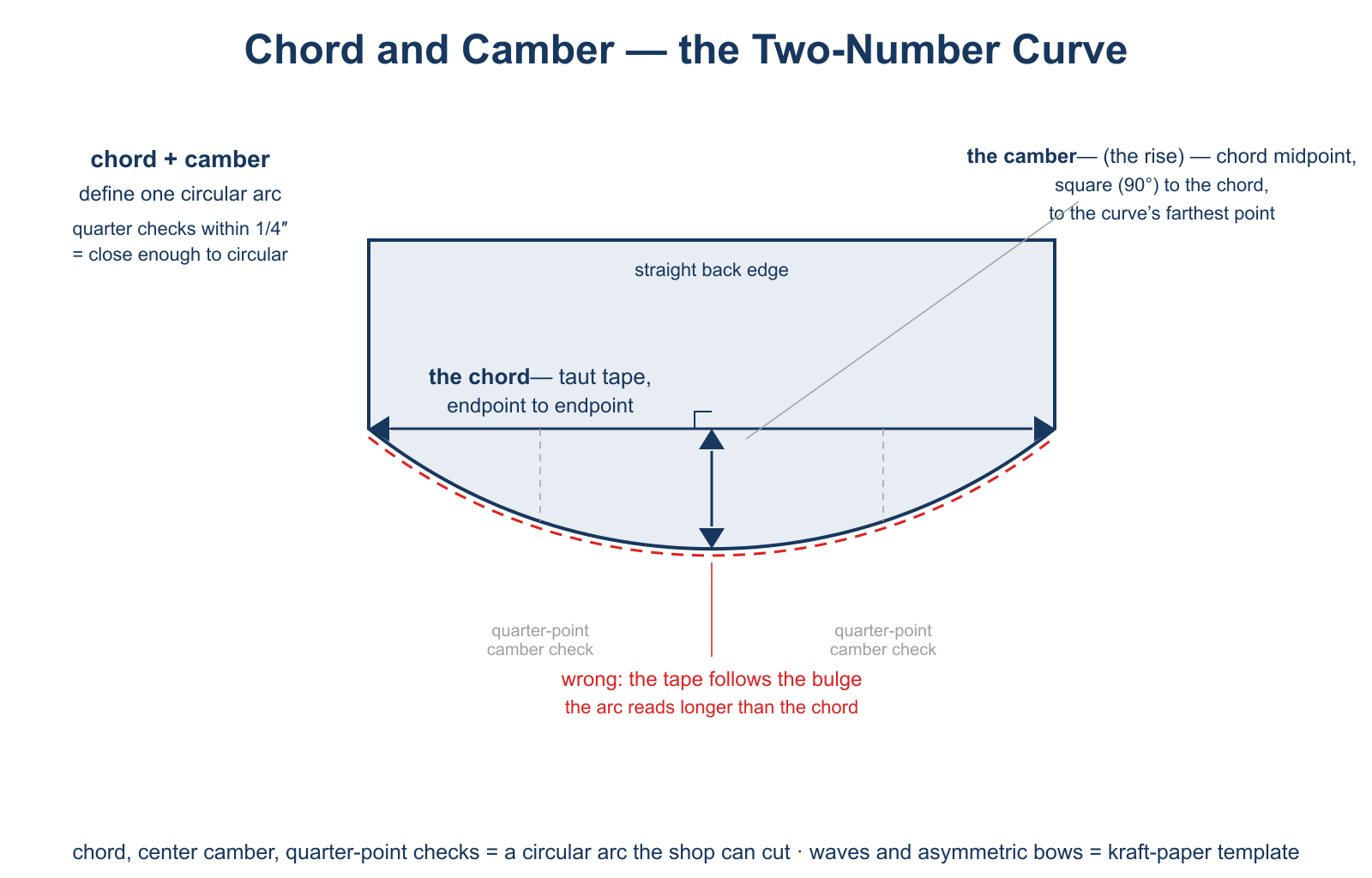
Chord plus camber defines a circular arc, and the shop cuts to it. The method is laid out for wicker frames in how to measure curved wicker seating — chord length, camber at center, and camber checks at the quarter points for curves that aren’t perfectly circular. Real furniture arcs are usually close enough to circular that the three-number spec (chord, center camber, one quarter-point check) is sufficient; when it isn’t, templates take over. The line between a general curved front and our configurator’s dedicated Bowed shape card — and when each applies — is drawn in curved vs bowed cushions.
The template rule for curves: any curve that varies more than a quarter-inch from its own arc — asymmetric bows, flat-then-curving fronts, wave shapes — is a kraft-paper job. Trace, label, photograph flat with a tape. The practice is standard custom-shop input and recommended across the whole measuring series (cushion measurement mistakes).
Curved Sectionals and Multi-Module Arcs
The curved sectional is an arc built from modules, and the cushion spec follows the modules:
- – Each module’s pad is its own piece — chord and camber per module, corner pieces measured as their own angled or curved shapes. The full sectional discipline (every piece, one session, one sketch) is in sectional cushion replacement.
- – Seam lines land on module boundaries — the pads meet where the frame’s modules meet, and matching fabric at the seams makes the arc read continuous.
- – Radius consistency matters more than absolute size. A curved sectional’s modules share a center; pads cut to inconsistent radii step at the seams where the frame flows. Measure each module but verify the set’s consistency — the quarter-point checks exist for this.
The Weather Stack on Shaped Pads
Curves don’t change the outdoor spec; they raise its stakes (shaped pads are custom work, and nobody re-orders custom annually):
- – Solution-dyed acrylic fabric — the fade-and-clean grade for pads that will live seasons in the sun: Sunbrella vs regular outdoor fabric, with the honest cost logic in is Sunbrella worth it. On shaped work, the fabric’s pattern behavior on curves matters — see the stripe note below.
- – Quick-dry foam for uncovered placements — curved decks and garden benches get full weather; the drainage case: quick dry foam for outdoor cushions.
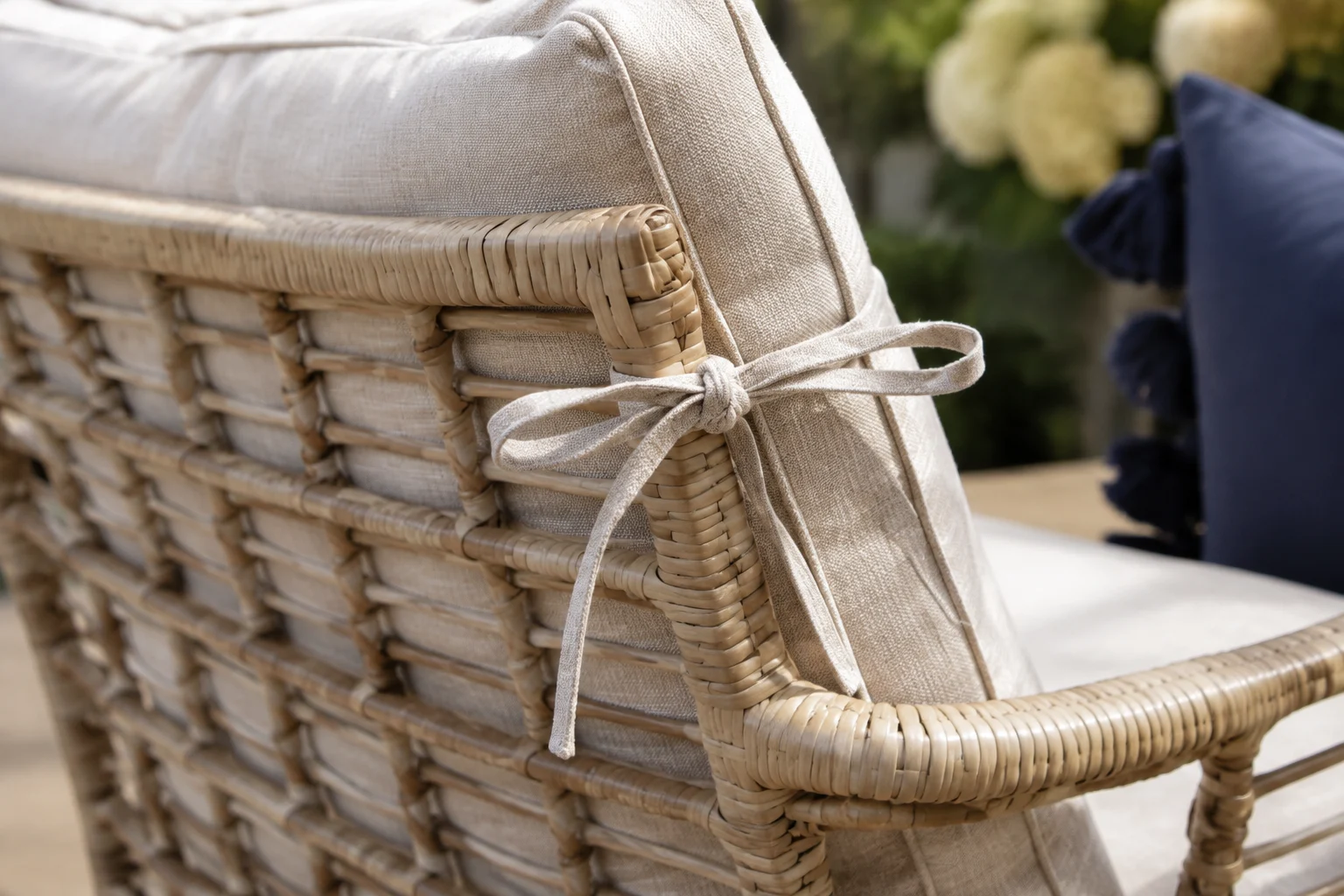
- – Ties at the curve’s structural bars — curved frames hide their structure under the arc; find the real bars (photograph with old pads off) and tie there: cushions with ties, with the wind logic in how to keep cushions from blowing away.
- – Density by duty — deep-seat curve builds at 50D–60D (how to choose foam density); the thickness logic is in deep seat cushions.
Stripes on Curves: The Pattern Warning
The design note that saves re-orders: stripes become rays on curved pads. A striped fabric on a bowed-front loveseat radiates from the arc’s center — visually dramatic on some frames, chaotic on others, and never what the fabric photo implied. Before ordering striped or strongly directional fabric on curved work, hold the fabric sample against the curve and look. Solid weaves, textures, and non-directional patterns are immune. The general color-and-pattern logic: choosing cushion colors.
Ordering Curved Work
- Measure by curve class: chord-and-camber (with quarter-point checks) for gentle arcs; multi-number outlines for module sets; templates for everything irregular. Photograph the frames bare and dressed.
- Set the build: the weather stack by exposure, density and thickness by duty, ties at the real bars, pattern direction checked against the curve.
- Order at custom wicker cushions for the wicker and rattan curve family, or custom outdoor cushions for the general outdoor curve — both take arcs and templates as routine input: pricing from a $45 make-base plus per-square-foot foam and fabric rates, 4–7 business days, curves verified against your photos before cutting.
The Back Curve: Curved Backrests Join the Job
Most curved outdoor work is a two-curve job — the seat’s arc and the backrest’s curve — and the back curve has its own failure modes when specified as a rectangle:
- – Rounded-top and scalloped backs (the wicker classics) need their outlines specced — the rounded-back methods are rounded back chair cushions: chord-and-rise for gentle arches, outlines for fans, templates for shells.
- – The rake interaction. Outdoor backs recline, and a curved reclined back means the pad covers an angled arc — measure along the backrest’s actual surface (the recline-length habit from patio lounge chair cushions), or the pad arrives short because the straight-line measurement was.
- – Back curves and sun. The back pad’s upper arc takes the steepest sun angle on curved seating — the crescent-fade note from round outdoor cushions applies to any arc, and it is the reason the backs fade first on curved sets. The per-piece renewal route (new backs on sound seats, one lot, one order) is the set’s economics at year three or four — the same renewal logic as conversation set guide.
Two Real-World Curve Orders, Described
The shape work becomes concrete in two examples the order desk sees weekly. The bowed wicker loveseat: chord of 51 inches, camber of 4 at center and 3.5 at the quarter points — close enough to circular for the arc spec — plus a rounded-top back pad templated from kraft paper; the set ordered in one lot with ties at the four frame bars the weave hides. The fire-pit curved sectional, five modules: each module’s pad measured chord-and-camber, corner pieces specced as their own angled shapes, seams on module boundaries, the whole run in one acrylic fabric so the arc reads continuous. Both orders live or die on the same habit: the photograph of the bare frame, taken while the old pads were off, that let the shop verify every number against the real furniture before the knife moved.
FAQs
How do you measure a curved cushion?
Chord and camber — the straight-line width across the curve’s ends, and the rise from that line to the curve’s peak — with quarter-point checks, or a template for irregular arcs. The full method: how to measure curved wicker seating.
Can I put a rectangular cushion on a curved seat?
Poorly — rectangles gap at the corners, curl at the arc, and look wrong. Curves under about 2 inches of camber can take radius-corner rectangles (how to measure radius corners); beyond that, order the shape.
How are curved sectional cushions measured?
Per module — chord and camber each, corner pieces as their own shapes, seams on module boundaries. The full sectional discipline: sectional cushion replacement.
Do curved outdoor cushions need different fabric?
The same outdoor grades, with one addition: check stripes and directional patterns against the curve — stripes become rays on arcs. The grade logic: best outdoor cushion fabric.
What about curved benches on decks?
Chord-and-camber for the arc, the full weather stack, ties at the deck framing, and templates for irregular runs. Fixed-run notes: extra long bench cushions.
Do shops really cut to templates?
Yes — traced outlines are routine custom input and the standard method for curves that resist numbers. Label orientation and photograph flat with a tape.
Next Steps
- Classify your curve (bow, module arc, garden run, shell), measure chord-and-camber with quarter checks — or template it — and photograph frames bare and dressed.
- Fix the weather stack and duty spec, check pattern direction against the arc, and mark the real tie bars.
- Order at custom wicker cushions or custom outdoor cushions — arcs and templates verified before cutting, 4–7 business days.
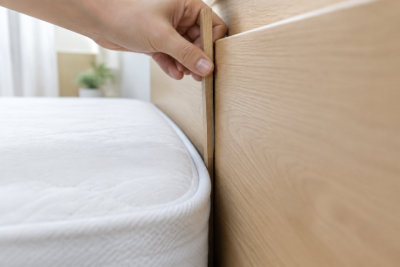
What Size Bed Gap Filler Do I Need? Thickness, Length and Density
Size a bed gap filler from three measurements, not the bed’s name: thickness equals gap width plus half an inch to one, length runs the full seam, height runs platform to mattress top. Density starts at 50D.
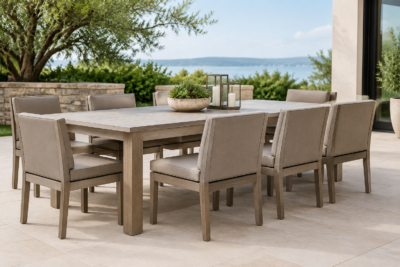
Cushion Thickness & Seat Height: Match the Pad to the Table
Cushion specs usually answer comfort questions. Thickness answers a geometry question: how high off the floor you end up sitting,

Church Pew Cushion Sizes: Standard Dimensions and How to Measure
Standard pew seats run 19-21 inches deep; cushions are cut 2-3 inches thick to measured runs at plus-or-minus half inch tolerance. Dimensions table, taper rules, and the pew-by-pew measuring method.
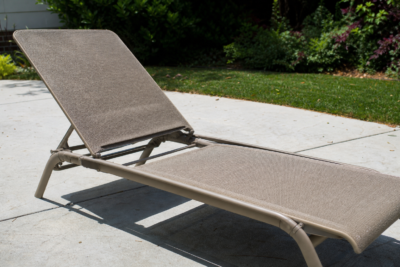
Chaise Lounge Cushion Measurements: A Complete Guide to Getting the Fit Right
How to measure a chaise lounge cushion correctly — seat depth, back height, thickness, hinge points and one-piece vs two-piece styles — with real Hampton Bay chaise dimensions.
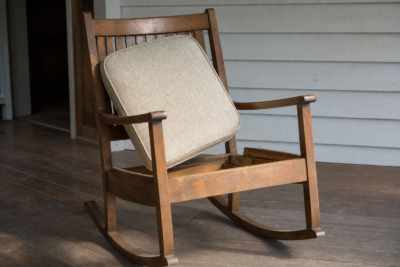
How to Measure Rocking Chair Cushions: Seats, Backs and Tie Positions
How to measure rocking chair cushions — tapered seats, curved backs, slat-gap tie maps and rock clearance — with the three-number protocol for both pieces of a rocker set.
Window Seat Cushion Measurement: How to Get a Perfect Fit
Measure a window seat cushion correctly — width across alcoves, depth front to back, thickness vs sill height, radius corners and bay window angles — with tips from the cutting floor.