
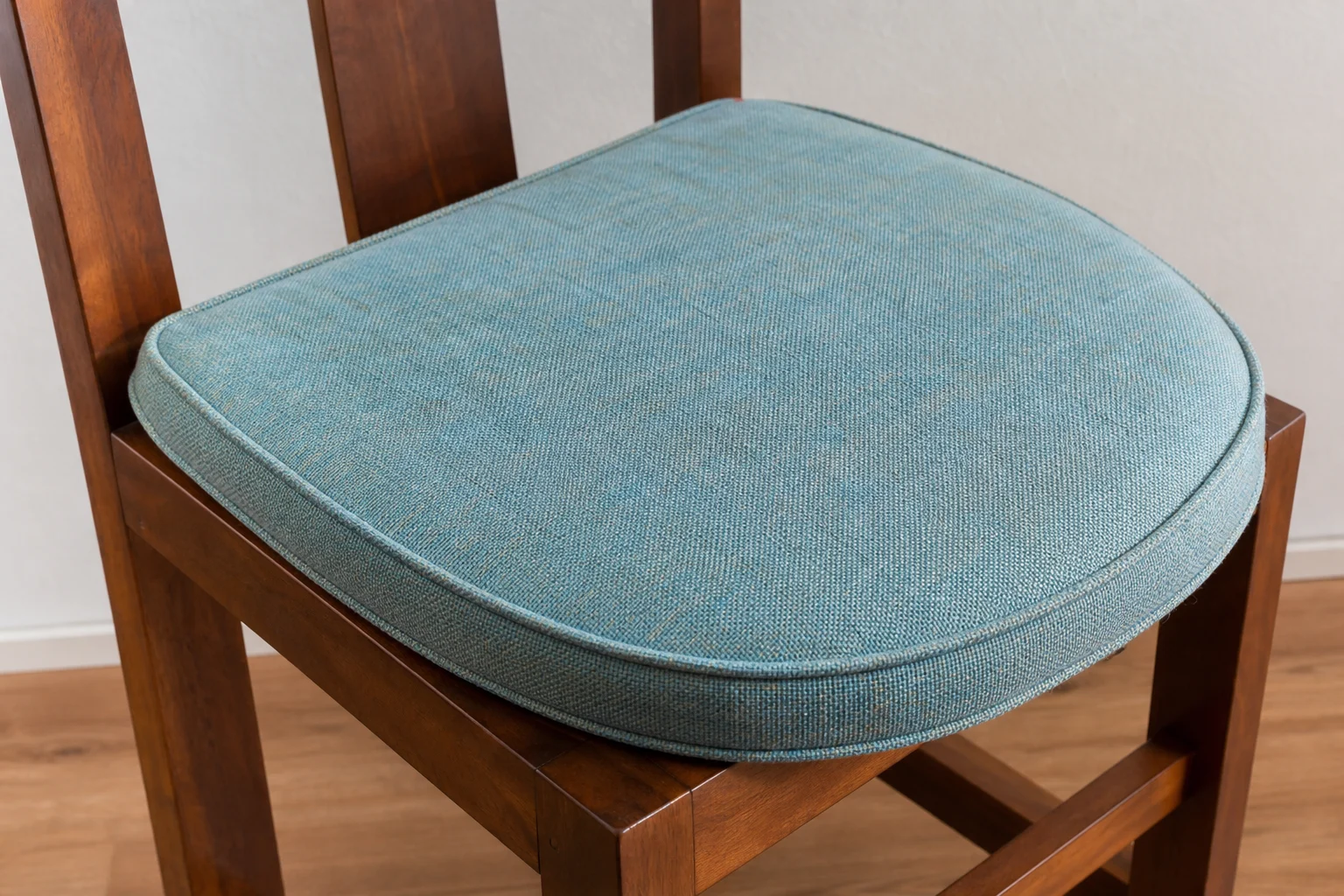
The D-shaped cushion — a semicircle with a straight back edge, the letter it’s named for — is the geometry of seats built against something: the round window seat against the wall, the corner chair, the ships-wheel bench, the half-round hall bench, the curved dressing-table stool. It’s also one of the most commonly mis-measured shapes in the cushion world, because a D is fully specified by exactly two numbers (the flat edge and the curve’s reach) and almost nobody measures the right two. This guide covers the geometry, the measuring, and the D’s honest alternatives. The full-circle relatives are covered in how to measure round cushions and round outdoor cushions; the corner logic scales from how to measure an L-shaped bench cushion.
The Geometry: Two Numbers and a Shape
A true D is a semicircle: a straight diameter edge (the back, against the wall or frame) and a 180-degree arc (the front, where the sitter’s legs hang). It is fully determined by:
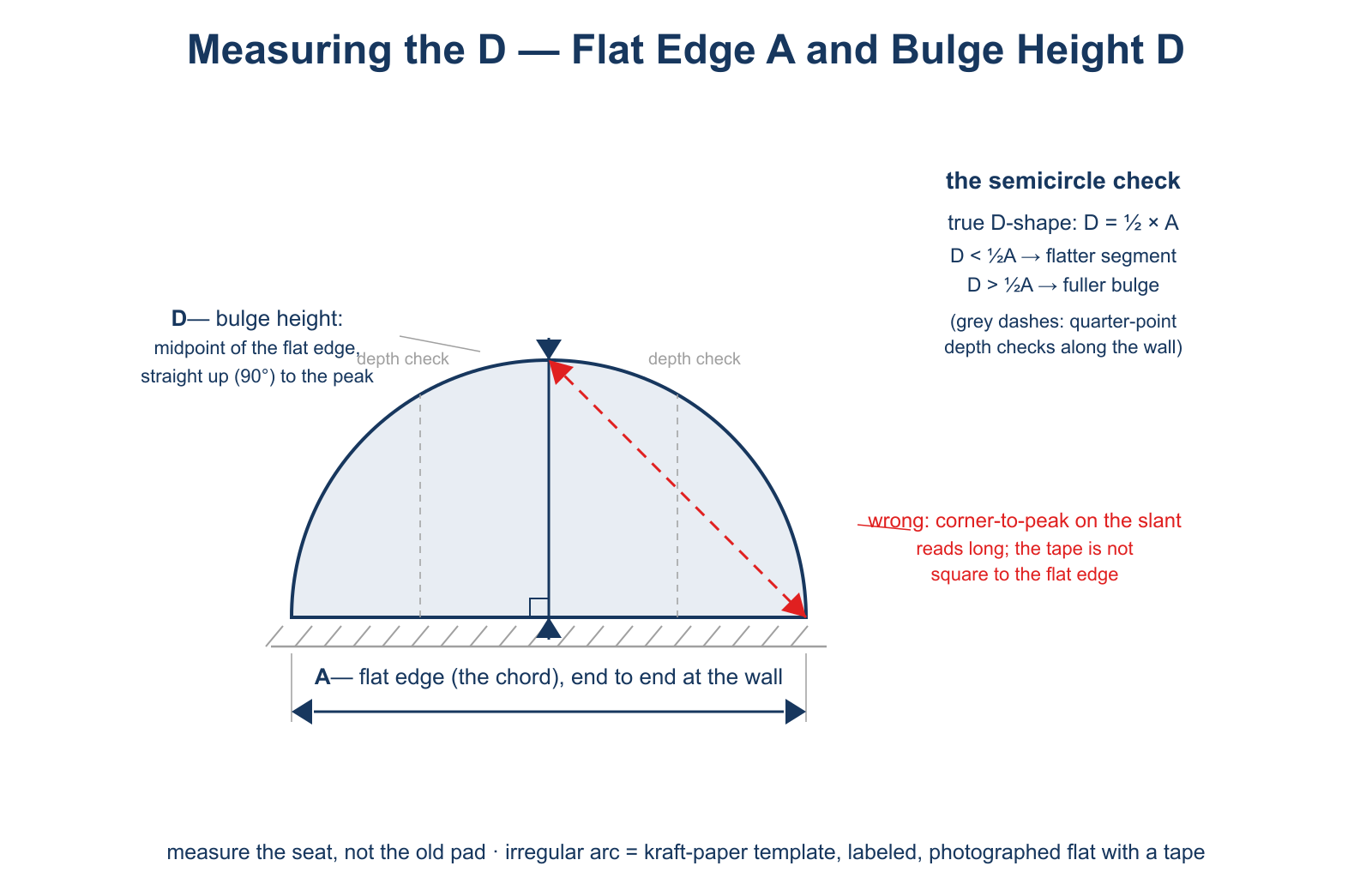
- The chord (the flat edge’s length) — across the seat at the wall. In our configurator this is field A (“Flat edge length,” cut range 8–120″).
- The depth (the arc’s reach) — from the flat edge to the curve’s farthest point. That is field D in our configurator (“Bulge height,” cut range 4–60″).
For a true semicircle, depth equals half the chord — and this is the check that catches most mis-measured Ds: measure both, and if the depth is not half the flat edge, your seat is not a semicircle but a segment (flatter than semicircular, depth less than half) or a bulge (fuller, depth greater). All three are legitimate shapes; each is specified differently, and “D-shaped, about 24 inches” is how the wrong shape arrives.
Measuring the D: The Three-Number Method
Measure the seat, not the old pad, per the general rule (how to measure):
- – The flat edge: end to end, at the wall or frame — the chord.
- – The depth: perpendicular from the flat edge’s midpoint to the front curve’s farthest point.
- – The curve itself: for a true semicircle, the curve is determined (radius = half the chord). For anything else — seat edges that bulge, flatten, or wander — take three or four depth measurements at intervals along the flat edge and note the variance, or template the outline.
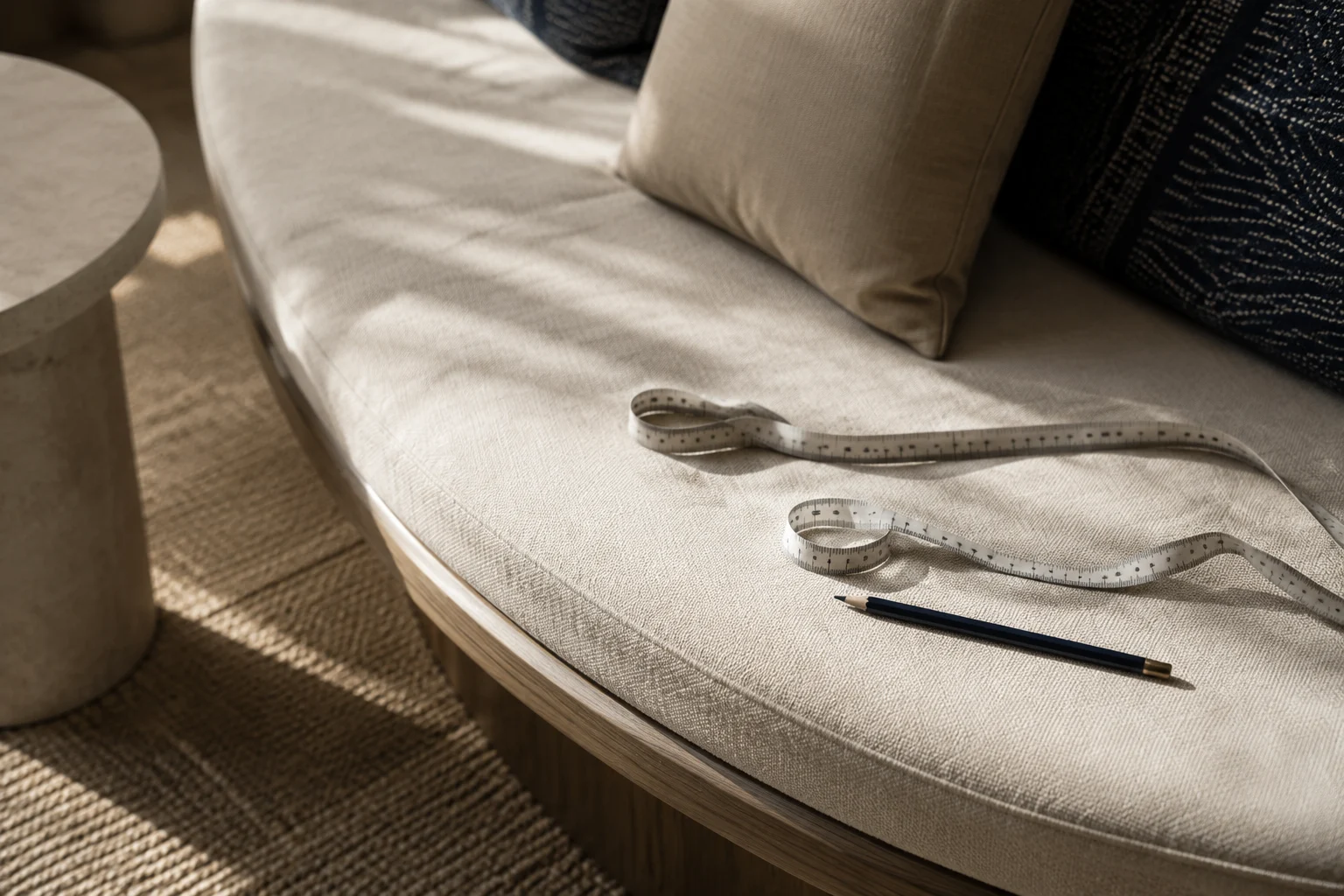
The template option (kraft paper traced to the seat’s outline, labeled, photographed flat against a tape) is the answer for any D that isn’t a clean semicircle — the same routine recommended across every resistant shape in cushion measurement mistakes. Half-round window seats from the millwork era are notoriously irregular arcs wearing a semicircle’s costume.
The corner-radius note: if the flat edge meets the arc in tight corners rather than a smooth junction, note the corner treatment — some D-seats run small radii at the junctions (a soft corner rather than a crisp one), which is a cutting spec.
Where D-Shapes Actually Live
- – Half-round window seats and hall benches — the classic: the wall provides the flat edge, the room provides the curve. Duty is usually landing-pad; thickness 3–4 inches for the occasional sit, 4–5 if it’s a reading spot (the window-seat thickness logic in window seat cushion measurement).
- – Round breakfast-nook corners — the nook’s round end: the D continues the straight runs into the curve (breakfast nook cushions).
- – Corner chairs and telephone chairs — the vintage corner chair is a D or quarter-round; measure by the same method.
- – Dressing-table and vanity stools — small Ds and half-rounds at 2–3 inches.
- – Marine helm seats — the wheel-side D: the weather stack applies (boat cushions).
- – Half-round foyers and radiator covers — the flat-back bench over the radiator: the heat considerations from bay window cushions (dense foam tolerates warmth better than light fill) apply.
D Versus the Alternatives: When a Rectangle Would Do
The honest question before ordering shaped work: does the seat actually need the D?
- – The seat is a true half-round platform — the D pad is correct and nothing else fits.
- – The seat is square with rounded front corners — a rectangle with radius-corner cutting is the better spec (how to measure radius corners); a full D over a rounded-square seat wastes pad and curls.
- – The seat is a quarter-round (corner) or three-quarter round — the same measuring logic, different fractions; template them.
- – The frame’s curve is decorative, not structural — some “curved” benches present a curve but measure nearly rectangular; check whether the curve exceeds 2 inches of depth before paying for shaped work.
Build Notes on the D
- – Thickness: 3–5 inches by duty; the D’s shape doesn’t change the thickness bands, but its platform (usually wood or millwork) sets the comfort spec the way any bench platform does (indoor bench cushions).
- – Fill: 50D for daily seats, 35D for landing pads — the density logic in how to choose foam density.
- – The arc’s edge is the wear point. The front curve is where sitters’ thighs slide across the edge daily; a tight, clean knife-edge seam holds its line along the arc without bulk.
- – Attachment: D-seats against walls hold by fit and weight — a snug flat-back measurement is what keeps them seated.
- – Fabric on curves: patterns with a directional repeat behave differently across the arc — stripes become rays on a D, which is either the charm or the problem, decided before ordering. The pattern-placement logic is in choosing cushion colors.
Ordering the D
- Measure the flat edge and depth (the semicircle check: depth should equal half the edge), spot-check the arc’s trueness, and template anything irregular.
- Fix the build: thickness by duty, density by use, clean knife-edge seams for daily seats, fabric with pattern direction decided.
- Order at custom D-shaped cushions — the D entry point, priced by your flat edge and bulge — or custom window seat cushions for the window-seat Ds, and the general custom cushions builder for corner chairs, vanity stools, and half-round benches — pricing from a $45 make-base plus per-square-foot foam and fabric rates, 4–7 business days, with arcs and templates verified before cutting.
The D in Context: Half-Rounds, Quarter-Rounds and Full Circles
The D is one member of a rounded-seat family, and knowing the relations keeps the spec language straight:

- – The half-round (the D itself) — 180 degrees of arc against a flat wall edge; the window seat and hall bench standard, specified by chord and depth as above.
- – The quarter-round — 90 degrees of arc, the corner seat’s shape: two flat edges meeting at a right angle (against two walls) and an arc between their far ends. Specified by the two flat edges’ lengths and the arc; the corner logic scales from the L-bench methods in how to measure an L-shaped bench cushion.
- – The three-quarter round — 270 degrees of arc wrapping a corner post or pillar; rare, template territory without exception.
- – The full circle — the round seat proper, specified by diameter: how to measure round cushions and the outdoor family in round outdoor cushions.
- – The racetrack and oval — stretched rounds: two diameters (major and minor axes) define the ellipse, or a rectangle with semicircular ends specified by the straight length plus the end diameters.
The family shares one measuring discipline — the arc is checked against its own geometry (the semicircle test for Ds, the two-axis check for rounds and ovals) and templated whenever the furniture’s honesty fails the check. Vintage and millwork-era rounded seats fail it constantly; the template is the diplomacy that resolves the dispute.
FAQs
What is a D-shaped cushion?
A semicircle with a straight back edge — the shape of seats built against walls and frames: half-round window seats, corner chairs, vanity stools.
How do you measure a D-shaped seat?
Two numbers: the flat edge (chord) end to end, and the depth from the flat edge’s midpoint to the curve’s farthest point. For a true semicircle, depth equals half the flat edge — measure both and check.
What if my half-round seat isn’t a true semicircle?
Then it’s a segment or a bulge — take three or four depth measurements along the flat edge, or template the outline. Kraft-paper templates are the answer for irregular arcs: cushion measurement mistakes.
Can I use a rectangular cushion on a rounded seat?
Only if the rounding is minor — under about 2 inches of depth variance, a radius-corner rectangle fits and costs less. Beyond that, order the shape.
What thickness for a D-shaped window seat cushion?
3–4 inches for landing-pad duty, 4–5 for a reading seat — the same bands as any window seat. The thickness logic: window seat cushion measurement.
Do D-shaped cushions need special edges?
No special edge build is needed — a clean knife-edge seam runs the arc neatly and keeps its line at the daily wear point where thighs slide across.
Next Steps
- Measure the flat edge and the depth, run the semicircle check, and template the seat if the arc resists two numbers.
- Set the build: thickness by duty, clean knife-edge seams for daily seats, pattern direction decided against the arc.
- Order at custom D-shaped cushions, custom window seat cushions, or the custom cushions builder — arcs verified before cutting, 4–7 business days.
What Size Bed Gap Filler Do I Need? Thickness, Length and Density
Size a bed gap filler from three measurements, not the bed’s name: thickness equals gap width plus half an inch to one, length runs the full seam, height runs platform to mattress top. Density starts at 50D.
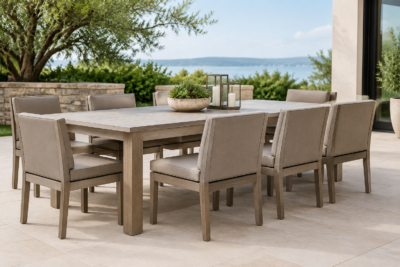
Cushion Thickness & Seat Height: Match the Pad to the Table
Cushion specs usually answer comfort questions. Thickness answers a geometry question: how high off the floor you end up sitting,

Church Pew Cushion Sizes: Standard Dimensions and How to Measure
Standard pew seats run 19-21 inches deep; cushions are cut 2-3 inches thick to measured runs at plus-or-minus half inch tolerance. Dimensions table, taper rules, and the pew-by-pew measuring method.
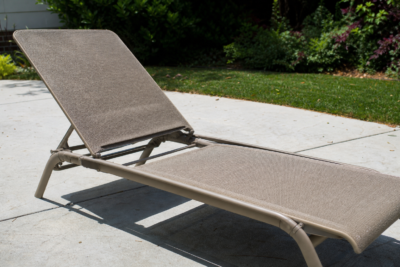
Chaise Lounge Cushion Measurements: A Complete Guide to Getting the Fit Right
How to measure a chaise lounge cushion correctly — seat depth, back height, thickness, hinge points and one-piece vs two-piece styles — with real Hampton Bay chaise dimensions.
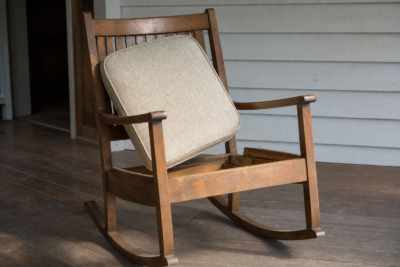
How to Measure Rocking Chair Cushions: Seats, Backs and Tie Positions
How to measure rocking chair cushions — tapered seats, curved backs, slat-gap tie maps and rock clearance — with the three-number protocol for both pieces of a rocker set.
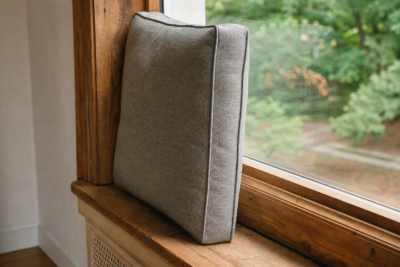
Window Seat Cushion Measurement: How to Get a Perfect Fit
Measure a window seat cushion correctly — width across alcoves, depth front to back, thickness vs sill height, radius corners and bay window angles — with tips from the cutting floor.