
Sunbrella’s palette runs to hundreds of colorways across its collections — enough range that “which color” becomes a real project rather than a preference. The good news is that the color system is more navigable than it looks: colors are organized into families and collections, they behave predictably (because solution-dyed acrylic fades so slowly that the color you choose is the color you keep), and the decision collapses to a few rules about light, space, and how colors read at cushion scale. This guide covers how the Sunbrella color system is organized, how specific colors behave in sun, shade, and small yards, and the swatch discipline that turns a screen guess into a confirmed choice. The general color-and-space reasoning is in choosing cushion colors; the fabric lines themselves are mapped in Sunbrella fabric collections.
How the Sunbrella Palette Is Organized
Three organizing layers, from broadest to narrowest:
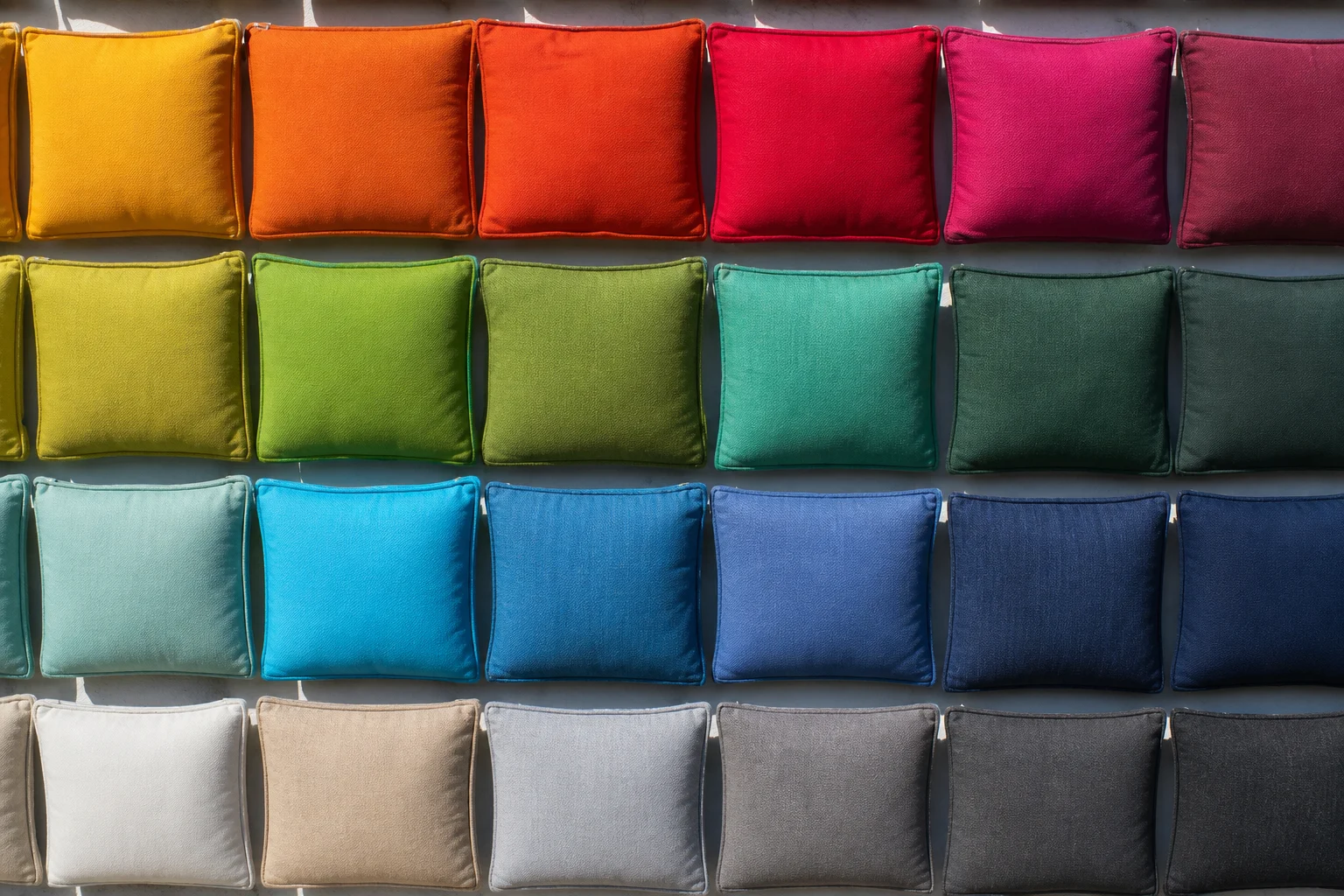
- Color families — the base hues: neutrals (whites, creams, taupes, grays), earth tones (sand, terracotta, greens), blues, blacks, and the saturated brights. Every collection draws from the same family wheel; families are the first cut of any search.
- Collections — curated groups of colorways within the upholstery line, spanning solids, textures, and patterns; a collection holds together aesthetically, which is why designers pick a collection first and a colorway second (the collection map).
- Colorways within a collection — the individual named colors and patterned weaves, each with a style number the trade uses for ordering. The numbering is how repeat orders land on the same color; “the beige one” is how they land on a different one.
Two structural facts that matter for buyers. First, colorways rotate: seasonal palettes come and go while core colors persist — completing a set years later means finding the same colorway, or accepting the nearest current equivalent. Second, the same color name across different constructions can read differently — a color in a canvas weave and the same color in a fine weave scatter light differently, so match by swatch, not by name.
How Sunbrella Colors Behave Outdoors
The fiber’s behavior is the whole system’s foundation: solution-dyed acrylic puts the color inside the fiber, holds it for years against UV, and carries a 5-year fade warranty from the brand (why it holds). What that means color-by-color:
| Color family | In full sun | In shade | Practical notes |
| Whites and creams | Stays white; shows soil and pollen | Reads grayish in deep shade | The classic premium look; demands the cleaning habits more than the sun habits |
| Grays and taupes | Holds; the great hider of ordinary dirt | Deepens toward somber | The most forgiving family overall |
| Earth tones (sand, terracotta) | Holds; fades least visibly of all families | Warms a shaded space | The lowest-maintenance choice in real yards |
| Blues | Holds; the classic patio palette | Can go cold in heavy shade | The most popular family, with the most colorways |
| Saturated brights (red, orange, yellow) | Holds color but shows UV dust and pollen film | Brightens shade dramatically | The confident choice; reds are the family photography lies about most |
| Black | Holds; heats noticeably in sun | Can swallow a small space | Sophisticated in sets, hot to the touch at midday |
The fade question that drives most Sunbrella anxiety is the wrong anxiety — the fiber holds. The right questions are soil visibility, heat, and how the color reads at scale in your light, which is where the rules below come in.
Five Rules for Choosing at Cushion Scale
- Judge colors in your yard’s light, at the hour you use it. A colorway chosen at noon reads different at six in the evening, and the west-facing patio’s light is a different world from the north-facing porch. Screens compound the error — every photograph has a white balance, and none of them is your patio.
- Bigger than you think: color intensifies with area. A swatch that reads calm becomes emphatic across six seat cushions. When torn between two colorways, choose the quieter one at swatch scale; it will be the louder one at set scale.
- Pick the neutral for the big areas, the color for the accents. The durable palette architecture is neutral cushions plus a minority of colored or patterned pieces — because neutral families (gray, taupe, earth) forgive dirt and future-change, while the accent layer is cheap to update (choosing cushion colors develops the full scheme logic).
- Mind the two-color trap with existing furniture. Cushions against a frame color read as one palette; test the pairing physically — brown frames shift grays toward purple, black frames drain saturated brights, and neither is visible on a screen.
- Match across the set by colorway number and dye lot, once. Completing a Sunbrella-colored set piece by piece over months is how mismatched colorways happen; order the full count (plus a spare piece for daily-use sets) in one run, in one dye lot.
The Swatch Discipline
The process that replaces guessing, in four steps:
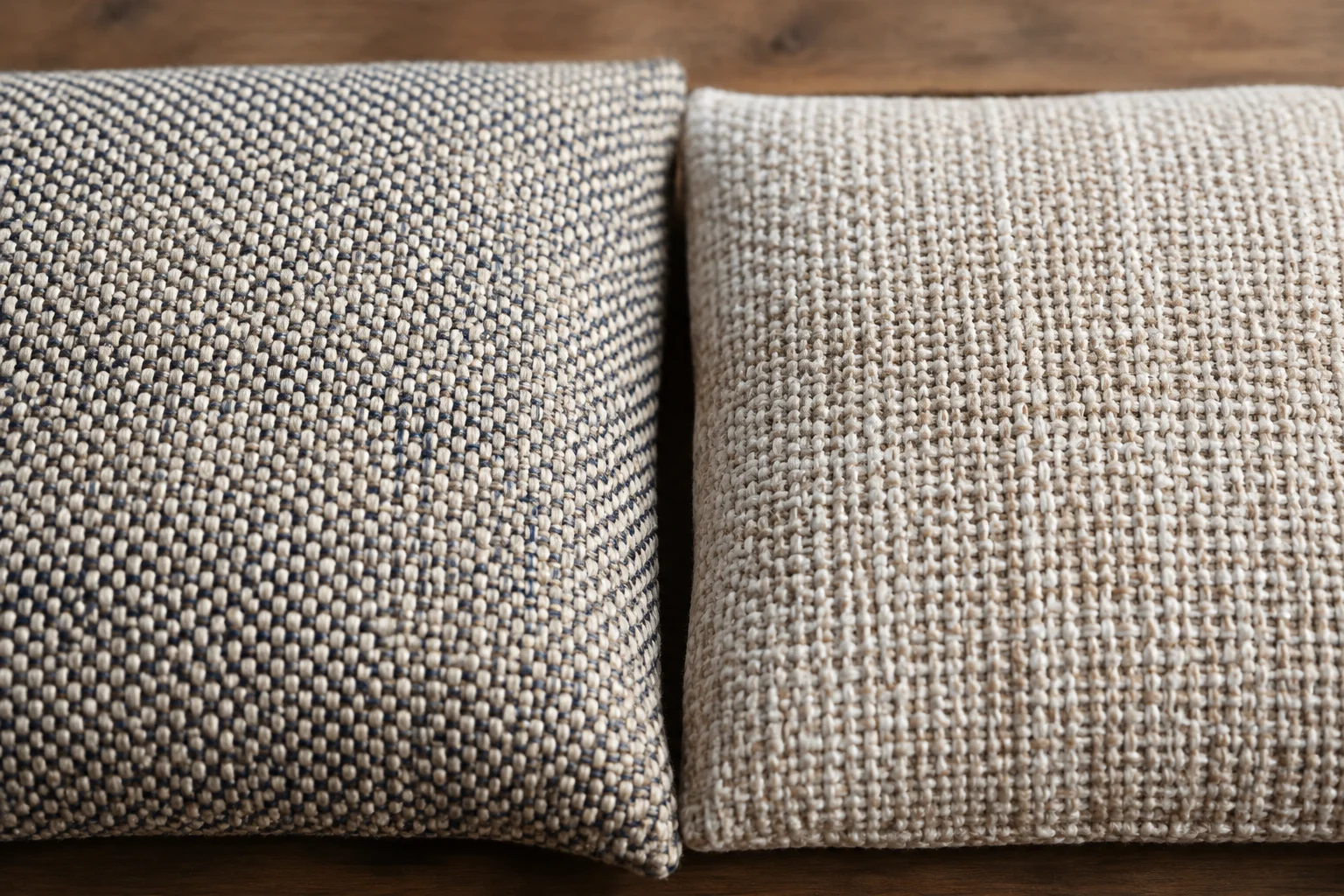
- Narrow to three or four candidate colorways on screens — family first, then collection, then color; do not fall in love at this stage.
- Get physical swatches of the finalists — through the fabric channels that serve your region; this step is the entire difference between choosing and hoping.
- Live with the swatches on-site for a few days — tape them where the cushions will sit; watch them at morning, noon, and evening; put soil, pollen season, and the family’s actual mess habits into the decision honestly.
- Order by style number, in one dye lot, cut to your measurements. The colorway number is the exact color; the dye lot is the exact batch; the measurements are the exact fit (how to measure) — the three facts that make the delivered set match the vision.
Colors and the Rest of the System
Color is one of three choices in a Sunbrella-class cushion; the other two are line and construction. The line (upholstery for seating; Rain for exposed-and-showered placements) is mapped in the collections guide. Construction — pattern alignment across pieces and seams sewn clean — is what turns good fabric into good cushions, and it is specified at order time, not discovered afterward. For cushions cut to your dimensions in Sunbrella-class acrylics: custom outdoor cushions and the fabric options at Sunbrella cushions.
Color Maintenance: Keeping the Color You Chose
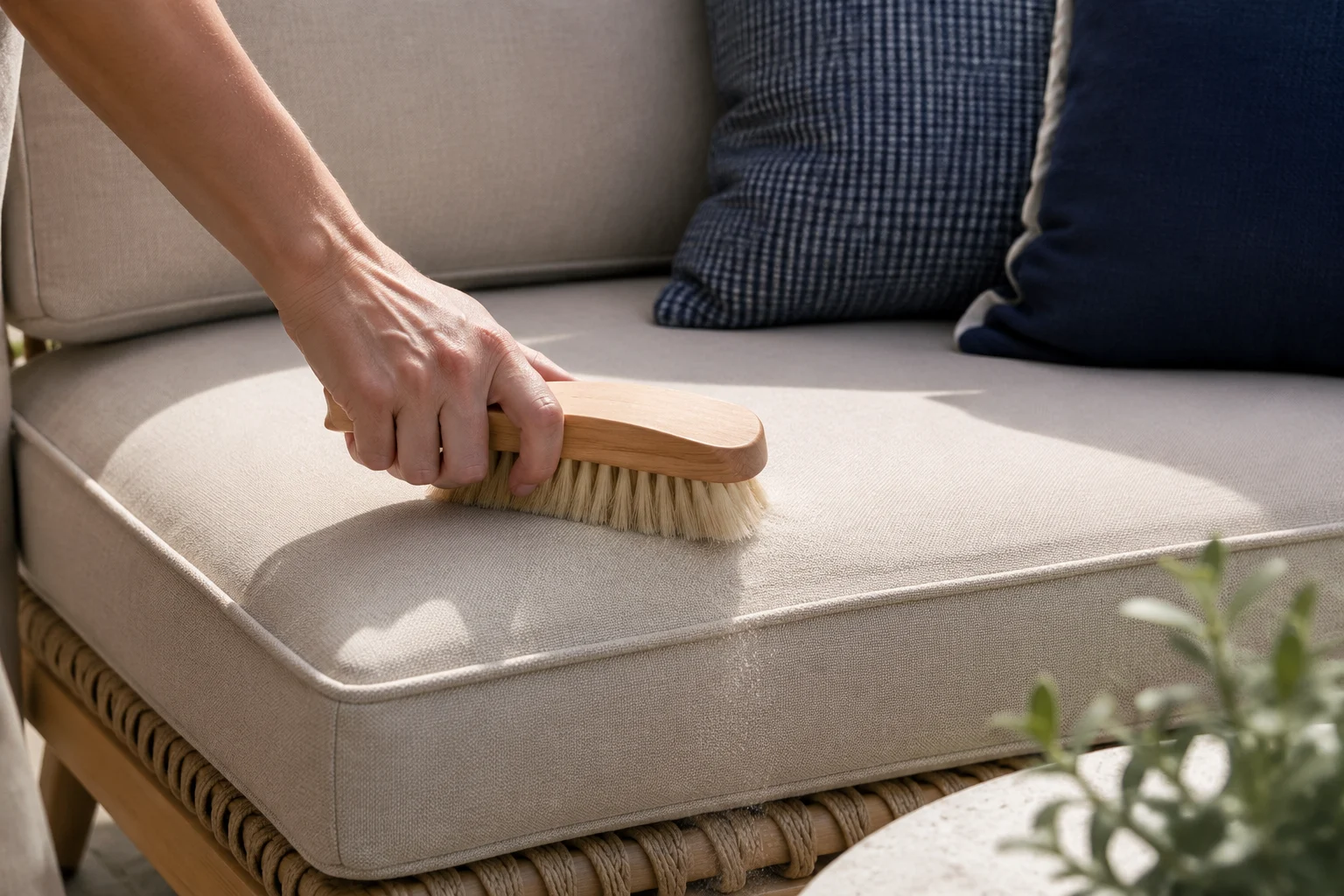
The fade resistance means the color stays; the surface still needs ordinary care, and Sunbrella-class fabric makes that care unusually forgiving. The regime that keeps colorways true: rinse dust and pollen off regularly (airborne grit is what abrades fibers and dulls color — rinse, don’t scrub), clean spills at first stain with the fiber’s chemistry (the cleaning playbook), and use diluted bleach where the stain demands it — the property that distinguishes solution-dyed acrylic from everything cheaper is that bleach cleans it without stripping color. Once a season, a proper wash per the care guidance resets the whole set; once a year, a look at the 303-type fabric-guard question (the re-treating guide) finishes the program. The color you chose with such care at the swatch stage is the color the system is built to keep.
FAQs
How many colors does Sunbrella come in?
Hundreds of colorways across the upholstery collections, organized into families and collections with style numbers per color — the practical navigation is family first, collection second, colorway last, confirmed by physical swatch.
Do Sunbrella colors fade in the sun?
Very slowly — solution-dyeing puts the color inside the acrylic fiber, and the brand backs the fabrics with a 5-year fade warranty; color behavior differences between families are about soil visibility, heat, and light reading, not about some colors fading and others not (is Sunbrella worth it).
What is the most forgiving Sunbrella color for a real yard?
The earth-tone and gray-taupes families — they hold against UV, hide ordinary dirt, and read well in both sun and shade; whites look superb but show everything, and brights are confident but least forgiving of photography’s lies.
Can I match my existing Sunbrella cushions later?
Only by colorway style number and dye lot — order the full count plus a spare in one run, because colorways rotate seasonally and a later “same color” order can be the nearest current equivalent rather than the match.
How do I choose between similar Sunbrella colors?
Physical swatches on-site for a few days, judged at the hours you actually use the space — and when still torn, take the quieter one, because every colorway intensifies across a full set of cushions.
Next Steps
- Narrow to 3-4 candidate colorways by family and collection, then get physical swatches of every finalist.
- Judge the swatches on-site across days and hours, against the frames, with the household’s mess habits priced in.
- Order the full set by style number in one dye lot, cut to your measurements — custom outdoor cushions with Sunbrella-class fabric options at Sunbrella cushions — 3-6 weeks delivery, crafted in 4-7 days, nothing cut until your dimensions are confirmed.
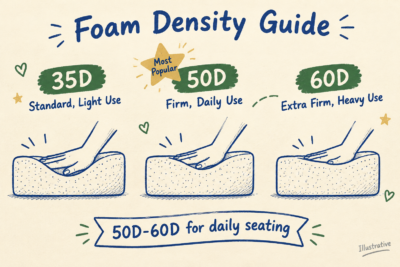
Foam Density Explained: D-Ratings vs lbs/ft³
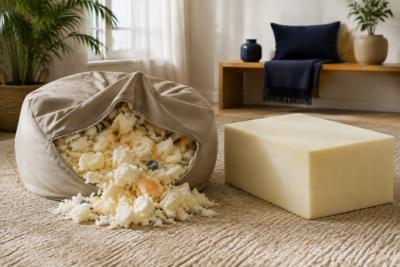
What foam density actually measures, why D-ratings and lbs/ft³ (PCF) are two different languages with no direct conversion formula, and how to translate between them honestly — by use tier and lifespan, with the 35D–65D grades decoded.
Flame Retardants in Cushion Foam: What Changed and What to Ask
Cushion foam flame retardants explained: why California TB117 put additive chemicals into furniture foam, what the TB117-2013 revision changed, what CertiPUR-US and GREENGUARD actually certify, how to read new-foam off-gassing, and the six questions to ask any supplier for nursery and commercial buying.

Wheelchair Cushion Foam Replacement: Measure, Order, Revive
Replace wheelchair cushion foam instead of the whole pad: three signals the core is done, W x D and thickness measuring, 50D-65D density for all-day seats, and cover fit – cores cut to your measurements.
How to Care for Polyester Cushions: Washing, Fading and Stretching Them Back
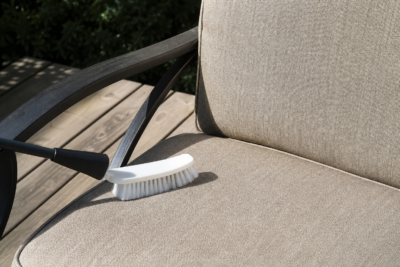
Polyester cushion care from top to bottom: what spun polyester can and can’t handle, the wash-day routine that won’t ruin fills, how to slow the fading that defines the tier, and reviving covers that have stretched out.
How to Choose Foam Density: 35D vs 50D vs 60D vs 65D (Decision Guide)
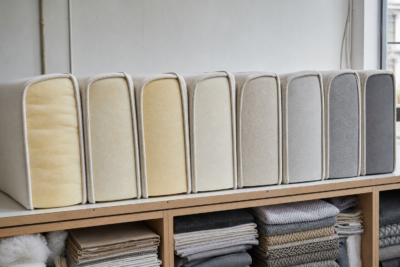
Pick cushion foam density in three questions: 35D for occasional seats, 50D as the daily-use default, 60D for heavy sitters and long hours, 65D for commercial and marine duty — with lifespan rules of thumb and what each upgrade costs.
HD Foam vs Dry-Fast Foam: The Outdoor Cushion Guide
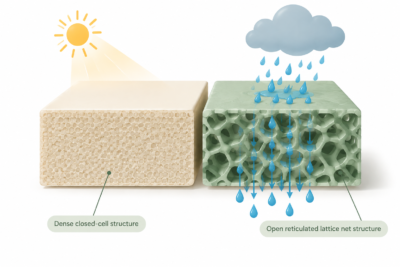
High-density foam vs dry-fast reticulated foam for outdoor cushions — cell structure, PPI, feel, the measured price premium (+9% at one configurator), and the simple covered-vs-uncovered test that picks for you.