
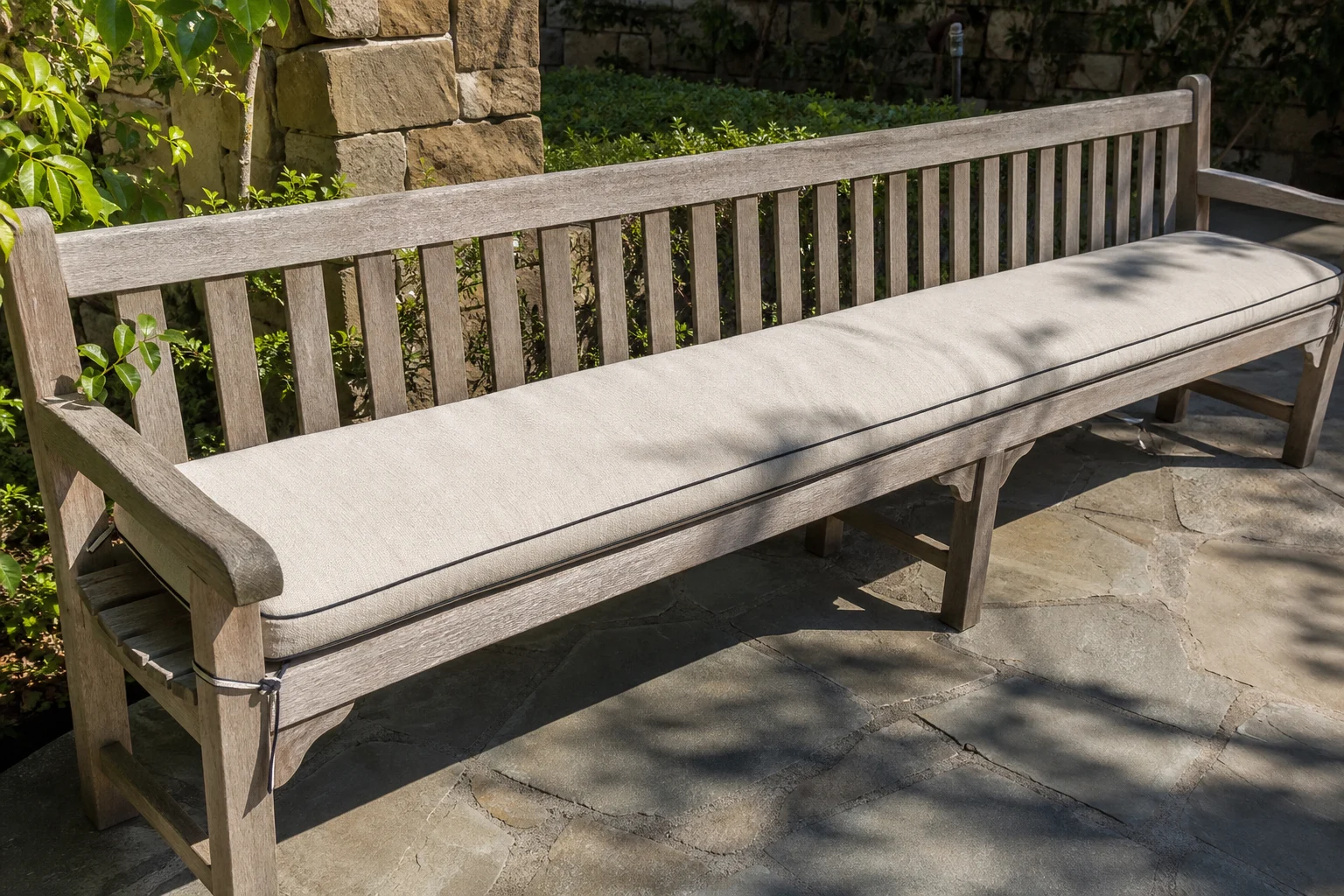
The outdoor bench is the patio’s workhorse — dining seating, porch perching, garden punctuation — and its cushion is governed by two facts more than anything else: length is fit (a bench cushion that is short of the frame or overhanging it looks wrong immediately), and wind is the enemy (a bench cushion is a large flat sail attached to nothing unless you attach it). Get those two right, add the standard weather specs, and the bench is the most satisfiable cushion project on the patio. This guide covers standard lengths and how to match them, thickness and fill choices, the anti-wind attachment question, weather specs, and the ordering routes. The measuring deep-dive (including L-shaped and trapezoid benches) is bench cushion measurements.
Sizes: The Length Problem
Bench cushions are sold by length and depth, and the market’s standard lengths cluster around familiar frame sizes:
| Bench type | Typical frame length | Cushion route |
| Small garden/porch bench | ~36-42 inches | Stock lengths usually fit |
| Standard patio bench | ~48 inches | The best-served stock length in the market |
| Long bench / glider | ~60 inches | Stock exists; verify exact frame length |
| Extra-long benches (72 inches and beyond) | Past the stock ladder | Custom — the extra-long bench guide territory |
| L-shaped and corner benches | Two runs meeting at a corner | Custom — measured piece by piece (how to measure an L-shaped bench) |
| Trapezoid seats (front wider than back) | The wedge benches of curved sets | Custom — front-width and back-width (trapezoid measurement) |
Two disciplines make the length decision reliable:
- Measure the frame’s seating span — rail to rail or slat to slat, wherever the cushion’s edges will land — to the nearest quarter inch (bench cushion measurements). A worn old cushion is a hint, not a source; the frame is the truth.
- Decide the overhang policy on purpose. Flush-to-the-rail looks tailored and sheds wind marginally better; an inch or so of overhang reads softer. Past a couple of inches, overhang starts looking accidental — and the free edge is what wind takes.
Depth is the second dimension (common seat depths run around 17-20 inches for benches, deeper for lounge-grade pieces), and thickness is a comfort-and-proportion choice: 2.5-3 inches suits dining-height benches; 4-5 inches makes a perch bench comfortable; past that you are building a daybed, which is a legitimate project (daybed cushions).
The Wind Question: Attachment Decides Everything
An unattached bench cushion on an exposed patio is a weather event waiting to happen — large flat area, light weight, nothing holding it down. The attachment options, in ascending order of security:
- Ties. The classic: ties at the frame’s solid points (through slat gaps, around rails). They work, they look traditional, and they are the right answer wherever the frame offers tie-through geometry. Specify tie positions as distances from a corner — generic tie spacing is how cushions stay attached on one end and sail on the other.
- Grip backing. A textured non-slip underside — invisible, effective against the daily slide, and the minimum spec for any smooth-surfaced bench. Wind resistance is real but limited: grip beats sliding, not storms.
- Hook-and-loop or strapping through the frame. For genuinely exposed sites (waterfront, open hilltop, coastal), mechanical attachment through the frame is the honest answer — the cushion that must not move gets fastened, not balanced.
- Weight and geometry as passive defense. Thicker cushions with tailored (flush) fit present less edge to the wind; a bench backed against a wall shelters its cushion’s windward face.
The practical pairing most exposed patios land on: ties plus grip backing — the combination that survives both the daily nudge and the ordinary storm.
Weather Specs: The Standard Tiers, Bench Edition
Bench cushions live the same outdoor physics as every other cushion, with one amplification: benches often sit more exposed than dining sets — against a railing, at a garden’s edge, on an open porch swing frame.
- – Fabric: solution-dyed acrylic or Olefin for exposed sites; polyester defensible only under real cover. The fiber logic and the honest hierarchy: best outdoor cushion fabric; the acrylic cost-per-year case: is Sunbrella worth it.
- – Fill: a real core for anything sat on daily — 50D-60D for daily-duty seating (how to choose foam density); fiber-only bench pads flatten on the bench clock and read thin within seasons.
- – Construction: welt cord (piping) stiffens the long front edge — on a 48-plus-inch cushion, that edge is the visual spine of the whole bench (cushion piping and welt cord); wipe-clean covers make the weather maintenance cycle humane (replacement cushion covers).
- – The maintenance system: store off-season (the winter method), edge-dry after rain and drain the persistent heaviness (the method), clean at first stain (the playbook). The full habits: outdoor cushion maintenance tips.
Where to Buy: The Routes
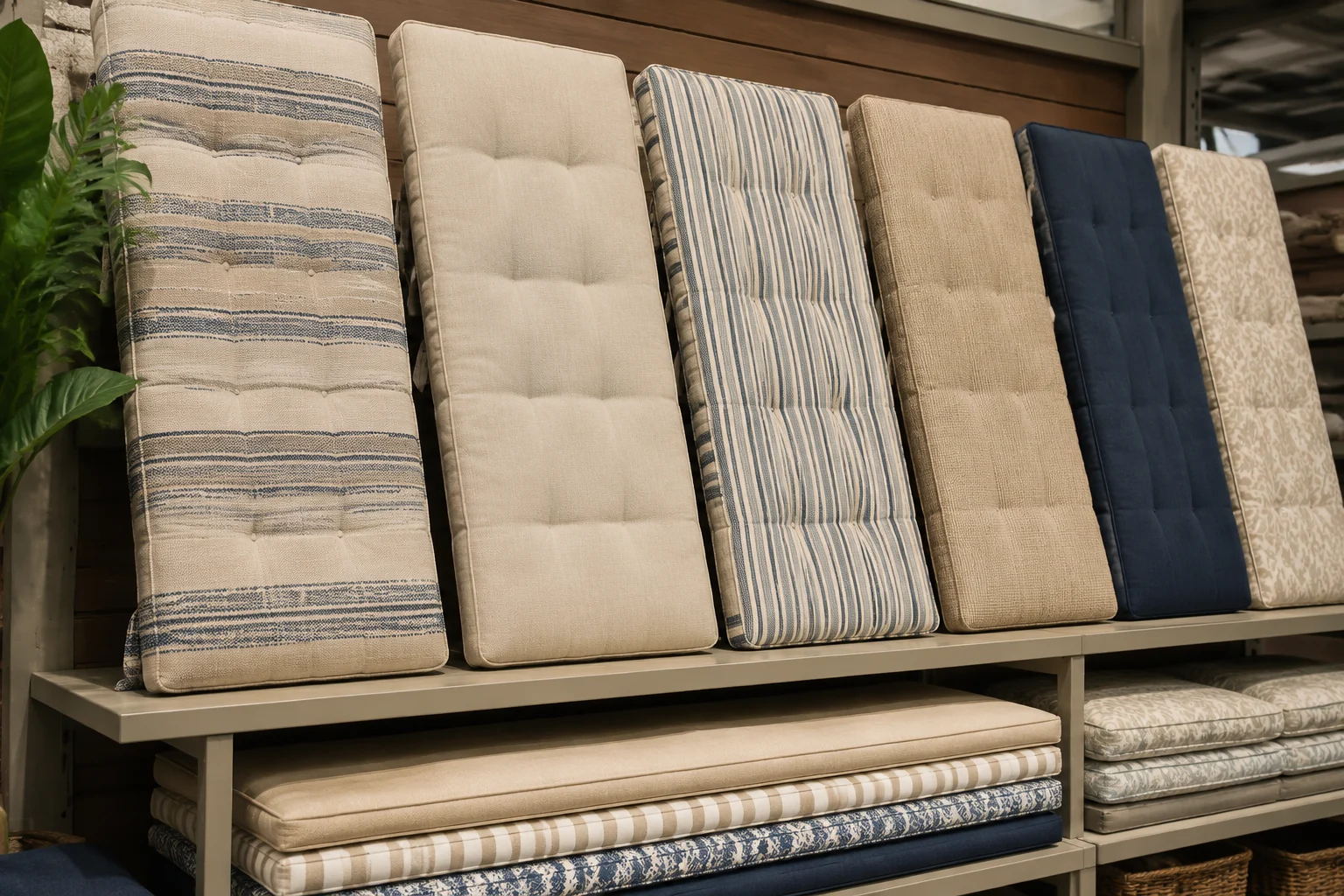
Stock bench cushions. The standard lengths are among the best-served products in the outdoor market — every seasonal wall and marketplace stocks them from spring onward. The checks are the standing five (dimensions in the spec table, fiber, fill, attachment, construction), with length-match as the make-or-break first check and the clearance-window logic for bargain hunters (Walmart’s cycle covers the calendar).
Brand-set benches. If the bench belongs to a named patio set, the brand window logic applies: matching pieces exist while the set is current, and the lines we document piece by piece (Hampton Bay and the Martha Stewart collections — 195+ verified sizes across 31 collections) are covered in the Hampton Bay replacement guide and its Martha Stewart companion.
Custom runs. The exact-fit route for everything the stock ladder misses — odd lengths, extra-long runs, L-shaped and trapezoid benches, benches with specific tie geometry — and the spec-choice route for benches worth keeping: cut to your measured span, your thickness, weather spec chosen on purpose. Pricing from a $45 make-base plus area at per-sqft foam and fabric rates. Entry point: custom outdoor bench cushions (the bench-specific category page) and custom outdoor cushions for the general configurator.
The Swing and Glider Cousins
Two bench-family relatives with their own pages worth knowing: porch swings take bench-form cushions with the added motion question (the constant movement works ties the way rocking chairs do — outdoor swing cushions covers the line), and gliders and bench swings share the attachment logic. If your “bench” moves, read the swing guide before ordering.
The Bench Family: Forms and Their Fit Logic
“Outdoor bench” spans more furniture than any single cushion spec covers, and each form bends the project:
- – Dining benches — the table-height form: 2.5-3 inches of thickness, exact length to the table’s span, and the same apron arithmetic as dining chairs (thickness bounded by the table’s underside).
- – Storage benches — the box with a lid that seats: cushion attaches to the lid (weatherproof closures matter, because the lid’s underside faces ground moisture), and the hinge side wants the hinge gap respected or the cushion binds at every open.
- – Garden and park benches — the slatted classic: ties through the slat gaps, grip between the slats’ rails, and the exposure logic of furniture that sits in open garden by design.
- – Glider and porch benches — the motion forms: attachment under constant movement is the rocking-chair problem at bench scale — re-stitch ties at the first fray, and read the motion-furniture logic in the rocking chair guide and the swing cousin’s page (outdoor swing cushions).
- – Planter and integrated benches — built-ins with arms and corners: effectively L-shaped and trapezoid projects wearing a bench’s name (L-shaped measuring, trapezoid measuring).
The family rule: name the form before measuring, because the form dictates which measuring guide is the right one — and which attachment system survives the furniture’s actual life.
Frame Materials and the Cushion’s Micro-Climate
The bench’s frame material changes what the cushion sits against, and the differences are practical:
- – Wooden slats breathe and drain but abrade cushion undersides slowly — grip backing doubles as an abrasion layer here, and the slat gaps are natural tie points.
- – Metal frames conduct heat: full sun makes the frame hot enough to matter through thin cushions, which is a thickness argument (a 4-inch core insulates; a 1.5-inch pad transmits), and metal’s smooth surfaces are the grip-backing home turf.
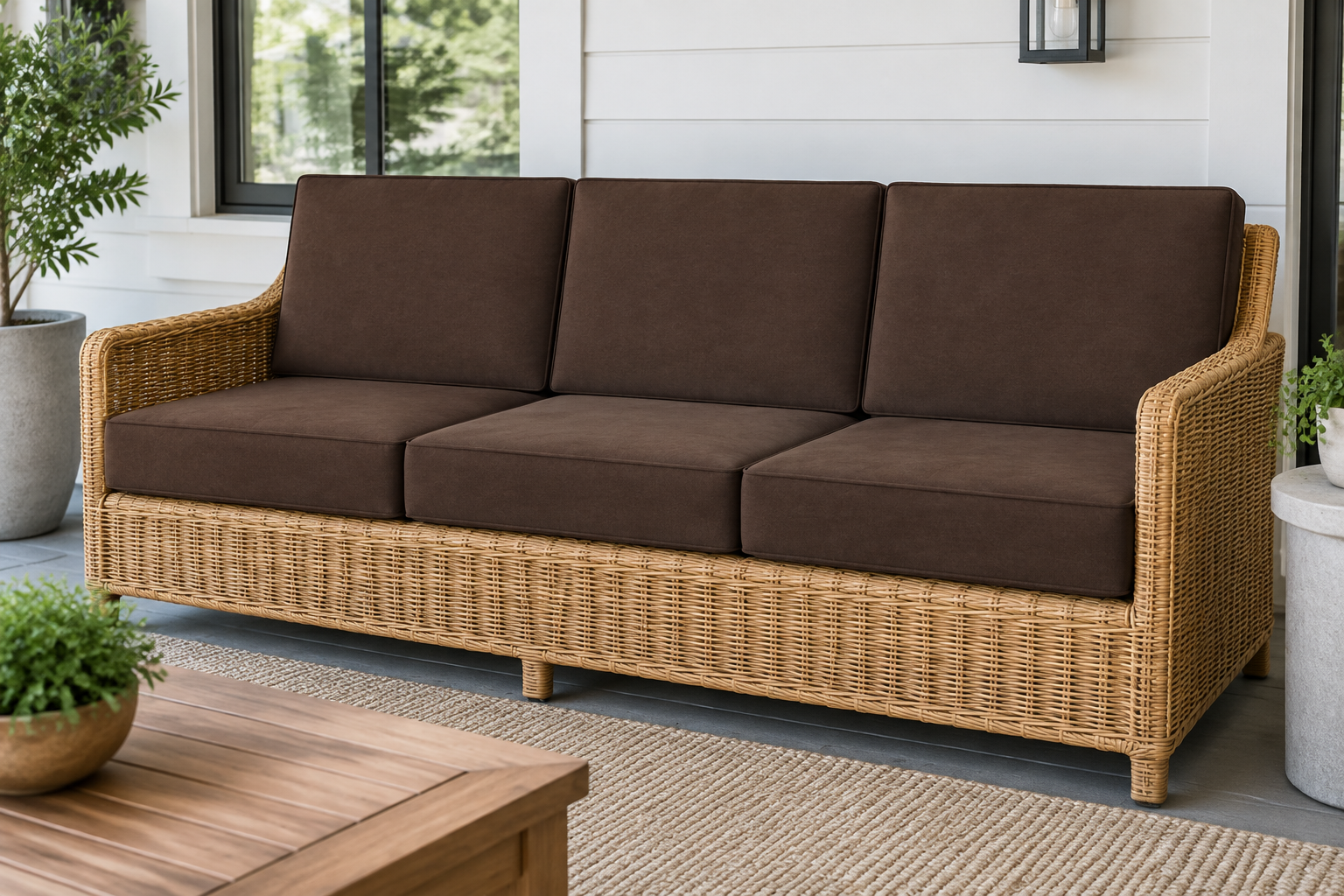
- – Woven and wicker frames offer the best natural attachment (the weave’s strong points) and the curved-front geometry that sends the project to the curved-measuring method (how to measure curved wicker seating; the family background: wicker furniture cushions).
- – Recycled-lumber frames (the POLYWOOD class) are the low-maintenance extreme — frames that want nothing, which quietly raises the standard the cushion should meet (the POLYWOOD cushion logic).
Cushion Care, Bench Edition
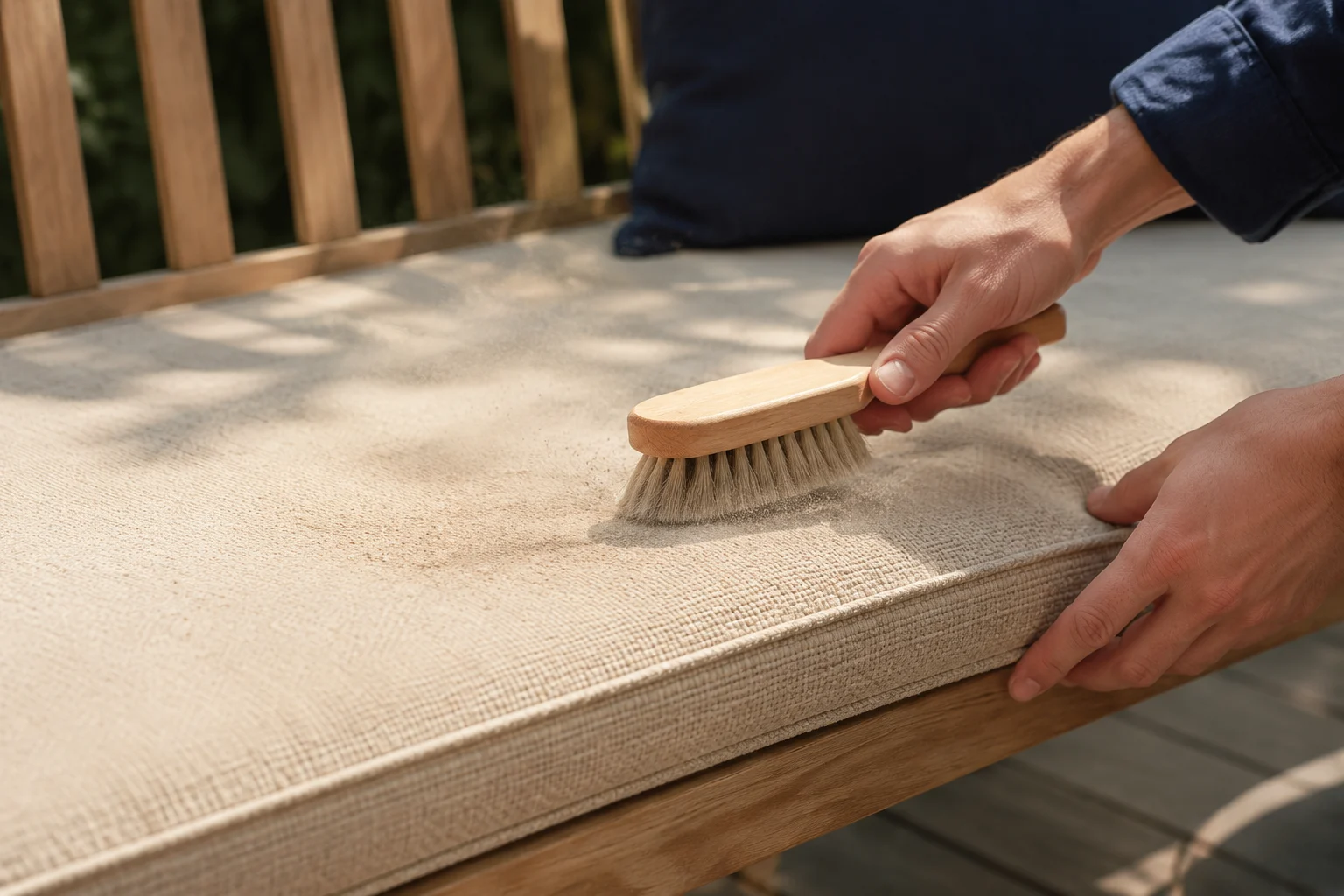
The maintenance system is universal, but benches add two bench-specific notes to it. First, the long edge: a 48-plus-inch cushion’s front edge is its visual spine and its first failure point — welt cord keeps it crisp, and flipping the cushion end-for-end monthly shares the edge wear the way chair rotation shares fade. Second, the underside’s secret life: benches sit directly on slats and frames that hold moisture after rain, so lifting the cushion to dry the underside after wet spells is the bench-specific habit that prevents the mildew that starts where nobody looks — the triage when a cushion has already gone heavy is how to drain waterlogged cushions. The full universal system — storage, edge-drying, first-stain cleaning, sun rotation — is outdoor cushion maintenance tips, and the replace-vs-nurse signals are when to replace outdoor cushions.
FAQs
What size bench cushion do I need?
Your frame’s seating span decides — measure rail to rail to the nearest quarter inch (bench cushion measurements) and match to the stock ladder (36-60 inch standard lengths) or go custom for anything the ladder misses; overhang past a couple of inches reads accidental and gives wind an edge.
How do I keep outdoor bench cushions from blowing away?
Attach them — ties at the frame’s solid points plus grip backing handles daily and ordinary-storm duty, and genuinely exposed sites (waterfront, open coastal) justify mechanical fastening through the frame; an unattached bench cushion is a sail with a cushion attached.
How thick should an outdoor bench cushion be?
2.5-3 inches for dining-height benches, 4-5 inches to make a perch bench comfortable — with a real core at 50D-60D for daily use, because fiber-only pads flatten within seasons of bench duty (how to choose foam density).
Are outdoor bench cushions waterproof?
No cushion is waterproof as a system — covers resist water to their fiber’s tier (acrylics and coated polyesters shed it) while fills hold whatever gets in through seams; the honest framing and the drainage behavior are waterproof cushions explained.
Where do I get a custom outdoor bench cushion?
Custom outdoor bench cushions — cut to your measured span and depth, your thickness, and the weather spec chosen deliberately; from a $45 make-base plus per-sqft rates, nothing cut until your dimensions are confirmed.
Next Steps
- Measure the seating span and depth rail to rail, decide the overhang policy and thickness — bench cushion measurements is the walkthrough.
- Fix the attachment plan (ties, grip, or both) based on how exposed the bench sits.
- Stock lengths can shop the seasonal wall; everything else prices at custom outdoor bench cushions — 4-7 business days, confirmed before cutting.
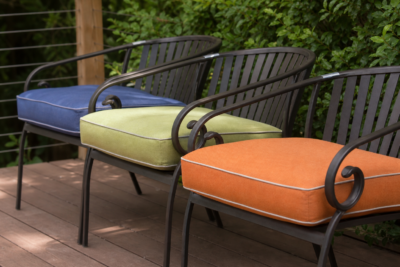
Patio Chair Cushions: The Complete Buying Guide (Outdoor Too)
Everything that decides a patio or outdoor chair cushion — sizes, thickness, ties, fabric tiers and where each buying route wins. Custom from $45 when grids fail.
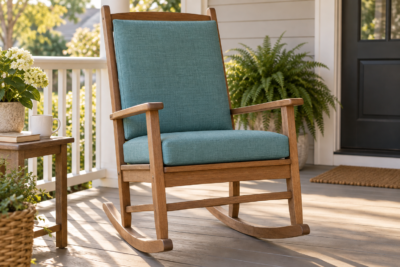
Outdoor Rocking Chair Cushions: The Weatherproof Guide to Sizes and Fabrics
An indoor rocking cushion dies fast on a porch. The sun bleaches the print in a single season, the foam
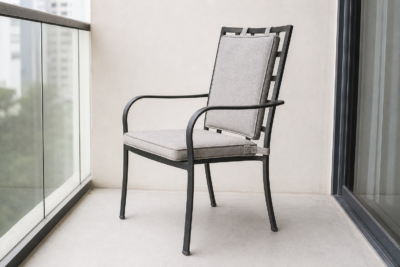
Cushions for Metal Patio Chairs: Frame Types, Grip and the Heat Question
Cushions for metal patio chairs guide: wrought iron, aluminum and steel frames and what each means for pads, sliding on slick metal, heat absorption in sun, sizing across mixed metal sets, and the outdoor duty spec.
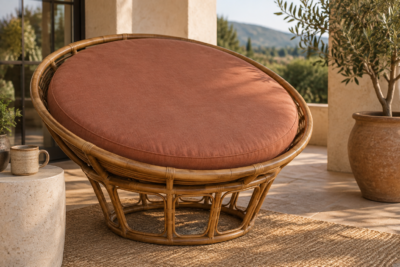
Outdoor Papasan Cushions: Weathering the Big Round
Outdoor papasan cushions fail in a known order — fabric, fill, bowl. The overhang-vs-inset diameter decision, fiber vs foam outdoors, and the honest line between a flat round and the concave original.
High Density Foam Couch Guide: What Density Actually Means
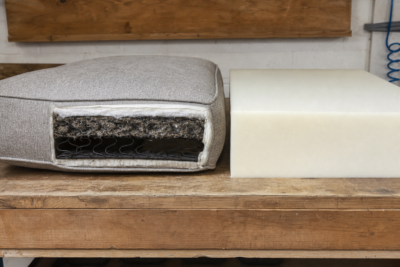
What high density foam actually means for a couch — the ×10 density convention, density vs firmness (ILD), the 35D–65D grades ranked by use, how each grade fails, and what density costs per square foot.
Adirondack Chair Cushions: Sizes, Selection & Replacement Guide
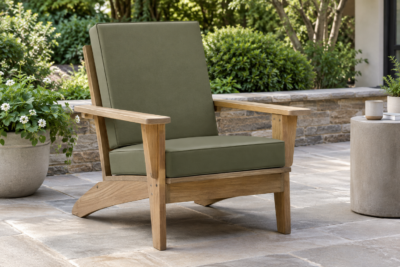
Adirondack cushion sizes decoded: 20×20 seats, tall-back options, tie patterns, best fabrics — plus fitting odd or vintage chairs.