
The question comes in two forms. “Can my wicker set stay out in the rain?” — answerable with a material test and one honest paragraph. And “is wicker waterproof?” — which is the wrong question entirely, because no furniture is waterproof in the way the asker hopes, and the wickers that survive weather do it by not absorbing and drying fast, not by repelling water like a duck’s back.
Here’s the honest answer for each family, what weather actually does to each, and the protection habits that matter. The material map behind it: types of wicker materials; the identification test: how to tell indoor from outdoor wicker.
The Short Answers
Natural wicker (rattan, cane, paper fiber, willow): not weatherproof, not close. Rain soaks natural fibers, they swell, then dry and crack on the cycle; humidity grows mold in the weave; sun embrittles. Natural wicker that gets rained on repeatedly is being destroyed in slow motion. Covered porch at most, and even there, watch the humidity.
Resin/PVC wicker: waterproof strands, honest weaknesses. The vinyl strands themselves don’t absorb water — but the weave holds it in its pockets, frames and fasteners rust or corrode if they’re not aluminum or properly coated, and UV (not water) is what actually kills PVC-resin: embrittlement and chalking over a few seasons.
Woven HDPE: all-weather in the real sense. Non-absorbing strands, UV-stable chemistry, over (usually) powder-coated aluminum frames — it can genuinely live outside. “All-weather” here means tolerates weather, not unaffected by it: dirt accumulates in the weave, cushions on top have their own weather behavior, and multi-year sun eventually fades even HDPE.
And the furniture ≠ its cushions. Even genuinely all-weather frames carry cushions that are not — the cushion spec is its own weather problem, per weather resistant cushions, and the wet-cushion rescue routine is how to drain waterlogged cushions.
What Each Kind of Weather Actually Does
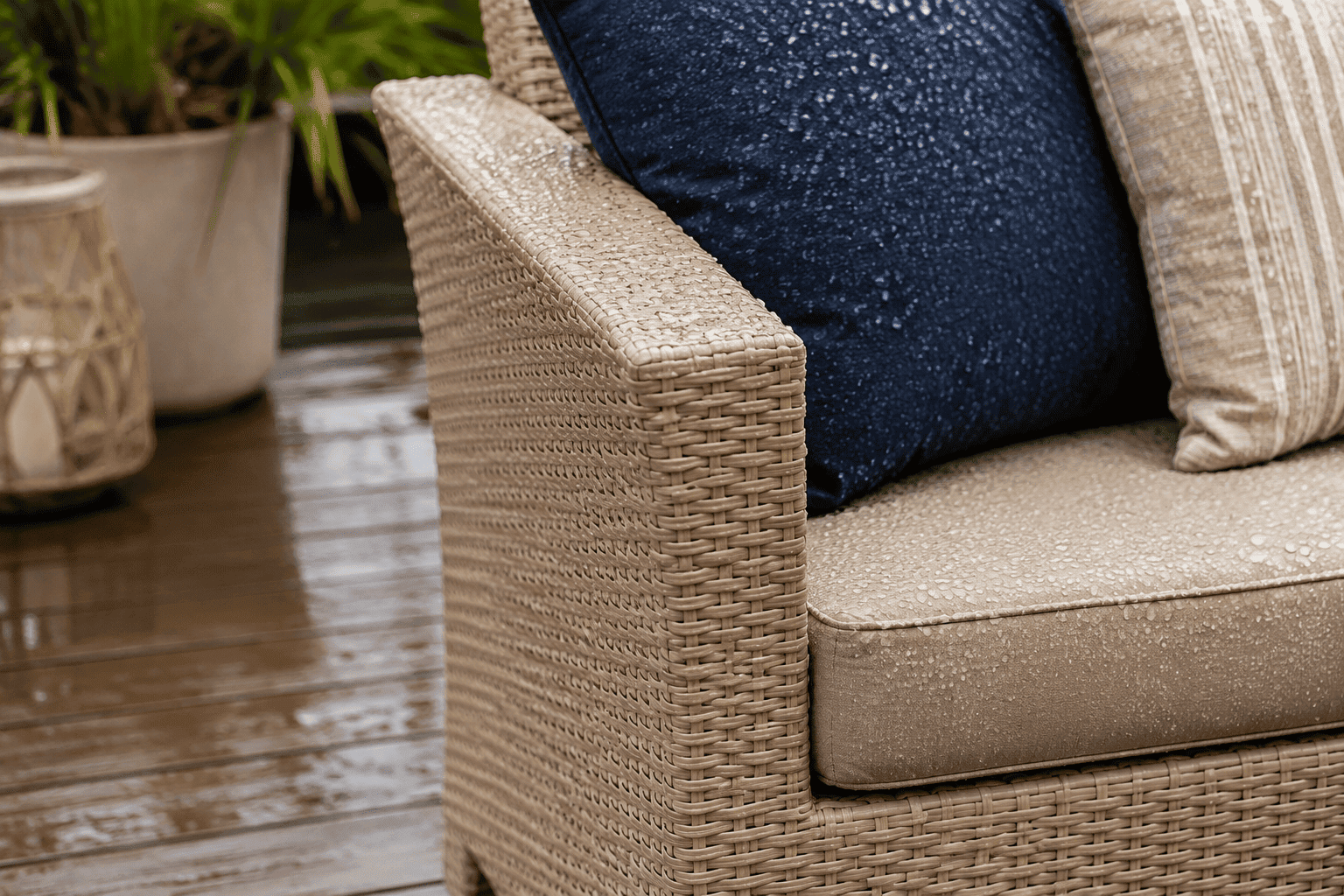
Rain. Natural wicker: absorbed, swelled, crack-cycle begun — the single most destructive event for naturals. Resin/HDPE: runs through the weave and off; the furniture dries, the cushions need standing on edge, and pockets of the weave hold surface water briefly. The frame question decides long-term: aluminum shrugs; uncoated or scraped steel rusts at the joints, and rust bleeding through a weave is a real failure mode.
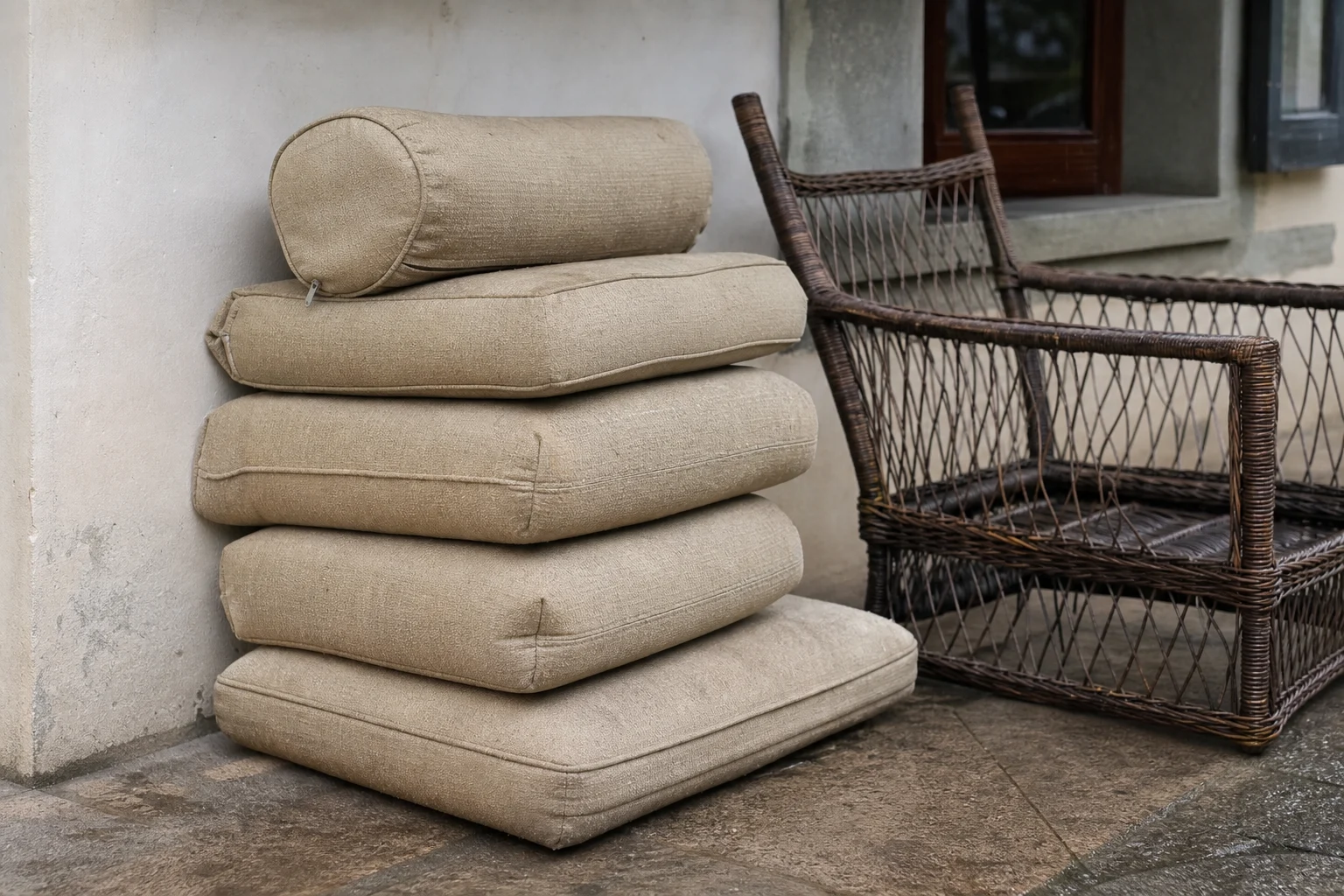
Humidity and damp air. The slow killer of naturals even under cover — mold in the weave, mildew smell, fiber softening. The mold system for cushions transfers to woven furniture directly (how to prevent mold on outdoor cushions is written for cushions but the moisture logic is identical). Synthetic wicker is indifferent to humidity.
Sun. UV is what actually ages outdoor wicker: PVC-resin embrittles and chalks (a few seasons), HDPE fades slowly (years), naturals embrittle fast even indoors near bright windows. The UV exposure logic that applies to fabric in fabric color fastness and UV stability has a furniture-scale twin.
Freeze-thaw. Matters mainly in the wet-then-frozen version: water held in weave pockets or frame joints expands. Drain-and-dry before a freeze, and synthetic wicker winters fine outside in most climates — though storing cushions for winter remains the rule for the soft parts.
Protection Habits That Add Years
For naturals (indoors/covered):
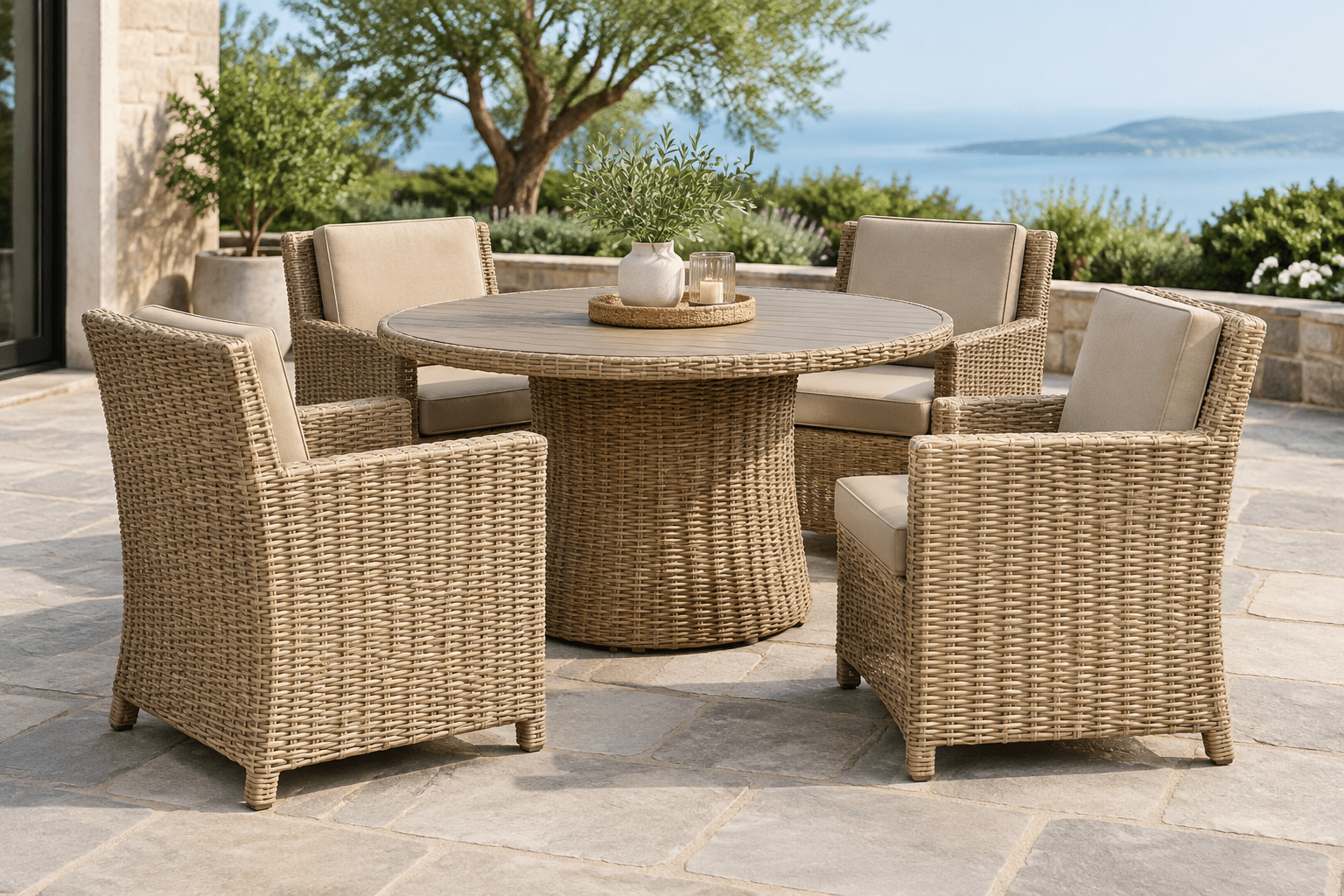
- – Keep them out of direct sun and away from radiators — the drying cycle is the enemy.
- – Maintain humidity in heated winter rooms; dry air is what makes old rattan creak and crack.
- – Dust the weave (vacuum with a brush attachment) and spot-clean with a barely-damp cloth; oil or wax finishes per the maker’s guidance to keep fibers fed.
- – If a natural piece does get soaked: dry it slowly, not with heat — forced drying locks in the cracking.
For synthetics (outdoors):
- – Hose the weave down monthly — dirt and grime are what make white resin look gray, and a rinse is the entire maintenance budget.
- – Cushions off or on-edge after rain, and stored properly off-season; the frame outlasts three generations of cushions (when to replace outdoor cushions handles the soft-side schedule).
- – Inspect frame joints annually — a weave is only as weatherproof as its frame; touch up scratched coatings before rust establishes.
- – Covers for the off-season or long absences: breathable furniture covers, never plastic sheeting (condensation under plastic is the humidity problem you built a cover to avoid).
For all of it: the cushion layer is both the comfort spec and the furniture’s sunscreen — covered weaves age slower, and well-fitted cushions (wicker furniture cushions) with ties or gripper bases stay put through the weather instead of ending up in the yard (how to keep cushions from blowing away).
“All-Weather” on the Tag, Decoded
Marketing shorthand, worth decoding the way weather resistant cushions decodes the cushion version: it means engineered to tolerate outdoor exposure — on wicker, that claim is only as good as the strand material (HDPE yes, PVC seasonally) and the frame (aluminum or properly-coated steel). It never meant “no maintenance, no limits,” and the sets that last a decade are the ones rinsed monthly, cushioned properly, and covered in the off-season.
Can You Waterproof Natural Wicker? The Honest Answer
People who inherit or love natural wicker often ask about sealing it for outdoor life, and the honest answer is nuanced: you can slow the damage; you cannot change the material.
- – Marine spar varnish and outdoor-rated sealers buy real resistance — they coat the fibers against liquid water and some UV. What they can’t fix: the fiber’s response to humidity cycling (swell-shrink continues under the coating, eventually checking the finish), and the weave’s geometry (moisture lodges in weave pockets no coating reaches).
- – The practical result: sealed natural wicker survives covered-porch duty well — morning dew, shade, incidental damp. It does not survive open-air patio duty in any coating, and the coating itself yellows and peels on a two-to-three-year repaint cycle.
- – The better question is whether the piece’s beauty justifies an indoor life instead — natural wicker’s honest best destiny — while genuine outdoor woven furniture (types of wicker materials) does the open-air work it was engineered for.
The same honest framing applies to “waterproofing” cushions, where the word meets the same physics: sealing fails where draining succeeds (waterproof cushions explained).
The one-sentence version worth memorizing. Synthetic wicker survives weather by ignoring it; natural wicker survives weather by being kept away from it — and no product changes either sentence, only the calendar on which it is proven.
The covered-porch middle ground. Between indoors and open patio sits the covered porch — and it is a genuinely different exposure class: shade, no driving rain, but humidity, temperature swings, and the splash zone near open edges. Synthetic wicker treats it as indoors (trivially fine); naturals treat it as their outdoor limit — brought in for winter, monitored in humid summers. The porch is where most “can it go outside” questions actually live, and the answer is material-specific there more than anywhere.
FAQs
Can wicker furniture get rained on?
Synthetic wicker (HDPE, quality resin over aluminum) yes — it drains and dries; natural wicker no — soaked natural fibers swell, crack and mold. Identify which you have before the first storm does it for you.
Is any wicker truly waterproof?
Synthetic strands don’t absorb water, but “waterproof” furniture is the wrong goal — weave pockets hold surface water and frames can rust, so the winning property is non-absorption plus fast drying. HDPE over aluminum is that.
What happens if natural wicker gets wet?
The fibers swell, then crack as they dry; repeated cycles destroy the weave, and trapped moisture grows mold. One accidental soak: dry slowly, away from heat, and watch for mold.
Does wicker furniture rust?
The weave doesn’t — the frame can. Uncoated or scratched steel frames rust at joints and bleed through the weave; aluminum frames are the all-weather pairing. Check the frame before buying.
How do I protect wicker outside?
Monthly rinse, cushions that drain and dry, tie-downs for wind, breathable covers for off-season, and annual joint inspection. The maintenance habit stack does more than any product claim.
Can wicker stay outside in winter?
HDPE over aluminum can, in most climates, drained and covered; PVC-resin gets brittle in deep cold; naturals come in. The cushions come in regardless — the winter storage guide covers them.
Next Steps
- Identify your set — the strand snap-test and frame check in how to tell indoor from outdoor wicker — before trusting it to weather.
- Match the protection plan to the family: humidity and sun management for naturals, rinse-and-cover discipline for synthetics.
- Outfit the frames with weather-correct cushions at custom wicker cushions — waterproof fabric over high-density foam with tied attachment for open-air sets, tailored indoor specs for naturals.
Every cushion on this site is cut and sewn by the Cushion Mill workshop — ten-plus years at the cutting table, and every measurement confirmed in writing before anything is made.
Best Outdoor Furniture Materials: What to Buy for Your Climate and Budget
The material-by-material guide to outdoor furniture — teak, aluminum, steel, HDPE wicker, resin, recycled plastic and more — ranked for weather endurance, maintenance burden and cost, with the cushion spec each one implies.
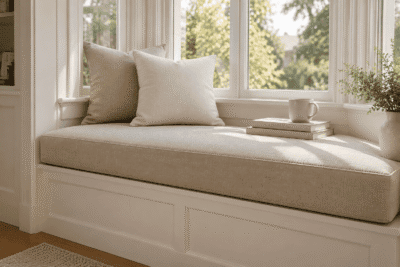
Window Seat Pillows and Padding: How to Layer a Window Seat People Actually Sit On
Most window seats fail the same way: someone puts a thin pad on a plywood deck, calls it a reading

Luxury Patio Furniture: What the Premium Tier Actually Buys
What separates genuine luxury outdoor furniture from marked-up mid-tier — materials (teak, premium sling, solution-dyed systems), construction and design licensing, warranty depth, and where premium spend is worth it versus where custom cushions achieve the same end.
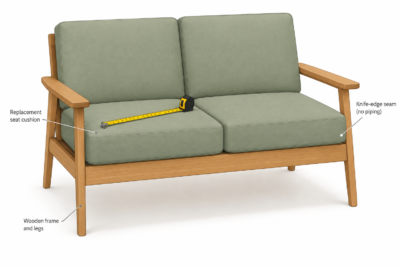
Settee Cushion Foam: Sizing, Density and Replacement Guide
Settee cushion foam answered: two-seat measuring rules, density by how your settee lives, thickness the rails allow, and real prices for a 48 x 18 inch pair.
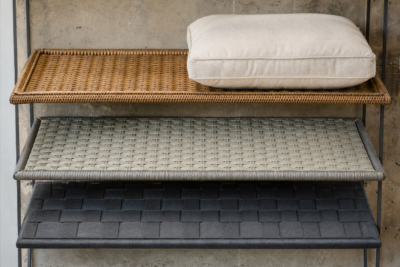
Types of Wicker Materials: Natural, Resin and HDPE Compared
Every wicker material family ranked — rattan core, paper fiber, bamboo, willow and reed on the natural side; PVC-resin and woven HDPE on the synthetic side — with outdoor ratings, lifespans and what each means for cushions.
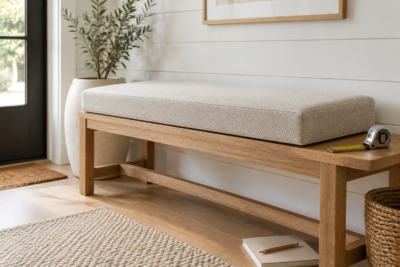
Bench Cushions: The Complete Guide to Sizes, Types and Custom Fit
A bench cushion is only as good as three numbers: the length and depth of the seat deck it sits