
Online patio furniture buying has a specific regret pattern: the set that looked generous in the photo and arrives doll-sized; the “wicker” that turns out to be first-season resin; the delivery that arrives in the middle of a workday as six boxes, one of them the wrong item; the return process that costs half the purchase. Every one of these is preventable by method — dimensions verified before purchase, materials named in writing, shipping reality checked, fit strategy chosen deliberately.
This is the method. It leans on the category knowledge in outdoor cushions buying guide and patio set vs buying separately, and the channel-honesty of where to buy outdoor cushions.
Step 1: Verify Dimensions Against Reality, Not Photos
Photoshoot furniture is staged to look generous. Numbers don’t stage.
- – Pull the full dimension set — not just “3-seat sofa”: width, depth, seat height, arm height, overall height. Any listing without a dimension table is a listing failing its first test.
- – Tape it out on your patio. Painter’s tape at the real footprint, then walk around it with the walkway clearances that matter (18–24 inches of circulation, per small patio spaces). The tape-out prevents the two classic mistakes at once: oversized sets and impossible walkways.
- – Check seat height against your table. Outdoor seat heights run 15–19″; your dining table wants 10–12″ of knee clearance between seat and tabletop — verify against the actual table, and remember cushions add thickness (seat pads vs cushions on the thickness-geometry interaction).
Step 2: Make the Seller Name the Materials
The online-material game runs on adjectives; make them use nouns:
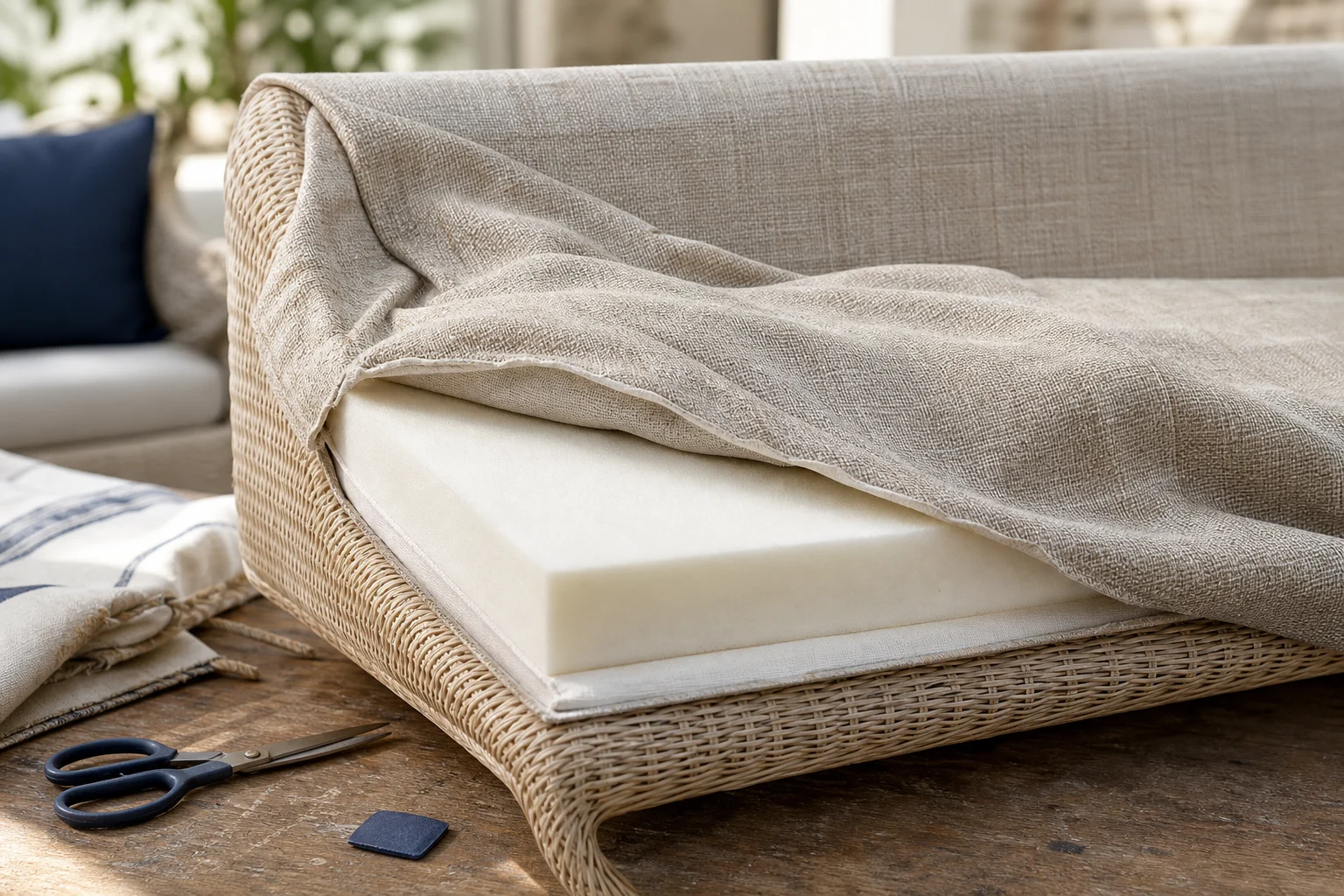
- – “Wicker” — ask: HDPE, PVC-resin, or natural? (types of wicker materials)
- – “Metal frame” — ask: aluminum or steel, and what coating? (best outdoor furniture materials)
- – “Weather-resistant fabric” — ask: what fiber, is it solution-dyed, what UV hours rating? (weather resistant cushions, fabric color fastness and UV stability)
- – “High-density foam” — ask: what density number? (how to choose foam density)
Written answers in the message thread become your recourse if the product differs. Sellers who won’t answer material questions in writing are answering them, in their way.
Step 3: Read Reviews Like an Inspector
Star ratings hide the distribution; the useful information is pattern-matched:
- – Search reviews for the failure words: “rust,” “faded,” “ripped,” “arrived damaged,” “missing” — then count and date them. A fading cluster at month eight is the product’s real curriculum vitae.
- – Weight the 3-star reviews heaviest — they usually contain the specific trade-off (“beautiful but the cushions are thin”).
- – Photo reviews over text reviews: buyer photos show the set at month six, not day one — the fade-and-sag reality photos are worth fifty “love it!” entries.
- – Check the review dates against model years — sellers re-list products under new names to shed bad reviews.
Step 4: Interrogate the Shipping Reality
Outdoor furniture shipping is where online buying quietly breaks:
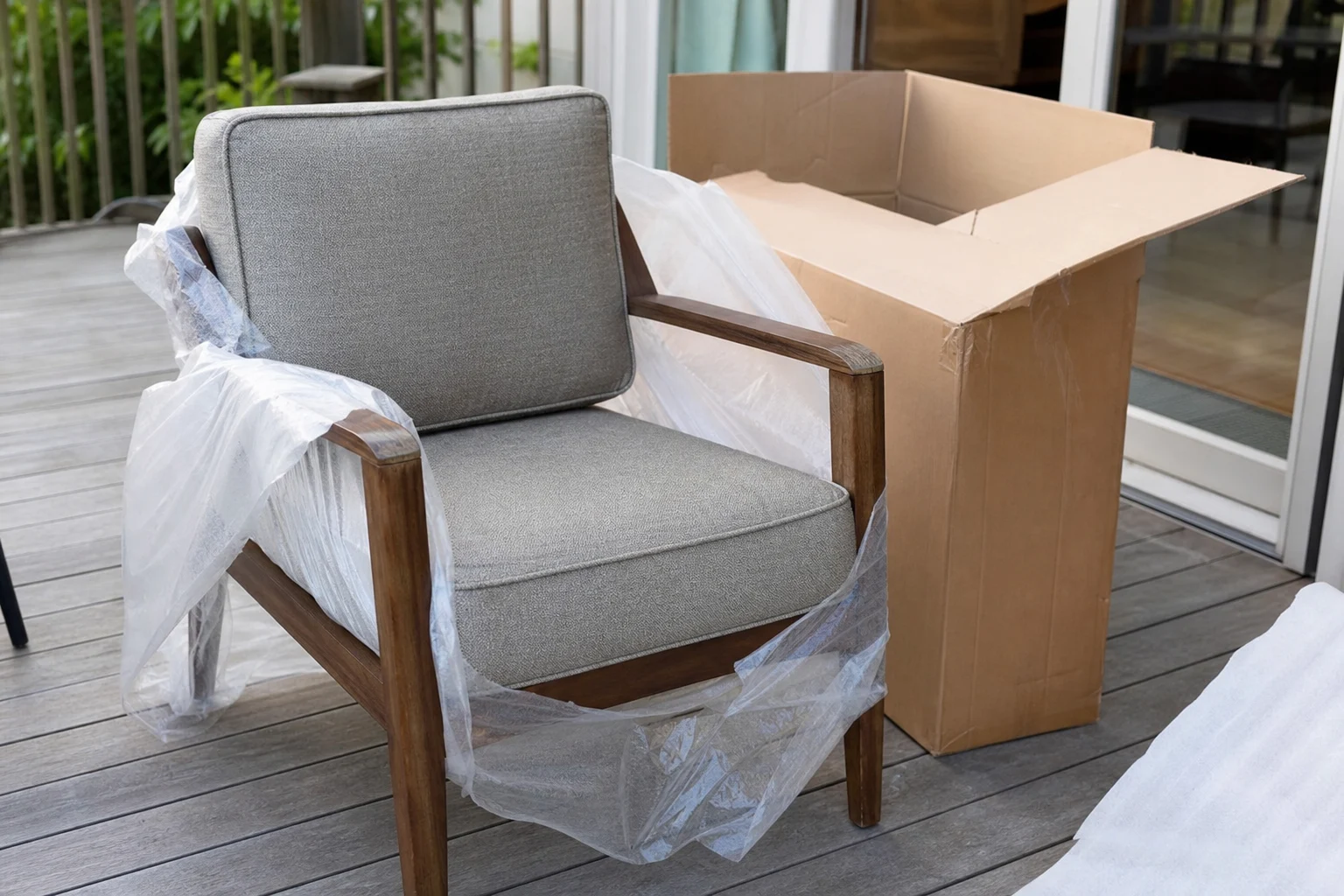
- – Delivery tier: threshold (curb), liftgate, or room-of-choice? A 90-lb crate at the curb is a plan, not a delivery.
- – Box count and assembly: how many boxes, what’s the assembly hardware story, and who pays returns? Freight returns on furniture regularly cost hundreds — the “free shipping” that isn’t free both ways (free shipping and hidden fees unpacks the pattern).
- – Timing: stock-to-door lead time in writing. Import-cycle products quote optimistic dates; domestic made-to-order quotes real windows (custom cushion production runs 4–7 business days as a standard example).
- – Packaging damage protocol: photograph boxes before signing or acknowledging delivery — freight-damage claims live and die on that documentation.
Step 5: The Fit Strategy — Where Custom Solves Online’s Worst Problem
The deepest online-buying regret isn’t quality, it’s fit: standard-size cushions on non-standard furniture. Production cushions come in catalog sizes; your furniture came from a decade of different catalogs. The strategy that eliminates the category:
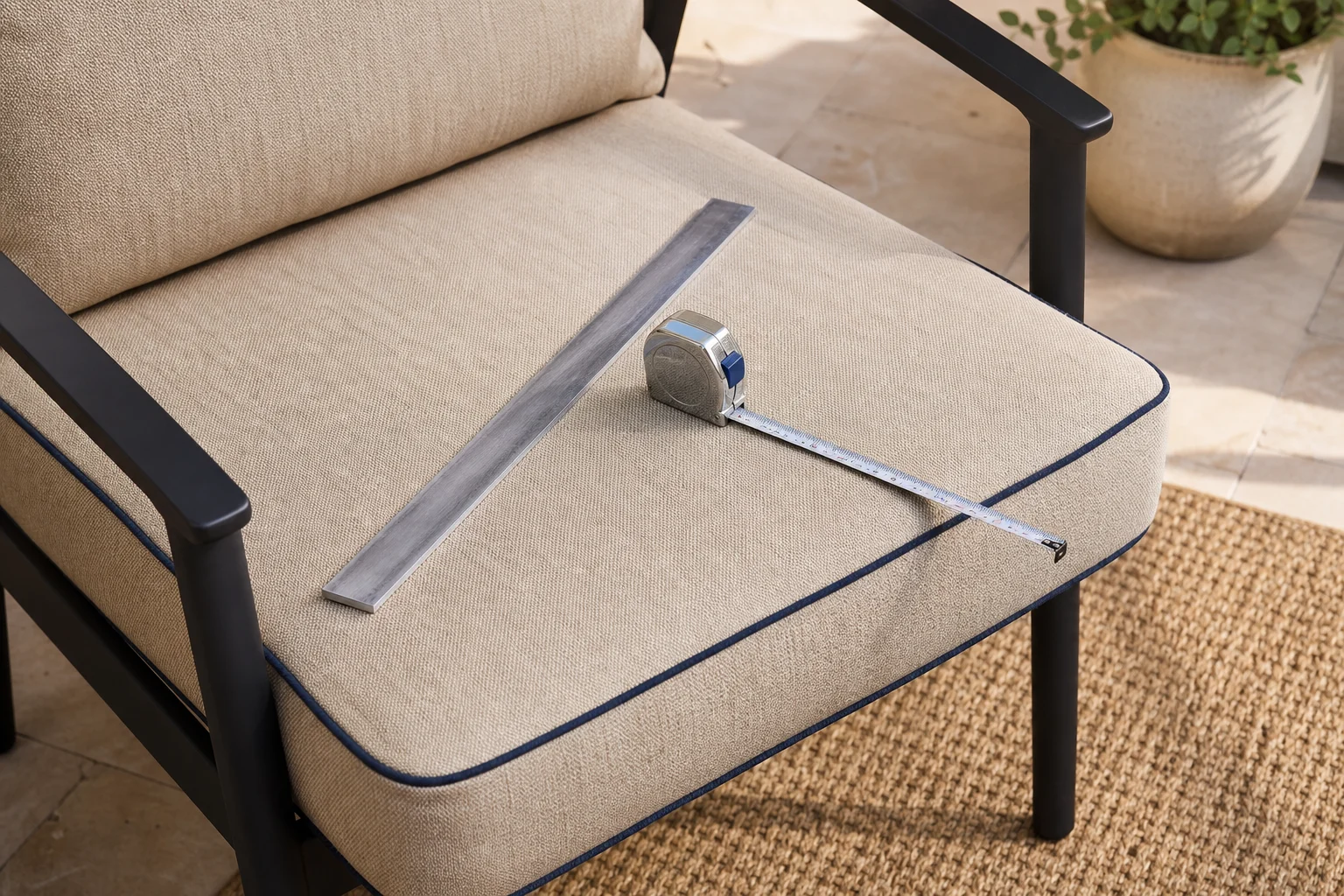
- – For new frames: verify seat dimensions pre-purchase (Step 1) and plan the cushion layer as its own decision (chair cushion sets for set logic) — OEM cushions are routinely the weak link anyway (luxury patio furniture makes the case).
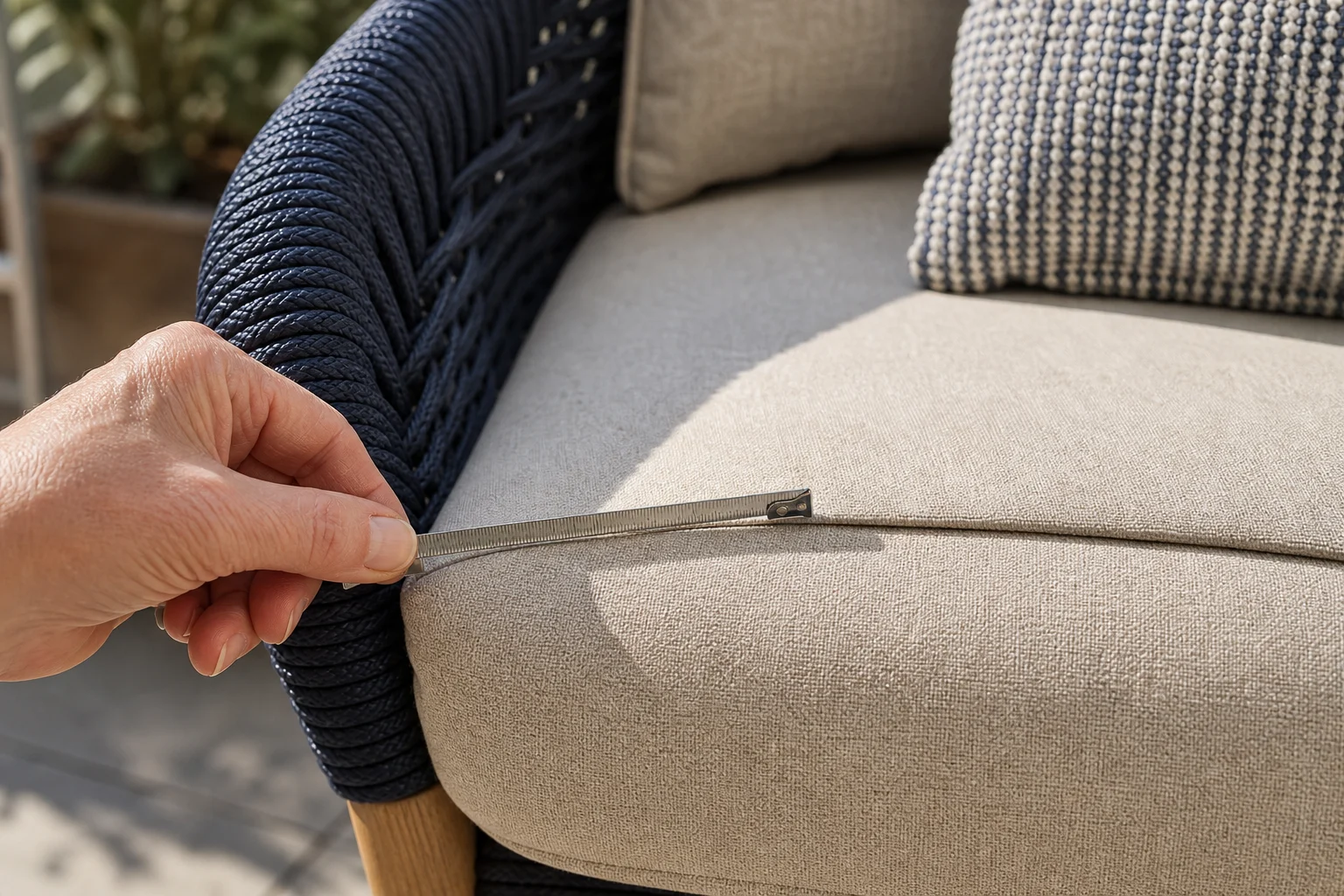
- – For existing frames: custom cushions measured to the actual furniture — the routine in how to measure outdoor cushions — cut to ±½” (±¾” over 36″) at transparent pricing ($45 base per cushion plus area × fabric rate, a flat $7.43 per square foot across all 119 fabrics). Photo-verified before cutting, which is the online-est advantage there is: the workroom confirms your numbers against your photos before anything is made.
- – For brand-name furniture: the brand-replacement ecosystem exists for exactly this — Hampton Bay and Martha Stewart series (Hampton Bay replacement cushions, how to find your Martha Stewart model) — where the measuring is already done and the fit is by-series.
Custom is online buying at its best: no showroom, no catalog-size compromise, and verification built into production.
Step 6: The Return and Warranty Audit
Before paying: return window length, who pays return freight, restocking fees, and whether returns go parcel or freight (the cost difference is decisive). Warranty: what’s covered — frame, finish, cushions — for how long, and the process to claim (most durable outdoor furniture on reading warranty depth honestly). Screenshot everything; listings change, and your order records are your copy of the contract.
The Pre-Purchase Checklist
- ☐ Dimensions pulled and taped out on the actual patio, walkways verified
- ☐ Materials named in writing (HDPE/aluminum/solution-dyed/density numbers)
- ☐ Reviews pattern-read for failure modes at month six-plus
- ☐ Shipping tier, box count, assembly and timing in writing
- ☐ Returns: window, payer, freight method, restocking
- ☐ Warranty coverage by component, screenshotted
- ☐ Cushion layer planned deliberately — not whatever ships with the set
The Delivery-Day Protocol
The method’s final stage, where online buying most often fails the buyer:
- Before the driver leaves: count boxes against the shipping manifest, photograph every box (especially corners), and note any damage on the delivery receipt before signing. Freight claims live and die on that moment — a signed-clean receipt of crushed boxes is a claim denied.
- The immediate inspection: open the frames box first (structural damage is the claim that matters), then glass and tabletops, then cushions. Photograph anything wrong with the item beside its packaging.
- The assembly window: assemble within the return window, not after — the wobble discovered at week six is a maintenance issue; the wobble discovered at day three is a return.
- The records file: screenshots of the listing, the order confirmation, the material answers from Step 2, the delivery photos — one folder, kept until the warranty expires. Every dispute in online furniture resolves in favor of whoever documented.
The Five Regrets This Method Prevents
Collected in one list, the regrets that motivated every step above:
- – The doll-house surprise — furniture smaller than it photographed: prevented by Step 1’s tape-out.
- – The mystery material — “wicker” that was one-season resin: prevented by Step 2’s written answers.
- – The month-eight fade — fabric that failed where the listing promised: prevented by review pattern-reading and fiber-name questions.
- – The freight surprise — $200 to return the set that did not fit: prevented by Step 4’s shipping audit.
- – The catalog-fit failure — cushions that fit approximately: prevented by the custom-layer strategy, where every piece is cut to the measured furniture at ±½” (±¾” over 36″) with photo verification before production.
The Method Applied: One Worked Example
A concrete run-through — a couple buying a small conversation set online for a 10 × 8 patio:
Day 1: patio taped out (painter’s tape at the set’s published footprint plus 24-inch walkways) — the tape kills the five-piece set they’d bookmarked and confirms a two-seat-plus-side-table fit (small patio spaces). Day 2: material questions sent to two sellers — Seller A answers “solution-dyed sling on powder-coated aluminum, stainless hardware” in writing; Seller B answers “weather-resistant wicker.” Seller A advances. Day 3: reviews pattern-read — one fade cluster at month nine on the Seller A set’s dark fabric, mitigated by choosing the lighter colorway (choosing cushion colors). Day 4: shipping audited — liftgate included, four boxes, 10-day window, returns by freight with the seller paying (rare, and worth the search). Day 5: order placed, screenshots filed, delivery photos taken at the door, and the cushion upgrade spec’d separately — the OEM pads going to the guest chairs, custom 50D replacements at $45 base per piece ordered for the daily seats. Total time invested: about two hours across a week, exchanged for a set that fits, survives the climate, and returns cleanly if it fails. That is the whole method — five steps, one worked afternoon at a time.
The Trust Stack
Every step above builds one asset — a stack of verifiable facts where most buyers have a feeling: dimensions taped against reality, materials named in writing, failure patterns counted in reviews, shipping terms audited, photos documenting delivery, and the cushion layer specified rather than assumed. Sellers respect the stack (serious buyers get better service), warranties enforce through it (documented claims win), and future-you inherits it (the replacement order in year five starts from the file, not from memory). Online patio buying without regret is not luck or extreme caution — it is the stack, built one step at a time, in about two hours.
The seasonal-timing note. The online calendar has two advantage windows: late-season clearance (Labor Day through early fall — labor day patio guide) discounts current-stock frames hardest, and the winter-early-spring window offers full selection with pre-season lead times for made-to-order pieces (memorial day patio prep plans the receiving end). Mid-summer buying pays full price for partial seasons — the method’s buyers plan one season ahead and buy in the windows.
The single-question summary. Asked to compress this entire guide to one sentence: verify before you pay — dimensions against tape, materials in writing, shipping and returns in the record, and the cushion layer as its own deliberate order rather than whatever the boxes bring.
FAQs
Is it safe to buy patio furniture online?
Yes, with method — dimensions taped out, materials named in writing, and shipping/returns audited before paying. The regrets are systematic and the method prevents each one.
How do I know an online listing’s quality is real?
Make the seller use nouns — material names, density numbers, UV ratings — in writing, and read the 3-star reviews and buyer photos for month-six reality. Adjectives aren’t specifications.
What’s the biggest risk in online furniture buying?
Fit — production cushions in catalog sizes on your non-catalog furniture. Custom cushions measured to the frame solve it entirely, at ±½” tolerance (±¾” over 36″).
Should cushions be bought online separately from furniture?
Often yes — OEM cushions are routinely the weakest part of a set, and spec’ing the layer separately (fabric by exposure, fill by wetness) upgrades the whole purchase.
What do I photograph at delivery?
Every box before opening, every damage immediately, and the item beside the packaging — freight claims depend on that documentation, signed only after inspection.
How long does custom furniture take online?
Domestic made-to-order runs real windows — cushions at 4–7 business days standard — versus import restocks measured in months. Lead-time honesty is itself a quality signal.
Next Steps
- Tape out your target dimensions this weekend and verify walkways and table clearances before falling in love with anything.
- Run the checklist on any listing you’re serious about — materials, shipping, returns, warranty, in writing.
- For the cushion layer, skip catalog sizes entirely: custom outdoor cushions measured to your frames, photo-verified before cutting, at $45 base plus fabric area, in 4–7 business days.
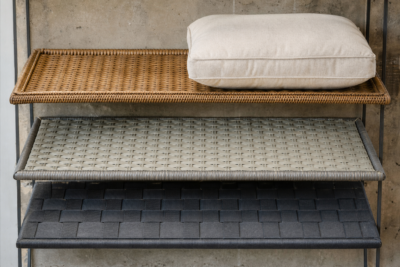
Types of Wicker Materials: Natural, Resin and HDPE Compared
Every wicker material family ranked — rattan core, paper fiber, bamboo, willow and reed on the natural side; PVC-resin and woven HDPE on the synthetic side — with outdoor ratings, lifespans and what each means for cushions.
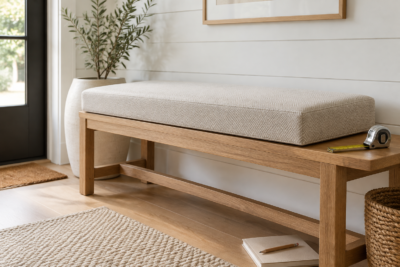
Bench Cushions: The Complete Guide to Sizes, Types and Custom Fit
A bench cushion is only as good as three numbers: the length and depth of the seat deck it sits
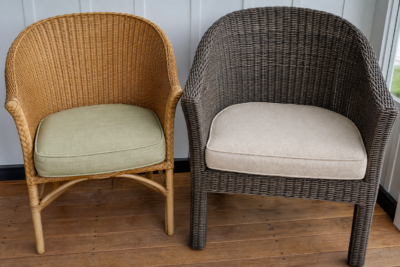
How to Tell Indoor from Outdoor Wicker: The Identification Guide
Five practical tests to classify any wicker piece — strand snap-test, frame magnet check, weave and weight inspection, tag and price decoding — and why getting this wrong is the most expensive wicker mistake there is.

Patio Furniture Sets: How to Choose Seating Sets, Dining Sets and Modules
The patio-set decoder — set types by use pattern (dining, conversation, sectional, bistro), what set pricing bundles and hides, the OEM cushion problem, and the set-versus-separate decision made honestly.
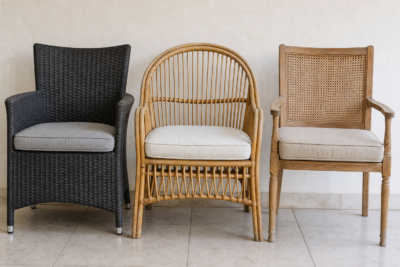
Wicker vs Rattan vs Cane: What Each Word Actually Means
The three most-confused words in woven furniture, sorted properly — rattan is a material, wicker is a weaving method, cane is a specific weave and fiber — and what each distinction means for cushions, care and outdoor use.
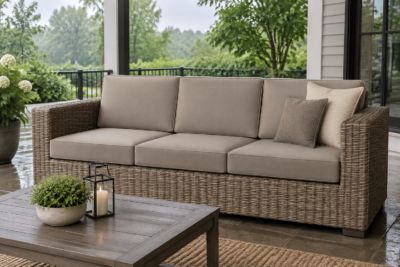
Is Wicker Furniture Waterproof? The Honest Weather Answer
No wicker is waterproof and good wicker doesn’t need to be — how rain, humidity and sun actually affect natural and synthetic wicker, what ‘all-weather’ really means, and the protection habits that add years to either family.