
Every custom cushion order that reaches our cutting floor passes a human review first — photos against numbers, looking for the mismatch patterns that cause remakes. After enough weeks of that, the errors stop being surprising. They are the same nine, over and over, in roughly the same order of frequency.
A custom cushion is cut to your numbers exactly. That is the whole value of it — and it is also why a half-inch input error cannot be absorbed downstream. Here are the nine mistakes, why each one happens, and the ten-second fix.
(Mistake zero, for completeness: measuring nothing and hoping a “standard size” fits. It sometimes does. The standard sizes chart tells you when. For everything else, the full measuring method is in how to measure outdoor cushions.)
Mistake 1: Measuring the Old Cushion Instead of the Frame
Why it happens: the old cushion is right there, the frame has arms in the way.
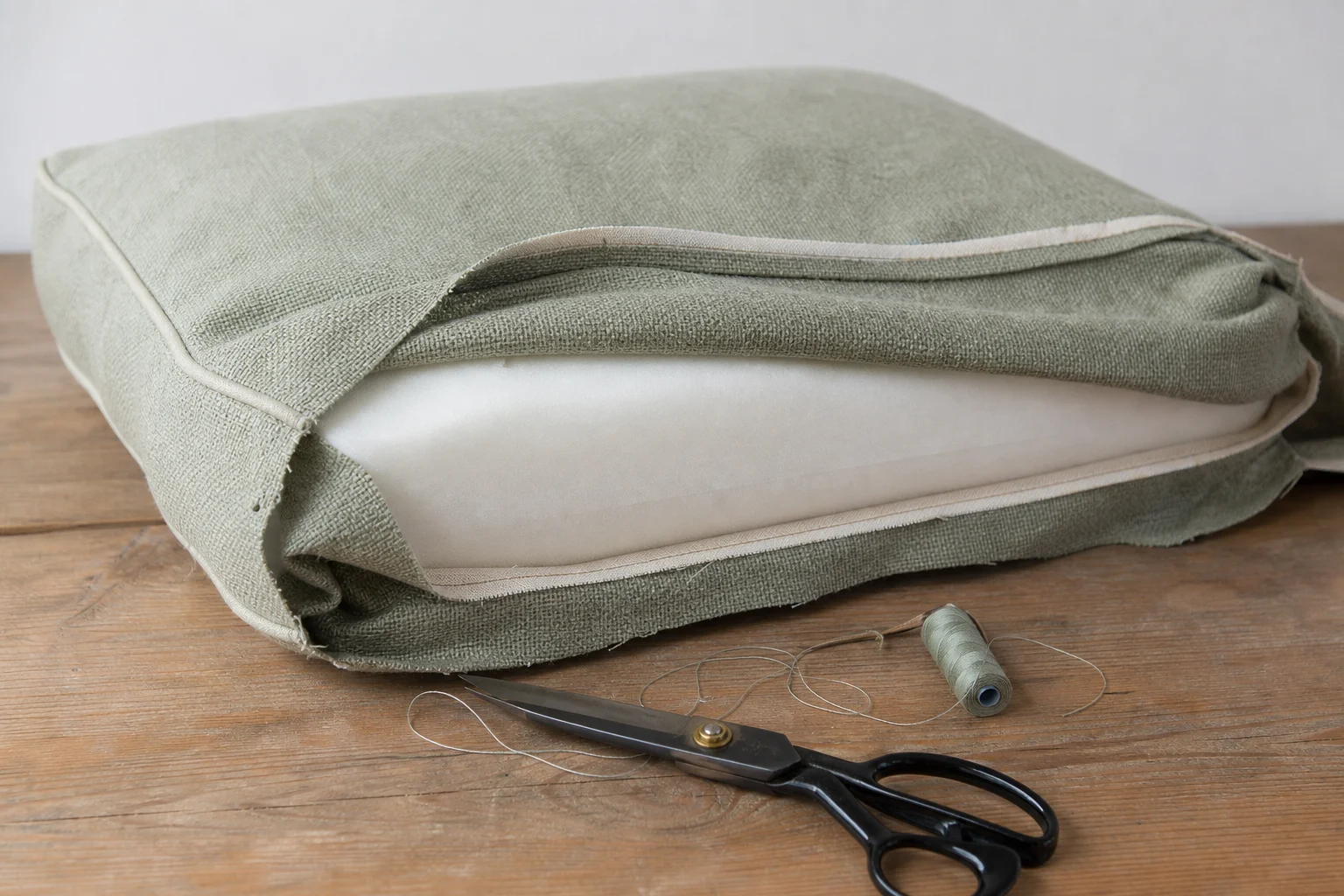
Why it fails: foam compresses with age — a ten-year-old seat can be an inch narrower than the day it was sewn — and covers stretch. Copy the old cushion and you rebuild a decade of sag into the new one.
Fix: measure the frame (inside arm to inside arm, back to front rail) whenever the frame exists. Measure the old cushion only when the frame is unreachable, and measure seam to seam, never over a skirt.
Mistake 2: Measuring Depth Diagonally
Why it happens: most patio seats slope backward, and the tape naturally runs down the slope instead of across it.
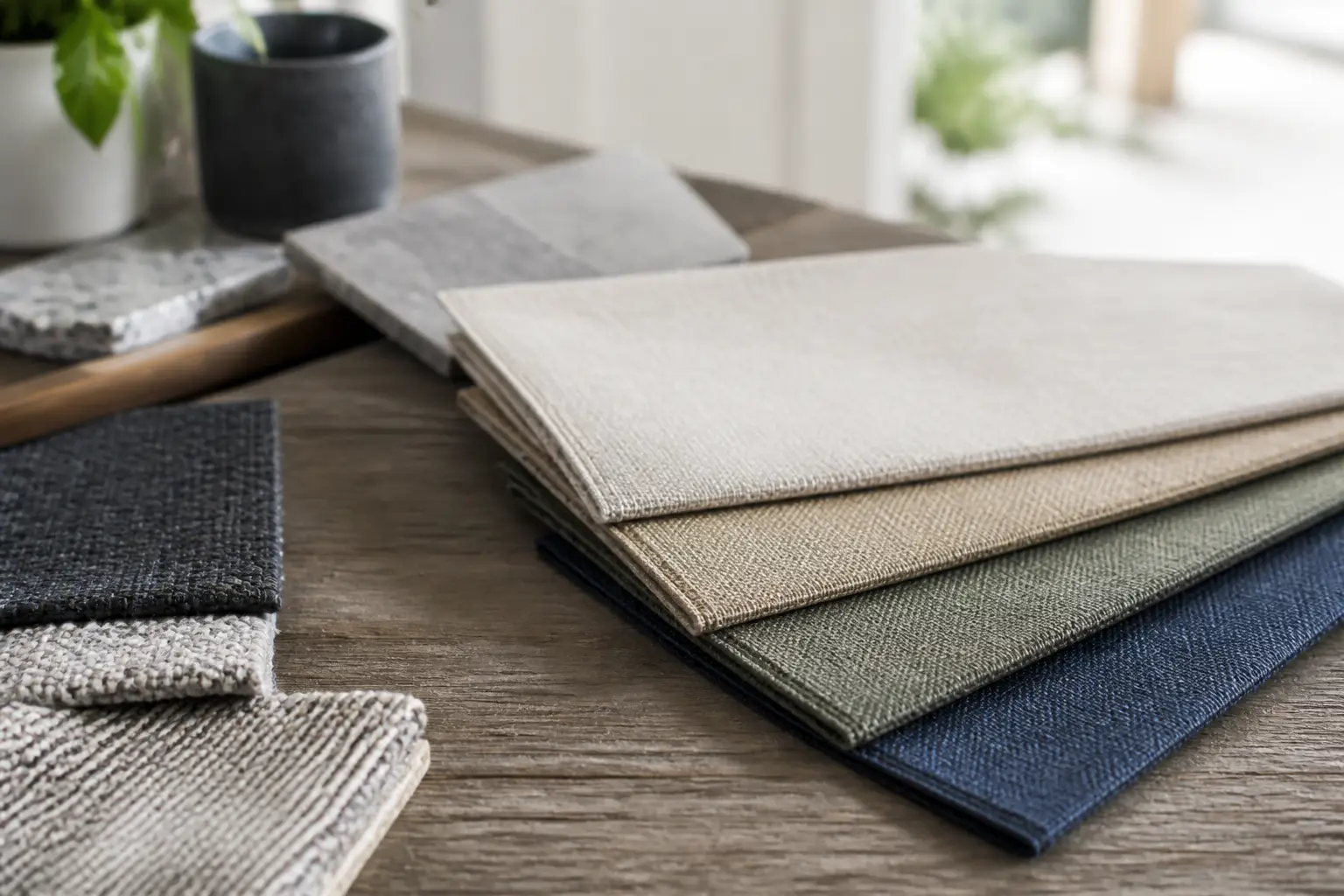
Why it fails: a diagonal read adds a phantom half to full inch. The cushion arrives too deep, bunches against the backrest, and will not lie flat.
Fix: keep the tape level and horizontal, measuring the shadow of the seat, not its ramp. If it helps, drop a plumb line (a string with a washer) off the front edge and measure to that.
Mistake 3: Guessing at Thickness
Why it happens: thickness feels like a comfort preference, so people pick a number they like.
Why it fails: thickness interacts with things people forget — the arms (a thicker cushion can ride above them), the table height on dining chairs, the sill on window seats — and it is a price driver, since foam is billed by volume.
Fix: measure the old thickness seam to seam as a baseline, then check the constraints above it (arm height, table, sill) before choosing to change it. The thickness-by-use table in bench cushion measurements is a sound default guide.
Mistake 4: Treating a Trapezoid as a Rectangle
Why it happens: front and back widths differ by only two inches, and one number is easier.
Why it fails: cut to the wide number, the cushion bags at the narrow end; cut to the narrow, it binds. Manufacturers build tapered frames more often than people expect — the Miramar lounge chair (a Martha Stewart collection sold at Home Depot) runs 25″ at the front and 23″ at the back, the Pacific Grove loveseat 49″ and 46″.
Fix: always measure width at the front, middle, and back. Record both end numbers if they differ by more than 1/2″. Our order form has separate front/back width fields for this.
Mistake 5: Ignoring Corner Radius
Why it happens: corners are small, and a radius sounds like a refinement.
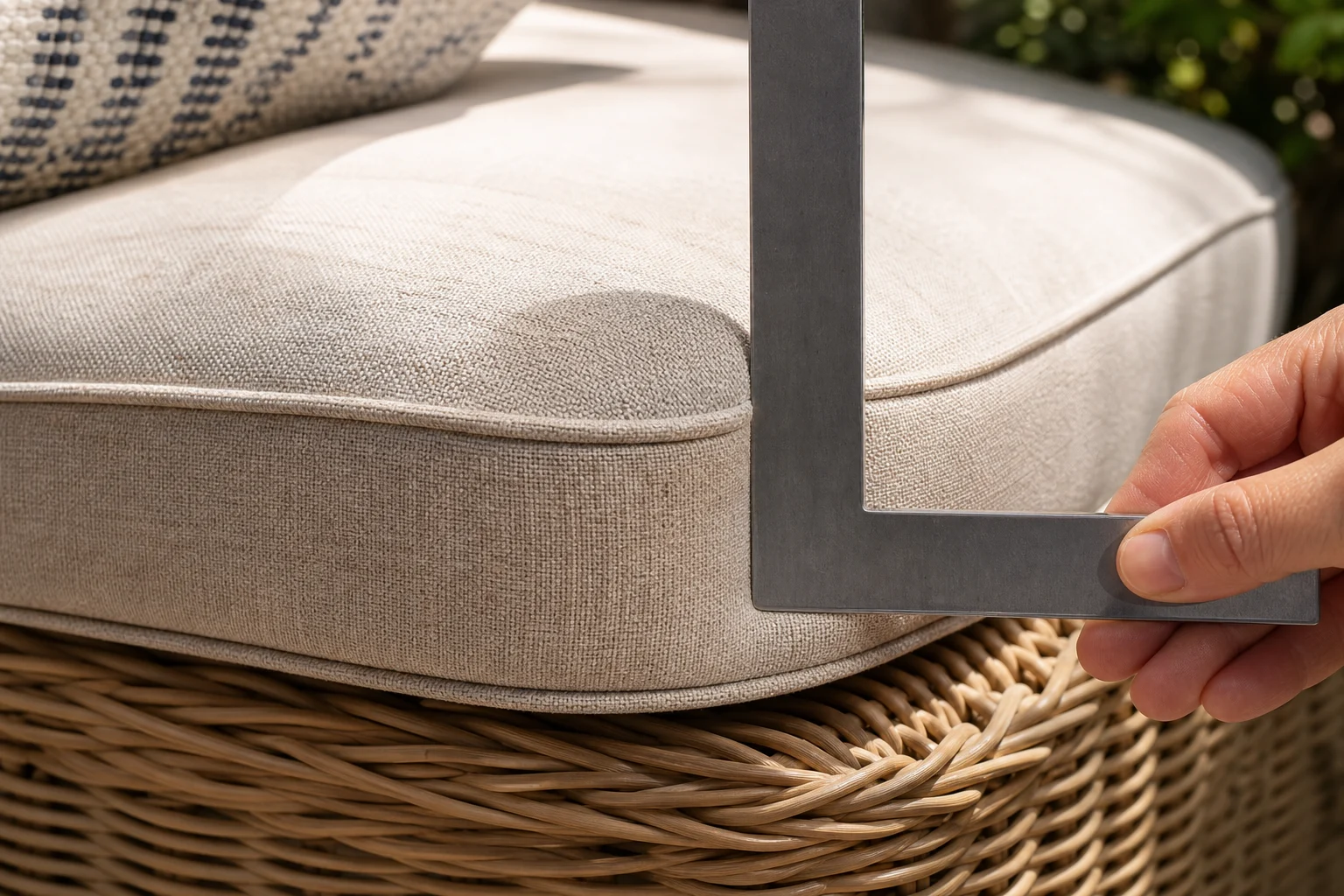
Why it fails: a square-cut cushion on a rounded wicker or bull-nosed frame shows bare frame at each corner — dog ears on wicker, gaps on wood. It is the most visually obvious error on the list.
Fix: the card method — slide a card into the corner until it touches both sides, measure to first contact with the curve. Takes ten seconds, saves a remake. Full walkthrough in how to measure outdoor cushions.
Mistake 6: Rounding Up “for Safety”
Why it happens: it works when buying clothes, so people apply it to cushions.
Why it fails: a slightly snug cushion looks tailored and eases to fit; a too-big cushion bows, wrinkles at the corners, and on framed furniture can refuse to sit down between the arms at all. Generous rounding is error in exactly the wrong direction.
Fix: measure to the nearest 1/4″ and order exactly that. If anything, when your three width readings disagree, order the smallest.
Mistake 7: Forgetting the Back Cushion Is a Separate Piece
Why it happens: people measure the seat, feel the pattern is established, and extrapolate.
Why it fails: backs are rarely the same as seats. The Spring Haven loveseat pairs a 23.5 × 27 × 5 seat with a 24.5 × 20.5 × 7 back — different width, different depth, double the thickness. The Laurel Oaks chaise runs 5.5″ seat against 6.25″ back.
Fix: every piece gets its own line: width, depth, thickness, quantity. Seat and back are never one measurement.
Mistake 8: Not Writing Anything Down
Why it happens: it is three numbers, who needs paper.
Why it fails: by the time the order form is open, “was it 23 and a half or 24 and a half?” is unanswerable, and the guess is 50/50. Multiply by seat + back + multiple chairs and the error rate compounds.
Fix: sketch each piece, label the three numbers, photograph the sketch next to the furniture. Our order desk reviews every order against customer photos precisely because notes made on-site beat memory made at a keyboard.
Mistake 9: Measuring a Cushion That Is On the Furniture
Why it happens: it seems equivalent, and dismantling the set is work.
Why it fails: compressed foam under body-visible sag reads short; a cushion standing in a frame reads narrower at the waist than its true seam-to-seam; and a back cushion measured in place reads the wrong height because the seat cushion is hiding its lower edge.
Fix: remove the cushion, lay it flat on a table, measure seam to seam without stretching. For frames, measure the empty frame. Two minutes of dismantling beats three weeks of waiting for a remake.
The Five-Minute Pre-Order Checklist
Before entering numbers into the custom cushions builder:
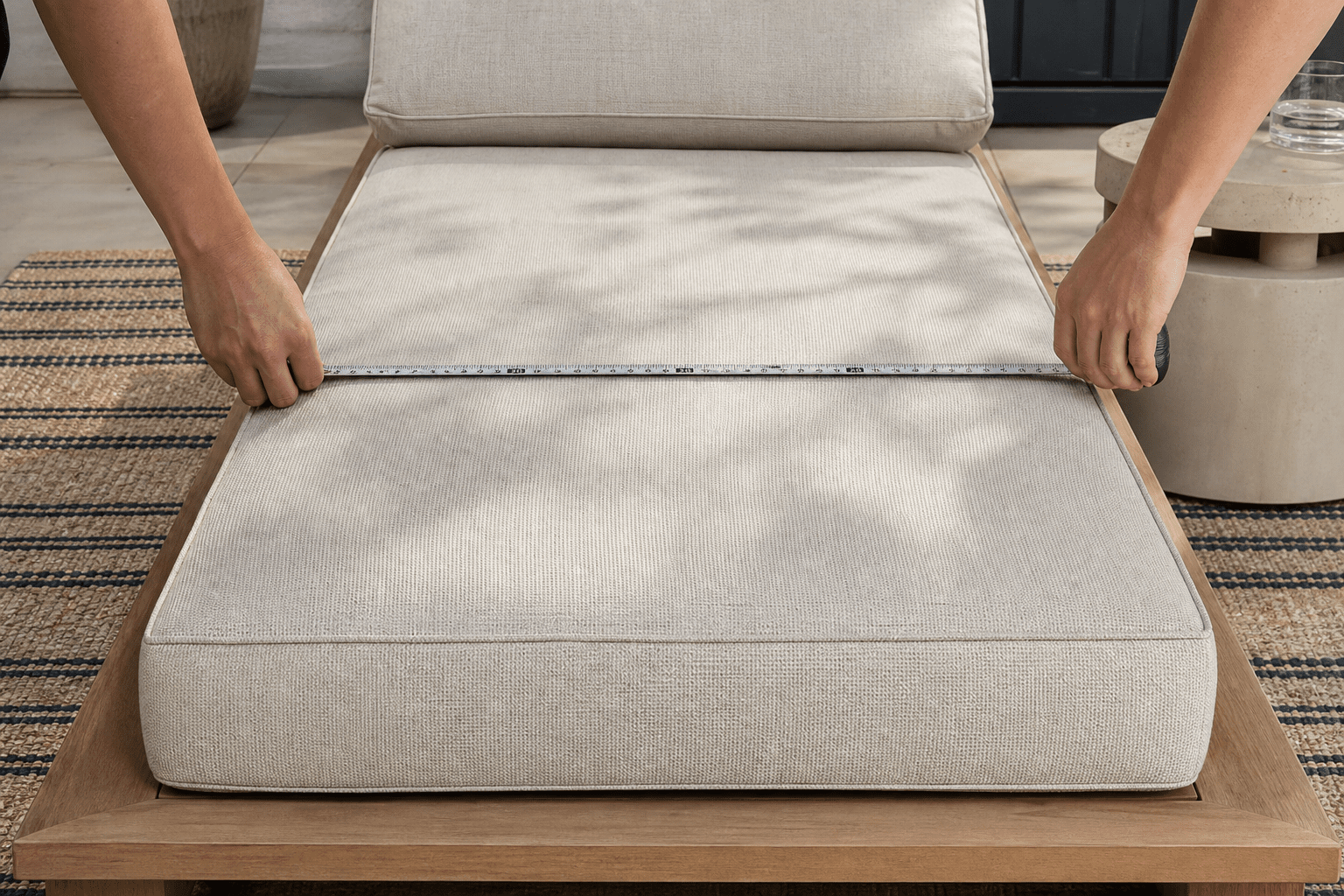
- Frame measured (not old cushion), cushion removed, surface flat
- Width at three points; both recorded if trapezoid
- Depth horizontal, not diagonal
- Thickness seam-to-seam; constraints above checked (arms/table/sill)
- Radius corners measured or template traced; ties located; photos taken
Ordering cores only? Replacement couch foam uses the same checklist — measure the cover interior, not the crushed core. Deeper guides for specific pieces: chaise lounge measurements, window seat measurement, bench measurements. If your furniture is a Hampton Bay set, check the replacement cushions hub first — the pattern may already exist (see Spring Haven, Santa Rosa, Edington, Pacific Grove, Redwood Valley), and your measurements become a confirmation rather than a leap of faith. IKEA sleeper owners have a measured shortcut too: the FRIHETEN sleeper sofa replacement cushions page pins the published 24-inch seat depth and 18 1/8-inch seat height the tape should agree with. The rest of the measured IKEA range sits on the IKEA replacement cushions index.
How Our Order Desk Catches Mistakes You Miss
The review layer behind every order is worth understanding, because it is your safety net for exactly these nine errors:
- – Photo cross-check: every order that includes photos gets them compared against the numbers — a “24-inch seat” photographed next to a tape that reads 26 gets flagged before cutting, not after delivery.
- – Range flags: measurements outside plausible ranges for the piece type (a 40″ dining depth, a 2″ deep-seat) trigger a human question, because they are almost always mislabels, not exotic furniture.
- – Trapezoid detection: customers who enter one width for a tapered frame usually discovered the taper the hard way; review catches the pattern (front-heavy chairs from known series) and asks.
- – The “smallest reading” advisory: when several readings differ, the desk confirms which end is which — the single most consequential clarification in the whole pipeline.
The lesson to take from the safety net’s existence: professional shops want your photos. Upload them with every custom order. The five minutes it takes is the cheapest insurance in the entire category — it converts your leap of faith into a checked order (how to submit).
The Measurement Golden Rules (Pin These)
Nine mistakes, nine fixes, one card:
- Frame beats old cushion — always, when reachable
- Three width readings; record both ends if they differ
- Depth stays horizontal — measure the shadow, not the ramp
- Thickness seam-to-seam, checked against what’s above it
- Trapezoids get two numbers, not an average
- Radius corners get measured, not assumed square
- Exact numbers — round nothing, and order the smallest reading
- Every piece gets its own line — seat and back are never one spec
- Write everything down, photograph everything twice
Rules 1, 7 and 8 prevent the most remakes; rules 3 and 6 cause the most visible embarrassments. All nine are free.
FAQs
What is the most common cushion measurement mistake?
Measuring the old cushion instead of the frame — compressed foam and stretched covers bake years of sag into the new cushion.
How accurate do cushion measurements need to be?
Within 1/4 inch; custom cushions are cut to your exact numbers, and precision in equals fit out.
Should I round measurements up just in case?
No — order exact numbers, and when readings disagree, the smallest: a snug cushion looks tailored, a big one bows and wrinkles.
What if I already ordered and my numbers were wrong?
Contact us immediately — orders caught before cutting can be corrected at no charge; once foam is cut, the piece has to be remade.
Can someone check my measurements before I order?
Yes — upload photos with your order and our order desk reviews every one before cutting; you can also ask first via the contact page.
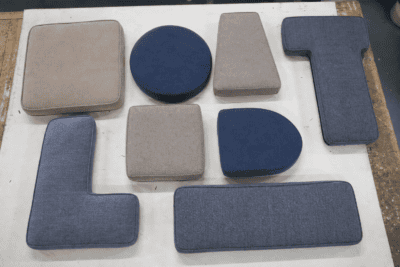
Cushion Shapes Guide: All 11 Shapes, What They Fit, and How to Measure Each One
A field guide to every cushion shape we cut — rectangle, chaise, L-shape, T-cushion, bowed, notched, round, oval, half-round and wedge — which furniture each one belongs to, how to measure it in inches, and exactly which shape to pick in our custom cushion builder.
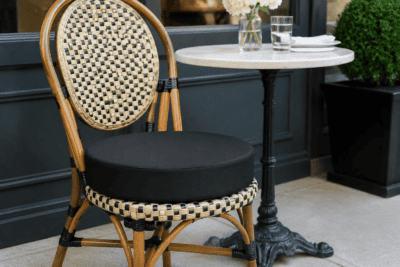
Round Outdoor Cushions: Diameter Duty on the Patio
Round outdoor cushion guide: round patio dining sets, fire-pit seating and round loungers; diameter measuring with the two-axis check, thickness bands, weather specs for circular pads, and ordering rounds.

U-Shaped Cushions: Measuring the Wraparound Seat
U-shaped cushion guide: the three-arm geometry of wraparound seating, inside versus outside radius measuring, seam placement at the corners, continuous versus sectioned builds, and ordering U-runs to template.
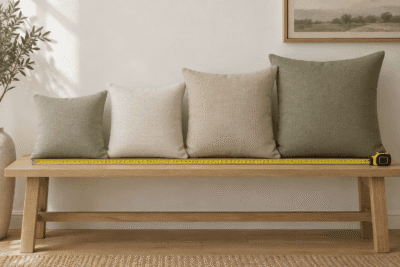
Throw Pillow Sizes: Standard Chart and How to Measure
There is no industry law, but there is a firm convention: throw pillows cluster at 16, 18, 20 and 22
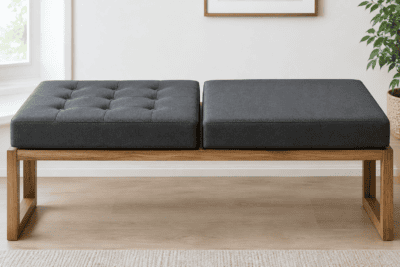
Tufted vs Unbuttoned Cushions: The Stitch Decision
Tufted versus plain cushion tops compared: what tufting and stitched patterns actually do to fill, feel and lifespan, button versus stitch construction, the market’s custom stitch styles, and when plain wins.
How Much Fabric Do You Need for Custom Cushions? (Yardage, Math and a Reality Check)
Two very different people ask how much fabric a cushion needs. One is sewing it herself and standing at a