
Chaise lounges are the hardest cushion in the patio to measure — and the most expensive to get wrong. Unlike a dining chair, where a wrong measurement wastes one seat cushion, a chaise cushion is a long, multi-panel piece (often with a hinged back), so every error gets multiplied down its five or six feet of length. And because chaise replacements sit at the top of the price range (custom chaise cushions typically run in the $255–$290 band at the fabrics most customers choose), a remake hurts.
This guide covers the measurement points that matter, the difference between one-piece and two-piece chaise cushions, and the actual dimensions of popular Hampton Bay chaise frames we cut replacements for every week. For the universal basics of width/depth/thickness, start with how to measure outdoor cushions first.
One-Piece or Two-Piece: Which Chaise Cushion Style Do You Have?
Before any numbers, identify the construction, because it changes what you measure:
- – Two-piece sets — a separate seat cushion and back cushion. Easiest to measure, easiest to replace, and what most two-piece chaise frames are designed around — Spring Haven on the Hampton Bay line, Cedar Island and Lake Adele on the Martha Stewart line.
- – One-piece hinged cushions — seat and back sewn as a single unit that folds at the recline hinge. You must measure the hinge location precisely, because the fold line is where the sewing stops and starts.
- – One-piece stitch-creased — a single length of cushion with a sewn crease instead of a true hinge. Measure it flat end to end, then note the crease position.
If your old cushion is a one-piece and you would prefer two pieces (or vice versa), that is a change our sewing floor can make — just say so in the order notes on the custom cushions page.
How Do You Measure a Two-Piece Chaise Cushion?
Measure each piece as its own cushion with three numbers each.
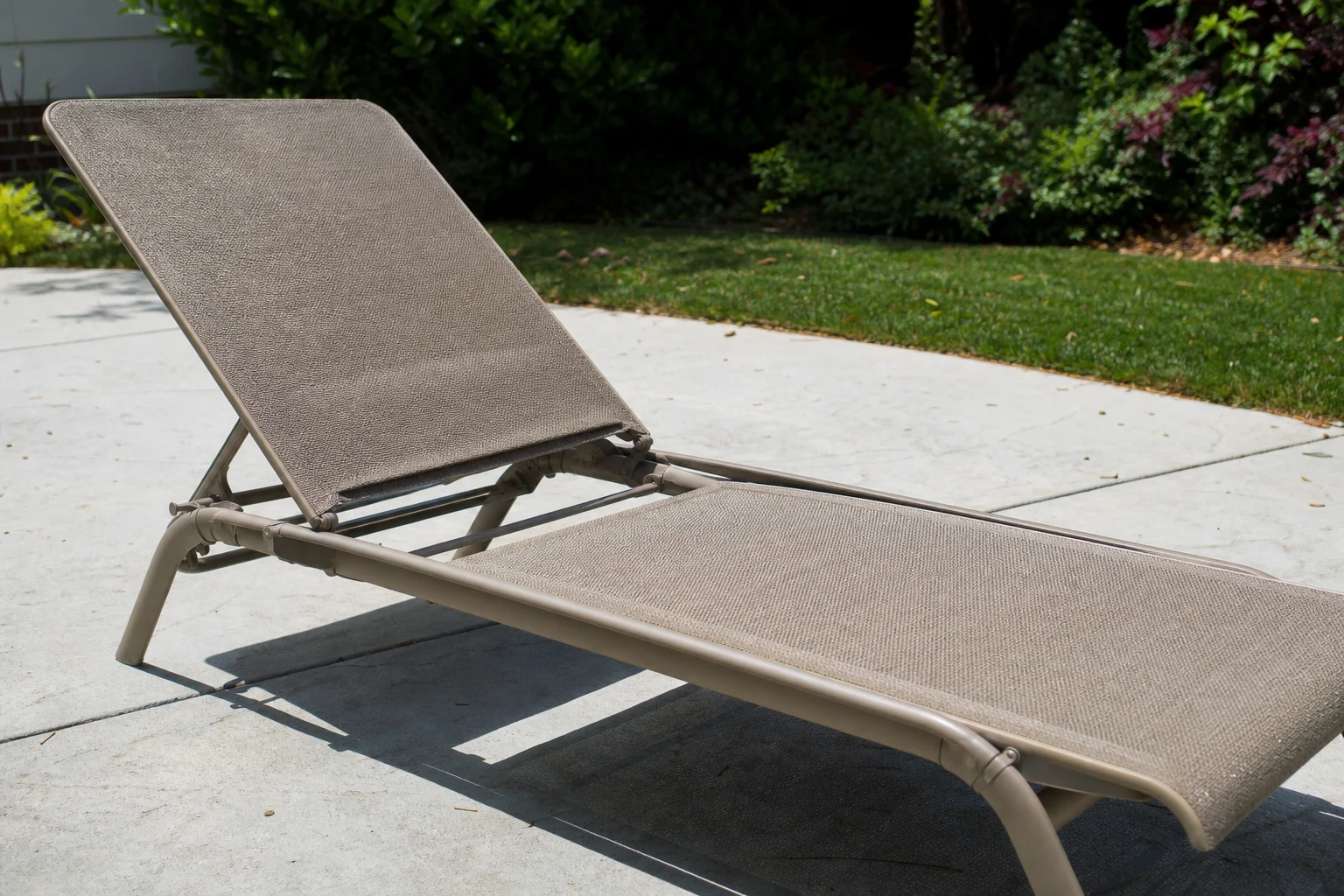
Seat cushion
- – Width: inside arm to inside arm. Most patio chaise frames run 21.5″–26″ wide. The Kampar chaise is one of the widest at 31″.
- – Depth (length): from the hinge point (where the back cushion begins) to the front edge of the footrest area. This is the long measurement — typically 42″–50″.
- – Thickness: 4″–5.5″ is the comfortable range for chaise seats.
Back cushion
- – Width: same as, or slightly narrower than, the seat.
- – Depth (height): from the hinge line to the top of the backrest frame. Typical range 26″–32″.
- – Thickness: often 4″–6.25″. Backs on deep-seating chaises can run thicker than seats — the Laurel Oaks chaise pairs a 5.5″ seat with a 6.25″ back.
Measure the back cushion while it is standing in its natural position in the frame, not laid flat, so the height reads true against the frame.
How Do You Measure a One-Piece Hinged Chaise Cushion?
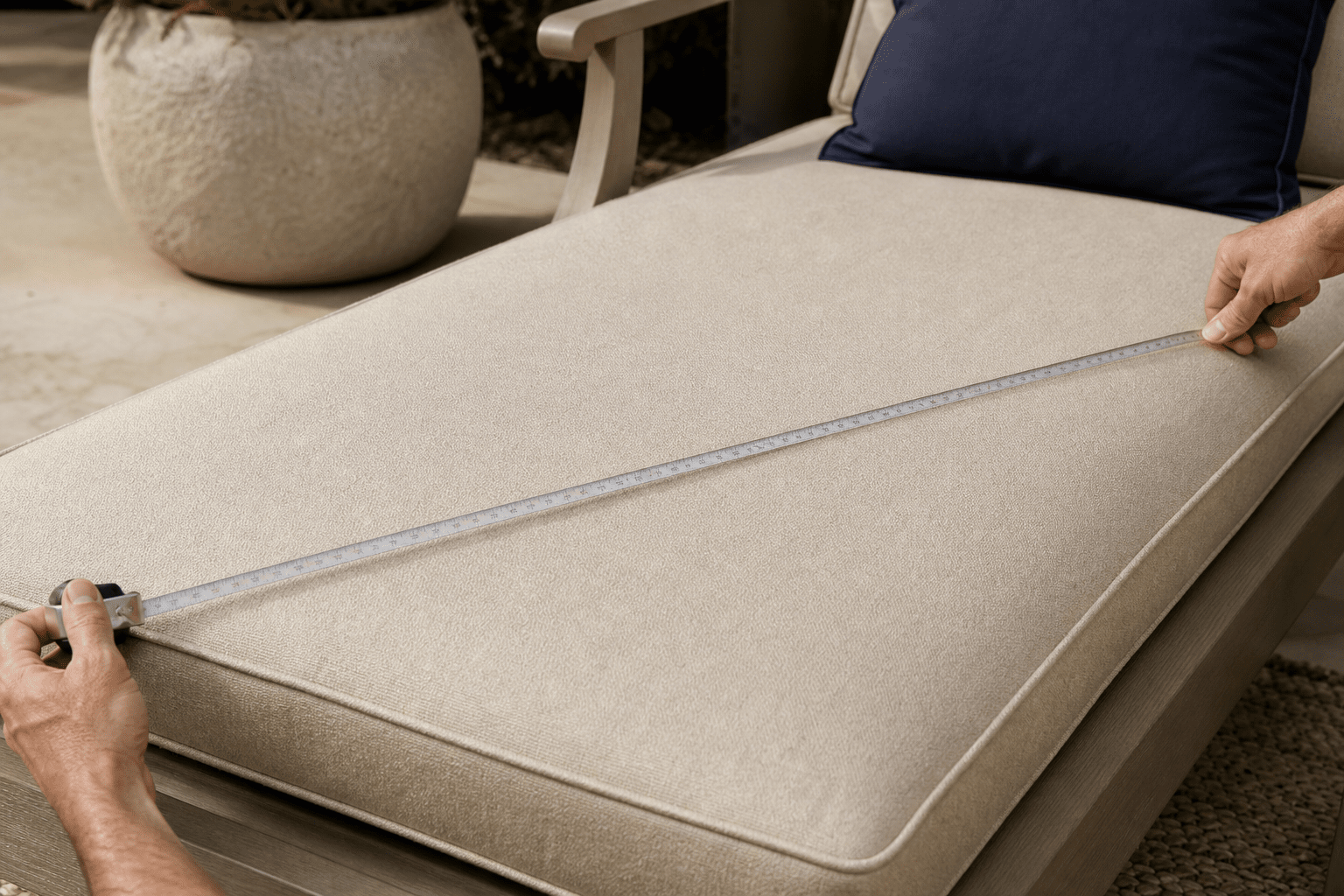
- Overall length: with the chaise laid flat, measure end to end along the seam.
- Hinge location: measure from the front edge to the fold line, and from the fold line to the far end. Record both — this is the number that positions the crease over the frame’s hinge.
- Width at front, middle, and back: some frames taper. If front and back differ, record both (trapezoid).
- Thickness at the seat section and at the back section if they differ.
- Recline positions: note whether the back has multiple locking positions, and whether the cushion binds when it reclines. A cushion that is slightly too thick at the hinge will not let the back fold fully.
What Are the Extra Measurement Points People Miss?
Four details that appear on our cutting forms because they cause remakes when skipped:
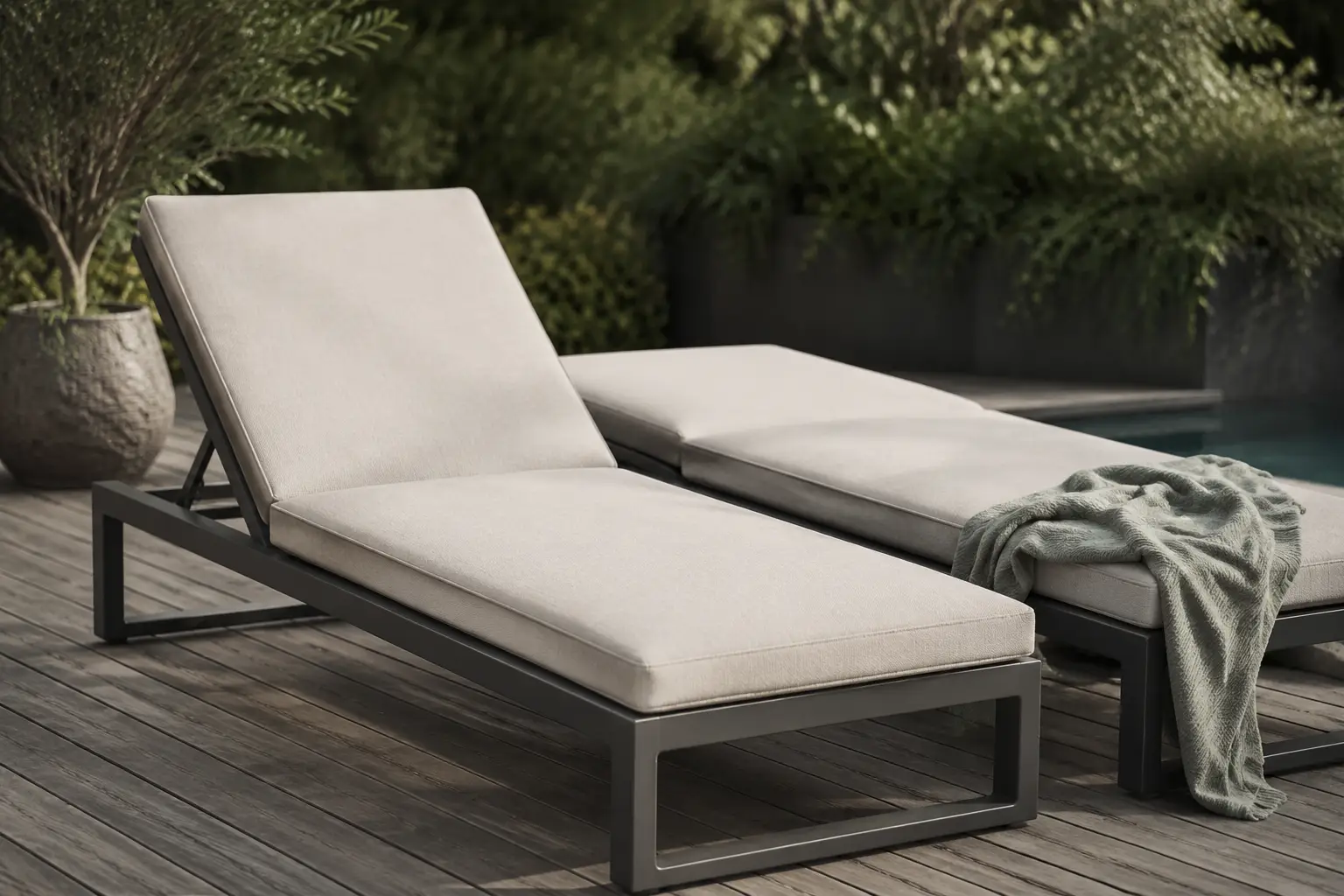
- – Tie placement. Measure from the cushion edge to the center of each tie loop on the frame, and note whether ties are at corners only or also mid-edge. Chaise backs especially need correctly placed ties or they slide down every time the lounge reclines.
- – Arm clearance. On frames with curved or scrolling arms, measure the clear width at the narrowest point the cushion passes, not at the widest.
- – Footrest section. Some chaise frames (recliner-style) have a separate footrest panel — measure it as its own piece.
- – Hinge gap. For hinged one-piece cushions, note whether there is a visible gap between seat and back at the fold. The sewing team leaves a scissor gap at the hinge so the cushion folds; too big looks sloppy, too small prevents folding.
Real Dimensions from Popular Hampton Bay & Martha Stewart Chaise Frames
Actual replacement dimensions we cut (seat W × D × T / back W × D × T, inches):
| Series | Seat | Back | Style |
| Spring Haven | 23.5 × 50 × 5 | 23.5 × 26 × 5 | Two-piece |
| Cedar Island (Martha Stewart) | 26 × 49 × 5 | 26 × 26.5 × 5 | Two-piece |
| Lake Adele (Martha Stewart) | 22.5 × 46 × 5 | 22.5 × 28.5 × 5 | Two-piece |
| Laurel Oaks | 26 × 47.75 × 5.5 | 26 × 27.25 × 6.25 | Two-piece |
| Oak Cliff | 24.5 × 48.5 × 5.5 | 24 × 27.5 × 5.5 | Two-piece |
| Verrado | 22 × 48 × 5 | 22 × 28 × 5 | Two-piece |
| Middletown | 24 × 46 × 5 | 24.5 × 32 × 5 | Two-piece |
| Kampar | 31 × 50 × 5 | 31 × 28 × 5 | Two-piece |
Notice the spread: seat depth alone runs from 42″ (Pembrey) to 50″ across these frames. That eight-inch spread is exactly why there is no such thing as a universal chaise cushion, and why every “standard” chaise pad you see at a big-box store fits some frames and puddles on others. Ready-to-order patterns for Spring Haven and other Hampton Bay sets are on the replacement cushions page — the Spring Haven chaise page includes the full seat/back set.
How Does Thickness Change Comfort and Price?
Chaise cushions show thickness more than any other piece because you lie on them for hours. Our factory perspective:
- – 3.5″ — entry level, fine on slatted frames where the deck flexes.
- – 4.5″–5″ — the sweet spot for rigid frames; 35D–50D high-resilience foam at this thickness supports without bottoming out.
- – 5.5″+ — plush deep-seating feel; at this thickness consider a firmer density (50D+) or a firm base layer, because soft thick foam shears under an adult’s full reclined weight.
Thickness is also a price driver: density options are priced live in the builder, and a chaise is a lot of cubic feet. Moving a 24 × 48 seat from 4″ to 5″ adds roughly a cubic foot of foam per cushion. The custom cushion builder shows the price impact as you adjust.
How Do You Order If Your Chaise Is Not on the List?
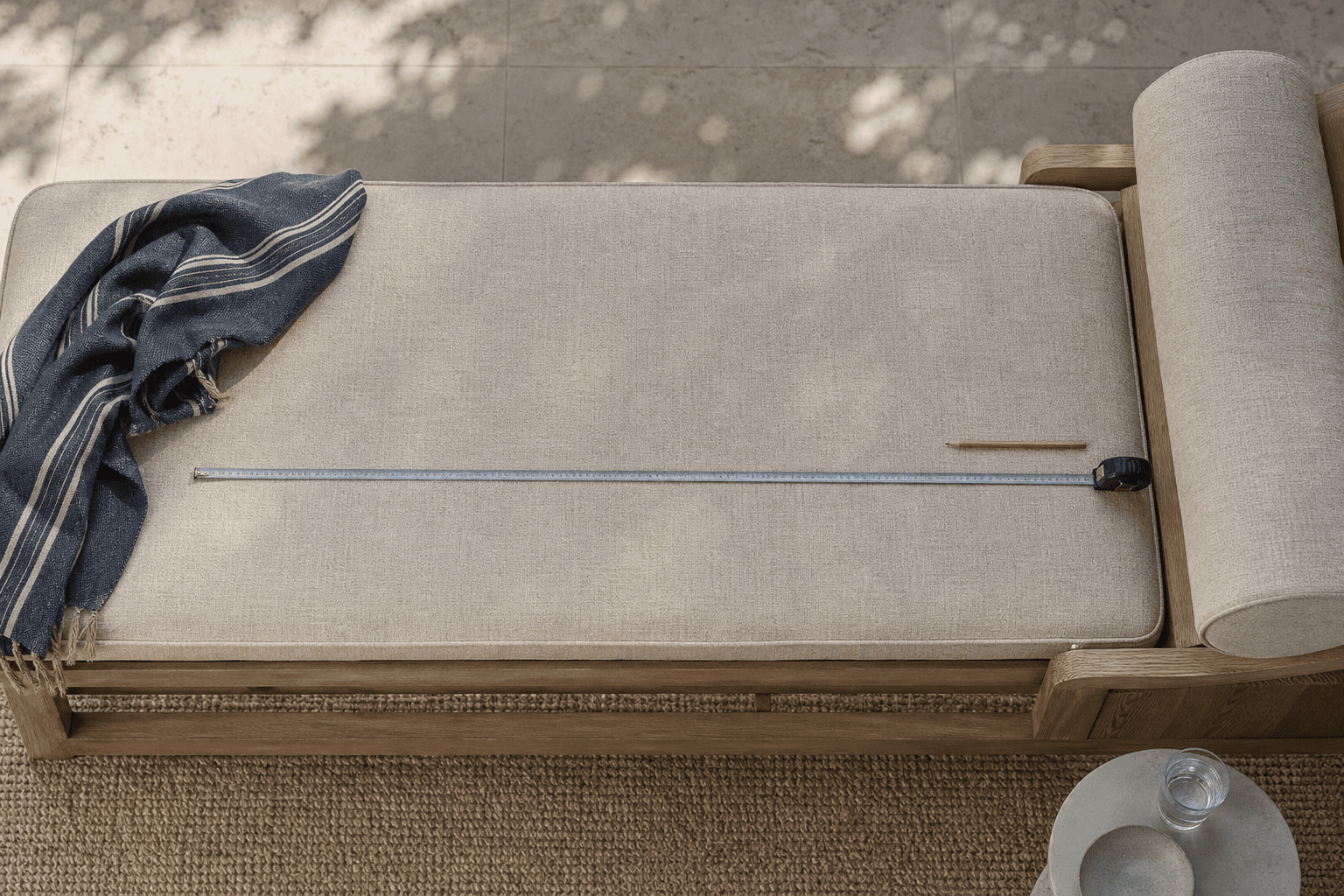
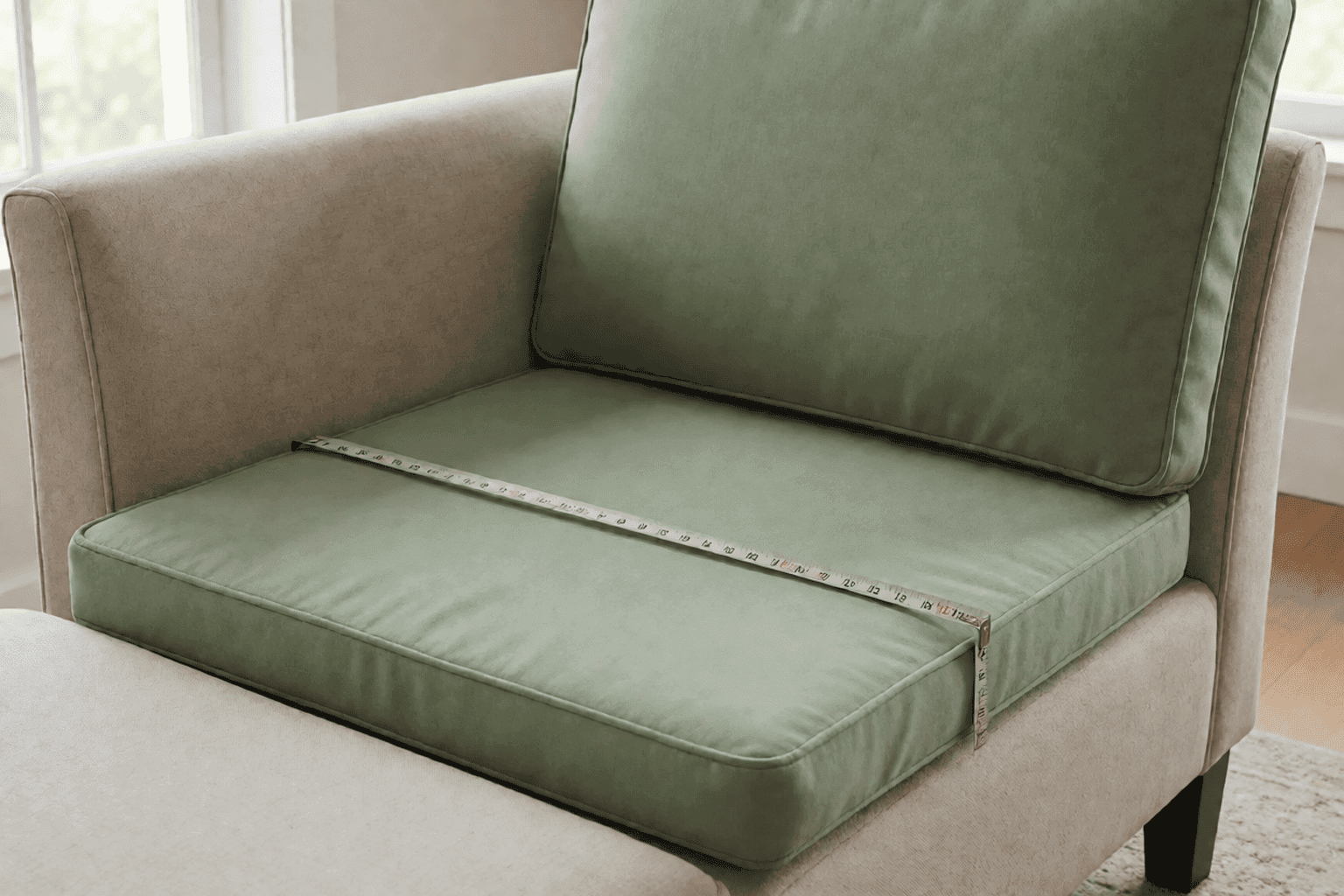
Measure it as described above, photograph the frame from the front and side with a tape laid along the seat, and enter the numbers in the custom cushions configurator — or start from the custom chaise lounge cushions scenario page. Discontinued frames are our specialty — see our replacement cushions hub for the brands we stock and what to do when yours is not among them.
Chaise Cushion Cheat Sheet
The whole guide, compressed to the card format our order desk uses:
| Measurement | What to record | Typical range |
| Seat width (front / mid / back) | All three; both ends if trapezoid | 21.5″–31″ |
| Seat depth (hinge to front) | One number, tape flat on deck | 42″–50″ |
| Seat thickness | Seam to seam on edge | 3.5″–5.5″ |
| Back width | Usually matches seat | 22″–31″ |
| Back height (hinge to top) | Measured in the frame, standing | 26″–32″ |
| Back thickness | Seam to seam | 4″–6.25″ |
| Hinge position (one-piece only) | Front edge to fold line | — |
| Tie points | Center-to-center from cushion edges | 2–4 pairs |
Plus the two questions that catch most errors before they happen: is the back a separate piece or hinged to the seat? and do the arms curve inward at any point the cushion passes? — both answered above, both remake-savers.
Foam and Fabric Notes Specific to Chaises
Chaises concentrate three demands other pieces don’t, and the spec sheet should reflect it:
- – Full body weight, reclined, for hours — the density argument is strongest here: 50D+ HR foam in the seat section (density explained). A chaise is also where the memory-topover-over-HR-base layering earns its keep for nap-ready loungers.
- – The most sun exposure on the patio — chaises live poolside and deck-side, flat, facing the sky. Solution-dyed fabric is effectively mandatory for any chaise in real sun (fabric tiers); and light-colored chaise covers show sunscreen oils — the bleach-cleanable advantage matters here more than anywhere (cleaning methods).
- – Quick-dry cores near water — uncovered poolside builds want reticulated foam that drains and flushes (water system logic); we do not carry reticulated cores, so our outdoor line pairs waterproof covers with high-density foam — bring poolside cushions in after soak days. A soaked chaise cushion is a 5-cubic-foot sponge otherwise.
FAQs
What is the standard chaise lounge cushion size?
There is no true standard — seats run 42″–50″ deep and 21.5″–31″ wide across common frames; always measure your frame rather than trusting a generic size.
How do I measure a hinged chaise cushion?
Lay it flat, measure the overall length, then measure from the front edge to the fold line separately so the crease lands on the frame’s hinge.
How thick should a chaise cushion be?
4.5″–5″ with high-resilience foam is the comfort sweet spot for most rigid frames; go 5.5″+ with firmer density for a plush deep-seating feel.
Can I replace just the chaise seat and keep the old back?
Yes, order the seat alone — but note that new foam next to ten-year-old foam makes the contrast obvious, and many customers end up ordering the pair once they see it.
How much does a custom chaise cushion cost?
Custom chaise replacements typically land in the $255–$290 range depending on fabric grade; see our price guide for the full breakdown by fabric tier.
Two-Piece Sets: Where the Tape Sits
On a two-piece set the seat pad is measured flat and square — width across the seat, depth from the back rail to the front edge — while the back pad takes its own numbers; the join between them is a straight seam, not a hinge, and each piece orders on its own merits.
Hinged Backs and Loft Choices in Practice
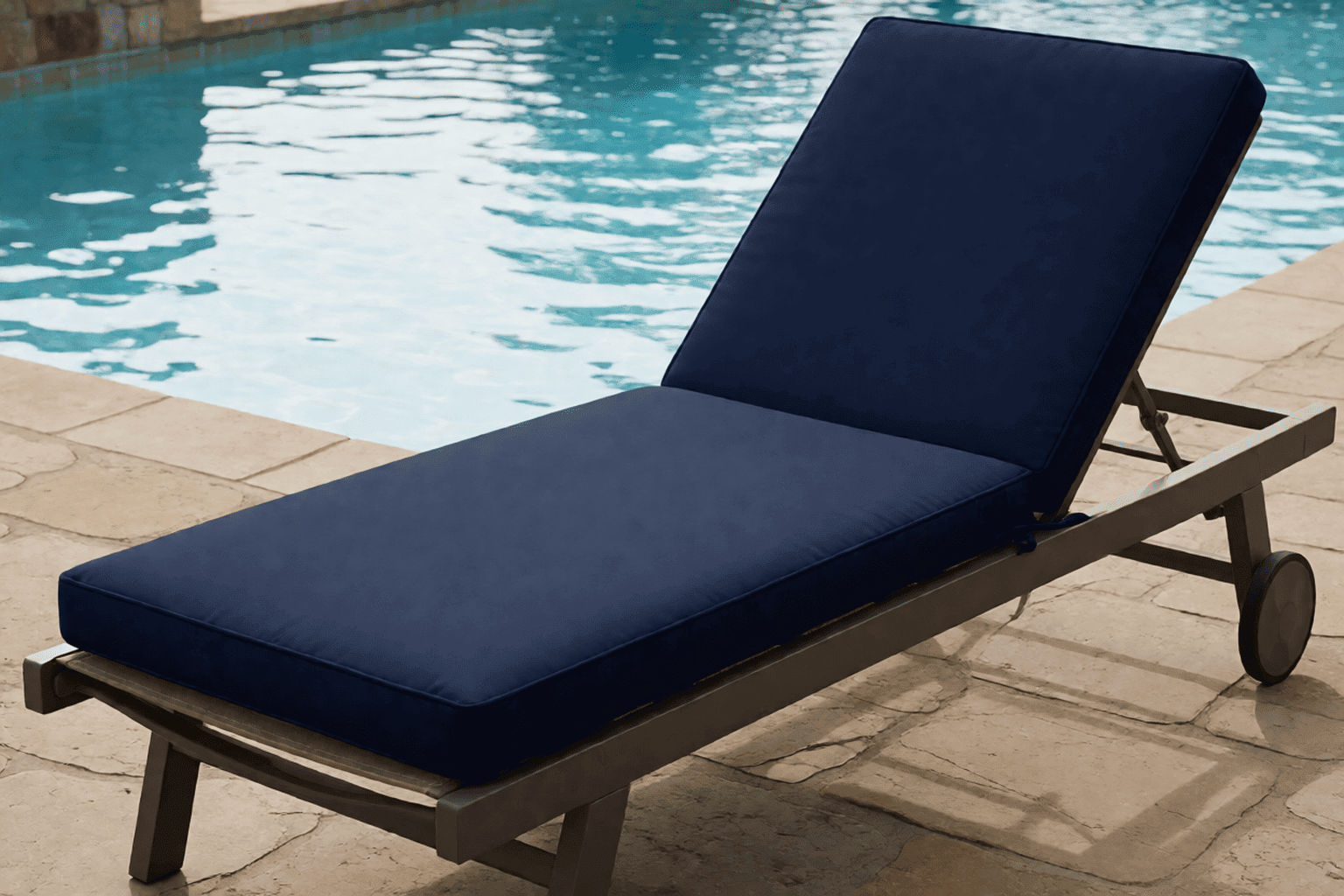
On a hinged or folding chaise the back is its own measurement – width at the hinge, width at the top rail, and the pivot point marked on your sketch, because a pad cut for a flat back will bunch the moment the hinge bends. A back pad built in sections follows the frame instead of fighting it.
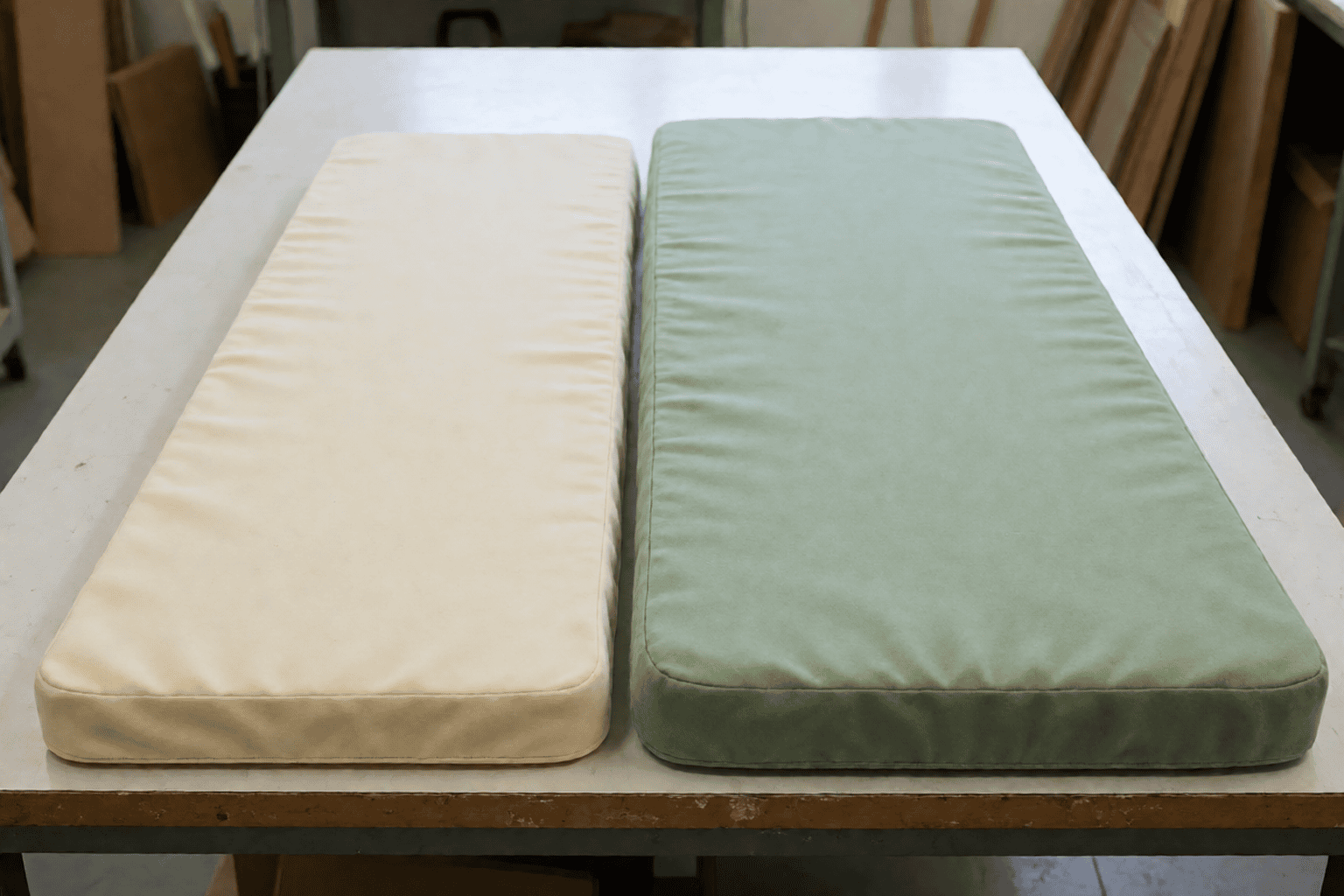
Loft is the other choice people underestimate: two pads with the same footprint but different thickness sit completely differently. A slim low pad keeps the silhouette and the seat height; a thick plush pad trades height for sink-in comfort. Same tape measure numbers, different chair.
Cushion Shapes Guide: All 11 Shapes, What They Fit, and How to Measure Each One
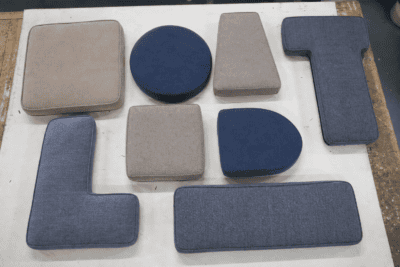
A field guide to every cushion shape we cut — rectangle, chaise, L-shape, T-cushion, bowed, notched, round, oval, half-round and wedge — which furniture each one belongs to, how to measure it in inches, and exactly which shape to pick in our custom cushion builder.
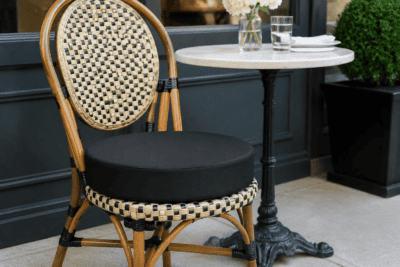
Round Outdoor Cushions: Diameter Duty on the Patio
Round outdoor cushion guide: round patio dining sets, fire-pit seating and round loungers; diameter measuring with the two-axis check, thickness bands, weather specs for circular pads, and ordering rounds.
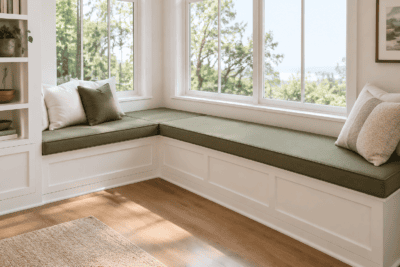
U-Shaped Cushions: Measuring the Wraparound Seat
U-shaped cushion guide: the three-arm geometry of wraparound seating, inside versus outside radius measuring, seam placement at the corners, continuous versus sectioned builds, and ordering U-runs to template.
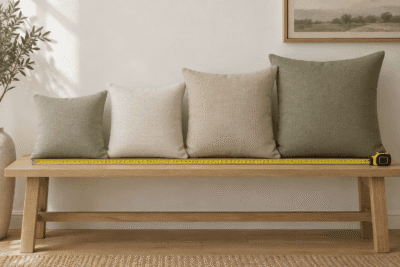
Throw Pillow Sizes: Standard Chart and How to Measure
There is no industry law, but there is a firm convention: throw pillows cluster at 16, 18, 20 and 22
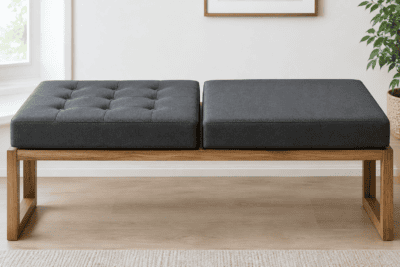
Tufted vs Unbuttoned Cushions: The Stitch Decision
Tufted versus plain cushion tops compared: what tufting and stitched patterns actually do to fill, feel and lifespan, button versus stitch construction, the market’s custom stitch styles, and when plain wins.
How Much Fabric Do You Need for Custom Cushions? (Yardage, Math and a Reality Check)
Two very different people ask how much fabric a cushion needs. One is sewing it herself and standing at a