
Walk a good patio showroom and a third of the furniture has no cushions at all — teak dining sets sold bare, sling chairs with the fabric as the seat, HDPE lumber chairs with contoured backs, mesh and textilene everything. The no-cushion category is not an oversight; it is a design philosophy with real arguments behind it. This guide takes those arguments seriously (they’re mostly true), then covers the honest cases for adding cushions to uncushioned frames anyway — because a large share of bare-furniture owners eventually do, and the upgrade has a right and a wrong way. The general buying landscape is outdoor cushions buying guide; the material logic of uncushioned frames runs through best outdoor furniture materials.
Why Makers Ship Furniture Bare
Four honest arguments, each true:
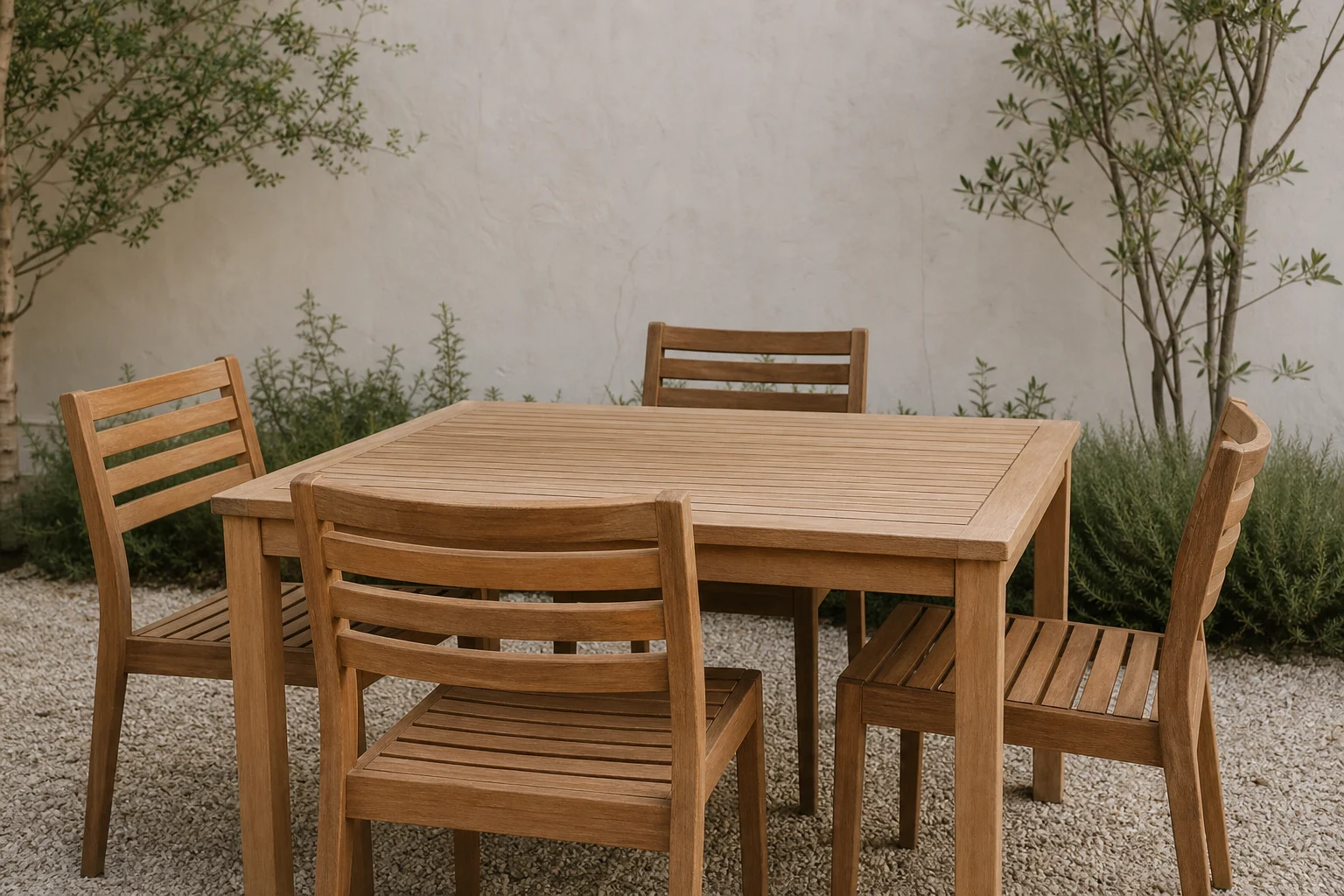
- Weathering is the maintenance plan. Teak and other dense hardwoods weather to silver and last decades; cushions fail in years. A bare set’s weakest component is the frame, which is to say there is no weak component. The teak-care routine is its own discipline: how to care for teak furniture.
- The frame does the ergonomics. Good uncushioned furniture — contoured slats, curved backs, ergonomic HDPE lumber — is shaped to the body. The contour replaces the cushion the way a well-designed chair indoors sometimes needs no padding.
- Nothing to store, nothing to blow away. No cushions means no seasonal storage ritual (how to store outdoor cushions for winter), no post-storm draining, no wind chasing (how to keep cushions from blowing away).
- The aesthetic is the point. The teak-and-linen modern patio, the bare-aluminum bistro set — a whole design language built on structure over softness.
So the bare category is coherent. The question is what it costs you.
What Bare Costs: The Honest Ledger
- – Time limits. Contoured or not, bare frames are comfortable in doses — a meal, a coffee. The three-hour read, the afternoon nap, the working-from-the-patio session: these are cushion territory, and contouring doesn’t change it.
- – Hard surfaces stay hard. Age, weight, and joint sensitivities change the calculation; the bare bench that was fine at 35 is a different bench at 60.
- – Heat and cold. Metal and HDPE frames take the sun’s heat and the morning’s chill directly; the pad is the thermal layer (cushions for metal patio chairs covers the physics).
- – Winter usability. Bare frames are exactly as uninviting in November as they are in July; a cushion set is the difference between three-season and four-season patios.
None of which argues against bare furniture — it argues for knowing which seats on your patio are for meals and which are for staying.
The Case for Adding Pads Anyway
Most bare-furniture owners who add cushions do it for one of four reasons, all legitimate:
The comfort threshold moved. The household sits longer than it used to — retirement, remote work, kids doing homework at the patio table. The frame hasn’t changed; the hours have.
The seat is a dining-workhorse. A teak dining set used for daily meals benefits from seat pads the way indoor kitchen chairs do — the duty logic in kitchen chair cushions, outdoors.
The look wants a change. Pads are the cheapest seasonal redecoration a patio has — the color-and-pattern logic in choosing cushion colors applied to furniture that has been beige since installation.
The bare experiment ended. Many buyers discover the contour philosophy works for exactly the showroom-test duration, not the Saturday-afternoon duration. That discovery is not a failure of the furniture; it’s a preference, and preferences are allowed.
How to Cushion Uncushioned Furniture Properly
Adding pads to furniture designed bare has a right way, and it starts with respecting the frame’s design:
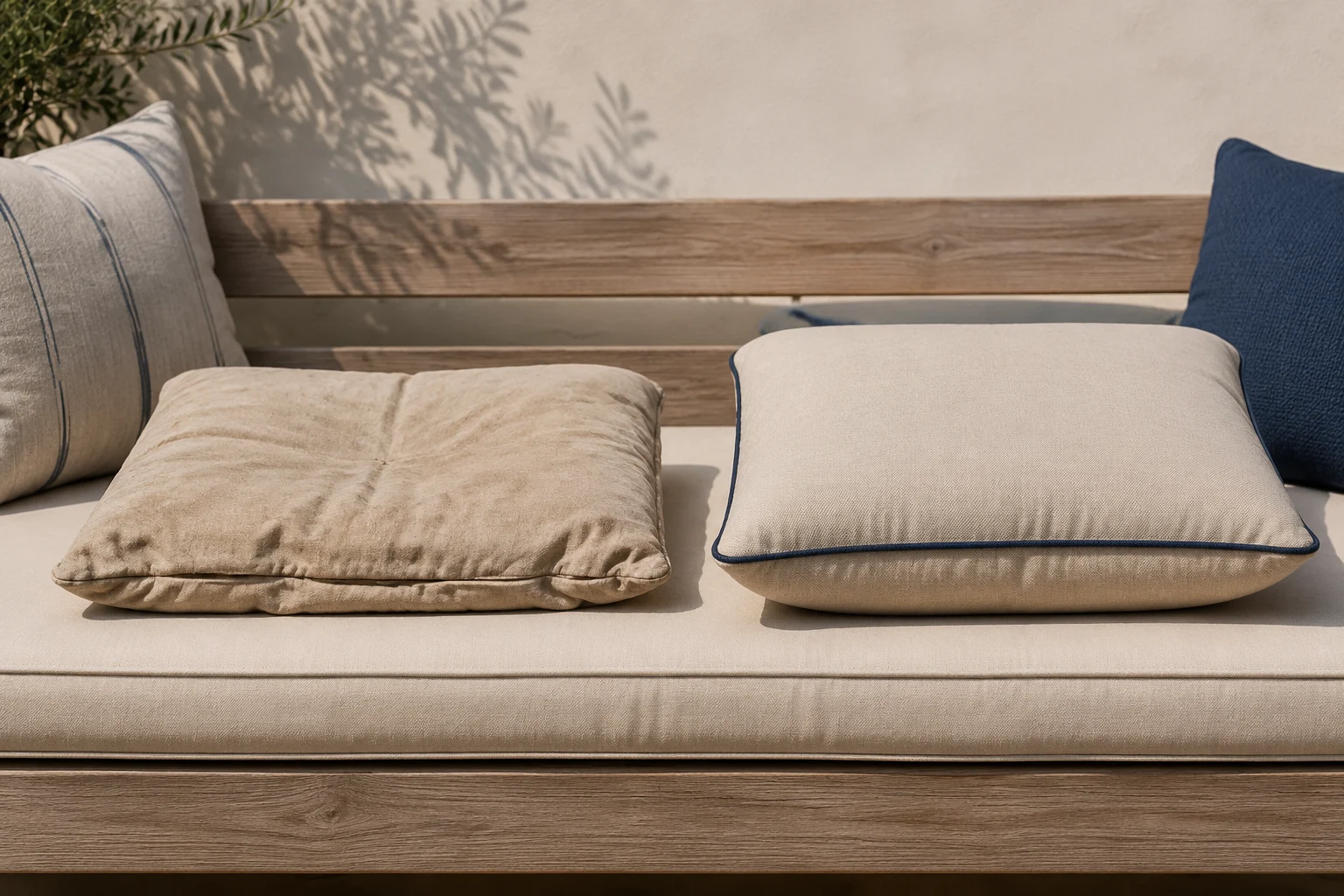
- – Measure the seat as a platform, not an opening. Uncushioned seats have no slot or rim logic — the pad sits on top, so it’s ordered at full dimension (no compression allowance) with grip backing or ties for attachment. The measuring routine: how to measure outdoor cushions.
- – Thin beats thick on contoured frames. A 2-inch pad lets a contoured back or ergonomically shaped seat keep working through the foam; a 5-inch pad erases the contour you paid for. The exception: flat-slat seats, which take 3–4 inches like any deck.
- – Attachment to what’s there. Slat frames offer bar anchor points for ties; HDPE lumber accepts hook-and-loop hardware; teak takes ties at the frame’s stretchers. The attachment logic per material: how to stop cushions from sliding.
- – Choose weather to match the furniture’s grade. There’s a quiet absurdity in a weatherproof teak frame carrying a pad that dies in two seasons — bare-graded furniture has earned the good stuff: solution-dyed acrylic over quick-dry foam (Sunbrella vs regular outdoor fabric, quick dry foam for outdoor cushions). The pads should be the frame’s equals.
- – Protect the finish. Teak especially: pads left on weather the wood beneath differently than the exposed surfaces, leaving a cushion-shaped ghost. The habit is simple — pads on for use, pads off for storage, and the teak oils evenly (how to care for teak furniture).
The Frame Types That Take Pads Best
- – Teak and hardwood dining sets: the classic upgrade; thin seat pads, ties at the stretchers.
- – HDPE lumber (the POLYWOOD-type frames): flat lumber seats take pads well; hook-and-loop on the lumber is the durable attachment. Sizing by frame: POLYWOOD cushion sizes.
- – Sling and mesh chairs: the pad-over-sling route rather than re-slinging — the decision logic in re-slinging patio chairs.
- – Metal bistro and dining: the full metal spec — cushions for metal patio chairs.
The Bare-Plus-Pad Household: The Realistic Best of Both
The realistic conclusion isn’t bare-versus-padded; it’s which seats and which seasons. A patio that runs bare teak for the daily coffee and deploys a pad set for the long seasons and the long sitters gets both philosophies’ best: the low-maintenance frame philosophy every day, the cushioned comfort when it’s actually wanted. The pad set for this hybrid life is exactly what custom outdoor work serves best — measured to the bare frames’ platforms, thin where the contours should work through, thick where the frame is flat, stored indoors on the off-cycle, and out for the season that uses them. Entry point: custom outdoor cushions — pricing from a $45 make-base plus per-square-foot foam and fabric rates, ties and grip backing as specified add-ons, 4–7 business days of crafting, 3–6 weeks delivery, dimensions confirmed before cutting.
The Hybrid Patio in Practice: A Worked Example
The clearest way to see the hybrid philosophy is a real patio: a teak dining set (bare, daily coffee, weekend meals), two HDPE lumber loungers by the pool (bare, noon-hour use), and a conversation corner (originally bare, now padded). What the household learned in three seasons is the pattern most hybrids converge on:
- – The bare dining set stayed bare. The daily coffee is a twenty-minute sit; the contour philosophy holds at that duration, and the table stays clean-lined. The thin pad set exists in a closet and deploys maybe six times a year — holiday meals with the elders, the long birthday dinner. It measures to the teak platforms (how to measure outdoor cushions) at a modest 2 inches, and it stores indoors between deployments (how to store outdoor cushions for winter).
- – The pool loungers got pads permanently. Sunbathing is an hours-long activity; bare lumber in full sun is a griddle. The pads are the thick builds (4–5 inches, quick-dry foam, acrylic fabric) that patio lounge chair cushions specifies — poolside being the hardest duty in the outdoor-cushion world.
- – The conversation corner was the revelation. What began as a bare-frame design statement became, over two seasons, the most-used seating on the property once real cushions arrived — and the pads are what made “the patio living room” a place people actually stay. The conversation-set cushion economics are covered in conversation set guide.
The lesson generalizes: bare furniture serves short doses superbly and long sessions poorly, and the household’s actual usage pattern — not the showroom impression — is the spec. Buy the frames bare if the philosophy suits; add the pads where the hours actually happen.
FAQs
Why does some outdoor furniture come without cushions?
Because the maintenance math and the design philosophy both favor bare: weatherproof frames outlast pads, and contoured seats do the ergonomics. The arguments are mostly true — best outdoor furniture materials.
Can I add cushions to uncushioned furniture?
Yes — measured to the seat as a platform, full dimensions, thin pads where the frame is contoured, attached with ties or hook-and-loop to the frame’s real anchor points.
What thickness for pads on contoured frames?
Two inches — let the contour work through the foam. Thick pads erase the shape the furniture was designed around; flat-slat seats take 3–4 inches.
Do cushions damage teak furniture?
Only by weathering it unevenly — pads left on long-term create a cushion-shaped ghost. Pads on for use, off for storage, and the teak ages evenly (how to care for teak furniture).
What fabric grade for pads on premium bare furniture?
Match the frame’s grade — solution-dyed acrylic over quick-dry foam. A pad that dies in two seasons is beneath a frame that lasts twenty.
Is bare furniture actually comfortable?
For doses — meals, coffee, the showroom-length sit. The hours-long use is cushion territory, and the threshold moves with age and household; recognizing it moved is the honest reason to add pads.
Next Steps
- Walk the patio and classify seats by real use — meal seats, long-sit seats, look-at seats — and decide which earn pads.
- For the seats that do, measure platforms flat (contours noted for thin-pad speccing) and choose attachment per frame material.
- Order the hybrid set at custom outdoor cushions — platform-measured pads, frame-matched attachment, weather to the frame’s grade, confirmed before cutting.
Patio Chair Cushions: The Complete Buying Guide (Outdoor Too)
Everything that decides a patio or outdoor chair cushion — sizes, thickness, ties, fabric tiers and where each buying route wins. Custom from $45 when grids fail.
Outdoor Rocking Chair Cushions: The Weatherproof Guide to Sizes and Fabrics
An indoor rocking cushion dies fast on a porch. The sun bleaches the print in a single season, the foam
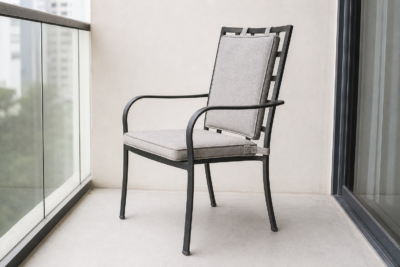
Cushions for Metal Patio Chairs: Frame Types, Grip and the Heat Question
Cushions for metal patio chairs guide: wrought iron, aluminum and steel frames and what each means for pads, sliding on slick metal, heat absorption in sun, sizing across mixed metal sets, and the outdoor duty spec.
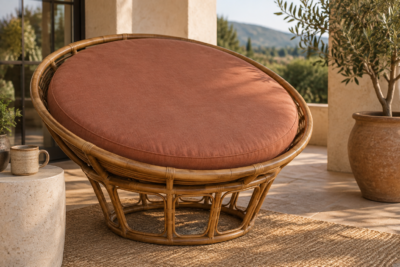
Outdoor Papasan Cushions: Weathering the Big Round
Outdoor papasan cushions fail in a known order — fabric, fill, bowl. The overhang-vs-inset diameter decision, fiber vs foam outdoors, and the honest line between a flat round and the concave original.
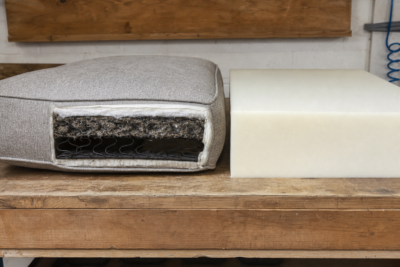
High Density Foam Couch Guide: What Density Actually Means
What high density foam actually means for a couch — the ×10 density convention, density vs firmness (ILD), the 35D–65D grades ranked by use, how each grade fails, and what density costs per square foot.
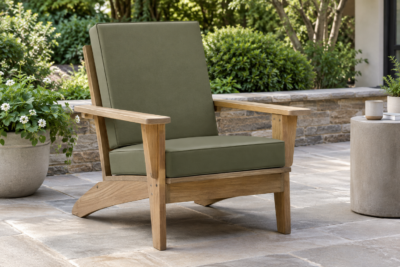
Adirondack Chair Cushions: Sizes, Selection & Replacement Guide
Adirondack cushion sizes decoded: 20×20 seats, tall-back options, tie patterns, best fabrics — plus fitting odd or vintage chairs.