
Custom Cushions vs Ready-Made: The True Cost Comparison
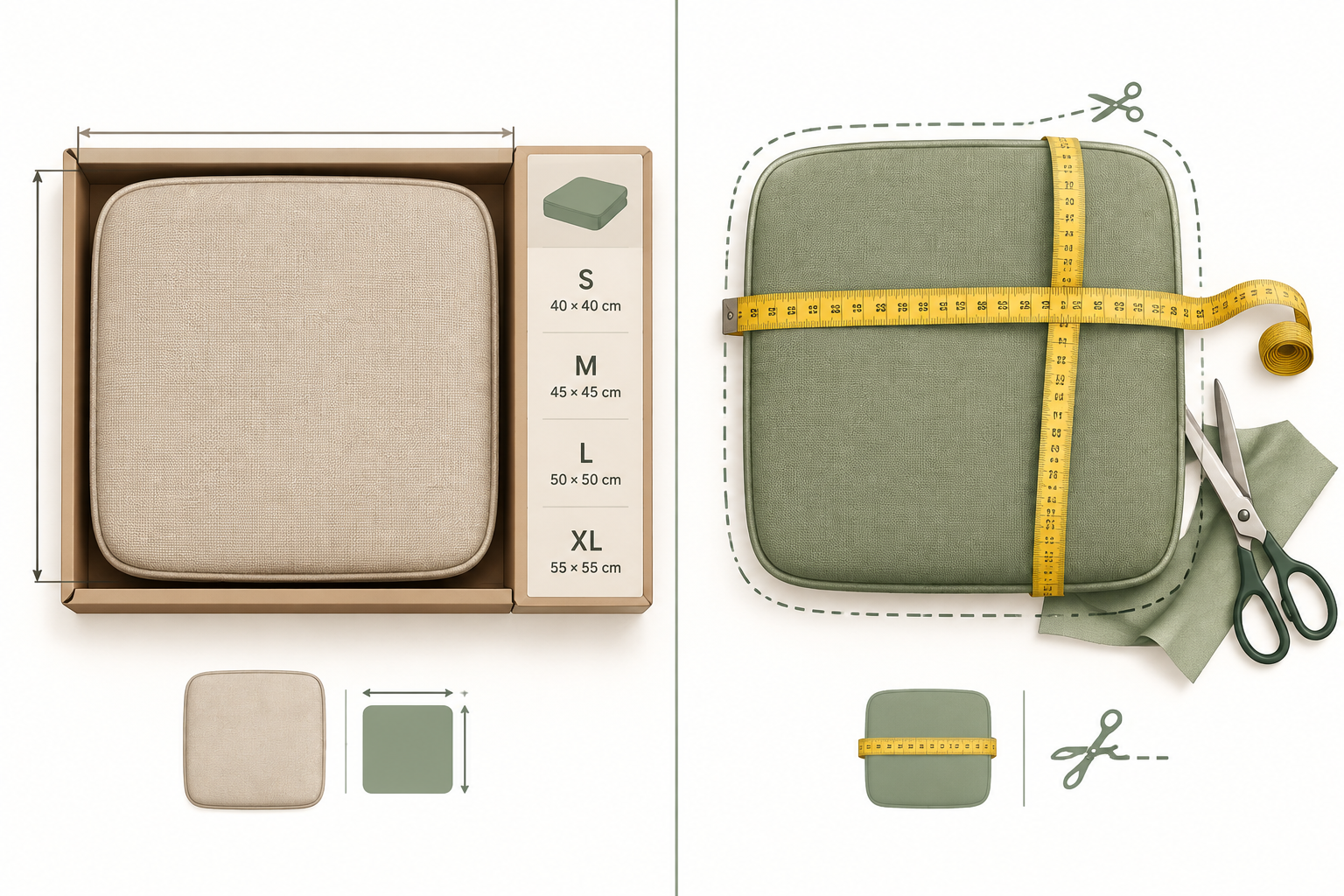
The shelf price of a ready-made cushion and the true cost of owning one are different numbers, and the gap runs in both directions. Sometimes the stock cushion genuinely wins — your furniture is a standard size, the cushion is lightly used, and a $30 pad is the right answer. Sometimes the stock cushion is a down payment on a problem: it almost fits, it ages badly, and the real bill arrives as a second purchase. This is the cost comparison done properly — including a pricing behavior we measured live on a competitor’s configurator that every “custom is expensive” instinct should read first.
If you want the conceptual breakdown — which product your furniture even qualifies for — that is custom vs standard cushions. This page is the money side.
The Two Price Tags, Side by Side
The sticker comparison is real, so state it honestly. From our market pricing analysis:
| Piece | Ready-made (universal size) | Fully custom, standard fabric |
| Dining chair pad | $25–45 | ~$76 and up |
| Standard bench pad (22 × 16 × 5, 50D) | $40–70 | $112 |
| Curved / bowed bench (nonstandard) | usually does not exist | $130 |
On identical, standard, rectangle work — a dining pad nobody leans hard into — ready-made is cheaper and there is no shame in that purchase. Custom pricing is not a markup on the same product; it is a different product whose price reflects one-off cutting, sewing and fabric choice. The true-cost question starts where the two columns stop being comparable: nonstandard shapes, worn furniture worth keeping, and any seat that carries daily weight.
The Walk-Up Pricing Trap (Measured, Not Theorized)
The most misleading number in this market is the “from” price. In September 2026 we walked a competitor’s custom bench configurator all the way through, changing nothing but required inputs for a real 22″ curved bench cushion:
| Configurator stage | Displayed price |
| Landing “from” anchor (minimum size) | $18.50 |
| Side length set to 22″ | $120.29 |
| Curved back width (16″) added | $130.23 |
| 6″ thickness, high-density foam | $186.30 |
| Premium fabric (Agora line) | $221.07 |
The $18.50 anchor became ten times itself before checkout, and none of it was a trick — every step was a legitimate, disclosed configuration choice. The lesson is not that this shop is dishonest; it is that comparing a ready-made sticker price against a custom “from” price compares a real number against a fictional one. The only honest comparison is configured-price-to-sticker, and the only custom quotes worth comparing are the ones a configurator computes live in front of you.
The Three Hidden Costs of “Almost Fits”
Where ready-made quietly loses money is not the purchase — it is the sequel.
1. The re-buy cycle. A universal cushion that is an inch short on both sides looks fine for a week, then the foam settles and the shortfall becomes sag, bunching and a cover that slides every time someone stands up. The cushion is not “worn out” at that point; it was never right. Cost: the full price again, this time on custom.
2. Return shipping on wrong guesses. Free returns have trained buyers to treat sizing as reversible. On custom items it is not (every made-to-order shop, ours included, builds to your numbers and cannot resell them), and on stock items the “free” return is priced into the shelf. Measured either way, guessing costs.
3. Spec-down economics. Universal cushions compete on shelf price, and the cheapest way to hit a shelf price is lighter foam and thinner fabric — which is why a $30 pad can feel great in the store and read flat by fall. The fill economics are covered in foam vs fiber filling; the short version is that lifespan tracks the core, and stock cores at the low end are built to a price.
When Ready-Made Is Genuinely the Cheaper Answer
Objectivity cuts both ways, so here is the honest list:
- – Standard-size, lightly used seats. A guest chair at 18 × 18 does not need $90 of one-off cutting.
- – Temporary setups. Rental staging, a season of use, a dorm — depreciation beats fit.
- – You can physically verify the fit. Take the cushion to the furniture, or the measurements to the shelf, and “almost” never enters the math.
And one purchase that is neither column: if your furniture matches a named series with published dimensions, brand-pattern replacements combine custom-grade fit with near-stock prices — that third path is laid out in custom vs standard cushions. And when the whole couch set is due, a full replacement set cut to your numbers sidesteps both columns entirely.
What a Transparent Custom Quote Looks Like
A custom price you can trust is a price you can rebuild. Ours is public arithmetic: $45 base per piece plus top area × (foam rate + fabric rate), every rate on the sheet, all 119 fabrics at one flat rate, no shape surcharge — the same bowed 22″ bench that walked to $186–221 above prices at $130 through our builder, and a plain 22 × 16 × 5 bench in frequent-use foam at $112. The mechanics are taken apart term by term in how the quote is built, and you can test the arithmetic live on any shape in the cushion builder.
The true-cost rule of thumb, in one sentence: buy ready-made when your furniture is standard and your use is light; buy custom when the piece is nonstandard, daily-sat, or worth keeping — and in custom, compare configured prices, never “from” prices.
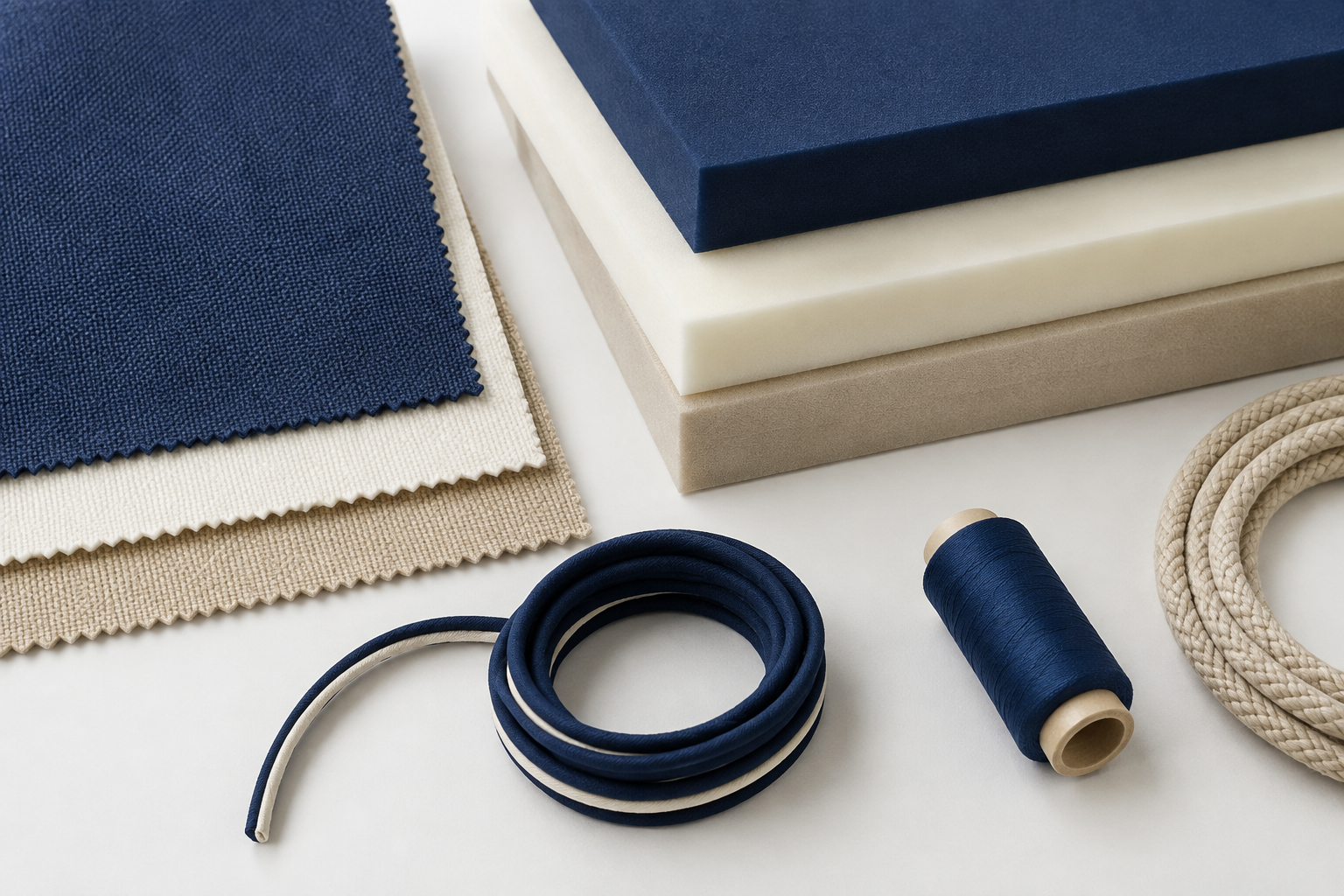
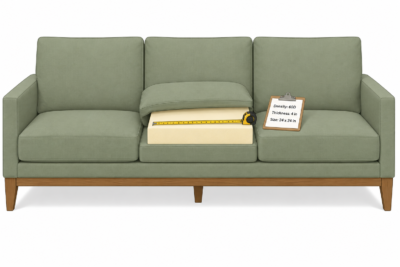
Couch Cushion Foam Replacement: Density, Cost and Buying Guide
Replace couch cushion foam in one right order: 50D vs 60D density, measuring the old core, four ways to buy, and real worked prices for one seat and a full set.
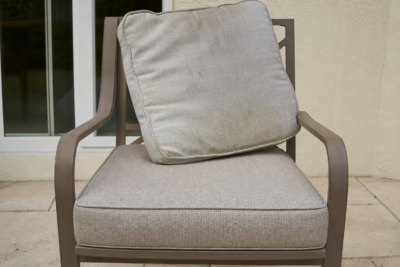
Where to Buy Replacement Patio Cushions: 5 Ways, Compared
Five ways to replace patio cushions — the set maker’s parts program, seasonal aisles, universal-fit listings, specialists and measured custom — plus the Home Depot house-line route with 31 measured collections.
Why Is Patio Furniture So Expensive? The Cost Anatomy, Explained
What actually drives patio furniture prices — weatherproof materials, UV-stable finishes, marine-grade hardware, freight on bulky goods, and seasonal retail economics — why the good stuff costs 3-5x the box-store set, and where the value concentrates.
Patio Set vs Buying Separately: The Real Trade-offs
Buying a complete patio set versus assembling pieces: price coherence and one-click convenience versus fit-to-space precision, mixable quality and replacement flexibility — how to decide, and the hybrid strategy that captures both sides.
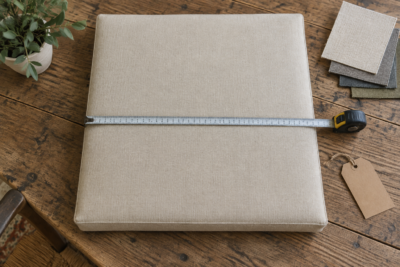
How Much Do Custom Cushions Cost? Price Ranges by Shape (2026)
Custom cushions cost USD 50-400 depending on shape, size, density and fabric. Live factory-direct price ranges for bench, window seat, outdoor, sofa and boat cushions — and how to price your own.
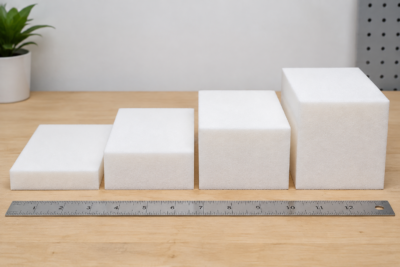
Outdoor Cushion Foam: Density and Thickness Guide With Real Numbers
Short answer: for a daily-use outdoor seat, order 3 inches of foam at 50D–60D; move to 4 inches and 60D