
Wicker furniture is where universal cushions go to fail. The frames are generous, the seat decks are deep, the backs are tall — and most off-the-shelf cushions are cut for none of that. This guide covers wicker cushion dimensions by furniture type, the fit problems specific to wicker (seat depth, back height, one-piece benches), fabric and fill choices for weave-through weather exposure, and the brand-name wicker path (most big-box wicker sets — Hampton Bay included — have documented dimensions). Measuring basics: how-to-measure.
What Sizes Do Wicker Cushions Come In?
Summary first: dining wicker chairs take standard-ish squares (19-21 inches), but wicker conversation sets run 23-27 inches of seat depth with tall back pillows — the territory where stock sizes stop working. Real documented examples from wicker series follow the table.
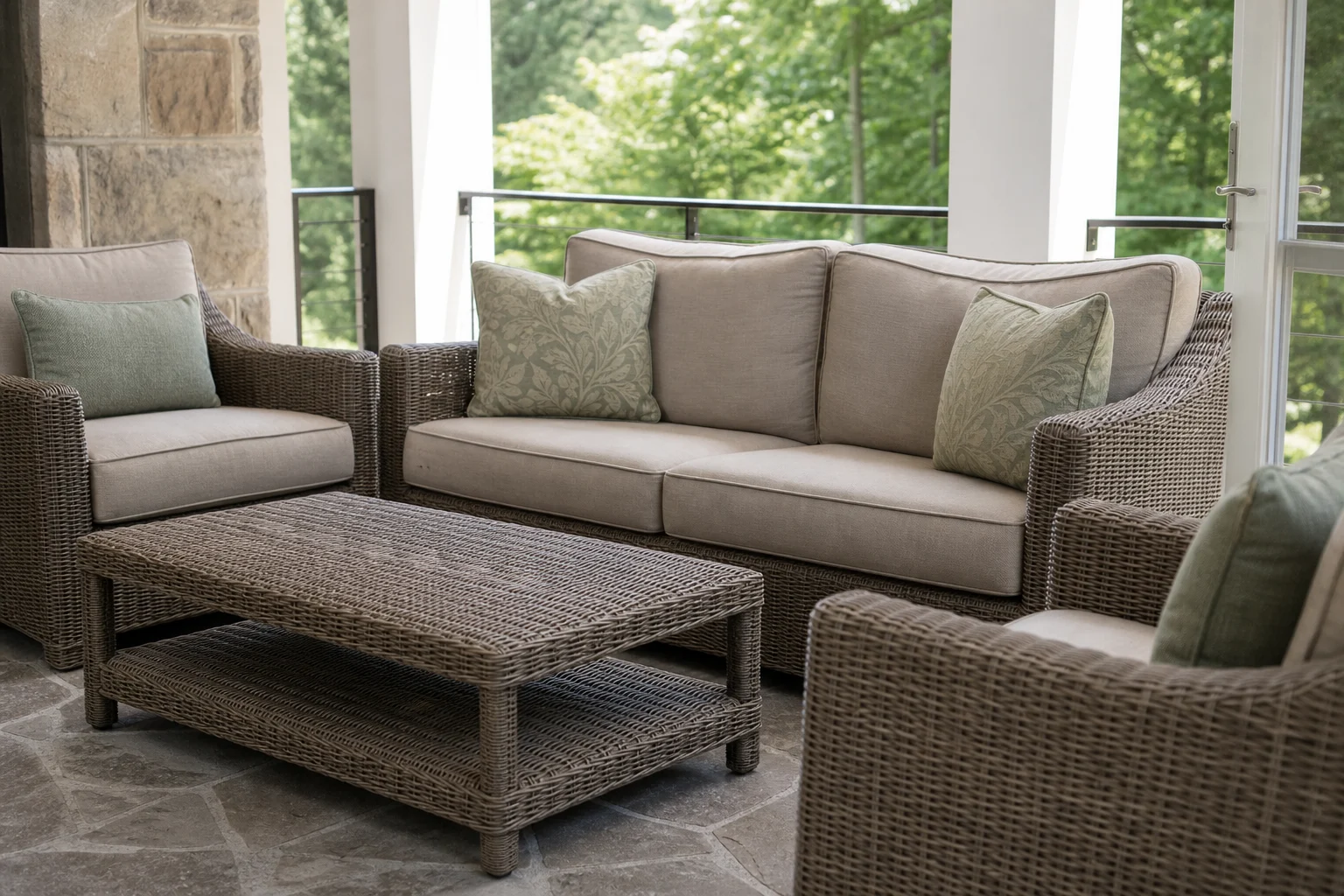
| Furniture type | Seat cushion | Back cushion/pillow |
| Wicker dining chair | 19-21 W x 19-21 D | 19-21 W x 18-20 H (or none) |
| Wicker lounge chair | 22-25 W x 23-27 D | 22-25 W x 18-23 H, 4-7 in loft |
| Wicker loveseat (2 seats) | 2 pieces, 22-28 W x 23-27 D | 2 backs, 4-7 in loft |
| Wicker sofa (3 seats) | 3 pieces, 22-25 W x 25-27 D | 3 backs |
| Wicker chaise lounge | 22-31 W x 42-50 D (hinged) | 22-31 W x 26-32 H |
| Wicker settee/bench | One piece, 40-60 W x 19-22 D | One or two backs |
| Wicker ottoman | 19-24 W x 16-20 D | — |
Those deep-seating numbers are not hypothetical — they are the documented range across wicker series in our Hampton Bay dimension database: Kampar wicker chaise seats run 31 x 50 inches and Oak Cliff chaises 24.5 x 48.5, Spring Haven chaises 23.5 x 50, and back pillows reach 7 inches of loft on Spring Haven loveseats and sofas (full chart).
Why Universal Cushions Fail on Wicker
Three geometric reasons, in order of how often they bite:
- Seat depth. Universal deep-seating cushions top out around 22-23 inches of depth. Wicker conversation seats run 23-27. A shallow cushion on a deep deck leaves a hard gap behind your knees and walks backward constantly.
- Back pillow loft. Wicker backs sit tall and reclined; they need real pillows (4-7 inches of loft) to bridge the frame angle. Universal back pads are flat by comparison — the “why does my back hurt” complaint.
- One-piece benches and sectionals. Wicker loveseat benches (Edington’s 48-inch glider is the documented Hampton Bay example) and sectional wedges have no universal equivalent at all.
The Brand-Name Wicker Path
Most wicker conversation sets in American backyards are big-box brands, and the major one — Hampton Bay — now has a documented dimension database: 24 series of its own plus the 7 Martha Stewart collections sold beside it (195+ verified sizes across 31 collections). If your wicker set carries either brand:
- Identify the series (model guide).
- Look up the documented dimensions (Hampton Bay hub; worked examples: Spring Haven, Santa Rosa, Edington).
- Order replacements cut to those exact OEM dimensions — no measuring needed for documented series.
Unbranded or import wicker skips straight to measuring and custom cushions — custom wicker cushions is the category page for that route, with the quick-drain construction open-weave seats need — tie layouts are a retrofit ( how to add ties to cushions ).
Fabric and Fill for Wicker
Wicker’s weave is ventilated — which means cushions on wicker get airflow from below (good for drying) but also debris, moisture, and insects through the weave (bad for fills that hold anything).
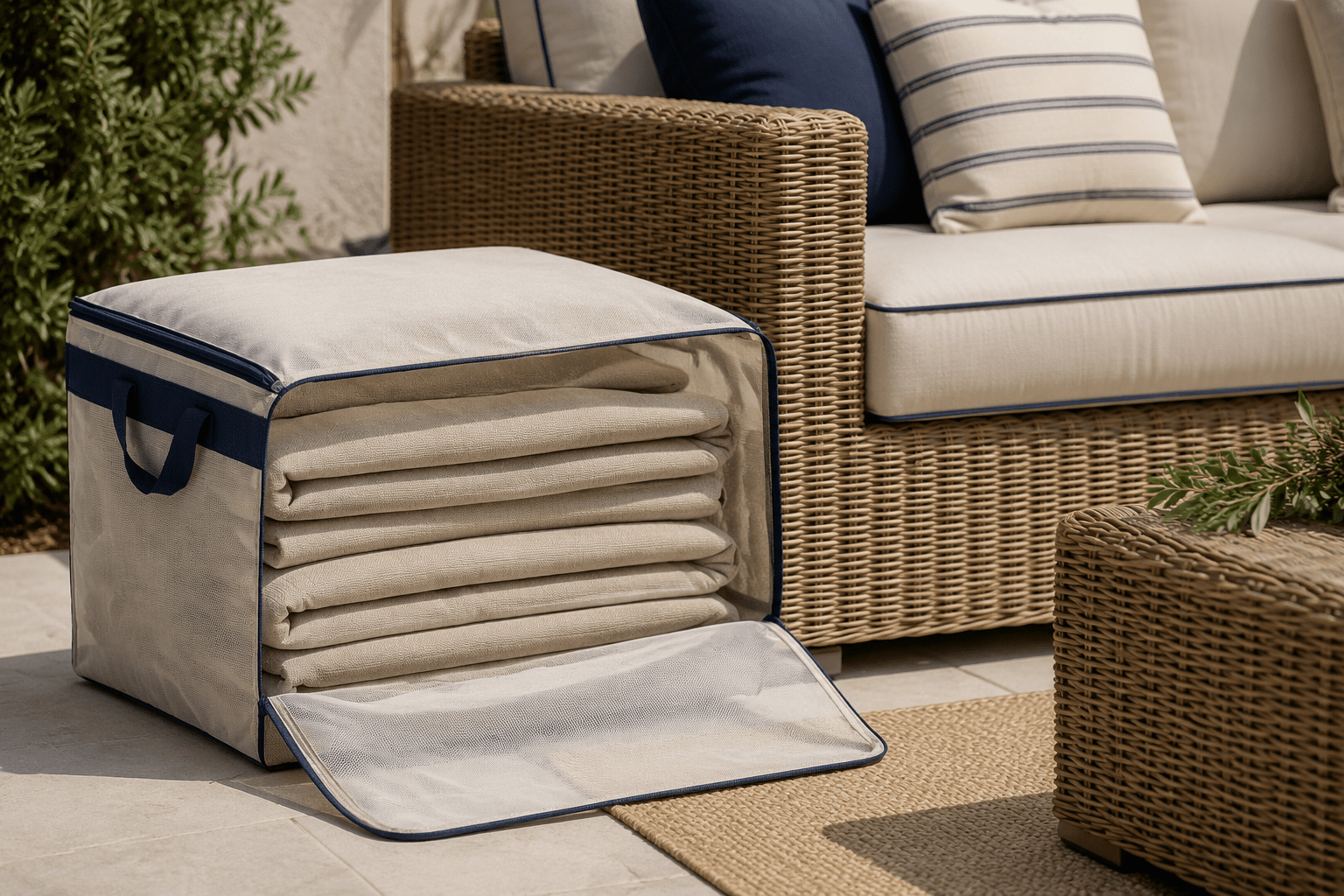
- – Fabric: solution-dyed acrylic or Olefin for anything living outdoors; wicker sets on covered porches can drop to polyester. UV hits wicker seating hard because the frames usually sit fully exposed.
- – Fill: foam-core or high-resilience foam over loose fiber — foam sheds water and dries through the weave; loose polyfill traps debris and moisture against the wicker.
- – Underside: a solid (non-grippy-cloth) base fabric resists the weave imprinting into the cushion and eases cleaning. Some workshops offer a mesh-bottom quick-drain option for uncovered sets — worth it where rain is frequent.
Measuring Wicker for Custom Cushions
Wicker-specific measuring notes beyond the standard method:
- – Seat depth: measure deck front to back, but subtract nothing for the weave — cushions sit on top of it. If the weave has a raised lip at the front, measure behind it.
- – Tapered seats: wicker seats often taper (wider at front). Measure both widths — this is the difference between a cushion that fits and one that bunches. Documented wicker examples: the Martha Stewart Miramar runs 25 front / 23 back; Palm Canyon firepit chairs 23/21.
- – Back height and angle: measure the back from seat deck to top rail, and note the recline — tall wicker backs sometimes want a two-part back solution (lumbar pad + headrest pillow) rather than one giant pillow.
- – Tie points: wicker frames offer natural tie-through gaps at the weave — note their positions and the weave gap size for tie placement.
Natural Rattan vs Synthetic Resin Wicker: Does It Change Cushions?
The two wickers diverge in ways that touch cushion choice:
- – Natural rattan/wicker (indoor and covered-porch furniture): the weave breathes and flexes; cushions live a gentler life. Cotton and indoor-outdoor blend covers are fine; foam grade matters more than fabric because the flexing frame abrades cushion undersides slowly. Natural wicker also dents under prolonged point pressure — dense foam distributes weight better than soft loose fill, which protects the weave itself.
- – Synthetic resin wicker (HDPE/PVC rattan) — what all outdoor wicker actually is, including every Hampton Bay wicker series: UV-stable, moisture-proof, and harder on cushions than natural fiber because it holds heat and water against the cushion underside. Quick-drain foam constructions and breathable base fabrics pay off here; a cushion with a sealed waterproof base on resin wicker traps condensation underneath and grows mildew at the contact face — the failure that gets blamed on “cheap cushions” when it is actually a construction mismatch.
The practical takeaway: on resin wicker, favor breathable over waterproof at the cushion base. Water passes through, dries through, and the frame does not care.
Caring for Wicker Cushions (and the Weave Beneath)
- – Vacuum the weave seasonally — debris that accumulates under the cushions grinds into both the weave and the cushion base with every sit.
- – Stand cushions on edge after rain, off the frame if possible: resin wicker holds a film of water that keeps cushion undersides damp for days otherwise.
- – Check tie points each spring — wicker’s natural tie-through gaps slowly enlarge as the weave relaxes with age; ties that once gripped can start sawing. Move ties to a fresh gap when the old one widens.
- – Store over winter — wicker frames can winter outside under covers, but the cushions should not; condensed moisture under a cover is worse than open-air exposure for cushion fill.
- – Wash covers per fabric tier: acrylic tolerates diluted bleach for mildew; Olefin prefers soap and water; polyester follows label instructions and fades either way. The fabric decision tree is in our Lowe’s guide.
Sourcing Summary: Three Routes for Wicker
- – Universal wall (covered in the Lowe’s and Home Depot guides): acceptable for wicker dining chairs in the 19-21 inch zone only; fails on conversation seating for the depth and loft reasons above.
- – Aftermarket spec catalogs: the brand-name path — the 31 documented collections across Hampton Bay and Martha Stewart make this the strongest aftermarket ecosystem in outdoor furniture (chart); other wicker brands vary from spotty to nonexistent.
- – Custom cutting: the universal fallback that always fits — measurements, trapezoid widths, and your choice of quick-drain construction for exposed sets: custom cushions.
For an unbranded wicker conversation set, the honest cost comparison: a full custom set (sofa + two chairs + ottoman in acrylic over HR foam) typically costs a fraction of replacing the furniture, and outlasts two rounds of the commodity cushions the set originally shipped with. Wicker frames — resin or natural — outlast everything; they are the best re-cushion investment in the furniture world.
FAQ
What size cushions fit wicker furniture?
Dining wicker chairs take ~19-21 inch squares; wicker conversation seating runs much larger — seats 22-28 inches wide by 23-27 deep with 4-7 inch back pillows. Measure your seat seam-to-seam; deep-seating wicker is rarely served by universal sizes (measuring guide).
Can I use universal cushions on my wicker set?
On dining chairs, usually yes. On conversation sets (lounge chairs, loveseats, sofas, chaises), universal cushions are typically too shallow (wicker decks run 23-27 inches vs universal ~22) and their back pads lack the loft wicker backs need.
How do I replace cushions for a Hampton Bay wicker set?
Identify the series name, look up its documented dimensions in the Hampton Bay chart — 31 collections are documented across Hampton Bay and the Martha Stewart line — and order replacements cut to those OEM specs. Unknown series go the measured-custom route via custom cushions.
What’s the best fill for wicker seat cushions?
Foam-core or high-resilience foam. The ventilated weave pushes moisture and debris upward through loose fills; foam sheds water, dries fast, and holds its shape against the weave pattern.
My wicker seat is wider at the front than the back. Does that matter?
Yes — that is a trapezoid seat, and a rectangular cushion will bunch and misplace the ties. Measure front and back widths separately and order a trapezoid cut; it is a standard custom option.
Breakfast Nook Cushions: The Corner-Seating Build Guide
Breakfast nook cushion guide: L-shaped and U-shaped runs, corner geometry and seam placement, seat-plus-back builds at dining height, morning-sun fabric logic, and ordering the whole run from one fabric lot.
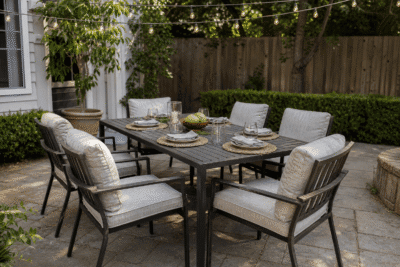
Outdoor Dining Sets: Buying the Set Right So the Cushions Work
Outdoor dining set buying guide: how the set choice locks in your cushion future — seat sizes, arm heights, frame materials, cushion quality in boxed sets versus custom pads, and set versus separate buying.

At Home Outdoor Cushions: The Decor Superstore’s Seasonal Wall
At Home runs a full-scale seasonal cushion department at decor-store prices — what the wall stocks, the fit grid, and when the superstore route ends at custom.
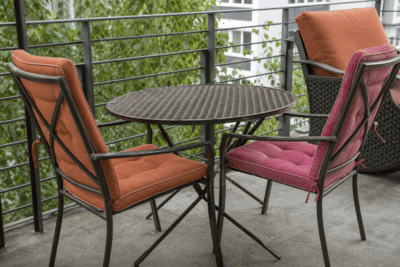
Target Outdoor Cushions: Threshold, Sizing and Replacement (2026)
Target’s Threshold cushions look designer but run generic sizes. What fits, what the seasonal rotation kills, and when custom replacements beat another Threshold refresh.
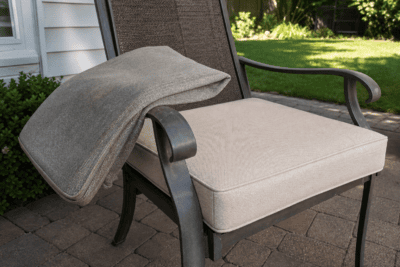
Hampton Bay Cushion Covers: Replacement Covers vs Full Cushion Replacement
The Hampton Bay covers question answered — why OEM cover-only replacements are rarely available for most series, the exact-fit route (full cushions by your series dimensions), re-covering services and DIY, and how to identify your series first.
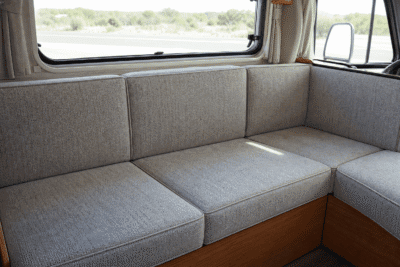
RV & Camper Cushion Replacement: The Complete Guide
RV dinette and berth cushion replacement — sizes, 45–60D foam for daily use, spill-proof fabrics, and the paper-template method for odd cabin shapes.