
The KALLAX shelving unit turned on its side is one of the most replicated furniture hacks of the past decade: cubes become cubbies, the top becomes a bench, and the whole thing lands in entryways, playrooms, and at the foot of beds doing bench duty. The hack’s missing half is the cushion — a KALLAX is a shelf, and nothing about a shelf’s top is comfortable to sit on. This guide covers sizing a cushion for a KALLAX bench, thickness and attachment decisions, and the ordering routes from stock pads to custom bench cushions. The general bench-sizing background is bench cushion measurements.
The Geometry: What You Are Cushioning
Two facts define the project:
- The top surface is a clean rectangle — which makes a KALLAX bench one of the friendliest custom-cushion projects in furniture: no curves, no notches, no hinges. The measurements that matter are the unit’s top width and depth and the sitting height you want to add.
- Cube units come in fixed, published widths — the common configurations are well documented in IKEA’s own listings, and the insert ecosystem (cube bins, drawers) is built around those widths. Practically: look up or measure your own unit’s top dimensions rather than working from memory, because unit generations and configurations vary, and a cushion cut to “the usual 2×2 width” fits only if your unit is that configuration.
The depth question deserves a decision rather than a default: the cushion can stop at the unit’s edge (clean look, less overhang) or overhang slightly (softer edge, more forgiving to sit toward the front). Overhang past an inch or so on a foam cushion accelerates edge breakdown — the foam shears where it passes the hard edge. Flush or minimal overhang is the durable choice.
Thickness: The Sitting-Height Decision
Bench cushions for shelf-top benches run 2 to 4 inches, and the right choice depends on what the bench is for:
| Use pattern | Sensible thickness | Why |
| Occasional entryway perch (shoes on and off) | 2-3 inches | Comfort for minutes, keeps the seat height predictable |
| Playroom reading seat, daily child use | 3 inches | Longer sits, forgiving landings |
| Mudroom storage-and-seat, adults daily | 3-4 inches | Real sitting; 4 inches with a 50D-plus core resists bottoming out |
| Foot-of-bed bench | 2-3 inches | Mostly staging, brief sits |
The fill logic is the same as any seating: density is lifespan (how to choose foam density). A thin pad over a hard board needs the density more, not less — low-density foam in a 2-inch pad bottoms out against the shelf top on every sit and feels like sitting on the shelf with extra steps.
Keeping It in Place
A KALLAX top is a smooth laminate surface, and cushions slide. The options, in increasing order of security:
- Non-slip underlay — the rug-pad approach; works, needs occasional repositioning, zero commitment.
- Ties — anchor points are the question: the cube openings and the unit’s side panels offer tie-through positions on most configurations; ties also suit the bench being lifted for vacuuming, which is the realistic maintenance pattern in an entryway.
- A cut-to-size grip underlay — a rug-pad layer under the pad suits laminate tops exactly.
For households with children climbing on and off, ties plus an underlay is the combination that stops the cushion becoming a sled.
Ordering Routes
Stock bench pads. The generic market’s bench pads come in common lengths and depths; the fit question is whether one matches your unit’s top dimensions closely enough (within half an inch per side reads fine; an inch of mismatch shows at the corners). The measuring standard is how to measure — measure the unit’s top, not the old pad or the room’s ambition.
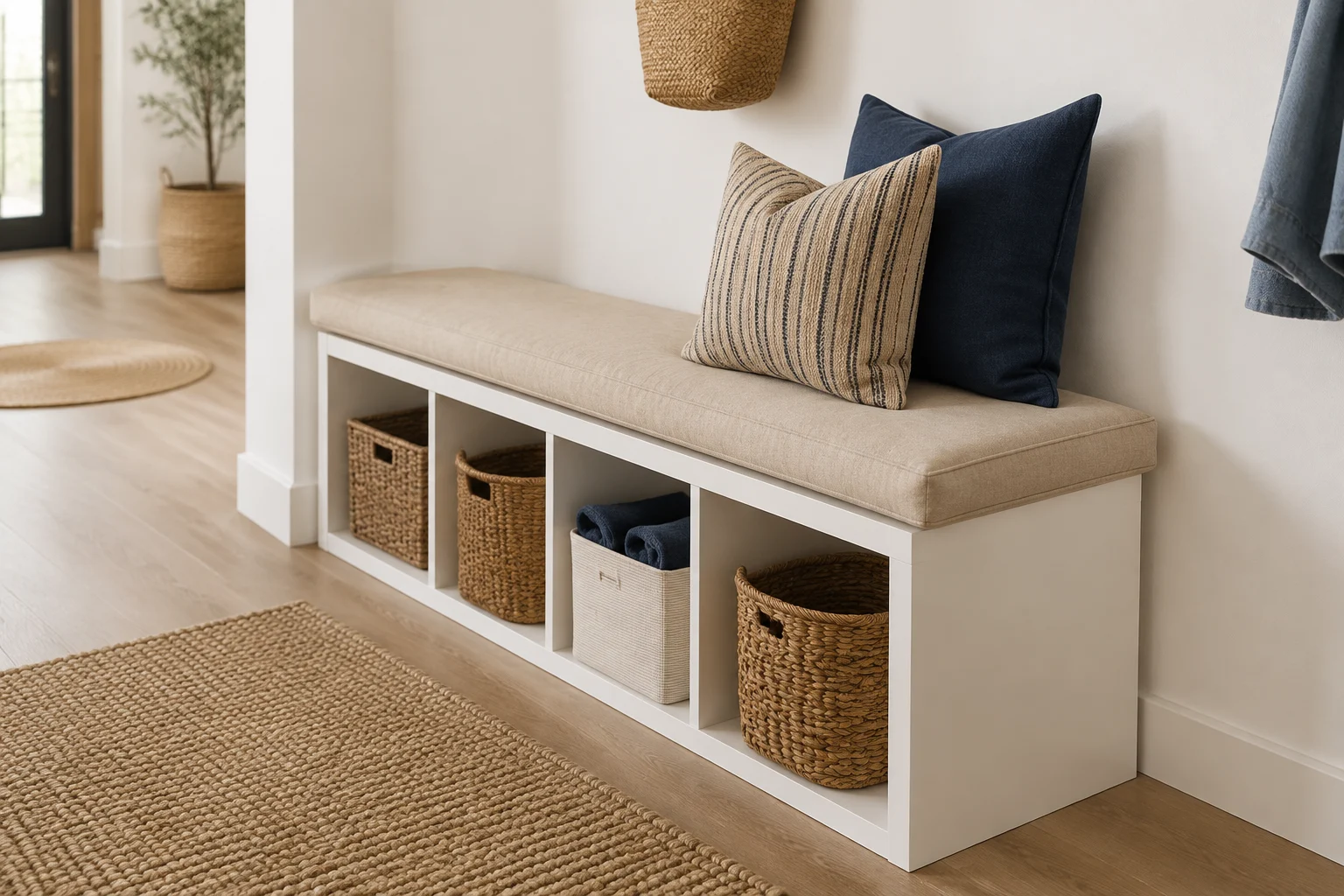
Custom bench cushions. The route that fits every configuration, and the natural choice for this project: a cushion cut to the exact top dimensions, at your thickness, in an indoor fabric from a library filtered for the purpose — sliding handled after-market (underlay or ties) — the entry point is custom bench cushions indoor. (KALLAX is shelving doing seat duty, so it sits outside our measured IKEA replacement index — that library covers the sofa and patio series; for a KALLAX top, your tape measure is the database.) Pricing runs from a $45 make-base plus area at per-sqft foam and fabric rates, and nothing is cut until your dimensions are confirmed. One production note for multi-unit projects — a playroom row of two or three benches should be ordered as a single batch so the fabric lot is consistent across the set: two slightly different lots on adjacent benches read as a mistake rather than a variation.
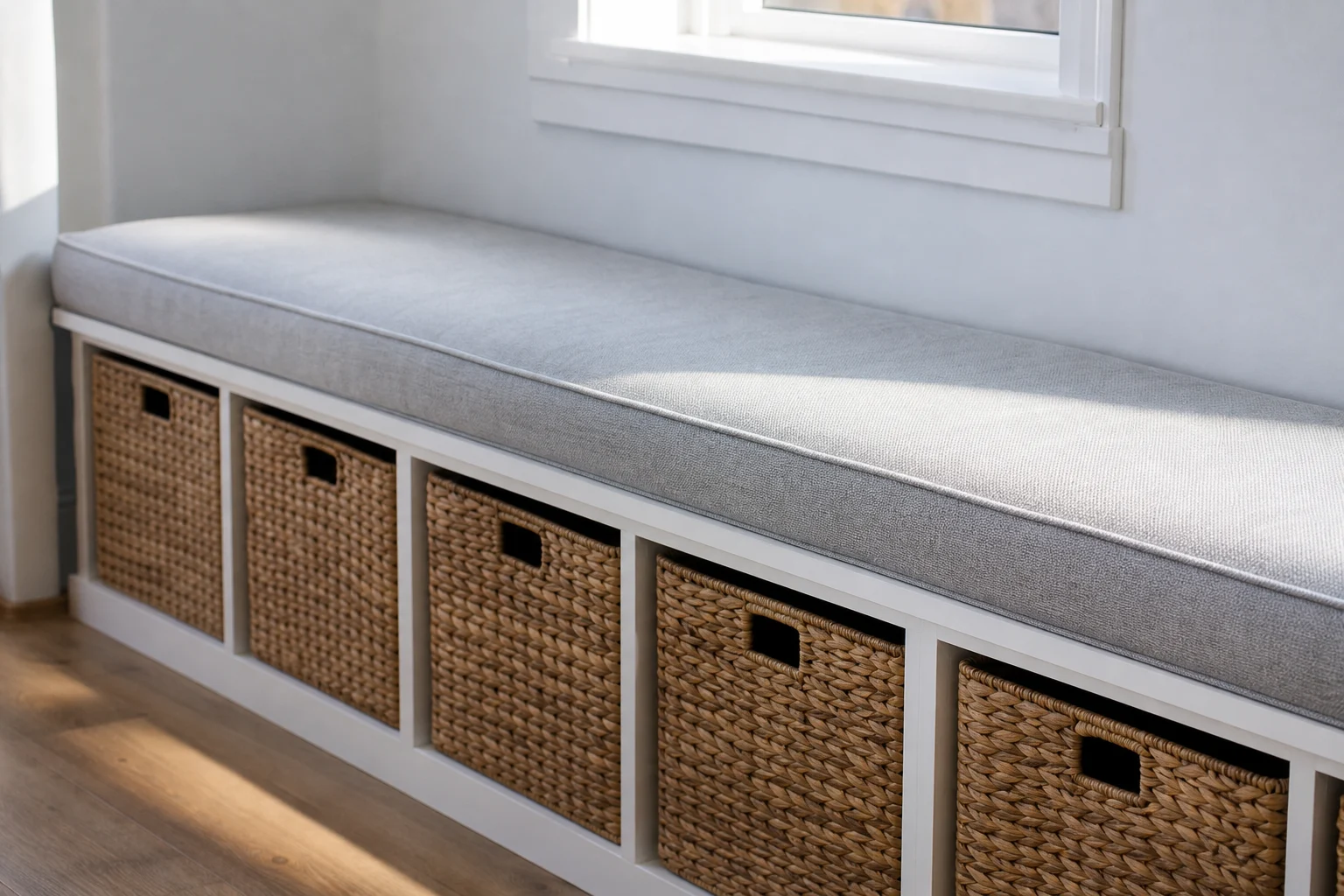
The window-seat adjacent case. Many KALLAX benches end up under windows, doing window-seat duty — if that is the plan, the sizing and construction decisions are the window-seat standard, covered in window seat cushion measurement: measure the niche, not just the unit, because built-in contexts add their own tolerances.
Fabric: Choose for the Room It Lives In
Entryway and mudroom benches want wipe-clean or hot-washable covers — shoes live here; playroom benches want durable weaves that hide the specific damage children inflict. The practical fabric logic (what hides wear, what cleans, what ages well) is in choosing cushion colors — written for sun exposure but the same wear-hiding reasoning applies indoors at high-traffic zones. And spec slightly firmer foam than feels necessary in the shop: covers re-tension over time and firmer cores absorb it better. For a bench that eats spills, a wipe-clean family is the washability.
The Load Question: Shelving Doing Seat Duty
A KALLAX unit is engineered as shelving, and the bench hack asks it to be furniture — which is fine within its design load, with two practical notes. First, the fastened-to-the-wall requirement: IKEA’s own anchors are an anti-tip measure for shelving, and a unit that people sit on and children climb wants that anchoring more, not less — it is the standard tip-furniture precaution, and it precedes any cushion discussion. Second, the top panel spans the cube openings, and long-term point loading (an adult always sitting in the same spot) is what shelves are least built for; the mitigations are free — sit over the dividers where the panel is supported rather than dead-center of the widest span, and rotate the cushion monthly so the wear and the sitting spot both migrate.
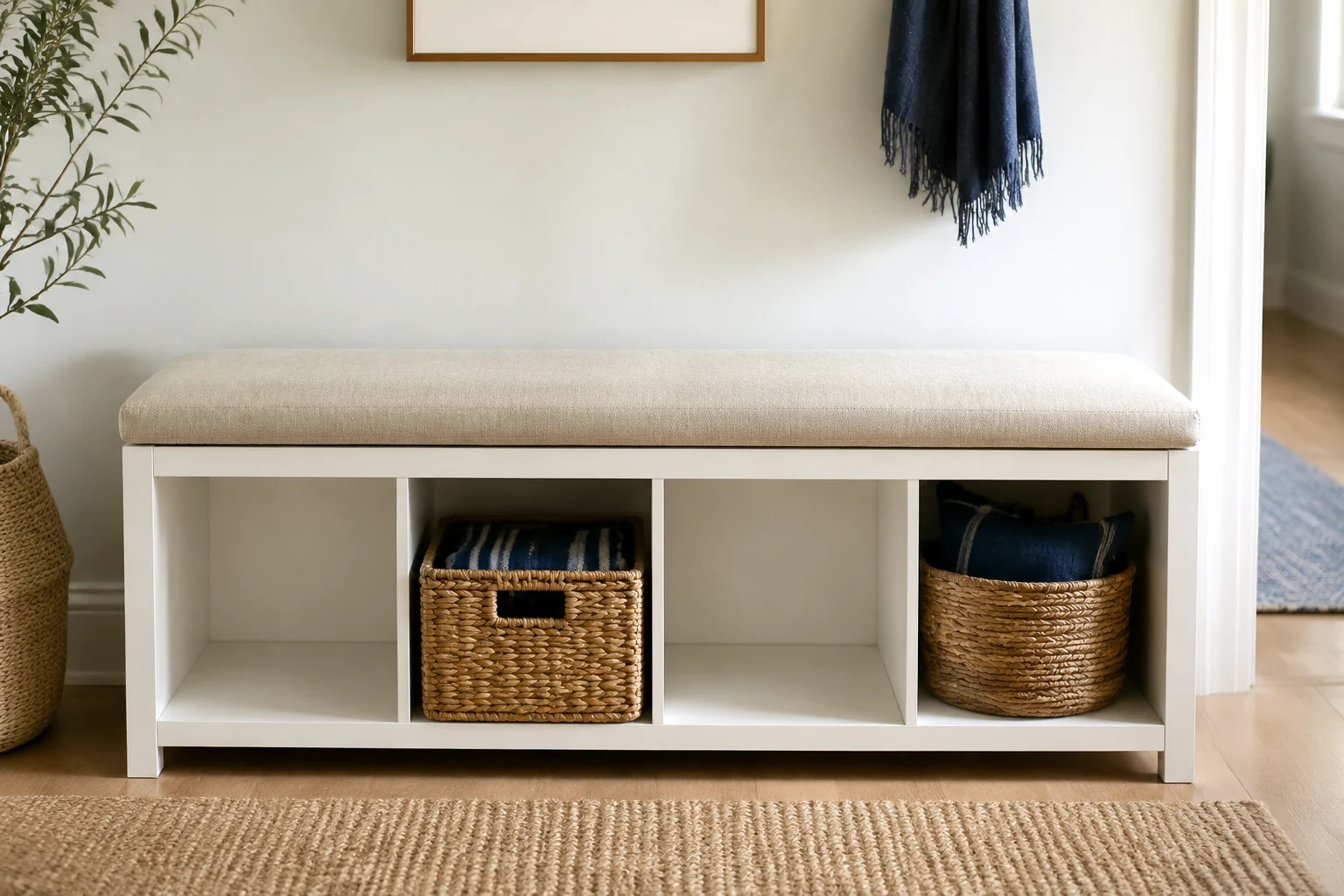
None of this argues against the hack; millions of these benches work fine. It is the difference between the hack lasting a decade and the top panel developing a memory of whoever sat on it. The cushion contributes too: a pad with grip backing spreads point loads slightly and protects the laminate from abrasion and the scratches that jeans rivets and shoe heels leave on bare shelf tops — the cushion is furniture preservation as much as comfort.
FAQs
What size cushion fits a KALLAX bench?
Cut to your unit’s actual top dimensions — cube units come in fixed published widths per configuration, so measure your own unit rather than ordering “the usual” size, and decide the depth question (flush edge versus slight overhang) before ordering (bench cushion measurements).
How thick should a bench cushion on a KALLAX be?
2-3 inches for occasional perches and foot-of-bed staging, 3-4 inches for daily real sitting — and with a dense core (50D-plus), because thin low-density foam bottoms out against the hard shelf top on every sit (how to choose foam density).
How do I keep a cushion from sliding on a laminate shelf top?
Non-slip underlay for zero commitment, ties through the cube openings for lift-and-vacuum maintenance, a cut-to-size underlay for a permanent solution — with kids climbing, ties plus underlay is the combination that works.
Should the bench cushion overhang the shelf edge?
Flush or minimal overhang — past an inch, the foam shears where it passes the hard edge and the front edge breaks down first; the soft-edge look is achieved better with a slightly softer foam grade than with overhang.
Where do I get a custom cushion cut for a KALLAX bench?
Custom bench cushions indoor — cut to your unit’s exact top dimensions, your thickness, in the indoor fabric of your choice, from a $45 make-base plus per-sqft rates; 4-7 business days, nothing cut until your dimensions are confirmed.
Can I use a KALLAX bench cushion on other cube shelving?
Yes, with the same rule applying — measure the actual top you own rather than assuming unit families share dimensions, because configurations vary and the cushion is cut to the numbers, not to the brand name.
Next Steps
- Measure the unit’s top width and depth, decide overhang and thickness per the tables above — all numbers to the nearest quarter inch.
- Choose the attachment strategy (underlay or ties) based on how much motion and vacuuming the spot will see.
- Price the exact-fit cushion at custom bench cushions indoor — the clean rectangle makes this one of the easiest custom projects in the house.
Patio Chair Cushions: The Complete Buying Guide (Outdoor Too)
Everything that decides a patio or outdoor chair cushion — sizes, thickness, ties, fabric tiers and where each buying route wins. Custom from $45 when grids fail.
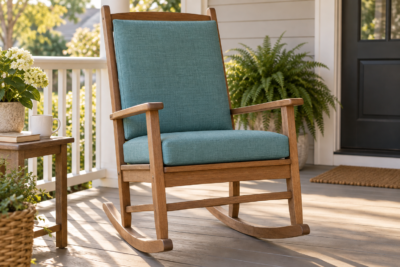
Outdoor Rocking Chair Cushions: The Weatherproof Guide to Sizes and Fabrics
An indoor rocking cushion dies fast on a porch. The sun bleaches the print in a single season, the foam
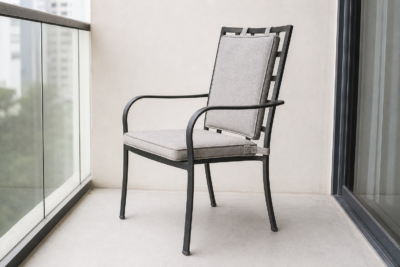
Cushions for Metal Patio Chairs: Frame Types, Grip and the Heat Question
Cushions for metal patio chairs guide: wrought iron, aluminum and steel frames and what each means for pads, sliding on slick metal, heat absorption in sun, sizing across mixed metal sets, and the outdoor duty spec.
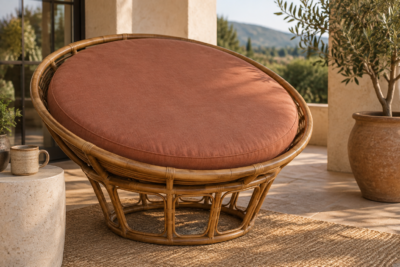
Outdoor Papasan Cushions: Weathering the Big Round
Outdoor papasan cushions fail in a known order — fabric, fill, bowl. The overhang-vs-inset diameter decision, fiber vs foam outdoors, and the honest line between a flat round and the concave original.
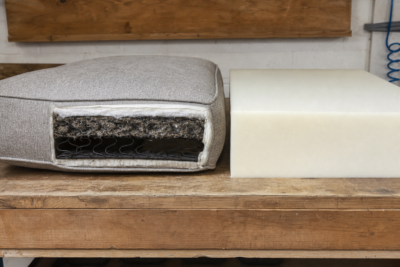
High Density Foam Couch Guide: What Density Actually Means
What high density foam actually means for a couch — the ×10 density convention, density vs firmness (ILD), the 35D–65D grades ranked by use, how each grade fails, and what density costs per square foot.
Adirondack Chair Cushions: Sizes, Selection & Replacement Guide
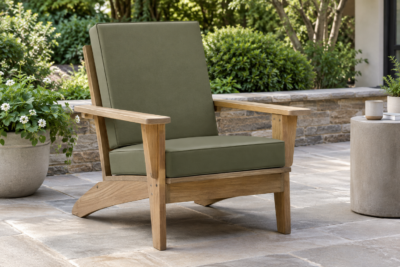
Adirondack cushion sizes decoded: 20×20 seats, tall-back options, tie patterns, best fabrics — plus fitting odd or vintage chairs.