
A sagging couch is almost always blamed on the cushions, and the blame is usually half right. The cushions are where the sag shows; the cause can be the foam inside them, the fiber inside the backs, or the support deck underneath them — and each cause has a different fix. Fluffing, flipping and batting patches treat the symptom. Dead foam and a broken deck do not respond to any of them, and furniture brands stopped making things easy decades ago: series get discontinued, official replacement parts vanish with them, and the frame outlives the channel that served it. A factory that cuts to measurements instead of model numbers has no such expiry date — but first, diagnose.
This guide walks the diagnosis top down: cushion first, then what is under the cushion, then the honest menu of fixes with what each one actually achieves.
Where Is the Sag Coming From?
Sit in your usual spot, stand up, and look at the seat. Then run these three checks in order:
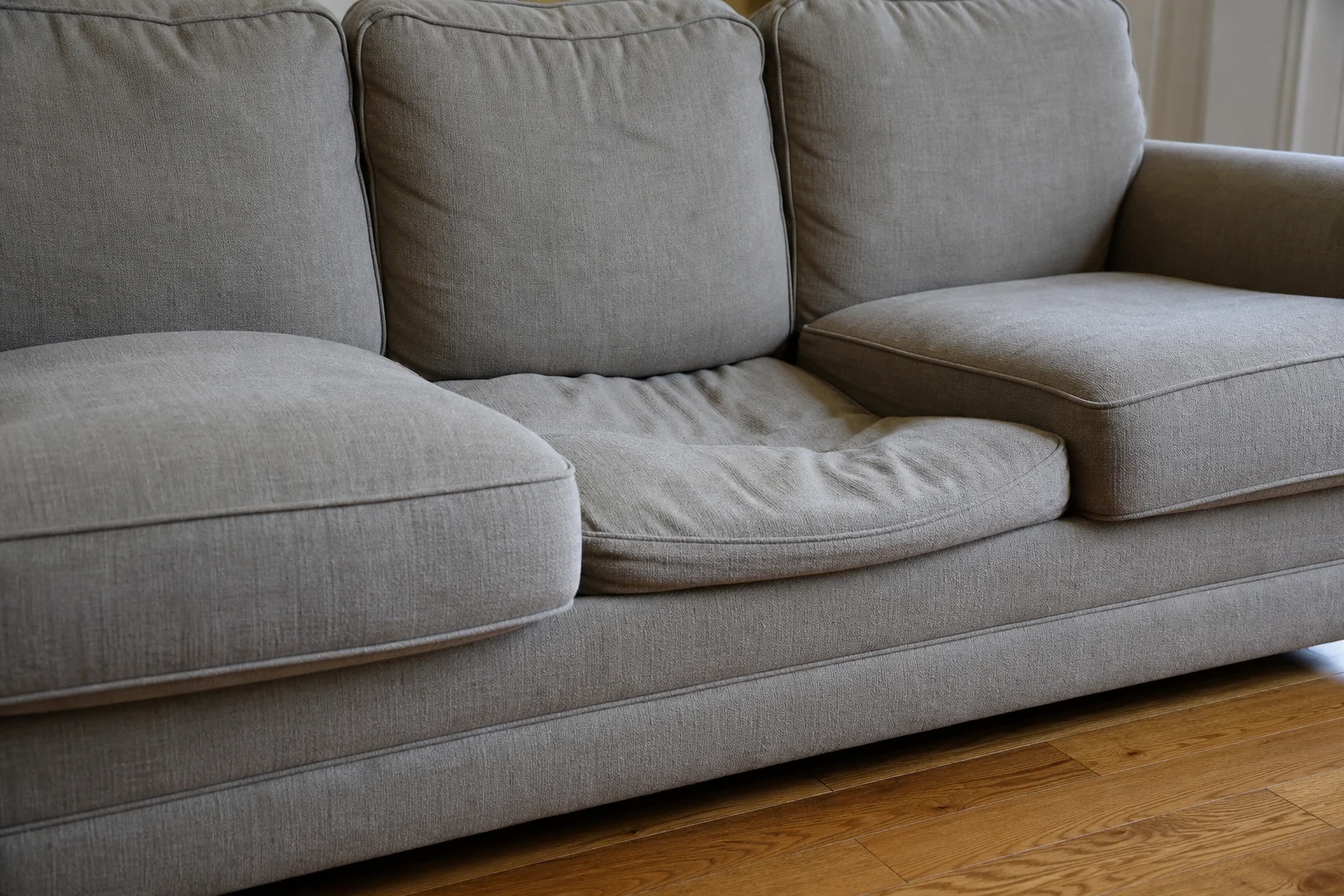
Check 1 — the rebound test (foam). Press the seat hard for five seconds and release. Live foam springs back in a second or two; dead foam keeps your handprint. Now kneel on the seat edge: if you feel the frame or the deck through the foam within seconds, the core has lost its load capacity. This is compression set — the foam’s cells have collapsed, and the condition is permanent. Seats sag to half their loft within a few years of daily use on under-specified cores; no rotation schedule reverses cell collapse.
Check 2 — the look from below (support deck). Take the seat cushions off entirely and look at what is under them: springs, elastic webbing, or a fabric deck. Press the deck with your palm where you normally sit. It should resist firmly and evenly. A deck that hangs like a hammock, webbing that has gone slack, or a spring that has snapped or popped loose will make new foam look old within months — the sag you see in the cushion is really the deck sagging through it.
Check 3 — the backs (fiber). Flatten a back cushion with your arm and watch it recover. Back cushions are mostly polyester fiber, not foam; fiber compacts and shifts with use, and the failure looks different: the cushion goes limp and lumpy rather than dented. Pat and punch it back into shape. If it re-lofts and holds, it needs routine re-fluffing. If it collapses again into the same flattened shape, the fiber is spent and the cushion needs refilling.
The rule of thumb: foam fails by denting, fiber fails by going limp, decks fail by hanging. Each failure names its own fix.
The Quick Fixes — and What They Actually Fix
Rotate and flip. Move seats position to position (left to right, and front to back if the cores are not wrapped asymmetrically) and flip them monthly if the covers allow. This evens out wear on cores that are still alive — it is prevention, not resurrection. A cushion with compression set comes back from flipping exactly as dented as it went in.
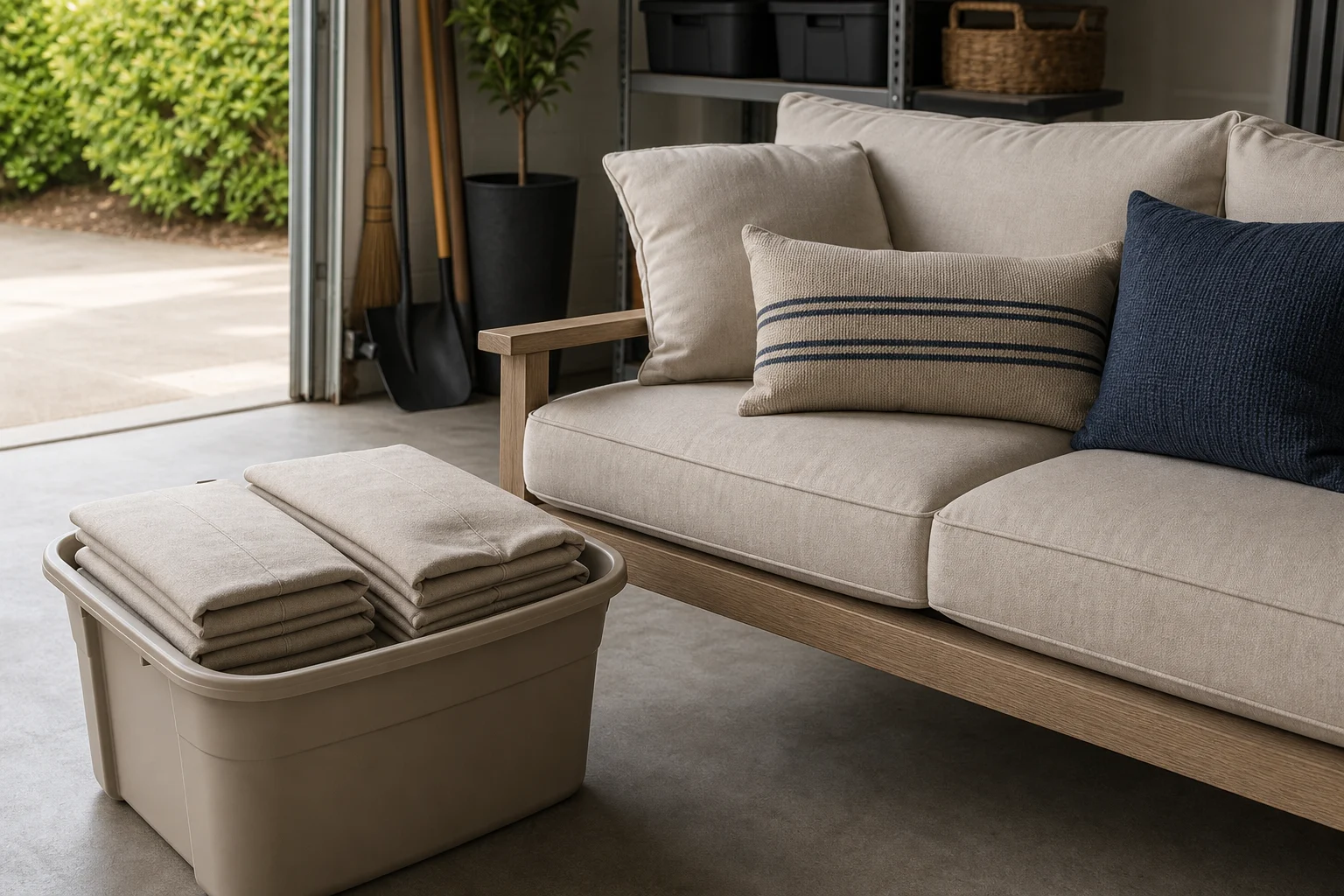
Pat and re-loft the fiber backs. Back cushions recover a surprising amount of fullness from a two-minute beating: hold the cushion upright and punch both faces, working the fiber back toward the top and edges. Do this monthly. Fiber that no longer responds needs new fiber, not more punching.
The batting patch. Sliding a layer of batting (or a folded blanket, in the classic emergency version) between the deck and the seat cushions hides a soft deck or a tired core. It works, briefly, and it is the right move when you need six weeks of grace before a proper fix — a guest is coming, the replacement is on order. Understand what it is: a shim. It adds height, not support, and the sag returns as the batting itself compresses.
Tighten or replace the deck. If Check 2 found slack webbing, re-tensioning webbing or clamping a snapped spring back into its clip is cheap and mechanical — upholstery suppliers sell replacement jute webbing, elastic webbing and spring clips, and the work is staples and clamps, not sewing. This fix is permanent and it is the one most people skip, because it hides under the cushions.
When It Is the Foam: Re-Foaming
If the rebound test failed, the honest fix ends at the foam. There is no conditioner, no fluffing technique and no insert that revives collapsed cells. The options:
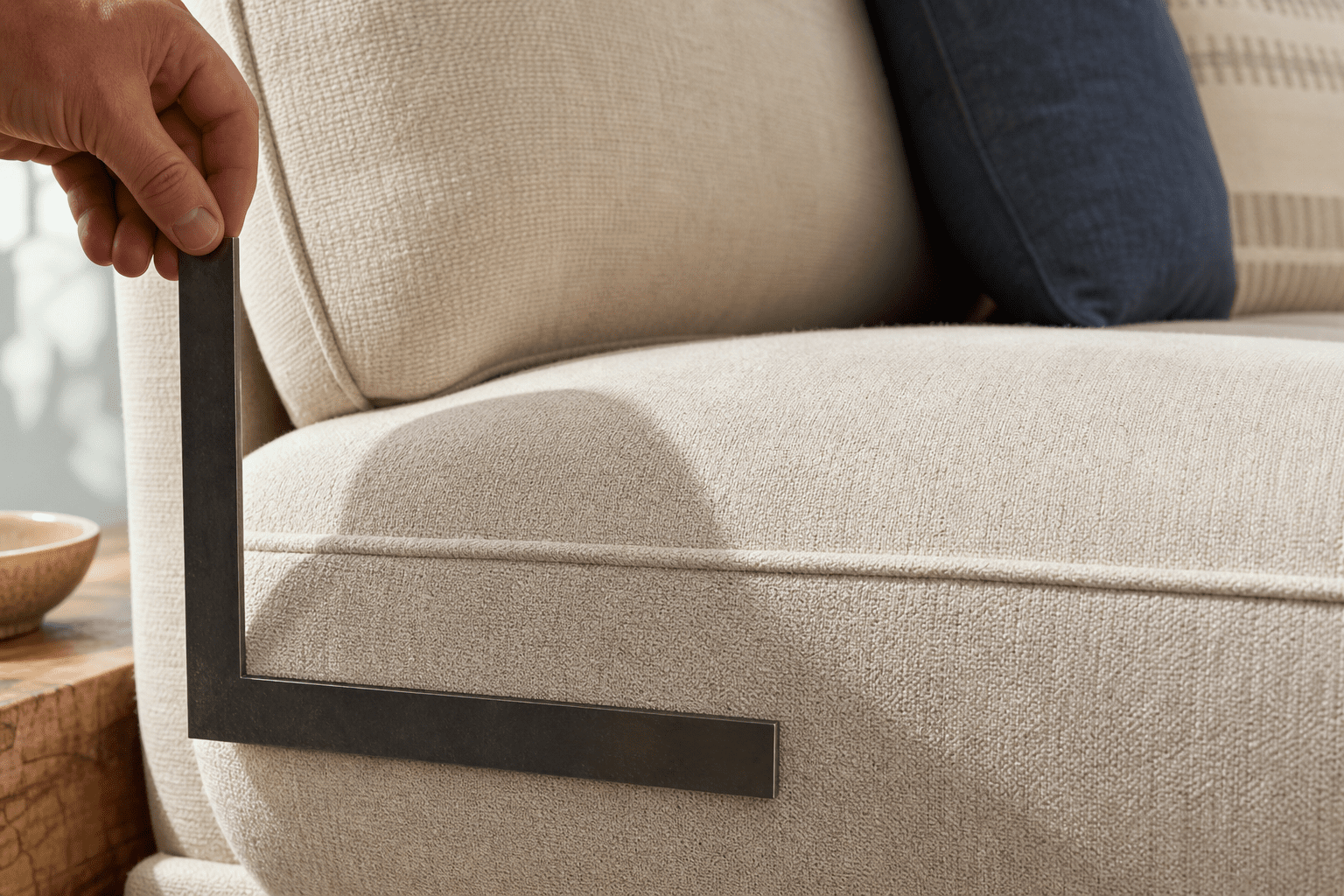
- – Re-foam the cores yourself. Measure the old cores (width, depth, thickness, to the nearest quarter inch), order new foam cut to size plus 1/2″ compression allowance, wrap in batting, refit the covers. The full walkthrough is in how to replace sofa cushion foam — for a daily-use couch, 45–60D density (our 50D or 60D grades) is the band that does not come back here in two years; the density-firmness distinction is explained in high density foam for couches.
- – Have the cores cut for you. T-cushion cores and anything above 5″ thick cut badly at home; ordering them cut to your measurements keeps the set matched. The ordering specifics are in sofa foam cut to size.
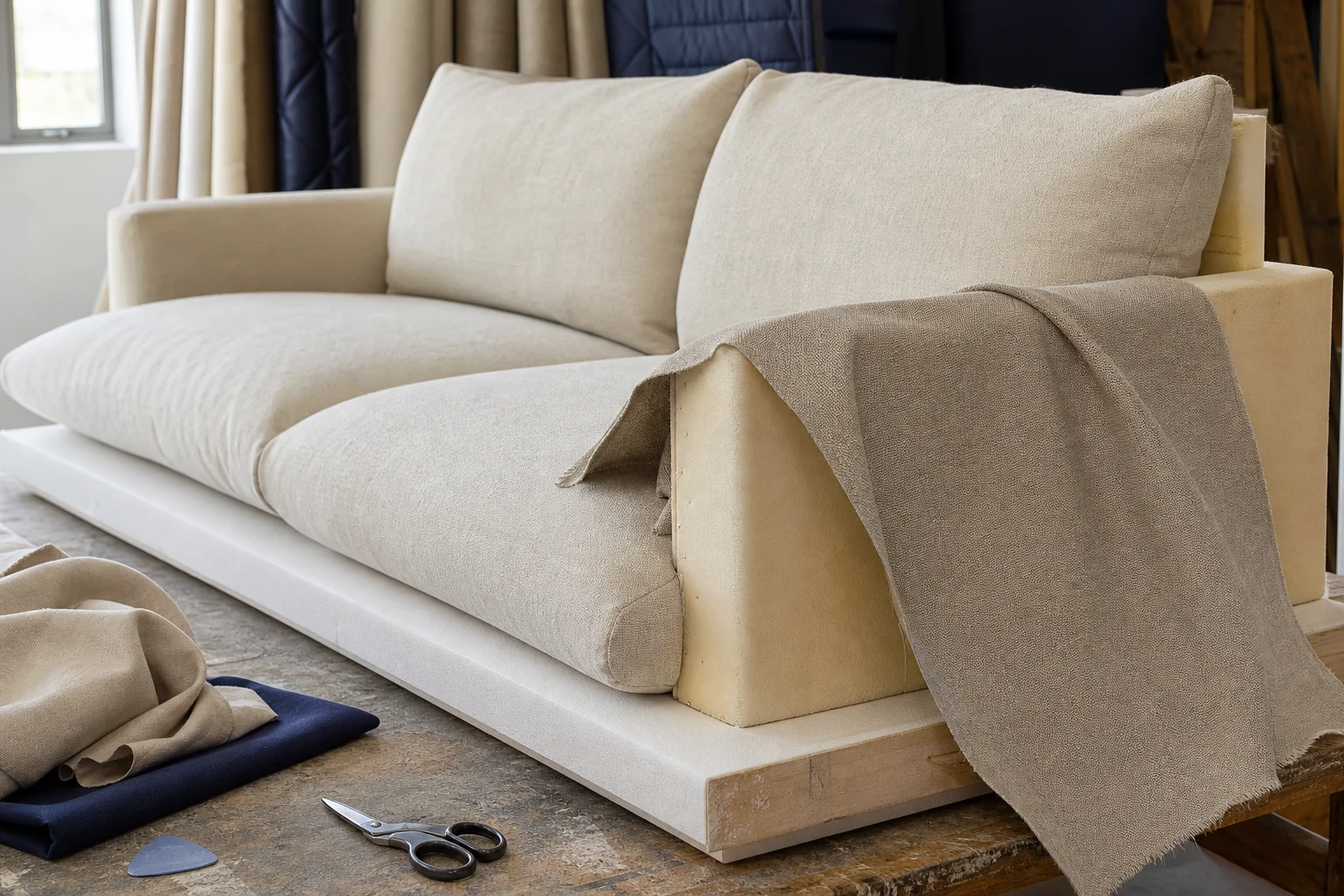
- – Replace the full cushions. If the covers are as tired as the cores, re-foaming saves nothing — a full replacement (core plus cover, cut to your numbers) is priced from a $45 make-base plus area at per-sqft foam and fabric rates, with foam at $17.13–$33.72 per square foot by density and thickness grade (custom cushions; the custom-vs-stock logic is in custom vs standard cushions). For a whole-set refresh in one production run, see our replacement couch cushions.
Sagging on a Sectional? Count First
Sectionals sag unevenly by design of use: the corner gets the sitting, the chaise gets the lounging, the far end stays firm. Diagnose each section independently — a live corner core next to two dead chaise cores is normal, and replacing only the dead blocks is legitimate. The block-by-block method is in sectional cushion replacement. If the whole sectional went soft at once, suspect the deck before the foam: shared decks fail together, shared foam rarely does.
The Decision Table
| What you found | The fix that works | Fixes that do not |
| Dented cores, slow rebound | Re-foam at 45–60D for daily use | Flipping, batting shims, inserts |
| Limp, lumpy back cushions | Refill with polyester fiber | Fluffing (delays only) |
| Hammock deck, slack webbing | Re-tension or replace the deck | New foam on a dead deck |
| All of the above on a 20-year frame | Deck repair plus full cushion replacement | Any single fix alone |
| Cores fine, sag appears in weeks | Re-check the deck — foam does not die that fast | Re-foaming |
One pattern worth naming: cushions that die every two or three years are usually not dying of age. They are dying of grade — cores cut at 20-something density dish within seasons, and the couch gets blamed. The lifespan logic is in cushion filling types.
FAQs
Why do couch cushions go flat?
Three causes, each with its own fix: foam cores collapse under years of loading (compression set — re-foam), fiber-filled backs compact and shift (refill), and the support deck under the seats stretches or breaks (re-tension or replace the deck) — fluffing only ever treats the second one, briefly.
Can you fix sagging couch cushions without replacing the foam?
Only when the cause is not the foam: slack decks get re-tensioned, limp fiber backs get refilled, and a batting patch buys weeks of grace — but cores that stay dented after the five-second rebound test are dead, and no treatment revives them.
How do I know if it is the springs or the cushions?
Take the seat cushions off and press the deck where you sit: a deck that hangs or gives unevenly is the culprit, and new foam on a broken deck sags again within months — the deck should resist your palm firmly before you spend anything on foam.
What density foam stops a couch from sagging?
45–60D for a couch sat on daily (our 50D and 60D grades), 65D for heavy-duty use — density is lifespan, so it is the spec that decides whether this fix lasts three years or ten (the density guide).
Is it worth re-foaming old couch cushions?
When the frame is sound, the deck passes the press test and the covers have years left, re-foaming is the cheapest honest fix; when two of those three fail, full replacement cushions cut to your measurements are the better buy (custom cushions).
Next Steps
- Run the three checks in order — rebound test on the cores, press test on the deck, re-loft test on the backs — and write down which failed.
- If the foam failed, measure every seat block to the nearest quarter inch using how to measure.
- Price the fix — core-only or full cushions — at custom cushions; production runs 4–7 business days of crafting with a 4-7 business-day make-and-ship window and nothing is cut until your dimensions are confirmed. Custom sofa cushions is the category page for full-set replacement, seat and back blocks in one run.
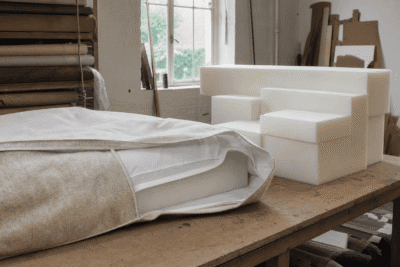
How to Replace Cushion Foam: A DIY Guide to Cutting and Fitting New Foam
Replace worn cushion foam yourself — choosing density and thickness, measuring the core, cutting foam at home, wrapping with batting and refitting covers.
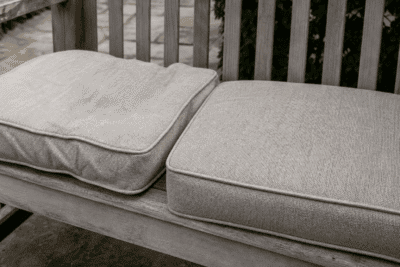
How to Tighten Cushion Covers: Seven Methods From Temporary to Tailored
Why cushion covers loosen — fabric stretch, fill loss, wrong original fit — and seven tightening methods in ascending permanence: repositioning tricks, quick refits, heat shrinking, sewn alterations, and re-covering with a properly sized cover.
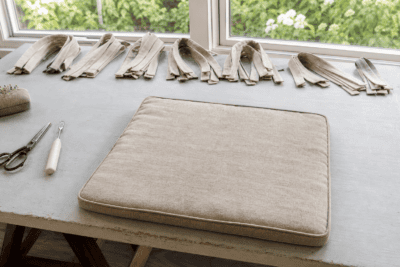
How to Add Ties to Cushions: Positioning, Sewing and the No-Sew Fixes
The complete guide to cushion ties — mapping positions to the frame’s real gaps, four tie styles from sewn loops to ribbon, hand-sewing and no-sew attachment methods, and when ties lose to straps, gripper bases or heavier anchors.
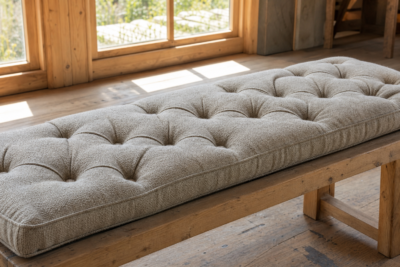
DIY Tufted Bench Cushion: How to Build the Quilted Look Yourself
A realistic walk-through of sewing a tufted bench cushion at home — materials list, the tufting method that works for beginners (buttons versus stitched pulls), foam and fabric choices, where DIY tufting goes wrong, and when to order the grid stitch instead.

Pallet Bench Cushion DIY: From Shipping Wood to Seated in a Weekend
The full pallet-bench project — sourcing and deconstructing pallets safely, building a squared bench frame, sizing the cushion to the finished deck, and the honest moment to buy the cushion instead of sewing it.
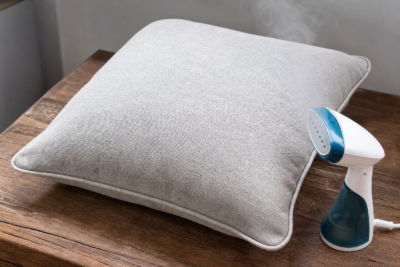
How to Get Wrinkles Out of Cushion Covers: Steam, Wash and Weight Methods
The complete wrinkle-removal guide for cushion covers — why covers wrinkle in the first place, the fabric-by-fabric method matrix (steam, dryer tricks, damp-weight, wash-and-air), the heat-safety rules by fiber, and the fit fixes that stop wrinkles returning.