Every cushion buyer reaches this fork: the standard-size cushion on the shelf is cheaper and available today; the custom one costs more and takes weeks. The retail instinct says take the cheaper one. The factory view — after years of cutting both — is that the sticker price comparison is the wrong comparison, because the two products solve different problems.
The honest framing: standard and custom are not two qualities of the same product. They are two different products, and your furniture decides which one is even eligible. Here is the full comparison, with real numbers, so your decision is made by facts rather than by price-tag gravity.
What “Standard” and “Custom” Actually Mean
Standard cushions are cut to fixed sizes in bulk — the sizes that fit average furniture: a 19 × 19 dining pad, a 21 × 21 seat, a 23 × 23 deep-seat cushion (the full table is on our standard sizes page). Manufacturers pick these because they fit the most common frames tolerably. Quality varies independently of size — there are premium standard cushions and junk custom ones — but the dimensions are set before your furniture exists in the picture.
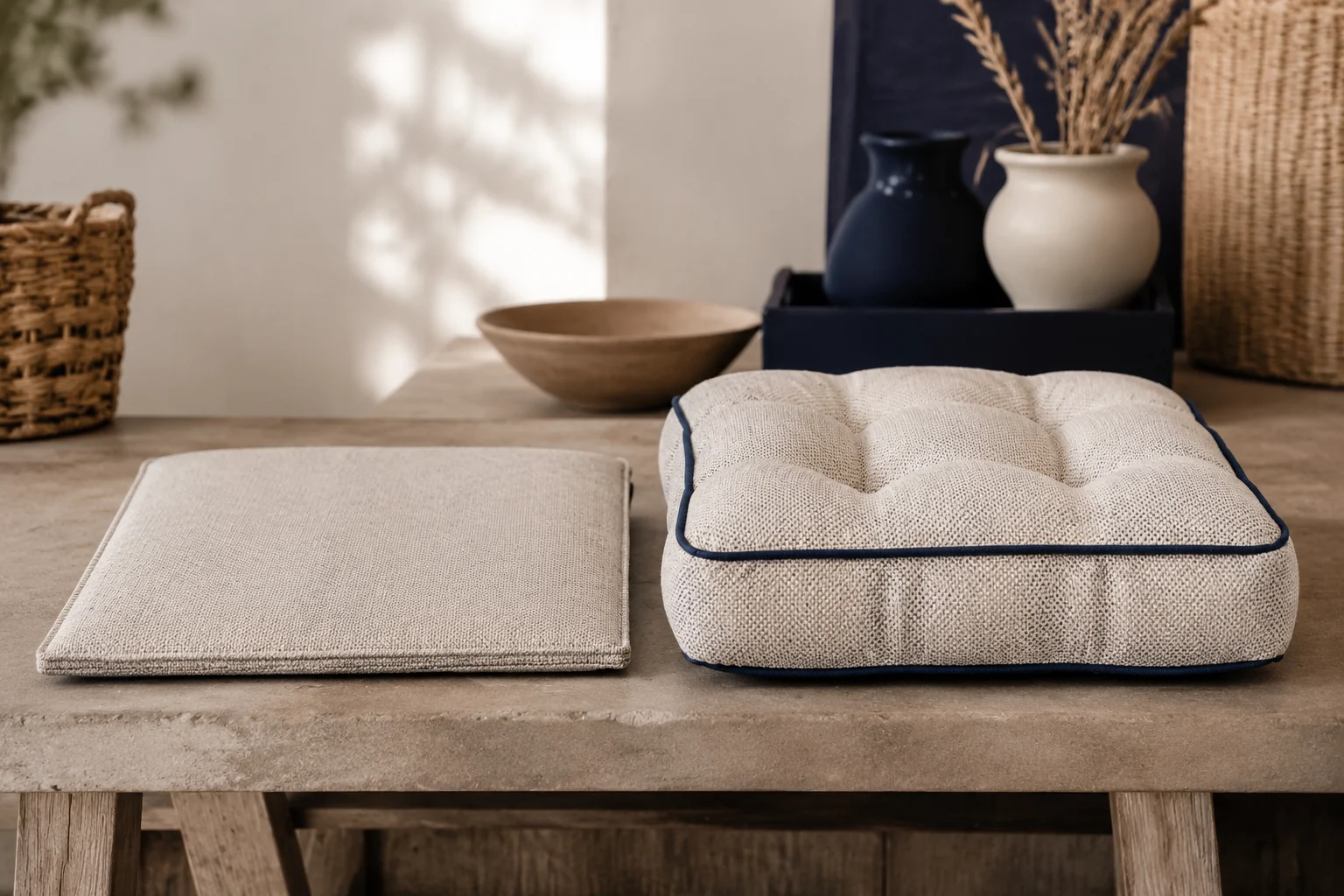
Custom cushions are cut to your measurements after you order — width, depth, thickness, trapezoid angles, your fabric, your foam. Nothing exists until your numbers do. (The measuring protocol that feeds it: how to measure outdoor cushions; the builder itself is at custom cushions.)
A third category muddies the water and shouldn’t: brand-pattern replacements — stock patterns cut to specific furniture lines (Hampton Bay series and other named furniture lines). These are custom-grade fit without custom measuring. If your furniture matches one (Spring Haven, Santa Rosa, Edington), this third path is usually the best deal on the board, and both “standard” and “custom” debates become moot.
The Real Price Difference (2026 Benchmarks)
From our pricing analysis of the custom market (data in the price guide):
| Piece | Standard (universal size) | Brand-pattern replacement | Fully custom (standard fabric) |
| Dining chair pad | $25–45 | $76–99 | $76+ |
| Lounge chair | $60–120 | $108–249 | $108+ |
| Chaise | $90–160 | $255–290 | $255+ |
| Loveseat | $100–180 | $192–326 | $192+ |
Two honest readings:
- On comparable specs, custom is not dramatically marked-up product — the premium over universal sizes buys exact dimensions and (usually) better foam, because universal cushions compete on shelf price and are specced down to hit it.
- Where custom really costs more is large and complex pieces — sectionals, trapezoids, templates — where there is no standard alternative at all.
The Five Real Differences
1. Fit (the whole point)
Standard sizes fit average frames tolerably. But real furniture scatters: chaise seats alone run 42″–50″ deep and 21.5″–31″ wide across common Hampton Bay and Martha Stewart lines (the chart is in chaise lounge measurements). A “standard chaise pad” on a 50″ seat puddles by eight inches or hangs off the end. The same scatter exists in loveseats (23.5″–28″ per seat), benches (36″–78″), and trapezoid frames (like the Martha Stewart Miramar’s 25″/23″ front/back) that no rectangle can fit.
Rule: fit quality is binary. A cushion that fits looks tailored and wears evenly; one that does not shift, abrade at the edges, and age prematurely. The measurement mistakes guide catalogs what ill-fit does over a season.
2. Lifespan per dollar
A standard cushion that fits poorly moves — sliding, friction at the frame edges, fabric creep at every sit. Movement is wear. Custom-fitted cushions are held by geometry, so the same fabric and foam last longer in service. Cost per year frequently favors custom despite the higher sticker.
3. Lead time
Standard: today. Custom: 2–6 weeks across the market (ours: made and shipped in 4-7 days, rush 3-5). If the party is Saturday, standard wins by default — and that is a legitimate reason, not a failure.
4. Foam and fabric control
Standard cushions come as-specced; the seller chose the foam (rarely stated — see memory foam vs regular foam for why unstated density is a warning) and the fabric (usually coated polyester — best outdoor cushion fabric). Custom lets you put a 50D core in a solution-dyed cover for the same labor — the specs that decide year five (cushion filling types).
5. The odd shapes
Trapezoids (Mill Valley’s 27″/72″ corner cushion), radius corners, bowed fronts, L-sections, T-cushions, bay windows (covered in window seat measurement) — no standard product exists for these, full stop. The choice is custom or a badly-fitting rectangle.
The Decision Rule
Ask three questions in order:
- Does a brand pattern exist for my furniture? → Order it. Verified fit without measuring — on the same pricing formula as custom; done. (Check replacement cushions.)
- Do my measurements match a standard size within 1/4″? (measured properly — the guide) → Standard is safe and cheaper; done. (standard sizes chart)
- Neither? → Custom, and the only remaining question is which specs: fabric tier by sun (Sunbrella worth it?), foam density by use.
When Standard Is Genuinely the Right Answer
- – The measurements truly match (verify — don’t eyeball it)
- – Short horizon: staging, a season of rental use, trying a style before committing
- – Time pressure that custom lead time cannot meet
- – Budget ceiling where the choice is standard-now versus nothing-now
When Custom Is the Only Right Answer
- – Any trapezoid, radius, L/T-shape, bowed or templated seat
- – Furniture with arms (inside fit must be exact or the cushion will not sit down)
- – Deep seating you intend to keep 5+ years (spec control compounds)
- – Non-furniture pieces: window seats, benches, boat cushions (see bench cushion measurements)
- – Replacement of cushions that were themselves custom — custom replacement couch cushions rebuild the set to new measurements
The Hybrid Money-Saving Trick
If your foam is still good and only the fabric has failed, cover-only orders re-shell existing cores in any fabric — a custom cover on sound standard foam is the cheapest quality upgrade path in the category (ask for a cover-only quote). Available at custom cushion covers. (Re-foaming existing covers yourself is the mirror-image DIY: how to replace cushion foam.)
Real Scenarios, Worked Through
The decision rule becomes vivid with real cases — these are the recurring situations our order desk handles:
Scenario 1: “My Hampton Bay set is 6 years old and the cushions are gone.” Check the pattern hub first — Spring Haven, Santa Rosa, Edington and a dozen other series have verified patterns (replacement cushions). Pattern order: no measuring, proven fit, ~$108–326 for typical pieces. This is the happiest path and most Hampton Bay owners land on it.
Scenario 2: “The big-box ‘universal’ chaise pad was cheap but never fit right.” Universal sizes average to no one’s frame — chaise seats scatter across 42–50″ (the chart). The money saved went into a cushion that slides, bunches and wears at the edges. Custom re-cut at $255+ is cheaper than a second wrong standard attempt.
Scenario 3: “I need 6 dining pads for a covered porch, party in 4 days.” Standard wins outright — lead time is a legitimate constraint (custom runs 2–6 weeks across the market; ours is crafted in 4-7 days, 4-7 business-day delivery). Measure anyway; the right standard size beats the nearest standard size.
Scenario 4: “Our window seat is 74 inches with two rounded corners.” No standard product exists at any quality (window seat guide). Custom, or a template if the angles are odd — the only question is specs, not standard-or-custom.
Scenario 5: “Cushions faded but foam still feels great.” Neither standard nor full custom — cover-only — ask for a quote. The scenario most people miss entirely.
The Total-Cost View: One Patio, Ten Years
A concrete comparison for a typical 4-piece conversation set (2 lounge chairs, loveseat, ottoman), quality maintained over a decade:
| Path | Years 0–10 spend | End state |
| Universal standards, replace on failure | ~$600 × 3 cycles = $1,800 | Perpetual imperfect fit, uneven wear |
| Custom once, foam 50D, solution-dyed | ~$920 × 1 + $700 re-cover at year 6 = $1,620 | Tailored fit throughout, one fabric refresh |
| Pattern replacement (if furniture matches) | ~$850 × 1 + re-cover = ~$1,550 | Same as custom, less measuring |
The custom path is not the expensive path — it is frequently the cheapest path once fit-driven wear and replacement cycles are counted. Standard only wins the sticker-price comparison, and only in year one.
FAQs
Are custom cushions worth the extra money?
When your measurements do not match a standard size within a quarter inch — which is most patio furniture — yes: fit drives appearance, wear and lifespan, and cost-per-year usually favors the custom piece; when a size truly matches, standard is the rational buy.
How much more does custom cost?
Universal-size cushions run $25–180 by piece; custom runs $76–361+ across our fabric range — but the premium buys exact fit and spec control, and the biggest gaps are on pieces no standard size covers at all.
Can I make a standard cushion fit a non-standard frame?
Not really — oversized cushions bag and shift, undersized ones look shrunken, and both wear out faster; frames outside standard tolerance need custom cutting.
What about brand replacement patterns — standard or custom?
Neither: they are pattern-cut to specific furniture lines, delivering custom-grade fit without custom measuring — check the replacement cushions hub before doing anything else.
Which is faster?
Standard ships immediately; custom runs 2–6 weeks across the market (ours: made and shipped in 4-7 days, rush 3-5) — if the event is this weekend, that is the deciding factor and standard wins.
The Difference You Can See
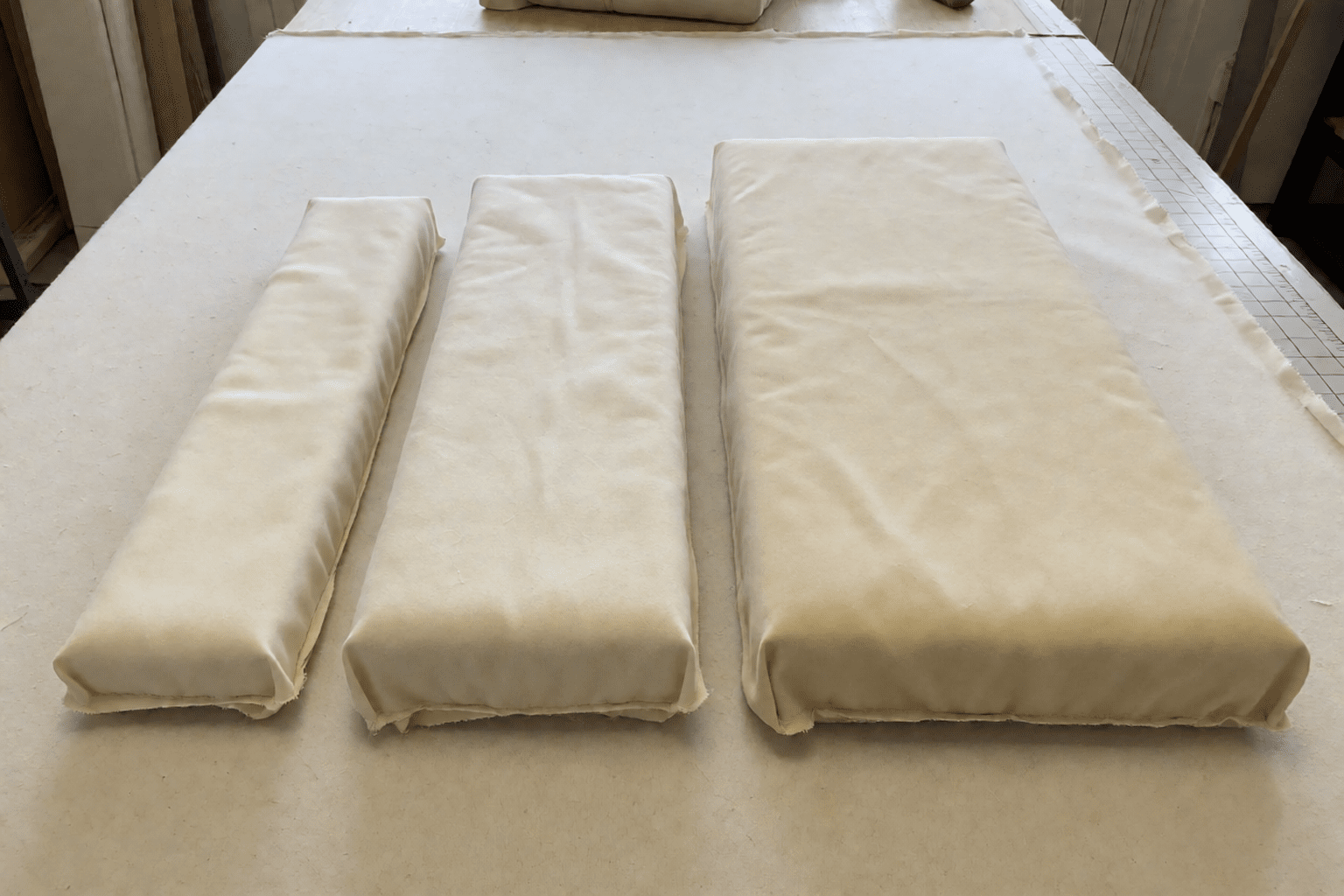
Custom means exactly this: finished pads of clearly different widths and depths from one order, laid out on the workshop cutting table – one narrow, one medium, one wide, each built to a different chair in the same house.
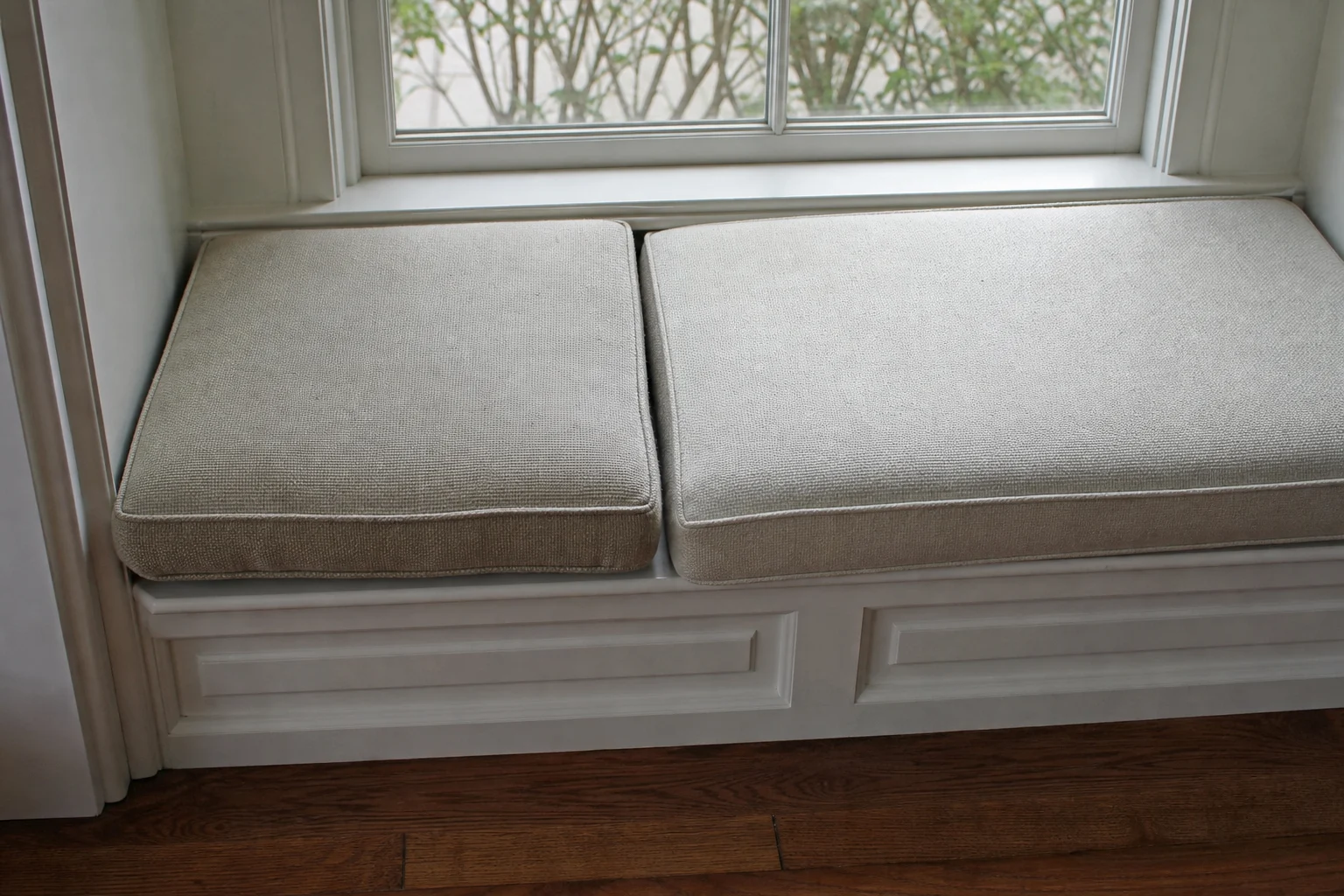
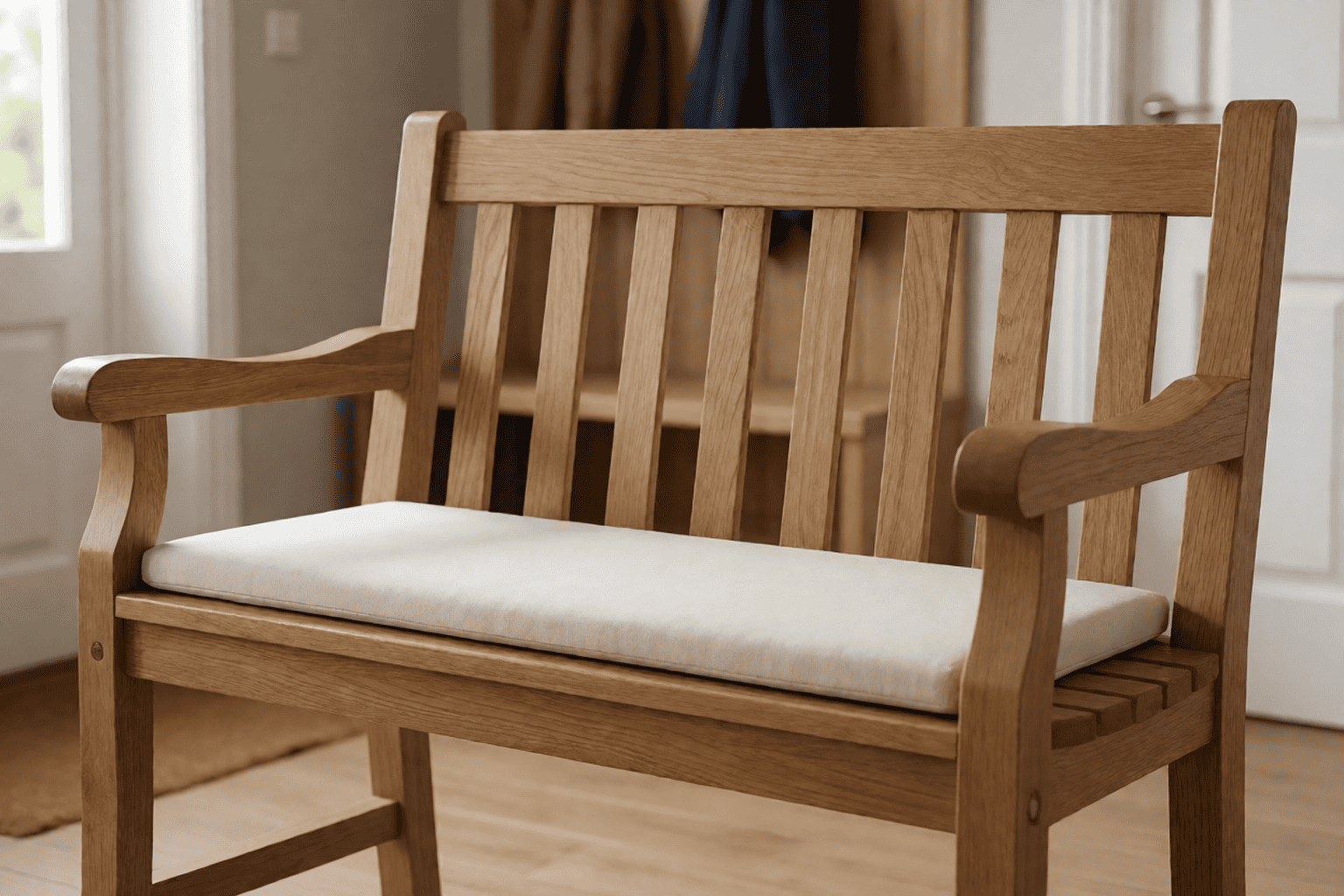
The standard-size failure mode is just as visual: an off-the-shelf pad that is clearly too narrow for the bench, bare wood showing on both sides, the pad sliding around in the frame it never matched.
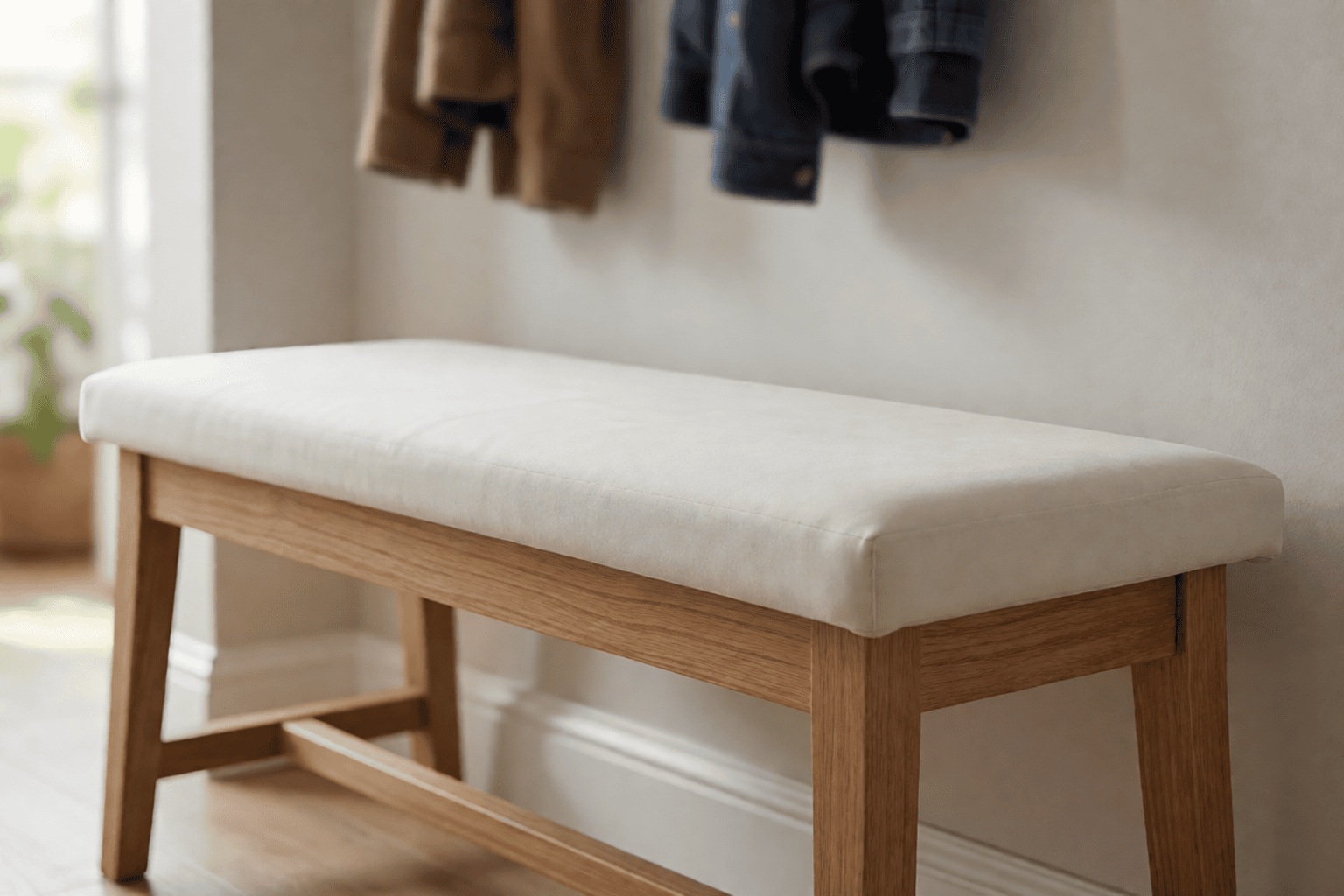
And the custom counterpart: the same style of bench covered edge to edge, corners meeting the woodwork, no gaps anywhere. Same bench, same room – the only change is that the pad was cut to the tape-measure numbers instead of the shelf.
Sofa Foam Cut to Size: How to Order Exact-Fit Foam
How to order sofa foam cut to size — measuring the core, adding the compression allowance, specifying density, thickness and shape, and the checklist to run before any foam is cut.
Cheap vs Quality Outdoor Cushions: Where the Money Actually Goes
What separates a $15 cushion from a $60 one and a $150 one — fabric construction, fill, stitching and covers — which upgrades matter, which are markup, and how to buy the quality your furniture actually needs without overpaying.
Couch Cushion Foam Inserts: Measure and Order New Cores
A foam insert replaces the flattened core inside the covers you already own. Measure seam to seam, pick 60D seats and 50D backs, and price the set in one order.
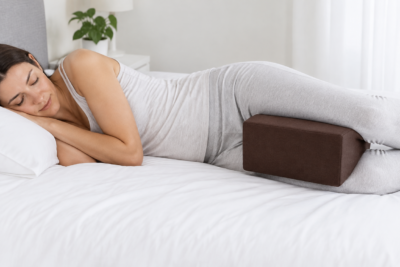
Knee Bolsters for Side Sleepers and Back Sleepers: A Firm Support Guide
A firm half-round D bolster fills the gap between the knees for side sleepers and under both knees for back sleepers. Heights, densities and lengths explained — positioning and comfort, made to order.
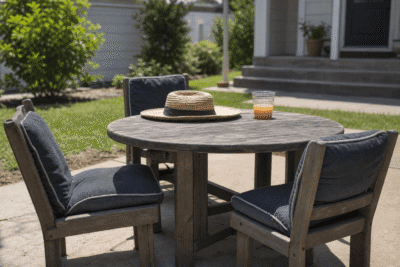
Kid-Friendly Patio Cushions: The Family-Proof Spec
Cushions that survive children — fabric families that shrug off juice and markers, construction that wipes fast, foam that handles jumping duty, attachment systems that stay put and stay safe, and the two-layer strategy that saves the good cushions.
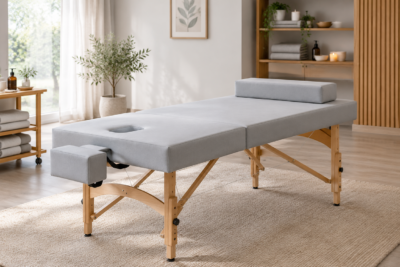
Massage Table Bolsters: Firmness, Sizing and Placement
A firm foam wedge is the positioning tool a massage table lacks. Four set sizes for ankles, knees, wrists and side-lying, solid 50D or layered builds, fabric choice included — priced 20% below custom.