
The Barcelona chair, designed by Mies van der Rohe in 1929, is a piece of furniture where the cushion is the furniture: a steel frame carrying a set of leather-upholstered panels — seat, back, and the buttoned cushions forming the arms. There is no seat under the cushion; the panels strapped to the frame are the sitting surface. That construction makes “replacement cushions” a different project than on any other chair in this guide series — closer to re-upholstery than to shopping. This guide covers what wears on a Barcelona chair, what the replacement routes actually are, and how to think about spending on a design classic versus a reproduction. General re-upholstery decision-making is in reupholster vs replace cushions.
What Actually Wears on a Barcelona Chair
Four components, four failure clocks:
- The leather panels. The sitting surfaces — seat, back, arm bolsters. Wear shows as compression creases, color loss at contact edges, and eventually cracking at the seams and button points. Quality leather wears in for decades; low-grade leather (common on reproductions) wears out in years.
- The foam inside the panels. Original-spec chairs use firm, layered foam that holds the panels’ sculpted shape; degraded foam shows as flattened seat bolsters and back panels that no longer hold their tufted profile — the chair reads “tired” even when the leather is fine.
- The straps. Leather straps suspend the panels from the frame. Straps stretch, tear at the frame hooks, or simply age out — and sagging straps make perfect panels look worn.
- The frame. Chromed steel; barring damage, it outlives everything else many times over — which is the whole replacement economics of this chair.
Route 1: Re-Covering Through an Upholsterer
The traditional route for the genuine article: an upholstery workshop strips the panels, replaces or re-builds the foam cores, re-covers in new leather, re-tufts, and re-straps the chair.
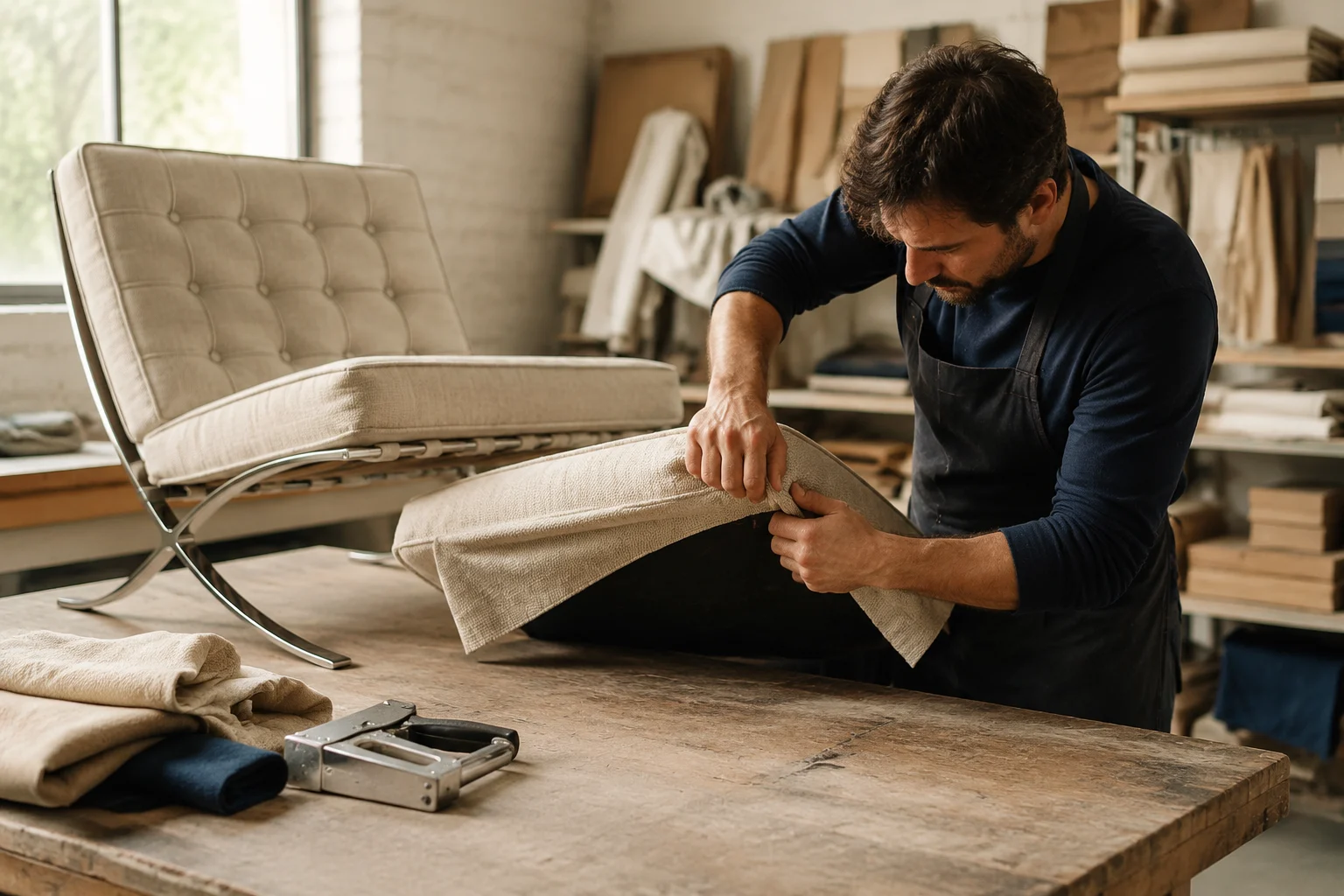
What it costs: this is skilled bench work with premium material — panels are sculpted, buttons are hand-set, and leather for a full chair is a significant material outlay alone. Quotes vary widely by region and leather grade; collect several, and treat any quote given without seeing the chair as a guess.
When it is the right route: a licensed original or high-quality early piece, where the frame and provenance justify bench hours. On a genuine piece, re-covering preserves the value that a reproduction never has.
What to ask an upholsterer: leather grade and source for the panels, whether foam cores are replaced or re-used, how buttons are set, and how straps are anchored — the four answers that separate a proper job from a re-skin.
Route 2: Aftermarket and Replacement Panel Sets
The reproduction ecosystem (chairs built to the Barcelona pattern, sold widely at a range of price points) has produced a parallel market in replacement panels and strap sets:
- – Panel sets exist for the pattern, but sizing varies with the reproduction generation — a “Barcelona cushion set” built for one factory’s frame does not necessarily fit another’s. Measure the frame’s strap span and panel dimensions before ordering anything.
- – Strap kits are the cheap, high-value fix. If the panels are sound and the chair sags, replacing straps first is the ten-percent-of-cost fix that often solves the perceived problem.
- – Quality tiers are wide. Aftermarket panels run from decent leather over firm foam to bonded leather over soft foam — bonded leather is the cracks-in-three-years material, whatever the listing says.
Route 3: Custom Panels Cut to Your Frame’s Measurements
The route that fits every generation of the pattern, licensed or reproduction: panels built to your frame’s measured dimensions, in the leather or heavy upholstery fabric you choose, with foam specified deliberately. The measurements that matter:
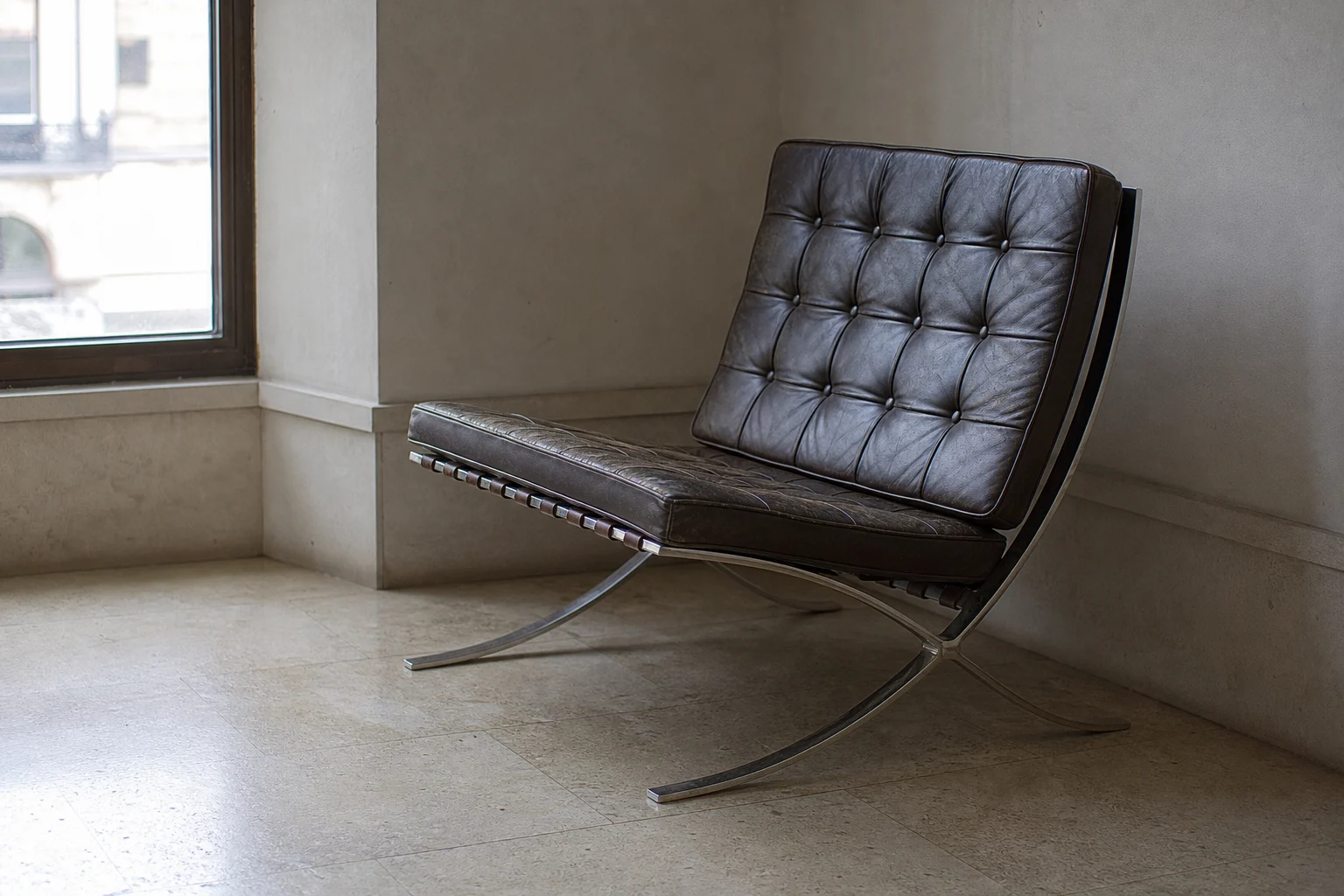
- Seat panel width and depth at the frame span — strap anchor to strap anchor, and front edge to backrest.
- Back panel dimensions and the button layout — the tufting grid defines the chair’s look; a re-make that changes the button count changes the design.
- Arm bolster dimensions — length, diameter, and how the bolsters meet the back panel.
- Strap spans — anchor point to anchor point, so the panels sit at the designed height.
For indoor statement seating built to measured dimensions — Barcelona panels, bench cushions for the matching pieces, or any sculpted indoor seat — the entry point is custom sofa cushions, with the fabric chosen from a library filtered for indoor use. The same entry point covers the ottoman that usually accompanies the chair and the matching bench pieces of a set, so the whole suite can be re-covered in one run and one fabric batch — dye-lot consistency across pieces being one more thing individual orders gamble on and one-run production does not.
Should You Restore, Re-Cover, or Replace?
The decision table for a worn Barcelona-pattern chair:
| Situation | The sensible route |
| Licensed original, sound frame, tired leather | Upholsterer re-cover — preserves the piece’s real value |
| Good reproduction, worn panels, your space loves the chair | Custom panels to measured dimensions, or quality aftermarket if dimensions match |
| Sagging with sound panels | Straps first — the cheap fix that often resolves it |
| Cheap reproduction, everything tired | Replacement chair — bench hours exceed the piece’s ceiling |
| Frame damaged | Assess before any cushion spending — a bent frame is the piece’s spine |
The general logic — spend in proportion to what the frame justifies — is the same one that governs reupholster vs replace on any furniture; the Barcelona chair just raises all the numbers.
Judging Reproductions Before Spending on Them
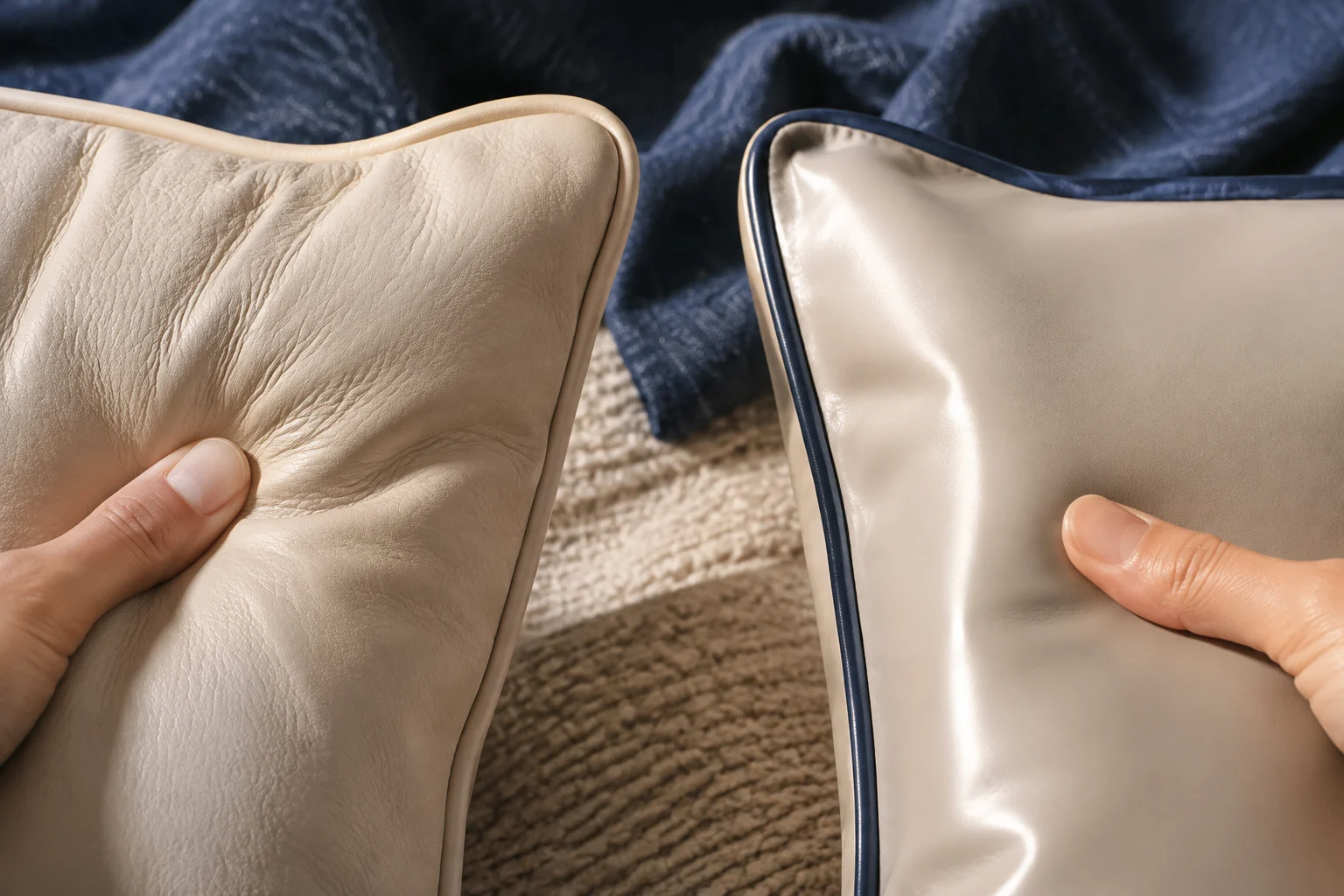
The Barcelona pattern’s reproduction market spans excellent to worthless, and the difference decides whether re-covering makes sense. Four tells, visible in ten minutes:
- Frame joints and steel gauge. Solid welds, substantial bar stock, and a frame that does not flex under hand pressure — the reproduction worth re-covering has a frame worth serving. Thin-wall tube and visible weld grinding say the ceiling is low.
- Leather grade at the edges. Turn the panel edge or check under the seat: full-grain or top-grain leather shows pores and a natural edge; bonded leather shows a uniform, plastic-smooth backing — bonded leather is the cracks-in-three-years material, and re-covering over a bonded-leather budget usually means replacing the whole panel anyway.
- Button work. Original-spec tufting sets buttons deep and even; shallow, uneven, or glued buttons are the signature of fast production, and re-doing them correctly is a significant share of any re-cover quote.
- Strap anchoring. Proper frames offer solid anchor points; reproductions sometimes improvise. Anchors that look like afterthoughts will tear out under real use regardless of what the panels cost.
The rule the tells add up to: spend on the chair in proportion to what the frame justifies — which is the same rule that governs reupholster vs replace everywhere, just with bigger numbers per decision.
FAQs
Can you buy replacement cushions for a Barcelona chair?
Panel sets exist on the aftermarket for the reproduction ecosystem, but sizing follows the generation of the frame — measure the strap spans and panel dimensions of your chair before ordering, because “Barcelona cushion set” is not a standardized size across factories.
Why is re-covering a Barcelona chair so expensive?
Because the work is sculpted upholstery — layered foam built into shaped panels, hand-set buttons, premium leather as the material, and strap work — bench hours plus material, not a cushion swap; quotes without seeing the chair are guesses.
My Barcelona chair sags — do the panels need replacing?
Check the straps first — stretched or torn straps make sound panels sit low, and a strap kit is the cheap fix; panels with flattened bolsters and lost tufting profile are the foam-failure signal that points at re-covering or replacement.
Can custom panels be made for a reproduction frame?
Yes — panels built to your frame’s measured dimensions (seat span, back layout, bolsters, strap anchors) fit any generation of the pattern; the entry point for measured indoor seating is custom sofa cushions.
Is it worth restoring a reproduction?
When the frame is good and the space loves the chair — a re-cover or measured panel replacement at a fraction of a new licensed piece is defensible; a tired cheap reproduction with a damaged frame is not worth bench hours.
How do I maintain the leather between replacements?
Keep panels dusted and conditioned per the leather’s own care guidance, keep the chair out of sustained direct sun (UV is leather’s main enemy indoors), and re-tension straps at the first sag rather than sitting on the decline — the two cheap interventions that postpone the expensive one.
Next Steps
- Diagnose before spending: straps, leather condition, foam profile — in that order of cost.
- If panels are the project, measure the frame — strap spans, panel dimensions, button layout — and record to the nearest quarter inch per how to measure discipline.
- For measured replacement panels, start at custom sofa cushions — made to order in 4-7 business days of crafting, 3–6 weeks delivery, nothing cut until your dimensions are confirmed.
Patio Chair Cushions: The Complete Buying Guide (Outdoor Too)
Everything that decides a patio or outdoor chair cushion — sizes, thickness, ties, fabric tiers and where each buying route wins. Custom from $45 when grids fail.
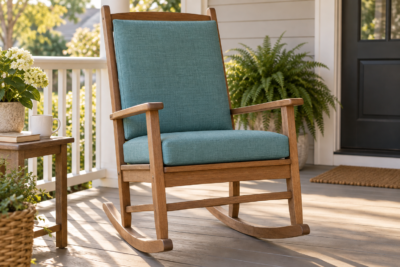
Outdoor Rocking Chair Cushions: The Weatherproof Guide to Sizes and Fabrics
An indoor rocking cushion dies fast on a porch. The sun bleaches the print in a single season, the foam
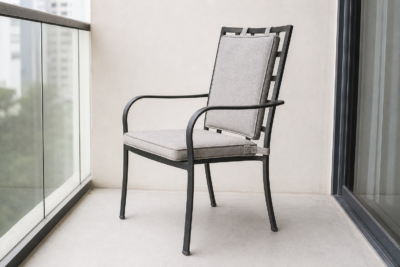
Cushions for Metal Patio Chairs: Frame Types, Grip and the Heat Question
Cushions for metal patio chairs guide: wrought iron, aluminum and steel frames and what each means for pads, sliding on slick metal, heat absorption in sun, sizing across mixed metal sets, and the outdoor duty spec.
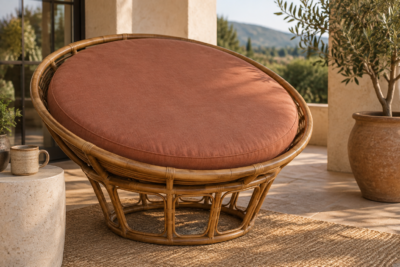
Outdoor Papasan Cushions: Weathering the Big Round
Outdoor papasan cushions fail in a known order — fabric, fill, bowl. The overhang-vs-inset diameter decision, fiber vs foam outdoors, and the honest line between a flat round and the concave original.
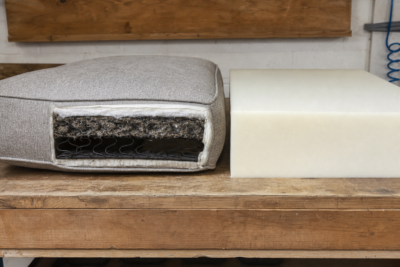
High Density Foam Couch Guide: What Density Actually Means
What high density foam actually means for a couch — the ×10 density convention, density vs firmness (ILD), the 35D–65D grades ranked by use, how each grade fails, and what density costs per square foot.
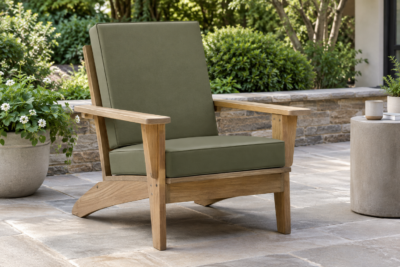
Adirondack Chair Cushions: Sizes, Selection & Replacement Guide
Adirondack cushion sizes decoded: 20×20 seats, tall-back options, tie patterns, best fabrics — plus fitting odd or vintage chairs.