
Chasewood (Hampton Bay)
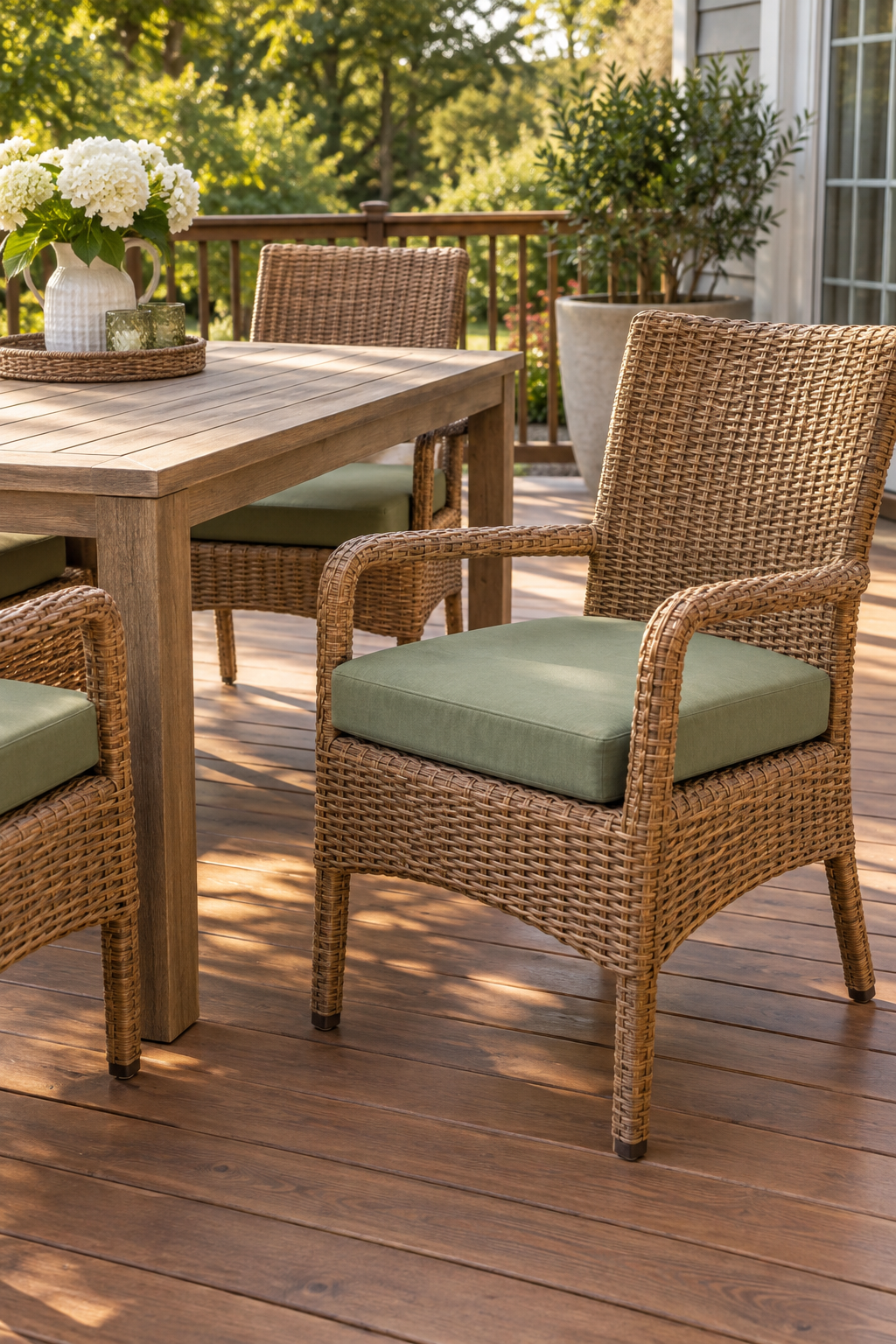
Ask someone the measurements of their patio cushions and you will get width and depth without hesitation. Ask the third number — thickness — and the answer is almost always a shrug: “whatever it was.” Thickness is the forgotten dimension, the one nobody chose and everybody inherits. Yet of the three numbers on a Chasewood order, thickness is the one that decides whether sitting down feels like arriving or like descending, whether knees clear the table edge, and whether getting up at the end of the evening is a non-event or a production.
Thickness is three decisions wearing one number
Every inch of cushion height does three unrelated jobs at once, which is why it rewards a little thought:
The sitting-height decision. Add an inch of foam and the seat sits an inch higher — full stop. That inch changes where thighs rest relative to the table, whether feet plant flat or dangle, and how deep the hips sink at the end of a long dinner. Shorter sitters and children feel it most; a seat that was fine at four inches can become a perch at six.
The standing-up decision. Leaving a chair is a leg-press, and the starting height of that press is set by the cushion. Higher is easier — hips start closer to standing — which is why anyone in the household who mentions knees should get the taller, firmer version of the set rather than the plush one. This single interaction between thickness and density does more for comfort in daily use than any fabric choice.
The frame-fit decision. Some frames cradle their cushions with arms and rails; others are open platforms. On a walled frame, extra height raises the sitter above the armrests — sometimes pleasant, sometimes like riding in a tub. On an open frame, extra height simply travels upward with no rails to meet. Which frame you have decides how much thickness is cosmetic and how much is structural.
The decision tree, in order
Choosing thickness well is mostly a matter of asking the questions in the right sequence:
- Who sits most, and how do they leave the seat? Knees, hips, or a household that includes anyone over seventy — go taller and firmer. Young household, deep-sink preference — the plush route stays open. This question outranks all aesthetics.
- What did the old pads do wrong? The worn set is a data point: if everyone found the old chairs hard to leave, the old thickness plus soft, tired foam was the culprit — correct both. If the old set was always slightly too tall for the table, now is the moment, since thickness is chosen fresh at order, never inherited.
- What do the frame’s walls permit? Measure armrest height above the seat deck. Cushion tops landing an inch or two below the arm stay comfortable; cushion tops at or above arm level change the chair’s whole character. This measurement is the ceiling on ambition.
- What does the table want? Chasewood dining chairs live under a table, and thigh clearance is a real constraint — seat top to table underside wants comfortable knee room. One quick measurement of the old set-up in use answers this permanently.
Only after those four questions does the word “plush” earn a vote — and by then it usually votes with the winner anyway.
Density: the other half of the height story
Thickness sets the starting height; density sets how much of it survives the first sit and the first season. Two foams of identical thickness behave completely differently: a soft fill compresses to a fraction of its height under load, delivering a sit far lower than the tape suggested, while a firmer fill holds its figure. For seats carrying daily use, the working guidance is the 55D to 60D neighborhood from the 35D to 65D menu, with back-rests near 50D; thinner pads especially want the firmer end, because a slim, soft cushion is the one geometry that both sits low and bottoms out. One elegant compensation lives inside the same rule: a slightly thinner cushion at higher density often out-performs a plump one at low density — same effective seat height, better support, longer life.
The rebuild is also the natural moment to fix a set whose chairs have drifted apart. Foam wears unevenly — the favorite chair sinks first — and a decade of that leaves one seat two inches below its neighbors. Ordering every cushion to the same three figures resets the set to a single height, which is quietly one of the most satisfying differences a rebuild makes: the patio sits level again.
Naming the frames under the decision
Chasewood belongs to the uncharted roster of Hampton Bay lines — identified via retail listings and owner reports, with no official cushion chart ever published. The naming drill is quick: the white tag under a seat frame carries the model number beside its GLD or THD supplier prefix; Home Depot order history or the assembly leaflet from the original box answers about as fast; and if both have disappeared into previous moves, photos of the frames sent to the bench narrow the construction era. However the name settles, the specification that matters is the three figures per cushion — width, depth, and the now-deliberate thickness at the seam, per the measuring guides — because same-name sets across model years shipped with different lofts, and loft is precisely the dimension you are re-deciding.
Height, cost, and cloth
The third dimension prices like the first two: every cushion opens at a $45 make-base and moves only with finished size — thickness included — and the density selected across 35D to 65D. All 119 fabrics price flat at a given size, so a deliberate height strategy never argues with the wardrobe: the taller firm seats for the daily chairs, the plush deep version on the reading bench by the door, patterned cloth wherever the sun lands hardest. Every cover unzips fully from the foam for machine washing, which keeps a deliberately-chosen height looking deliberate — covers stay crisp, foam keeps its figure, and the sitting height you calculated on day one is still the one arriving at year three.

Adjacent uncharted series: Amelia Springs and Charleston. For an officially charted comparison, the Melbourne page holds one, and the Hampton Bay hub indexes every line the bench follows.
Frequently asked questions
Should new cushions match the thickness of the old ones?
Only if the old ones were right. Thickness is the one dimension worth re-deciding at rebuild time: taller eases standing and suits knee-conscious households, slimmer lowers the seat under low tables. Measure the old pads as a reference point, then choose the height the sitters actually need.
How does thickness change how a chair feels to leave?
Directly — seat height is where a stand starts, and every added inch of cushion raises the launch point. Pair extra height with firmer foam (seats near 55D to 60D from the 35D to 65D menu) and the cushion holds that height under weight instead of collapsing back to the old low start.
Do taller cushions interfere with armrests?
They can — measure armrest height above the seat deck before committing. Tops sitting a bit below the arms stay comfortable; tops level with or above the arms turn the chair into a tub. Open frames without rails have no such ceiling, which is why the same thickness can suit one frame and overwhelm its neighbor.
Can a thin cushion be as comfortable as a thick one?
Often, if the density is right. A slim cushion at the firmer end of the menu can out-perform a plump, soft one — the same effective sitting height, better support, and a geometry that resists bottoming out. Plushness is a weave-and-density effect at least as much as an inches effect.
What does choosing thickness do to the price?
Exactly what any dimension does: cushions start at $45 and scale with finished size, so a taller pad costs a little more than a slim one and cloth never adds a cent — all 119 fabrics price identically at a given size. Deliberate geometry is cheap; inherited geometry is what costs comfort.
How long until height-calculated cushions arrive?
Standard sewing occupies 4 to 7 business days, the rush lane 3 to 5, and freight spans 3 to 6 weeks to most US addresses. A spring decision on sitting height lands comfortably before the season that will test it.
What ordering from this bench gets you
- One workshop for the full build — cutting, filling, sewing under one roof for over a decade, with the same hands quoting and making.
- Every figure set — including the thickness you finally chose on purpose — verified against your piece count before cloth is cut; oddities raise a question, never a guess.
- No minimum order and no stock cycle — one re-heighted chair or the whole leveled set, any of 119 flat-priced cloths.
- Remake terms kept plain: any cut beyond ±½″ (±¾″ past 36″), or the wrong fabric or build, remade free of charge.
Chasewood replacement cushions with the forgotten dimension finally decided — height chosen for the knees that use it, density chosen to keep it.
Between two thicknesses and want a sanity check against your frames? Send armrest and table measurements and the desk will run the arithmetic. Different series under the decision? Any frame, cut to your figures — or start from the Hampton Bay index.