
Amelia Springs (Hampton Bay)
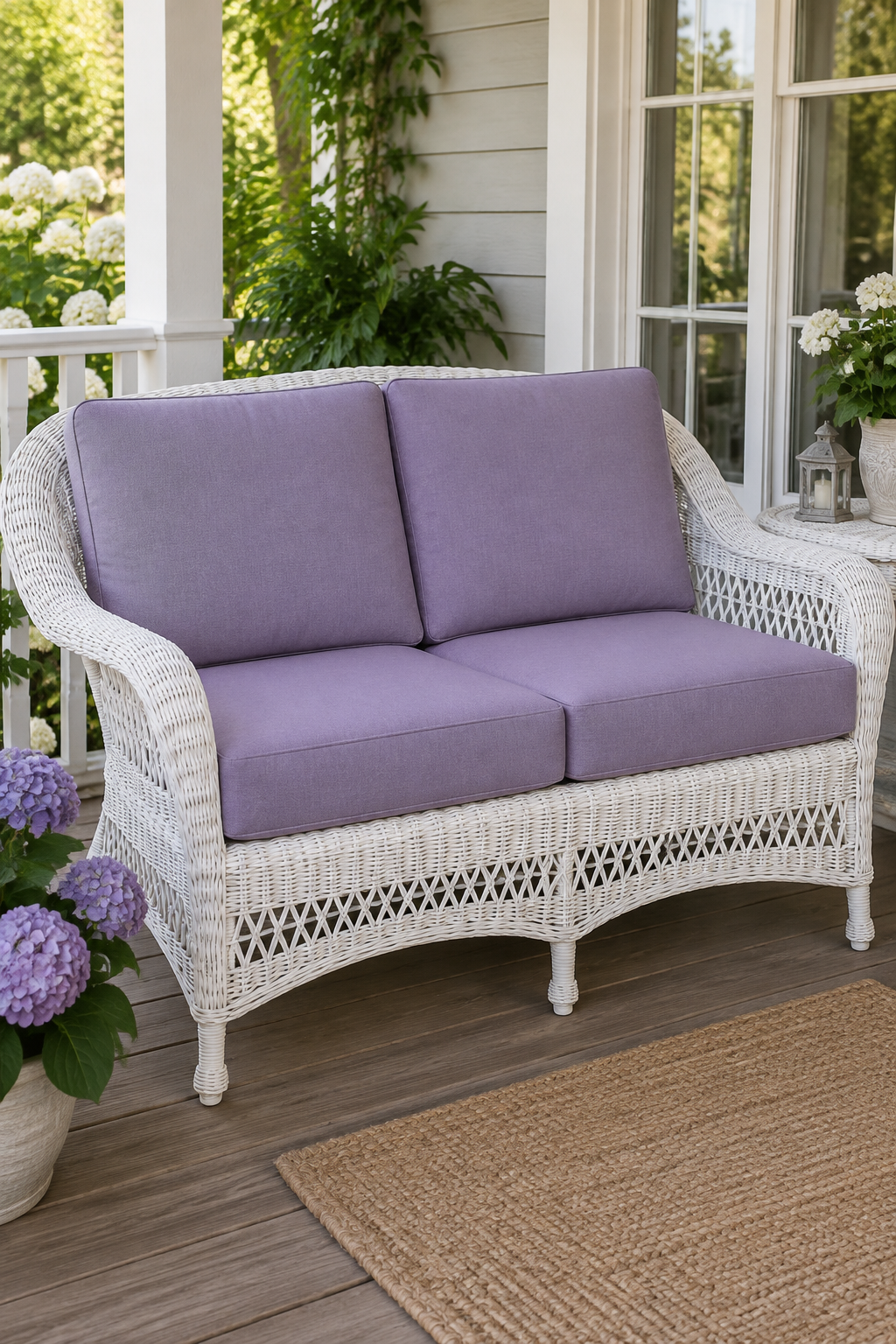
The Amelia Springs set was bought for the family, and the family includes a seventy-pound shepherd who has claimed the corner chair as sovereign territory. Everyone adores him. One member of the household, though, spends August indoors with itchy eyes whenever patio season peaks — and the problem was never the dog himself. It was what the dog leaves behind in the cushions.
Pet allergy is a fabric-management problem before it is a pet problem. Dander is small, sticky, and patient; the right cloth and the right rinse routine keep a yard usable for the allergic half of the family without banishing the four-legged half.
The allergen is not the dog
What triggers a pet allergy is a protein found in skin flakes, saliva, and dander — particles fine enough to become airborne and tenacious enough to bind to textile fibers on contact. A dog that sleeps on a cushion load for a season is not just leaving hair you can vacuum off. The allergen works into the weave the way pollen does, holding on through light brushing and surviving dry conditions for months. This is why a patio can bother an allergic guest even on a day the dog has been nowhere near it: the seats themselves have become a reservoir.
Which is genuinely good news, in a backwards way. You cannot re-engineer the dog. You absolutely can re-engineer the reservoir.
Where dander actually lives in a cushion
Cloth is not equal before allergens, and the differences are physical. Deep-pile, plush, and heavily textured weaves present a forest of fibers that trap fine particles and hold them through casual cleaning; a tight, smooth, close-woven surface gives dander almost nothing to grip, and what lands on it sits near enough to the surface that rinsing carries it away. The seams deserve their own mention: every seam is a small canyon where hair and flakes collect, so simpler panel geometry means fewer harbors. And beneath the cloth, the foam itself never touches the dog directly — the cover is the whole battlefield, which is what makes a washable cover the cornerstone rather than a convenience.
Choosing a weave that lets go
Run a hand across a candidate fabric and ask one question: does this feel like it would release debris under a hose, or shelter it? The allergy-friendly answer is the flat, dense, smooth-faced family — canvas-grade plain weaves and tight sisal-look cloths from the 119-option swatch menu. Deep boucle, shag-like textures, and lofty napped surfaces are the ones to walk past for this rebuild, gorgeous as they are. Color does a quiet bit of work too: mid-tone patterns hide the visible hair between washes, which matters psychologically as much as practically — nobody deep-cleans a seat that looks clean.
None of these choices move the price. Every cushion starts from a $45 make-base and scales only with finished size and the density picked between 35D and 65D; all 119 fabrics price flat at a given size, so the low-allergen discipline is free. Density still follows the body’s needs, not the allergy’s — roughly 60D for daily seats and about 50D for back-rests keeps the shepherd’s favorite corner chair comfortable for humans at the same time.

The rinse cycle that actually matters
An allergen-control wash is a bit more than a freshness wash, and the difference is mechanical. Wash warm rather than hot-extreme, use plain detergent, and let the machine run an extra rinse — the second rinse is the one that carries loosened protein out of the weave instead of redepositing it. Line-dry fully before the covers go back on. Every cover on an Amelia Springs rebuild from this bench unzips completely for exactly this routine; a cover you cannot remove is a cover you are living downstream of. A workable cadence for a dog-heavy yard: a full launder monthly in shed season, spot-rinse the dog’s favorite seat weekly, and a wipe-down of the frames’ arm rails where paws land.
The dog’s own contribution helps more than any product: paw and coat rinsed after park days puts measurably less allergen on the furniture to begin with.
Living with both — territory that respects lungs
Total exclusion wars between dog and allergic family member rarely hold. Territory works better. One chair stays his — ideally the one with the smoothest cloth and a wash cadence of its own — and the dining seats stay dog-free by habit and by gentle persistence. The buffer habit that earns its keep: a throw blanket on his chair that goes in the wash weekly, catching most of the load before the cushion cover does. None of this requires harshness; it requires the allergic member knowing which seats are theirs to relax in, and those seats being the easiest in the yard to keep clean.
Frequently asked questions
Can an allergic person and an outdoor dog genuinely share a patio?
Usually, yes — outdoors gives you dilution that indoor rooms can only envy. Airflow carries airborne allergen away constantly, so the remaining exposure is mostly contact-driven: sitting where dander has accumulated. Smooth washable covers plus a monthly launder shrink that reservoir hard, and designating dog-free seats covers the rest.
A closing word on expectations, because allergy households deserve honesty: no fabric is allergen-proof, and any seller promising otherwise is selling certainty that does not exist. What a considered rebuild delivers is a large, compounding reduction — smoother cloth holding a fraction of the load, seams that release it in a rinse cycle instead of banking it, and a wash routine measured in minutes a month. Families who rebuild this way mostly report the same quiet outcome: the patio stops being the room the allergic member visits briefly and returns to being the room where the whole household, dog included, spends the afternoon.
Which fabric in the menu is the worst choice for allergies?
Anything deep-pile or heavily napped — plush, shag-adjacent, deep boucle. Their fiber forests trap dander below the reach of a rinse and hold it for months. The best choices sit at the other end: flat, tight, smooth-faced weaves that release particles under water. All 119 options price the same at a given size, so switching families costs nothing.
How often do the covers really need washing?
Monthly through shed season is the practical cadence, weekly for the one chair the dog has claimed. Between launderings, a hose rinse of the favorite seat does most of the work. The routine only functions because every cover unzips fully for machine washing — no panel on this bench’s builds is sewn shut.
Does a higher foam density help with allergies?
Not directly — allergen lives on the fabric surface, and the foam never contacts the dog. Density is about the humans: around 60D for seats in daily service, near 50D for backs, anywhere in the 35D to 65D range the menu offers. Spend your allergy attention on cloth choice and rinse discipline instead.
Will leather-look or wipes-clean vinyl be better?
Wipe-clean surfaces are genuinely low-allergen, and several smooth-faced options in the swatch menu read that way while remaining textile. The trade is comfort in heat — non-breathing faces get clammy in sun. Many dog households run the compromise: wipe-clean feel on his chair, breathable weave on the human seats.
How fast can a full low-allergen set arrive?
Sewing takes 4 to 7 business days standard, 3 to 5 on a rush, and freight adds 3 to 6 weeks to most addresses — so a spring rebuild wants the order placed while the yard is still brown. Every piece lands within ±½″ of your figures, ±¾″ past 36″, remade free if not.
What ordering from this bench gets you
One workshop, in-house start to finish — the same hands cut, fill, and sew every piece, and have for over ten years. Figures re-checked against piece count before any cloth is cut — a suspicious measurement triggers a question, not a guess. No minimum order and no stock cycle — one dog-chair rebuild or the whole Amelia Springs set, in any of 119 fabrics. Fair-build guarantee: anything outside the ±½″ tolerance (±¾″ past 36″), built to the wrong cloth or the wrong spec, gets remade at no charge.
Amelia Springs replacement cushions built for a family that includes fur — smooth-faced, fully washable, allergen-shrinking by design.
Start the dog-friendly rebuild →
Torn between two weaves for a dog household? Ask the bench directly — describe the coat and the wash routine, and we will point at cloths. For the fabric-first view of pet-proofing, the claw-resistance page walks the same territory — and when you are ready, the customizer cuts to your measurements, with the full Hampton Bay catalog for your other frames.