
Search “RV dinette cushion covers” and the first two screens are stretch slipcovers — printed polyester spandex tubes with elastic hems, sized “universal,” photographed on booth cushions that happen to fit. They solve a real problem, just not necessarily yours: a stretch cover changes what your dinette looks like, while what most dinettes need is for the covers to fit the geometry they actually have — the storage-lid hinges, the backrests that flip forward into a bed, the U-shaped run around the table base. This page separates the two jobs: what stretch covers legitimately do, where dinette geometry defeats them, and how custom-fit covers get specified, measured and ordered. The full booth-dinette replacement picture — foam, sizing, complete sets — is its own guide at RV dinette cushions; this page is about the cover layer only.
What Stretch Covers Actually Do — and Where They Stop
Credit first: a stretch slipcover is the fastest, cheapest way to make a tired dinette presentable. It goes on in minutes, survives a season or two, and earns its keep as a transition — refreshing a camper for resale, covering a rental unit between guests, buying time while the real order is decided. For those jobs, nothing else competes on speed or price.
The stopping points are structural, not quality-of-brand:
- Fit is borrowed, not made. “Universal” covers average across hundreds of booth builds; a hem sized for a 4-inch core slips and bags on a 6-inch core, and an elastic edge under a heavy foam seat works loose with every slide-in.
- The fabric is thin by design. Stretch covers run light so they can stretch — which means seams print through, the cover abrades at every corner the cushion rides on, and a season of slide-ins and slide-outs does the rest.
- Prints sit on the surface. Patterns on stretch covers are typically printed rather than dyed into the fiber, so the window-side seat fades first and the set stops matching itself within a couple of seasons of sun.
- They add a moving layer. A loose cover over a cushion is a second thing that can travel; the sliding mechanics are the same gap problem explained in why custom cushions slide less.
None of this makes stretch covers a bad purchase for the transition job. It makes them the wrong purchase for the keeping job — a dinette you intend to live with for years wants covers cut to its own numbers.
Why Dinette Geometry Defies One-Size Covers
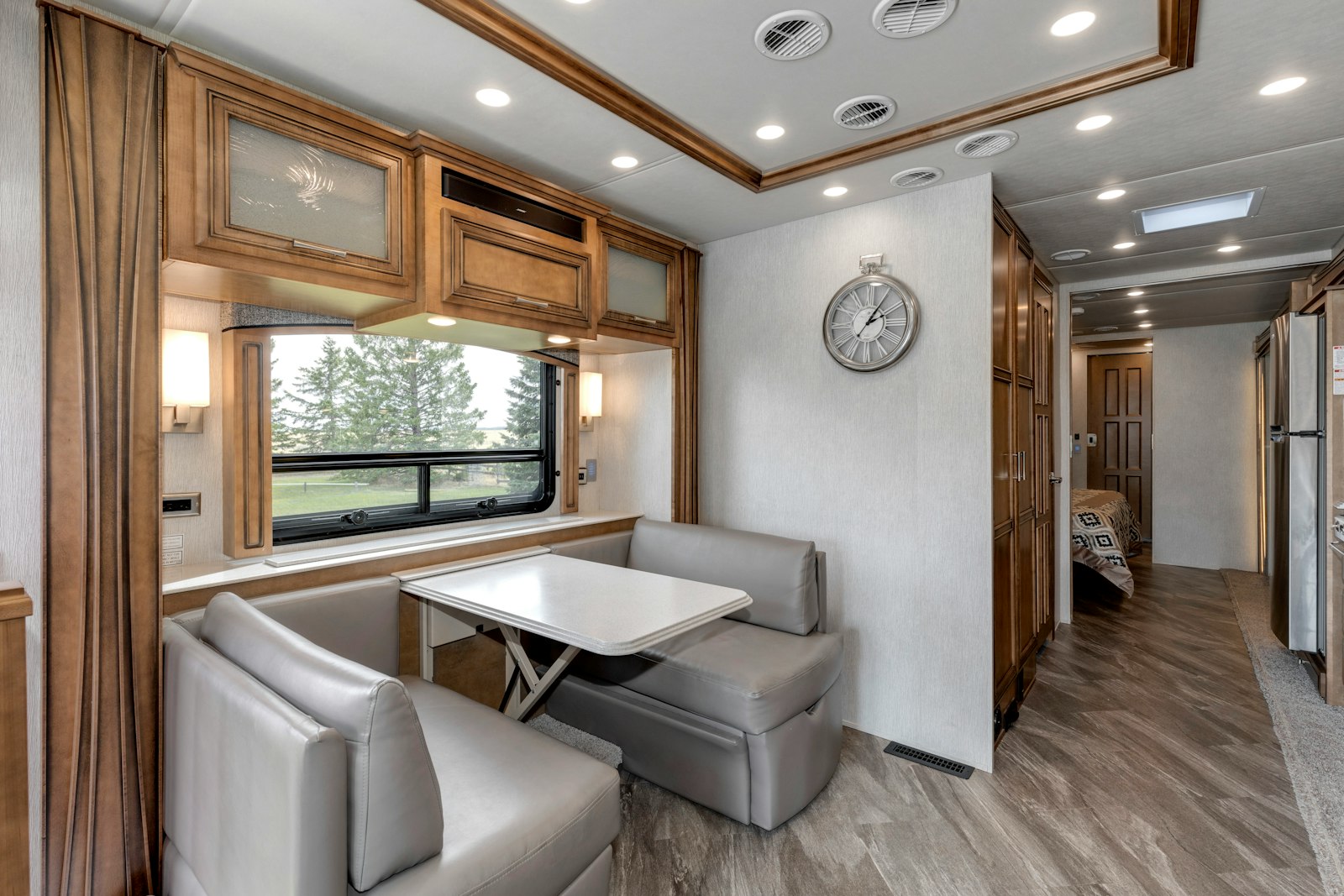
A booth dinette is not a bench with a table beside it. Four features of the typical layout break universal covers on their own, and most dinettes have two or three of them at once:
- The U- or L-shaped run. The seating wraps the table base in one continuous deck, so “one cover per cushion” is already wrong — the corner pieces are shaped, and the run’s total length belongs to no stock dimension.
- Hinged storage lids. Most dinette seats are storage boxes: the seat cushion sits on a lid that must still open. A stretch tube that grabs the whole box fights the hinge or blocks it; covers built for a dinette are cut per piece so the lid, not the cover, decides what moves.
- Backrests that make the bed. In the standard layout, backrests flip forward onto the seats to create the sleeping surface. Covers specified for dinette duty account for that flip in their depth and seam placement; a slipcover pooled at the fold is what turns a five-minute bed conversion into a wrestling session.
- The window and table envelope. Backrest height is capped by the window above and clipped by the table edge in front — measurements a “high back” or “low back” stock size will average right past.
The measuring routines for all of it — around the pedestal, under the windows, across the lid — are laid out in the dinette measuring guide, and the same geometry from the replacement side is in the RV cushion replacement guide.
The Zipper and the Flat Panel
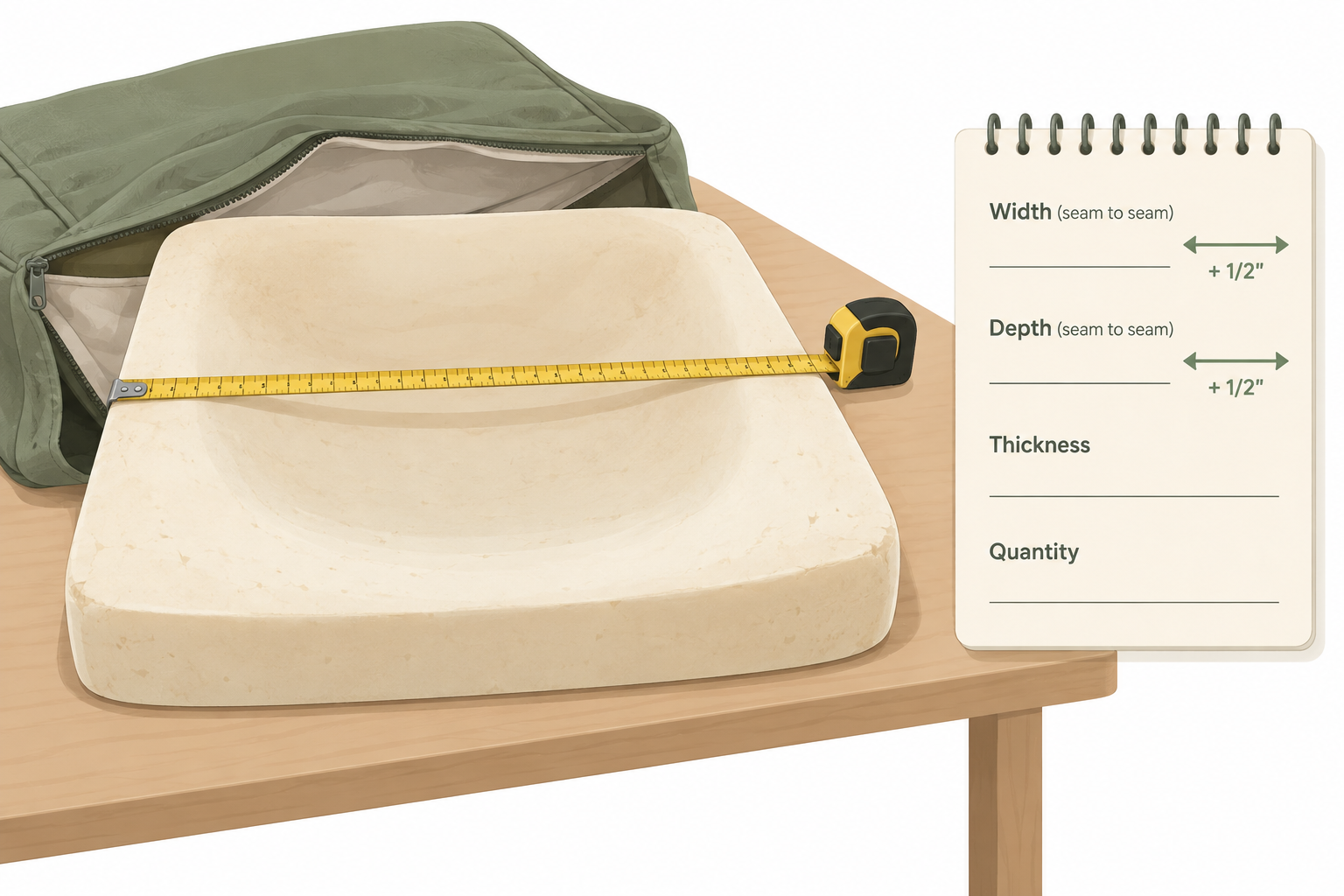
A custom dinette cover is built the way the cushion under it is built: each face is a single flat fabric panel, cut to the measured dimensions, joined at square corners with knife-edge seams stitched flush, and closed along one edge with a concealed zipper. That construction is what separates a fitted cover from a slipped one:
The zipper is the maintenance plan. Life on the road is spills, road dust and the occasional window left open — a zip-off cover launders in a hotel sink and dries overnight, where a sewn-shut cover means spot-cleaning the cushion in place for the life of the set. Every cover we build zips, front to back, as standard.
Flat panels hold their shape. A panel cut to the core’s real dimensions has nothing to stretch, bag or pool; the corners stay square after a season of slide-ins because square is how they were cut, not how elastic holds them.
Measuring for Covers: The Core, Not the Old Cover
The rule that ruins most cover orders: measure the foam core, never the old cover. Covers relax, shrink and bias with washing — a cover measured after three seasons of laundering will specify a sleeve one or two sizes off the core it needs to fit. Take the old covers off, and measure the bare cores: length, width and thickness for every piece, to the nearest quarter inch, plus a note on which pieces have hinges under them and which backs flip. For shaped pieces — the corner wedges, the pedestal cut-outs — a paper template traced on the deck is the reliable spec; the method is written up in the replacement guide’s paper template section. The general cover-ordering principles, including the fabric-lot rule, are in the replacement cushion covers guide.
Fabric Behind Big Glass
An RV window is a magnifier: dinette fabric sees more concentrated sun than the same fabric on an open patio, because the glass traps heat against it while the UV pours through. Spec accordingly — solution-dyed acrylic and olefin, which carry color in the fiber, hold their color where printed covers lose it, and both shrug off the spills that define dinette life. The second spec consideration is vibration: miles of road work seams and edges in a way a stationary bench never sees, which argues for the flat-panel construction above and for face fabrics with real weight. Van-life foam and fabric spec, from the bed side of the same question, is covered in foam for van life.
Cover Only, or Replace the Whole Cushion?
Covers are the right order when the cores are right. Test them before deciding: press a hand hard into each seat core — foam that rebounds immediately and still measures its original thickness is a core worth covering; foam that holds the dent, feels granular when squeezed, or has collapsed at the hinge line is done, and a new cover over it is money on dead foam. The decision test in full — the five-minute cover-or-core check — is in the cushion covers guide. Where cores are done, the full replacement path, from foam density for bed duty to ordering a matched set, is the dinette replacement guide.
One ordering note specific to us: cover-only orders are quoted per set rather than priced from a chart, because cover work depends entirely on your piece count, shapes and fabric. The path is to send the core measurements and the piece list — photos of the current layout help — and the quote comes back before anything is cut.
FAQs
Will universal stretch RV dinette covers fit my booth?
They fit some booths well — the ones closest to the average dimensions the maker sized for. On thicker cores, hinged lids and flip-forward backrests the fit degrades fast: hems slip, fabric pools at the fold, and the cover fights the geometry every time the bed gets made.
Can I get custom dinette covers with zippers?
Yes — a concealed zipper along one edge is standard construction on every cover we build, so each piece zips off for laundering and back on in seconds. Zip-off is the maintenance plan for road life; sewn-shut covers mean spot-cleaning in place for the life of the set.
How do I measure for covers on odd-shaped dinette pieces?
Measure the bare cores in three dimensions — never the old covers, which relax and shrink with washing — and trace shaped pieces like corner wedges as paper templates on the deck. The routine, including hinge and backrest notes, is in the dinette measuring guide.
Do covers work over hinged storage seats?
Built ones do: each piece is cut to its own core so the cover moves with the cushion, and the lid opens underneath exactly as before. Stretch tubes that grab the whole box are the ones that fight or block the hinge.
How much do custom RV dinette covers cost?
Cover-only sets are quoted rather than chart-priced, because the work scales with piece count, shapes and fabric choice. Send the core measurements, the piece list and a photo of the layout, and the quote comes back before anything is cut.
Should I recover or replace my dinette cushions?
Test the cores: foam that rebounds from a hard press and holds its thickness is worth recovering; foam that keeps the dent, feels granular or has collapsed at the hinge line is done, and belongs in the replacement path instead — the five-minute test is in the covers guide.
What fabric holds up to sun through RV windows?
Solution-dyed acrylic or olefin. RV glass concentrates sun and heat on the backrest fabric, and printed covers fade there first; fibers with the color built in hold the set together visually for years.
Can the backrest covers be included with the seats?
Yes — seats, backs, and any bench or ottoman pieces in the same run can be built as one matched order, which also keeps every piece on the same fabric roll so the set matches as it ages.
Next Steps
- Run the core test on every piece — hard press, watch the rebound, note any dent that stays — to confirm covers are the right order at all; the test is in the cushion covers guide.
- Strip the old covers and measure the bare cores — length, width, thickness per piece, to the nearest quarter inch, with paper templates for shaped pieces per the dinette measuring routine.
- Send the piece list, measurements and layout photos for a cover-only quote — or, where the cores failed the test, take the same numbers to the full replacement path, with standard making running 4–7 business days (rush 3–5) and shipping in 3–6 weeks.
Outdoor Daybed Cushions: Specs for Full Exposure
Outdoor daybed cushions take rain, sun and lying duty at once. Four frame shapes, measuring pod sectors and arcs, the weather stack at mattress scale, wind and pooling.
Settee Cushion Foam: Sizing, Density and Replacement Guide
Settee cushion foam answered: two-seat measuring rules, density by how your settee lives, thickness the rails allow, and real prices for a 48 x 18 inch pair.
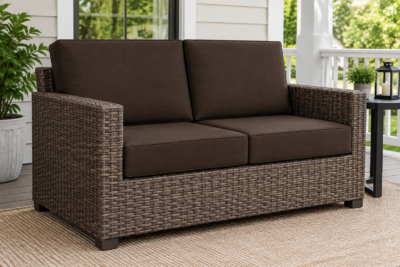
Wicker Loveseat Cushions: Curved Frames, Two-Seat Sets and Outdoor Duty
Wicker loveseat cushion guide: measuring curved and rounded frames, seat-and-back sets for two-position seating, outdoor fill and fabric for open patios, and replacing discontinued patio-set cushions.
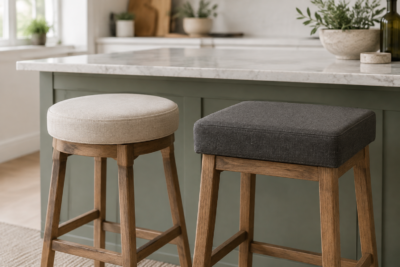
Round vs Square Bar Stool Cushions: Picking the Shape, the Backrest and the Size
Round decks take round cushions, square decks take square — the stool decides. The stock size ladder, the dog-ear corner trap and when a custom cut is the only real fix.
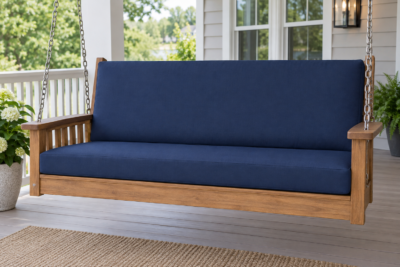
Replacement Porch Swing Cushions: Sizing a Frame You Already Own
A porch swing outlives several sets of cushions — that is the normal order of things. The hard part of
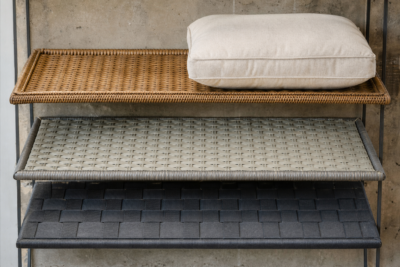
Types of Wicker Materials: Natural, Resin and HDPE Compared
Every wicker material family ranked — rattan core, paper fiber, bamboo, willow and reed on the natural side; PVC-resin and woven HDPE on the synthetic side — with outdoor ratings, lifespans and what each means for cushions.