
The Adirondack is two measuring jobs wearing one chair. The seat is the most forgiving cushion target in outdoor furniture — a flat, unobstructed deck where a close fit just works, which is why stock 20-inch squares cover so many of them. The back is the opposite: a tall, reclined fan of slats that angles away from vertical, tapers as it rises, and offers the only strap anchors through the gaps between boards. Measure the seat casually and you will be fine; measure the back casually and the cushion will not fit, will not stay, or both.
The method underneath is the standard protocol — seam to seam on the old cushion or frame-first when it is gone, foam thickness read at the seam line, every number confirmed to tolerance before cutting (±½” on custom dimensions, ±¾” over 36 inches). The complete walkthrough lives in how to measure outdoor cushions; this page is the Adirondack layer. For ordering, the custom Adirondack chair cushions page carries the seat-and-back preset with the outdoor fabric tiers this chair lives in.
Step 1: Measure the Seat Deck — Width Twice, Depth Once
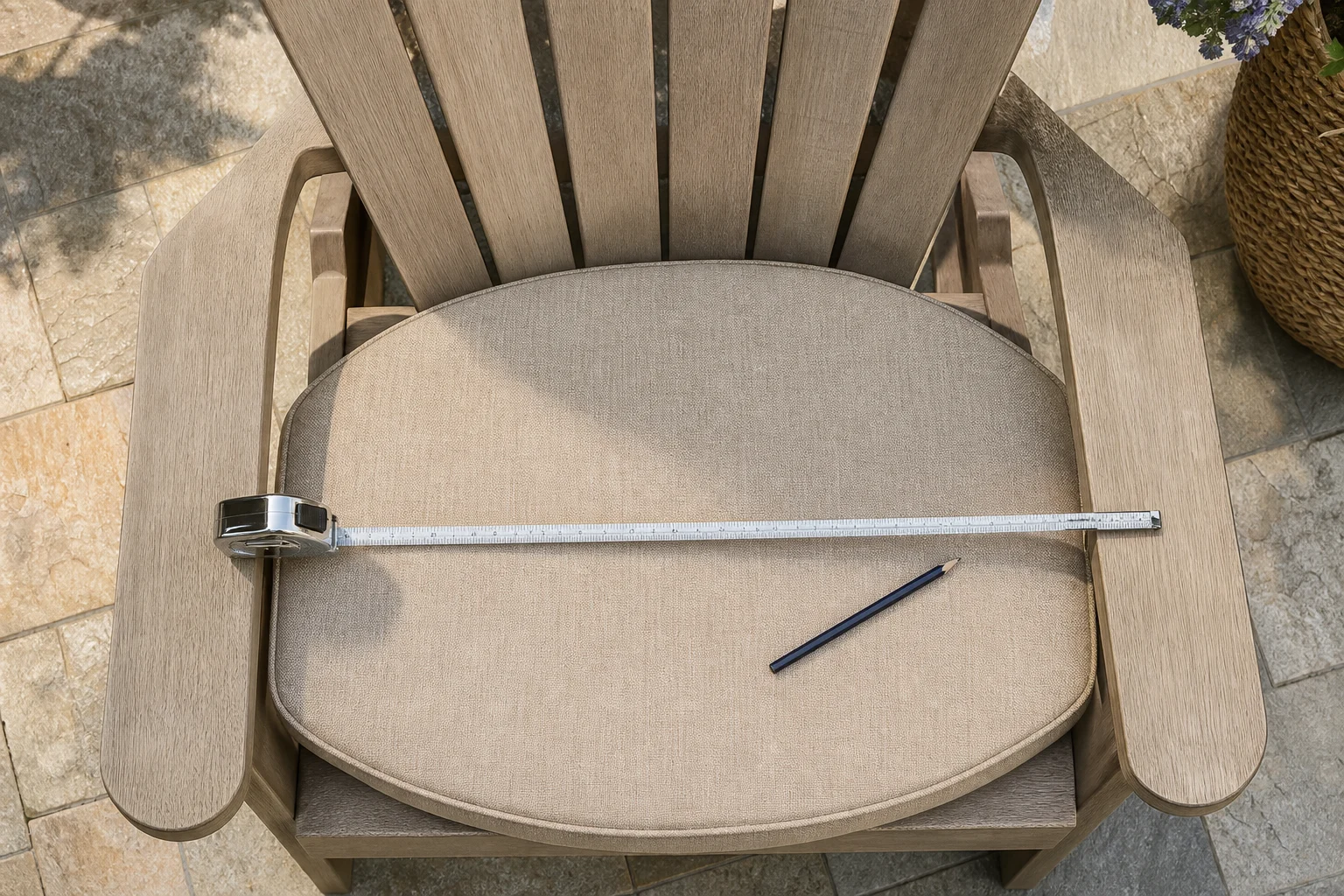
Adirondack seats taper more than most chairs because the wide-arm design narrows toward the back.
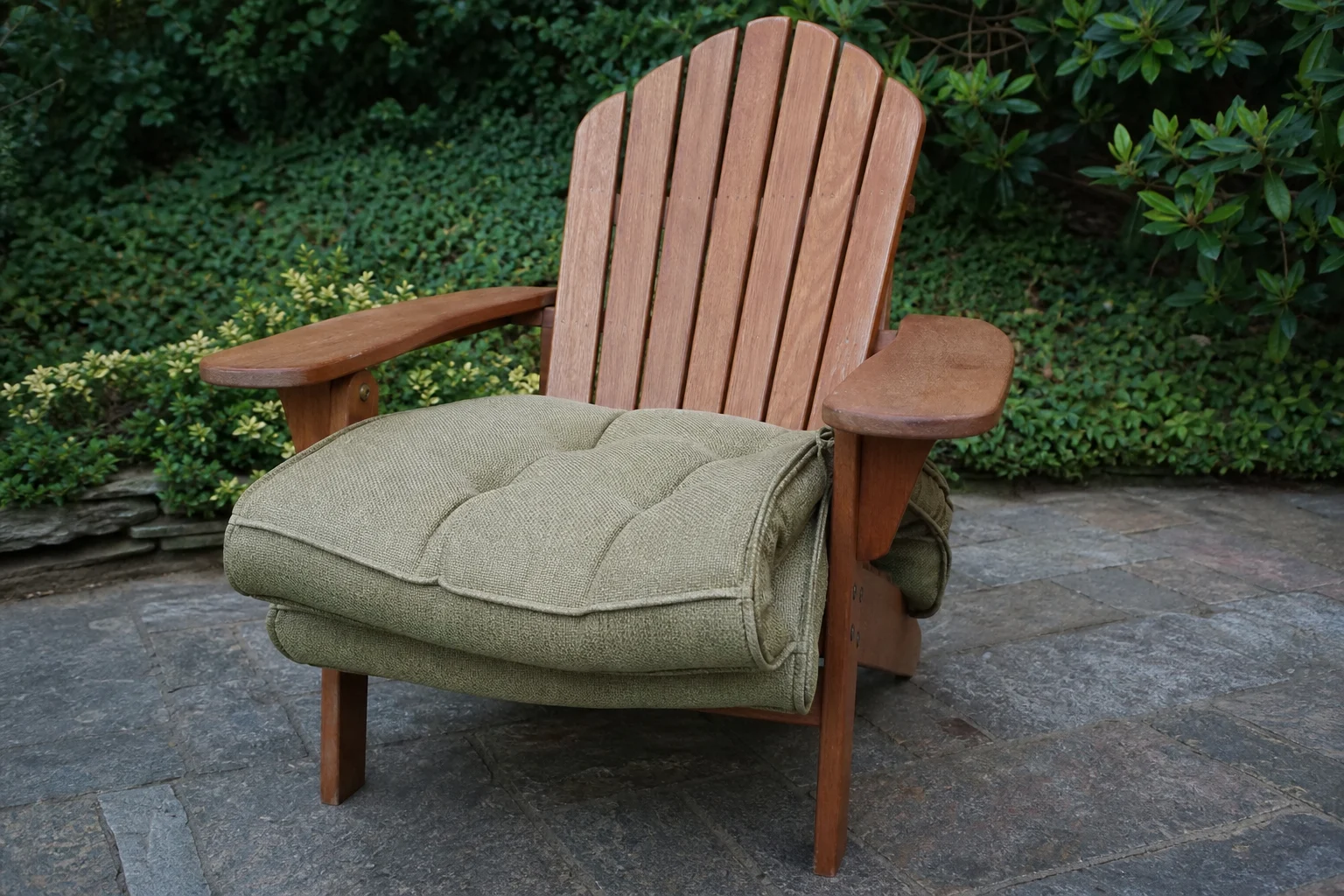
- Width at the front edge of the seat deck, between the arms.
- Width at the back, where the seat meets the back frame. If the two differ by more than half an inch, you need a trapezoid cut — record both numbers, front and back, as separate widths.
- Depth from the front edge to where the seat meets the back frame. The reclined geometry hides the junction lower than it looks; measure the flat deck only, tape level.
Most seats land in the 19–21 inch range with 20 × 20 as the de facto standard, and oversize “king” Adirondacks take 22–24 inch squares. If your deck measures within half an inch of a stock size, the standard cushion wins on price and availability; outside that band, the custom route is the one that actually fits (the full sizing context).
One Adirondack quirk to note while you are down there: the seat deck often carries a slight backward slope as part of the chair’s ergonomics. Do not correct for it in the depth — the foam spec can be tapered later (Step 3) — just note it.
Step 2: Measure the Fan Back — Height First, Then the Taper
Back cushions come in two styles, and they measure differently:
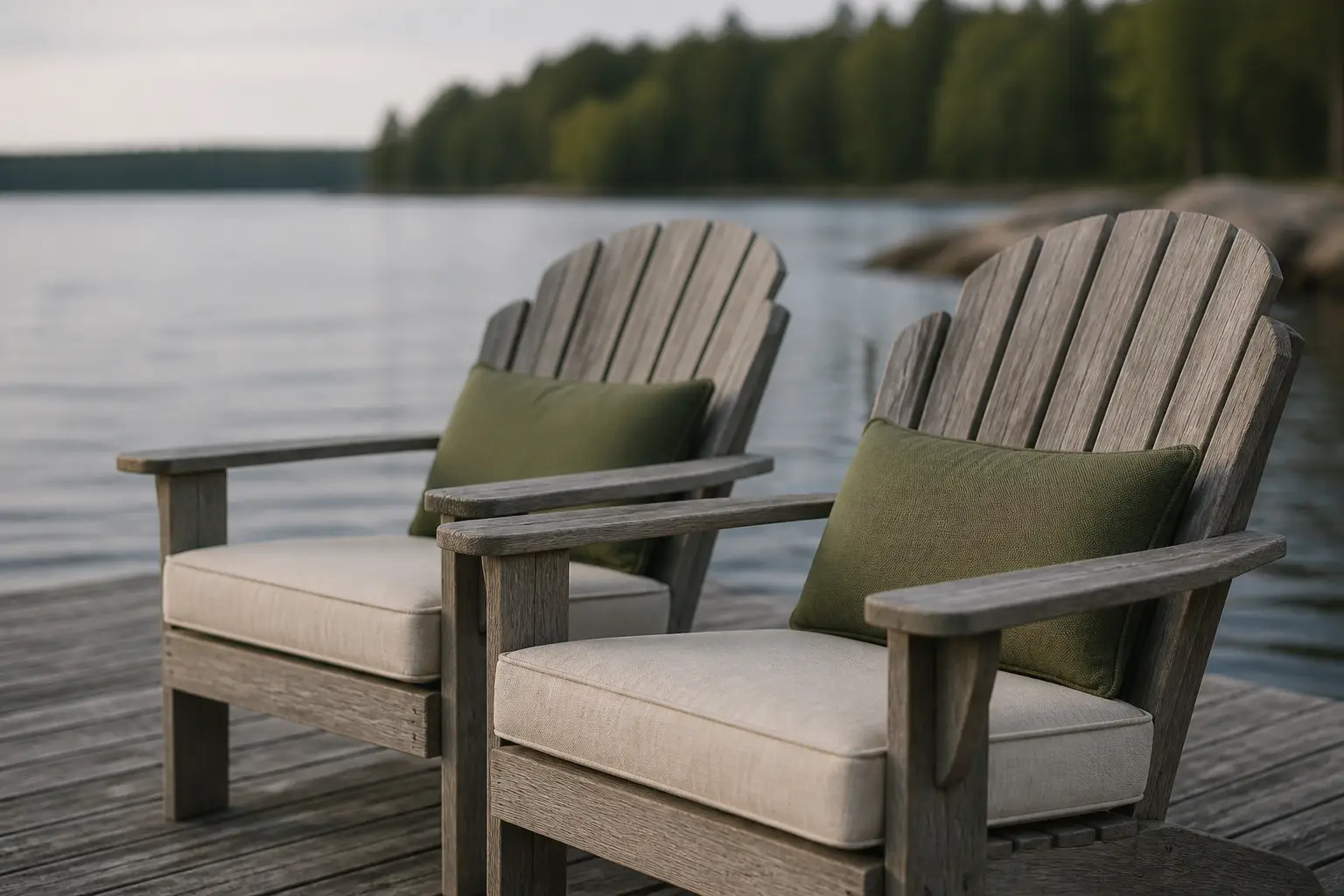
- – Short back (lumbar) pads, roughly 20 × 12 to 20 × 14: lower-back coverage that fits any back height. Measure the width where the pad will sit — usually the widest point below mid-back — and a 12–14 inch height. This is the safest upgrade when the back height is unknown or the chair is headed for gifting.
- – Full-height back cushions, 20 × 24 up to 21 × 30: total coverage up the fan. Measure height from the seat deck to the top slat, minus 2–3 inches so the cushion does not overhang the crest rail, and width at the widest point the cushion will reach — because the fan tapers, a full back cushion cut as a rectangle will overhang the slats on both sides near the top.
The tailored move on full backs is a tapered cut that follows the fan: record the width at the bottom of the cushion’s run and the width at the top, exactly like the seat trapezoid but vertical. It reads as built-in rather than strapped-on, and it is a cutting detail, not a redesign — tapered fan-back cuts are routine on our floor.
Step 3: Respect the Recline — Geometry Before Comfort
The Adirondack back leans away from vertical by design, and that angle affects three decisions:
- – Seat thickness. The chair’s recline is calibrated for a cushioned seat; 2–4 inches is the working range, with thicker pads pushing you further forward in the arc. On folding resin Adirondacks with slightly crowned seats, stay at 2–3 inches or the geometry pushes you past the recline.
- – Back cushion thickness. Every inch of back pad moves you that far forward off the designed posture. 2–3 inches is the range that adds comfort without re-engineering the chair.
- – The seat’s backward slope. Where the deck slopes, the foam can be tapered a quarter to half inch from front to back to level the sitting position — an option stock cushions never offer, and worth specifying on chairs you expect to sit in for hours.
Step 4: Draw the Slat-Gap Map
Back cushions attach through the gaps between slats, so the map of those gaps is the fit:
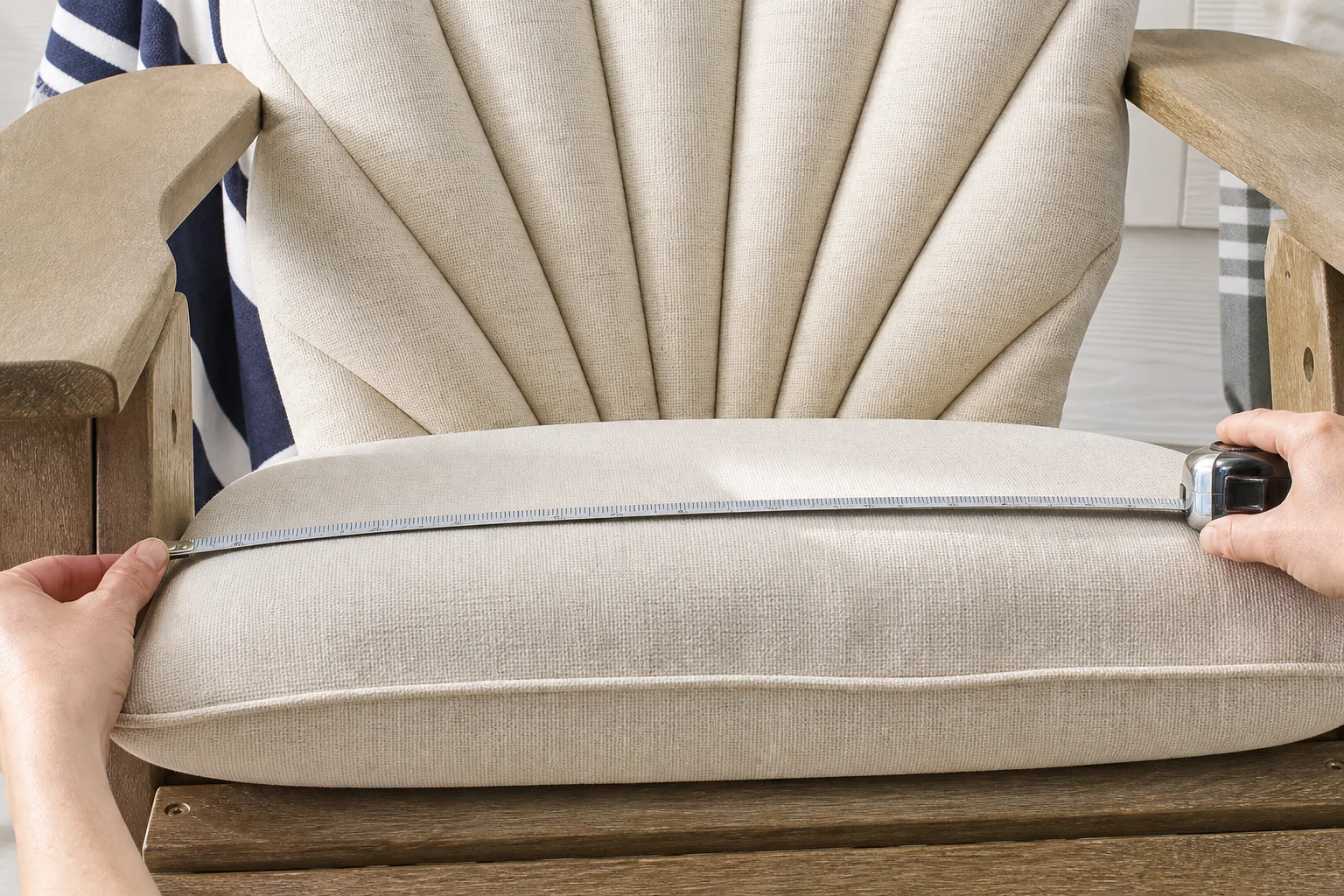
- From the seat deck upward, measure the height of each gap between slats.
- Note gap widths — poly-wood (HDPE lumber) chairs run wider gaps than wood, and straps need enough length to wrap and fasten behind.
- Decide which two gaps the straps will use, and record them by height from the deck.
Straps landing on solid wood instead of a gap is the number-one back-cushion fit failure on Adirondacks — a cushion can be dimensionally perfect and still not stay put. Five minutes with a pencil converts that risk into a spec.
Step 5: Handle the Special Cases
- – Vintage and handmade chairs: pre-standardization seats run wider, deeper, or rectangular rather than square; tall backs pass 30 inches, which no stock cushion covers. Full custom territory, measured as above.
- – King Adirondacks: measure to the bigger deck and match the nearest standard square, or go custom for a one-piece seat-and-back unit.
- – Double Adirondacks (tête-à-tête, settees): two seat cushions plus one long or two separate backs. Measure the combined seat deck — often past 48 inches — and treat the long pad as a bench piece (bench cushion measurements covers the over-48-inch tie rules).
- – Ottoman pairings: roughly 18–20 inch squares, 2–3 inches thick; order in the same fabric run so the set matches.
Common Adirondack Measuring Mistakes
| Mistake | What goes wrong | The fix |
| One seat width recorded | Trapezoid deck cut as rectangle; gaps at the arms | Width at front and back; both recorded |
| Depth measured down the slope | Cushion overhangs the front edge | Flat-deck footprint, tape level |
| Back height measured to the crest rail | Cushion overhangs the top on every recline | Height minus 2–3 inches |
| Back cut as a rectangle | Overhangs the tapering fan near the top | Bottom and top widths; tapered cut |
| Straps ordered without the map | Roots land on solid wood; cushion slides | Slat-gap heights from the deck up |
| Thickness by comfort alone | Recline pushes you forward out of the design | 2–3 inches back, 2–4 seat; taper for slope |
Adirondack Cushion Cheat Sheet
| Measurement | What to record | Typical range |
| Seat width (front / back) | Both; trapezoid if >½” apart | 19″–21″ (20 × 20 standard) |
| Seat depth | Flat deck, front to junction | 18″–21″ |
| Seat thickness | Seam to seam | 2″–4″ |
| Back style | Short lumbar or full height | — |
| Back height | Deck to top slat, minus 2–3″ | 24″–30 full; 12–14 short |
| Back width (bottom / top) | Both for a tapered fan cut | 20″–21″ |
| Slat-gap map | Height of each gap from the deck | 3–5 gaps typical |
| Strap points | Two gaps, by height | — |
FAQs
What size cushion fits a standard Adirondack chair?
A 20 × 20 seat cushion fits the majority; 19 × 19 and 21 × 21 cover most of the rest, and oversize kings take 22–24 inch squares. Backs split into short lumbar pads (about 20 × 12) and full-height cushions measured against your back.
How do I measure an Adirondack back cushion?
Height from the seat deck to the top slat minus 2–3 inches, width at the widest point the cushion will reach — top and bottom widths if you want a tapered cut that follows the fan — plus the slat-gap positions the straps will thread through.
Why does my Adirondack cushion keep sliding?
Almost always tie or strap mismatch: anchors landing on solid wood instead of a gap, or seat ties fastened where the frame offers nothing to loop. Draw the slat-gap map and mark strap points by height.
How thick should Adirondack cushions be?
2–4 inches on the seat and 2–3 on the back. The recline is designed around a cushioned seat, and every extra inch of back pad moves you forward off the intended posture.
Can I get a one-piece seat-and-back cushion?
Yes — custom one-piece units are cut for chairs where the seat-to-back junction is continuous, common on king and double Adirondacks. Measure both pieces as described, plus the junction, in one sketch.
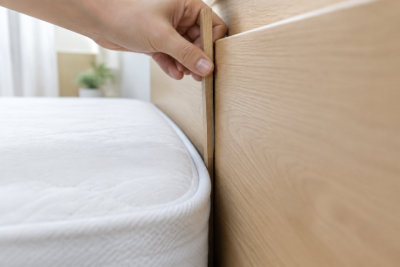
What Size Bed Gap Filler Do I Need? Thickness, Length and Density
Size a bed gap filler from three measurements, not the bed’s name: thickness equals gap width plus half an inch to one, length runs the full seam, height runs platform to mattress top. Density starts at 50D.
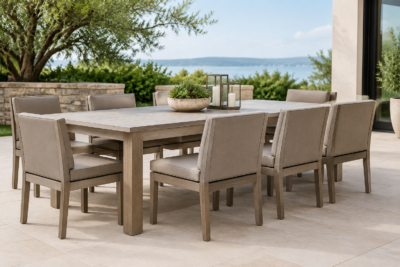
Cushion Thickness & Seat Height: Match the Pad to the Table
Cushion specs usually answer comfort questions. Thickness answers a geometry question: how high off the floor you end up sitting,

Church Pew Cushion Sizes: Standard Dimensions and How to Measure
Standard pew seats run 19-21 inches deep; cushions are cut 2-3 inches thick to measured runs at plus-or-minus half inch tolerance. Dimensions table, taper rules, and the pew-by-pew measuring method.
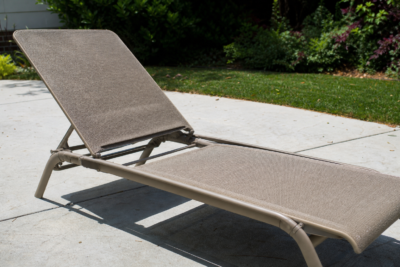
Chaise Lounge Cushion Measurements: A Complete Guide to Getting the Fit Right
How to measure a chaise lounge cushion correctly — seat depth, back height, thickness, hinge points and one-piece vs two-piece styles — with real Hampton Bay chaise dimensions.
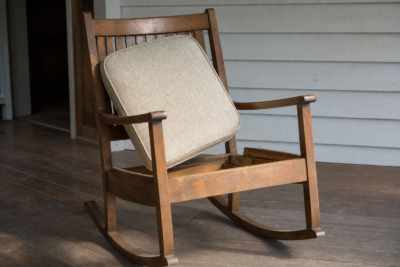
How to Measure Rocking Chair Cushions: Seats, Backs and Tie Positions
How to measure rocking chair cushions — tapered seats, curved backs, slat-gap tie maps and rock clearance — with the three-number protocol for both pieces of a rocker set.
Window Seat Cushion Measurement: How to Get a Perfect Fit
Measure a window seat cushion correctly — width across alcoves, depth front to back, thickness vs sill height, radius corners and bay window angles — with tips from the cutting floor.