
Cushion shopping meets sustainability marketing at every price point — “eco-friendly,” “green,” “natural,” “recycled,” “conscious.” Most of it points at something real, and some of it points at nothing. This guide separates the two: what genuinely reduces a cushion’s environmental footprint (spoiler: it’s materials and lifespan), what the certifications mean, and how to buy cushions that earn the label.
For the general material landscape this builds on, see cushion filling types and the best outdoor cushion fabrics. Here we’re evaluating the same materials on a different axis.
The Honest Framing: What Makes a Cushion Sustainable
A cushion’s footprint has three phases, and they’re not equally weighted:
- Materials. What the foam and fabric are made from, and how they were produced. This is the phase marketing emphasizes — because it’s the easiest to message.
- Lifespan. How many years the cushion lasts before landfill. A cushion that lives 10 years has half the annual footprint of one that lives 5, no matter what either is made of. This is the phase that matters most, and marketing never mentions it.
- End of life. Whether components can separate — cover washed and reused, foam replaced, fabric eventually recycled or composted. Cushions designed as systems (replaceable cores, recoverable covers) outperform cushions designed as objects.
That framing explains the otherwise-counterintuitive core claim of this guide: the most sustainable cushion most people can buy is a durable one with replaceable parts — even in conventional materials — before it is a fragile one in virtuous materials. A natural-fiber cushion that flattens in three seasons and can’t be refilled is not greener than a high-density foam cushion that lasts a decade and can be re-covered twice. Longevity is the environmental feature; everything else negotiates around it.
Sustainable Fills: What’s Real
Recycled polyester fill (rPET). Plastic bottles processed into fiberfill or, less commonly, into foam-grade material. This is the most common “eco” fill claim, and it’s legitimate with caveats: it diverts waste stream plastic, but it’s still polyester at end of life (not recyclable again in most municipal systems). Best application: outdoor cushions where the alternative fill is virgin polyester — same performance, lower production footprint.
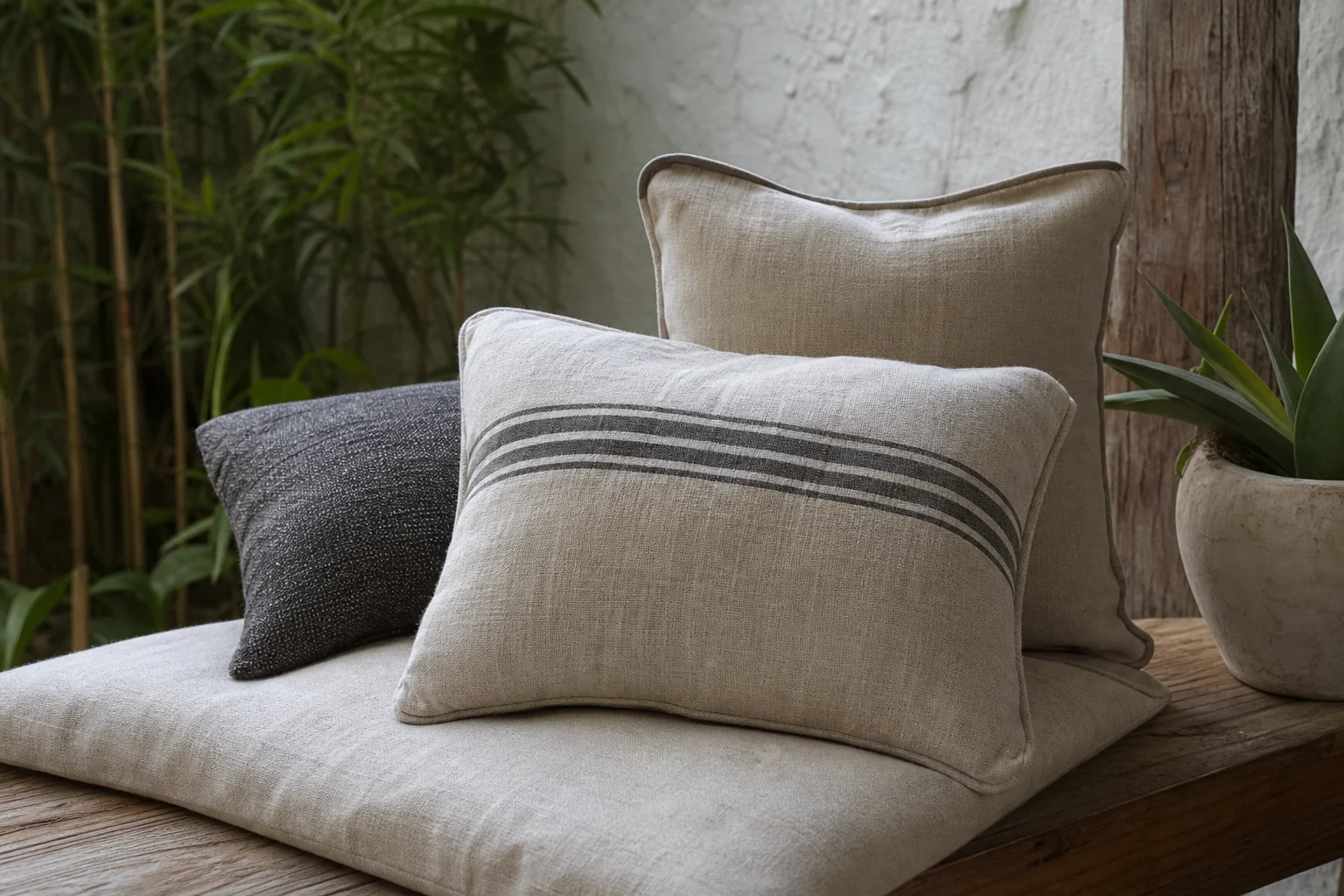
Plant-based foams. A growing slice of the foam market substitutes soy, castor, or other plant oils for a percentage of the petroleum in polyurethane. Typical substitution rates are modest (single-digit to ~20% polyol replacement), so “plant-based foam” means somewhat less petroleum, not a natural material. It performs like conventional foam of its density — judge it by the density grade exactly as the foam density guide teaches, because that’s still what determines lifespan.
Natural latex. The genuine article in sustainable foam: tapped from rubber trees, biodegradable at end of life, extremely durable (often outlasting synthetic foams of equivalent density), and naturally resistant to mold, mildew and dust mites. The trade-offs are real: cost sits well above polyurethane, it’s heavy, and it’s firm by nature — and its firm-by-nature character makes it best suited to layered builds — the comfort-layer logic in memory foam topped cushions applies by analogy. If a fully renewable foam matters to you, latex is the one that isn’t a compromise on its own terms.
Natural fiber fills (cotton, wool, kapok, buckwheat). Renewable and biodegradable, and each has honest seating applications — wool resists mildew and flame; cotton batting softens seat tops. But as primary seat fills they compact quickly under body load and can’t match foam’s support-per-inch. They shine in back cushions and accent pieces; in seat cores they trade longevity (the biggest sustainability variable) for material purity.
Refillable constructions. Any cushion with a zippered cover and a replaceable core — the architecture of replacement foam projects — is structurally greener than a sealed cushion, because the fabric survives multiple foam generations. If you do nothing else sustainable, buy cushions you can re-core.
Sustainable Fabrics: What’s Real
Solution-dyed acrylic — the counterintuitive entry. It’s a synthetic, but its fade resistance (the mechanism explained in solution-dyed acrylic explained) means it stays in service for years where piece-dyed fabrics chalk out in seasons. On the lifespan axis, a fabric that lasts five times as long with zero water-dye effluent at the mill (solution dyeing uses dramatically less water than piece dyeing) is an environmental win wearing a synthetic’s clothing.

Recycled and OceanBound polyolefins. Olefin/polypropylene weaves from recovered plastic streams. Olefin is already a strong outdoor performer (the comparison is in Sunbrella vs other outdoor fabrics); recycled-feedstock versions are common and credible. The labeling to trust is percentage-specific (“made with 100% recycled polypropylene”), not the vague “recycled materials.”
Natural fibers: cotton, linen, hemp. Renewable and beautiful, with real durability differences — hemp and linen outlast cotton in abrasion and UV. Un-treated natural fibers belong indoors; outdoors, their water-holding and mildew susceptibility shortens lifespan badly, which loops back to the longevity principle. The honest indoor-outdoor division holds: naturals for interior seating, high-performance synthetics for weather exposure.
Certifications worth knowing. OEKO-TEX Standard 100 (no harmful substances at tested levels — a health cert, not an environmental one), GOTS (organic textile processing chain for natural fibers), GRS (Global Recycled Standard — verifies recycled content and processing), and GREENGUARD (low VOC emissions, relevant indoors). A certificate number on the label means the claim was audited; the word “eco” alone means nothing was.
The Practices That Matter More Than the Label
Three behaviors that reduce cushion footprint more than any material swap:
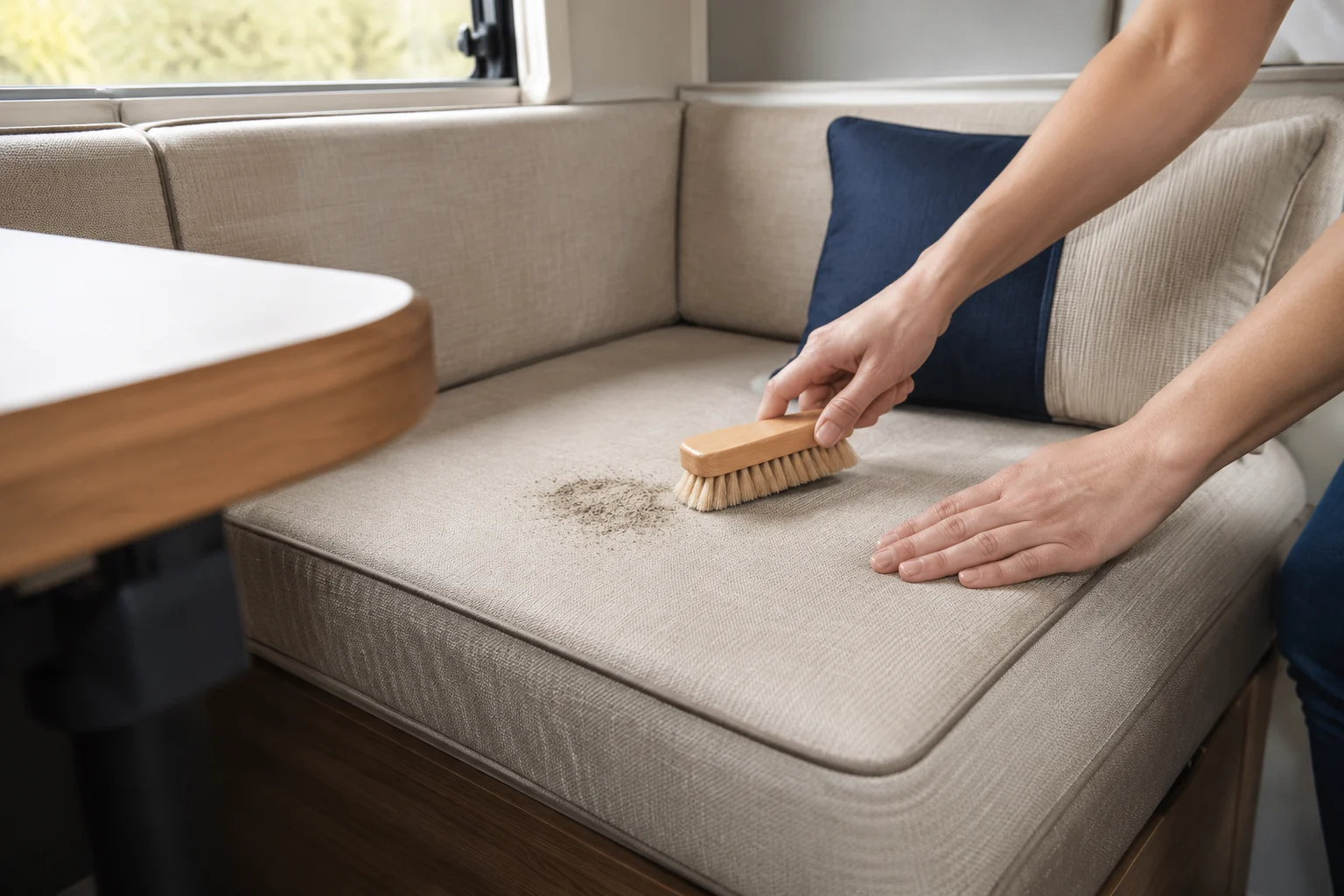
- Buy to the density grade. A 50D daily-use core lasts 5–8 years where a 35D core in the same service flattens in 2–3 — the density ladder in how to choose foam density is, functionally, a sustainability menu. The price difference is dollars; the lifespan difference is double.
- Maintain what you own. Washing covers, rotating for even wear, proper winter storage (how to store cushions for winter) — maintenance is the highest-leverage green action in seating. Most cushions die of neglect, not age.
- Repair the layer that failed. Dead foam under good fabric: re-core it (replacing sofa cushion foam). Tired fabric over good foam: re-cover it (replacement cushion covers). Only when both layers age out does whole-cushion replacement earn its footprint.
Greenwashing: Five Phrases to Read Past
- – “Eco-friendly” / “green” — unregulated everywhere, meaningless alone. Look for the specific attribute beneath it.
- – “Made with recycled materials” — at what percentage, from what? “Made with 5% recycled content” is technically true and practically nothing. GRS certification or a stated percentage is the test.
- – “Biodegradable foam” — polyurethane foam is not biodegradable in any timeframe that matters. Latex is. The phrase on a poly cushion is borrowed credibility.
- – “Natural” — arsenic is natural. The word indicates nothing about production, durability or end of life.
- – “Chemical-free” — nothing is. The meaningful claim is which chemicals aren’t there, verified by OEKO-TEX or equivalent.
FAQs
What’s the most eco-friendly cushion fill?
Natural latex for a fully renewable core; recycled-fiber fill for budget outdoor use; and structurally, any zippered cushion with a replaceable core — because refillability extends fabric life across multiple foam generations. Judge any latex core by the same density duty-matching that governs standard foam — the density guide — because lifespan is still the sustainability variable.
Are foam cushions bad for the environment?
Less than their reputation suggests, and lifespan is the reason. A density-matched foam core serving 8–10 years has a lower annual footprint than a natural-fiber cushion replaced three times over. Choose density to the duty (the density guide), and the material’s longevity does the environmental work.
Are recycled polyester cushions actually better?
Yes, modestly — they divert waste plastic and skip virgin petroleum, with identical performance. They’re not a circular solution (the second life is the last), but as outdoor fills they’re the honest choice within the tier.
Can cushion foam be recycled?
Rarely through municipal systems; sometimes through specialty foam recyclers and take-back programs. The practical “recycling” is reuse: re-core a different piece of furniture, cut for draft stoppers or pet bedding, or donate intact cushions. Designing for your own re-use beats hoping a facility exists.
Do sustainable cushions cost more?
Latex does; recycled-fiber and certified fabrics mostly land within a few dollars of conventional equals — and on Cushion Mill quotes fabric is a flat $7.43 per square foot across all 119 fabrics, so choosing by durability moves nothing. The durable choice is usually the affordable choice; the two agendas agree.
Next Steps
- Match your next cushion purchase to duty, not label: density for the hours and load it will see — that single spec buys the years that define its footprint.
- Audit what you own for the repair-first route: a re-core or re-cover project (see replace cushion foam and covers) is the greenest cushion you’ll ever “buy.”
- For new custom work with the lifespan principle built in — density matched to duty, wipe-clean families by room, ties that keep pieces in service — start at custom outdoor cushions.
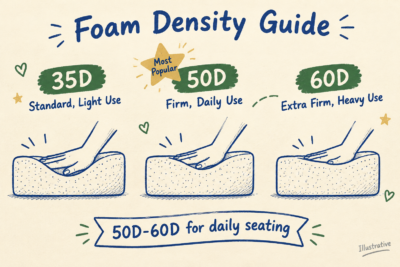
Foam Density Explained: D-Ratings vs lbs/ft³
What foam density actually measures, why D-ratings and lbs/ft³ (PCF) are two different languages with no direct conversion formula, and how to translate between them honestly — by use tier and lifespan, with the 35D–65D grades decoded.
Flame Retardants in Cushion Foam: What Changed and What to Ask
Cushion foam flame retardants explained: why California TB117 put additive chemicals into furniture foam, what the TB117-2013 revision changed, what CertiPUR-US and GREENGUARD actually certify, how to read new-foam off-gassing, and the six questions to ask any supplier for nursery and commercial buying.
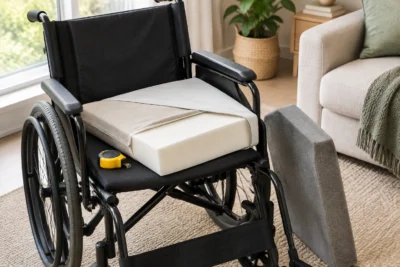
Wheelchair Cushion Foam Replacement: Measure, Order, Revive
Replace wheelchair cushion foam instead of the whole pad: three signals the core is done, W x D and thickness measuring, 50D-65D density for all-day seats, and cover fit – cores cut to your measurements.
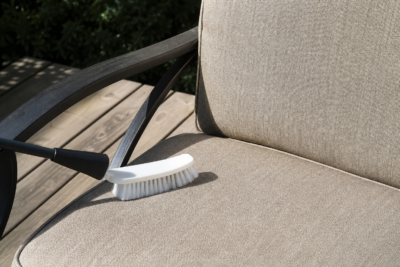
How to Care for Polyester Cushions: Washing, Fading and Stretching Them Back
Polyester cushion care from top to bottom: what spun polyester can and can’t handle, the wash-day routine that won’t ruin fills, how to slow the fading that defines the tier, and reviving covers that have stretched out.
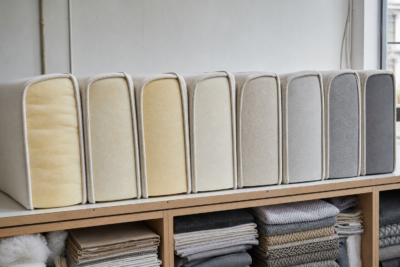
How to Choose Foam Density: 35D vs 50D vs 60D vs 65D (Decision Guide)
Pick cushion foam density in three questions: 35D for occasional seats, 50D as the daily-use default, 60D for heavy sitters and long hours, 65D for commercial and marine duty — with lifespan rules of thumb and what each upgrade costs.
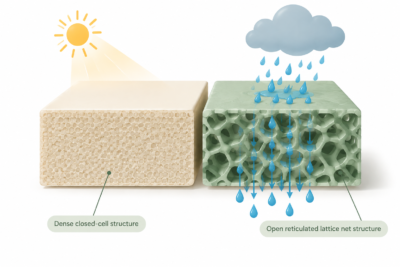
HD Foam vs Dry-Fast Foam: The Outdoor Cushion Guide
High-density foam vs dry-fast reticulated foam for outdoor cushions — cell structure, PPI, feel, the measured price premium (+9% at one configurator), and the simple covered-vs-uncovered test that picks for you.