
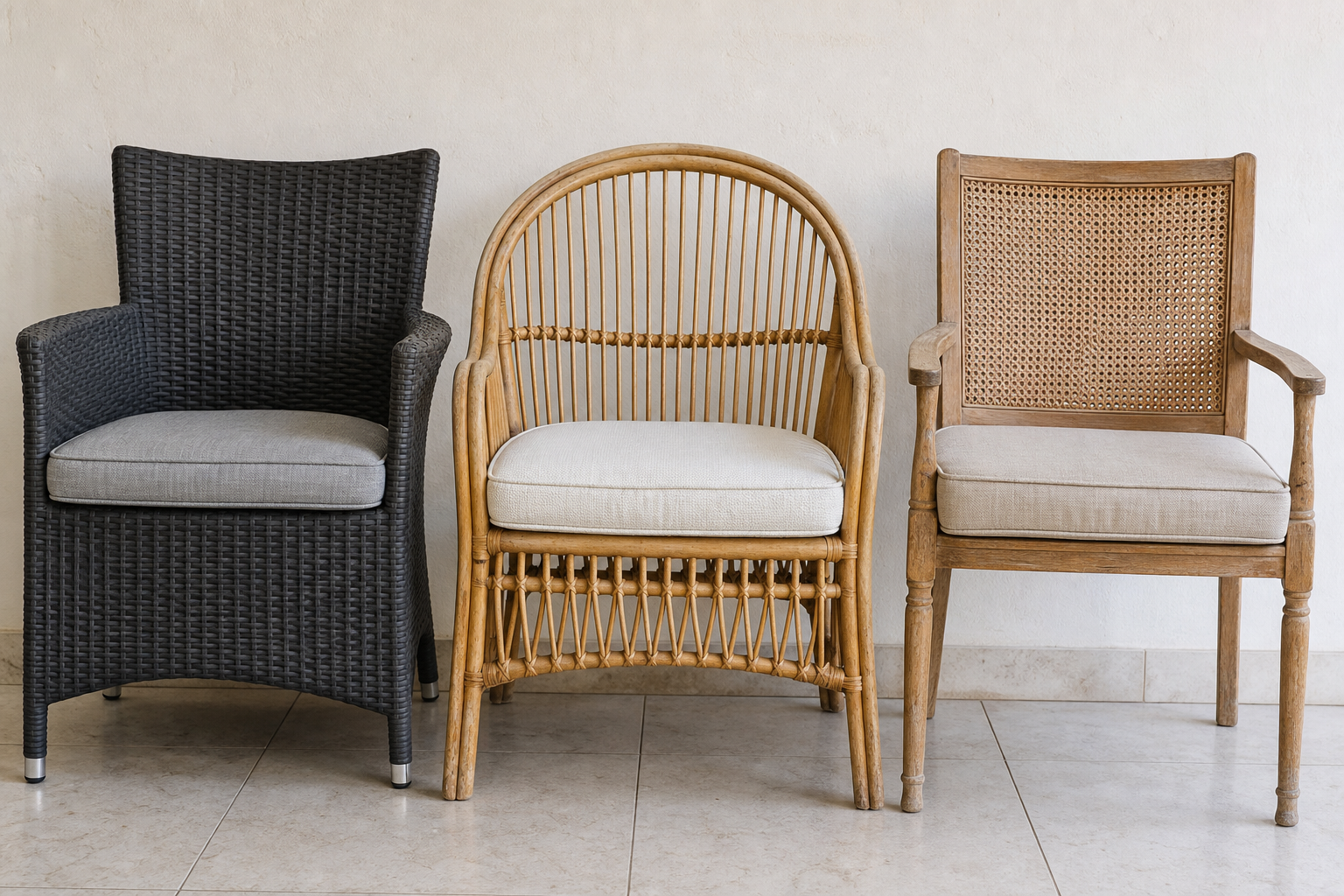
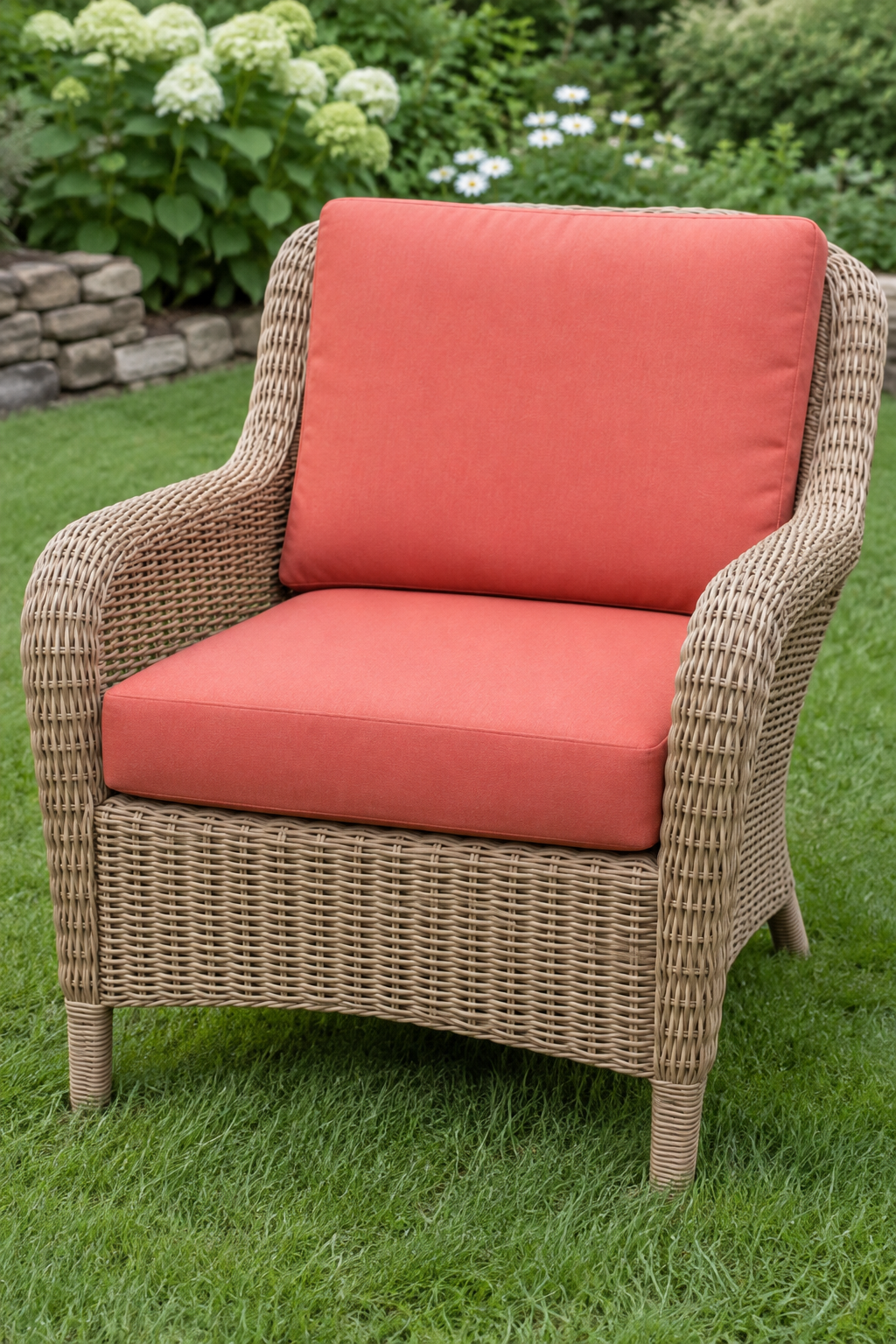
The measurement advice that assumes a helper breaks down the moment you are one person with a seven-piece Folian set and a free Saturday. Solo measuring works — run as a numbered production line rather than seven separate scrambles. The routine below finishes most sets inside an afternoon, with records clean enough that our verification desk reads them straight through.
Set the line up before touching a tape
Solo errors are organizational, not optical. One person balancing a tape, holding a pad and writing simultaneously will transpose numbers sooner or later — so remove the balancing act instead of practicing it. The setup takes ten minutes:
- A paper row per piece. Seven pieces, seven rows, written before anything is measured: Chair 1, Chair 2, Loveseat L, Loveseat R, Sofa sections, ottoman last. Every measurement lands on a labeled row the moment it is read, never on a palm or a shared corner of a receipt.
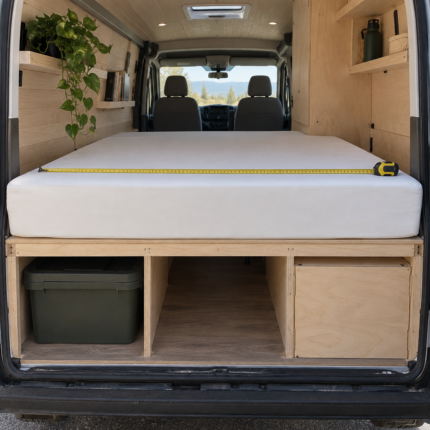
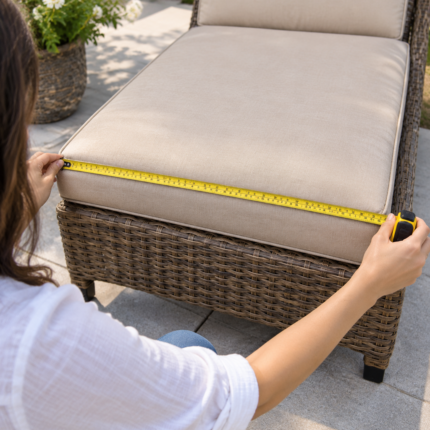
- Tape on the seat, phone above it. Lay the tape across the cushion rather than hooking it, and photograph the tape in place. The photo is your second recorder — if a written figure looks wrong later, the picture adjudicates.
- A flat reference edge. One chair pushed against a wall or a straight board clamped to the frame gives you a fixed line to measure from, replacing the second pair of hands that would otherwise square the tape.
The running order: seats, then backs, then stragglers
Work one dimension at a time across the whole set — every seat width first, then every seat depth, then thicknesses, then the backs. Batch-by-dimension beats piece-by-piece for a solo operator because the tape stays in one orientation, your body repeats one motion, and a figure that deviates from its siblings (one seat 21 inches where four read 19) jumps out immediately instead of hiding in a column of mixed numbers.
Measure at the seam line — width at the widest seam point, depth front-to-back, thickness through the loft at the edge — per cushion, since seat pads and back pads are separate jobs with separate figures. The measurement guide library diagrams exactly where the tape goes on each piece type, including the curved backs and rounded fronts that uncharted series like Folian tend to carry.
When a helper shows up after all
The solo routine above stands on its own, but a second pair of hands changes the economics pleasantly — if you know how to spend them. The wrong way is piece-by-piece tag-team measuring, which mostly produces two people narrating the same transposition errors. The right way divides the recorder role from the tape role and never lets one head hold both:
The tape-holder positions and reads aloud, digit by digit, from a fixed eye level — “one nine, point five” beats “about nineteen and a half,” because rounded speech writes rounded figures. The recorder repeats each figure back before writing it, which sounds theatrical and catches nearly every mishear. Roles swap at the halfway point to keep attention honest, and the photo ritual survives unchanged: tape on the pad, phone above, one frame per cushion, every time.
A helper also unlocks the cross-check that solo sessions skip: after the batch pass, one of you re-measures three random pieces blind — no peeking at the sheet first — and the figures should agree with the originals within an eighth of an inch. Where they do not, that piece gets a third reading on the spot, in front of witnesses. Ten extra minutes, and the sheet you submit has been audited by the only quality-control team with a stake in the outcome: the household that will sit on the results.
A closing note on what the sheet becomes after submission: the labeled rows travel with your order all the way to the bench, where the piece names you chose appear on the work sheet itself. That continuity is the quiet luxury of the measured route — nothing about your afternoon of measuring gets translated, summarized, or averaged on its way to becoming furniture. What you wrote is what gets cut, and what gets cut is what arrives, which is why the numbering discipline at the kitchen table pays dividends all the way through freight and unboxing, months later, when every pad lands on the frame it was named for.
What the series name does and does not get you
Folian sits with the majority of Hampton Bay lines: never charted, never spec-sheeted, moved through Home Depot as seasonal boxed stock. The white tag under a seat frame (model number behind a GLD or THD supplier code) confirms the name in a glance; order history in your Home Depot account or the original assembly leaflet confirms it almost as fast. No paperwork survives, and the frame’s era-typical steel or wicker-over-steel build plus photos sent to the bench narrow the field.
What the name never delivers is dimensions — Hampton Bay refreshed series across model years, so even a confirmed “Folian” on two chairs from different seasons can mean different lofts. Your numbered rows, not a label, are the specification your order is cut to.
From labeled rows to a cut list
Enter the rows into the configurator exactly as labeled — the labels become the piece names on your quote and on our bench sheet, so “Loveseat L” stays distinguishable from “Chair 1” all the way through sewing. Pricing opens at a $45 make-base per cushion and scales with size and the density you dial between 35D and 65D; the 119-fabric menu prices flat, so fabric stays a lifestyle choice rather than a budget line. Covers on every piece zip off the foam for washing — worth having on any set large enough to need a numbering system in the first place.

Uncharted neighbors on the same route: Amelia Springs and Sydney. For a charted reference, the Kampar page carries measured dimensions; the Hampton Bay hub indexes every series we track.
Frequently asked questions
I finished and one chair has no row — can I add it later?
Add it as its own order whenever you measure it — orders carry no minimums and each piece prices from the same $45 make-base. Keep the first order’s finished pads as the reference when measuring the straggler, so figures stay consistent across the set.
My photos and my written numbers disagree — which wins?
The tape-lying-on-the-pad photograph usually wins, because writing is where transcription happens and photographs do not transpose digits. If both look defensible, send both — our verification desk resolves exactly this kind of conflict before cutting.
Two identical chairs measured a quarter inch apart — redo them?
Not necessarily: a quarter inch of spread on nominally identical pieces is common (manufacturing tolerance plus measurement technique). Send both figures as measured; cuts landing within ±½″ of submitted numbers — ±¾″ past the 36″ mark — are guaranteed, or remade.
Does a big set change the price per cushion?
Each cushion prices individually from the $45 make-base, rising with size and density; there are no quantity discounts and no set-size surcharges either. Seven pieces cost seven line items, visible one by one as you build the quote.
How long from solo session to delivery?
Sewing runs 4–7 business days standard, 3–5 as a rush; freight adds 3–6 weeks to most US addresses. Measure now, sit early next month — the classic solo-cushioner timeline.
Will off-the-shelf cushions save me the measuring session?
Rarely — uncharted boxed-set furniture carries proprietary seat decks, and a near-fit universal pad usually slides, gaps at the back or rides above the arms. The afternoon of solo measuring is the cheaper hour compared to a return cycle on wrong-fit stock cushions.
What ordering from this bench gets you
- In-house cutting, filling and sewing for over ten years — the quoter and the builder are the same operation, nothing dropshipped.
- Every labeled row re-checked against your piece count before fabric is unrolled — a “Chair 2” written where “Loveseat L” was meant gets caught here, not after sewing.
- No minimums, no stock calendar — from a single ottoman to a numbered seven-piece run, any of 119 fabrics at flat pricing.
- Remake terms in plain language: off-tolerance cuts, wrong fabric, wrong build — corrected at our cost.
Folian replacement cushions from one person, one afternoon, one numbered sheet — from a $45 make-base per piece.
Ran out of daylight with rows still open? Send what you have plus frame photos and we will help close the gaps. Not a Folian after all? Any shape, custom built — or start from the Hampton Bay index.
Shipping & Delivery
- Orders over $158 ship free — add a second cushion or an upgrade and shipping’s on us.
- Smaller orders ship anywhere in the contiguous US for one simple flat fee — always shown before you pay.
- Made in 7–14 business days. Each cushion is cut and sewn to your measurements after you order, never pulled from a shelf.
- ±½″ tolerance on all custom cuts — and if we cut it wrong, we remake it free. No forms, no fine print.
Have a deadline? Contact us before ordering and we will tell you honestly whether we can meet it.
Related products
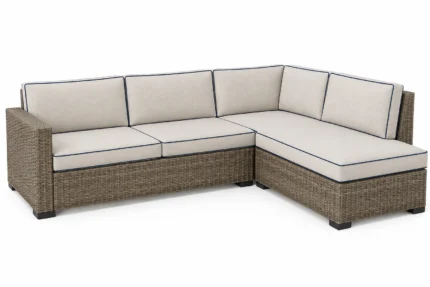

Custom Sectional Cushions
- Cut to your exact measurements — seats, corners, chaise ends, backs.
- 119 performance fabrics at one price — full-sun and quick-dry outdoor lines included.
- One order, one dye lot — every piece in the run ships color-matched.
- Factory-direct from $162 — instant quote in the customizer below.
- ±½″ tolerance, re-checked before cutting — remade free if we cut it wrong.
Custom Wrought Iron Chair Cushions
- Cut to your exact measurements — curved backs, scroll arms, vintage frames.
- 119 performance fabrics at one price — full-sun and quick-dry outdoor lines included.
- One order, one dye lot — every piece in the run ships color-matched.
- Factory-direct from USD 103 — instant quote in the customizer below.
- ±½″ tolerance, re-checked before cutting — remade free if we cut it wrong.