
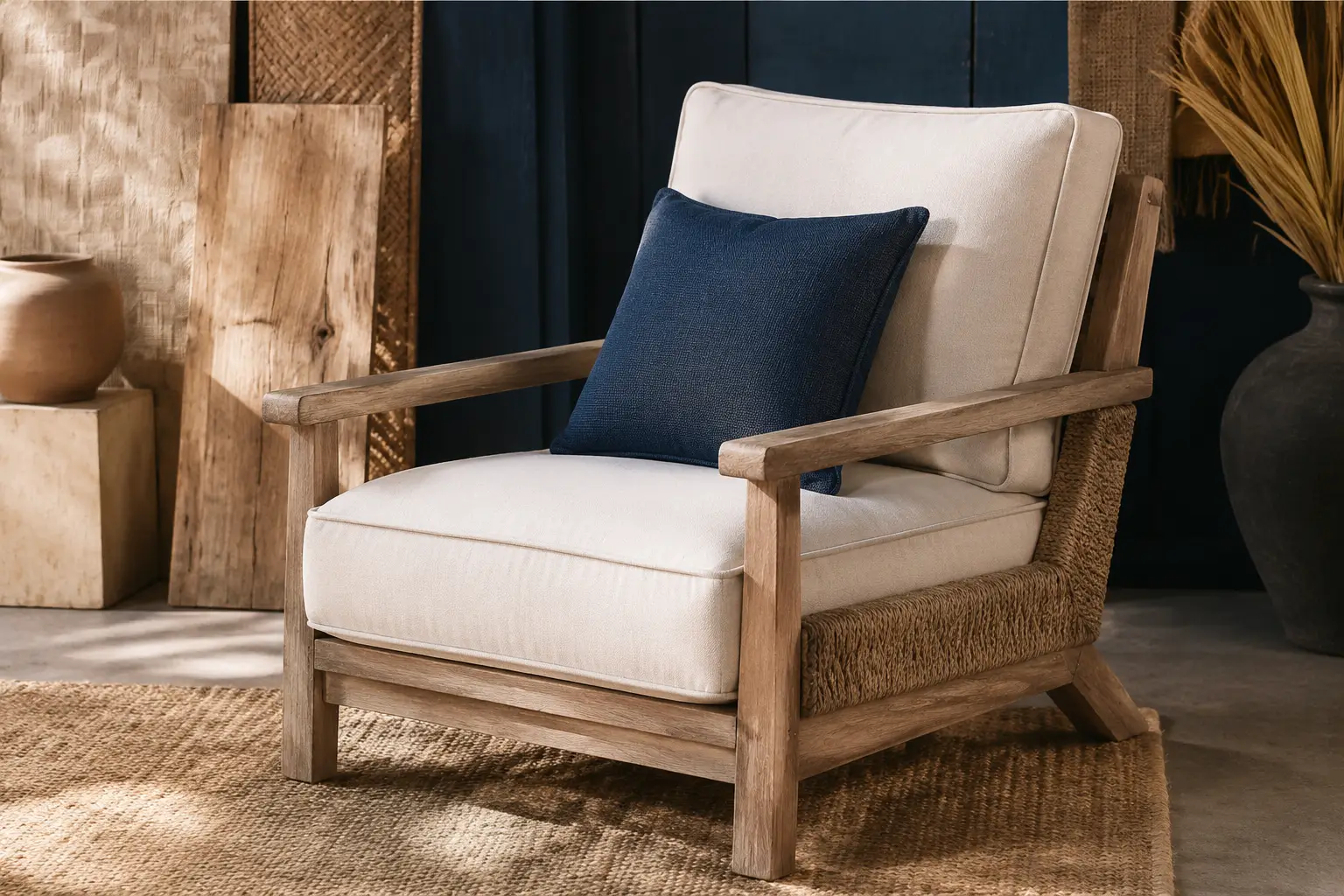
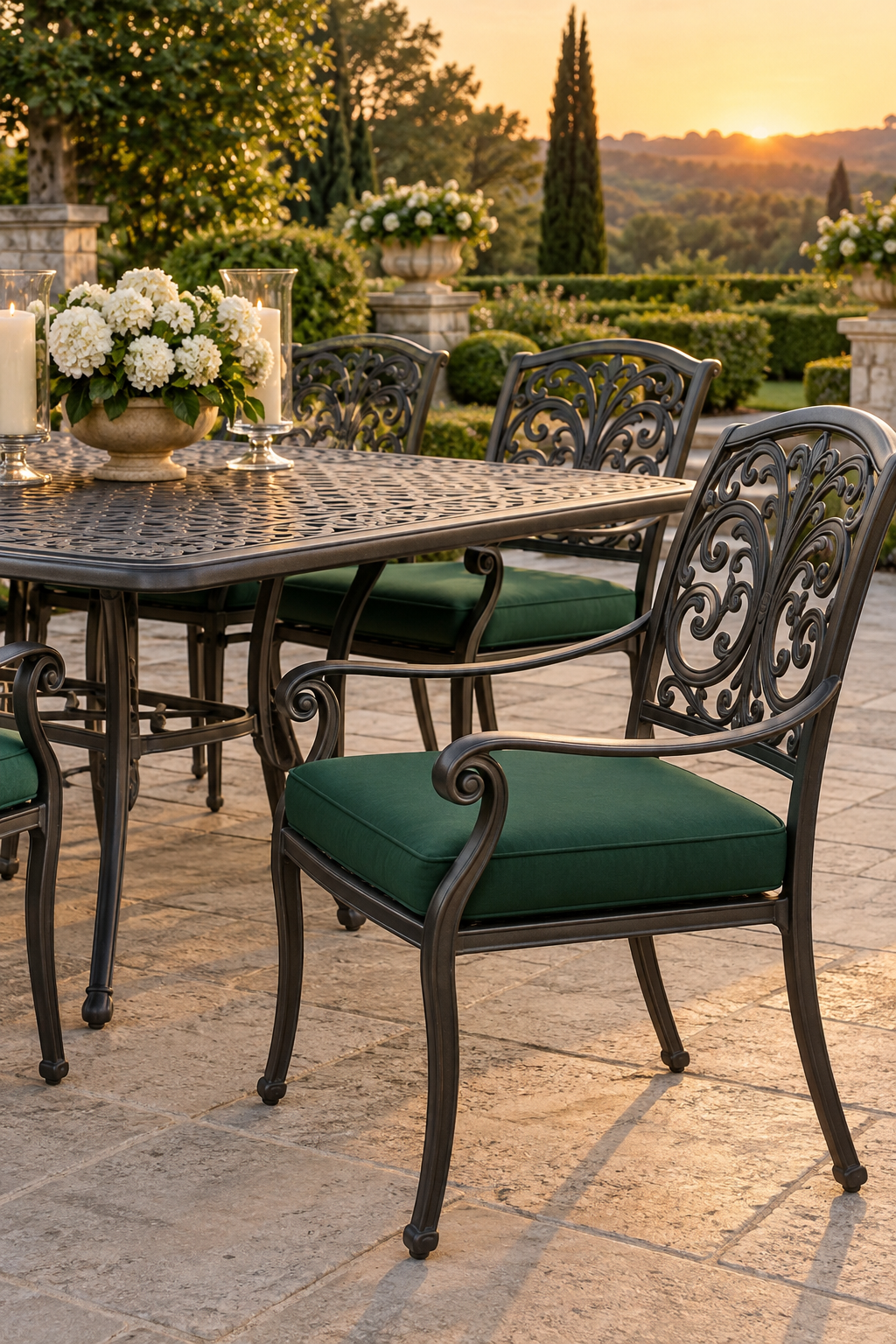
Every un-charted series forces the same fork in the road: measure the old cushion, or measure the empty seat? Both paths produce numbers, but they produce them honestly under different conditions — and knowing which to trust for which dimension is the difference between pads that fit a Padova frame and pads that nearly do.
Path A: the old pad as witness
When the original cushions survive in one piece, they remain the fastest specification source — a pad was literally built to its frame once already. The old-pad route delivers thickness most reliably of all: whatever loft you measure through the edge is a factory-sanctioned starting figure, adjustable to taste up or down. Width at the seam reads nearly as clean on a pad whose covers still hold shape.
But witness testimony degrades, and degraded pads degrade it silently. Foam compresses unevenly — the front edge where weight lands first can lose an inch while the rear keeps its loft, so a “width” read off a bowed pad inherits the bow. Covers stretch a quarter inch per side over years of sit-downs; edges curl upward and inflate every figure they touch; and a pad stored folded carries a crease that no measurement recovers from. The old pad tells the truth about its own current shape — which is only the frame’s shape if the pad has been treated gently.
Path B: the bare seat deck as witness
Stripping the pads off and measuring the deck itself removes every layer of foam history from the figures. Width and depth read off the structure the cushion must sit on and fit within — inside arm to inside arm, front rail to seat back — and on a sound frame these numbers do not drift with the years. For sets whose pads are destroyed, shredded, or long gone, the deck is not the alternative path; it is the only one.
The deck route has its own soft spots. It yields no thickness at all — loft is a choice, not a structure, and gets selected fresh in the configurator. Curved or scooped decks complicate depth: measure the flat usable span, not the deepest point of the scoop, or the finished pad tents in the middle. And wicker decks woven with a slight crown read a quarter inch proud at center unless the tape stays level — the measurement guides diagram exactly how to bridge a crowned or curved deck without inventing figures.
When both are available, run both
The strongest order comes from the collision of the two paths, because each covers the other’s weak dimension:
- Thickness from the old pad — loft informed by what the maker originally chose — then adjusted for how the set is used now, not how it was used then.
- Footprint from the deck — width and depth read off the structure itself, immune to stretched covers and compressed foam.
- Discrepancies noted, not averaged away. When the pad’s width and the deck’s width disagree by more than half an inch, the pad has deformed — the deck figure wins, and a note in the order telling us which path each figure came from lets our verification desk check the logic rather than guess at it.
Send figures with their provenance labeled and the bench can re-derive your reasoning — which is precisely what happens before any fabric is unrolled, when every submitted number is re-checked against the piece count.
A note on which path suits which household: the old-pad route rewards sets whose covers still sit square and whose foam still has some spring — figures read off healthy pads land close to deck figures anyway, and the collision check becomes a formality. The deck route rewards everyone else: destroyed pads, missing pads, pads so old they resemble their own shadows. Households between the two states — one good survivor pad, three exhausted ones — can run the survivor as the thickness reference across the whole set and the deck as the footprint authority, which is the standard hybrid we see arrive from mixed-condition estates and long-lived sets alike. Whichever combination you land on, label it in the order notes; reasoning we can read is reasoning we can verify.
First, be sure it is a Padova
The identification ladder is short. The white tag under a seat frame, model number usually riding behind a GLD or THD supplier code, names the line in seconds. Home Depot order history or the original assembly leaflet answers nearly as fast, searchable by the series name. When both paper trails are gone, the era-typical steel or wicker-over-steel build plus photos of the arm profile and weave sent to the bench narrows the field — usually inside a day.
And the standing caveat cuts in favor of your tape measure again: Hampton Bay refreshed series across model years, so a confirmed Padova name on two different-season chairs still leaves the dimensions to be measured. No official Padova cushion chart exists to fall back on; the two-path routine above is the chart.
From provenance-labeled figures to a quote
Figures entered in the configurator build a line-item quote on the spot: each cushion opens at a $45 make-base and scales with size and the density chosen between 35D and 65D — firmer densities repaying daily seating in longer shape retention. Fabric stays out of the arithmetic entirely: all 119 options price flat at a given size, whether the route runs through water-resistant tech fabric for open sky, cotton linen under cover, or velvet against claws. Every cover zips off the foam for a full wash — the maintenance logic that keeps a measured fit looking measured, year after year.
Adjacent uncharted series: Niles Park and Park Meadows. A charted reference series starts at Kampar; the Hampton Bay hub indexes every line we track.
Frequently asked questions
My old pad reads smaller than the deck by three-quarters of an inch — which number do you want?
The deck’s, labeled as such. A pad that reads narrow has compressed or shrunk; the deck is the structure the cushion must actually fit. Keep the old pad’s thickness figure, choose footprint from the frame, and note the discrepancy in the order so verification can follow your logic.
Only a torn half of one old cushion survives — is it worth measuring?
For thickness, yes — loft is loft even on a fragment that kept its edge. For width and depth, skip it and run the deck path; torn edges and escaping foam distort footprints badly.
Can loft be changed from what the originals had?
Freely — thickness is the one dimension that is a preference rather than a fact of the frame. The configurator takes your chosen loft and prices it with size and density; the original pad’s thickness is a starting suggestion, not a constraint.
How precisely must the figures be recorded?
To the eighth of an inch is ideal, quarter inch acceptable. Our bench guarantees its cuts to half an inch of what you send — three quarters once a figure crosses the 36″ line — and a miss on that, a wrong fabric or a wrong build comes back rebuilt rather than debated.
What does the two-path rebuild cost?
Per cushion, pricing opens at a $45 make-base and moves with dimensions and the density dialed between 35D and 65D. The quote assembles line by line in the configurator before anything is cut; fabric never moves the number.
How long from submitted figures to doorstep?
Standard sewing runs 4–7 business days, a rush compresses it to 3–5, and freight covers 3–6 weeks to most US addresses. Measuring both paths adds an afternoon; ordering adds a lead time worth starting sooner.
What ordering from this bench gets you
- Cutting, filling and sewing in one workshop for more than ten years — quoted and built by the same people, nothing brokered or dropshipped.
- Every figure re-verified against piece count before fabric is unrolled — and provenance-labeled numbers get their logic checked, not just their arithmetic.
- No minimums — one measured replacement or the full set re-specced, any of 119 fabrics at flat pricing.
- Remake terms in plain words: off-tolerance cuts, wrong fabric, wrong build — corrected on our account.
Padova replacement cushions measured from whichever witness tells the truth about which dimension — from a $45 make-base per piece.
Paths disagreeing by more than an inch? Send both sets plus photos and the verification desk will referee before cutting. Not a Padova after all? Any shape, custom built — or start from the Hampton Bay index.
Shipping & Delivery
- Orders over $158 ship free — add a second cushion or an upgrade and shipping’s on us.
- Smaller orders ship anywhere in the contiguous US for one simple flat fee — always shown before you pay.
- Made in 7–14 business days. Each cushion is cut and sewn to your measurements after you order, never pulled from a shelf.
- ±½″ tolerance on all custom cuts — and if we cut it wrong, we remake it free. No forms, no fine print.
Have a deadline? Contact us before ordering and we will tell you honestly whether we can meet it.
Related products
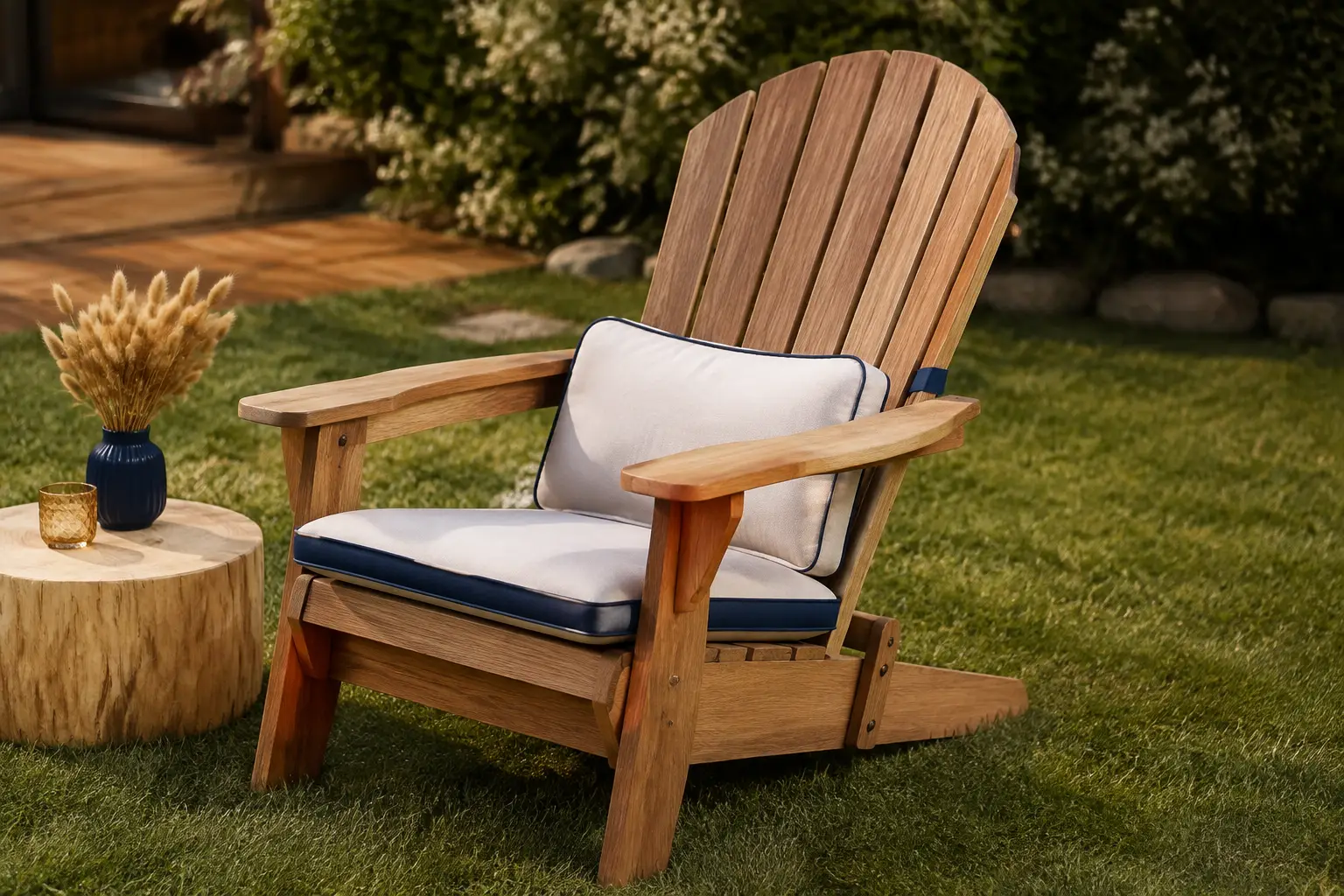
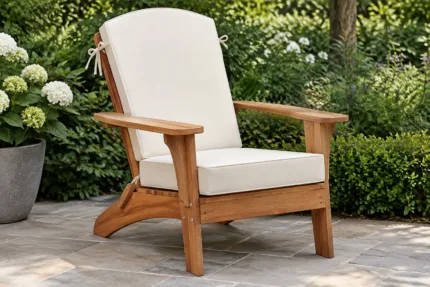
Custom Adirondack Chair Cushions
- Cut to your exact measurements — standard, oversize and vintage frames.
- 119 performance fabrics at one price — full-sun and quick-dry outdoor lines included.
- One order, one dye lot — every piece in the run ships color-matched.
- Factory-direct from $113 — instant quote in the customizer below.
- ±½″ tolerance, re-checked before cutting — remade free if we cut it wrong.

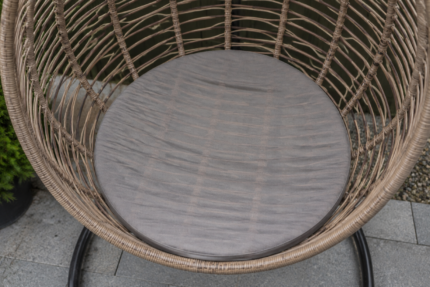
Custom Egg Chair Cushions
- Replacement pads for egg chairs cut to your measurements — any diameter the basket measures, any thickness from 2 to 8 inches.
- Round seat pads from $115 (20 in. × 2 in., 50D); the standard 22 in. × 4 in. rebuild is $144; seat + back sets for hanging egg chairs from $225.
- Four density grades (35–65D) and the full thickness ladder — the spec universal pads never offer.
- All fabric tiers one price: solution-dyed outdoor weaves for balconies and patios, cotton-linen and velvet for indoor nooks.
- Made in 4–7 days at our own cutting tables, ± ½ inch in writing; a piece outside tolerance is remade free.
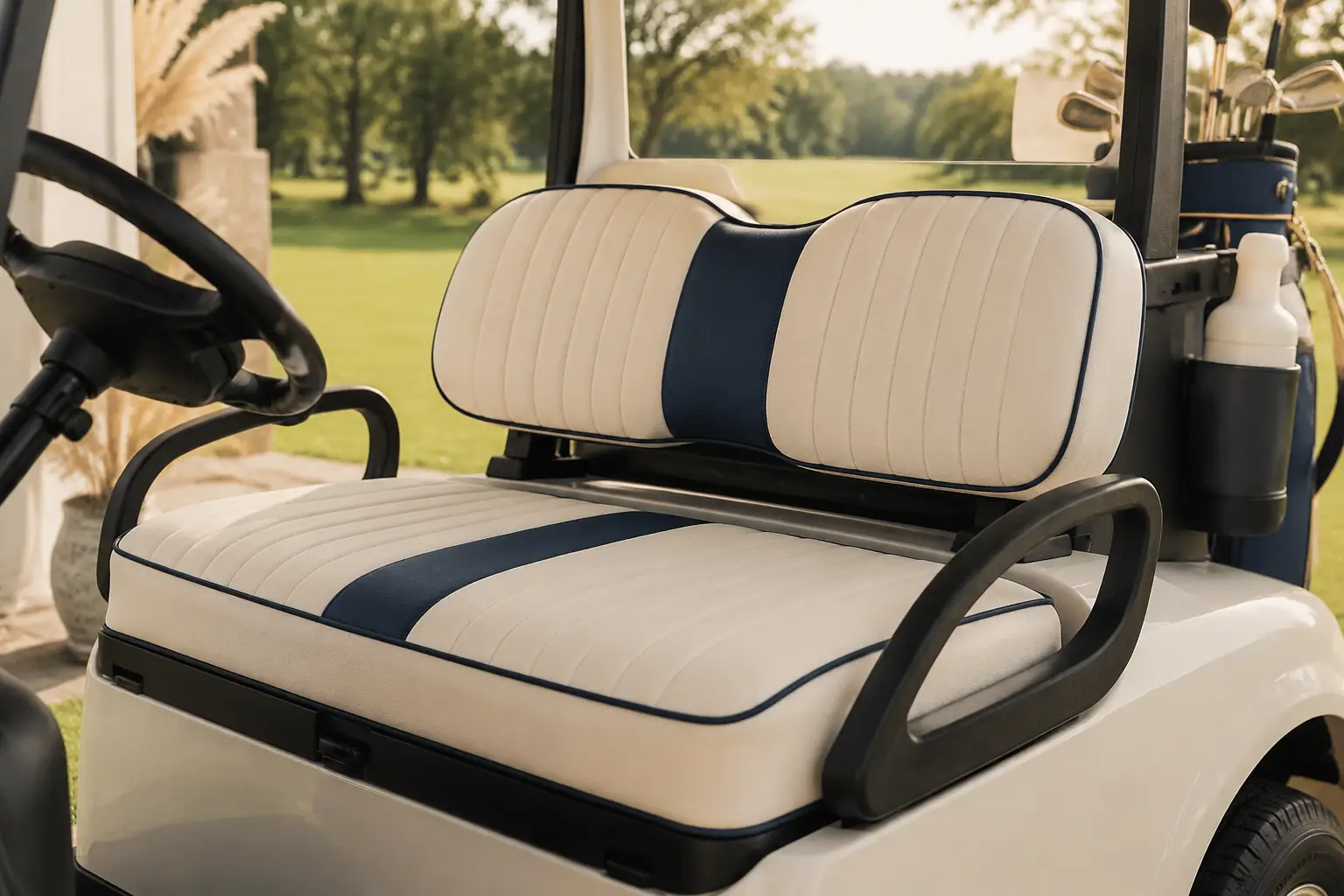
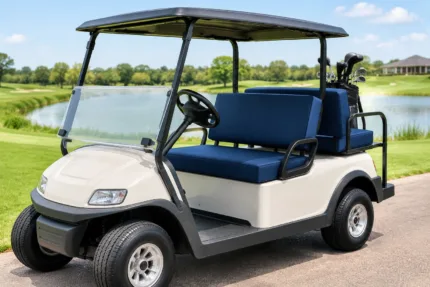
Custom Golf Cart Cushions
- Cut to your exact measurements — any cart, any seat kit.
- 119 performance fabrics at one price — full-sun and quick-dry outdoor lines included.
- One order, one dye lot — every piece in the run ships color-matched.
- Factory-direct from $166 — instant quote in the customizer below.
- ±½″ tolerance, re-checked before cutting — remade free if we cut it wrong.