
A standard church pew seat runs 19–21 inches deep and 16–18 inches from floor to seat top, and pew cushions are cut 2–3 inches thick to sit on that seat without changing the geometry the pew was built around. The one number that matters more than any of these: your own sanctuary’s measurements — because pews vary pew to pew within a single nave, cushions are cut to measured runs, held to ½″ tolerance (¾″ over 36″), not to a catalog number.
This guide covers the standard dimensions, how each one drives the cushion spec, and the measuring method — the sizing companion to the complete pew cushion specification guide, and the measurement base for ordering at custom church pew cushions.
The Standard Dimensions of a Church Pew
Pew manufacturers’ published specs (Kivett’s, Artech, New Holland — current as of 2026) converge on the same ranges:
| Dimension | Typical range | What it means for the cushion |
|---|---|---|
| Seat depth (front to back) | 19–21″ | The cushion’s depth; tapered seats need front and back measurements |
| Seat height (floor to seat top) | 16–18″ | Cushion thickness adds to it; 2–3″ keeps seated height near design intent |
| Pew length | 8–20 ft runs; 12 and 16 ft most common; 22′6″ practical maximum | Cushions follow the run, cut per pew, not per order |
| Seating width per worshipper | ~18″ planned | A 12-ft pew seats 7–8 adults comfortably; committees that budget 10 per pew will hear complaints |
| Row spacing (back to back) | 36″ standard; 38″ comfortable | Thicker cushions eat kneeler clearance in tighter rows |
| Aisle width | 48″ minimum; 72–96″ for processions | End-cap shapes — square, radius, notched — follow the aisle side |
Two of these numbers do most of the work in a cushion order: seat depth, because it is the cushion’s second dimension; and length, because a sanctuary’s runs are almost never uniform. The rest of the table exists to catch the interactions — a 3″ cushion in a 36″-spacing row with kneelers is a different decision than the same cushion in a 38″ row without them.
From Pew Dimensions to the Cushion Spec
Thickness is the first spec decision, and it is a service-length question more than a comfort question:
- – 2″ foam — the traditional profile for historic pews where seat height and kneeler clearance are tight; enough loft for an hour-long service.
- – 2.5″ — the common modern choice; adds pressure distribution for long services without visibly changing the pew line.
- – 3″ — comfort-first sanctuaries and newer pews built with cushioning in mind; check kneeler clearance before committing (the geometry discipline in seat pads vs cushions).
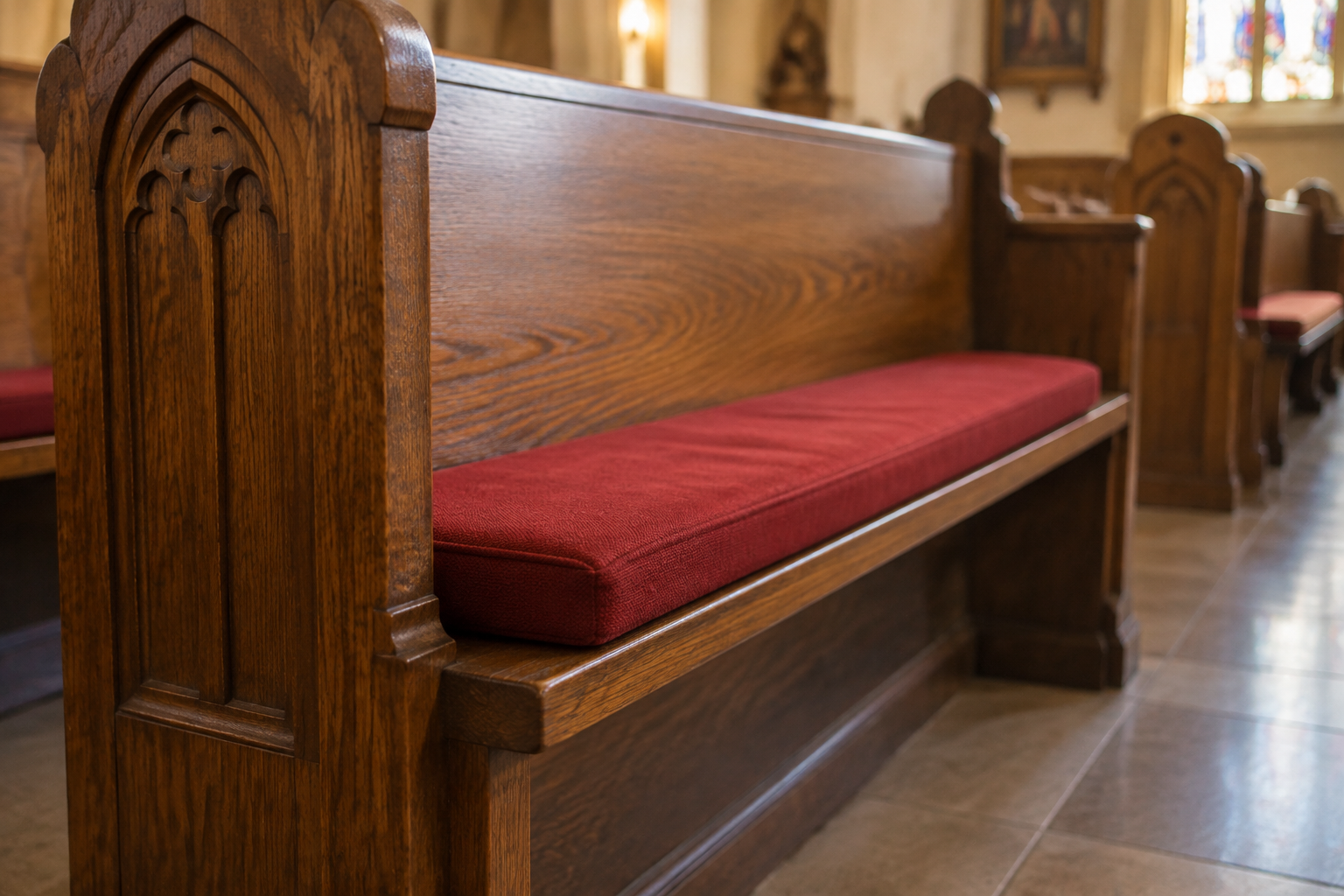
Depth follows the seat, with one craft rule: on a tapered seat — most pew seats lose ½–1″ of depth between the front edge and the back — the cushion is cut to the smaller measurement plus a hair, so the front edge sits flush and the back gap stays hidden under the backrest overhang. A cushion cut to the front (deeper) measurement on a tapered seat cups at the back and walks forward every time a row stands up. Square front edges are standard; radius end caps follow the pew’s carved ends where the run meets an aisle.
Length is per pew, not per row. The same carpenter’s variance that hits dining sets applies across dozens of pews and compounds with decades of repairs: in a typical sanctuary, nominally identical 12-foot pews measure anywhere across an inch of spread once the end caps, notched radiator clearances, and shortened access seats are counted.
How to Measure Pews for Cushions
A sanctuary survey that produces a clean order takes one volunteer afternoon. The routine, pew by pew:
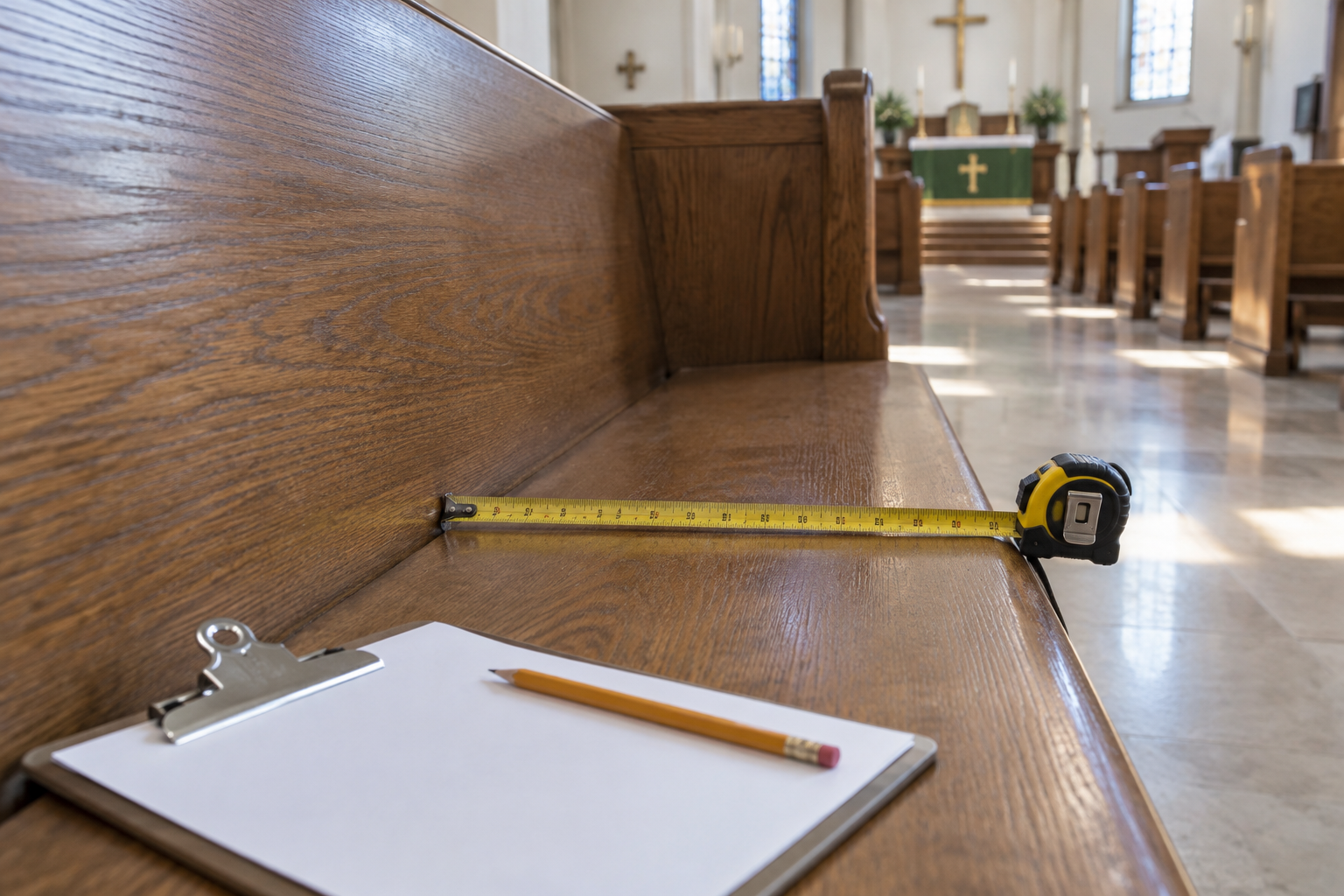
- Group the runs first. Nave, transept, choir, chancel — each section gets its own measurement sheet, because sections differ in spec as well as size (the sectioning logic in the specification guide).
- Measure seat depth twice per pew — at the front edge and against the backrest, inside the end caps. Record both numbers; the taper is the difference.
- Measure length inside the end caps, not end to end of the wood. End panels are decorative width; the cushion lives between them.
- Record every anomaly on the sheet: notched pews at radiators and columns, radius end caps on aisle ends, shortened pews at crossing aisles, and the special pieces — pulpit seating, communion rail kneelers, chancel benches.
- Photograph each run with the tape visible in the frame. A photo of the tape at 12 ft 3¼″ settles more disputes than a handwritten note — and it is what a custom workroom verifies against before cutting (the same photo-verification discipline as how to measure outdoor cushions, run at sanctuary scale).
Measure to the nearest ⅛″ and let the workroom’s tolerance do the rest: per-piece cutting at ±½″ (±¾″ over 36″) absorbs the measuring wobble that volunteer surveys always carry.
Special Pieces and Their Sizes
Kneelers run thinner — 1.5–2″ over firm support — because they take point loads, not sitting loads. Choir and chancel seating often takes a firmer spec for longer continuous services, in the same runs’ dimensions. Access seating follows ADA transfer heights rather than pew standards, and is best ordered as its own line on the measurement sheet rather than folded into the nave totals.
The Five Sizing Mistakes That Cause Rework
- – Measuring one pew and multiplying. The carpenter’s variance means pew 12 of a nominally identical run can differ by ¾″ from pew 1; multiplied orders strand every outlier uncut.
- – Using the front depth on a tapered seat. The cushion cups, walks, and gets blamed on the foam.
- – Ignoring kneeler clearance when upgrading thickness. Moving 2″ to 3″ foam takes an inch out of the kneeler gap in a 36″ row — felt by every knee in the building within one service.
- – Measuring end-to-end wood instead of between end caps. The extra 1–2″ per pew becomes a cushions-don’t-fit problem across the whole order.
- – Ordering from the architect’s drawing instead of the room. Sanctuary walls move, radiators get added, pews get re-anchored — the 1962 drawing is a hypothesis; the tape is the data.
FAQs
What is the standard size of a church pew cushion?
There is no catalog standard — pew seats run 19–21″ deep and sanctuary runs run 8–20 ft, so cushions are cut to measured runs: 2–3″ thick, seat-depth minus any taper, length per pew between the end caps, at ±½″ tolerance (±¾″ over 36″).
How deep is a church pew seat?
19–21 inches is the published range across major pew manufacturers, and most seats taper ½–1″ from front edge to backrest — which is why cushions are cut to the smaller, rear measurement.
How do you measure pews for cushions?
Per pew, not per row: depth at front and back (the taper), length between the end caps, height if kneeler clearance is tight, every anomaly recorded, and a photo of the tape with each run. Measure to ⅛″ and let the workroom tolerance absorb the rest.
How thick should pew cushions be?
2″ for historic pews with tight clearances, 2.5″ as the common modern spec, 3″ for comfort-first sanctuaries — thickness is capped by kneeler clearance in 36″-spaced rows before it is capped by anything else.
Do all pews in a church take the same cushion size?
Nominally identical pews vary — ½–¾″ pew-to-pew spread is normal carpenter’s variance, before repairs and alterations add more. Group runs into sections, measure each pew, and order per piece.
Can cushions be cut for radius end caps and notched pews?
Yes — radius end caps on aisle ends and notches for radiators or columns are recorded on the measurement sheet and cut per piece, the same as any other dimension in the run.
Next Steps
- Survey the sanctuary pew by pew — depth front and back, length between end caps, anomalies on the sheet, tape visible in every photo.
- Set the spec by section: thickness against kneeler clearance, thinner firmer kneelers, access seating as its own line.
- Build the order at custom church pew cushions — per-piece pricing from USD 45 base plus fabric area, photo-verified before cutting, made in 4–7 workdays.
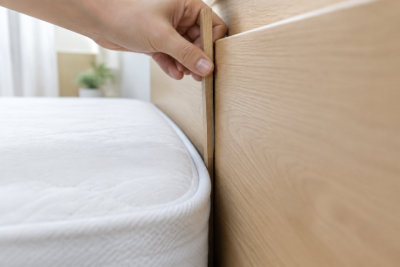
What Size Bed Gap Filler Do I Need? Thickness, Length and Density
Size a bed gap filler from three measurements, not the bed’s name: thickness equals gap width plus half an inch to one, length runs the full seam, height runs platform to mattress top. Density starts at 50D.
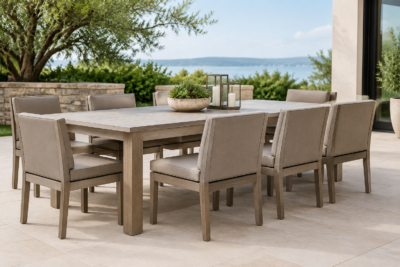
Cushion Thickness & Seat Height: Match the Pad to the Table
Cushion specs usually answer comfort questions. Thickness answers a geometry question: how high off the floor you end up sitting,
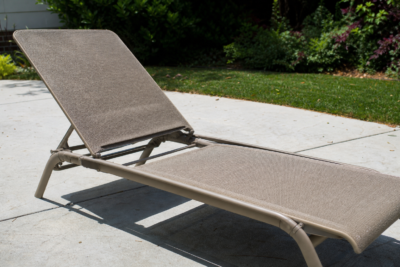
Chaise Lounge Cushion Measurements: A Complete Guide to Getting the Fit Right
How to measure a chaise lounge cushion correctly — seat depth, back height, thickness, hinge points and one-piece vs two-piece styles — with real Hampton Bay chaise dimensions.
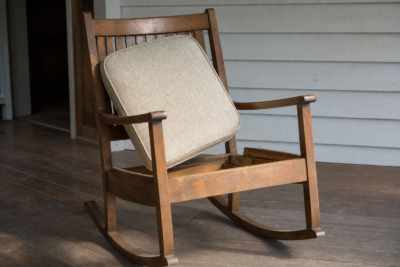
How to Measure Rocking Chair Cushions: Seats, Backs and Tie Positions
How to measure rocking chair cushions — tapered seats, curved backs, slat-gap tie maps and rock clearance — with the three-number protocol for both pieces of a rocker set.
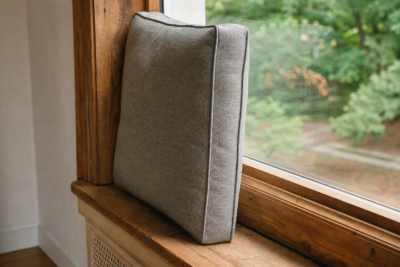
Window Seat Cushion Measurement: How to Get a Perfect Fit
Measure a window seat cushion correctly — width across alcoves, depth front to back, thickness vs sill height, radius corners and bay window angles — with tips from the cutting floor.
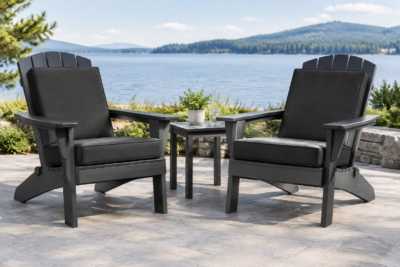
How to Measure Adirondack Chair Cushions: Seats, Fan Backs and Slat Gaps
How to measure Adirondack chair cushions — tapered seats, fan-back heights, recline geometry, strap-through slat-gap maps and two-piece sets for the tall-back chair.