Adirondack chairs are the most forgiving cushion target in outdoor furniture — with one big exception: the back. This guide covers the standard dimensions, the two back-cushion styles, tie patterns, fabric selection for chairs that live in full sun, and what to do when your Adirondack is non-standard (vintage, oversize, or poly-wood with slat gaps). Measuring basics live in our how-to-measure guide; if your whole patio set needs cushions, start with the Hampton Bay guide or Lowe’s guide instead.
What Size Cushion Does an Adirondack Chair Take?
The Adirondack seat is the easy half: most chairs take a roughly square seat cushion in the 19-21 inch range, and because the seat is flat and unobstructed, close fits work better here than on any other furniture type.
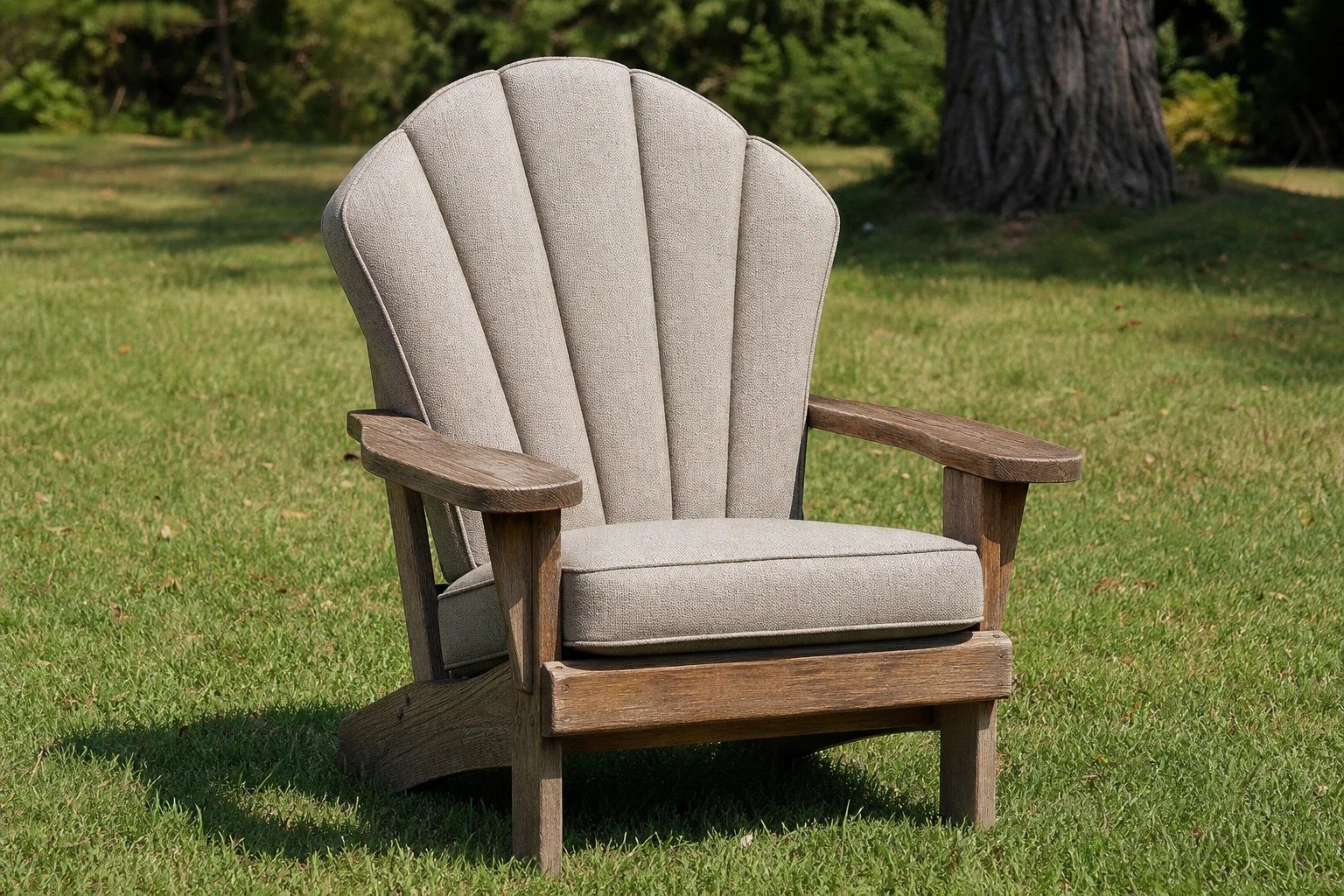
Before the table, the summary: seat cushions cluster around 20 x 20, back cushions split into short (headrest-style) and full-height styles, and thickness is a comfort choice more than a fit constraint (2-4 inches typical).
| Component | Typical size range | Notes |
| Seat cushion | 19 x 19 to 21 x 21 | 20 x 20 is the de facto standard |
| Seat thickness | 2 to 4 inches | Thicker = more comfort, raises seating height |
| Short back cushion | ~20 x 12 to 20 x 14 | Covers lower back only; fits any back height |
| Full back cushion | 20 x 24 to 21 x 30 | Needs the fan/slats to be tall enough |
| Throw pillow | 18 x 18 to 20 x 20 | Optional; sits on top of back cushion |
A stock 20×20 cushion covers the majority of Adirondack seats; chairs built oversize (the “king” Adirondacks) take 22-24 inch squares like this size class.
Seat Cushion or Full Set: What Do You Actually Need?
Three configurations, in ascending comfort:
- Seat cushion only. The classic look — bare slats on the back, pad on the seat. Cheapest, easiest to store, fine for short sits. Most Adirondacks are used this way.
- Seat + short back cushion. The short (12-14 inch) back pad straps around the slats at lumbar height. Works on every chair regardless of back height — the safest gift/upgrade option.
- Seat + full back cushion. Full-height coverage up the fan back. Maximum comfort for long sits (which is the whole point of an Adirondack), but you must measure the back height first: from the seat deck to the top slat, minus 2-3 inches so the cushion does not overhang the crest.
The Tie Pattern: The Detail That Decides Fit
Adirondack cushions attach with ties, and the tie layout must match your chair:
- – Rear-corner ties (standard): two ties at the back corners of the seat cushion, fastening around the rear slat or side frame. Fits nearly all chairs.
- – Four ties: adds front ties; useful on shallow seats where the cushion walks forward.
- – Back cushion straps: full-back cushions use horizontal straps threading through the slat gaps and buckling or velcro-ing behind — count your slat gaps and note their spacing before ordering.
- – Poly-wood (HDPE lumber) chairs: slat gaps are often wider than wood chairs; straps need enough length to wrap. Check the gap width.
When a cushion “fits” dimensionally but slides constantly, the ties are the culprit — this is the most common complaint in Adirondack cushion reviews.
Which Fabric Should You Choose?
Adirondacks typically live in the open, in full sun — the harshest environment for cushion fabric. Tier guidance:
- – Solution-dyed acrylic (Sunbrella-class): the right default for uncovered chairs. Color lives in the fiber; 5+ years of UV resistance; mildew cleans with diluted bleach without harming the color. Highest upfront cost, lowest cost per year.
- – Olefin: strong second. Near-acrylic fade resistance, better stain behavior, typically cheaper. A good pick under trees where pollen and bird traffic are the main enemies.
- – Polyester (including “spun poly”): acceptable only for covered porches and occasional use. An uncovered polyester Adirondack cushion fades noticeably in one summer.
For fill: foam-core cushions hold shape and dry faster than loose-fill; thick loose-fiber fills feel luxurious but absorb and hold rain. If the chairs stay out all season, favor quick-dry constructions.
Special Cases
Vintage and handmade Adirondacks
Older and artisan chairs predate standardization — seats run wider, deeper, or rectangular rather than square. Measure the seat (width front, width back, depth) and if it is not within half an inch of a stock size, have the cushion cut to your numbers: custom cushions. The same applies to matching vintage tall backs (30+ inches), which no stock cushion covers.
Oversize “king” Adirondacks
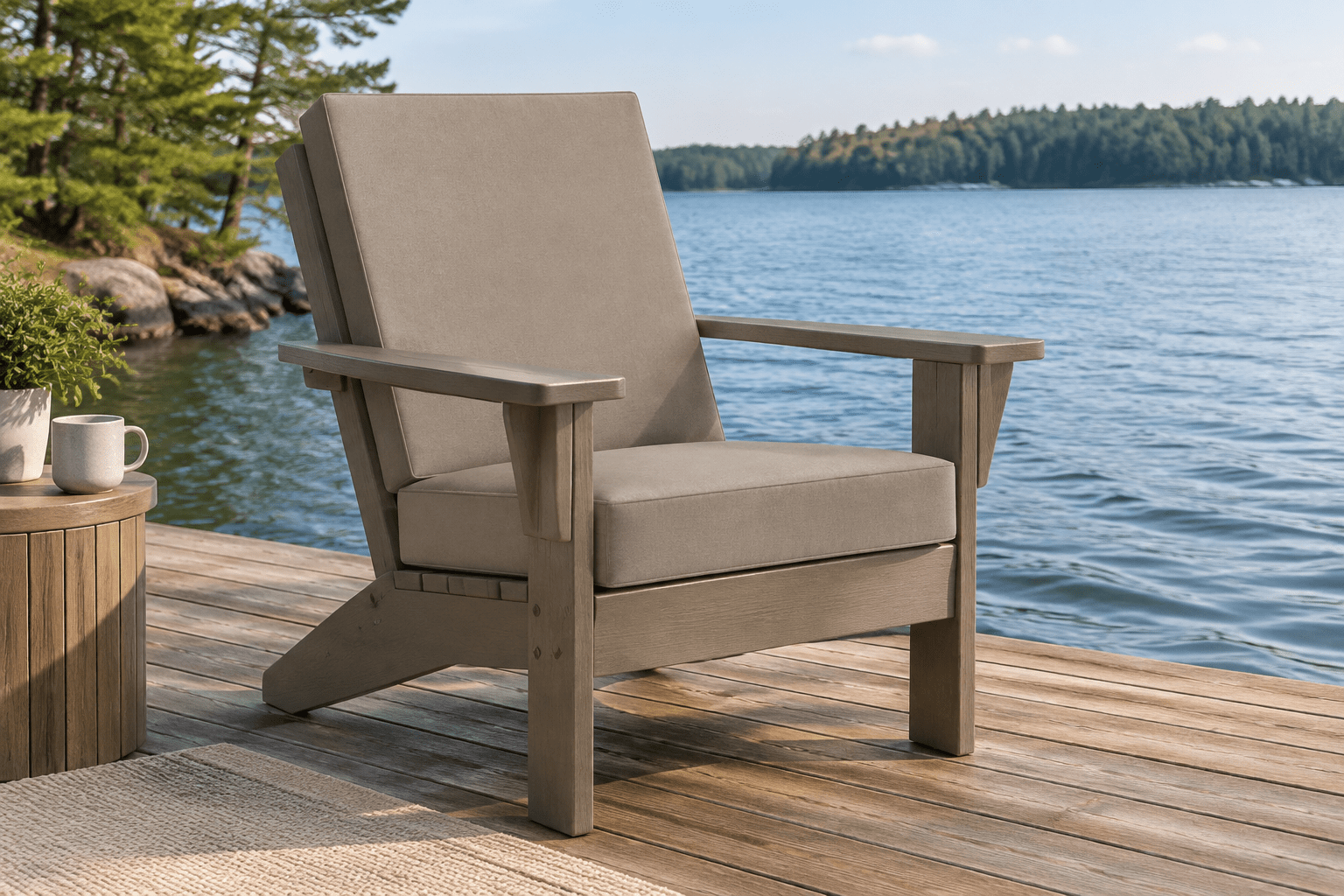
The plus-size Adirondacks (often marketed for their roomy 24+ inch seats) take the bigger square sizes — measure and match to the nearest standard, or go custom for a one-piece seat-and-back unit.
Double Adirondacks (tête-à-tête and settees)
Two-seat Adirondack settees need two seat cushions plus one long or two separate back cushions; measure the combined seat deck (often 48+ inches) — one-piece bench-style seat pads fit some models, and custom bench cushions handle the rest.
Plastic/resin folding Adirondacks
The light folding versions have slightly crowned seats and narrower backs; standard cushions still work, but choose thinner foam (2-3 inches) so the back cushion does not push you past the recline angle.
Caring for Adirondack Cushions
- – Store or stand them on edge after rain; Adirondack slats trap water against the cushion underside.
- – Bring them in over winter — the fan back makes them awkward to cover well, and indoor storage beats any furniture cover.
- – Wash acrylic and Olefin with mild soap; rinse; dry standing. Bleach-dilutable acrylic shrugs off mildew spots.
- – Rotate seat cushions occasionally if the chair orientation means one face takes more sun.
How to Measure an Adirondack for Cushions
The Adirondack-specific measuring notes (the general seam-to-seam method is at how-to-measure):
- Seat width at the front edge and at the back edge of the seat deck — Adirondack seats taper more than most chairs because of the wide-arm design. If the two widths differ by more than half an inch, you need a trapezoid cut.
- Seat depth from the front edge to where the seat meets the back frame — the reclined Adirondack geometry makes the seat-to-back junction lower than it looks; measure the flat deck only.
- Back height and width for back cushions: height from seat deck to top slat minus 2-3 inches (so the cushion does not overhang the crest), and width at the widest point the cushion will sit — the fan back means a full back cushion can be tapered to follow the fan, which looks tailored and prevents side overhang.
- Slat gap positions: measure the distance between slat gaps from the seat deck up, if you want a strap-through back cushion. Straps landing on solid wood instead of gaps is the number-one back-cushion fit failure on Adirondacks.
- Tie anchor points: identify where rear ties can fasten — the rear seat rail, the slat gaps, or the arm frame. Different chairs offer different anchors; the cushion’s tie placement must match what exists.
One Adirondack quirk worth knowing: the seat deck often has a slight backward slope (part of the ergonomics), so foam thickness at the front vs back of the cushion affects feel. Custom workshops can taper the foam slightly (a quarter to half inch) to level the sitting position — an option stock cushions never offer.
What About Adirondack Ottoman and Side Pairings?
Completing the set:
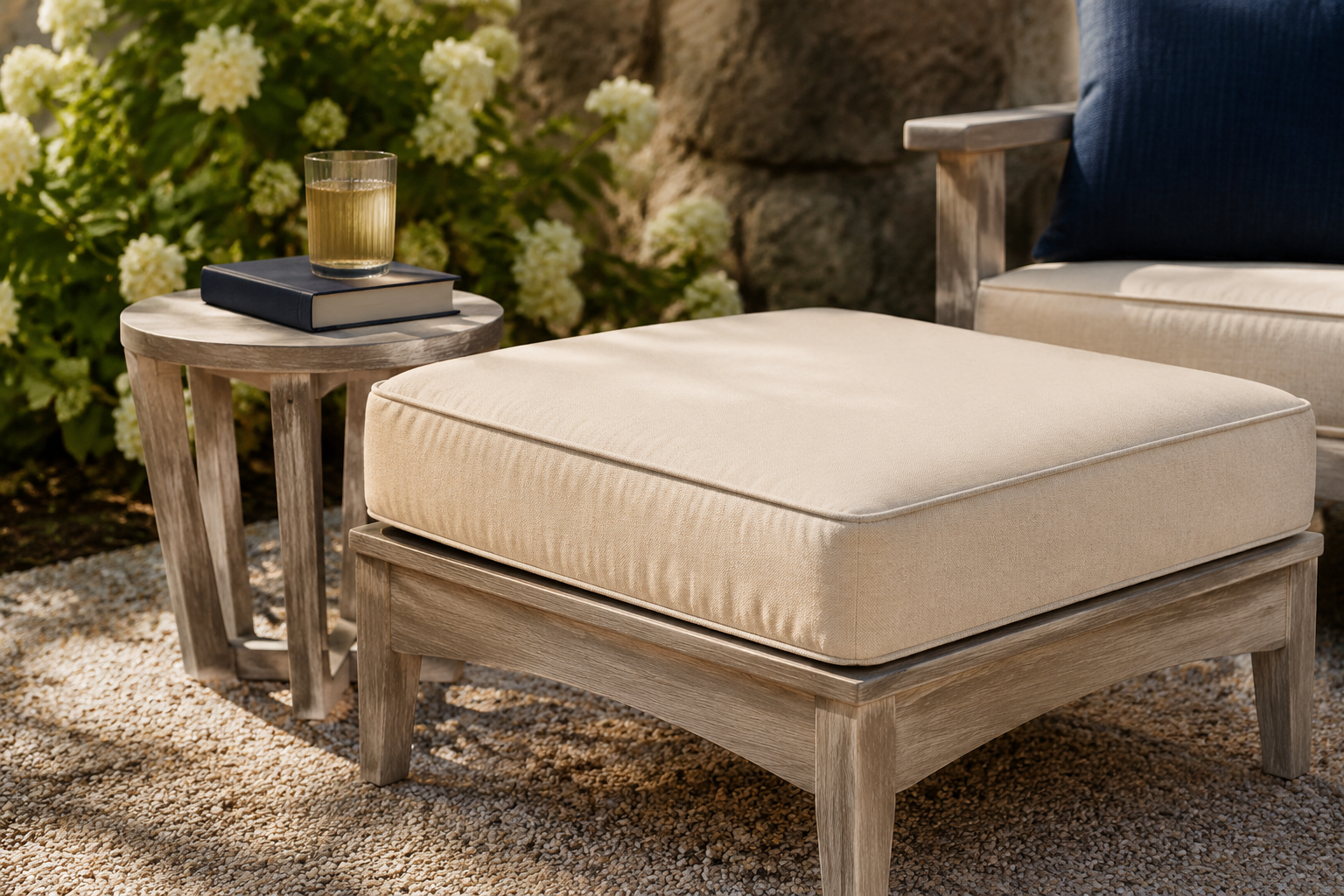
- – Adirondack ottomans take roughly 18-20 inch square pads, 2-3 inches thick. Match the seat cushion’s fabric; ottoman pads get more foot traffic (literally) so a tougher weave grade pays off.
- – Side tables and drink tables: usually bare wood, but thin 16-18 inch pads exist for people who use the table as an extra seat. Standard sizes cover these — see the standard sizes guide.
- – Matching pillow sets: an 18-20 inch throw pillow on the back cushion is the classic three-piece Adirondack kit (seat + back + pillow). If you are ordering custom anyway, having the pillow cut to match guarantees fabric consistency across all three pieces.
Where Adirondack Cushions Come From: Aisle, Brand, or Custom
Three sourcing routes specific to this chair type:
- – Big-box seasonal wall: Adirondack seat pads appear every spring in the 19-21 inch squares and matching back pads. Because the Adirondack seat is the most forgiving fit target, this route works more often here than for any other furniture type. The caveats from earlier sections still apply: verify fabric tier (polyester fades fast on chairs that live in the open) and tie layout.
- – Cushion specialists and brand programs: makers of the chairs themselves (the poly-wood and teak Adirondack brands) often sell matching cushion sets sized to their own chairs — the rare case of the brand-parts channel working in the buyer’s favor. If you know your chair’s maker, check their accessories listing before the generic aisle.
- – Custom: for vintage chairs, oversize kings, double settees, and anyone wanting a specific fabric — custom cushions cuts seat, back, and throw pillow as a matched set, including tapered fan-back cuts that stock cushions never offer. Start from the custom Adirondack chair cushions page, where the seat-and-back preset carries the outdoor fabric tiers this chair lives in.
Price-wise, the routes stack predictably: seasonal-wall pads cost least per piece, brand accessory sets sit mid-tier with guaranteed fit, and custom runs highest per piece but is the only route that covers every chair and every fabric choice — and for a chair you expect to keep for a decade, the matched-set look wears better than assembled-from-the-aisle.
The Comfort Case for the Full Set
One closing argument for the seat-plus-back configuration: the Adirondack’s reclined geometry is designed around the assumption of a back cushion. Bare-lumber Adirondacks force you to brace with your neck and shoulders on long sits — the “nice chair, can’t sit in it more than twenty minutes” experience. A full set (seat, back, optional pillow) converts the chair into what the design intended: a nap-capable reading chair. If your chairs host anything longer than a morning coffee, the back cushion is not an accessory, it is the missing component.
FAQ
What size cushion fits a standard Adirondack chair?
A 20 x 20 inch seat cushion fits the majority of standard Adirondacks; 19 x 19 and 21 x 21 cover the rest. For the back, choose a short ~20 x 12 lumbar style (fits any chair) or a full back cushion measured against your back height.
Do Adirondack chairs need back cushions?
Not for fit — only for comfort. Seat-only is the traditional setup. A back cushion matters if you sit for hours; the reclined angle has no lumbar support of its own.
Why does my Adirondack cushion keep sliding?
Tie mismatch. Rear-corner ties need a rear slat or frame bar to fasten to; on chairs where the rear slat sits high or low, re-tie at frame level, or choose four-tie cushions. Persistent sliders on odd frames are solved with ties placed where the frame needs them.
Can I leave Adirondack cushions outside all summer?
With acrylic or Olefin fabric and foam-core fill, yes — expect years, not seasons, of life. Polyester cushions left out will fade within a summer; store those between uses.
How many cushions do I need per chair?
One seat cushion minimum; a seat plus short back (the 20 x 12 lumbar style) is the universal comfort upgrade; the full three-piece set (seat, full back, throw pillow) is for long sits. The seat-only look is traditional, but the reclined fan back has no lumbar support of its own — the back cushion is doing ergonomic work, not decoration.
My chair is oversize/vintage and nothing stock fits. What now?
Measure seat width x depth (and back height, plus slat-gap spacing if you want a strapped back cushion) per our measuring guide, and have cushions cut to your dimensions — custom cushions builds Adirondack sets including one-piece seat-and-back units, cut to your measured frame.
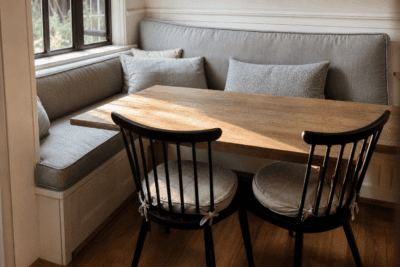
Breakfast Nook Cushions: The Corner-Seating Build Guide
Breakfast nook cushion guide: L-shaped and U-shaped runs, corner geometry and seam placement, seat-plus-back builds at dining height, morning-sun fabric logic, and ordering the whole run from one fabric lot.
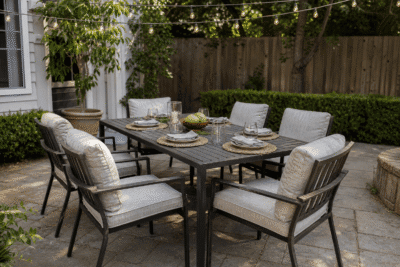
Outdoor Dining Sets: Buying the Set Right So the Cushions Work
Outdoor dining set buying guide: how the set choice locks in your cushion future — seat sizes, arm heights, frame materials, cushion quality in boxed sets versus custom pads, and set versus separate buying.
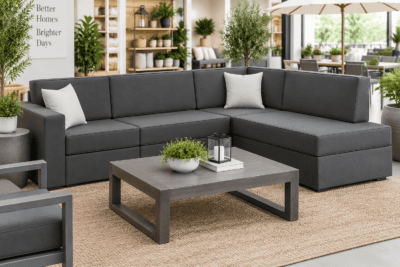
At Home Outdoor Cushions: The Decor Superstore’s Seasonal Wall
At Home runs a full-scale seasonal cushion department at decor-store prices — what the wall stocks, the fit grid, and when the superstore route ends at custom.
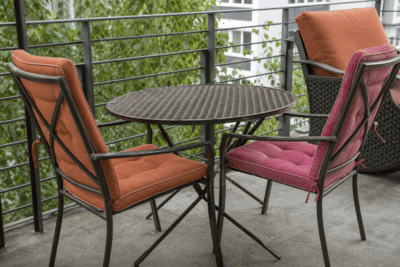
Target Outdoor Cushions: Threshold, Sizing and Replacement (2026)
Target’s Threshold cushions look designer but run generic sizes. What fits, what the seasonal rotation kills, and when custom replacements beat another Threshold refresh.
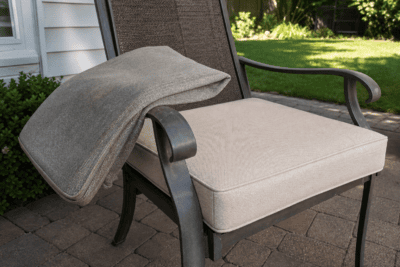
Hampton Bay Cushion Covers: Replacement Covers vs Full Cushion Replacement
The Hampton Bay covers question answered — why OEM cover-only replacements are rarely available for most series, the exact-fit route (full cushions by your series dimensions), re-covering services and DIY, and how to identify your series first.
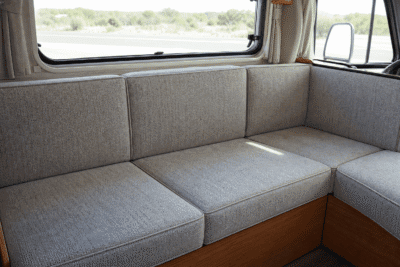
RV & Camper Cushion Replacement: The Complete Guide
RV dinette and berth cushion replacement — sizes, 45–60D foam for daily use, spill-proof fabrics, and the paper-template method for odd cabin shapes.