Tobago (Hampton Bay)
Two houses on the same street can order the identical Tobago cushion in the identical cloth and end up with two different pieces of furniture. The south-facing porch gets cloth that bleaches at the shoulders and reads two shades lighter by August; the north-facing one keeps its depth of color for years but turns every fabric decision into a guessing game, because nothing on a shaded porch ever looks like it did on the sample. Same sun, same cloth, different geometry.
Direction of light is the most under-used fact in outdoor fabric choice. It decides which colors tell the truth, which fade first, and whether the seat you loved in the showroom survives contact with your actual yard.
The geometry behind north light and south light
In the northern hemisphere, a south-facing exposure faces the full arc of the sun: high, hot, direct in summer, low and penetrating in winter. A north-facing exposure sees the sky but almost never the disc itself — light arrives scattered, soft, and remarkably constant through the day. Painters paid fortunes for north-facing studios for exactly this reason: north light changes so little that color judged under it at nine in the morning still holds at four in the afternoon.
East and west sit between, each with a personality. East gets its strongest light early — cool-toned, low, and short — which is why east-porch breakfast seats flatter warm cloths that would glare at noon. West collects the day’s accumulated heat and the long amber hours of evening light that warm every color they touch, then hands the fabric a full afternoon of radiation on the way out.
Judge color where the light tells the truth
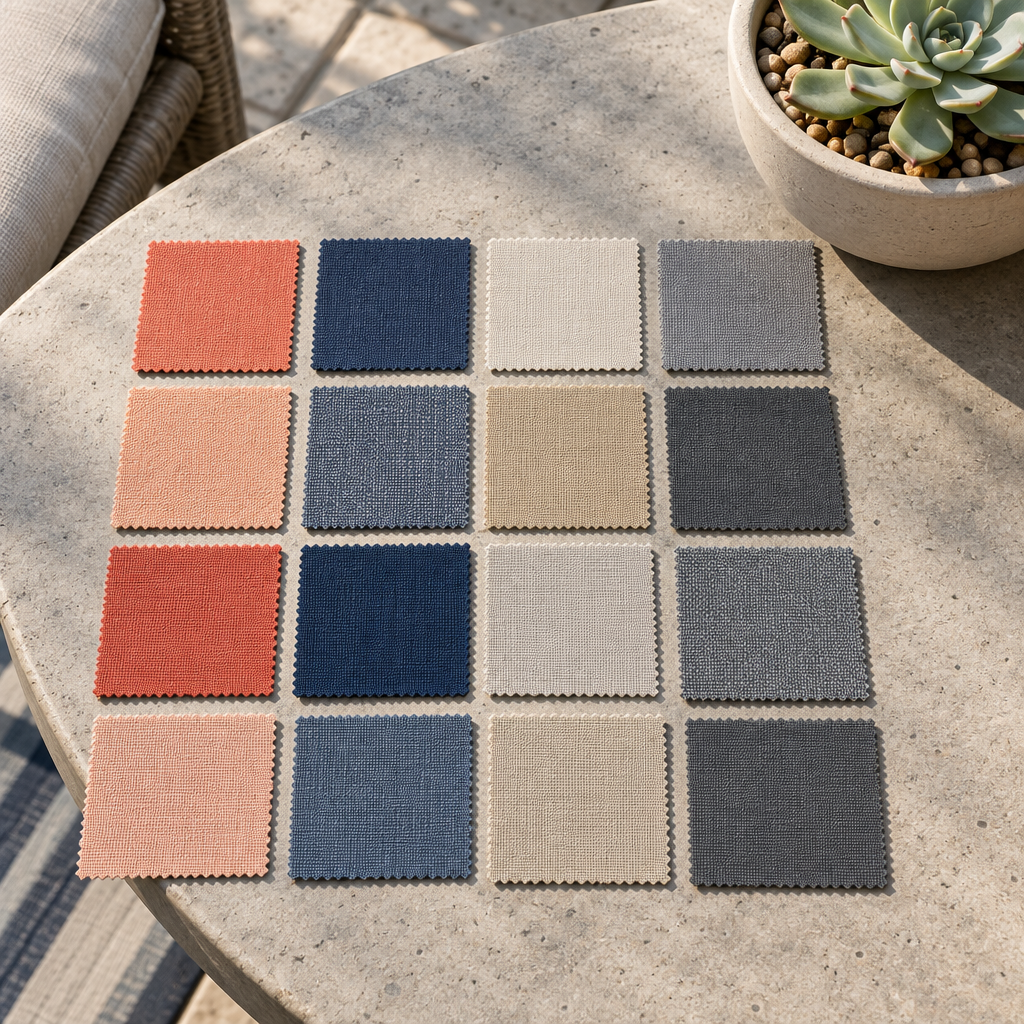
The working rule: make the final color comparison in open shade facing north, and treat every other lighting as a special effect. Direct sun pumps contrast and bleaches out the very differences between two similar cloths; evening light gilds everything and hides green undertones; porch lamps flatten reds. Open-shade north light is the closest outdoor equivalent to the even illumination colors were dyed under — it is the light in which two navy swatches finally admit they are not the same navy.
Practically, for a Tobago rebuild: take the shortlist of cloths from the 119-fabric menu to the seat itself, hold them against the frame in north shade, and eliminate everything that surprises you. The cloth that survives honest light will still be the one you recognize at the end of the season.
The noon test
Then run the opposite check on purpose. Whatever cloth won the north-light judging gets one look at high noon on the actual seat, in full sun, because that is the harshest hour the fabric will ever face and some colors misbehave precisely there — the pale weave that turns luminous white and glares, the saturated one that reads as a dark void. A cloth that passes both readings, even in shade and brutal in direct sun, is a cloth that will not ambush you in July.
This two-light discipline costs ten minutes with swatches in hand and replaces the most common regret in outdoor orders: the color that was chosen under a showroom’s warm track lighting and never stood a chance on an exposed patio.
What direction does to cloth over seasons
Radiation does the fading, and direction decides the dose. A south-facing seat takes the year’s full ultraviolet budget head-on, so its color fades first on the horizontal surfaces — the seat tops and arm crowns that face the sky — while shaded undersides keep their depth, and the cloth slowly tells you its own exposure history in two tones. East and west seats fade more evenly but from one consistent angle, which is why a long-lived set eventually shows a sunward and a leeward face on every cushion.
Two practical answers follow. For exposed positions, pick cloths whose character lives in texture and weave structure rather than in delicate surface color, so that gradual fading changes the cloth’s mood rather than ruining its plan. And where a seat takes sun on one face only, remember that rotating pieces end-to-end every so often spreads the dose — the maintenance side of the same coin is covered in the one-sided fade playbook.
What a light-aware order costs
Nothing about direction changes the arithmetic. Every Tobago piece starts from the same $45 make-base and climbs only with finished size and density between 35D and 65D; all 119 cloths price flat at a given size, so the fade-tolerant textured weave for the south rail and the delicate tonal cloth for the north reading nook bill by the identical rule. A sun-beaten dining set at 60D under daily service, a shaded lounge pair at a gentler fill — the figure follows size and density, never exposure. Sewing runs 4 to 7 business days, 3 to 5 on rush, with freight adding 3 to 6 weeks; order against the calendar of the season you want covered.
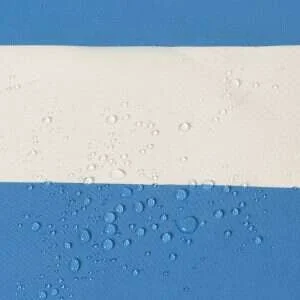
Washing stays uniform across every exposure: covers zip off completely for machine washing — no sewn-shut panel on this bench — because sun-facing and shade-facing cloths alike eventually meet a spill, and the recovery path should not depend on which side of the house they live on.
Frequently asked questions
Why did my fabric look different the day it arrived?
Because it was probably last judged under a screen or a shop’s warm lighting, and it arrived into your yard’s geometry. Unbox in the actual position, in daylight, before forming any opinion — and judge the keeper decision in open shade facing north, where colors stop performing and start telling the truth.
Is a north-facing spot really getting no sun?
It is getting light without the disc — scattered, even, low-contrast illumination all day. That constancy is why north shade is the standard for judging color and why north-facing cushions keep their depth for years. What north exposure lacks is warmth and drying speed, so a north seat’s real challenge is damp, not fade.
Which direction fades outdoor fabric fastest?
South, in the northern hemisphere, takes the largest total dose of direct radiation across the year; east and west each deliver one strong daily session, west with more accumulated heat. North fades slowest of all. Choose south-facing cloth for fade tolerance first and color second — the reverse of how a shaded seat can afford to shop.
Do I really need different fabrics for different sides of one yard?
Not different — differently prioritized. The exposed rail wants texture-led, fade-tolerant weaves; the shaded nook can take color-led and delicate ones. Both price identically per size from the $45 make-base, so a two-spec order costs nothing extra and each seat gets cloth chosen for the light it actually lives in.
Can I judge color from my phone screen?
Only as a first pass. Screens over-saturate, shift with brightness settings, and render the same photo differently on every device in the house. Use the screen to build a shortlist from the 119 cloths, then make the final call on physical evidence — cloth against frame, in open shade, in your yard’s own daylight.
Does low winter sun still do damage?
More than people expect. When deciduous trees drop their leaves, a yard that shaded itself all summer suddenly takes low-angle sun deep into spots that never saw it in June — and winter’s low arc means radiation arrives almost horizontally into vertical cushion faces. A seat that survived summer unscathed can fade along its back panel in a single bare-twig season, which is the argument for seasonal rotation even on cloth that never worried about July.
What ordering from this bench gets you
One workshop, in-house start to finish — the same hands cut, fill, and sew every exposure-aware piece, and have for over ten years. Figures re-checked against piece count before any cloth is cut — a doubtful measurement triggers a question, not a guess. No minimum order and no stock cycle — one sun-rail chair or the whole two-exposure set, in any of 119 fabrics. Fair-build guarantee: anything outside the ±½″ tolerance (±¾″ past 36″), built to the wrong cloth or the wrong spec, gets remade at no charge.
Tobago replacement cushions chosen for the light they will actually live in — judged in honest shade, tested at brutal noon, priced the same either way.
Unsure which exposure your seats actually get through the day? Send photos taken at different hours and we will read the light with you. For what to do once a sunward face has already faded unevenly, see the one-sided fade playbook — or go straight to the made-to-your-numbers order form. The full Hampton Bay catalog places your Tobago pieces in context.