
“Should we just buy a new set?” is the question every tired patio eventually asks, and it deserves a real answer rather than a shrug at a big-box aisle. This page runs the honest five-year ledger for a Pinnacle set: the re-cushion route against the replace-the-furniture route, in dollars, hassle and consequences nobody prints on a price tag.
The two routes, lined up honestly
Route one: replace the furniture. A comparable boxed set at today’s prices, plus delivery or a borrowed truck, plus an afternoon of assembly with the usual leftover-hardware mystery and the inevitable discovery that one critical bolt shipped as a decorative duplicate. Then the old set: hauled to the curb or a dump run, where steel and wicker frames with years of life left enter the waste stream. Total cost lands somewhere between “a lot” and “a real lot” depending on taste, and the new set arrives with its own countdown clock — the same foam-and-fabric layer that just failed on you, on a fresh timer.
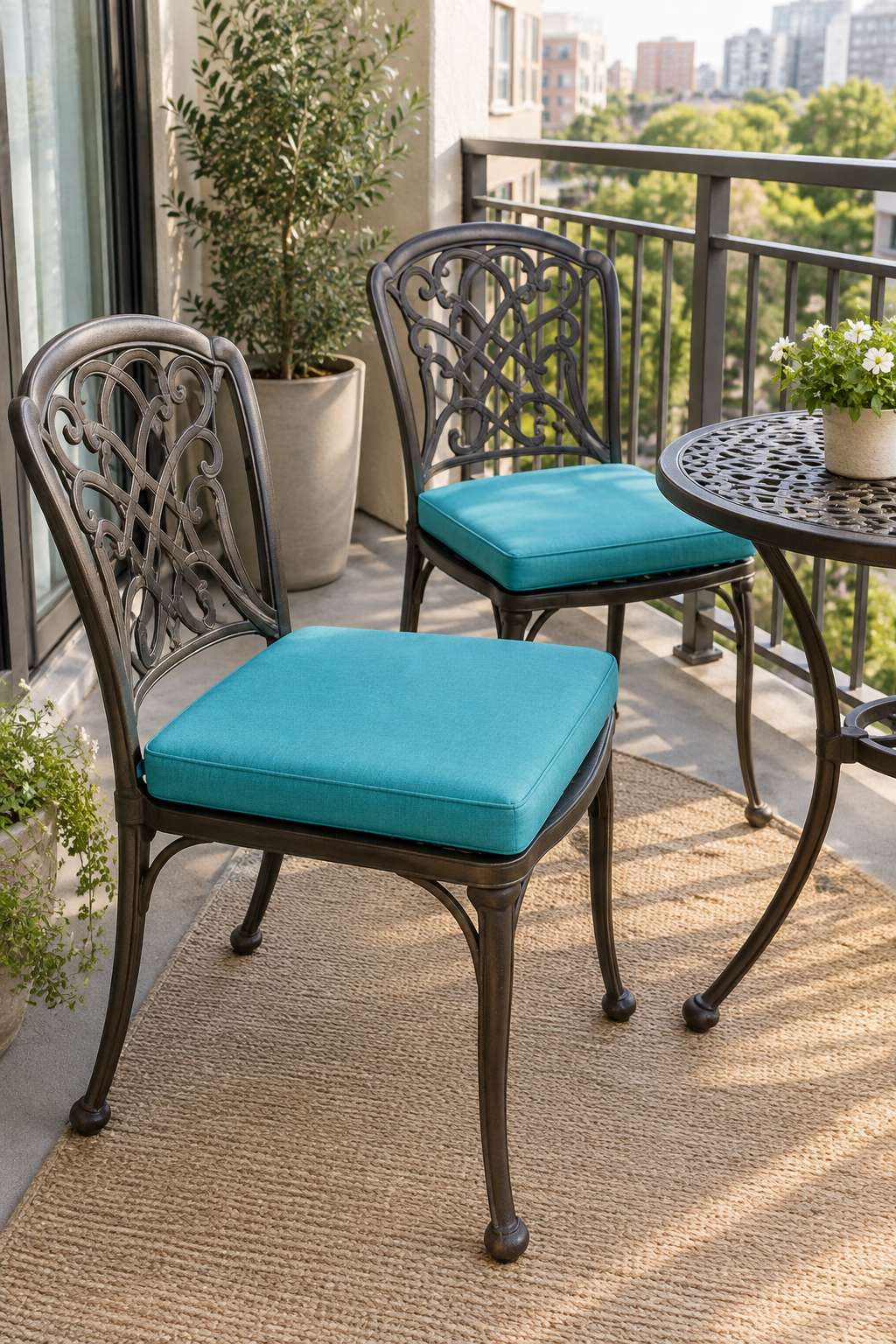
Route two: re-cushion the set you own. A measuring afternoon, an order cut to your figures, and pads that fit frames you already know are sound. Each cushion starts from a $45 make-base and scales with size and the density you choose between 35D and 65D — for most sets, the project totals a fraction of replacement. Nothing goes to the curb. The frames keep their years of service, and the new consumable layer can be replaced again in five or seven years for less than one new furniture purchase.
The ledger’s quiet line item is repetition: furniture gets bought once and depreciated; cushions get replaced on their own schedule forever. A household that internalizes that difference stops shopping for sets and starts maintaining them — which is cheaper every five-year window the arrangement runs.
The ledger’s unprinted columns
Dollars are the easy comparison; the harder-to-quantify columns still break toward the rebuild. Disposal: a replaced set is a truck run or a bulk-pickup scheduling exercise, and in many municipalities a fee — the re-cushion route generates a garbage bag of old foam and nothing more. Fit risk: a new set is bought by sight, online or floored, and arrives as a gamble on proportions; measured pads arrive as a certainty about the furniture you already live with. Style drift: replacing furniture drags the patio toward whatever this season’s catalogs push, while re-cushioning lets the same frames take on a new decade in whatever fabric the household actually wants — 119 options, one flat price, zero pressure to buy a matching umbrella. And the habit column compounds: the household that learns its set is maintainable stops treating patio furniture as consumable and starts treating it as kept — which, for anything with a sound frame, is what it is. Five-year windows stack: run the arithmetic twice and the maintained set is not merely cheaper, it is the one still standing in the same corner, worn in instead of worn out.
Where the money in a cushion actually goes
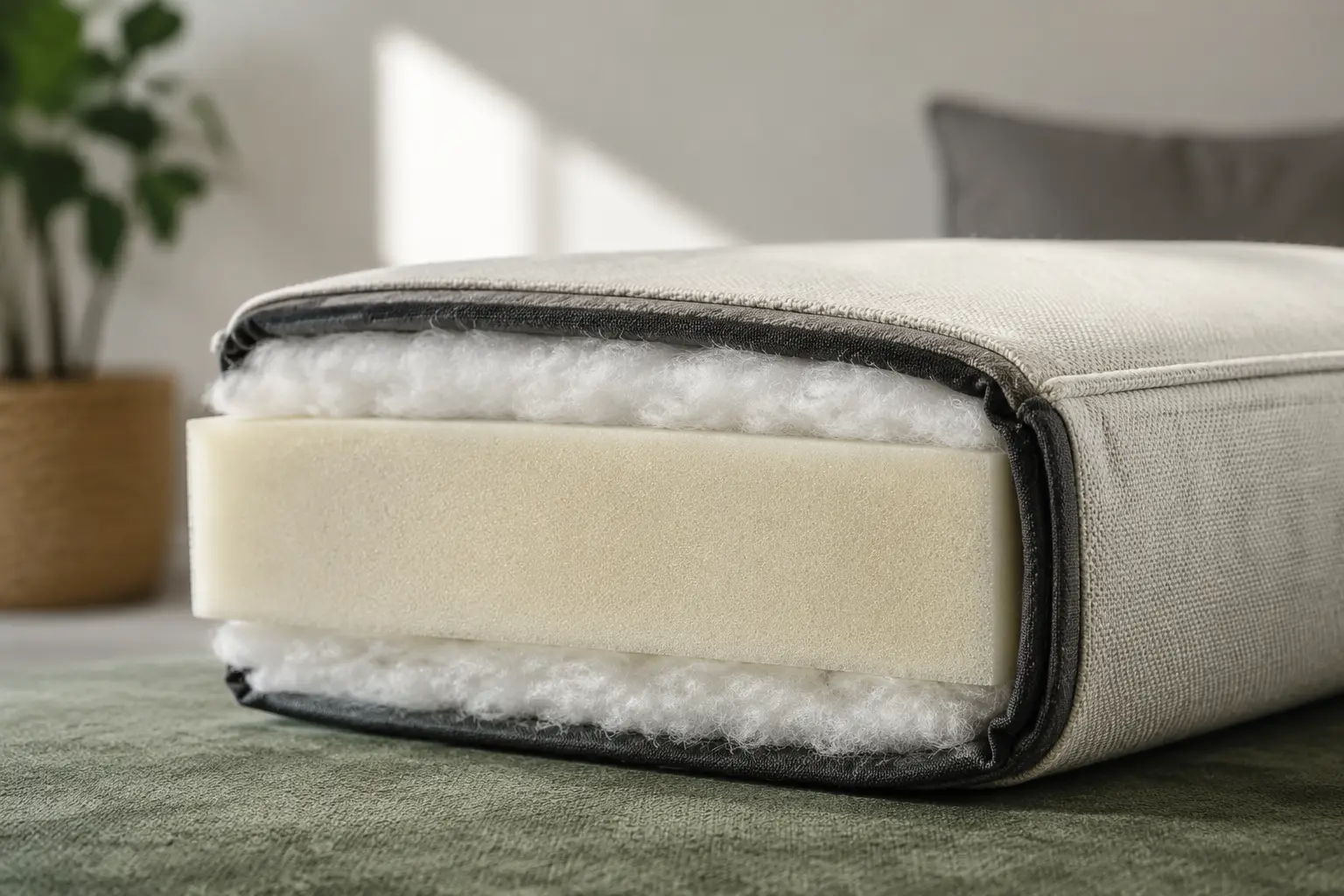
Understanding the rebuild’s price means knowing what you are buying. A replacement cushion is three materials plus labor: foam (the single biggest cost driver, and the reason density moves the quote — 35D foam and 65D foam differ materially in raw cost), fabric (a flat, identical cost across our menu of 119 options, which is why color choice never changes a figure), and bench time (cutting, filling, sewing, QC — the in-house labor of a workshop that has done this for over ten years). The $45 make-base is the entry point of that stack at small sizes; dimensions and density do the rest.
What is deliberately absent: no brand licensing overhead, no retail markup layer, no freight-from-overseas padding baked into unit prices. The order ships from the bench that built it, on a flat-rate freight adding 3–6 weeks to most US addresses — a cost visible in the quote rather than hidden per-cushion.
Sound frame, tired pads: the qualifying test
Route two only wins when the furniture itself has years left, so run the check before committing: grab each frame and try to rack it diagonally — solid frames resist, tired ones shift. Snug every bolt you can find and see whether wobbles disappear. On wicker pieces, look for broken weave at flex points and load corners; on steel, check welds and rust-through (surface rust is cosmetic, flaking rust is structural). Frames that pass this two-minute exam are exactly the candidates the re-cushion route was made for. Frames that fail it have honest years behind them, and new pads would be polish on a sunset.
Confirming the line is a Pinnacle — worth doing, cheap to do — follows the standard ladder: white tag under a seat frame (model number behind a GLD or THD supplier code) first, Home Depot order history or the assembly leaflet second, frame photos to the bench third. No chart was ever published for the series, and same-name pieces from different model years can differ in loft, so the specification remains your own three figures per cushion per the measurement guides.
Choosing the consumable layer’s specs
With the frame qualified, the new layer gets specified like the maintenance it is. Density by use: 55D–60D for seating that works daily, 45D–50D for occasional pieces, the full dial running 35D to 65D — each step priced openly before checkout. Fabric by exposure and household: water-resistant tech fabric under open sky, cotton linen for covered corners, velvet against claws and constant lounging — all 119 options flat-priced, so the choice is lifestyle, not budget. And every cover zips off the foam for washing, because a layer meant to be replaced in five years is a layer meant to be kept presentable in the meantime.
Series neighbors on the uncharted route: Park Meadows and Posada. A charted series reference begins on the Kampar page; the Hampton Bay hub indexes everything we track.
Frequently asked questions
Is re-cushioning ever more expensive than replacing the set?
Only at premium-furniture scale — heirloom frames with complex curves can run a full re-cushion into low four figures. For standard boxed-set geometry like Pinnacle’s, measured replacements from a $45 make-base per cushion virtually always total well under a comparable new set.
What density gives the longest replacement interval?
The 55D–60D band holds working shape longest under daily compression cycles — typically the difference between replacing pads in year four and replacing them in year seven. Density is priced transparently across the 35D–65D dial, so longevity is bought knowingly.
Can I spread the rebuild across two budget cycles?
Yes — no minimums exist. Replace the seats this year and the backs next, keeping one old pad of each type as the measurement reference so the second batch matches the first. Each piece prices identically whether ordered alone or with forty siblings.
What happens to tolerance errors — am I self-insuring the fit?
No — cuts landing outside ±½″ of your figures (±¾″ past 36″), wrong fabric, or wrong build are remade at our cost. The tolerance is our risk to hit, not yours to absorb.
How does the timeline compare with buying new furniture?
Standard sewing runs 4–7 business days, a rush 3–5, with flat-rate freight adding 3–6 weeks to most US addresses — broadly the same window as a delivered furniture order, minus the assembly afternoon.
Do I need to identify the series before ordering?
The order runs on measurements, not names — the identification ladder (tag, order history, photos to the bench) exists to stop you chasing a published chart that never was. Photos settle any residual doubt before cutting begins.
What ordering from this bench gets you
- One workshop, ten-plus years of in-house cutting, filling and sewing — the quote, the build and the shipping under a single roof.
- Submitted measurements re-verified against piece count before fabric is unrolled — the same scrutiny the frame test above runs in reverse.
- No minimums — staged rebuilds across budget cycles price each piece from the same $45 make-base, any of 119 fabrics at flat pricing.
- Remake terms without an argument clause: off-tolerance, wrong fabric, wrong build — corrected at our expense.
Pinnacle replacement cushions — the five-year answer to a five-year question, from a $45 make-base per piece.
Frame test came back ambiguous? Send photos of the joints and weave and we will give a straight verdict before you commit. Not a Pinnacle after all? Any shape, custom built — or start from the Hampton Bay index.
Shipping & Delivery
- Orders over $158 ship free — add a second cushion or an upgrade and shipping’s on us.
- Smaller orders ship anywhere in the contiguous US for one simple flat fee — always shown before you pay.
- Made in 7–14 business days. Each cushion is cut and sewn to your measurements after you order, never pulled from a shelf.
- ±½″ tolerance on all custom cuts — and if we cut it wrong, we remake it free. No forms, no fine print.
Have a deadline? Contact us before ordering and we will tell you honestly whether we can meet it.
Related products

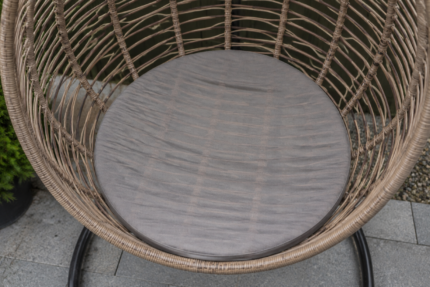
Custom Egg Chair Cushions
- Replacement pads for egg chairs cut to your measurements — any diameter the basket measures, any thickness from 2 to 8 inches.
- Round seat pads from $115 (20 in. × 2 in., 50D); the standard 22 in. × 4 in. rebuild is $144; seat + back sets for hanging egg chairs from $225.
- Four density grades (35–65D) and the full thickness ladder — the spec universal pads never offer.
- All fabric tiers one price: solution-dyed outdoor weaves for balconies and patios, cotton-linen and velvet for indoor nooks.
- Made in 4–7 days at our own cutting tables, ± ½ inch in writing; a piece outside tolerance is remade free.
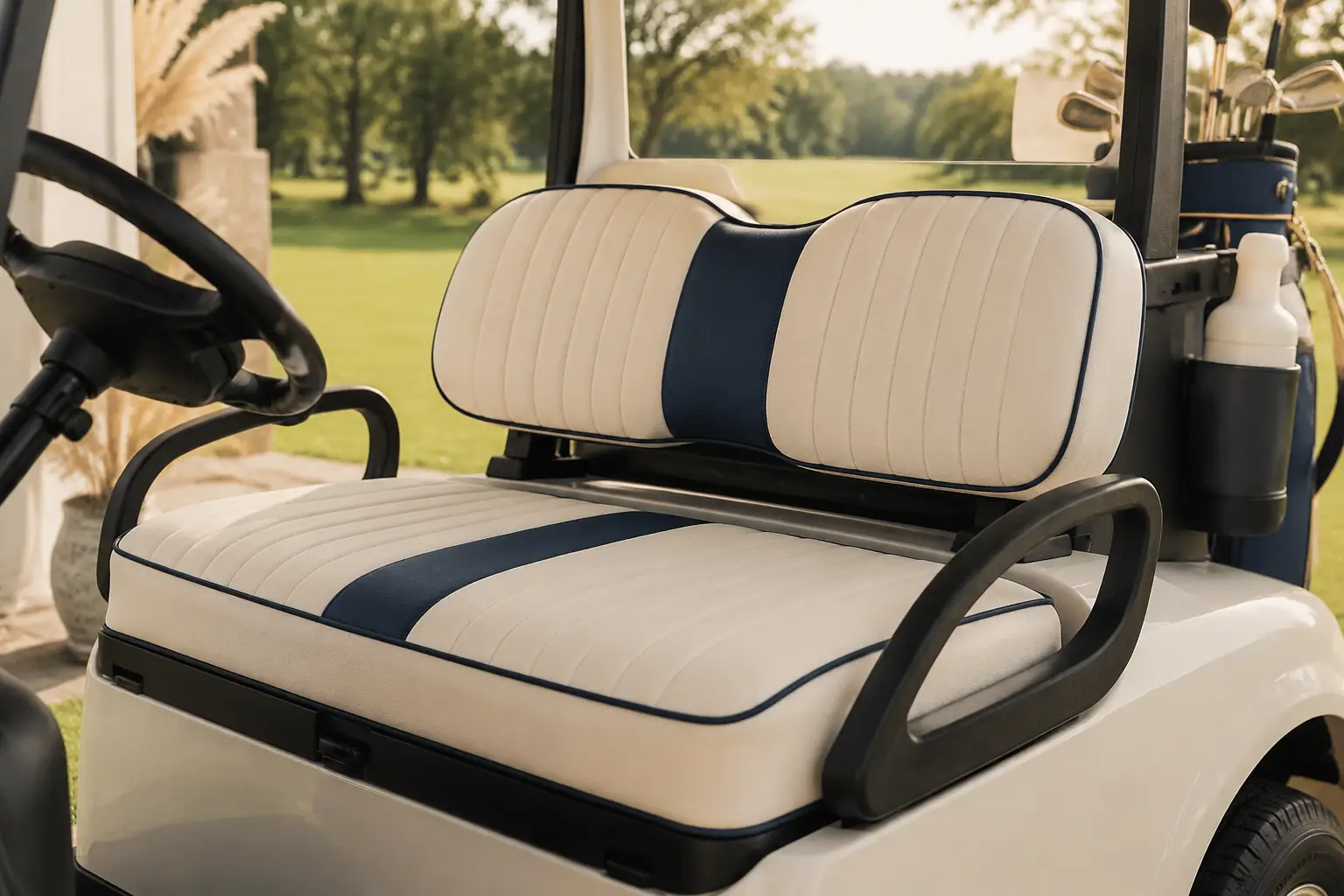
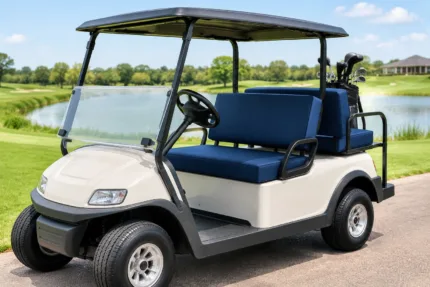
Custom Golf Cart Cushions
- Cut to your exact measurements — any cart, any seat kit.
- 119 performance fabrics at one price — full-sun and quick-dry outdoor lines included.
- One order, one dye lot — every piece in the run ships color-matched.
- Factory-direct from $166 — instant quote in the customizer below.
- ±½″ tolerance, re-checked before cutting — remade free if we cut it wrong.

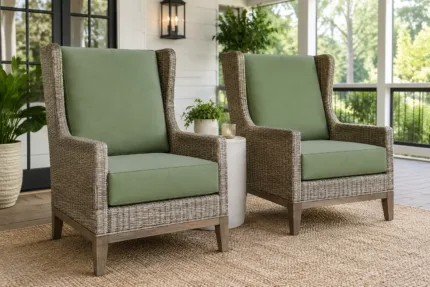
Custom Lawn Furniture Cushions
- Cut to your exact measurements — lawn chairs, swings, benches, chaises.
- 119 performance fabrics at one price — full-sun and quick-dry outdoor lines included.
- One order, one dye lot — every piece in the run ships color-matched.
- Factory-direct from $99 — instant quote in the customizer below.
- ±½″ tolerance, re-checked before cutting — remade free if we cut it wrong.
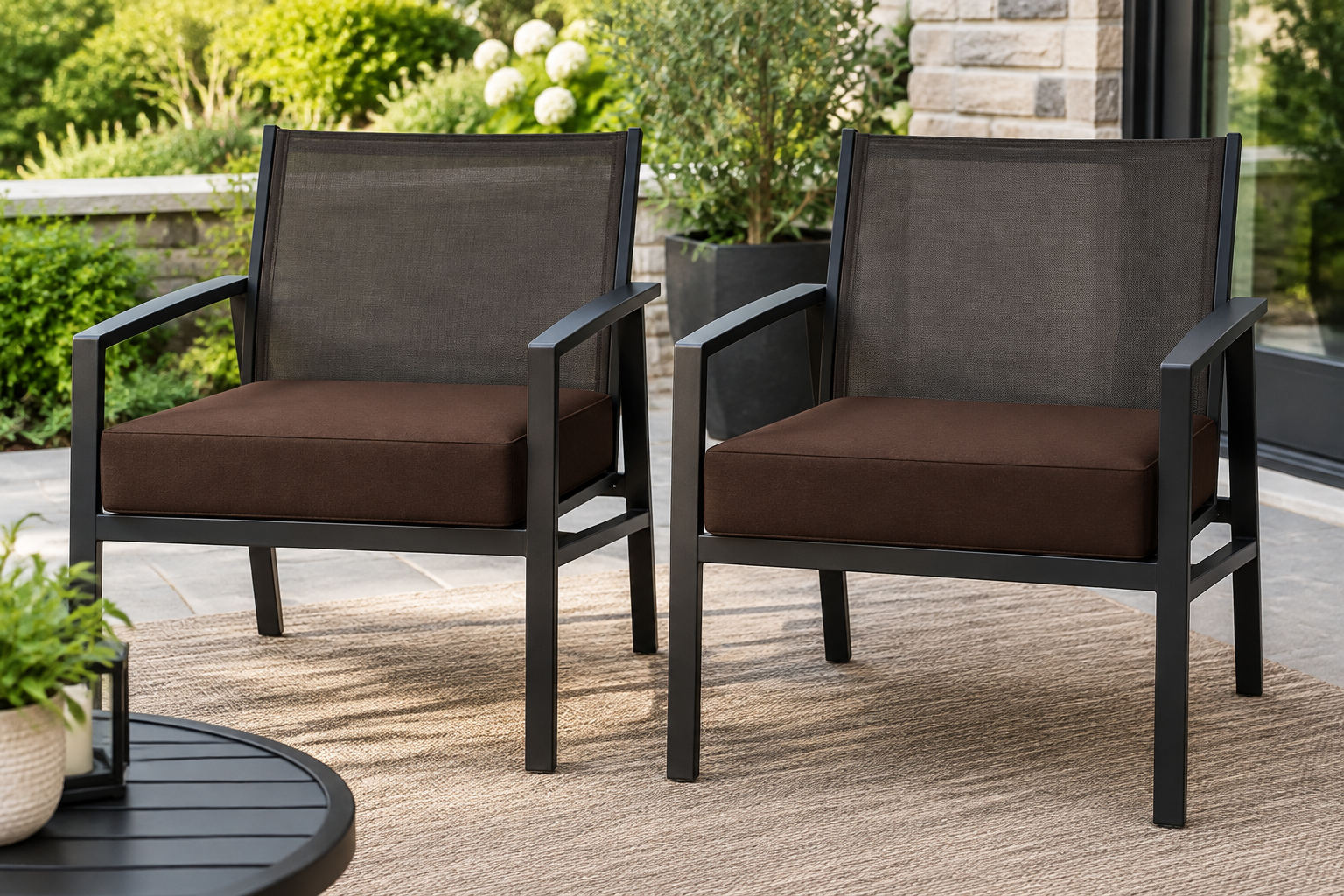
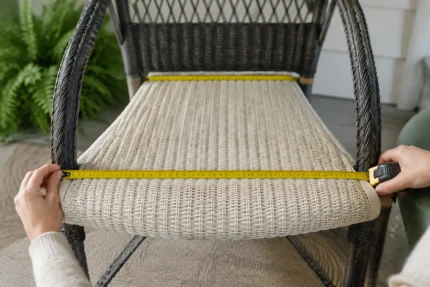
Custom Outdoor Seat Cushions
- Cut to your exact measurements — wicker, wrought iron, wood and lawn frames, any seat deck.
- 119 performance fabrics at one price — full-sun and quick-dry outdoor lines included.
- One order, one dye lot — every piece in the run ships color-matched.
- Factory-direct from $113 — instant quote in the customizer below.
- ±½″ tolerance, re-checked before cutting — remade free if we cut it wrong.