Measuring one chair is easy. Measuring a six-piece Dockview set — two armchairs, a loveseat, four dining sides — is where orders go sideways: figures swap between pads, a back cushion gets listed as a seat, and the workshop receives a puzzle instead of a spec. This page is about the discipline that keeps a set-order clean.
The pad-by-pad ledger
A full-set order is really five small orders that happen to share a carton. Treat it that way from the first tape reading. The method that survives contact with real patios is deliberately dull:
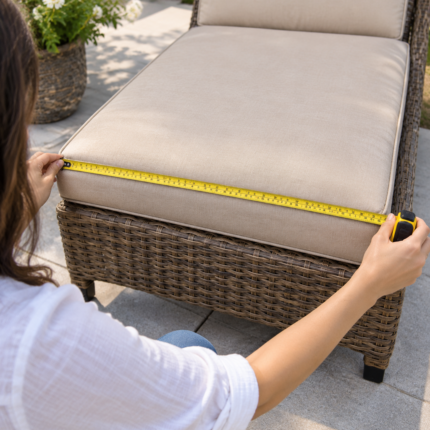
Label each piece before measuring anything — masking tape on the frame, “S1” through “S6” for seats, “B1” through “B6” for backs. Photograph the labeled set once, so every later figure has a home. Then measure one piece at a time, in label order, recording three figures per pad: seating width between the arms, depth along the flat deck, thickness at the seam. Photo of the tape in position for each figure — twelve photos for a six-piece run sounds excessive until the first number looks wrong and the photo arbitrates.
Seats and backs never share a row in your ledger. A back pad’s second dimension is height, not depth — it runs top to bottom along the frame — and mixing the two conventions inside one order is the single most common clerical error on multi-piece jobs.
The complete field method, with per-frame-type diagrams, lives in the measurement guide library. Budget twenty unhurried minutes for a six-piece Dockview run — less than one episode of the show you’ll watch while the new pads are in production.
Entry technique saves a round-trip too. Type figures as decimals — 19.75 rather than 19-3/4 — and let the configurator’s live pricing confirm each line as it lands: an entered dimension immediately prices itself, so a typo like 187 instead of 18.7 announces itself in dollars before it reaches anyone’s cutting table. After entry, read the whole order back from the screen against the paper ledger, one line at a time, with the photos open beside it. Two minutes of read-back catches the transpositions and dropped decimals that no downstream check can repair once fabric is cut. Owners who follow the label-photograph-enter-readback sequence report the whole order taking one coffee’s worth of time, and the workshop’s verification pass — which reads the same numbers against your piece count a second time — almost always finds nothing left to catch.
Why there’s no chart to shortcut with
Dockview never received a published cushion chart — like most Hampton Bay series beyond the flagship names, it cycled through Home Depot as seasonal stock and its pad spec stayed inside the manufacturer. The dimensional numbers that do appear on retail and resale pages describe furniture envelopes and cartons, not pads, and pad figures extrapolated from them inherit every one of those errors before you’ve even transcribed them. Your own three-figure ledger is the only spec with a direct line to the actual furniture.
The workshop double-checks what you submit: figures re-verified against the stated piece count, proportions sanity-tested, and anything that reads oddly triggers a query before cutting — not after delivery. Finished tolerance runs ±½″ (±¾″ on dimensions past 36″), with free remakes whenever the miss is on our side.
And the series name in all this?
Strictly optional for the order itself — but worth five minutes for peace of mind. The white tag under the seat frame or inside an arm rail carries the model number behind a GLD or THD supplier prefix, and a macro photo rescues most half-faded tags. Your Home Depot order search for “Dockview” outranks everything when the tag is gone entirely; the original assembly manual comes third.
The name drifts elsewhere online — it reads like a marina development in half the country’s listings — so generic searches lead anywhere but here. Trust the tag and the receipt. And since Hampton Bay ran series across model years with quiet changes to arm curves and cushion heights, two “Dockview” chairs from different years can legitimately take different figures, which is one more argument for measuring every piece rather than copying one.
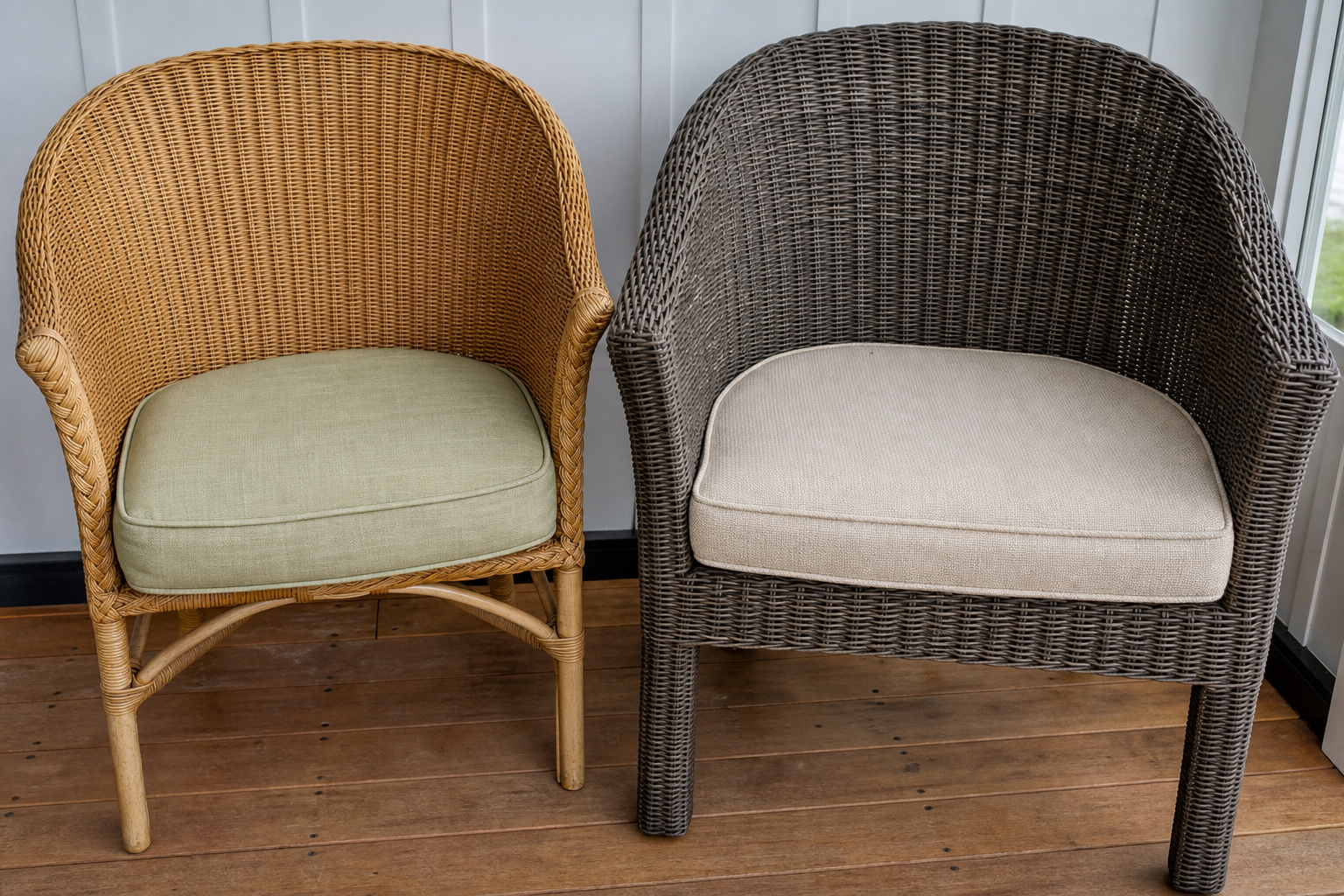
Tag gone and history thin? Photos of the frame — arm shape, weave, feet — usually resolve the series the same day, before any order exists.
Quote, fabric, foam — one sitting
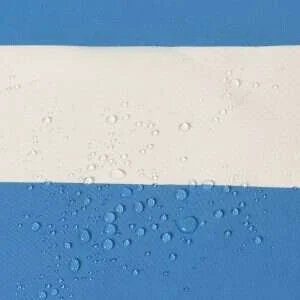
Ledger figures enter the configurator per pad, and the quote assembles line by line: each cushion opens at a $45 make-base and climbs with size and the foam density you pick across 35D–65D. The 119-fabric menu prices dead flat over any selection — cotton linen for sheltered porches, water-resistant tech fabric for open weather, premium velvet for claw-rated duty — and every cover unzips fully for washing. Set orders batch into one confirmed quote before anything reaches the cutting table; single-pad orders run through the identical path with no minimum.
Production occupies 4–7 business days standard, 3–5 with a rush flag, and shipping adds 3–6 weeks to most US addresses. A Dockview refresh ordered in the quiet weeks of late winter is seated a full season early.
Neighboring uncharted series — Charleston and Walnut Creek — use this same ledger method. Kampar carries a chart-backed page, and the Hampton Bay hub indexes every line we track.
Frequently asked questions
Do I measure every chair even if they look identical?
Yes — same-model pieces drift a quarter inch here and there across production runs, and tight frames don’t forgive it. Six chairs, six ledgers, six correct pads; the whole check adds maybe four minutes.
Loveseat pad — one measurement or two?
One pad spans it if the original did: measure the full clear width between the arms at the deck. If the original came as two pads, ledger it as two and both get measured — the frame decides, and photos of what you have settle any doubt.
And a note on figures that arrive mixed — some from the old pads, some from bare decks after you discarded the originals. That mixed provenance is fine as long as each row records which method produced it; the workshop treats deck-measured and pad-measured figures slightly differently during verification, and knowing which is which removes the last ambiguity from the check. When a row’s origin is uncertain, a photo of the spot it was taken from resolves the question in one exchange.
Can the workshop work from my photos alone?
Photos verify and diagnose, but angles and distance distort real dimensions. The order needs the tape figures; the photos ride along as reference and get checked against your numbers before cutting.
What does a mixed set — seats at one density, backs softer — cost extra?
Nothing. Density is chosen per cushion in the configurator, so mixed assignments price exactly as their components do. Each pad still starts from the $45 make-base and moves only with size and density.
How tight is the fit I should expect?
Cut tolerance is ±½″ per dimension, ±¾″ past 36″. On a frame measured correctly between arms, that reads as the pad settling in with light contact at the rails — snug without a fight, exactly like the originals did.
What’s the delivery picture for a full set?
Standard production runs 4–7 business days, rush 3–5, then 3–6 weeks of transit to most US doors — so a set ordered today is realistically a next-season-start delivery, and ordering in the off-season is the comfortable play.
The workshop behind the ledger
- Custom cushion manufacturing, ten-plus years, every order cut, filled, and sewn in one facility.
- Submitted figures re-verified against piece counts pre-cut — clerical slips surface as questions, not as deliveries.
- Build-to-order only, no minimums, all 119 fabrics at one flat price over any density choice.
- Guarantee band of ±½″ (±¾″ beyond 36″) with free remakes on wrong fabric, wrong build, or off-spec cuts.
Dockview replacement cushions, ordered from a clean ledger — each pad from a $45 make-base, every figure yours.
Name or numbers in doubt? Send photos first — or build from any custom shape / the Hampton Bay index.
Shipping & Delivery
- Orders over $158 ship free — add a second cushion or an upgrade and shipping’s on us.
- Smaller orders ship anywhere in the contiguous US for one simple flat fee — always shown before you pay.
- Made in 7–14 business days. Each cushion is cut and sewn to your measurements after you order, never pulled from a shelf.
- ±½″ tolerance on all custom cuts — and if we cut it wrong, we remake it free. No forms, no fine print.
Have a deadline? Contact us before ordering and we will tell you honestly whether we can meet it.
Related products
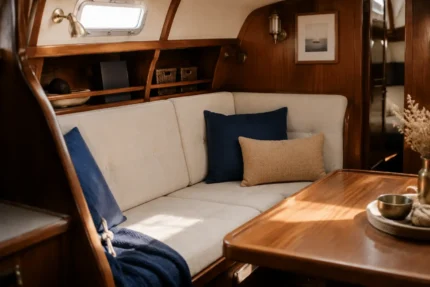
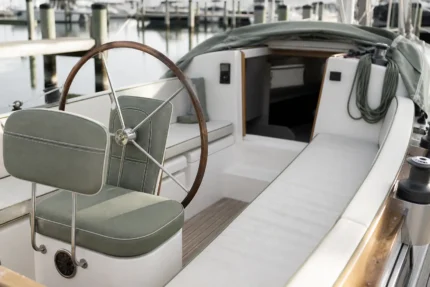
Custom Boat Cushions
- Cut to your exact measurements — berths, settees, dinettes, bolsters.
- 119 performance fabrics at one price — full-sun and quick-dry outdoor lines included.
- One order, one dye lot — every piece in the run ships color-matched.
- Factory-direct from $290 — instant quote in the customizer below.
- ±½″ tolerance, re-checked before cutting — remade free if we cut it wrong.
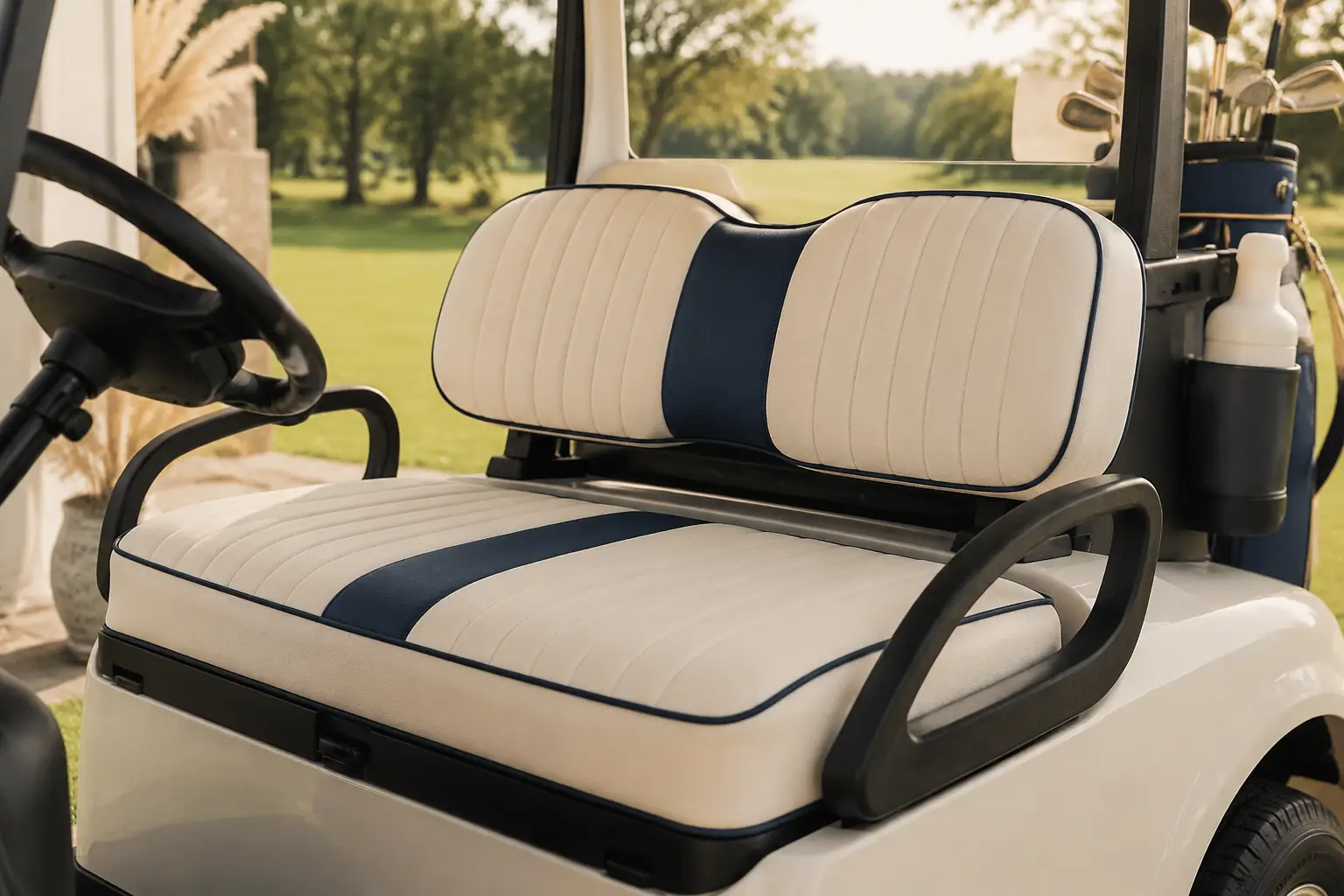
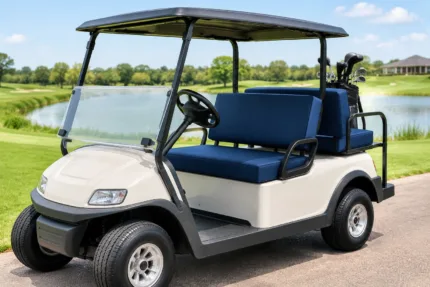
Custom Golf Cart Cushions
- Cut to your exact measurements — any cart, any seat kit.
- 119 performance fabrics at one price — full-sun and quick-dry outdoor lines included.
- One order, one dye lot — every piece in the run ships color-matched.
- Factory-direct from $166 — instant quote in the customizer below.
- ±½″ tolerance, re-checked before cutting — remade free if we cut it wrong.
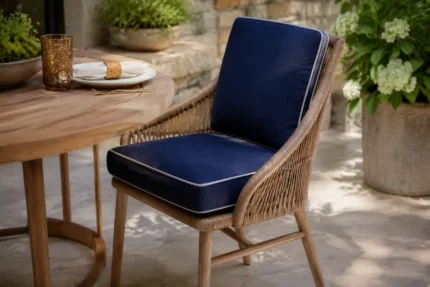
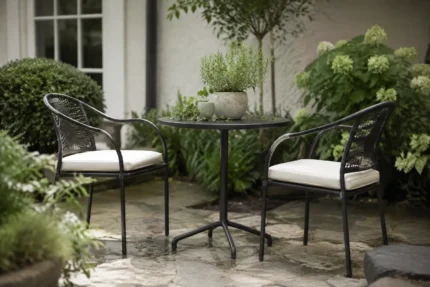
Custom Patio Chair Cushions
- Cut to your exact measurements — any patio set, any brand, any fabric.
- 119 performance fabrics at one price — full-sun and quick-dry outdoor lines included.
- One order, one dye lot — every piece in the run ships color-matched.
- Factory-direct from $106 — instant quote in the customizer below.
- ±½″ tolerance, re-checked before cutting — remade free if we cut it wrong.