
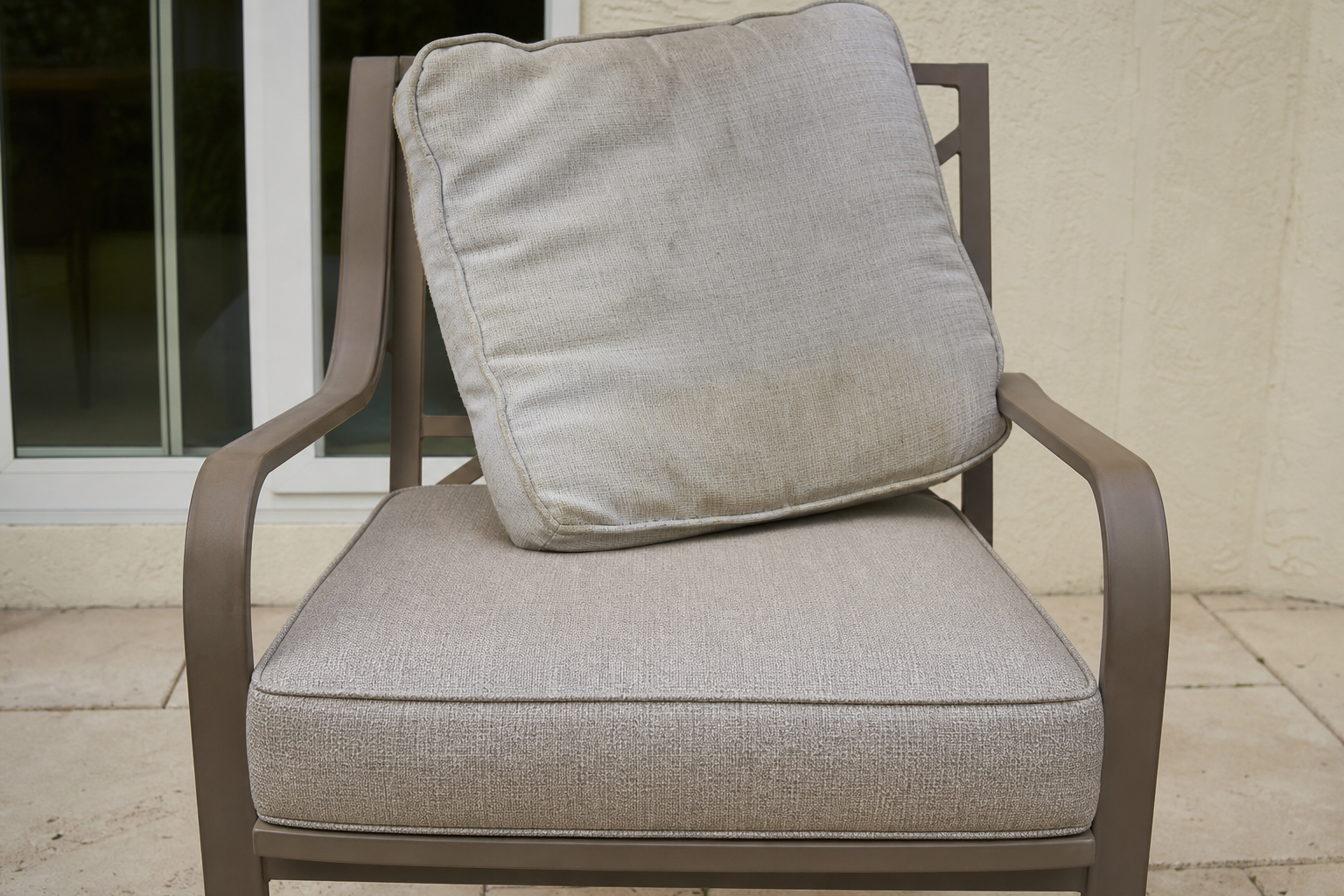
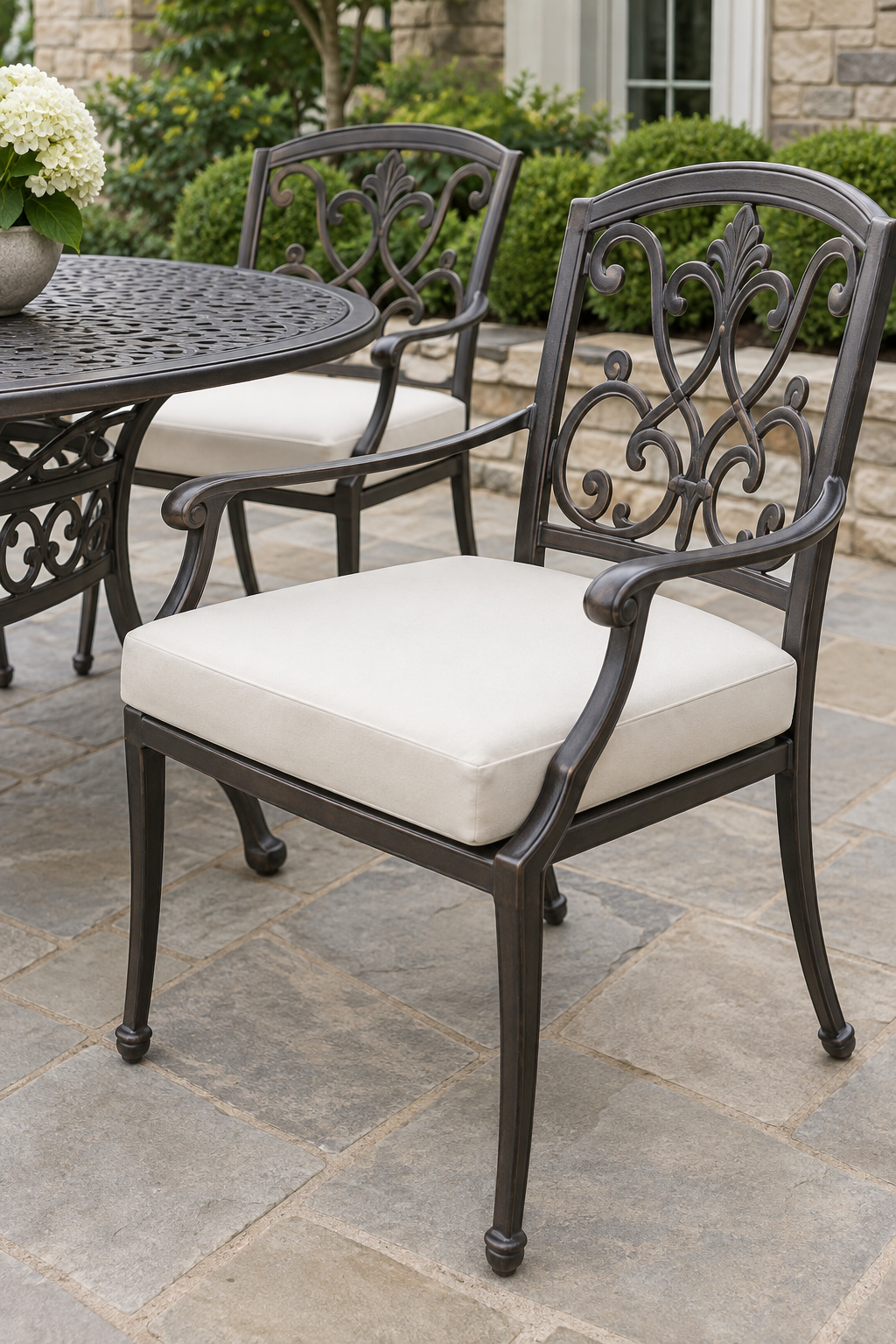
Ask three people to measure the same Cibola cushion and you will get three different answers — not because anyone is careless, but because tape measures carry built-in traps. This page is about reading yours so the numbers that reach our bench are the numbers your frame actually needs.
The mystery of the three different answers
Cibola never had a published cushion chart — the series moved through Home Depot as seasonal boxed sets, and its pad dimensions stayed inside the maker’s factory. So the three numbers you send us (width, depth, thickness at the seam) become the entire specification. Which makes measurement error the only real obstacle between you and pads that fit on the first try.
Here is the strange part most people never notice: the hook at the end of your tape measure is loose on purpose. That slop — usually a sixteenth to an eighth of an inch — exists so the hook grips an edge when measuring outside faces and compresses when butted against an inside face. If the hook has been bent or packed with grit, every reading you take inherits the damage. Before measuring a single cushion, check the hook slides freely and returns to zero against a known edge.
Two more error sources hide in plain sight. Reading the tape at a downward angle shifts the apparent mark by up to a quarter inch — bring your eye level with the numbers, not above them. And measuring across a curved or tapered cushion at the widest bulge, rather than at the seam line where the cut is actually made, inflates width on any pad with a rounded front edge. The seam is the datum. The workshop cuts to seam figures.
Confirming the frame is a Cibola
Identification stays useful even though the fix is the same: flip the chair and check the white tag under the seat frame, where model numbers typically hide behind a GLD or THD supplier prefix. A surviving label beats every other clue. Your Home Depot account’s order history runs a close second — searchable years back, and it names the series outright.
When both are gone, the frame itself narrows the field: Cibola pieces turn up as steel or wicker-over-steel boxed-set builds of their era, not the heavier dealer-network frames. Between two candidates, photographs of the arm profile and weave settle it faster than any forum thread. And remember that Hampton Bay refreshed series across model years — a same-name set bought three seasons apart can carry different cushion lofts, which is one more reason the chart-free route of measuring your own piece ends up safer than any borrowed numbers.
A reading ritual that survives our verification desk
Every set of figures that arrives here gets read back and sanity-checked against the piece count before cutting begins, so numbers recorded sloppily get caught — but numbers recorded carefully sail straight through. The ritual we recommend takes ten minutes for a full set:
- Measure each cushion three times, at different moments. Not three glances in a row — re-seat the tape, re-zero your eye, take a fresh reading. Two identical readings plus one outlier means re-measure a fourth time. Three readings clustering within an eighth of an inch give you a trustworthy middle value.
- Record at the seam, per cushion, immediately. Not after the whole set. The gap between measuring and writing is where numbers transmute — a 19 becomes a 16, depth gets copied into the thickness column. One row per cushion block, filled in the moment the tape comes off.
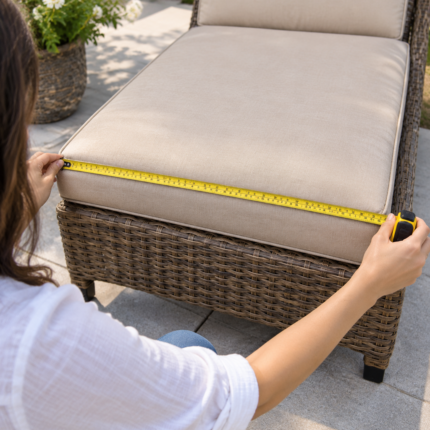
- Photograph the tape lying on the pad. A picture of the tape across the cushion, mark visible, costs five seconds and settles any dispute later — with yourself, or with our bench.
The measurement guide library covers the awkward cases — curved backs, rounded fronts, pieces where the old pad has to stand in for a missing chart. Most Cibola owners need nothing beyond the basic three-number routine.
Why the ritual earns its ten minutes: the figures you send are re-read at our bench before cutting, and the errors the desk catches most often are exactly the ones the ritual prevents — transposed digits, a depth written into a thickness column, one figure copied across an entire set from a single measured piece. Numbers that arrive clustered, per-cushion and photographed read as trustworthy at a glance, pass verification in one pass, and go straight to the cutting table. Numbers that arrive as a smudge of near-identical figures invite the queries that cost everyone a day, and days are exactly what a patio season has too few of. The tape measure is the only spec sheet this series ever had; ten disciplined minutes is what makes it a good one.
What your numbers turn into
Figures entered in the configurator build a live quote: pricing starts from a $45 make-base per cushion and climbs with size and the density you select across the 35D–65D band. Fabric never moves the number — all 119 options in the menu price identically at any given size, so the fabric decision stays purely about look, feel and upkeep rather than budget.
Measured carefully, the same order runs on cotton linen for a covered porch, water-resistant tech fabric for an open patio, or premium velvet where the furniture doubles as a cat’s afternoon throne. Every cover zips off for washing — precise numbers keep a cushion fitting well, and a washable cover keeps it looking well far longer.

Nearby series on the same uncharted route include Hampshire and Sydney. If your set turns out to be a Kampar, that line carries a charted reference page. Everything we track is indexed on the Hampton Bay hub.
Frequently asked questions
My three readings differ by an eighth of an inch — which do I send?
The middle value, noted as such. Spread at that scale sits within normal technique variance, and our cutting tolerance absorbs it. If your readings scatter wider than a quarter inch, the hook or your reading angle is usually the culprit — re-run the ritual before submitting.
Will a store-bought universal cushion work on a Cibola frame?
Almost never cleanly. Boxed-set furniture is cut to proprietary seat decks, so a universal pad close in width tends to miss on depth or loft — it shifts under weight, gaps at the back rail, or stands proud of the arms. Measured pads sit the way the originals did.
What density suits a set used a few times a week?
Occasional-use seating performs well in the 45D–50D range with a plusher hand. Daily-dinner seating earns the 55D–60D band, which holds shape for years of compression cycles. The full dial runs 35D to 65D, priced openly in the configurator.
How close to my numbers will the finished cushions be?
Within ±½″ on any dimension — and once a measurement passes 36″, within ±¾″. A finished piece landing outside that window goes back on the table and comes back right, at our expense.
What does a measured Cibola replacement cost?
Each cushion opens at a $45 make-base and scales with size and the density chosen. Fabric is flat-priced across the menu, and the full quote shows itself line by line before anything is cut.
How long between submitting numbers and delivery?
Standard sewing occupies the bench for 4–7 business days; flagging the order as a rush shortens that to 3–5. Freight then runs 3–6 weeks to most US addresses — worth front-loading into any plans for a specific date on the patio.
What ordering from this bench gets you
- A workshop that has cut, filled and sewn cushions in-house for over a decade — quoting, building and shipping happen under one roof, nothing brokered out.
- Re-verification of every submitted measurement against the piece count before fabric is unrolled — the ritual above is designed to make this check a formality.
- No stocking logic and no order minimums — one cushion, half a set, or a full estate inventory, any of 119 fabrics at flat pricing.
- A remake guarantee rather than a negotiation: off-spec cuts, wrong fabric, wrong build — corrected on our dime.
Cibola replacement cushions, cut to carefully-read numbers from a $45 make-base — check the hook, level the eye, write it down at the seam.
Uncertain the set is a Cibola at all? Send frame photos and we will confirm before anything is cut. Different series after all? Any shape, custom built — or start from the Hampton Bay index.
Shipping & Delivery
- Orders over $158 ship free — add a second cushion or an upgrade and shipping’s on us.
- Smaller orders ship anywhere in the contiguous US for one simple flat fee — always shown before you pay.
- Made in 7–14 business days. Each cushion is cut and sewn to your measurements after you order, never pulled from a shelf.
- ±½″ tolerance on all custom cuts — and if we cut it wrong, we remake it free. No forms, no fine print.
Have a deadline? Contact us before ordering and we will tell you honestly whether we can meet it.
Related products
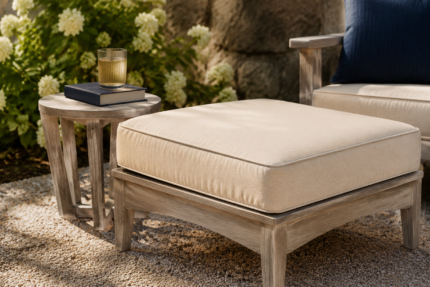
Custom Ottoman Cushions
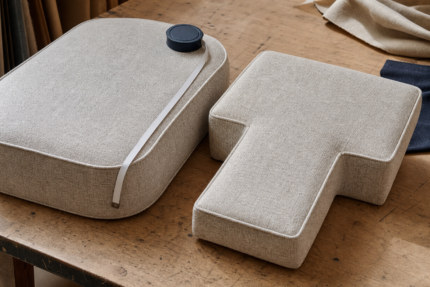
- Ottoman cushions cut to your measurements — round, oval, square, half-round and wedge tops, no minimum.
- 119 fabrics at one price — covered-porch linens to solution-dyed acrylic with a 5-year fade warranty.
- Rounds price on the bounding square — the published formula the customizer quotes, checkable with a tape measure.
- Cut to a ±½" tolerance — outside it, remade free, any time. From $89.
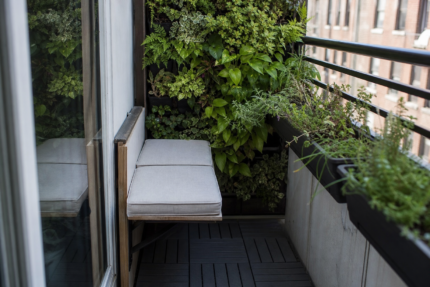
Custom Patio Cushions
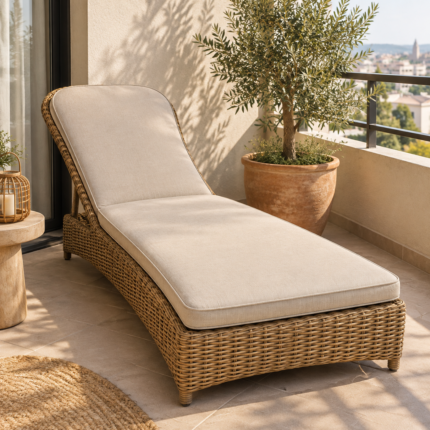
- Cut to your exact measurements — dining chairs, deep seating, benches, chaises and swings, any shape.
- 119 performance fabrics at one price — full-sun and quick-dry outdoor lines included.
- One order, one dye lot — the whole patio set ships color-matched.
- Factory-direct from $88 — instant quote in the customizer below.
- ±½″ tolerance, re-checked before cutting — remade free if we cut it wrong.
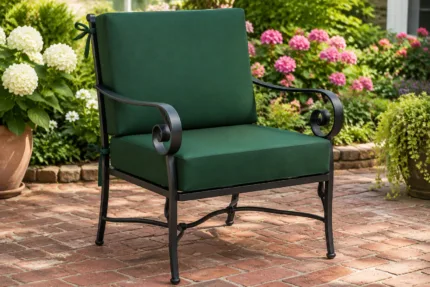
Custom Wrought Iron Chair Cushions
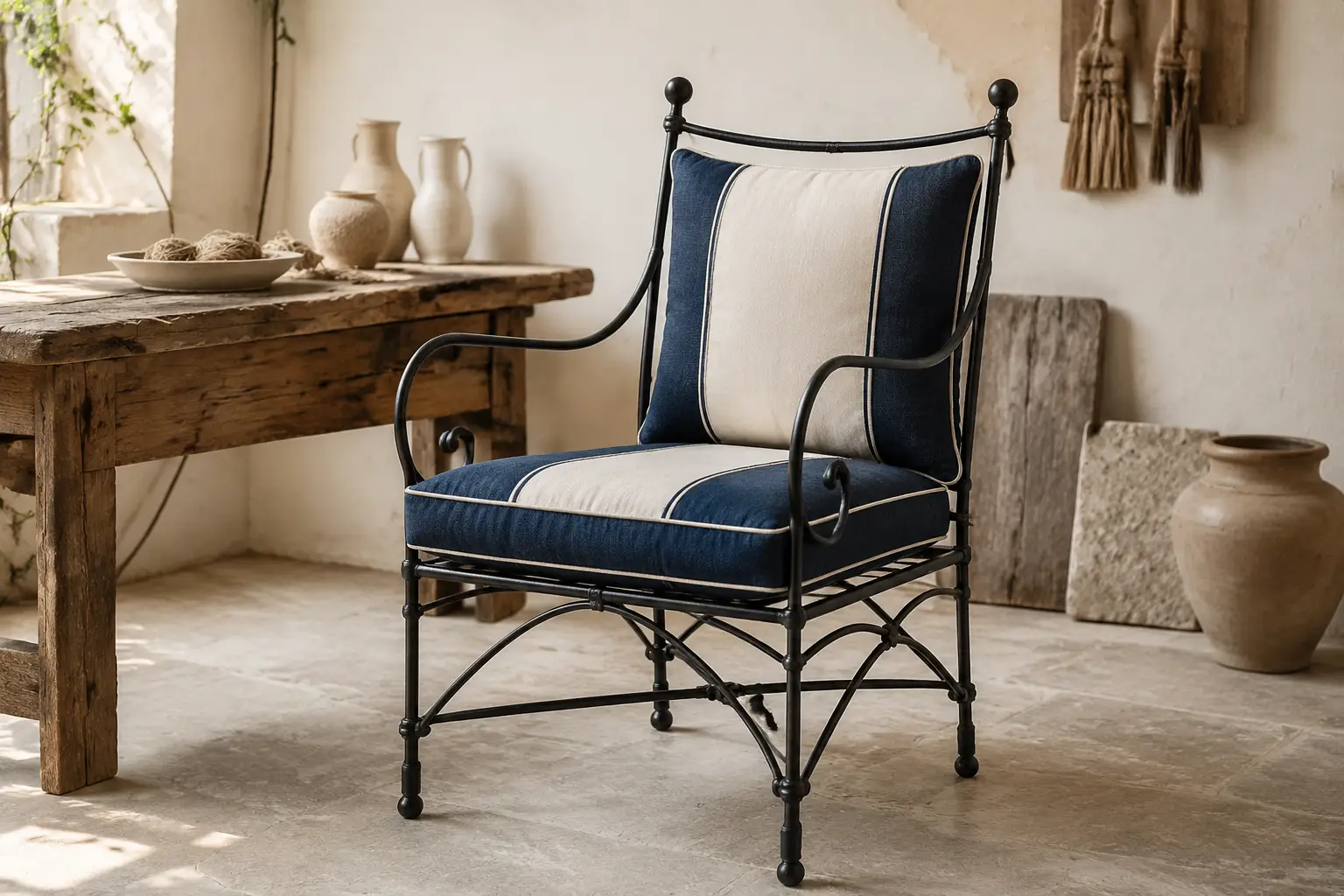
- Cut to your exact measurements — curved backs, scroll arms, vintage frames.
- 119 performance fabrics at one price — full-sun and quick-dry outdoor lines included.
- One order, one dye lot — every piece in the run ships color-matched.
- Factory-direct from USD 103 — instant quote in the customizer below.
- ±½″ tolerance, re-checked before cutting — remade free if we cut it wrong.