
Walnut Creek (Hampton Bay)
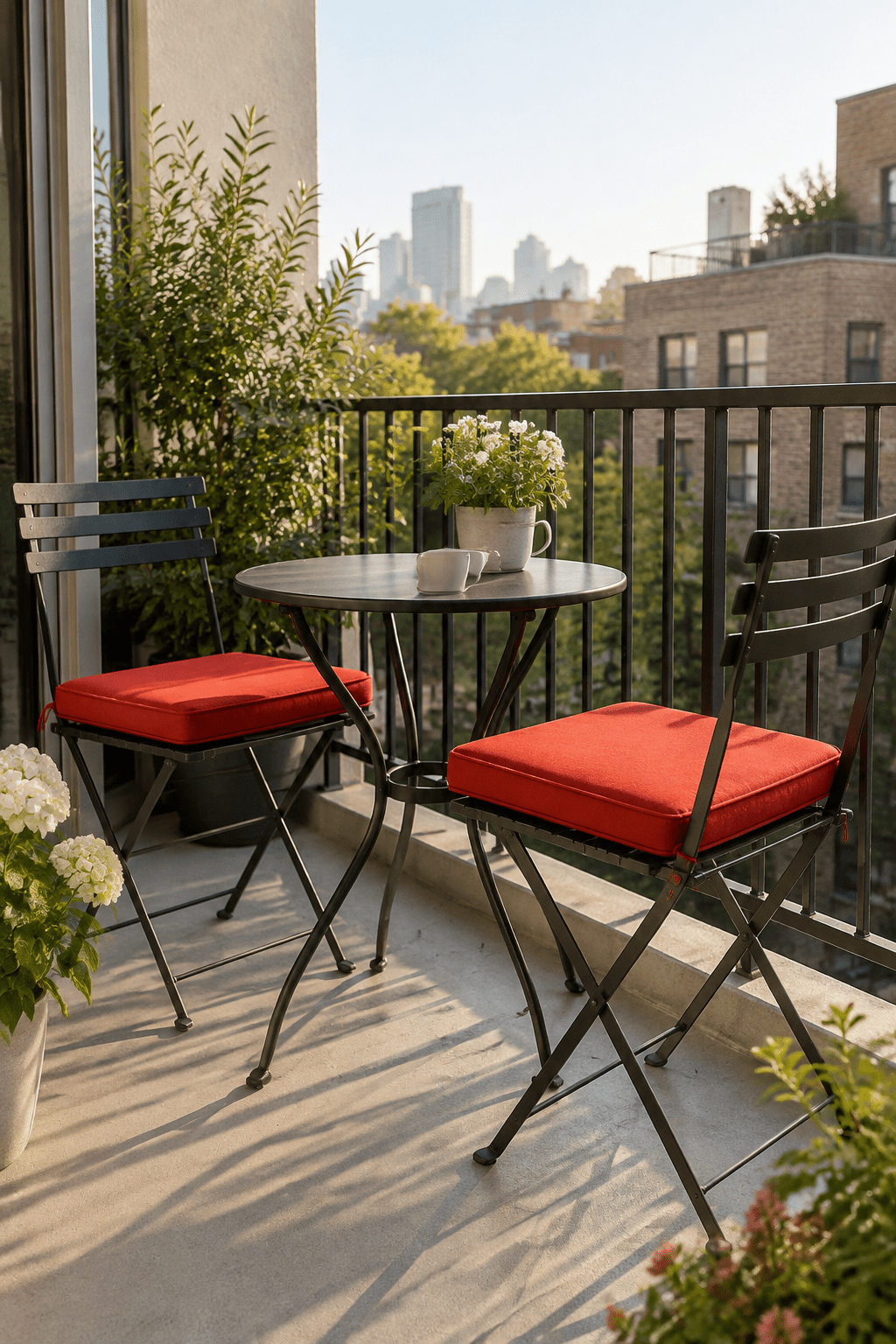
Thirty years in one house builds a yard with a memory in every corner, and then one spring it all fits into a moving truck. The Walnut Creek set that anchored the big back patio — six chairs, a glider, the long bench — goes to the buyers, or to a daughter’s place across the state, and the new porch at the active-adult community is exactly one third the size of the old one.
Nearly everyone makes the same mistake here: they carry the old numbers forward. The old house’s measurements, the old piece count, the old thickness habit — all of it written for a different yard, a different routine, a different body schedule. The comfortable path is ordering what you had. The right path is letting the new place speak first.
The measurements you cannot take with you
A measurement is an answer to a question, and the new porch asks different questions. The old figures described chairs under a big maple, spaced for a household of five in motion. The new figures describe a covered porch that catches the morning sun on one end, holds a club card table on Tuesdays, and gets grandchildren every other Sunday. Same family, different furniture, different arithmetic — the numbers from the old house describe the old house.
There is one honest exception. Your own body’s preferences are portable data: the thickness that let you rise without pushing off on the armrest, the firmness that ended a long talk without shifting. Keep that knowledge. Discard the dimensions.
Thirty days of living before one number is written
The discipline that pays for itself: arrive with the frames in place and no order in the cart, then live on the porch for a month before measuring anything. Thirty days is enough for the truth to surface — which chair everyone actually fights for, where the card table really belongs, which corner the sun reaches at coffee hour and which stays in shade until noon. Every one of those observations changes a spec: density on the fought-over chair, depth on the coffee corner seat, color logic in the shaded end.
The calendar cooperates if you let it. A move in September becomes an October measuring session, a November order, and sewing at 4 to 7 business days with freight adding 3 to 6 weeks lands the cushions as the new year turns — ordered by someone who now knows the porch, not by someone bracing against the move.
Fewer pieces, better pieces
Downsizing the set is not rationing; it is promotion. Where the old yard ran six chairs of identical mid-grade everything, the new porch often wants two excellent chairs for the daily rhythm, one deeper lounger for the reading corner, and a bench that exists for grandchildren and card nights. Each piece gets specified for its actual job instead of inheriting a fleet spec — and because every build starts from the same $45 make-base and climbs only with size and density across 35D to 65D, with all 119 cloths flat-priced at a given size, upgrading two chairs instead of maintaining six costs less, not more.
The density map follows the same logic. Daily chairs carry a 50D seat that balances rise support with all-day comfort; the lighter-traffic bench settles happily around 45D. Nothing about a smaller order needs to feel like a smaller purchase.
Weight is a feature now
At the old house, a heavy cushion meant quality. On the new porch, cushions get moved — inside ahead of a storm, aside for the weekly sweeping, off the bench when the card table expands — and the arithmetic flips: a piece that gets lifted properly every week outlives a heavier one that gets dragged because lifting it is unpleasant. Dragging, not sitting, is what actually grinds seams into decking.
So lighter builds earn their place honestly: a slightly slimmer profile in the mid-density band keeps every piece in the lift-with-one-hand class, and the wash routine follows the same courtesy — every cover zips off fully for machine washing, no sewn-shut panel anywhere on this bench, which turns the storm-weekend shuffle into a load of laundry rather than a furniture event.
The pieces that neighbors borrow
Community porches run on borrowing, and the borrowed chair is a distinct species. It sits empty five days, then hosts book club for three hours. It gets moved to the far table and back. It meets coffee cups it did not choose. Give that chair the forgiving spec: a tight-weave, mid-tone cloth from the 119-fabric menu that shrugs at a ring and washes without ceremony, and a density around 50D that takes burst use in stride. The private reading chair, by contrast, can take the delicate boucle you would never risk on the borrowed one — at the same per-size price.
What the new porch order costs
A downsized order prices like any other: each piece starts from the same $45 make-base, climbs only with finished size and density between 35D and 65D, and cloth never moves the number — all 119 fabrics price flat per size. Two promoted chairs, a reading lounger, and a grandchild bench, each specified for its real job, typically total well under the six-chair fleet they replace. Standard sewing runs 4 to 7 business days, rush 3 to 5 when a birthday brunch is already on the community calendar, and freight adds 3 to 6 weeks to most addresses.

Frequently asked questions
Can any measurements carry over from the old house?
Only the ones about you, not the ones about furniture. Your preferred thickness and firmness are self-knowledge worth keeping; every width, depth, and piece count described the old yard and the old routine. Measure the new frames where they now stand, after the month of living on the porch has shown you what each seat is actually for.
How few pieces is too few for the new porch?
The honest floor is one comfortable seat per regular resident plus one guest piece. Below that, the porch stops being used daily and starts being visited. Above it, every extra chair is another thing to store, move, and maintain — which is the exact burden the move was supposed to lighten.
Should we order before the move so it feels like home sooner?
Tempting, and backwards. Ordering before the move means specifying a porch you have not lived on yet — the old numbers wearing a new address. The settling-in you want comes from the thirty days of living first: after it, the order you place fits the life the porch actually has, and lands soon enough at 4-to-7-day sewing plus 3-to-6-week freight.
Are lighter foams a real durability compromise?
Not at these densities. The mid band around 50D seats and 45D backs is the same territory plenty of daily-use sets live in for years; what shortens cushion life fastest is drag, storm exposure, and skipped washing, not a sensible mid-density choice. Lighter pieces that get lifted instead of dragged routinely outlast heavier ones that get shoved.
What should the chairs neighbors borrow be specified with?
The forgiving spec: a tight, mid-tone, washable weave and around 50D density under burst use. Book club nights, borrowed seating, and grandchild duty all punish cloth and seams in short intense episodes — the piece specified for them absorbs that without ceremony, while your private chair keeps the more delicate cloth you would never lend out.
The old set’s cushions are still in good shape. Any use for them here?
As reference, not as parts. They will not fit the new frames — different chairs, different geometry — but the old seat you liked is a physical record of your own comfort preferences: its thickness and feel are the best brief you can hand a new order. Measure the old favorite before it leaves, write the numbers on the moving folder, and give the new build that same feel on the new frames.
What ordering from this bench gets you
One workshop, in-house start to finish — the same hands cut, fill, and sew every piece of the porch order, and have for over ten years. Figures re-checked against piece count before any cloth is cut — a doubtful measurement triggers a question, not a guess. No minimum order and no stock cycle — one reading chair or the whole fresh start, in any of 119 fabrics. Fair-build guarantee: anything outside the ±½″ tolerance (±¾″ past 36″), built to the wrong cloth or the wrong spec, gets remade at no charge.
Walnut Creek replacement cushions for the right-sized porch — fewer pieces, better pieces, measured after thirty days of truth.
Pictures of the new porch and frames ready? Send them in and we will help sort piece roles. To think through where each seat belongs before you measure, see how a walk-first layout discipline reads — then submit through the made-to-your-numbers form. The full Hampton Bay catalog places the Walnut Creek line in context.