
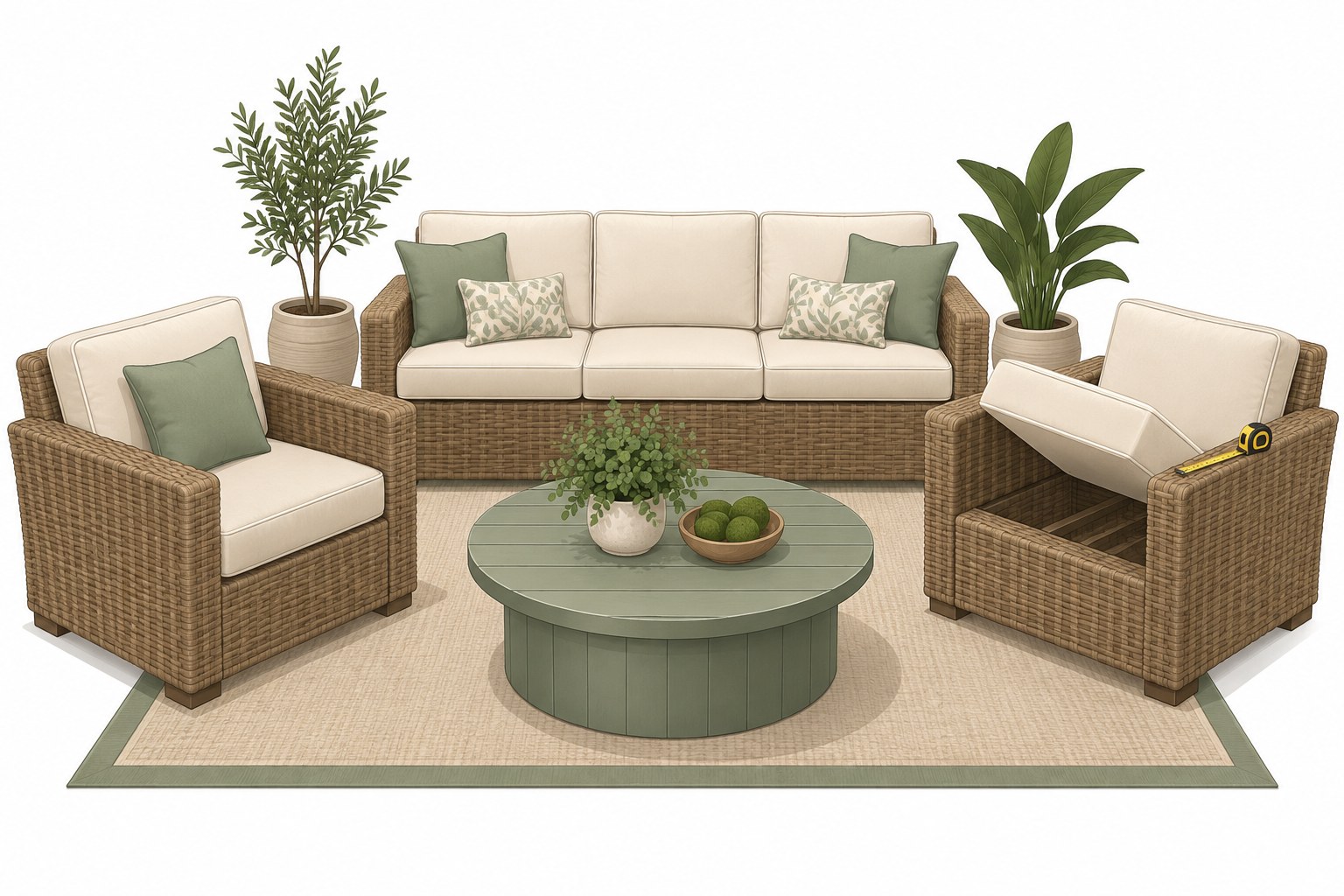
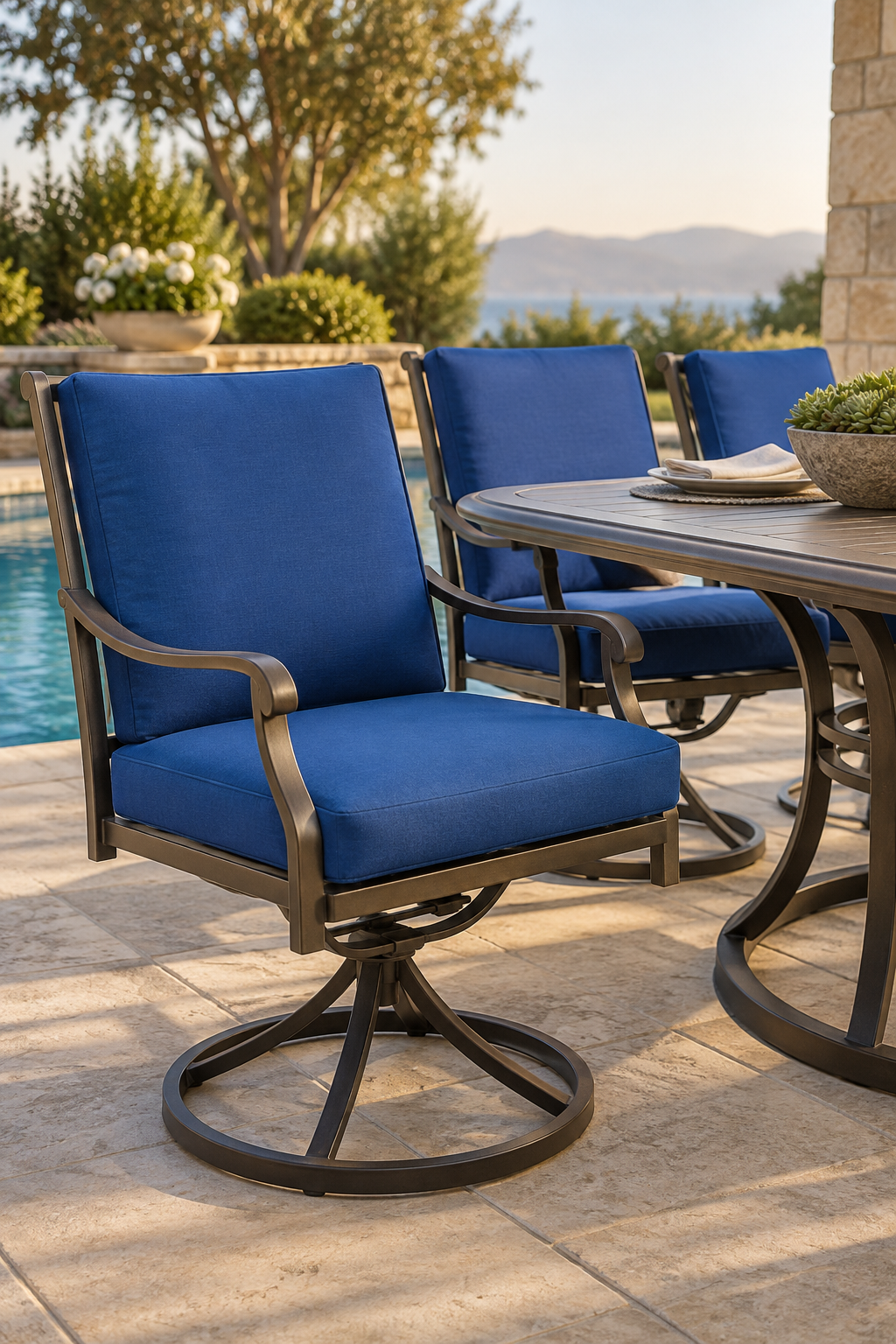
Sun does not age a patio evenly — it ages it by schedule. An east-facing Tramore set takes its ultraviolet dose before noon, a west-facing one after, and a south-facing arrangement bakes one chair face all day while its neighbor sits in architectural shade. Fabric choices that ignore the clock fade unevenly; choices that respect it age like they were planned.
The orientation clock, in practice
East light arrives low and cool: strong ultraviolet, gentle heat, and an angle that finds the vertical surfaces — back-rests and arm-facing fabric — before it ever touches a seat deck. Cushions on east-facing furniture take their radiation in a concentrated morning block, then dry and cool through the afternoon — a pattern that fades fabric steadily but kindly. West exposure reverses the deal — weaker morning, then a hot afternoon finish in which fabric temperature climbs and the dye structure takes damage faster per hour of light. South-facing arrangements (in the northern hemisphere) collect the longest direct window of all, and corner seats near reflective surfaces — light-colored walls, glass rails, water — collect a second, bounced dose on top.
You do not need instrument-grade observations to place your set on this clock. One photograph per chair per time of day — morning, noon, late afternoon — across a single weekend maps which pieces take which shift. Most sets surprise their owners here: the “shady” end chair often catches a hard reflected hour, and the seat everyone thought took the worst sun is shaded by the house two hours earlier than assumed.
Changing the clock instead of obeying it
Before ordering fabric against an exposure you dislike, remember the schedule itself is negotiable. A market umbrella placed to catch the west window converts the harshest afternoon dose into diffuse light for the two or three hours that matter — and does the same favor for whoever is sitting there. A shade sail over the conversation corner cuts direct hours without walling the sky out; a pergola does it permanently and adds architecture to the trade. Even re-angling a sectional fifteen degrees, where the patio allows, moves one chair out of the reflected bounce off a glass rail.
Structural shade rewards thought before purchase, though: an umbrella that blocks the noon sun but not the low west sun has re-scheduled the damage rather than removed it, and a sail sized to the wrong window shades the lawn instead of the seating. Photograph the patio at the hours you actually use it — not the hours the realtor shot — and intervene against those hours. The fabric you order afterward can then be chosen for color and hand under the light that remains, rather than for armor against light you no longer receive. The rotation habit still earns its keep under shade; it simply runs on a lazier calendar. Households that combine structural shade with pattern-forward fabrics and a twice-yearly rotation routinely report sets aging past a decade looking intentional rather than preserved — which is the actual goal, since a patio that reads as loved beats one that reads as armored.
The single-side fade problem
Uneven exposure produces the most common cosmetic failure we see in photos owners send: one face of the set — usually the back-rests facing the afternoon sun — fading two or three shades ahead of the seat tops and shadowed sides. The fabric is not failing; it is simply logging its dose honestly. Two habits largely erase the effect:
- Rotate cushions on a schedule. Swap seats to backs and lefts to rights when the seasons change — four swaps a year spreads one face’s dose across the whole set, and the set ages as one piece instead of seven.
- Buy the fade you can live with. Saturated solids show their history fastest; busy stripes and multicolor weaves hide a shade or two of drift without effort; lighter earth tones start closer to where sun is taking them anyway.
Naming the frame before ordering
The Tramore line sits in the uncharted majority of Hampton Bay series — no official cushion chart was published, so pads are cut to your own figures. Confirmation follows the usual ladder: the white tag under a seat frame (model number riding behind a GLD or THD supplier code) settles the name in seconds; Home Depot order history or the original assembly leaflet answers nearly as fast; failing both, the era-typical frame build plus photos sent to the bench narrows the candidates. Remember the refresh caveat — same-name sets from different model years can carry different lofts, which is one more reason your three measurements per cushion (width, depth, thickness at the seam, per the measuring guides) are the specification, not the label.
Fabric logic for sun-scheduled yards
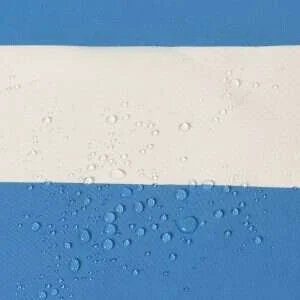
Within the menu’s 119 flat-priced fabrics, exposure thinking sorts into three useful buckets: solution-friendly patterns (cabana stripes, woven multicolors) for hard-exposure pieces where rotation discipline is unlikely; mid-tone naturals (oatmeal, sand, sage) for mixed-exposure sets, where a little drift reads as patina; bold saturated solids for genuinely shaded positions, where the color performs without the ultraviolet tax. Water-resistant tech fabric suits open-sky placements and wipes clean after rain; cotton linen rewards the covered corner with the best hand; velvet shrugs off claws and indoor-outdoor traffic. Every cover zips off the foam for washing — because sun management and soil management are two different problems, and only one of them is solved by rotation.
Pricing keeps out of the decision entirely: each cushion opens at a $45 make-base and scales only with size and the density chosen across 35D–65D. Exposure-appropriate fabric and exposure-appropriate price turn out to be the same thing — flat.
Neighboring uncharted series: Tolston and Willow Glen. A charted reference lives on the Melbourne page, and the Hampton Bay hub indexes every line we track.
Frequently asked questions
Can faded cushions be dyed back instead of replaced?
Occasionally, with mixed results — dye pools unevenly on weathered outdoor weaves and rarely matches the original shade across all faces of a set. A rebuild with fade-aware fabric choices tends to outlast the dye route by several seasons, and rotating the new cushions on a schedule keeps them even from the start.
How much sun before a fabric actually fails?
Dye drifts long before structure does — color loss is cosmetic and gradual, while the weave itself typically holds for years of exposure afterward. The bigger structural enemies are moisture cycling and foam compression, which is why washable zip-off covers and density choice matter as much as UV strategy.
Which fabrics hide fading best?
Multicolor stripes and woven heathers top the list — their own variation absorbs a shade or two of drift. Mid-tone naturals come next. Deep saturated solids show drift soonest, which makes them best for genuinely shaded seats.
What does an exposure-aware rebuild cost?
Per cushion, pricing starts at a $45 make-base and moves with dimensions and density (35D to 65D). All 119 fabrics — patterns and solids alike — price identically at a given size, so choosing for sun never costs extra.
How long until new pads arrive after ordering?
Count on 4–7 business days of standard sewing, 3–5 on a rush, plus 3–6 weeks of freight to most US addresses — so a set ordered at the spring equinox is sitting in its summer light.
Is there a chart I can check my Tramore against?
Not for this series — Hampton Bay never published one, and retail-listing dimensions describe whole furniture sets, not pads. Your own three numbers per cushion are the spec we cut to; our verification desk re-checks them against piece count before fabric is unrolled.
What ordering from this bench gets you
- A single workshop handling cutting, filling and sewing in-house for over a decade — the people quoting your order are the people building it.
- Measurement re-verification before any fabric is unrolled — three figures per cushion checked against your piece count, discrepancies queried rather than assumed.
- No minimums and no stock calendar — one shade-blasted corner chair or the full set, any of 119 fabrics at flat pricing.
- Plain-language remake terms: cuts outside the ±½″ window (±¾″ beyond 36″), wrong fabric, wrong build — remade free.
Tramore replacement cushions chosen for the light your yard actually schedules — from a $45 make-base, rotated with the seasons.
Want a read on your set’s light before choosing? Send photos from morning and afternoon and we will help place the clock. Not a Tramore after all? Any shape, custom built — or start from the Hampton Bay index.
Shipping & Delivery
- Orders over $158 ship free — add a second cushion or an upgrade and shipping’s on us.
- Smaller orders ship anywhere in the contiguous US for one simple flat fee — always shown before you pay.
- Made in 7–14 business days. Each cushion is cut and sewn to your measurements after you order, never pulled from a shelf.
- ±½″ tolerance on all custom cuts — and if we cut it wrong, we remake it free. No forms, no fine print.
Have a deadline? Contact us before ordering and we will tell you honestly whether we can meet it.
Related products
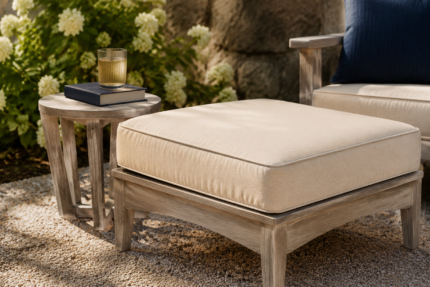
Custom Ottoman Cushions
- Ottoman cushions cut to your measurements — round, oval, square, half-round and wedge tops, no minimum.
- 119 fabrics at one price — covered-porch linens to solution-dyed acrylic with a 5-year fade warranty.
- Rounds price on the bounding square — the published formula the customizer quotes, checkable with a tape measure.
- Cut to a ±½" tolerance — outside it, remade free, any time. From $89.
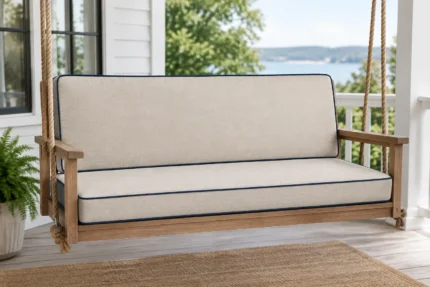
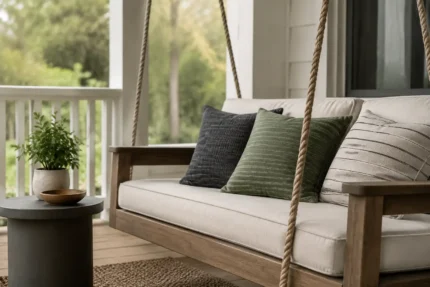
Custom Outdoor Swing Cushions
- Cut to your exact measurements — any swing, any frame, any fabric.
- 119 performance fabrics at one price — full-sun and quick-dry outdoor lines included.
- One order, one dye lot — every piece in the run ships color-matched.
- Factory-direct from $142 — instant quote in the customizer below.
- ±½″ tolerance, re-checked before cutting — remade free if we cut it wrong.
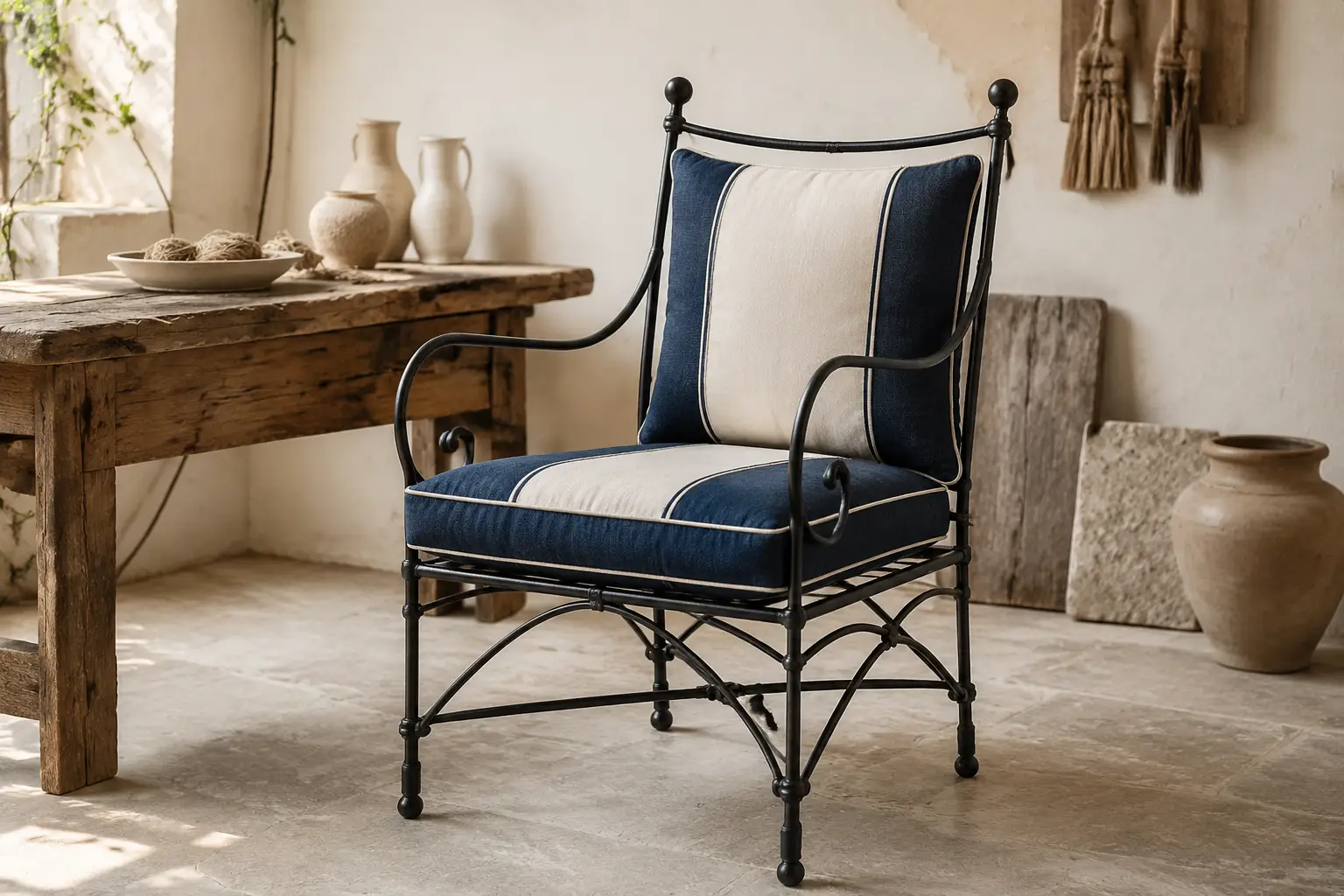
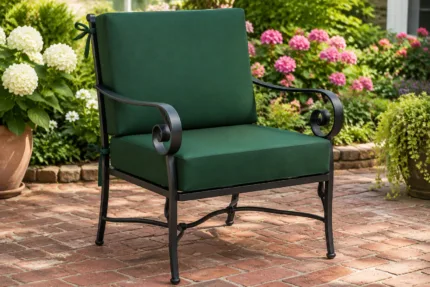
Custom Wrought Iron Chair Cushions
- Cut to your exact measurements — curved backs, scroll arms, vintage frames.
- 119 performance fabrics at one price — full-sun and quick-dry outdoor lines included.
- One order, one dye lot — every piece in the run ships color-matched.
- Factory-direct from USD 103 — instant quote in the customizer below.
- ±½″ tolerance, re-checked before cutting — remade free if we cut it wrong.