
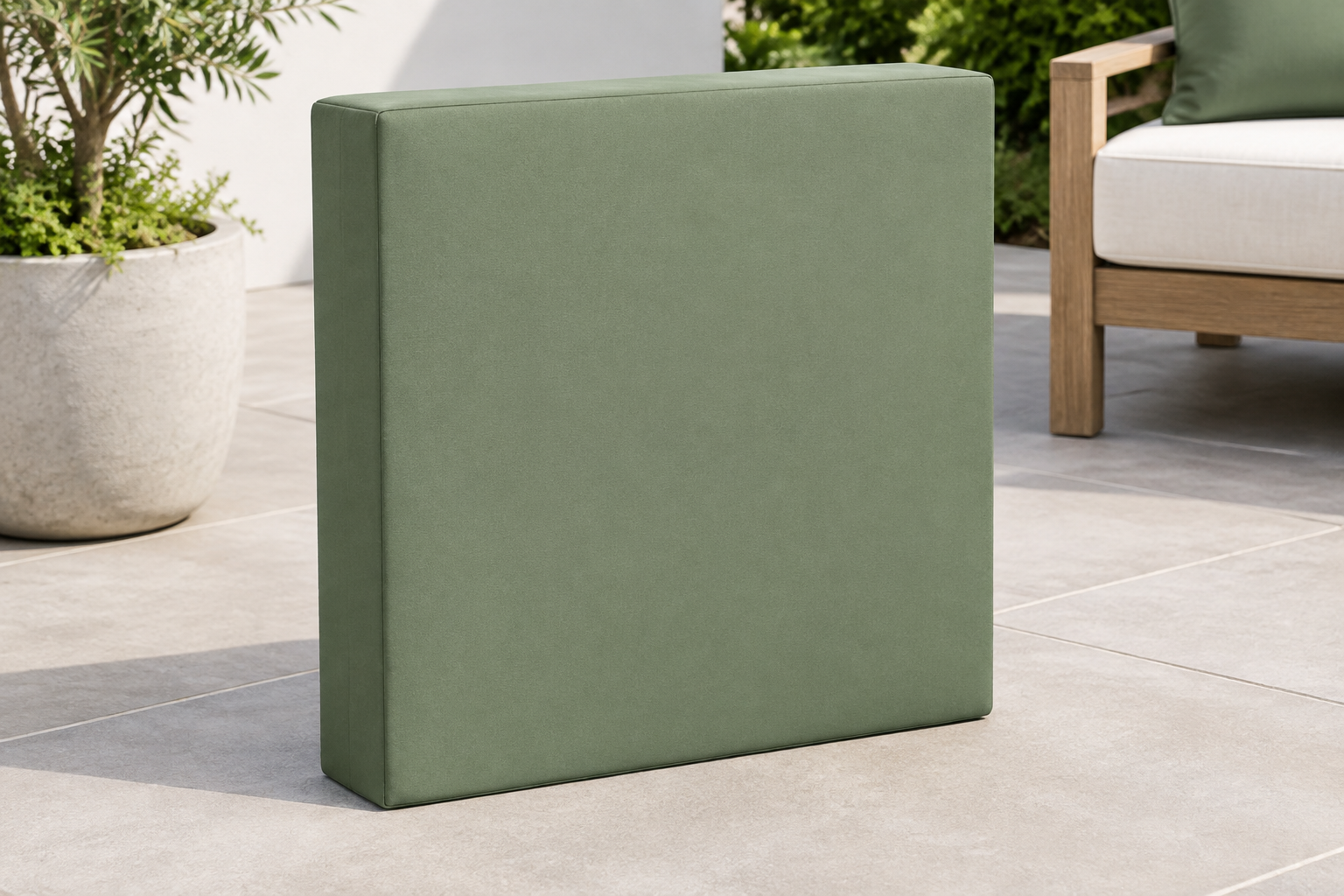
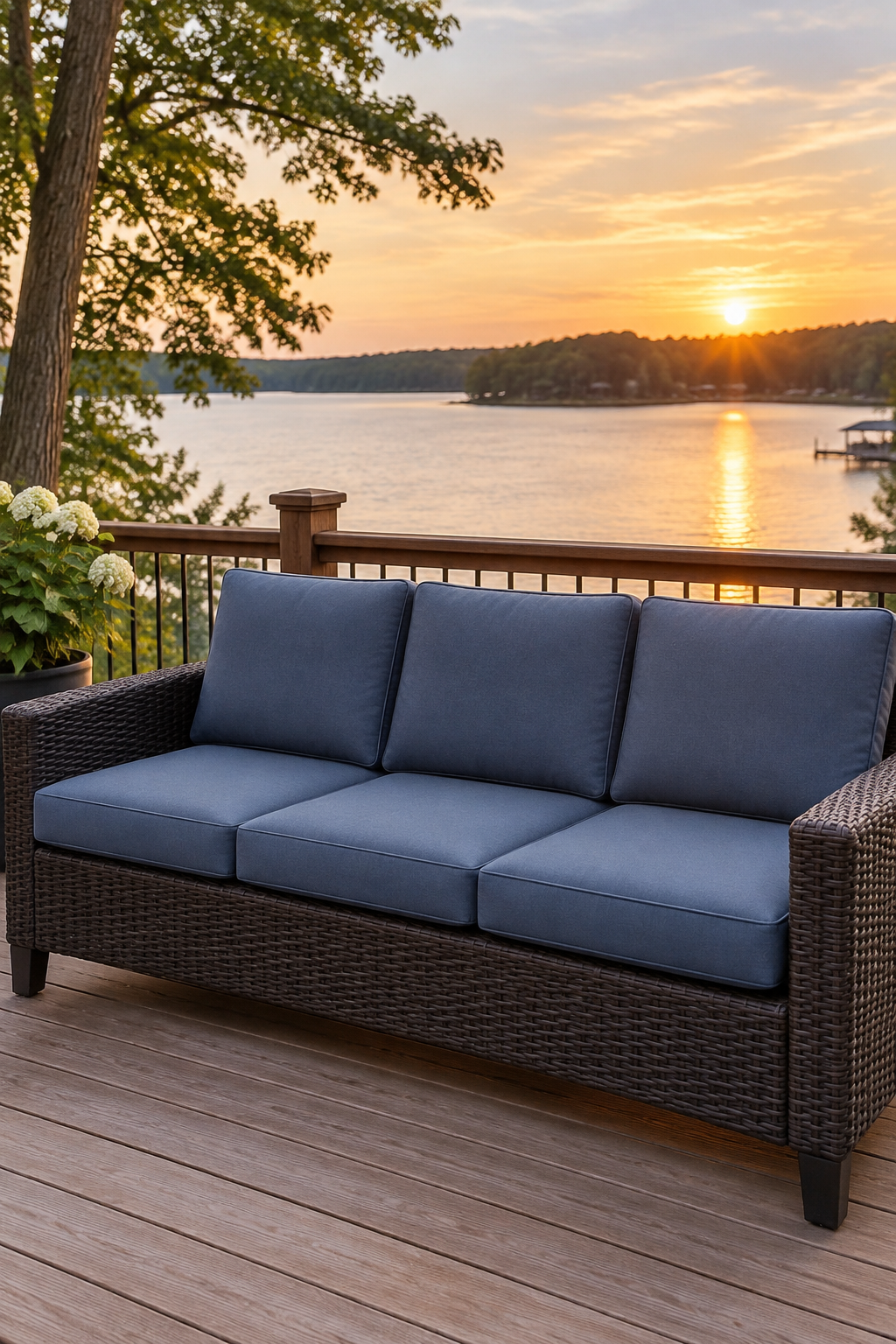
Nine out of ten wrong-size cushion orders trace back to a single mistake: measuring the frame instead of the seat. On Granbury pieces — like every uncharted Hampton Bay line — the tape measure is the spec sheet. Here’s how to read it right the first time.
Measure the pad, not the furniture
A Granbury chair gives you two possible widths, and only one of them matters. The first is the distance across the outside of the arms — what a furniture catalogue would list as the chair’s width. The second is the clear seating width between the arms, where the pad actually lives. Order to the first number and the pad bows against the arm rails for a few weeks before compressing into an ugly crease. Order to the second and it drops in like the original did.
The same discipline applies front to back. Depth means the flat surface the pad rests on — from the front rail of the seat deck back to where the seat meets the backrest, not down the sloped front apron of the frame. And thickness gets read at the seam, where the top and bottom faces meet, with the old pad resting on a flat floor rather than in your hands. Hands squeeze; floors don’t.
Photograph your tape in position for each number. The configurator takes the figures directly, and if anything looks internally inconsistent — a back cushion wider than its seat, a depth thinner than the foam could support — the review step catches it before cutting. Our measurement guide library covers the odd cases: rounded frames, attached bolster rolls, swivel bases.
A word on tools, because three of them decide whether measuring takes ten minutes or forty. A steel tape with a locking blade beats a floppy tailor’s tape for any span over eighteen inches — lock the blade, lay it flat on the deck, read at eye level. A second person helps on loveseats and sofas, where one end of the tape wanders while you read the other; solo measurers can pin the far end under something heavy and walk to the near end. And the surface matters: measuring across a pad still on the frame adds the pad’s own bulge to the figure, so for width readings that need to be frame-true, slip the tape under the old pad or measure with it removed. Fractions belong in the record exactly as read — a pad written as “about 20” arrives as something other than what the frame wanted.
Confirming you’re holding a Granbury
Identification matters less than measurement here, but it still earns its five minutes, mainly so you know what to call the set when the neighbors ask. The evidence stacks up in this order of reliability:
The white manufacturer tag, stapled under the seat frame or glued inside an arm cavity, carries the model number — usually opening with a GLD or THD supplier code. Faded but present beats gone entirely: phone-camera macro shots rescue more tags than you’d expect. Next, your Home Depot account history, where searching the series name surfaces the original line item, complete with the item number that resolves the series for good. The assembly manual from the original box does the same job on paper.
Granbury carries the usual caveats. It’s a Texas lake town’s name, so generic web searches drift toward travel results rather than furniture — your own records beat the search box. And Hampton Bay reused series names across model-year refreshes, with small changes to arm curves and cushion heights, which is one more reason the pads get cut to measured figures rather than to a nominal series size that may not match your production year.
Name still uncertain after the tag and the receipts? Send a few frame photos — the weave, the arm shape, the leg feet — and the workshop will call it before you order.
Why no chart exists, and why that’s survivable
Hampton Bay’s catalog operation published dimensional charts for a handful of flagship lines and left the rest — Granbury included — undocumented. The numbers that do circulate on retail pages describe shipping cartons and overall furniture footprints, which is precisely the frame-versus-seat confusion this page opened with. Republishing those figures as if they were pad specs would be a public service nobody needs.
The measured route replaces the chart completely. Your three numbers per cushion are re-checked by the workshop against your piece count, the quote is confirmed while the order is still on-screen, and only then does fabric get cut. Tolerance on our cut runs ±½″ — ±¾″ on dimensions beyond 36″ — and anything outside it gets remade at our expense.
Fabric and foam, priced flat
Every Granbury cushion starts from a $45 make-base and moves with two variables only: the dimensions you entered, and the foam density you select between 35D and 65D. The fabric menu — 119 options — prices flat across the board. Cotton linen suits sheltered sunrooms, water-resistant tech fabric suits an open patio that takes rain, and premium velvet takes the abuse of pets without picking or running. All three sew into the same knife-edge construction, flat panels meeting in a clean seam, covers closing with a zipper so the whole thing comes apart for washing.
Density selection is worth thirty seconds of thought: 45D–50D gives dining-and-lounging comfort that rebounds for years, while 60D–65D suits heavy daily use where you want the pad to feel firm under guests. Uncertain? The workshop’s review step will recommend a band based on your piece count and usage notes.

Ordering one replacement chair pad or refitting an entire Granbury dining run works identically — piece count is your choice, no minimums apply, and set orders batch into a single quote. Neighboring uncharted lines such as Hampshire and Amelia Springs follow the same process. Kampar owners have a charted series page; the Hampton Bay hub indexes everything we track.
Frequently asked questions
My tape says 22 inches across the arms but 19 between them — which do I submit?
The 19. Between-arm clearance is the pad’s world; the arm-to-arm figure belongs to the frame’s spec, not the cushion’s. When in doubt, submit both figures in your order notes and the review step will flag which was used.
Will a big-box universal pad do the job on a Granbury chair?
Almost never cleanly. Universal pads are cut to generic proportions, and uncharted Hampton Bay frames tend to run non-standard depths — the width may look close while the pad gapes at the back rail or rides too proud at the front edge. A made-to-figure pad eliminates the fudge factor entirely.
How do I verify the series without any paperwork?
Work the chain: white tag under the seat first, Home Depot account search second, assembly manual third. Failing all three, frame photos to the workshop settle most identifications within a day — free, and before any money moves.
What does density actually change in the price?
Higher-density foam costs more at the same size — visible live in the configurator as you toggle between 35D and 65D. What it never changes is the fabric price: all 119 options stay flat regardless of which one carries the foam.
Can I wash the covers after a season outside?
Yes — each cover unzips completely and goes in the wash on a gentle cycle. Zip-off covers are standard construction on every cushion leaving this workshop, not an add-on.
What’s the realistic timeline?
Production runs 4–7 business days standard, or 3–5 business days as a flagged rush. Shipping adds 3–6 weeks to most US doors, so a full Granbury refit ordered in early spring comfortably beats Memorial Day.
The workshop behind the order
- A custom cushion factory running ten-plus years — every order cut, filled, and sewn under one roof, nothing brokered out.
- Figures re-verified against piece counts before cutting — a measurement that looks off gets a question, not a guess.
- No inventory, no minimums — single pads and seven-piece sets get the same production slot.
- Guaranteed within ±½″ (±¾″ past 36″) — misses on our cut, wrong fabric, wrong build: remade free.
Granbury replacement cushions built from your own three figures, from a $45 make-base, in any of 119 fabrics.
Not certain it’s a Granbury at all? Send the photos first — then order once, correctly. Or start from any custom shape / the series index.
Shipping & Delivery
- Orders over $158 ship free — add a second cushion or an upgrade and shipping’s on us.
- Smaller orders ship anywhere in the contiguous US for one simple flat fee — always shown before you pay.
- Made in 7–14 business days. Each cushion is cut and sewn to your measurements after you order, never pulled from a shelf.
- ±½″ tolerance on all custom cuts — and if we cut it wrong, we remake it free. No forms, no fine print.
Have a deadline? Contact us before ordering and we will tell you honestly whether we can meet it.
Related products
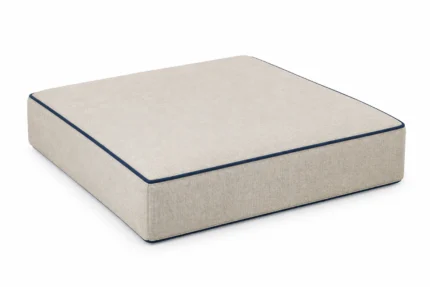
Custom Deep Seat Cushions
- Cut to your exact measurements — any deep-seating frame, any brand.
- 119 performance fabrics at one price — full-sun and quick-dry outdoor lines included.
- One order, one dye lot — every piece in the run ships color-matched.
- Factory-direct from $172 — instant quote in the customizer below.
- ±½″ tolerance, re-checked before cutting — remade free if we cut it wrong.
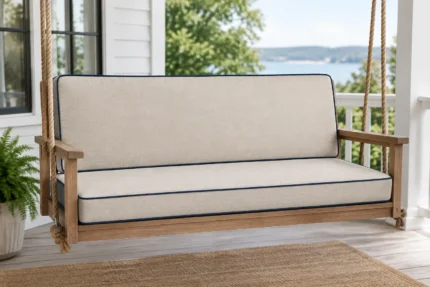
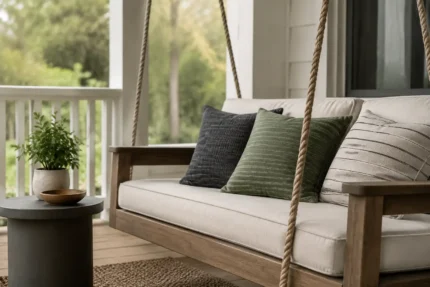
Custom Outdoor Swing Cushions
- Cut to your exact measurements — any swing, any frame, any fabric.
- 119 performance fabrics at one price — full-sun and quick-dry outdoor lines included.
- One order, one dye lot — every piece in the run ships color-matched.
- Factory-direct from $142 — instant quote in the customizer below.
- ±½″ tolerance, re-checked before cutting — remade free if we cut it wrong.
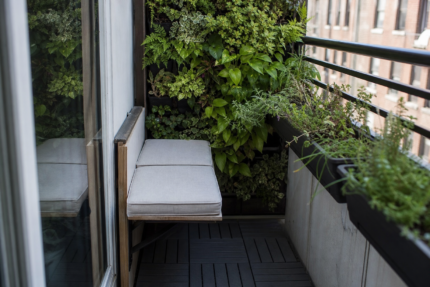
Custom Patio Cushions
- Cut to your exact measurements — dining chairs, deep seating, benches, chaises and swings, any shape.
- 119 performance fabrics at one price — full-sun and quick-dry outdoor lines included.
- One order, one dye lot — the whole patio set ships color-matched.
- Factory-direct from $88 — instant quote in the customizer below.
- ±½″ tolerance, re-checked before cutting — remade free if we cut it wrong.