
A Barclay frame already made its biggest design decision for you — the weave. Wicker furniture hands the cushion job a fixed color temperature and a fixed texture, and pads that respect both look deliberate, while pads that ignore either look like they wandered in from another yard. Here is how to choose on purpose.
Read your frame’s color temperature first
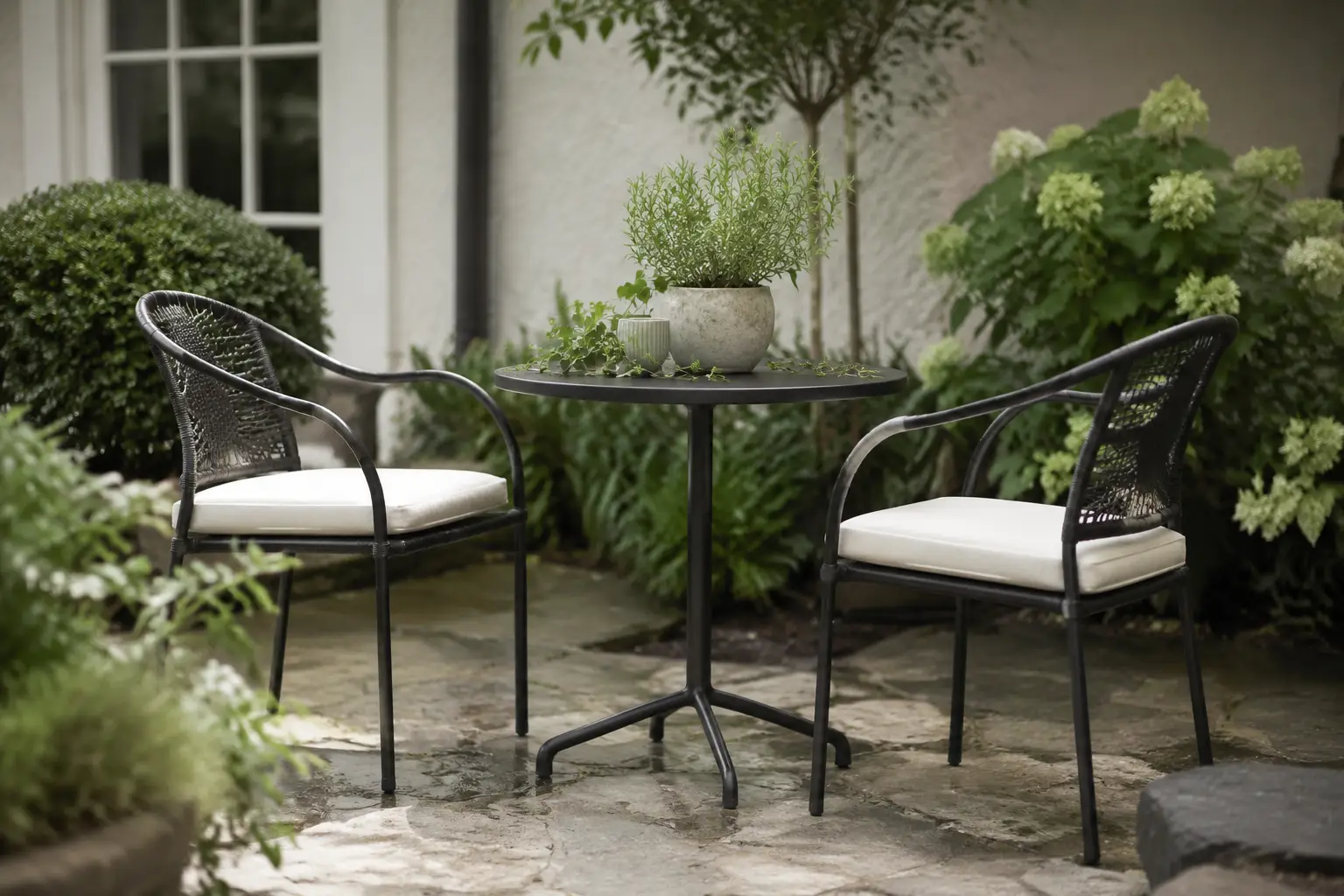
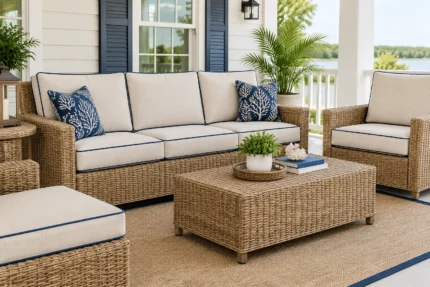
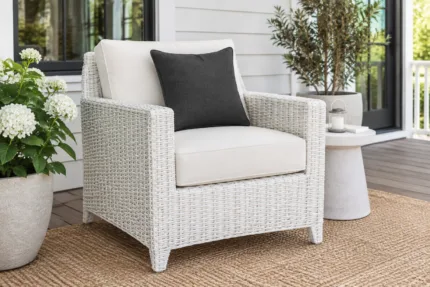
Barclay pieces shipped in the era’s standard wicker runs, and nearly every surviving example falls into one of three temperatures. Honey-brown rattan tones push warm and amber under afternoon light. Grey-wash and whitewash weaves sit cool and airy, close to driftwood. Black or espresso resin wicker reads nearly neutral, with a dark gravity that dominates a patio after sundown.
The test costs nothing: photograph your frame at midday in open shade — not full sun, which bleaches everything toward the same glare — and compare the photo against a true-grey reference like a concrete walk or white paper. Frames that lean amber in that comparison want cushions in the same warm family; frames that lean grey or blue want the cooler side of the menu. The wrong temperature does not look broken, exactly. It looks accidental, and guests cannot name why.
Texture matching: the second half of the handshake
Color gets the attention, but texture carries as much of the match. The principle is contrast with restraint:
- Coarse, open weaves (chunky rattan, wide resin braids) pair well with visibly textured cushion surfaces — slub linen weaves, canvas with a hand, woven textures that echo the frame’s rhythm at a smaller scale.
- Fine, tight weaves (smooth rattan, micro-braided resin) prefer calmer surfaces — flat cotton linen, smooth tech fabric, velvet with a low pile — so the frame keeps the texture statement.
- Matte black frames carry almost any surface, but a slight sheen or a woven texture keeps the pairing from going funereal in low light.
None of this constrains price — every fabric in our menu of 119 prices identically at a given cushion size, so texture and color choices are pure preference, not budget tiers.
Measuring pads that sit on a woven deck
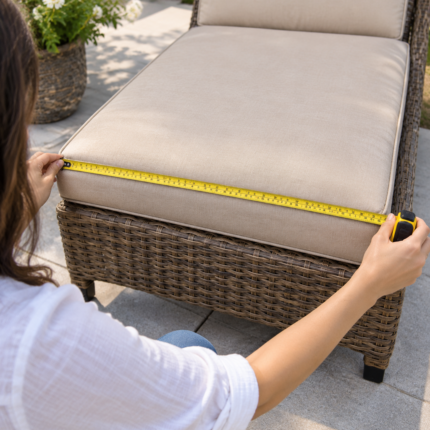
Wicker frames add one geometric wrinkle that steel frames do not: the seat deck itself is woven, which means it flexes, crowns slightly at center, and settles under load. Measured carelessly, those properties quietly inflate or deflate your three numbers. Take width inside arm to inside arm with the tape held level across the deck — a tape that sags into the weave’s crown reads a quarter inch narrow, and one bridged nose-high reads wide. Depth runs front rail to the seat back at the flat usable span, not down into any scoop the weave has developed over years of service.
The old cushions make the easiest reference when they survive: lay the tape across the pad at the seam and photograph it there, then confirm the footprint against the bare deck with pads removed. Where pad and deck disagree, the deck wins for width and depth — covers stretch, foam compresses, but the structure the cushion must fit inside does neither. Thickness is the one figure that is a preference rather than a fact: the original loft makes a sane starting point, and the configurator takes whatever you decide. The full three-number routine, with diagrams for the curved backs and rounded fronts common on wicker dining pieces, lives in the measurement guides.
One last wicker-specific habit: measure the same cushion twice, ten minutes apart, before you submit. Woven decks reward a second reading precisely because their give makes first readings optimistic — and two agreeing figures make our verification desk’s re-check a formality rather than a query.
Confirming the frame is a Barclay
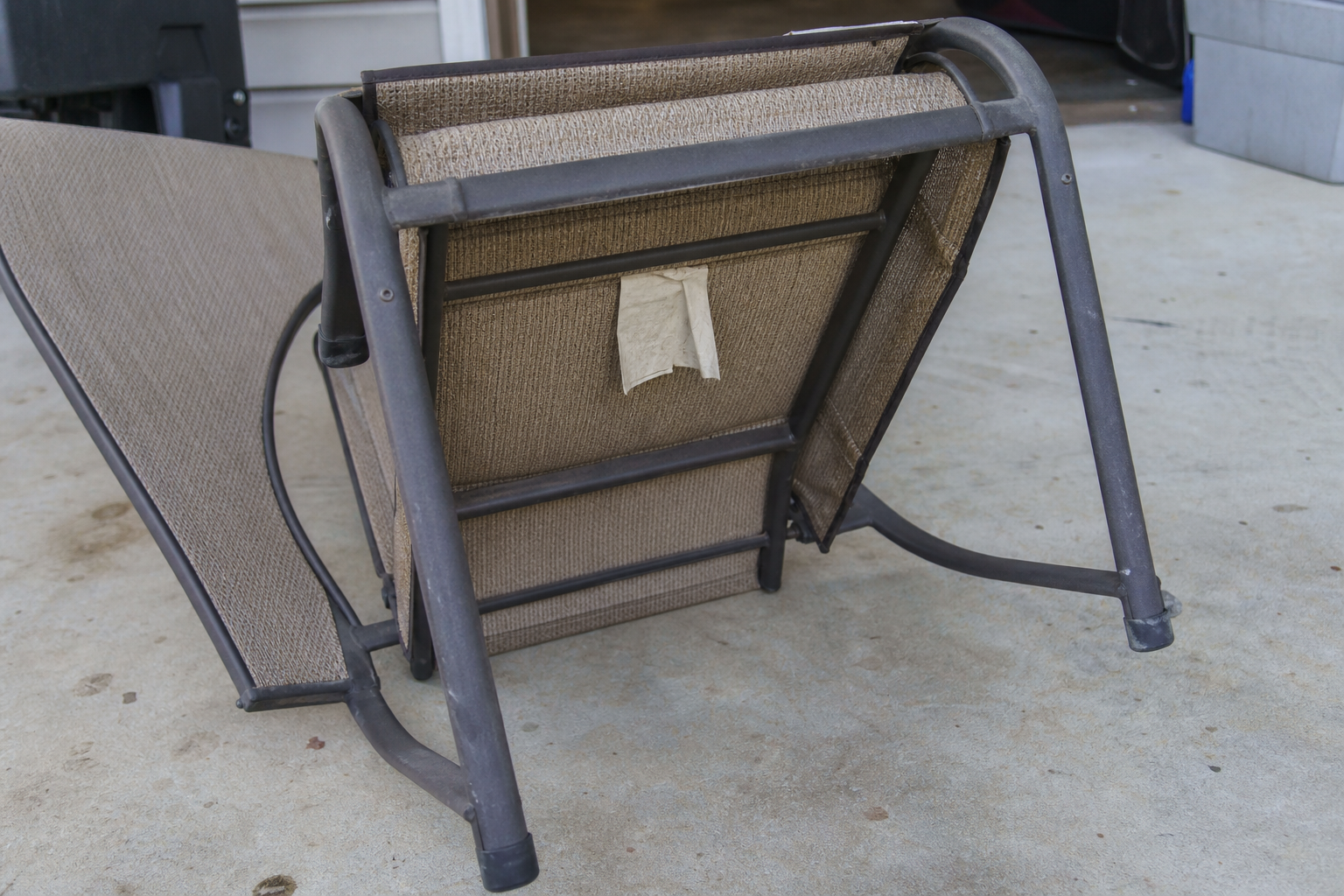
Series identification still matters for one reason: it sets expectations. The white tag under the seat frame (model number behind a GLD or THD supplier code) is the fastest confirmation, and Home Depot order history or the original assembly leaflet names the line outright. No tag and no paperwork? Wicker-frame cues plus a set of photos sent to the bench usually pin the line within a day.
And because Hampton Bay refreshed series across model years, two Barclay-labelled chairs from different seasons can differ in arm profile and seat depth — which is precisely why the pads we sew follow your three measurements per cushion rather than any series-wide number. The measuring guides cover the routine.
Three temperature routes through the fabric menu
Honey-brown frames take terracotta, oatmeal, saffron and moss — the palette the weave already suggests. Grey-wash frames open up fog blues, sage and shell. Black frames run the widest range, from crisp white to saturated cabana stripes that would overwhelm a lighter weave. Whatever route you pick, all covers zip off for washing — wicker’s nooks shed debris onto seat pads constantly, and a washable cover is what keeps the pairing looking chosen rather than endured.

One quiet advantage of the measured route for wicker owners: because the pads are cut to your deck rather than to a series average, a frame that has settled slightly asymmetric over the years gets pads that sit true on the deck as it is now, not as the factory intended it. The tape measure is diplomatic about age.
Open-patio placements add one more filter: water-resistant tech fabric shrugs off the rain a wicker set drinks in, wiping clean where cotton linen would need a wash cycle. Covered porches free you to use any surface in the menu. Pricing never enters the filter — each cushion starts from a $45 make-base and scales only with size and foam density across 35D–65D, whichever fabric wins.
Neighboring uncharted series worth a look: Geneva and Salem. The Kampar page charts a measured series, and the Hampton Bay hub indexes every line we track.
Frequently asked questions
Should cushions match the wicker exactly or contrast with it?
Neither pole works well. An exact tone-on-tone match flattens the frame’s texture; a hard contrast makes the pads shout. One or two steps of separation in the same temperature family — oatmeal over honey, fog blue over grey-wash — is the range where most satisfying pairings live.
Can the covers be cleaned without taking the cushions apart?
Yes — each cover zips off the foam entirely for washing. Unzip, machine-wash on gentle, air-dry, back on. No re-stuffing, no ties to thread, no tools; the zipper is standard on every cushion we sew, not an option.
How do I know which of the 119 fabrics suits an uncovered patio?
The fabric menu inside the order flow flags each option’s character; for open-air placement, water-resistant tech fabric is the low-maintenance pick, cotton linen thrives under cover, and velvet handles indoor-outdoor traffic plus claws. All 119 price the same at a given size.
What will new Barclay seat pads cost?
Per cushion, an order opens at a $45 make-base and rises with dimensions and the density you dial in between 35D and 65D. Fabric never changes the figure, and the quote assembles itself as you enter measurements.
How long does a fabric-and-measure order take to arrive?
Sewing runs 4–7 business days standard, 3–5 flagged as a rush. Shipping adds 3–6 weeks to most US addresses — a wider window than most expect, so order ahead of the season you actually want to sit in.
The label is gone — can I still order for an unidentified wicker set?
The order needs measurements, not a name. Identification mostly prevents you from chasing specs that never existed — and photos sent to the workshop usually name the line anyway, before cutting starts.
What ordering from this bench gets you
- One workshop for the whole job — ten-plus years of in-house cutting, filling and sewing; the people who quote the order build it.
- Measurements re-verified against your piece count before any fabric is unrolled — three numbers per cushion, checked, discrepancies queried.
- No minimums and no stock calendar — any count of pieces, any of 119 fabrics, flat fabric pricing throughout.
- A remake guarantee in plain terms: cuts outside ±½″ of your figures (±¾″ beyond 36″), wrong fabric, wrong build — remade free.
Barclay replacement cushions chosen against the weave — from a $45 make-base, cut to your three numbers per piece.
Want a second opinion on the pairing? Send a frame photo and we will talk through fabric directions before you order. Not a Barclay after all? Any shape, custom built — or browse the full Hampton Bay index.
Shipping & Delivery
- Orders over $158 ship free — add a second cushion or an upgrade and shipping’s on us.
- Smaller orders ship anywhere in the contiguous US for one simple flat fee — always shown before you pay.
- Made in 7–14 business days. Each cushion is cut and sewn to your measurements after you order, never pulled from a shelf.
- ±½″ tolerance on all custom cuts — and if we cut it wrong, we remake it free. No forms, no fine print.
Have a deadline? Contact us before ordering and we will tell you honestly whether we can meet it.
Related products
Custom Deep Seat Cushions
- Cut to your exact measurements — any deep-seating frame, any brand.
- 119 performance fabrics at one price — full-sun and quick-dry outdoor lines included.
- One order, one dye lot — every piece in the run ships color-matched.
- Factory-direct from $172 — instant quote in the customizer below.
- ±½″ tolerance, re-checked before cutting — remade free if we cut it wrong.
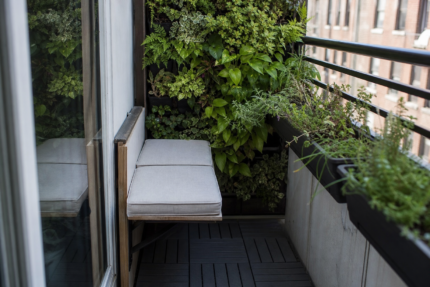
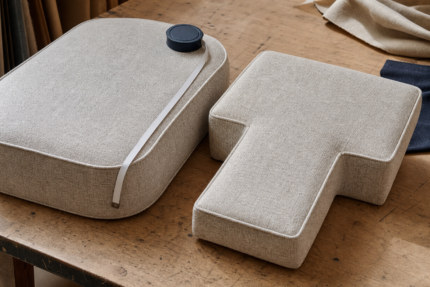
Custom Patio Cushions
- Cut to your exact measurements — dining chairs, deep seating, benches, chaises and swings, any shape.
- 119 performance fabrics at one price — full-sun and quick-dry outdoor lines included.
- One order, one dye lot — the whole patio set ships color-matched.
- Factory-direct from $88 — instant quote in the customizer below.
- ±½″ tolerance, re-checked before cutting — remade free if we cut it wrong.
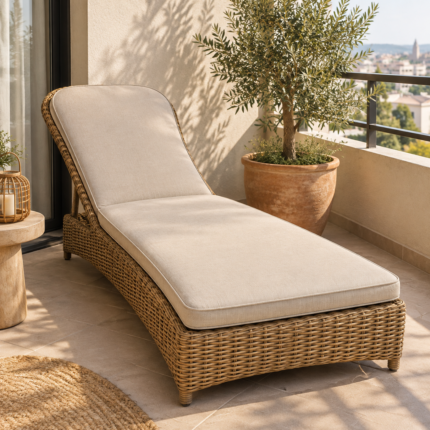
Custom Wicker Cushions
- Cut to your exact measurements — rattan, resin wicker, any weave.
- 119 performance fabrics at one price — full-sun and quick-dry outdoor lines included.
- One order, one dye lot — every piece in the run ships color-matched.
- Factory-direct from $106 — instant quote in the customizer below.
- ±½″ tolerance, re-checked before cutting — remade free if we cut it wrong.