
Cushion Fabric Calculator — Yardage That Is Actually Enough
Most fabric calculators add up the square inches of a cushion and divide by the width of the bolt. Fabric does not work that way: a box cushion has a side band, the band is one continuous strip, and a strip cannot be cut into pieces and reassembled. This calculator does the cutting-table math instead — two faces, one unbroken band, half-inch seam allowances on every edge, and the pattern factor for stripes and large repeats.
Why Area Math Undercounts
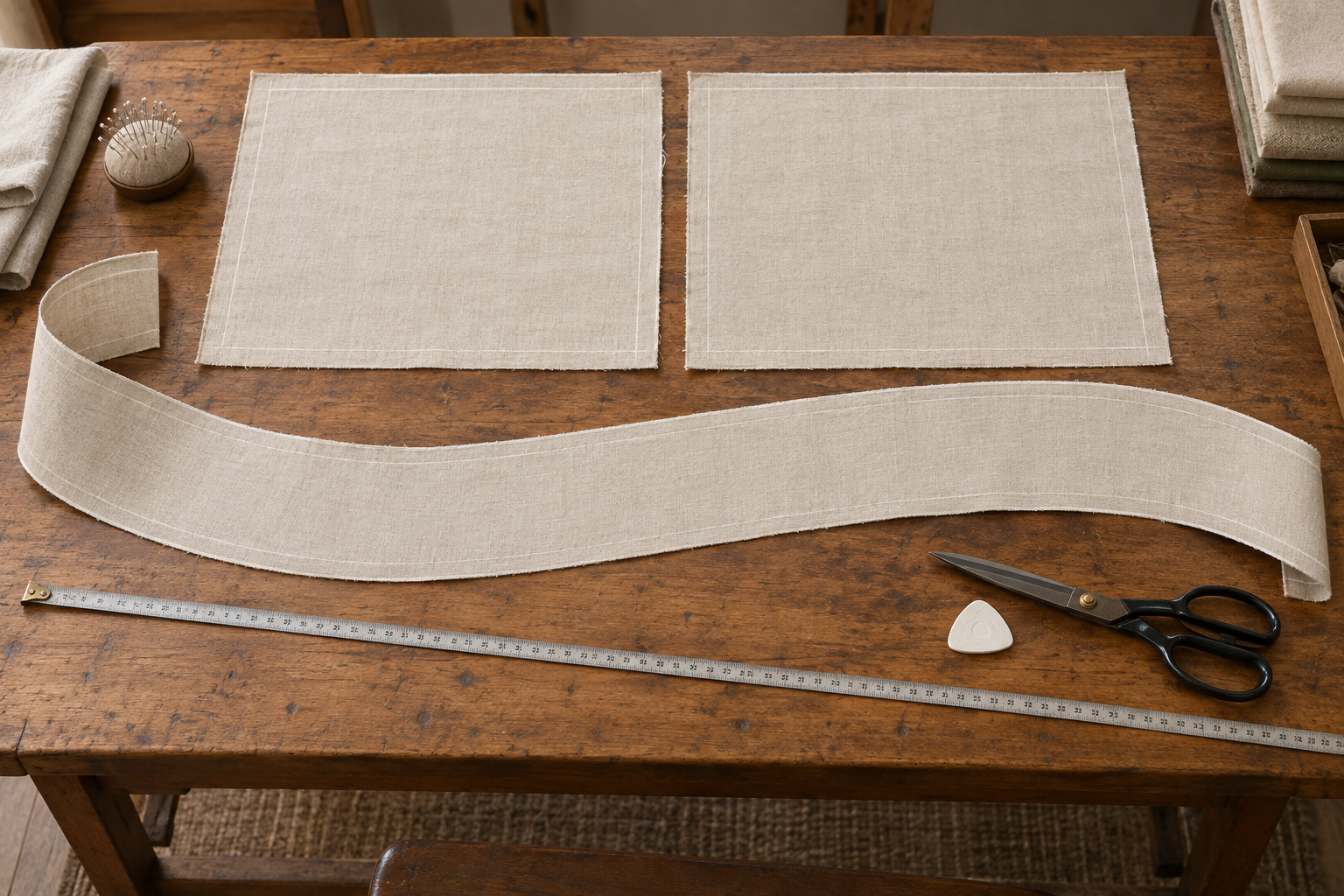
Run a 72 × 20 × 4-inch bench cushion through an area calculator and it returns roughly two yards — two faces at 2,880 square inches plus a band at 736, divided by 54 inches of width. The real answer is five and a half. The difference is the band: its perimeter of 184 inches, plus allowance, makes a single strip about 185 inches long, and that strip has to run unbroken down the bolt because a spliced side band is a visible seam on the edge that takes the most abrasion. The true fabric length is the longer of the two demands, never the sum of areas. The full walkthrough is in how much fabric do you need for custom cushions.
Shape Changes the Strip
A knife-edge pad — two faces sewn directly together — has no band at all, which is why it needs a fraction of the yardage and why area math happens to be honest for it. A box cushion adds the band. A round box cushion trades the rectangle for two circles plus a band cut to the circumference: a 24-inch circle has a perimeter of about 75 inches against 96 for a 24-inch square, so rounds are quietly band-cheaper than squares of the same width. Notched corners save nothing either: the fabric consumed is the full rectangle, because the strip and the face are cut before the notch exists.
Usable Width: 45, 54 or 60 Inches
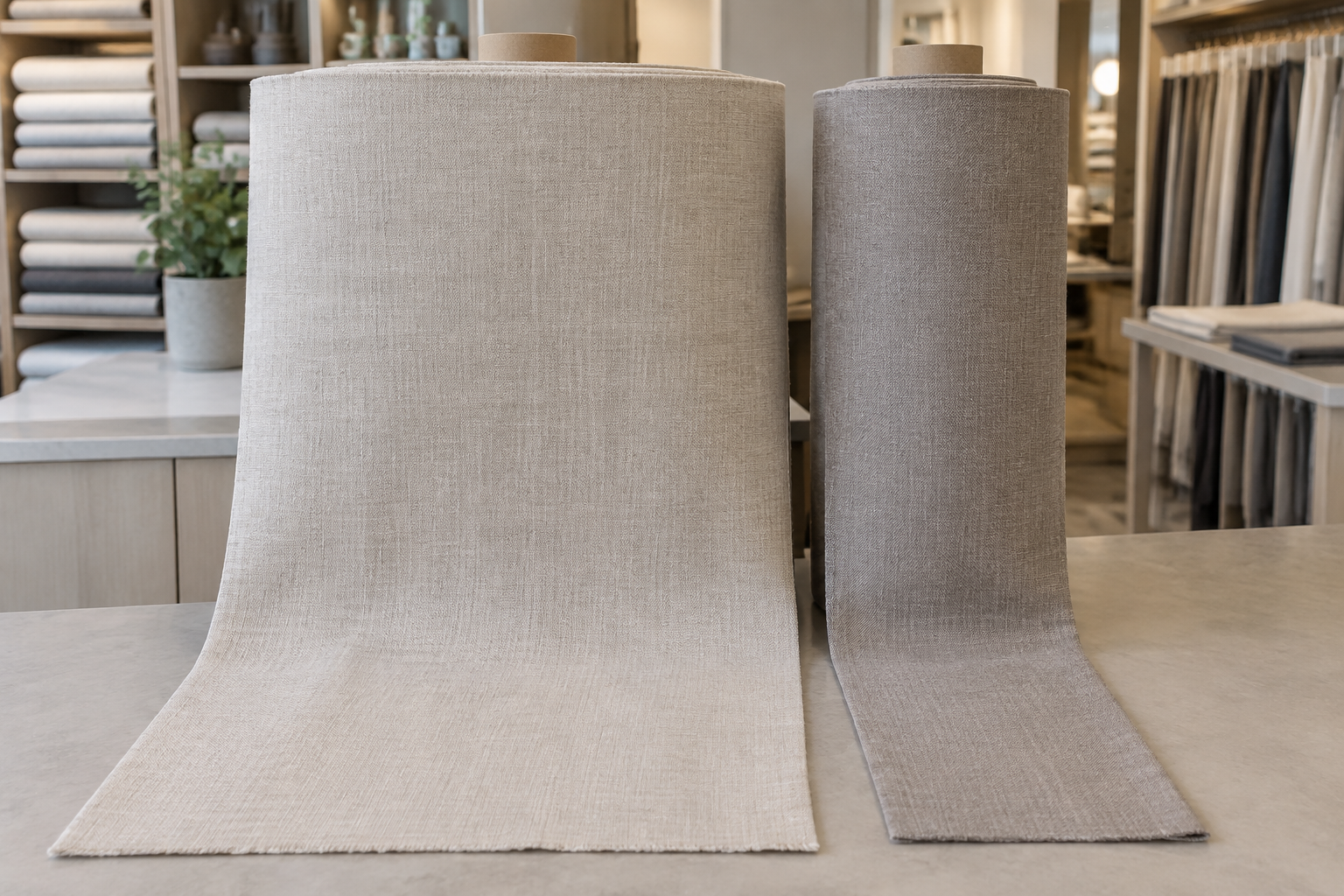
Upholstery-weight fabric runs 54 inches of usable width as the de facto standard, and this calculator assumes it unless you say otherwise. Apparel and quilting cottons run 44 to 45 inches — and the same bench cushion that needs 5½ yards on a 54-inch bolt needs nearly 8 on a 45, because the faces and the band stop fitting across the bolt in one pass. Specialty bolts run 60 inches or wider and go the other way. The width assumption matters more than almost anything else in the math — set it to the bolt you will actually buy.
Pattern Repeat and Direction
Pattern repeat: every cut piece must start at the same point in the pattern, so each face rounds up to a whole multiple of the repeat — the rule of thumb is 15–20% extra for stripes and medium florals, up to 25% for large-scale repeats, which is exactly what the pattern selector applies. Direction: one-way prints and velvet nap force every piece the same way up, quietly adding 10–15%. Railroaded fabric — pattern running along the bolt’s length — saves on long side bands; worth asking about at the counter.
The Second Ledger: Priced by the Square Foot
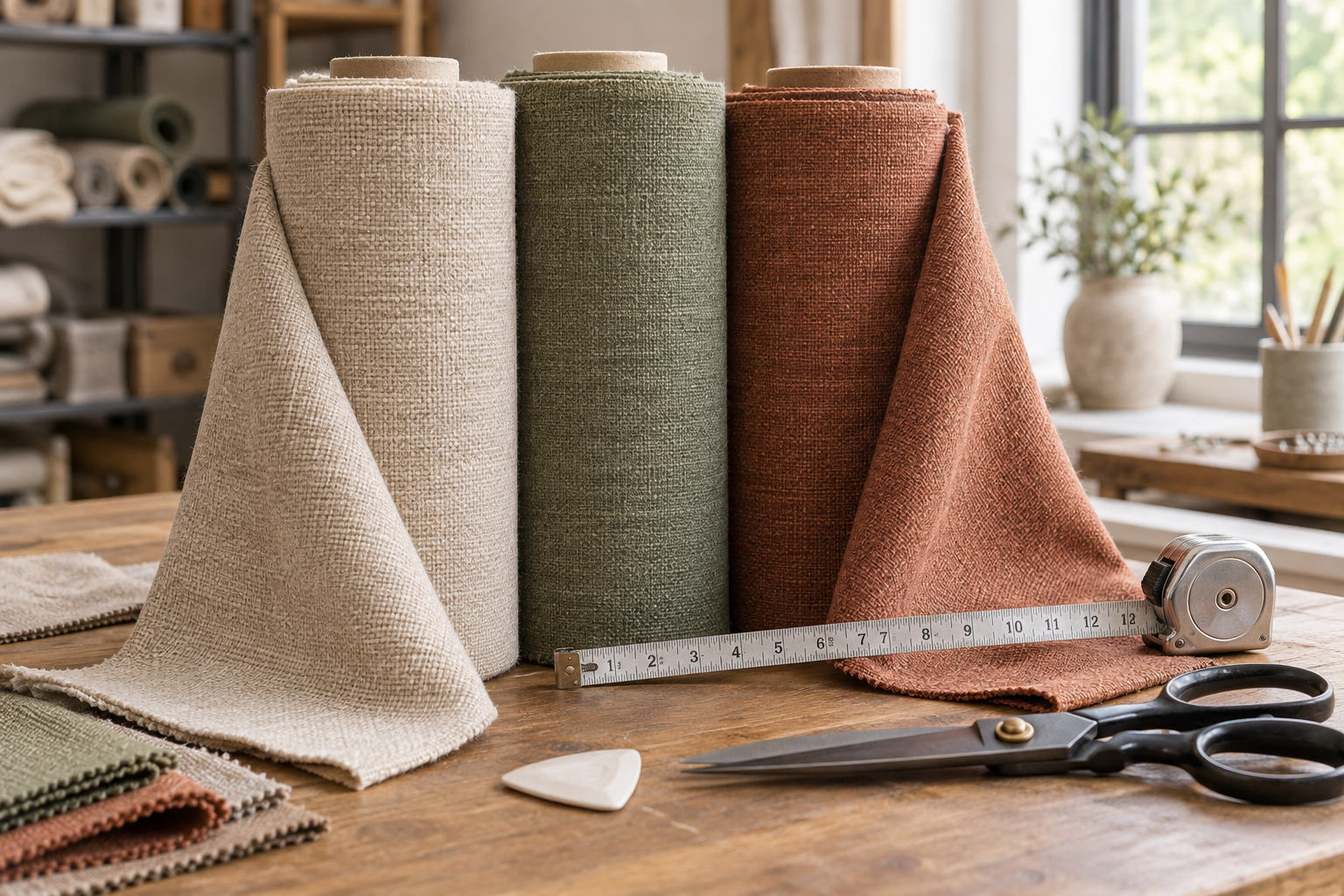
Here is the honest footnote every DIY calculator skips: a mill does not buy fabric the way a home sewer does. We cut from full bolts and nest orders together, so the leftover strip that would rot in your closet becomes someone else’s band the same afternoon. Our quotes therefore count fabric by the square foot of your cushion’s footprint — all 119 fabrics at one price, nothing cut until your measurements are confirmed. The Show Prices panel runs that ledger live, and its button drops your exact numbers into the designer. The pricing logic is unpacked in how custom cushion pricing is built.
Frequently Asked Questions
How many yards of fabric do I need for a 72-inch bench cushion?
For a 72 × 20 × 4-inch box cushion in solid 54-inch fabric, plan 5¼ to 5½ yards. The side band alone is a 185-inch continuous strip, which is what pushes the number past five yards. Area-based calculators that return about two yards are ignoring that the band cannot be cut into pieces.
How much fabric for an 18 × 18 × 3-inch box seat cushion?
About 2¼ yards of solid 54-inch fabric. Two 19-inch faces sit side by side across the bolt in one pass, and the 73-inch band runs beside them in the leftover width — the band, not the faces, sets the length.
Does fabric width really change the yardage?
Yes, dramatically. The same bench cushion that needs 5½ yards on a 54-inch bolt needs nearly eight yards on a 45-inch bolt, because the side band no longer fits in the width left beside the faces and takes its own pass down the roll. On a 60-inch bolt the numbers relax slightly.
How much extra fabric should I buy for stripes or a large pattern?
The industry rule of thumb: 15–20% extra for stripes and medium patterns, up to 25% for large-scale repeats — or one extra repeat per cut piece, whichever is easier to figure at the counter. Each piece’s cut length rounds up to a whole multiple of the repeat.
Can I splice the side band to save fabric?
You can, and you will regret it on the first abrasive weekend. A spliced band puts a seam on the exact edge that takes the most wear, and it reads as a homemade line around the whole cushion. If the continuous band does not fit your budget, the honest alternative is not a splice — it is letting a mill nest the cut for you.
I would rather not sew at all. Can you just make it?
That is the entire point of the Show Prices panel. Every cushion is cut and sewn to your measurements from $45 make-base plus per-square-foot rates, in any of 119 fabrics at one price. Standard production runs 4–7 days (3–5 on the rush lane); shipping takes 3–6 weeks and is free over USD 158 — and if we ever cut it wrong, it is remade free.
Is this fabric calculator for cushions accurate for box sides, seams and piping?
Yes — the calculator prices the full box: top and bottom faces, the side band, seam allowance and an optional piping line. It is the same math the cutting table uses. Stripes and large repeats still need extra yardage for pattern matching — the rows above cover how much.