The Mill Behind Your Cushions — Made to measure, crafted to last.
Factory Directsource workshop, no middlemen
119 Fabricsfree swatch program
±½″ Tolerancecut to your exact measurements
Remake Freeif the fit isn’t right
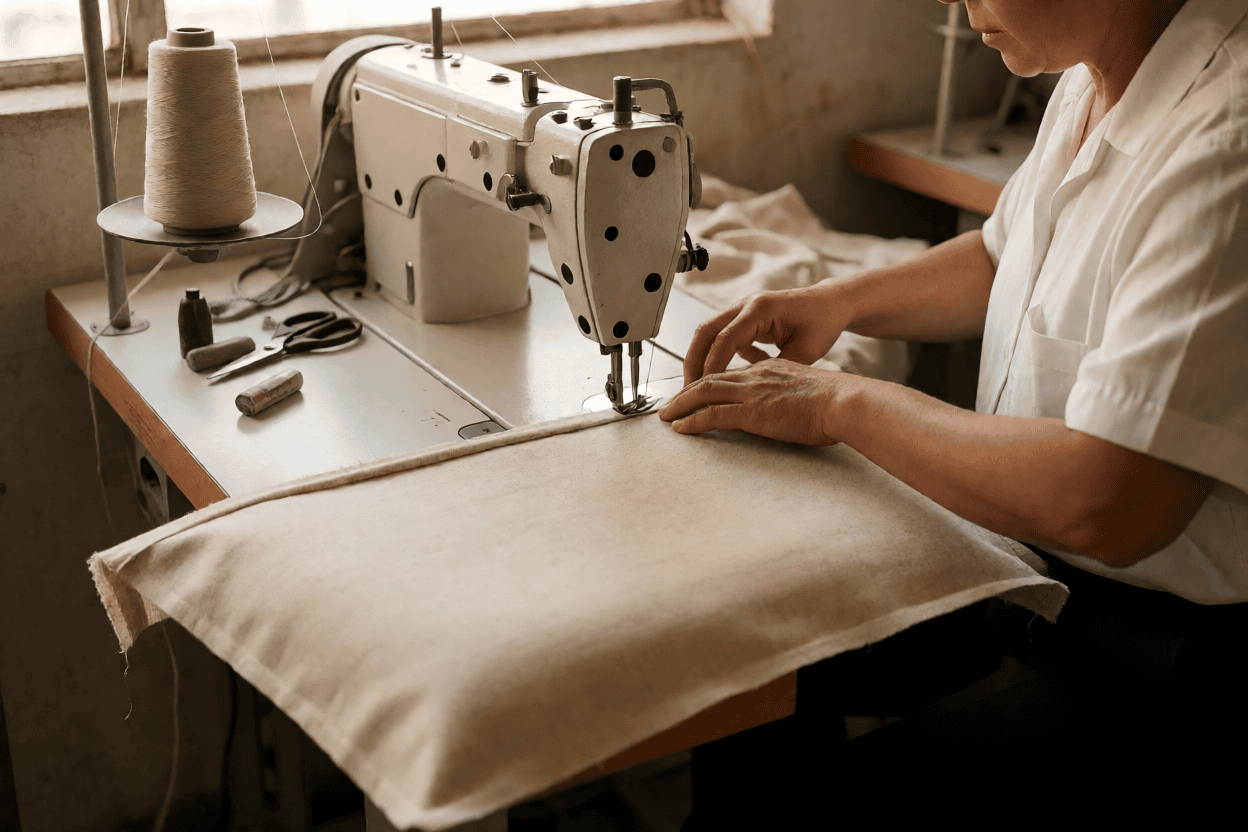
Cushion Mill is not a brand that buys cushions and resells them. We are the mill — a cushion workshop with ten years of cutting foam, sewing covers, and shipping replacements for furniture whose original pads gave out long before the frames did.
Ten Years at the Cutting Table
We started as a made-to-order mill shop in one of the world’s largest furniture manufacturing belts, where cushions, covers and foam are a local trade the way wine is a trade in wine country. For a decade we have cut and sewn on our mill floor for furniture brands, patio-set makers and cover houses — which means we have measured, replicated or rebuilt cushions for more furniture series than we can count. A few years ago we started shipping direct to homeowners, and the question changed from “can you make 500 of these” to “can you make one that fits my chair.” The answer, it turns out, is the same craft.
The two halves of the business feed each other. The brand work taught us production discipline — tolerance math, dye-lot management, what fails in year two — and the direct work teaches us the questions catalogs never answer: which slat the ties should reach, why a “24 inch” cushion measures 24.41, what a banquette survives in a house with children. This site is those answers written down, which is why so much of it reads like a workshop conversation rather than a brochure.
The Measured Database
Replacing a discontinued cushion set usually means a dead end: the brand moved on, the store sells only current sets, and “universal” pads fit nothing exactly. So we did the unglamorous work — measuring and cross-checking original equipment dimensions, piece by piece, across 43 series: 24 Hampton Bay + 7 Martha Stewart patio collections (195+ verified sizes) plus 12 IKEA series built from official product data (79 more measured dimensions). Every series page in our replacement library lists those dimensions openly, because an informed customer measures once and orders right. And where a brand publishes nothing trustworthy — Ashley, for instance — we say so and teach the identification route instead of publishing guesses.
How We Build a Cushion
Step
What happens
1. Dimension check
Your measurements are re-verified against our database and common sense. Odd numbers get a call, not a guess.
2. Foam cut
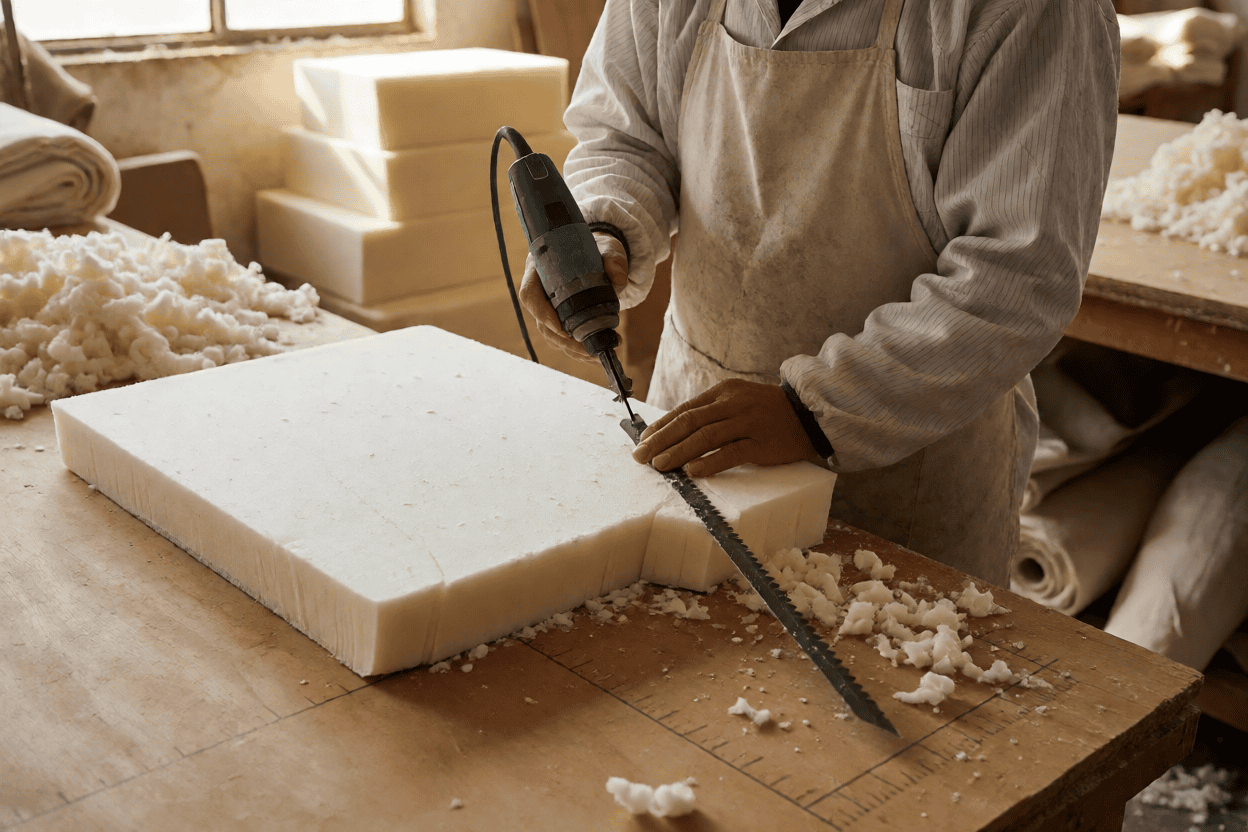
High-density 35–65D foam cut to size — the recovery and lifespan tier brands charge a premium for.
3. Cover sewn
Covers cut and sewn to your dimensions — never stock shells. Welt cord, ties and tufting as specified.
4. Fit & finish
Every piece is checked against your confirmed order dimensions before it ships — cut to within ½ inch, free remake if we miss. Flat-rate with tracking.
Materials & Where They Come From
We buy like a mill, because we are one — not by the roll from a craft store, but by the production lot:
Material
What we use
How we buy it
Foam
High-density 35–65D grades, the recovery tier brands upcharge for
Direct from foam mills in the same manufacturing belt as our mill — bought by the block, density-spec’d per lot
Outdoor fabric
Solution-dyed acrylic class (bleach-cleanable, 5-year fade performance) and waterproof tech weaves
From upholstery mills on long-running supply agreements, not spot buys
Same mills, same lots as our contract work — one fabric lot per set, so no dye-lot shifts
Why this matters to you: density and dye lot are the two things that separate a cushion that lasts seasons from one that flattens by August. Buying at the source is how a high-density 35–65D build costs you a “standard foam” price here.
Why Factory-Direct Matters
Between a factory and your porch usually stand a brand, an importer, a distributor and a retailer — each taking a margin and none of them holding a tape measure. Selling direct means we can put high-density foam in a custom-cut cushion at a fair price, answer your fit questions with a decade of pattern experience, and stand behind every seam because our name is on the tag. It also means no stock piles: every cushion is made to order in 7–14 business days — typical US custom shops quote three to six weeks, so the mill-direct route is roughly half the wait.
What We Make and What We Don’t
An honest catalog is shorter than a vague one. We make working cushions: seats, backs, benches, nooks, boat berths, pew runs — anything that benefits from measured foam and sewn covers, in our three fabric tiers on four density grades. We don’t make freestanding throw pillows as a decorative product line, we don’t carry a quick-dry reticulated core for open-boat duty (a marine specialist is the right shop there, and saying so costs us less than it would cost you), and our covers close with sewn envelope closures rather than zippers. Every limit on this list exists because we would rather you order the right thing from the right maker than the almost-right thing from us.
How an Order Actually Runs
You send numbers; a person reads them. Every order is checked against our database and against common sense — a 60-inch “dining chair” gets a question, not a shrug — and the confirmation you approve lists every dimension in writing. Then the foam is cut, the cover is sewn, the piece is measured again against the order before it ships. The tolerance is published: within ½ inch of your confirmed numbers (¾ on longer runs), or the piece is remade free. It is a slow-sounding process that takes 7–14 business days, and it is why the remake queue stays short.
Questions about a series, a shape, or a set you cannot identify? Contact us — a real person from the mill floor answers, usually within one business day.
Ordering & service
How do I order free fabric swatches?
Ask us for swatches of any fabric shown on this page — we mail cut samples so you can check color and texture in your own light before ordering.
What if the cushion doesn’t fit when it arrives?
Every cushion is cut to the measurements you submit. If we misread or miscut your numbers, we remake it at no charge.
Can I talk through my project before ordering?
Yes — send us a photo of your seat and your rough measurements, and the workshop team will confirm the best approach before you pay.
How are these different from store-bought pads?
Store pads come in standard sizes and thin foam. Ours are cut to your exact dimensions with your choice of foam thickness and fabric — made in the same workshop that ships them.
Ordering & service
How do I order free fabric swatches?
Ask us for swatches of any fabric shown on this page — we mail cut samples so you can check color and texture in your own light before ordering.
What if the cushion doesn’t fit when it arrives?
Every cushion is cut to the measurements you submit. If we misread or miscut your numbers, we remake it at no charge.
Can I talk through my project before ordering?
Yes — send us a photo of your seat and your rough measurements, and the workshop team will confirm the best approach before you pay.
How are these different from store-bought pads?
Store pads come in standard sizes and thin foam. Ours are cut to your exact dimensions with your choice of foam thickness and fabric — made in the same workshop that ships them.
— a real person from the mill floor answers, usually within one business day.
About Cushion Mill
The Mill Behind Your Cushions — Made to measure, crafted to last.
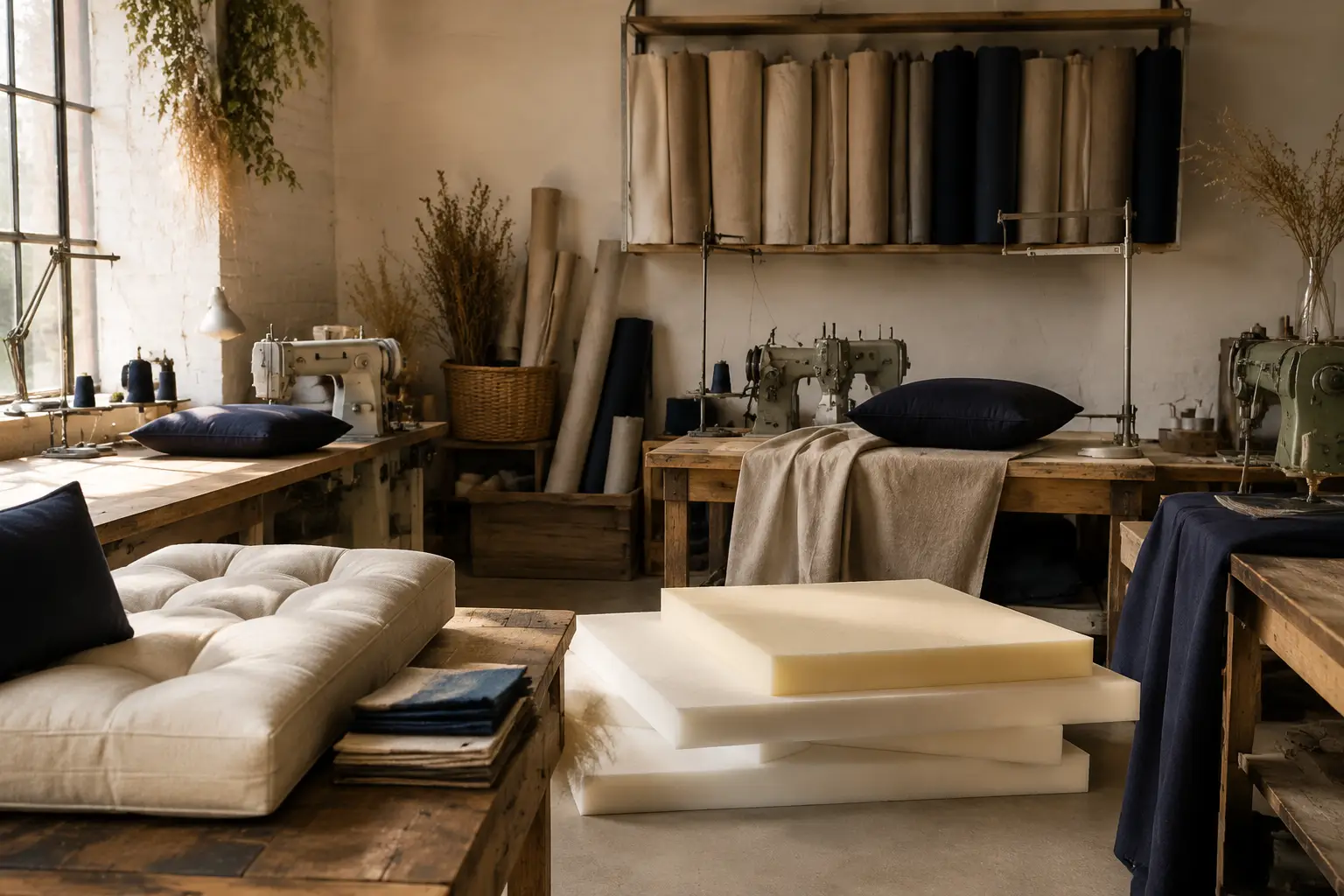
Cushion Mill is not a brand that buys cushions and resells them. We are the mill — a cushion workshop with ten years of cutting foam, sewing covers, and shipping replacements for furniture whose original pads gave out long before the frames did.
Ten Years at the Cutting Table
We started as a made-to-order mill shop in one of the world’s largest furniture manufacturing belts, where cushions, covers and foam are a local trade the way wine is a trade in wine country. For a decade we have cut and sewn on our mill floor for furniture brands, patio-set makers and cover houses — which means we have measured, replicated or rebuilt cushions for more furniture series than we can count. A few years ago we started shipping direct to homeowners, and the question changed from “can you make 500 of these” to “can you make one that fits my chair.” The answer, it turns out, is the same craft.
The two halves of the business feed each other. The brand work taught us production discipline — tolerance math, dye-lot management, what fails in year two — and the direct work teaches us the questions catalogs never answer: which slat the ties should reach, why a “24 inch” cushion measures 24.41, what a banquette survives in a house with children. This site is those answers written down, which is why so much of it reads like a workshop conversation rather than a brochure.
The Measured Database
Replacing a discontinued cushion set usually means a dead end: the brand moved on, the store sells only current sets, and “universal” pads fit nothing exactly. So we did the unglamorous work — measuring and cross-checking original equipment dimensions, piece by piece, across 43 series: 24 Hampton Bay + 7 Martha Stewart patio collections (195+ verified sizes) plus 12 IKEA series built from official product data (79 more measured dimensions). Every series page in our replacement library lists those dimensions openly, because an informed customer measures once and orders right. And where a brand publishes nothing trustworthy — Ashley, for instance — we say so and teach the identification route instead of publishing guesses.
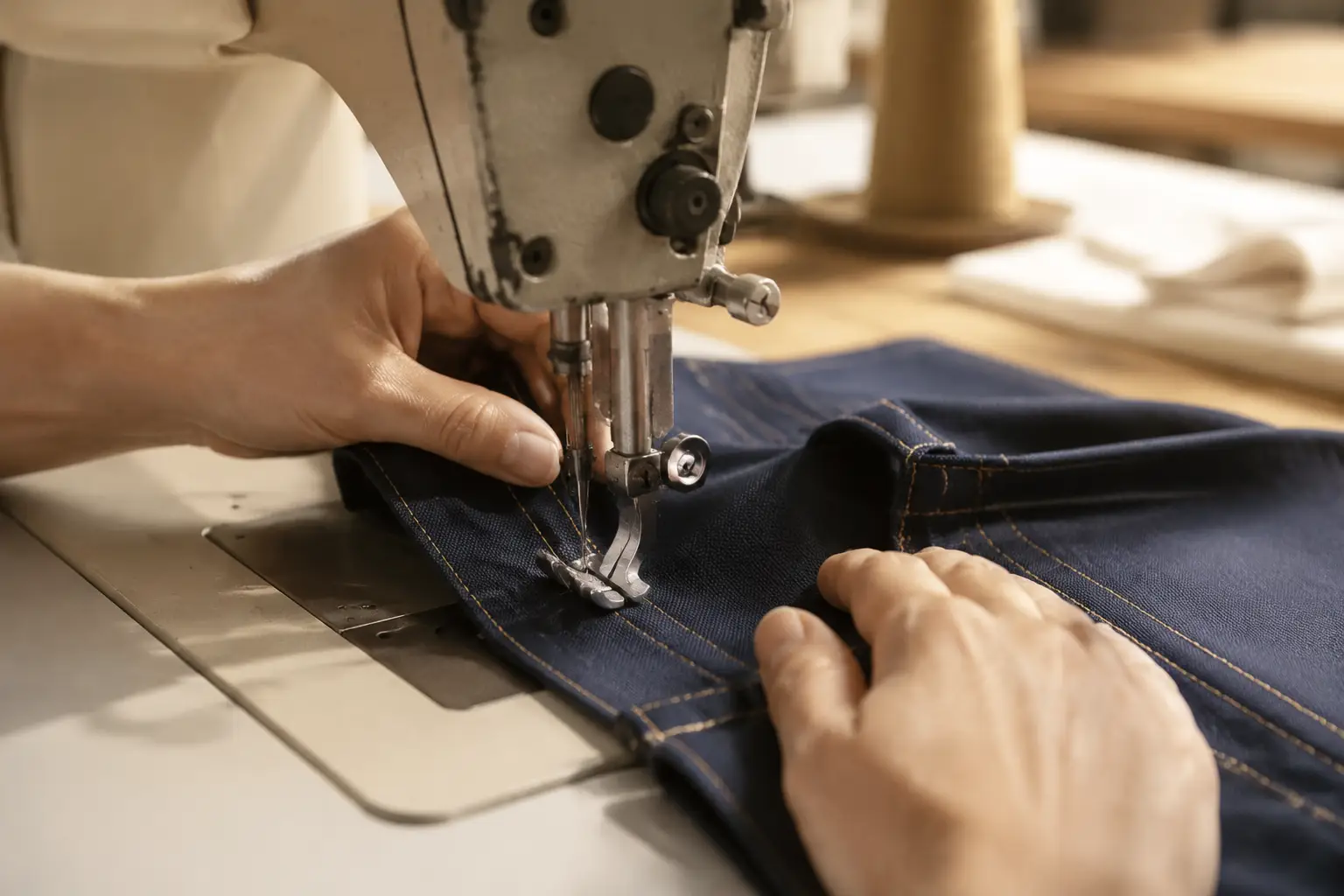
How We Build a Cushion
Step
What happens
1. Dimension check
Your measurements are re-verified against our database and common sense. Odd numbers get a call, not a guess.
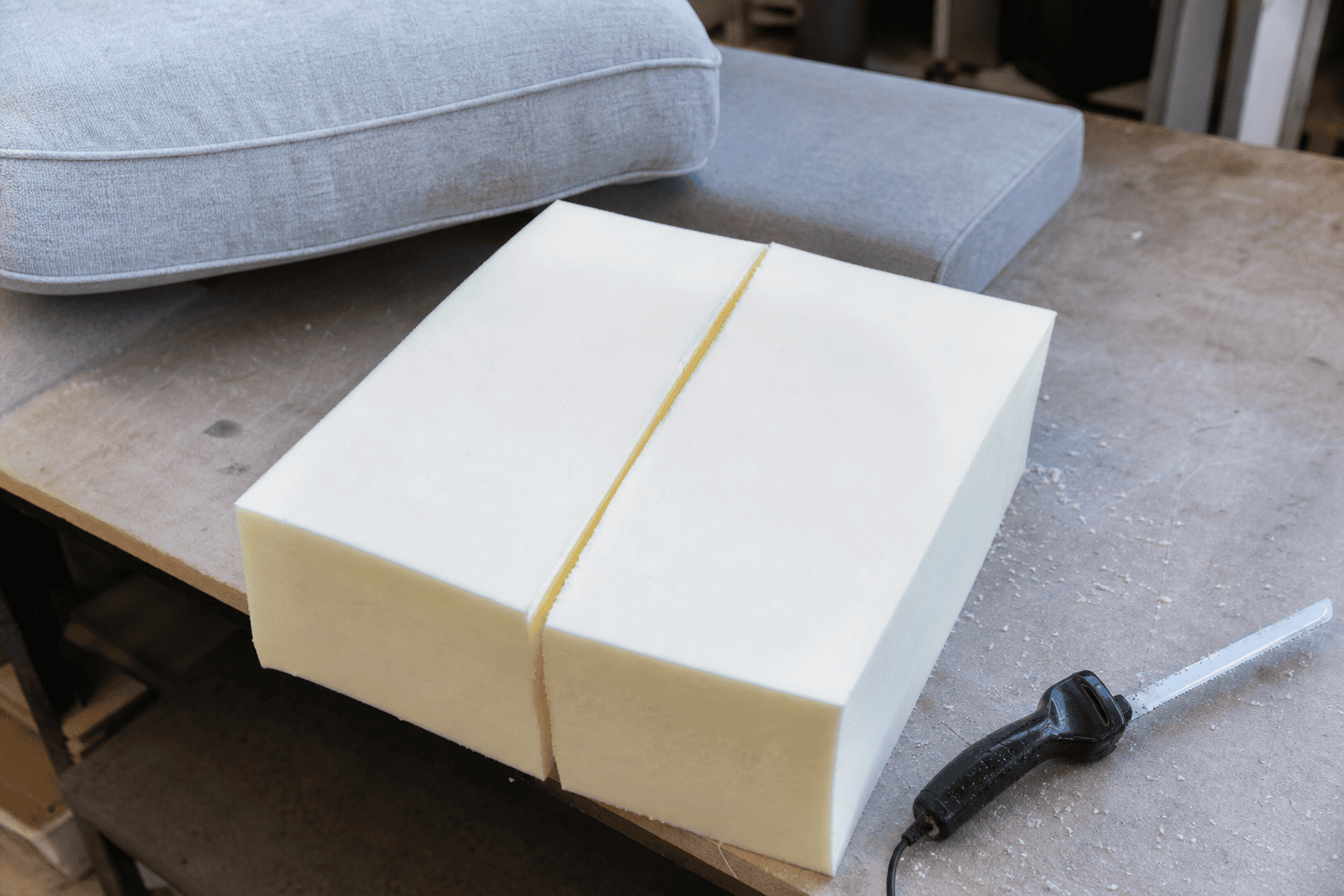
2. Foam cut
High-density 35–65D foam cut to size — the recovery and lifespan tier brands charge a premium for.
3. Cover sewn
Covers cut and sewn to your dimensions — never stock shells. Welt cord, ties and tufting as specified.
4. Fit & finish
Every piece is checked against your confirmed order dimensions before it ships — cut to within ½ inch, free remake if we miss. Flat-rate with tracking.
Materials & Where They Come From
We buy like a mill, because we are one — not by the roll from a craft store, but by the production lot:
Material
What we use
How we buy it
Foam
High-density 35–65D grades, the recovery tier brands upcharge for
Direct from foam mills in the same manufacturing belt as our mill — bought by the block, density-spec’d per lot
Outdoor fabric
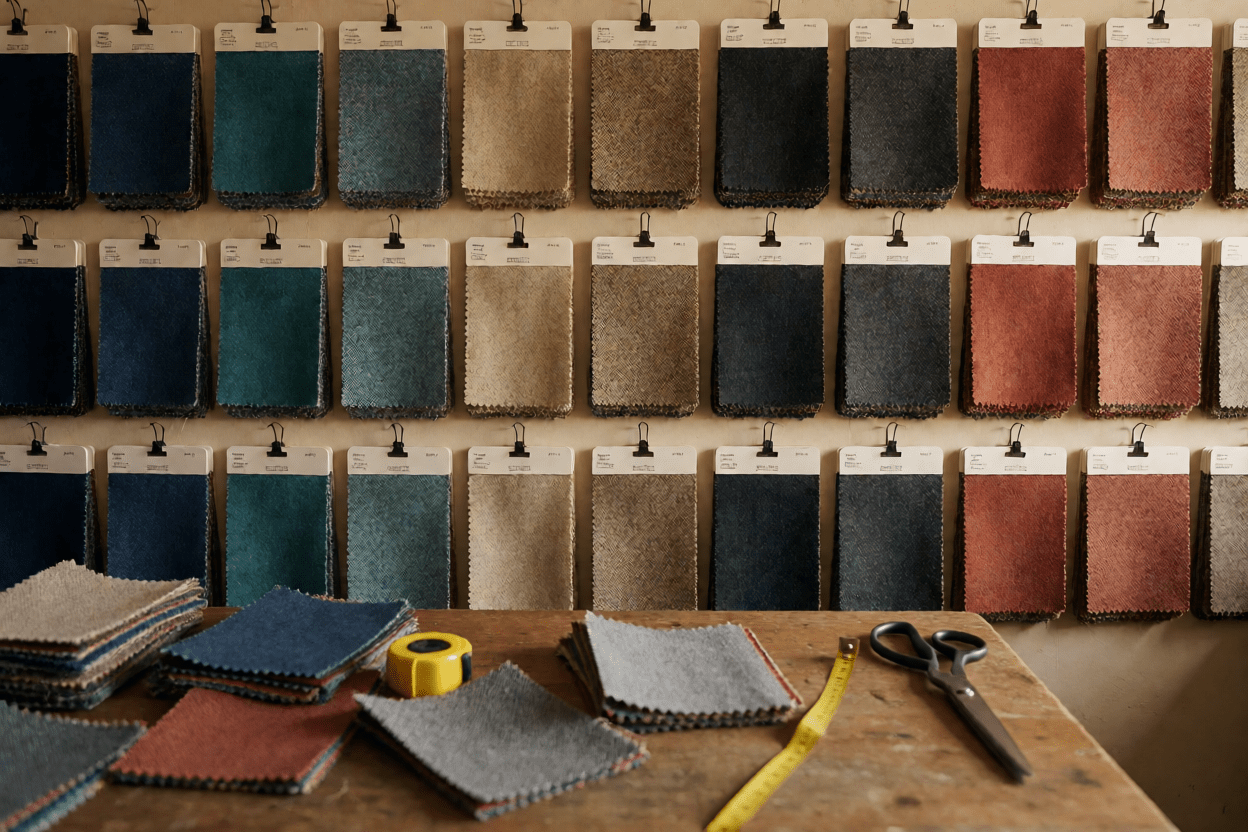
Solution-dyed acrylic class (bleach-cleanable, 5-year fade performance) and waterproof tech weaves
From upholstery mills on long-running supply agreements, not spot buys
Same mills, same lots as our contract work — one fabric lot per set, so no dye-lot shifts
Why this matters to you: density and dye lot are the two things that separate a cushion that lasts seasons from one that flattens by August. Buying at the source is how a high-density 35–65D build costs you a “standard foam” price here.
Why Factory-Direct Matters
Between a factory and your porch usually stand a brand, an importer, a distributor and a retailer — each taking a margin and none of them holding a tape measure. Selling direct means we can put high-density foam in a custom-cut cushion at a fair price, answer your fit questions with a decade of pattern experience, and stand behind every seam because our name is on the tag. It also means no stock piles: every cushion is made to order in 7–14 business days — typical US custom shops quote three to six weeks, so the mill-direct route is roughly half the wait.
What We Make and What We Don’t
An honest catalog is shorter than a vague one. We make working cushions: seats, backs, benches, nooks, boat berths, pew runs — anything that benefits from measured foam and sewn covers, in our three fabric tiers on four density grades. We don’t make freestanding throw pillows as a decorative product line, we don’t carry a quick-dry reticulated core for open-boat duty (a marine specialist is the right shop there, and saying so costs us less than it would cost you), and our covers close with sewn envelope closures rather than zippers. Every limit on this list exists because we would rather you order the right thing from the right maker than the almost-right thing from us.
How an Order Actually Runs
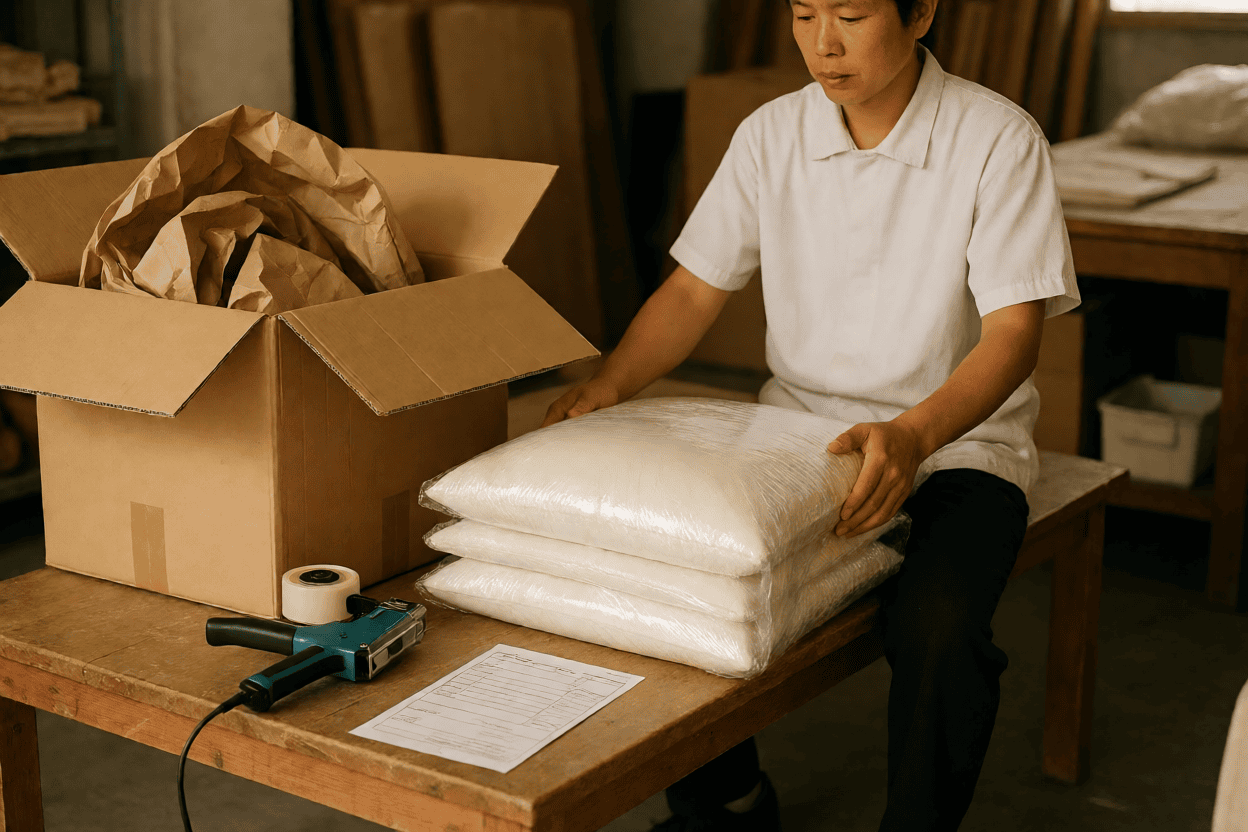
You send numbers; a person reads them. Every order is checked against our database and against common sense — a 60-inch “dining chair” gets a question, not a shrug — and the confirmation you approve lists every dimension in writing. Then the foam is cut, the cover is sewn, the piece is measured again against the order before it ships. The tolerance is published: within ½ inch of your confirmed numbers (¾ on longer runs), or the piece is remade free. It is a slow-sounding process that takes 7–14 business days, and it is why the remake queue stays short.
Questions about a series, a shape, or a set you cannot identify? Contact us — a real person from the mill floor answers, usually within one business day.
About Cushion Mill
The Mill Behind Your Cushions — Made to measure, crafted to last.
Cushion Mill is not a brand that buys cushions and resells them. We are the mill — a cushion workshop with ten years of cutting foam, sewing covers, and shipping replacements for furniture whose original pads gave out long before the frames did.
Ten Years at the Cutting Table
We started as a made-to-order mill shop in one of the world’s largest furniture manufacturing belts, where cushions, covers and foam are a local trade the way wine is a trade in wine country. For a decade we have cut and sewn on our mill floor for furniture brands, patio-set makers and cover houses — which means we have measured, replicated or rebuilt cushions for more furniture series than we can count. A few years ago we started shipping direct to homeowners, and the question changed from “can you make 500 of these” to “can you make one that fits my chair.” The answer, it turns out, is the same craft.
The two halves of the business feed each other. The brand work taught us production discipline — tolerance math, dye-lot management, what fails in year two — and the direct work teaches us the questions catalogs never answer: which slat the ties should reach, why a “24 inch” cushion measures 24.41, what a banquette survives in a house with children. This site is those answers written down, which is why so much of it reads like a workshop conversation rather than a brochure.
The Measured Database
Replacing a discontinued cushion set usually means a dead end: the brand moved on, the store sells only current sets, and “universal” pads fit nothing exactly. So we did the unglamorous work — measuring and cross-checking original equipment dimensions, piece by piece, across 43 series: 24 Hampton Bay + 7 Martha Stewart patio collections (195+ verified sizes) plus 12 IKEA series built from official product data (79 more measured dimensions). Every series page in our replacement library lists those dimensions openly, because an informed customer measures once and orders right. And where a brand publishes nothing trustworthy — Ashley, for instance — we say so and teach the identification route instead of publishing guesses.
How We Build a Cushion
Step
What happens
1. Dimension check
Your measurements are re-verified against our database and common sense. Odd numbers get a call, not a guess.
2. Foam cut
High-density 35–65D foam cut to size — the recovery and lifespan tier brands charge a premium for.
3. Cover sewn
Covers cut and sewn to your dimensions — never stock shells. Welt cord, ties and tufting as specified.
4. Fit & finish
Every piece is checked against your confirmed order dimensions before it ships — cut to within ½ inch, free remake if we miss. Flat-rate with tracking.
Materials & Where They Come From
We buy like a mill, because we are one — not by the roll from a craft store, but by the production lot:
Material
What we use
How we buy it
Foam
High-density 35–65D grades, the recovery tier brands upcharge for
Direct from foam mills in the same manufacturing belt as our mill — bought by the block, density-spec’d per lot
Outdoor fabric
Solution-dyed acrylic class (bleach-cleanable, 5-year fade performance) and waterproof tech weaves
From upholstery mills on long-running supply agreements, not spot buys
Same mills, same lots as our contract work — one fabric lot per set, so no dye-lot shifts
Why this matters to you: density and dye lot are the two things that separate a cushion that lasts seasons from one that flattens by August. Buying at the source is how a high-density 35–65D build costs you a “standard foam” price here.
Why Factory-Direct Matters
Between a factory and your porch usually stand a brand, an importer, a distributor and a retailer — each taking a margin and none of them holding a tape measure. Selling direct means we can put high-density foam in a custom-cut cushion at a fair price, answer your fit questions with a decade of pattern experience, and stand behind every seam because our name is on the tag. It also means no stock piles: every cushion is made to order in 7–14 business days — typical US custom shops quote three to six weeks, so the mill-direct route is roughly half the wait.
What We Make and What We Don’t
An honest catalog is shorter than a vague one. We make working cushions: seats, backs, benches, nooks, boat berths, pew runs — anything that benefits from measured foam and sewn covers, in our three fabric tiers on four density grades. We don’t make freestanding throw pillows as a decorative product line, we don’t carry a quick-dry reticulated core for open-boat duty (a marine specialist is the right shop there, and saying so costs us less than it would cost you), and our covers close with sewn envelope closures rather than zippers. Every limit on this list exists because we would rather you order the right thing from the right maker than the almost-right thing from us.
How an Order Actually Runs
You send numbers; a person reads them. Every order is checked against our database and against common sense — a 60-inch “dining chair” gets a question, not a shrug — and the confirmation you approve lists every dimension in writing. Then the foam is cut, the cover is sewn, the piece is measured again against the order before it ships. The tolerance is published: within ½ inch of your confirmed numbers (¾ on longer runs), or the piece is remade free. It is a slow-sounding process that takes 7–14 business days, and it is why the remake queue stays short.
Questions about a series, a shape, or a set you cannot identify? Contact us — a real person from the mill floor answers, usually within one business day.
About Cushion Mill
The Mill Behind Your Cushions — Made to measure, crafted to last.
Cushion Mill is not a brand that buys cushions and resells them. We are the mill — a cushion workshop with ten years of cutting foam, sewing covers, and shipping replacements for furniture whose original pads gave out long before the frames did.
Ten Years at the Cutting Table
We started as a made-to-order mill shop in one of the world’s largest furniture manufacturing belts, where cushions, covers and foam are a local trade the way wine is a trade in wine country. For a decade we have cut and sewn on our mill floor for furniture brands, patio-set makers and cover houses — which means we have measured, replicated or rebuilt cushions for more furniture series than we can count. A few years ago we started shipping direct to homeowners, and the question changed from “can you make 500 of these” to “can you make one that fits my chair.” The answer, it turns out, is the same craft.
The two halves of the business feed each other. The brand work taught us production discipline — tolerance math, dye-lot management, what fails in year two — and the direct work teaches us the questions catalogs never answer: which slat the ties should reach, why a “24 inch” cushion measures 24.41, what a banquette survives in a house with children. This site is those answers written down, which is why so much of it reads like a workshop conversation rather than a brochure.
The Measured Database
Replacing a discontinued cushion set usually means a dead end: the brand moved on, the store sells only current sets, and “universal” pads fit nothing exactly. So we did the unglamorous work — measuring and cross-checking original equipment dimensions, piece by piece, across 43 series: 24 Hampton Bay + 7 Martha Stewart patio collections (195+ verified sizes) plus 12 IKEA series built from official product data (79 more measured dimensions). Every series page in our replacement library lists those dimensions openly, because an informed customer measures once and orders right. And where a brand publishes nothing trustworthy — Ashley, for instance — we say so and teach the identification route instead of publishing guesses.
How We Build a Cushion
Step
What happens
1. Dimension check
Your measurements are re-verified against our database and common sense. Odd numbers get a call, not a guess.
2. Foam cut
High-density 35–65D foam cut to size — the recovery and lifespan tier brands charge a premium for.
3. Cover sewn
Covers cut and sewn to your dimensions — never stock shells. Welt cord, ties and tufting as specified.
4. Fit & finish
Every piece is checked against your confirmed order dimensions before it ships — cut to within ½ inch, free remake if we miss. Flat-rate with tracking.
Materials & Where They Come From
We buy like a mill, because we are one — not by the roll from a craft store, but by the production lot:
Material
What we use
How we buy it
Foam
High-density 35–65D grades, the recovery tier brands upcharge for
Direct from foam mills in the same manufacturing belt as our mill — bought by the block, density-spec’d per lot
Outdoor fabric
Solution-dyed acrylic class (bleach-cleanable, 5-year fade performance) and waterproof tech weaves
From upholstery mills on long-running supply agreements, not spot buys
Same mills, same lots as our contract work — one fabric lot per set, so no dye-lot shifts
Why this matters to you: density and dye lot are the two things that separate a cushion that lasts seasons from one that flattens by August. Buying at the source is how a high-density 35–65D build costs you a “standard foam” price here.
Why Factory-Direct Matters
Between a factory and your porch usually stand a brand, an importer, a distributor and a retailer — each taking a margin and none of them holding a tape measure. Selling direct means we can put high-density foam in a custom-cut cushion at a fair price, answer your fit questions with a decade of pattern experience, and stand behind every seam because our name is on the tag. It also means no stock piles: every cushion is made to order in 7–14 business days — typical US custom shops quote three to six weeks, so the mill-direct route is roughly half the wait.
What We Make and What We Don’t
An honest catalog is shorter than a vague one. We make working cushions: seats, backs, benches, nooks, boat berths, pew runs — anything that benefits from measured foam and sewn covers, in our three fabric tiers on four density grades. We don’t make freestanding throw pillows as a decorative product line, we don’t carry a quick-dry reticulated core for open-boat duty (a marine specialist is the right shop there, and saying so costs us less than it would cost you), and our covers close with sewn envelope closures rather than zippers. Every limit on this list exists because we would rather you order the right thing from the right maker than the almost-right thing from us.
How an Order Actually Runs
You send numbers; a person reads them. Every order is checked against our database and against common sense — a 60-inch “dining chair” gets a question, not a shrug — and the confirmation you approve lists every dimension in writing. Then the foam is cut, the cover is sewn, the piece is measured again against the order before it ships. The tolerance is published: within ½ inch of your confirmed numbers (¾ on longer runs), or the piece is remade free. It is a slow-sounding process that takes 7–14 business days, and it is why the remake queue stays short.
Questions about a series, a shape, or a set you cannot identify? Contact us — a real person from the mill floor answers, usually within one business day.